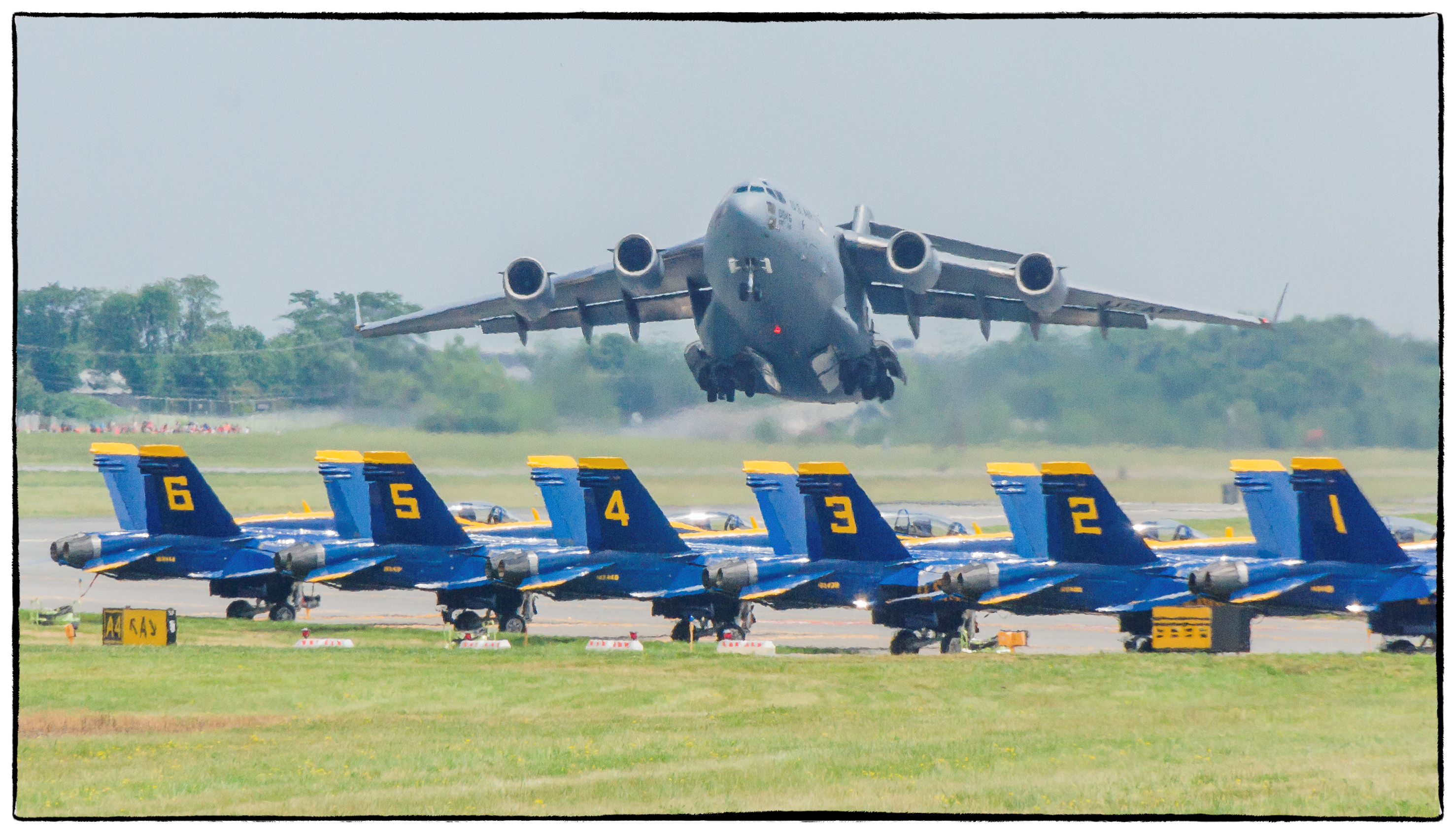
New York Air Show 2017 – C17 Globemaster III

I’d never seen such a large military aircraft in flight and eager to do so. So I was a bit disappointed when it didn’t appear on the programme for the particular day that we went. However, I was pleasantly surprised to hear the announcement that this aircraft would be flying that day. It’s very impressive. Above seen taking off with the Blue Angels in the foreground.

According to Military.com:

The C-17 Globemaster serves as the U.S. Air Force’s primary strategic lift aircraft for global transport of troops and equipment. The C-17 is capable of rapid strategic delivery of troops and all types of cargo to main operating bases or directly to forward bases in the deployment area. The aircraft can perform tactical airlift and airdrop missions and can transport litters and ambulatory patients during aeromedical evacuations when required. The inherent flexibility and performance of the C-17 force improve the ability of the total airlift system to fulfill the worldwide air mobility requirements of the United States.

Reliability and maintainability are two outstanding benefits of the C-17 system. Current operational requirements impose demanding reliability and maintainability. These requirements include an aircraft mission completion success probability rate of 92 percent, only 20 aircraft maintenance man-hours per flying hour, and full and partial mission availability rates of 74.7 and 82.5 percent, respectively.

The Globemaster III was designed to be able to land on runways as short as 3,500 feet and as narrow as 90 feet. With engine thrust reversers, the C-17 can back up and turn around on very small runways in forward operating bases.

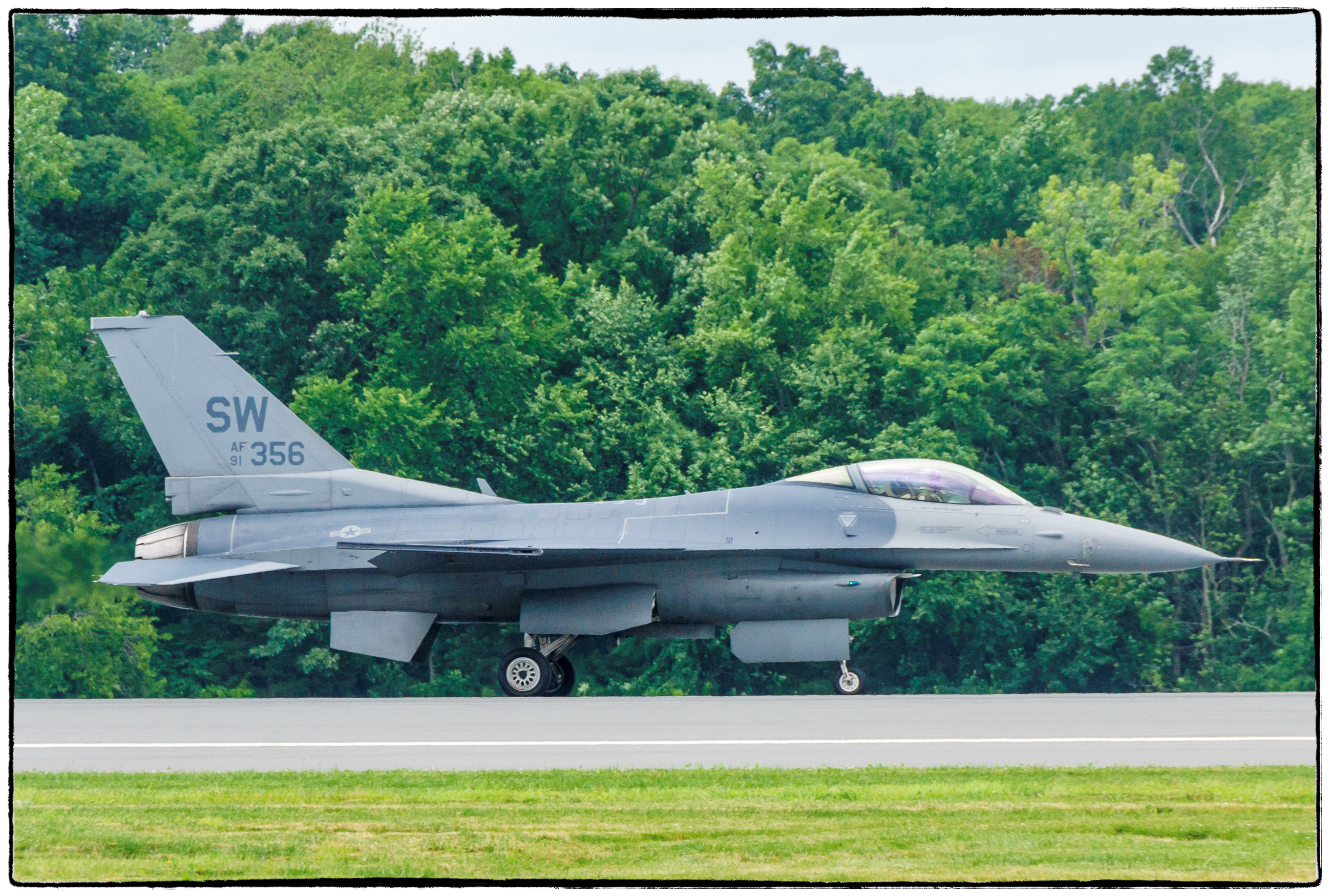
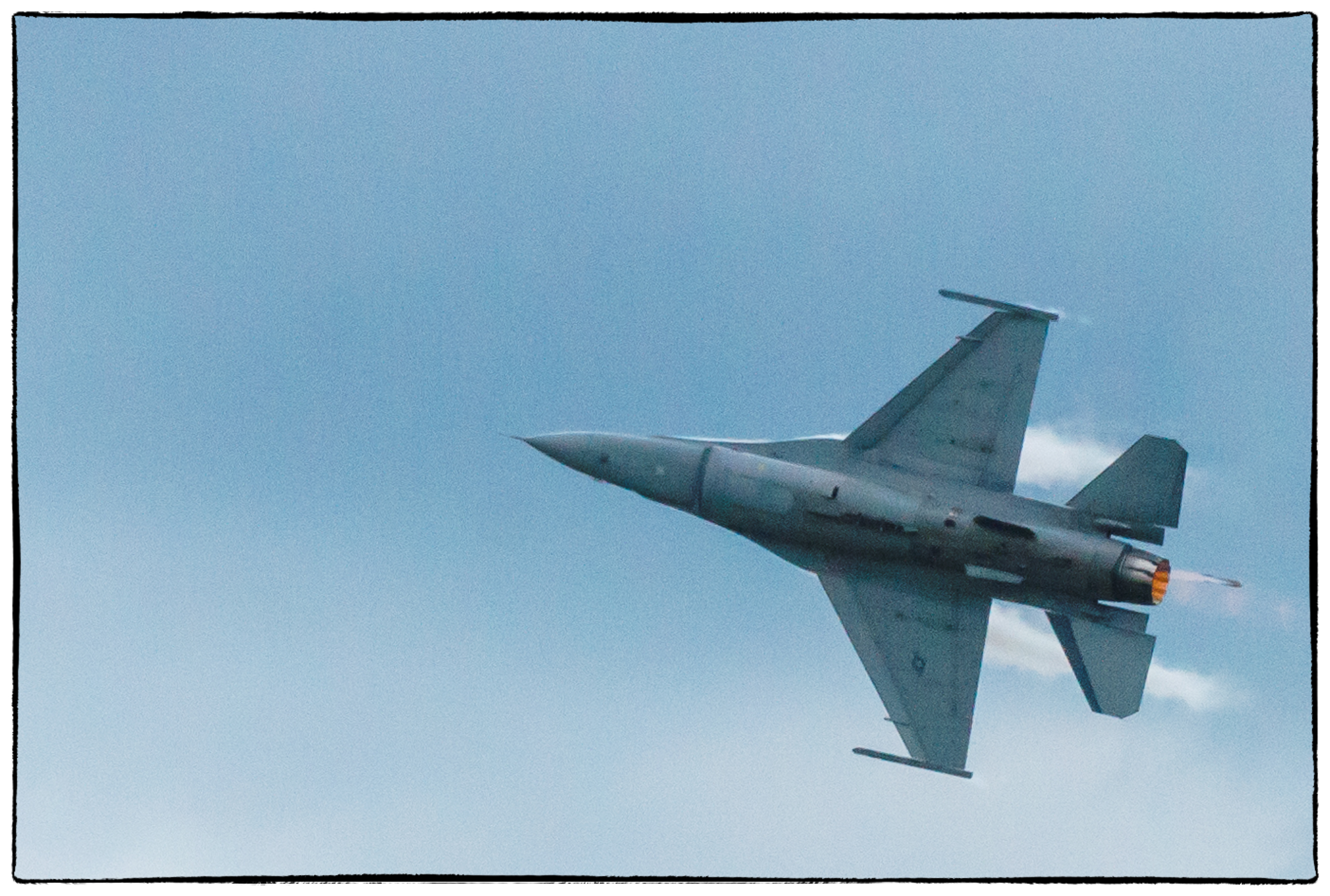
New York Air Show 2017 – F16 Viper

Military.com has this to say about the F16 Fighting Falcon (the F16 Viper is the latest version).:

One of the most versatile aircraft in the U.S. Air Force inventory, the F-16 Fighting Falcon has been the mainstay of the Air Force aerial combat fleet. With over 1,000 F-16s in service, the platform has been adapted to complete a number of missions, including air-to-air fighting, ground attack and electronic warfare.

In an air combat role, the F-16’s maneuverability and combat radius (distance it can fly to enter air combat, stay, fight and return) exceed that of all potential threat fighter aircraft. It can locate targets in all weather conditions and detect low flying aircraft in radar ground clutter. In an air-to-surface role, the F-16 fighting falcon can fly more than 500 miles (860 kilometers), deliver its weapons with superior accuracy, defend itself against enemy aircraft, and return to its starting point. An all-weather capability allows it to accurately deliver ordnance during non-visual bombing conditions.

According to Wikipedia:

At the 2012 Singapore Air Show Lockheed Martin unveiled plans for the new F-16V variant with the V suffix for its Viper nickname. It is to feature an active electronically scanned array (AESA) radar, a new mission computer and electronic warfare suite, and various cockpit improvements; this package is an option on current production F-16s and can be retrofitted to most in service F-16s. First flight took place 21 October, 2015. Production run To upgrade Taiwan’s F-16 fleet started January, 2017.

Taken with a Sony Alpha 500 and Tamron A18 AF 18-250mm f3.5-6.3

New York Air Show 2017 – Overview

I went to two friends to this years New York Air Show. I’d missed the 2016 show, but had last been there in 2015. Of course the trouble with such an event is that you tend to take a lot of pictures. I told one of my friends that this time I wasn’t going to take any pictures. I’d just enjoy watching the show.

Things did not turn out quite as I expected. I’d foolishly assumed that the displays would be pretty much the same as in 2015. This turned out not to be the case. There were a number of new aircraft that I hadn’t seen before, and which I wanted to take pictures of. Good thing I took the camera…just in case.

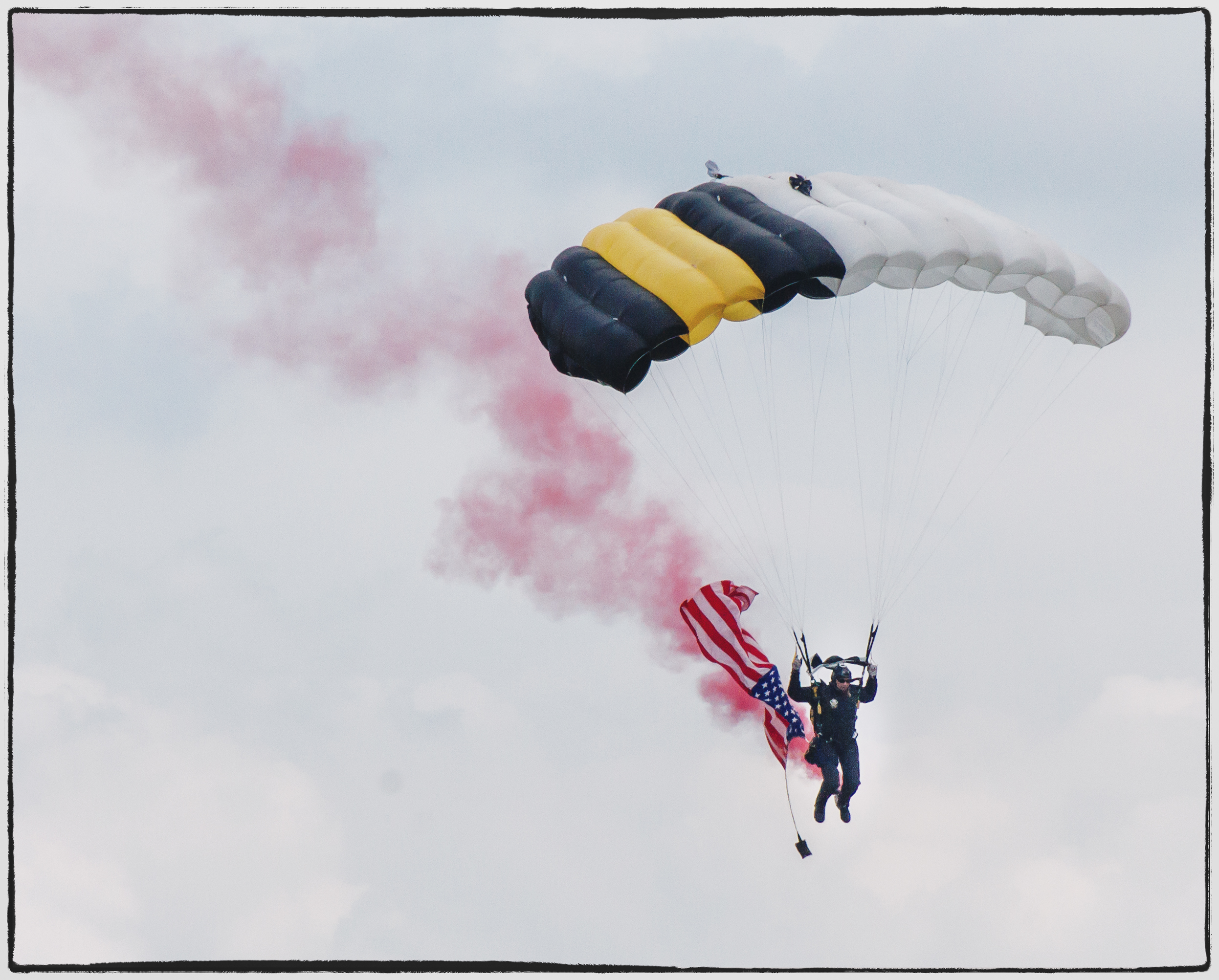
Above a member of the West Point Parachute Team, which opened the show.

Taken with a Sony Alpha 500 with Tamron A18 AF 18-250mm f3.5-6.3 lens.

Grasshopper

We went out last Sunday to pick up a couple of lamps we’d just purchased. On returning home I noticed this colorful little guy on our door. I thought it would be relatively easy to get a picture, but no doubt observing my presence he started to move away. He didn’t jump off or fly away, preferring to just walk around on the door. It did make my job rather more difficult though. I liked the bright colors against the plain white of the background.

Taken with a Sony RX-100 M3.

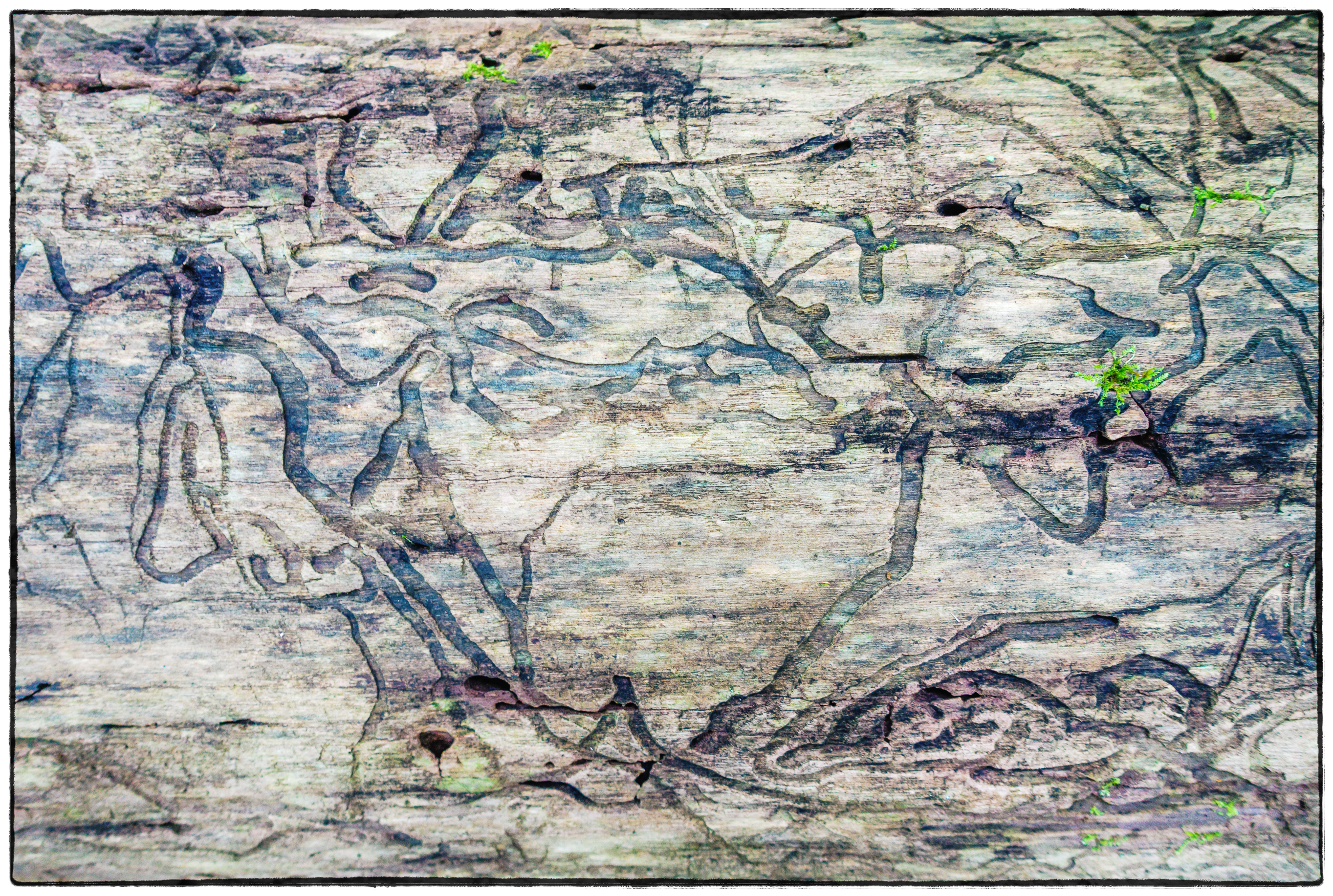
Lines on a fallen branch

I came across a fallen tree in the woods an on it were etched these lines. I have no idea how they’re made – possibly some kind of insect? They reminded me a bit of either the Chinese/Japanese paintings you often see, or perhaps some kind of ancient map with the lines representing roads and rivers. Maybe I should write “Here be Dragons” on it.

Taken with a Sony RX-100 M3.