
Every year at Hallowe’e the children of Briarcliff Manor come out and decorate the windows of the village stores with their paintings. Here’s a selection of their work.
15 images taken with an iphone 5s and combined in Adobe Photoshop Lightroom.
Photographs and thoughts on photography and camera collecting

Every year at Hallowe’e the children of Briarcliff Manor come out and decorate the windows of the village stores with their paintings. Here’s a selection of their work.
15 images taken with an iphone 5s and combined in Adobe Photoshop Lightroom.
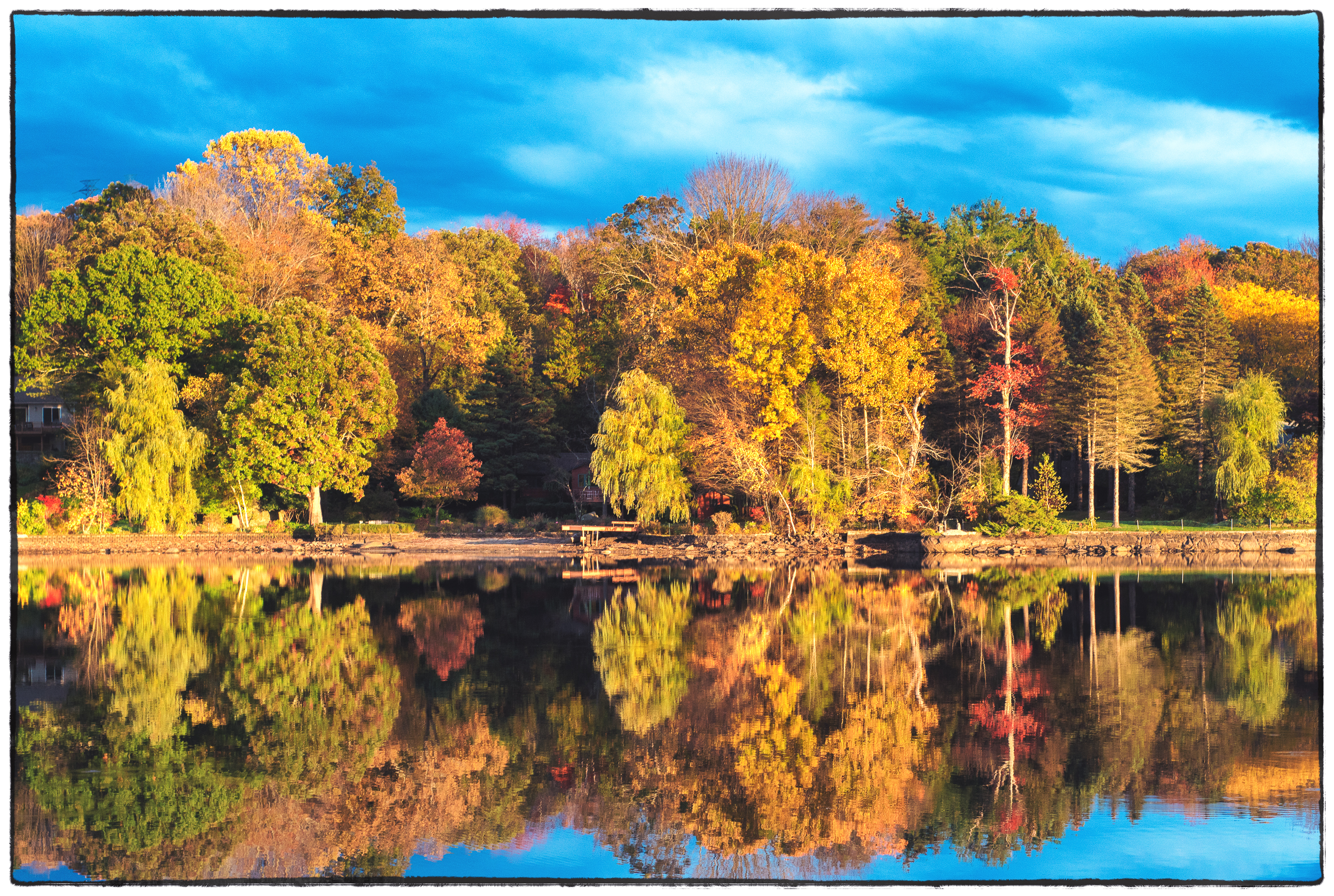
At was about 5:30 p.m. and we’d just returned from some shopping. I glanced out through the window and saw some incredible light. Moreover, the lake was as smooth as glass, showing the reflection of the fall colors of the trees. I grabbed a camera and rushed outside. Fortunately I was able to get a couple of shots before the light changed, which it did – and rather quickly too. A couple of seconds later and it had gone.
Taken with a Sony A77II and Minolta 50mm f1.7.
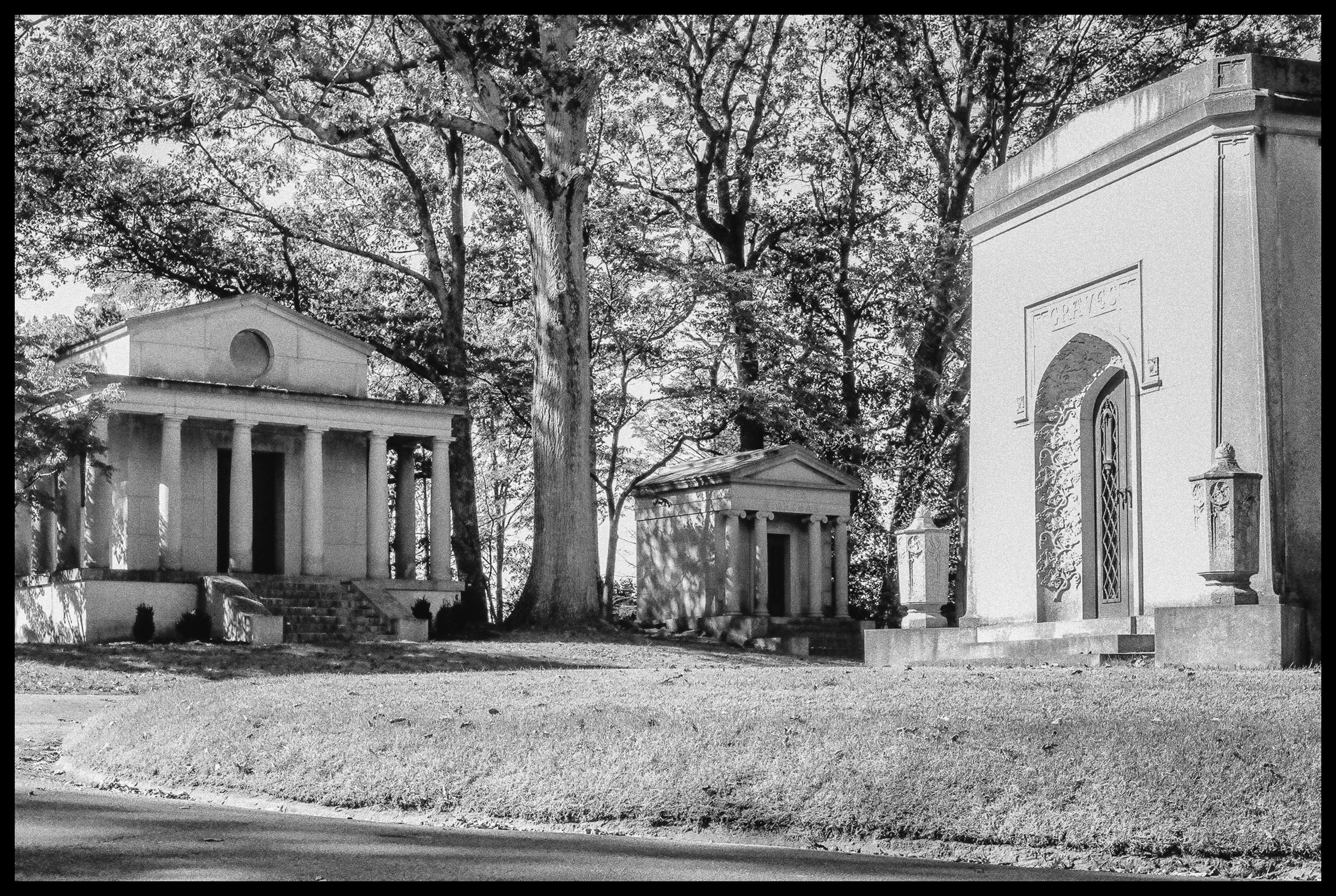
It took me a while to get around to using my August film camera. I had a bunch of old, color film that I wanted to use up so when trying out new/old cameras I’ve tended to use this first, and then convert the scanned images to black and white. I’ve now used up most of this old stock, so in this case I used true black and white film, specifically Kodak TX 100.
Suddenly I found I was very busy and had trouble thinking of a venue to try out the camera. I kept taking the camera with me, but time went by and I was getting more and more frustrated at not using it. Eventually I decided that I’d return to nearby Sleepy Hollow Cemetery, where I can usually find something worth photographing.
I have my film processed at The Darkroom and co-incidentally the resulting scans were made available to me on Hallowe’en. I say ‘co-incidentally’ because, in case you don’t already know, Sleepy Hollow Cemetery is pretty much “Ground Zero” for Hallowe’en in the US. The stomping grounds of the headless horseman, it’s also the final resting place of Washington Irving, the author of “The Legend of Sleepy Hollow“.
I must say that I loved using this camera. It’s small and fairly light for an SLR from that period and everything just felt right. One of the problems with only using a camera once is that you don’t really become familiar with it. This is particularly true with the OM2-n because of the unique arrangement of the controls i.e. they’re all on the lens, including the depth of field preview button. At first I was was groping around a bit to find the appropriate dial/button, but as I got used to it I began to appreciate how useful it is to have all of these controls (i.e. aperture, shutter, focus, depth of field) all in one location. I appreciated the large, bright finder typical of most film SLRs and which you no longer find on current DSLRs. The innovative (for the time) metering worked pretty well even if in a couple of cases (in particularly contrasty conditions) it did tend to overexpose highlights (this is probably a result of my lack of experience in using the camera rather than a problem with the camera itself). The 50mm f1.8 F-Zuiko auto-s that I was using focused smoothly and produced sharp results.
I like to shoot in aperture priority so this was perfect for me. Select the appropriate aperture and the display in the viewfinder shows you what shutter speed will be chosen.
The design of the camera reflects a belief in simplicity: just what you need – no more, no less. It was refreshing to use a camera that just gets out of the way and lets you focus on what you need to do while still providing you with the required feedback. This has been my problem with the compact point and shoot cameras I’ve been using of late. Although they get out of the way and let you focus on composition, they just don’t provide the information you need to be confident that you are getting the photograph that you want. On the other end of the scale are recent generation DSLRs. I just bought a Sony A77II and I must say that I find the complex functionality a bit bewildering. The OM2-n seems to just about get it all right.
A review of the OM2 on Casual Photophile comments:
All told, the OM-2 is a camera with which I’ve fallen in love. It’s tiny, inconspicuous, quiet, capable, and proud. It’s modern enough to use standard batteries, yet vintage enough to offer analog charms. The OM-2 can do anything we ask of it without breaking our backs or the bank. It just might be a perfect 35mm film camera. Staring at the OM-2 with the most critical eye leads one to stare without result. There’s nothing substantive about which to complain.
I’d very much agree.
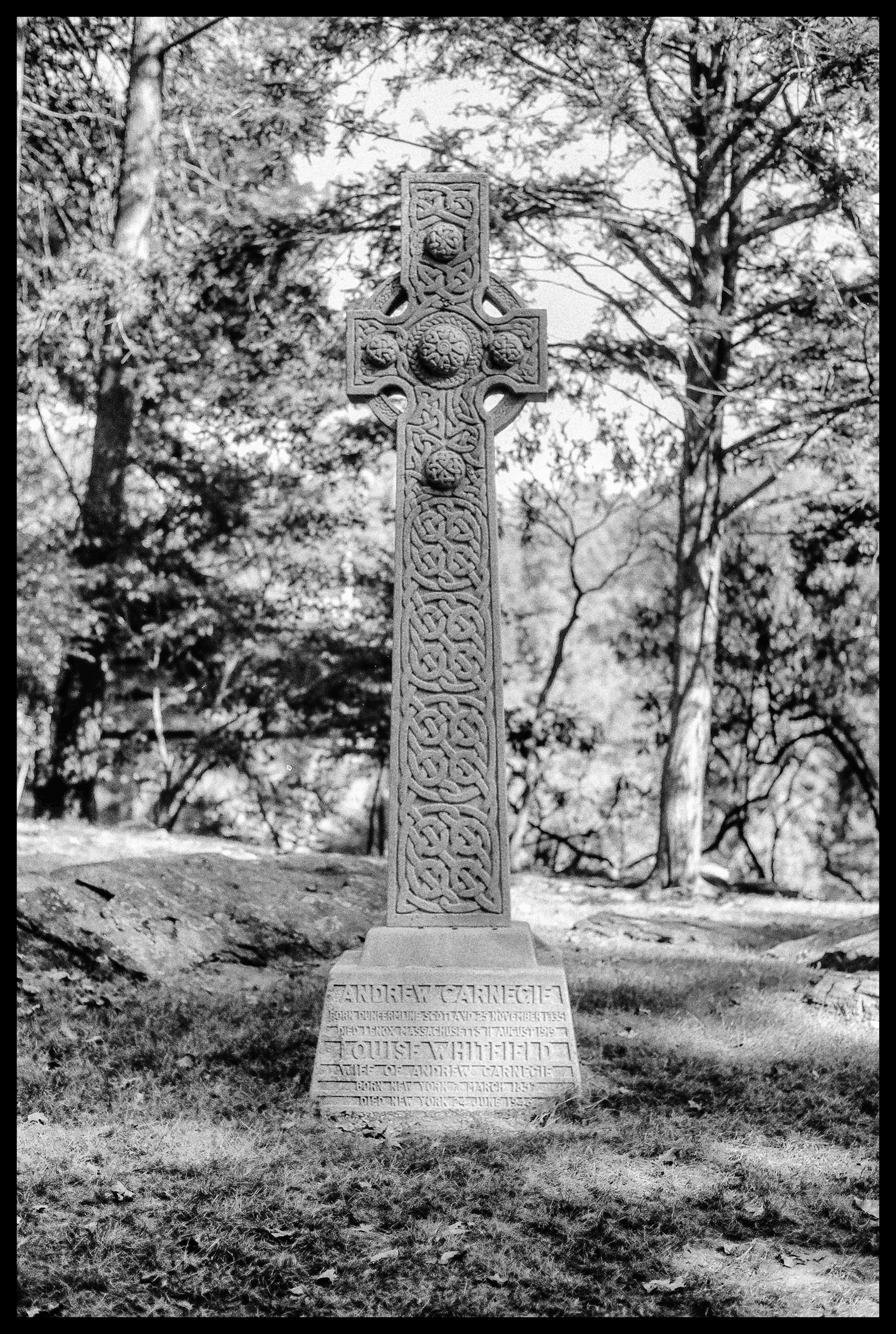
This simple celtic cross marks the final resting place of one of the richest people the earth has ever known: Andrew Carnegie.

Tombstones.
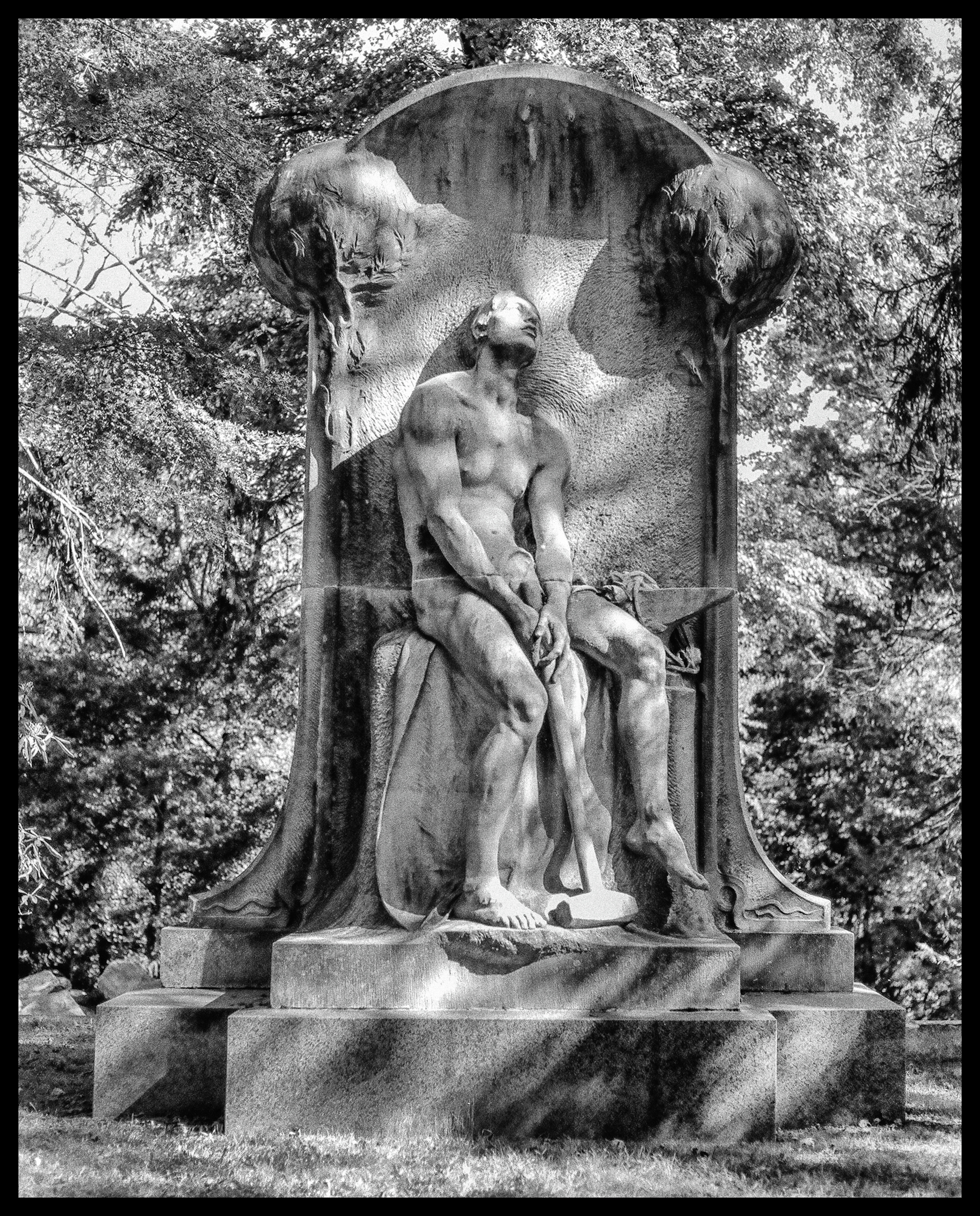
Henry Villard Memorial by Karl Bitter.
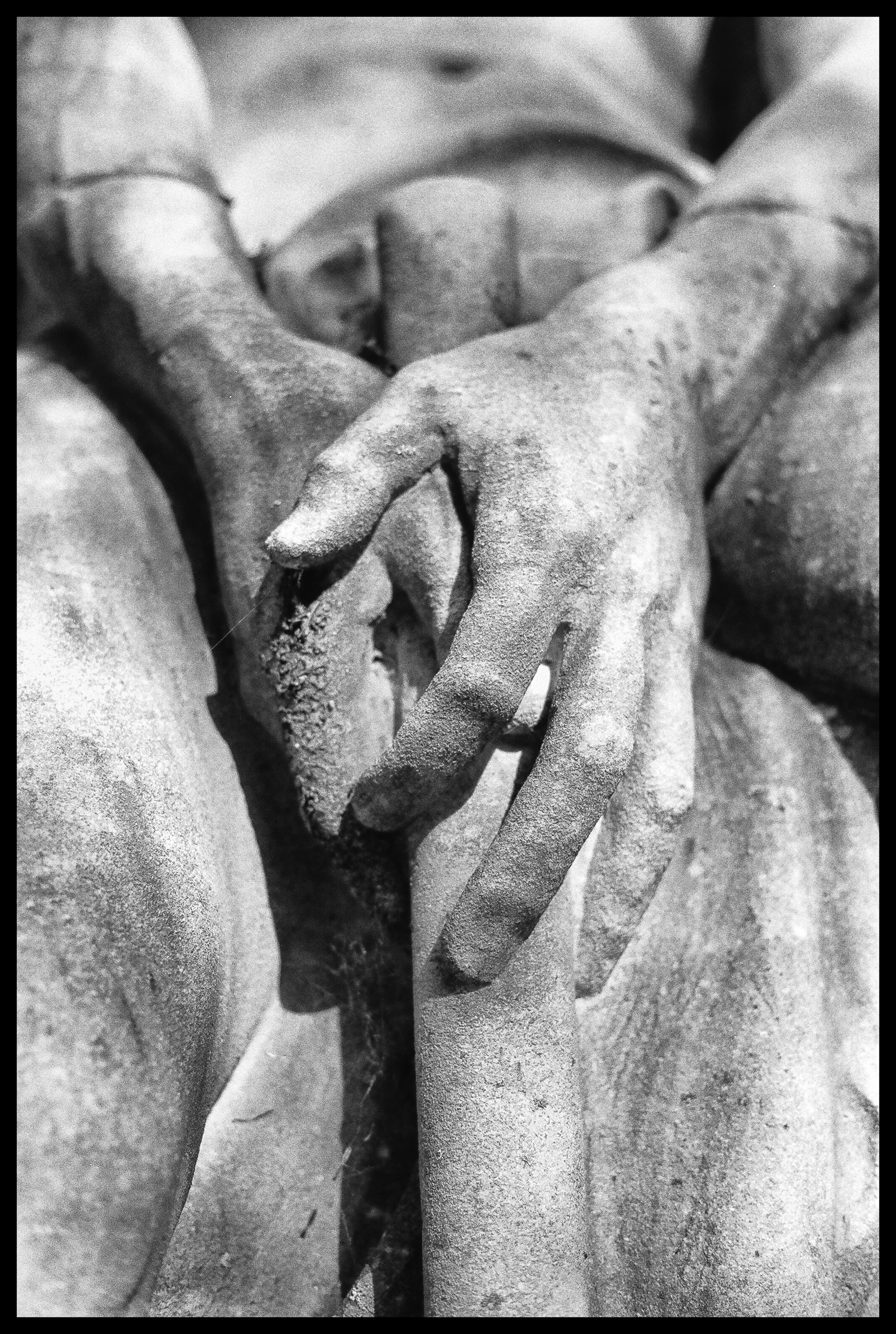
Detail of the Villard memorial.

William Evarts Benjamin (1859-1940) memorial. A prominent publisher and collector in Boston, Massachusetts.

Lyman Tiffany Dyer memorial. Trooper Squadron A 1896 – 1905. Member of Troop A ( Squadron A ), Volunteer Cavalry, Spanish American War. Participated in the Puerto Rico Campaign. Grandson of George Jones co-founder of the New York Times
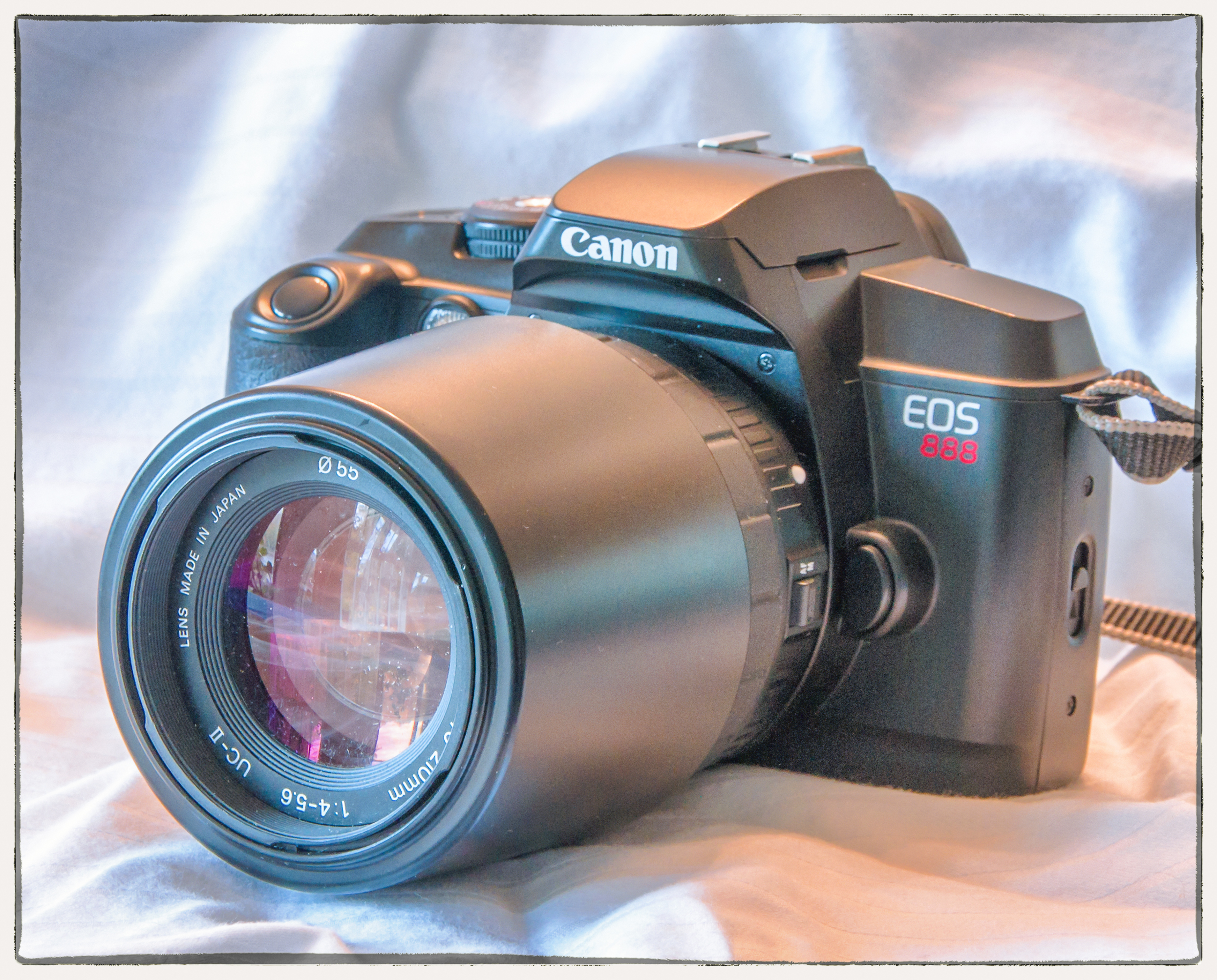
This camera was given to me by an good friend. He’s not all that much into photography and I imagine that if he wanted to take pictures, he would be unlikely to ever use a 1995 vintage film camera. In fact the camera is in such great condition that it looks as if it’s rarely been used at all. If he’d ever used it it would probably have been perfect for him: an easy to use camera aimed at entry level users. It is the kind of camera to bring along to family occasions, use while travelling etc. when you want to capture some pleasant memories without breaking the bank.
It’s a Canon EOS 888 (also called EOS 5000) in some markets.
The bulk of its functionality is controlled by a large dial on top of the camera. It uses 6-zone evaluative metering (or 9.5% partial metering at the centre) linked to the focus points, as is the three zone flash metering.
The camera has fully automatic exposure control, with no manual option.It also has shutter priority automatic exposure, where you set a shutter speed and the camera selects an appropriate aperture. Shutter speeds from 1/8 sec to 1/2000 appear on the selector dial, but in full auto mode the shutter can go down to a full 2 seconds.
It’s quite small and lighter than most SLRs. Clearly a lot of plastic was used in its construction, but it still feels quite solid.
If you don’t want to use the fully auto mode, or the shutter priority AE you can simply select one of the four Program Image Control (PIC) modes: Portrait, Landscape, Close-up or Sports. Like the fully auto mode these modes control both the shutter speed and the aperture.
Advanced Integrated Multipoint (AIM) control allows the camera to adjust to meet the photographers intentions. For example, if your subject is to the left of the picture, the focusing sensor on the left will be used. This will activate the exposure sensors on the left of the camera, so that the light reading is also taken from this area, rather than from the centre.
The built in flash uses through the lens (TTL, ISO guide number of 12m at ISO 100) metering linked to the selected focus point.
The viewfinder has indicators for partial metering (AE lock); correct exposure (blinks when exposure is bad); and correct focus. The top panel LCD displays the number of frames remaining; self-timer seconds remaining; and the aperture when in shutter priority mode. There’s also a battery level indicator. The camera takes two CR123A Lithium batteries.
The camera features the typical Canon quick load capability. Just pull out the film leader to the clearly marked point, close the back and the camera automatically advances the film. I was surprised to find, however, that the camera advances to the end of the roll, and then counts down as you shoot. ISO is set automatically (i.e. no option to change it manually) from ISO15 to an ISO of 2000.
A quartz date model was also available. However, it’s only programmed to 2019.
The camera came with a Sigma 70-210mm f4-5.6 UC-II.
For results see Canon EOS 888 results.
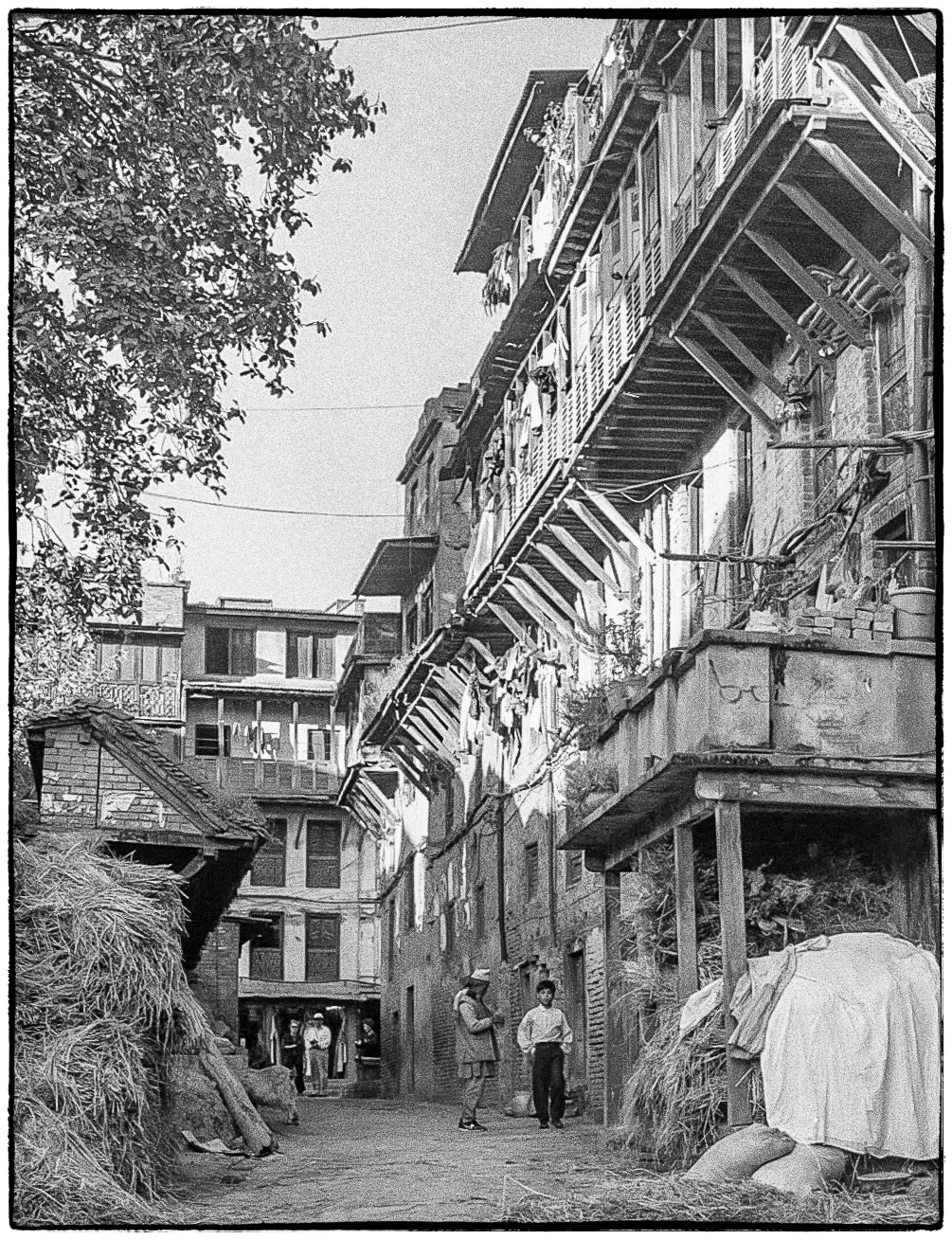
This was taken so long ago that I no longer remember anything about the circumstances under which it was taken. I suspect the camera was a Canon AE-1 and I don’t recall what lens was used.