
Over the years my wife has bought, used, and kept a number of these bright blue bottles. These stand in the window of one of our bathrooms.
Taken with a Sony Nex 5N and its 18-55mm f3.5-5.6 OSS kit lens.
Photographs and thoughts on photography and camera collecting

Over the years my wife has bought, used, and kept a number of these bright blue bottles. These stand in the window of one of our bathrooms.
Taken with a Sony Nex 5N and its 18-55mm f3.5-5.6 OSS kit lens.

Smoke pours from the chimneys of an Ohio steel mill in a 1949 picture for Life magazine. Photograph: W Eugene Smith/Life/Getty. Source: W Eugene Smith, the photographer who wanted to record everything.
Interesting review in The Guardian. W Eugene Smith, the photographer who wanted to record everything of a new book on the above mentioned photographer: Gene Smith’s Sink: A Wide-Angle View.
A couple of extracts from the article:
Like many photographers, Smith was obsessive in the pursuit of his vision, but fuelled by alcohol and a long-term addiction to amphetamines, his compulsive behaviour had over the years become extreme. Among his archives were several boxes containing photocopies of all the letters he had ever written.
More startling still are the 1,740 reels of audio tape, which were made by Smith between 1957 and 1965 in his previous loft apartment in 6th Avenue near West 28th Street. They contain around 4,500 hours of mostly ambient recordings often caught clandestinely on microphones he draped on dangling leads throughout the loft and in its stairways. These tapes reveal Smith’s seeming desire to document everything going on around him – and not just through photographs. They include hundred of hours of recordings of the many jazz musicians who gravitated there after hours; the likes of Thelonious Monk, Roland Kirk, Sonny Clark and Chick Corea, but also the conversations of stellar visitors including Norman Mailer, Salvador Dali and Anaïs Nin, as well as visiting photographers such as Henri Cartier-Bresson, Diane Arbus and Robert Frank.
“For each famous person,” writes Sam Stephenson in his fascinating book, Gene Smith’s Sink: A Wide-Angle View, “there were dozens of obscure musicians, pimps, prostitutes, drug addicts and dealers, dropouts, hustlers and thieves, beat cops and buildings inspectors, photography students, frame makers, fire extinguisher technicians and countless other figures”.
Written on a desk customised from Smith’s darkroom sink, Stephenson’s evocative book is the result of 20 years of research into the life of an American documentary photographer who, having been revered in his lifetime, is now regarded in the digital age with a kind of respectful curiosity.
…
For all that, the wayward individual that emerges out of Stephenson’s ambitious “wide angle” approach remains essentially unknowable, a blur in an otherwise sharply defined portrait of a tougher time and a truly bohemian milieu that already seems impossibly distant. I wondered if Stephenson’s opinion of the object of his elusive devotion had altered over the course of his long labour of love. “Well, I rate him even more highly as a photographer now, particularly for his Pittsburgh work, in which he captured American industrial urbanism at its pinnacle. For me, it’s his crowning achievement. But the book is about the life more than the work and, for me, tapes were the way into that life. Put it this way, if he had not made those tapes, I would not have spent 20 years of my life researching the book. I would not have followed the leads and connections to the many extraordinary characters in that life. For me, the characters that were drawn to his loft are the truest reflection of who he was.”
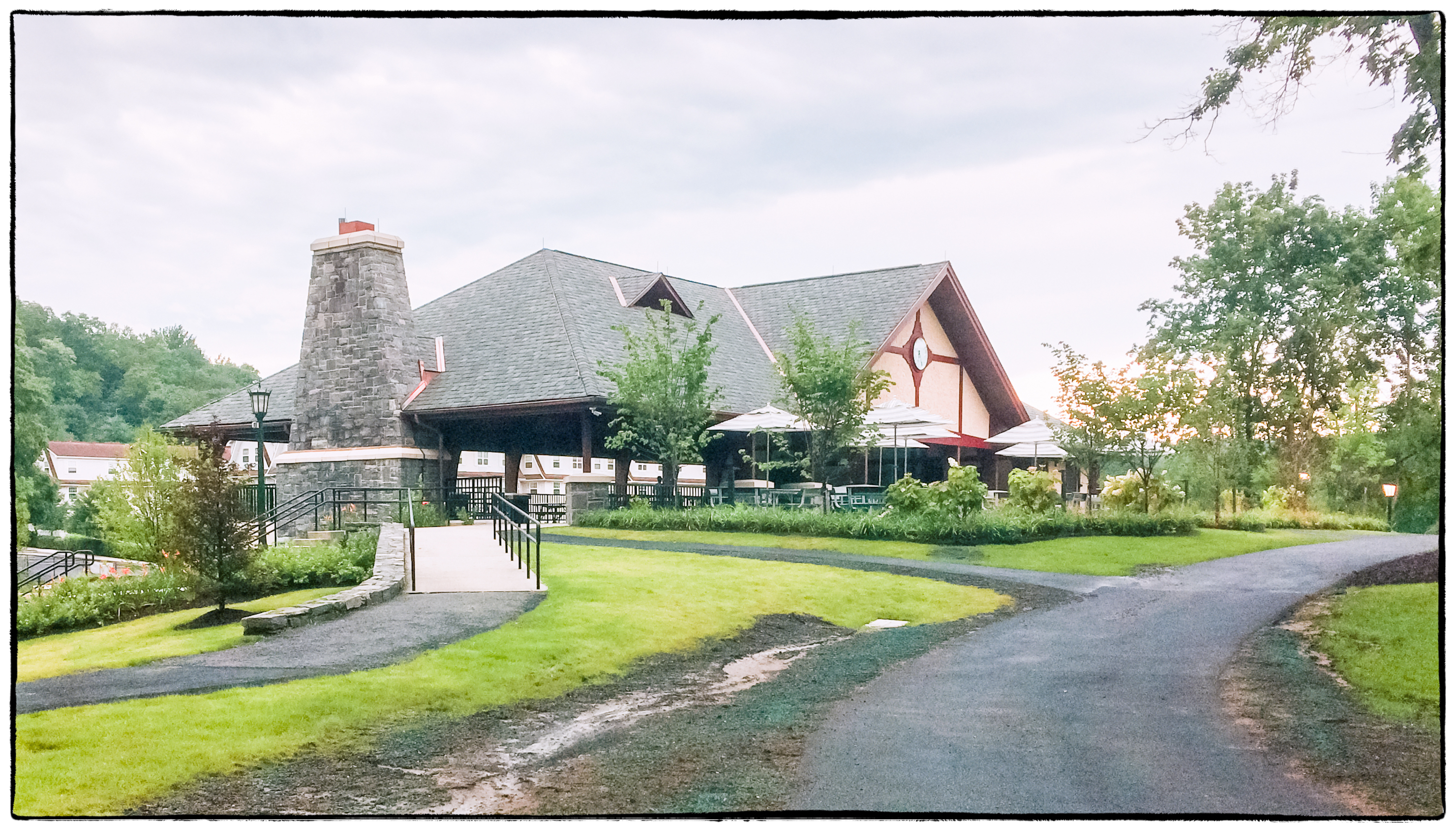
In an earlier post (see: Fire In Law Park, Briarcliff Manor) I described the serious fire in the Pavilion in Law Park in Briarcliff Manor, NY. In another post I noted that the rebuilding was underway (see: Phoenix arising from the ashes). The rebuilding has now been completed and the Pavilion is back and better than before.
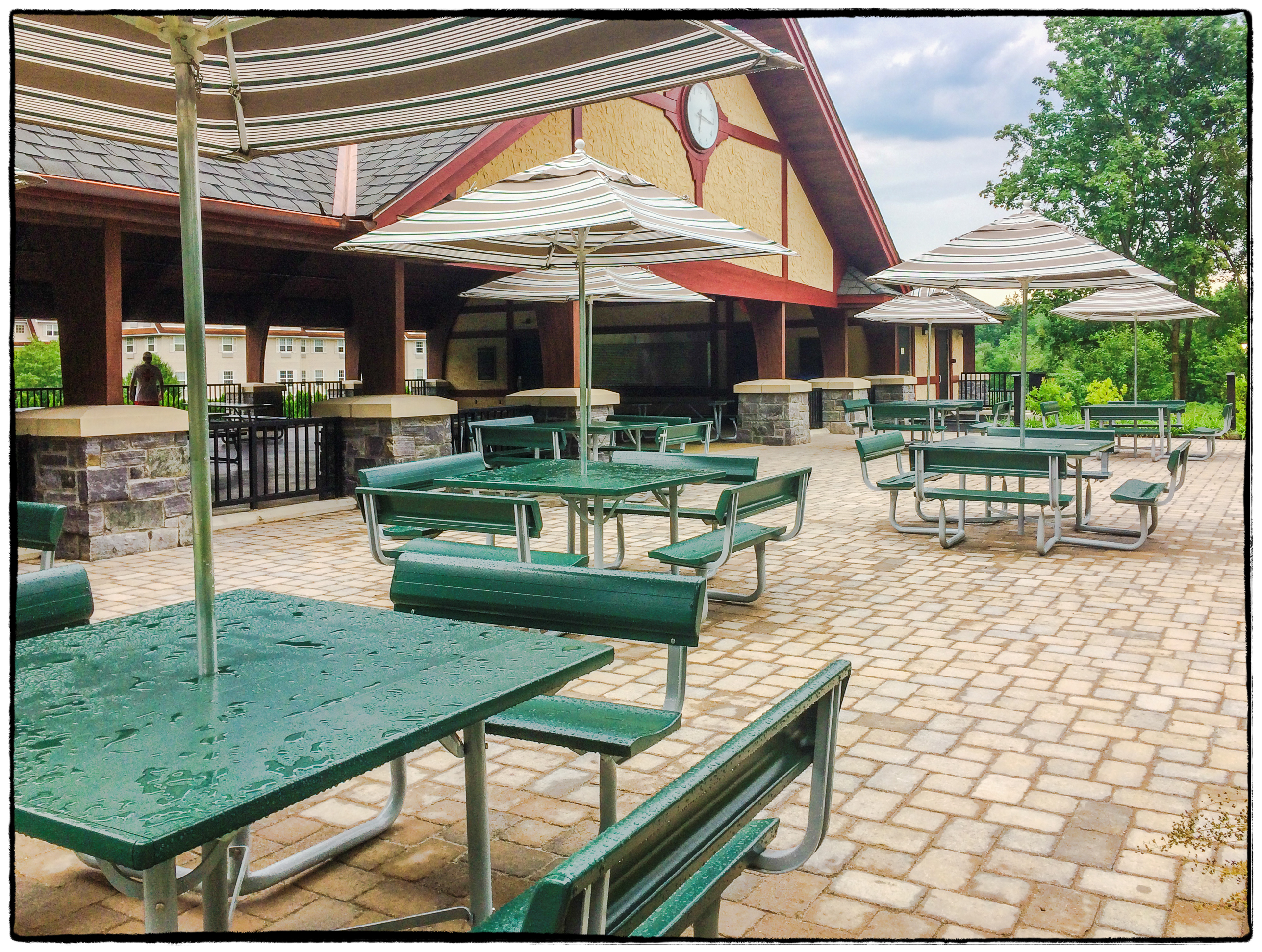
This paved area is new. In its earlier incarnation this was just grass. The tables and umbrellas are also new. Makes a pleasant area to sit and have a bite to eat.
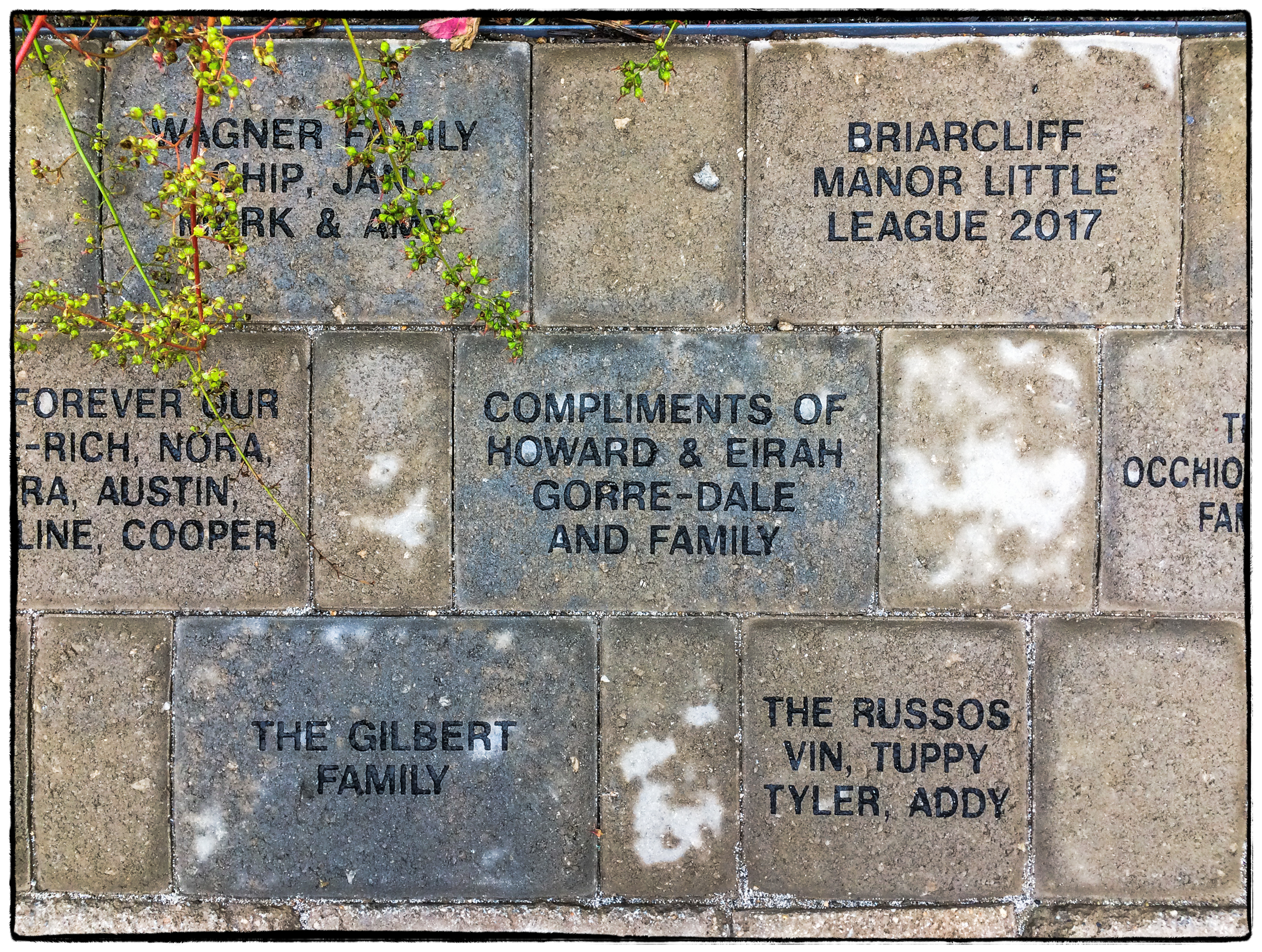
The town invited residents to purchase a brick and have something engraved upon it. These bricks have been placed around the edge of the paved area where they will not be walked upon and thus wear quickly. Of course we couldn’t resist having one.
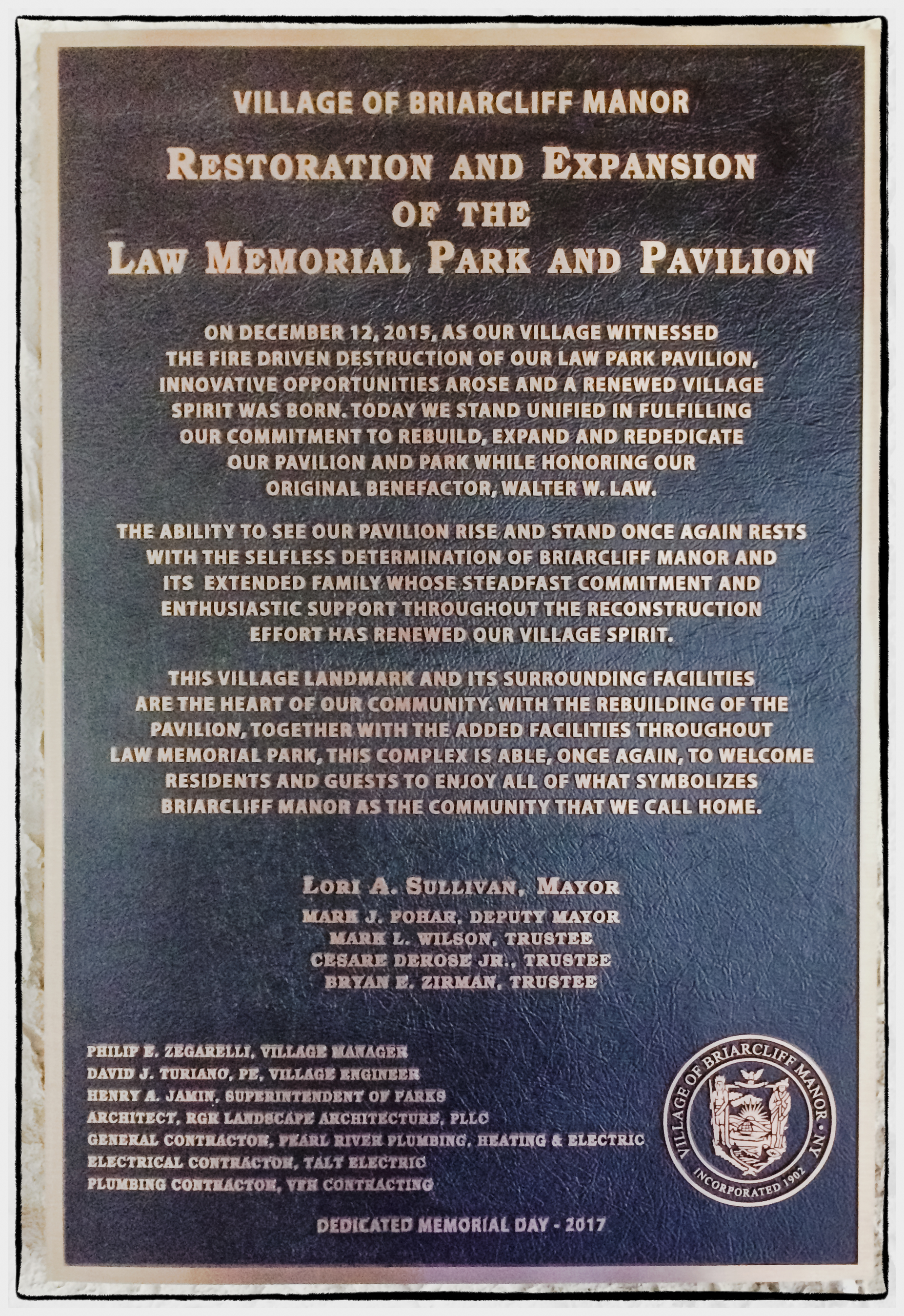
Commemorative plaque on one of the inside walls of the Pavilion.
I loved the old Pavilion’s wrought iron firescreen (see: Firescreen at Law Park). I thought that it had survived the fire, but it seems that this was not the case. I was pleased to see that a pretty much exact duplicate had been made to replace it (of course without the lovely patina of the original).
Taken with an iPhone 5s
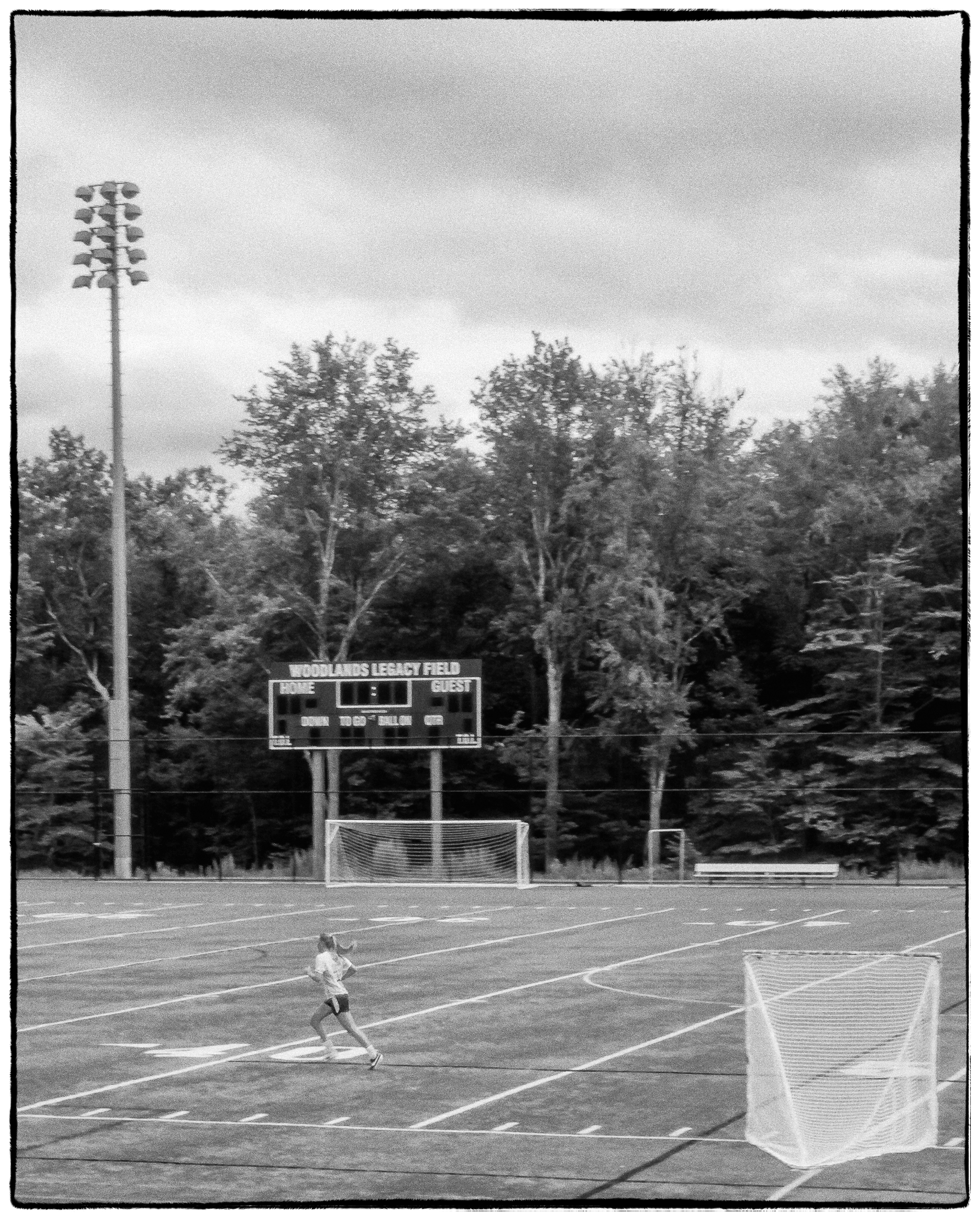
I’d taken the dog for a short walk in Granite Knolls Park in Yorktown, NY and was returning through Woodlands Legacy Park when I noticed this sports field. I initially thought to include the goals, the scoreboard, and the floodlights. But then this runner passed by….
Taken with a Sony RX100 M3
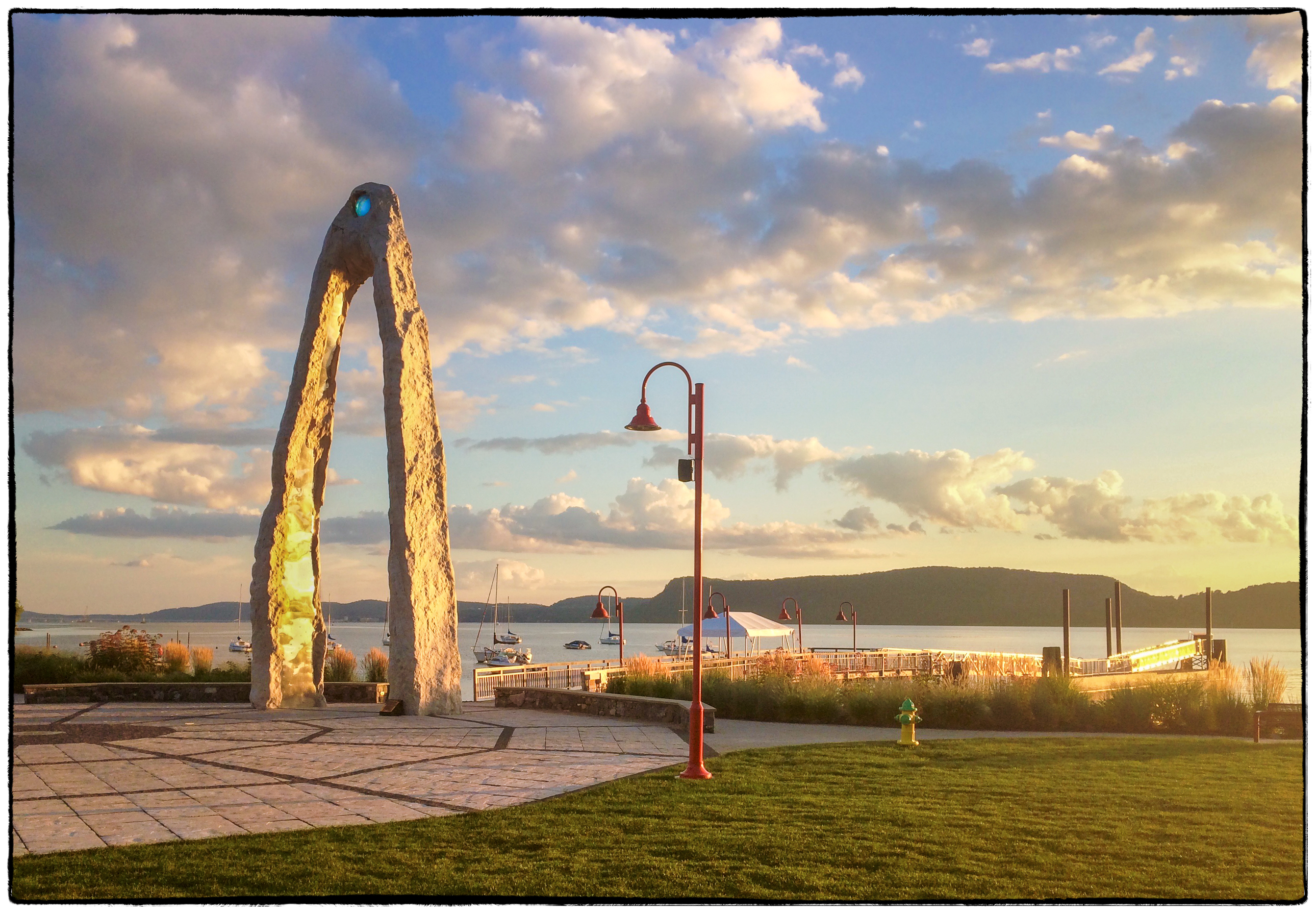
There have been numerous improvements to the Ossining, NY waterfront over the past few years. Not the least of these is the addition of a new waterfront restaurant: 3 Westerley.
I went with a friend for a drink and some food last Tuesday evening. We’d been before and found the food to be generally good, but the noise level in the indoor dining room to be very high. This time I arrived early (around 5:00 pm) and managed to get a table outside, which was very pleasant even if at that time of day the sun was very bright and it was rather hot. As the sun went down the light became better and the heat decreased.
This picture was taken from my seat on the outside patio looking towards the Haverstraw Ferry (the pier to the right of the picture). A steady stream of people trickled by from the Metro North Station (next to the restaurant) to the ferry.
The 42 foot high, 80 ton arch sculpture is by renowned artist Peter Lundberg.
Taken with an Apple iPhone 5s.