Sebastian Sadecki Street Photobook Series: Repetition

In this video, Sebastian Siadecki introduces a new series on street photography photobooks, a genre with which he has extensive experience. He provides a general definition of street photography: work primarily about people in public spaces, with generally no interaction before the photos are taken.

He then then discusses two photobooks that, according to him, use repetition in interesting ways:

  • 42nd and Vanderbilt by Peter Funch: This book features photos taken from the same vantage point: the corner of 42nd Street and Vanderbilt Avenue in Manhattan. The repetition of commuters in similar poses and expressions highlights their daily routines and habits. He explains that he initially dismissed the book because of its emphasis on the use of a long lens but later became “hypnotized” by the intimacy and focus on details. He notes how the book reveals not just repeated actions, but also consistent emotional states as part of the commute.
  • Twirl/Run by Jeff Mermelstein: This book is divided into two sections: women twirling their hair and men running in a hurry. The photos are displayed in a unique layout of three stacked images per page, emphasizing the collection over individual “bangers”. Siadecki discusses how Mermelstein’s long-standing practice of street photography led to the running series while the twirling series became a more conscious effort. He praises the book for reflecting the collective anxiety of New York City
  • I found myself wondering how the first one was created. Remember that Siadecki states that he almost dismissed it because of its use of a long lens (most street photographers use a normal or wide-angle lens). I worked in Manhattan for many years and know this area quite well. Its teaming with people and things happen very quickly. I don’t see how he could remember individuals passing by with possibly days between the chance encounters. The only way I can think that he did it was to take bursts of images and then later sort through them. So little technical skill may have been required. The images are not particularly pleasing aesthetically. So, I guess we’re in the realm of conceptual photography here: a genre that translates ideas or concepts into visual images, emphasizing the message over mere aesthetics and technique. It’s a genre that I’ve never fully understood, so I’d take what I’m saying, “with a grain of salt”. Maybe I just don’t get it.

    As for the second one, if you watch the video, you’ll discover that there are 120 images of women twirling their hair, and 120 images of men running. Too many for me I’m afraid. I don’t have that kind of attention span.

    So, I suspect I would find both books rather boring – if I were to buy them that is (which I probably won’t, although if I came across one in a bookstore, I’d probably spend a bit of time browsing through it). I think I’ll stick with the likes of Garry Winogrand, Joel Meyerowitz, Henri Cartier-Bresson etc.

    Note that this is not a comment on Mr. Siadecki’s channel, which I love. I collect photobooks and his channel has given me lots of pointers as to what my next purchase might be.
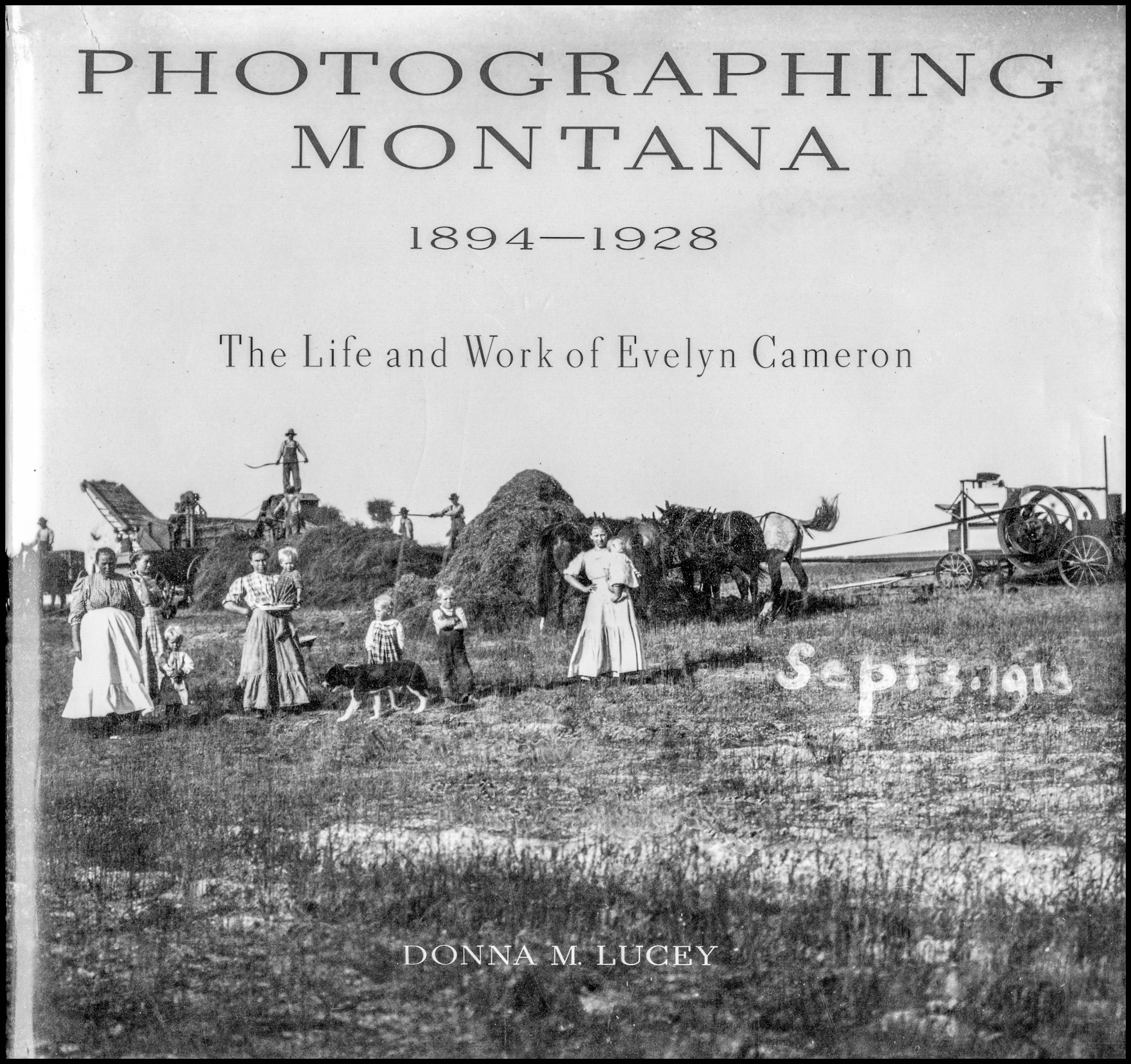

    Photographing Montana, 1894-1928: The Life and Work of Evelyn Cameron

    The summary on Amazon.com reads:

    “Leaving behind her childhood world of the English gentry, Evelyn Cameron began ranching on the harsh and beautiful plains of eastern Montana in 1889 with her husband, Ewen. When their initial venture–raising polo ponies–failed, Evelyn turned to glass-plate photography to help support her family. Nearly 2,000 negatives remained in a friend’s basement for 50 years after Evelyn’s death until author Donna M. Lucey tracked down the extra-ordinary collection.

    Photographing Montana showcases more than 150 photographs of life in Montana from the 1890s through the 1920s. Evelyn Cameron’s work portrays vast landscapes, range horses, cattle roundups, wheat harvests, community celebrations, and wildlife of the high plains. Her vivid images convey the lonely strength of sheepherders and homesteaders and track the growth of Terry, a small town on the Yellowstone River. Her family portraits are priceless glimpses into the past, capturing the endurance, pride, and hope of those she photographed.
    Through excerpts from her diaries and letters, we follow Evelyn’s transformation from a daughter of the English upper class to a resourceful ranchwoman relishing the independence and challenges of western life.”

    I don’t know which I liked more: the photographs or the riveting description of the life of a pioneer woman at that time. She was certainly a remarkable woman who took on the entire burden of managing a ranch/homestead, doing all the domestic chores, embarking on a career as a professional photographer etc. This was all the more remarkable as she came from a genteel, well off British family. Her husband and ne-er do well brother certainly didn’t seem to contribute much.

    I really enjoyed it.

    Not something you see everyday – again

    In fact, I can’t remember every seeing such a thing. I came across it in the men’s room at Croton Harmon Metro-North Station. Do they really have such a problem with toilet rolls being stolen that they have to lock them up? And, as you can see from the photograph, their scheme has fallen apart: one of the toilet rolls (the one on top) seems to have escaped. I suppose it will only be a matter of time before the criminal hordes will descend on it and whisk it away.

    Taken with a Sony RX10 IV