Mosaics at the 66th street subway station

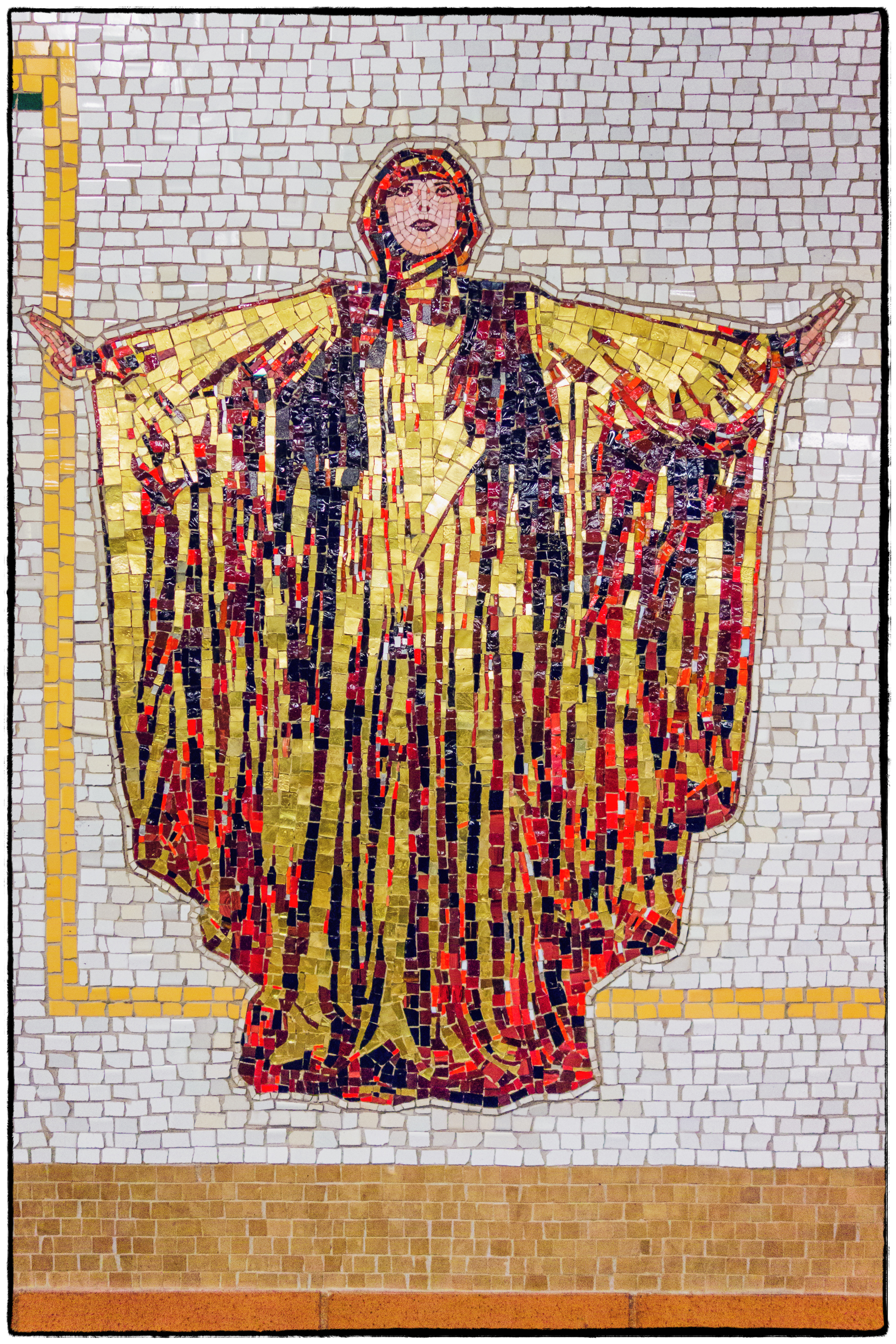
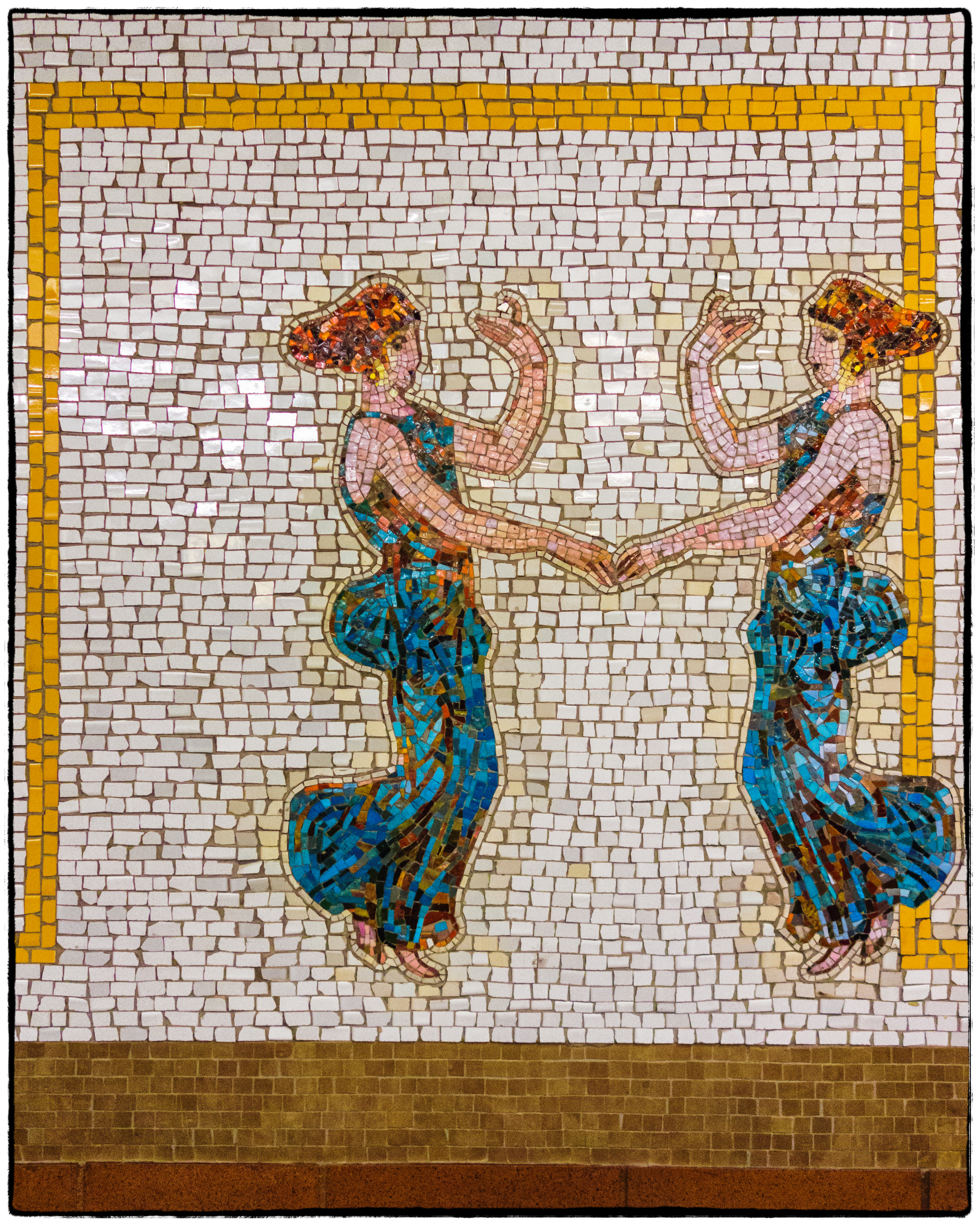
When we went to see “The King and I” other day we took the subway to the 66th Street-Lincoln Center stop. As we were returning I noticed these colorful mosaics on the walls.

According to the Metropolitan Transit Authority (MTA) – Arts and Design:

NANCY SPERO

Artemis, Acrobats, Divas and Dancers, 2001

Glass and ceramic mosaic on platform walls

This series of 22 brilliantly colored glass mosaic panels lines the walls of the station and bows to Lincoln Center’s opera, ballet, and classical music halls – and the vibrant, artistic character of the Upper West Side neighborhood. Spero conveys this through the use of iconic images of women both real and mythical, from such varied sources as archaeology, architecture, mythology and the contemporary world.

In Artemis, Acrobats, Divas, and Dancers, the central icon of opera, the Diva, is repeated in various forms that lead and follow riders through the station, giving the illusion of movement and change. Elsewhere, Spero represents scenes from the subway and the city outside, the architectural backgrounds enlivened by musicians performing and athletes running, signaling you are in a creative and energetic place, the Upper West Side of Manhattan.

According to Wikipedia:

Nancy Spero (August 24, 1926 – October 18, 2009) was an American visual artist. Born in Cleveland, Ohio, Spero lived for much of her life in New York City. She was married to, and collaborated with, artist Leon Golub.[1] As both artist and activist, Nancy Spero had a career that spanned fifty years. She is known for her continuous engagement with contemporary political, social, and cultural concerns. Spero chronicled wars and apocalyptic violence as well as articulating visions of ecstatic rebirth and the celebratory cycles of life. Her complex network of collective and individual voices was a catalyst for the creation of her figurative lexicon representing women from prehistory to the present in such epic-scale paintings and collage on paper as Torture of Women (1976), Notes in Time on Women (1979) and The First Language (1981). In 2010, Notes in Time was posthumously reanimated as a digital scroll in the online magazine Triple Canopy
Another visit to the Old West Point Foundry Preserve

Yesterday was my wife’s birthday. We’d already celebrated the day before, but she didn’t feel like staying home so we decided to take the dog for a walk. I know the places to walk better than she does so the decision was up to me. At first I thought of going to Little Stony Point (where she’s been before), but then it occurred to me that she’d never been to the Old West Point Foundry Preserve. As it turned out I was glad that we made this choice.

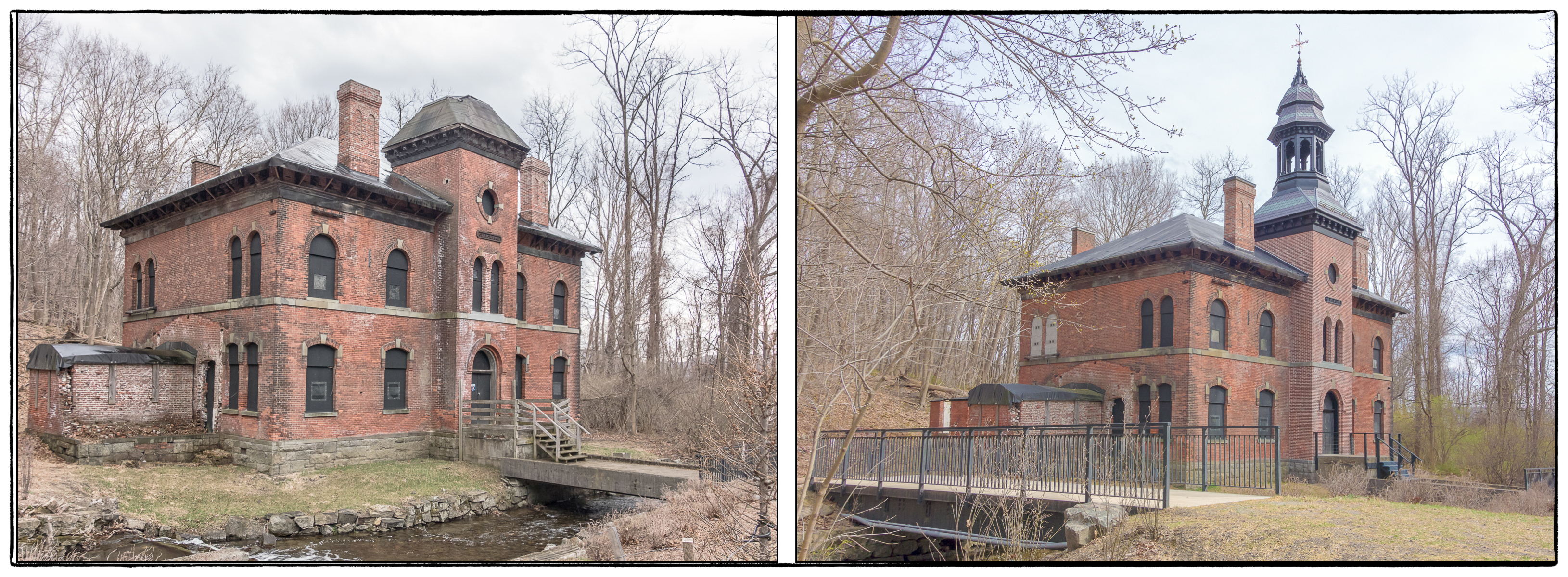
The old administration building is the only remaining building and as we approached it I had a feeling that something was different. Had they cleared away some trees so the view was better? Was it a different season so I could see the building more easily? And then it hit me: in previous visits the cupola was on the ground in a small wooden shelter while it was being worked on. Now it was back on top where it belonged.

Above you can see before and after pictures. The one on the left was taken during my first visit in April 2014 and the one on the right yesterday (i.e. March 31, 2016). What a difference! Now this magnificent old building seems complete.

This was a very pleasant surprise. I often hear about old buildings being demolished, but it’s rare that I hear of one being restored like this. I must admit that when I’d seen the cupola in its shelter during previous visits I rather cynically thought that that was where it would stay and that the restoration would never take place. I’m so pleased that this was not the case.

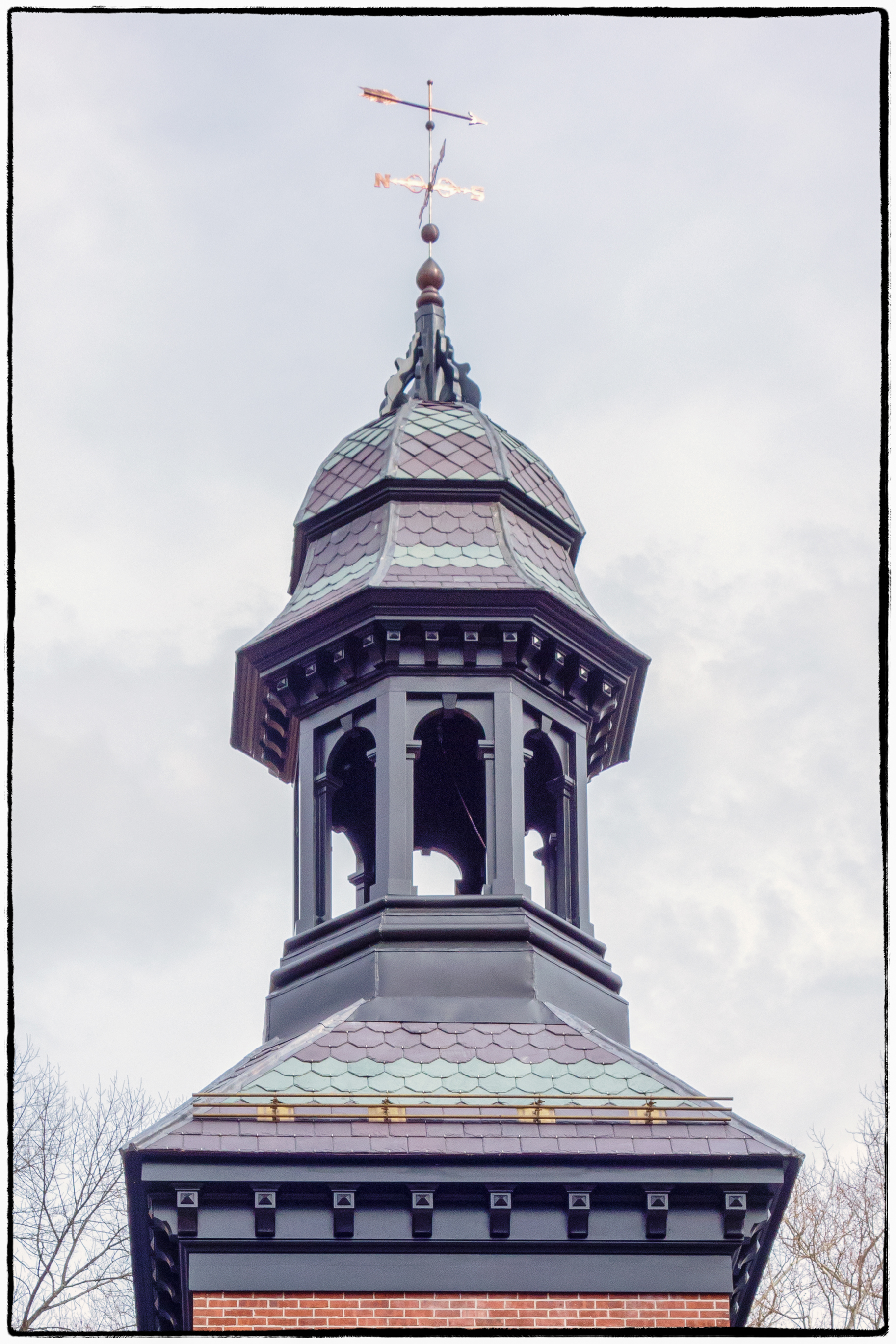
Closer view of the restored cupola.

I’ve posted about the foundry before in:

A few black and whites from the West Point Foundry Preserve
The Old West Point Foundry

Fairy in the garden

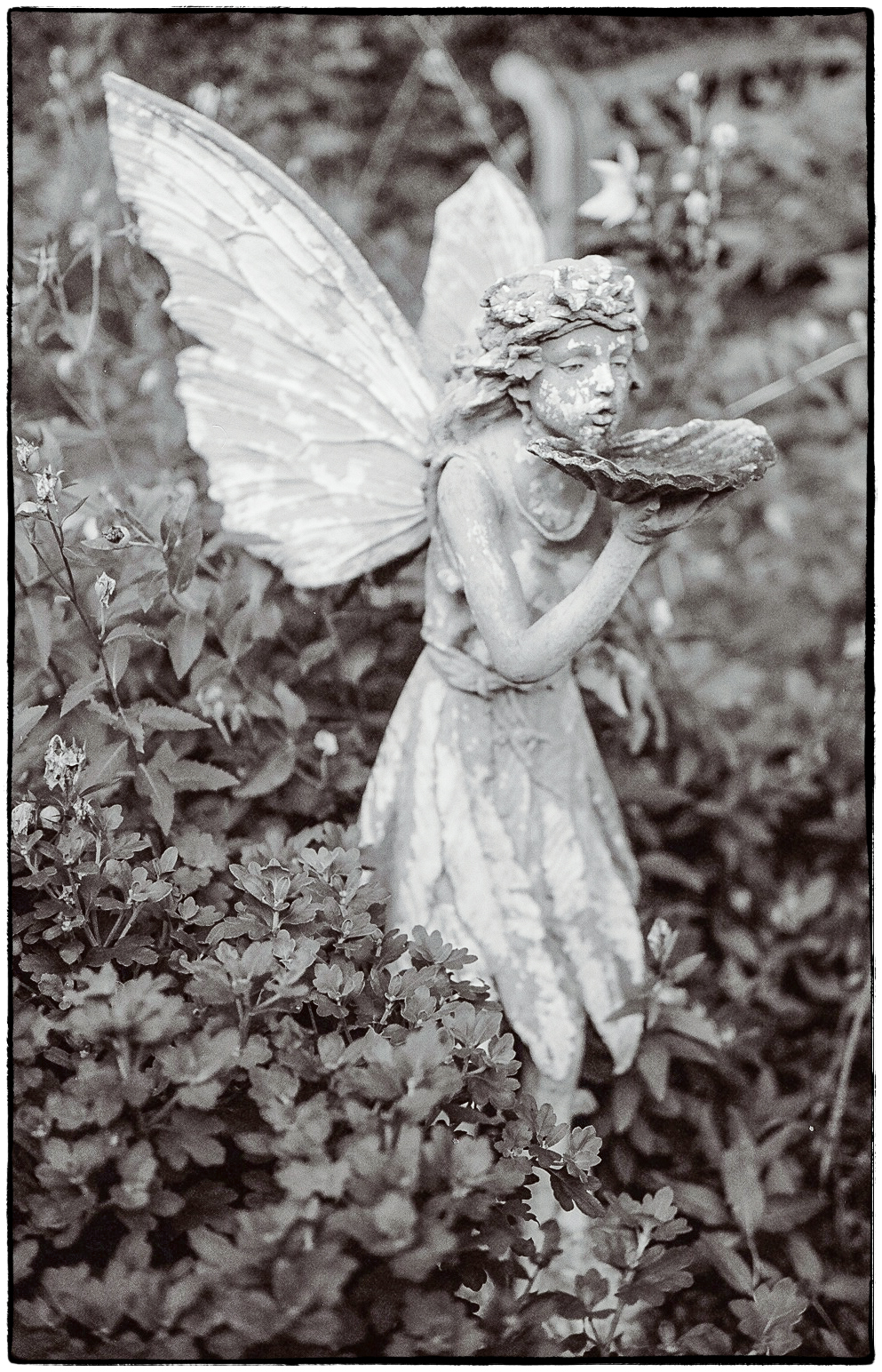
Taken in our garden at the lake house in June, 2013 with a Yashica FX-2. I’m little confused with this one. It’s certainly taken with a Yashica FX-2 (with 50mm Yashica DSB lens) and it’s with a number of other pictures with the June 2013 date, but doesn’t it look like snow on the statue’s head? If it is snow then the date must be wrong. If it isn’t snow then I can’t imagine what it could be.

The picture below shows a different view of the statue in a different location: at our house in Briarcliff Manor. This was taken with a different camera/lens combination: A Former Soviet Union FED-2 with Industar 61 lens.

In both cases I believe the film would have been Kodak BW400CN

The King and I

It’s my wife’s birthday today and she wanted to see “The King and I” on Broadway starring Kelli O’Hara and Ken Watanabe. It’s showing at the Vivian Beaumont Theater in Lincoln Center. Ms. O’Hara was not performing on 31 March so we got tickets for March 30.

I have a strange relationship to Rodgers and Hammerstein musicals. I really like one of them: Carousel (which I’ve read was Richard Rodger’s favorite), but I’m lukewarm to the others. Maybe the reason for this originates in my childhood. My family was not very musical and we didn’t have many records (this was pre-CD, pre internet download etc.). One we did have was the soundtrack of the movie: “The Sound of Music”. My mother played this endlessly. Actually she probably didn’t, but it seemed like it to me at the time. I grew to hate it. So I’m reluctant to go to one even though when I do I usually enjoy it. For example I saw “The Sound of Music” a few years ago and had a thoroughly good time.

I enjoyed this production too. As most people know it’s based on “Anna and the King of Siam” (present day Thailand). As usual for shows in NY the sets (the opening is particularly impressive) and lighting were great, and the costumes spectacular. The cast was terrific especially the principals: Kelli O’Hara, Ken Watanabe, Ruthie Ann Miles, and Ashley Park (whose voice I particularly liked) even though it was a bit difficult to figure out what Mr. Watanabe was saying at times.

I’ve now seen all of the famous Rodgers and Hammerstein musicals on Broadway and my preferences are as follows (from favorite to least favorite):

1. Carousel
2. South Pacific
3. Oklahoma
4. The Sound of Music
5. The King and I

So you can see that “The King and I” is my least favorite Rodgers and Hammerstein musical, which is a pity because it’s complex and interesting (see Scott Miller’s analysis). It has it’s points and some of the songs are wonderful. But to me it’s too long and there’s too much spoken dialogue. I found my attention wandering in the parts between the songs. I’m also not too fond of the lengthy ballet in the second act. I’d also agree with what Ben Brantley when he describes that show (in a generally positive review) as a “…colonialist-minded musical that, by rights, should probably embarrass us in the age of political correctness.

After the show we decided to finish the day with some Thai food (it seemed fitting) so we went to our favorite local Thai Restaurant: Bangkok Spice in Shrub Oak.

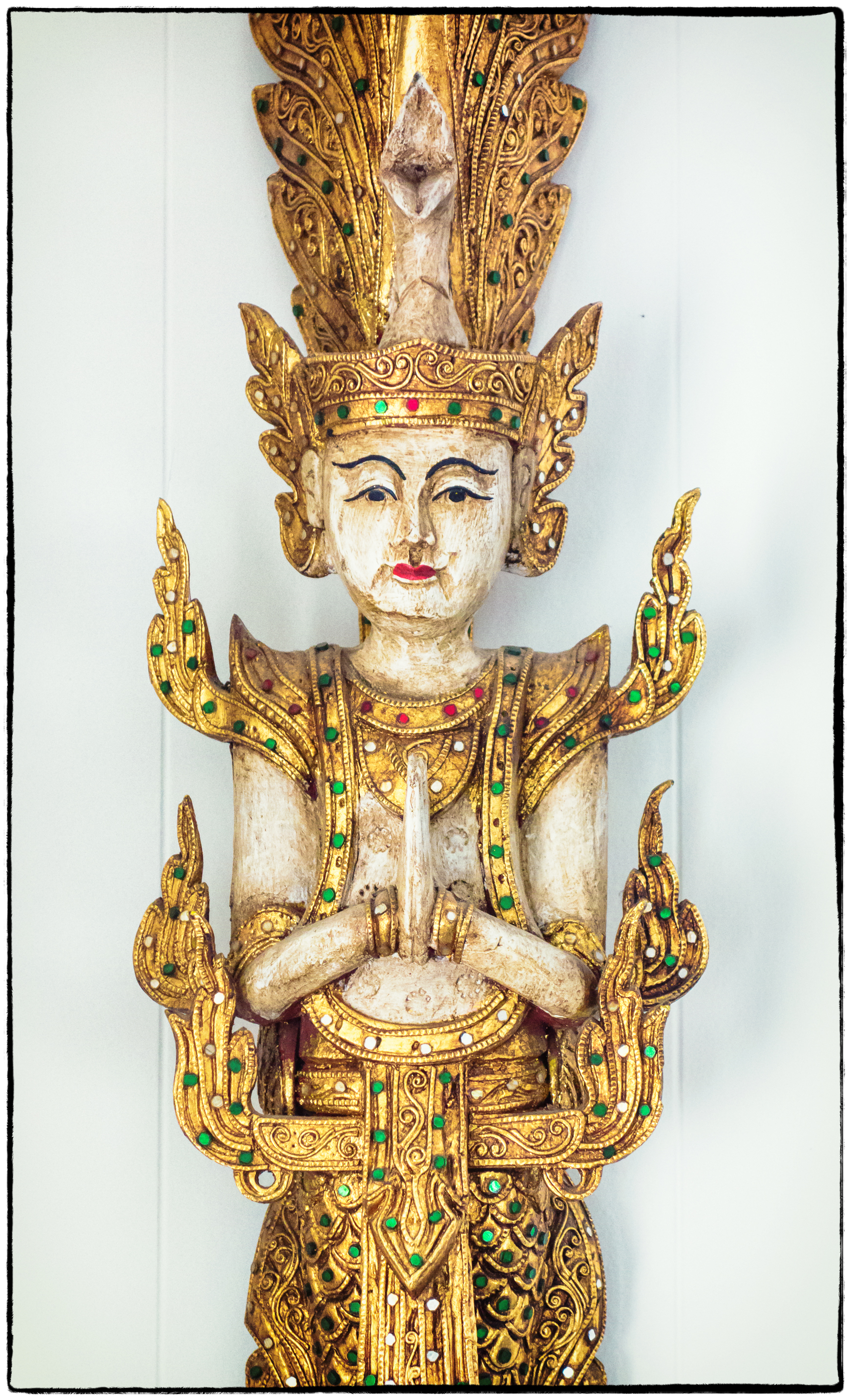
My wife and myself have been to Thailand many times. The statuette above was bought at a market outside of Bangkok and hangs on our living room wall. There’s a story behind it (and it’s later twin) but this post’s already long enough so I’ll keep it for another time.

Fujica 35-ML

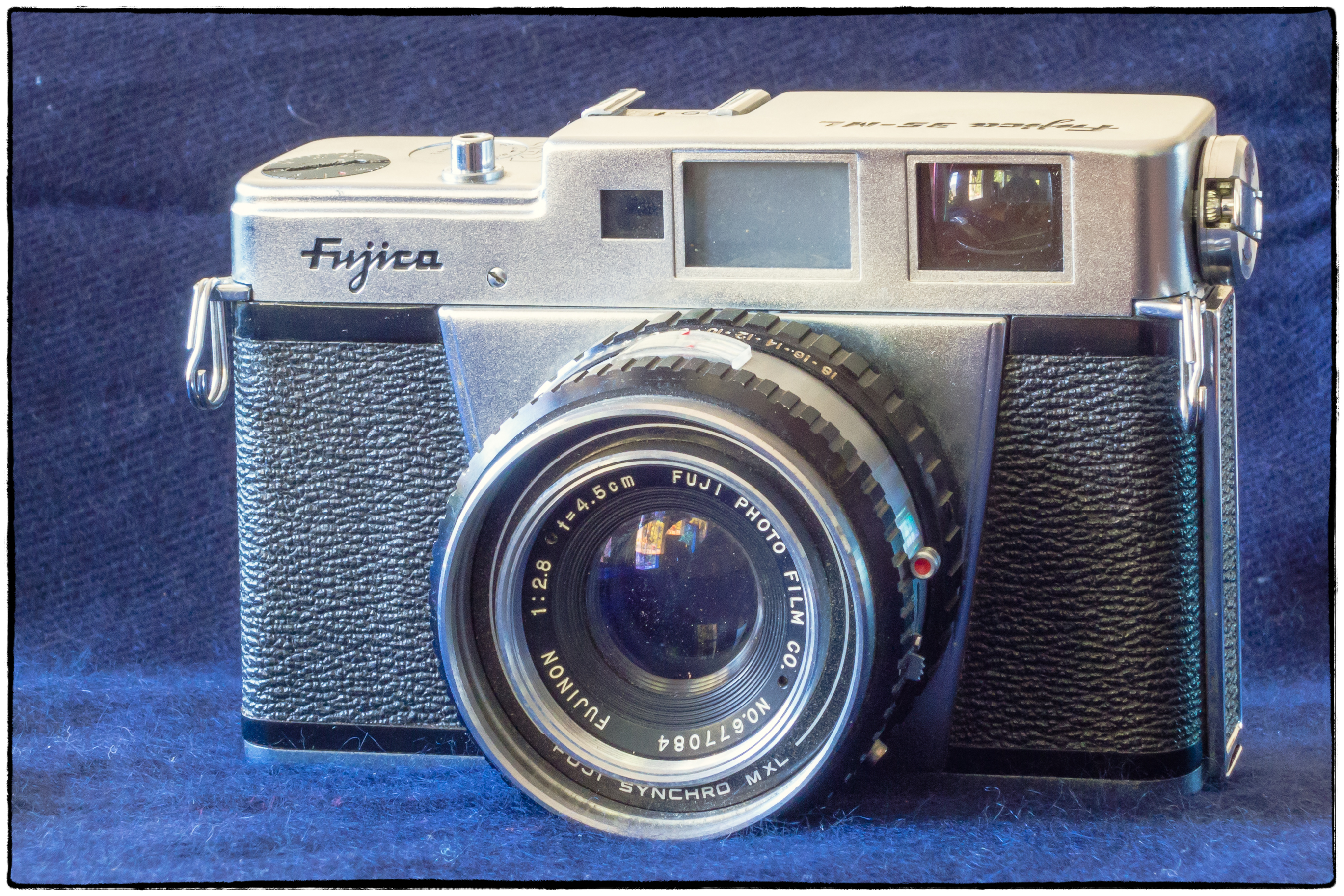
A few years ago I began my camera collection. After getting a couple of rangefinder cameras I started to browse the internet to see what others I might find and bumped into this post on photo.net: The Final Fujica’s Film. I liked the look of the camera and was somewhat taken by the images provided. Time went by and I would occasionally see one for sale, but until now I hadn’t actually gotten around to acquiring one. Recently, however, I saw this one. It was quite inexpensive and looked to be in fairly good condition. So I purchased it.

According to Sylvain Halgand’s wonderful site:

This camera has a coupled rangefinder and a parallax correction. An ultra-bright orange framing view is visible in the viewfinder and moves accordingly to the setting of distance. This setting is a first surprise because the setting is not made by turning a ring around the lens, but by turning a knob located where there is most often a film advance lever, it means under the right thumb. Distances are displayed by a rotating plate, located on the cover of the camera (near the frame counter) also serving as depth of field chart.

Accordingly, the film advance lever is below the camera without doubt in order to leave a body cover as flat as possible; the rewind crank is located on the side, such as a Leica.

The shutter speed and aperture settings are made by turning the two rings around the lens. A small window on the top of the lens displays the selected values. The values are combined using EV (exposure value).

The shutter allows shutter speeds from 1 second to 1/500 per sec, plus B. It has a self-timer, and M sync and X sync.

The lens is a Fujinon 45mm/2.8 with 5 elements.

In 1959, this camera was sold in the United States, § 69.95.

I was a little disappointed when it arrived. I’d bought it from a reputable dealer, from whom I’d bought a number of cameras in the past and with whom I’d always been satisfied. The camera was described as working and came with a decent warranty. However, when I examined it I noticed that in fact it wasn’t working – the shutter was stuck. I could have returned it under the warranty, but I’d paid so little for it I couldn’t be bothered. I’ve always had a yen to try fixing these older cameras. I’ve got to start somewhere. Maybe with this one?

And even if I never get it to work – so what! It still makes a decent display piece.