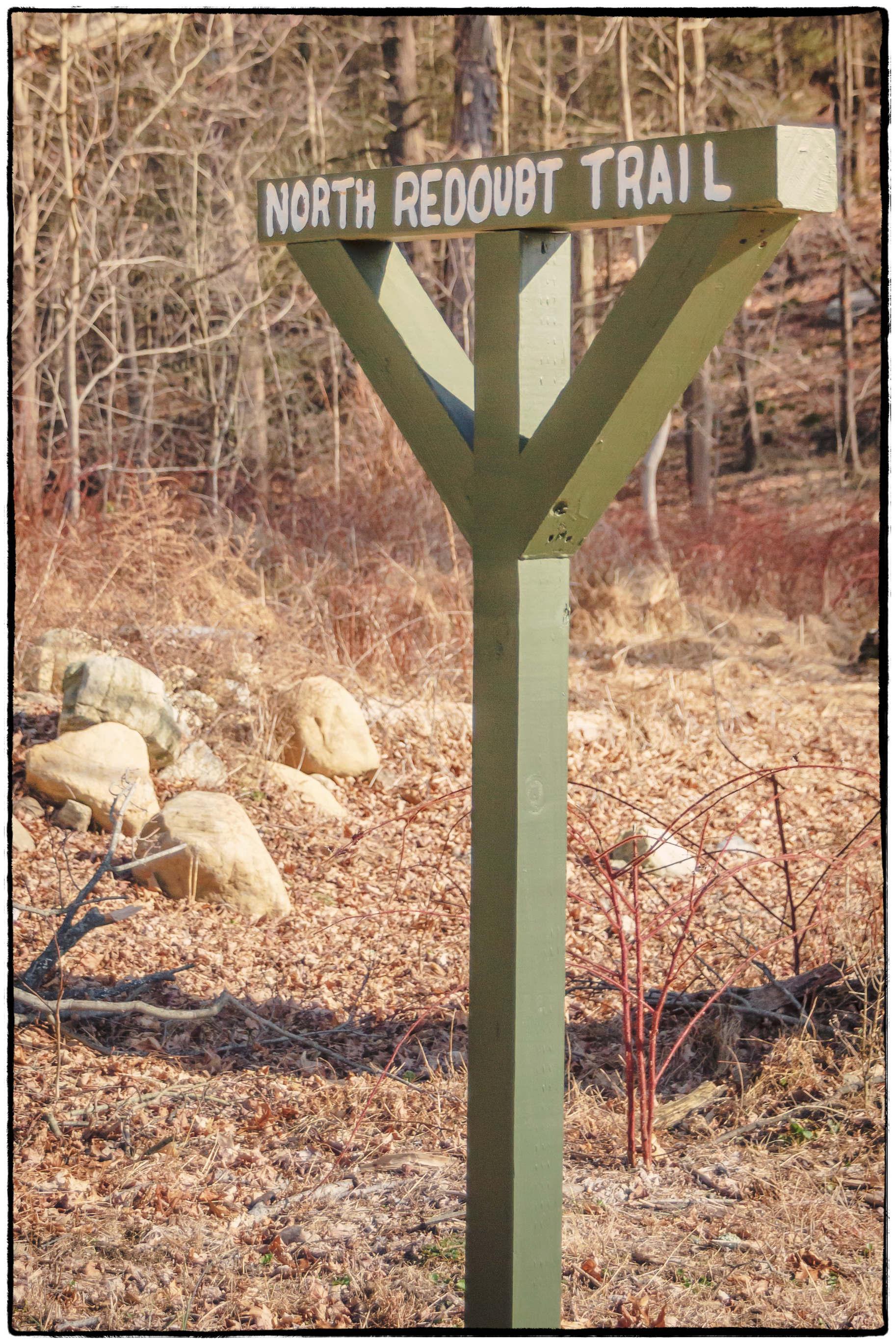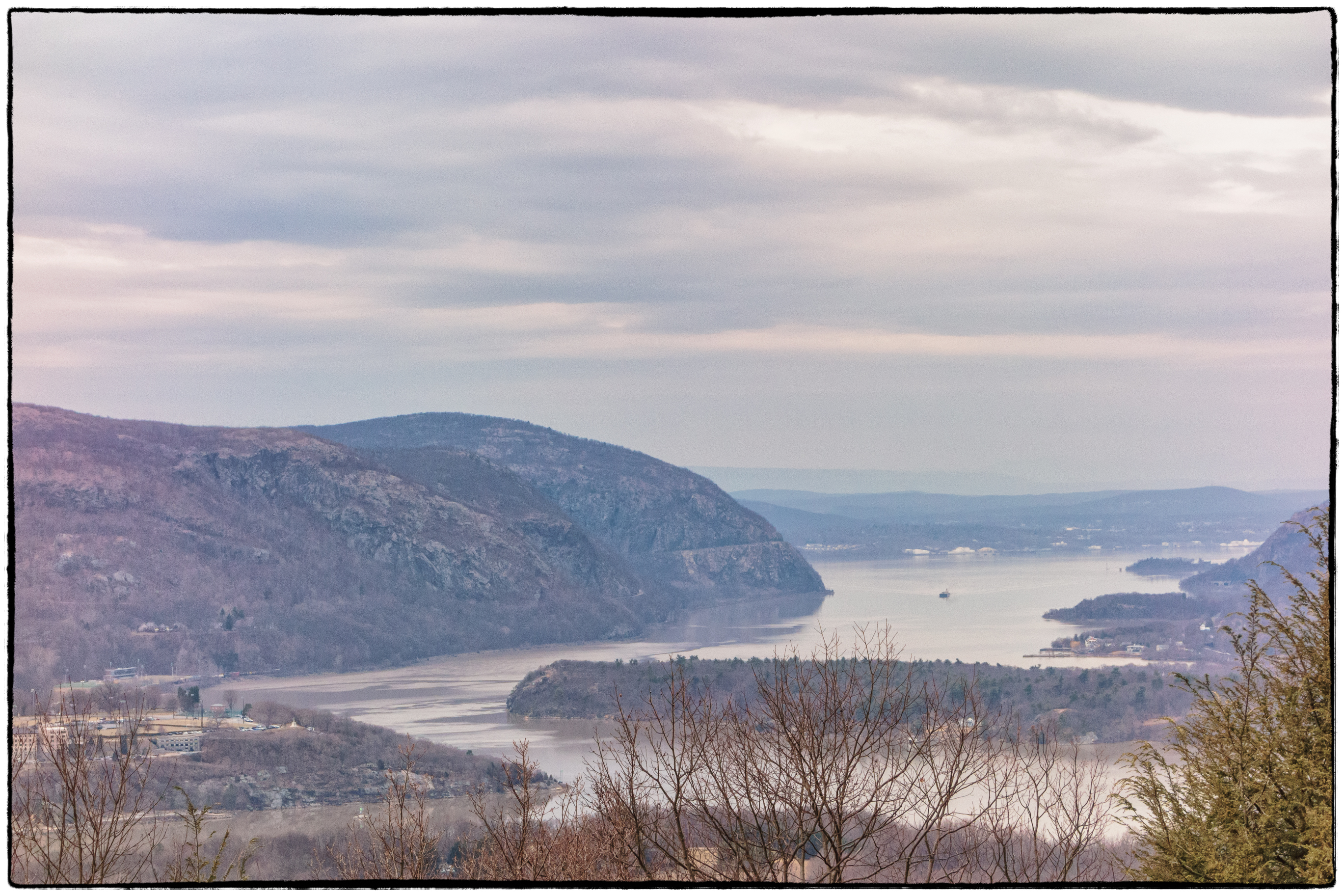
I’ve already mentioned that I went to the North Redoubt, but turned back before I reached the South Redoubt. Today I went back. It was a warm day (mid 60sF) and when we reached the top there was a strange kind of brownish haze across the river. The views from the South Redoubt are less obstructed by trees and apart from the usual grass covered mounds, the foundations of an old tower add interest. I was especially attracted to some of the history attached to the South Redbout – particularly since it involves one of my favorite Revolutionary War personalities: Benedict Arnold.
According to an information board situated at the South Redoubt:
Fortress West Point, a system of Revolutionary War fortifications in the Hudson Highlands, was constructed in response to the concern that the British seizure of the Hudson River-Lake Chaplain waterway to Canada would split the colonies and facilitate a British victory. The defenses were designed to delay a British naval or land force until Continental Army and militia reinforcements could arrive in the Highlands.
Fortress West Point took shape in 1778-79 on both sides of the Hudson River as a stair-stepped series of forts and redoubts, all focusing downward on Fort Arnold on West Point itself. The fortifications, 16 enclosed positions and 10 major battery sites in three rings were mathematically linked by overlapping artillery ranges and outwardly increasing elevations, using the hilly terrain to defeat attack. Fort Arnold (later named Fort Clinton) guarded the massive chain and boom installed on April 30, 1778 to prevent the passage of British warships between West Point and Constitution Island.
The outermost ring of eastern fortifications, consisting of the North and South Redoubts, was begun by order of General Washington to his Chief Engineer, Brigadier General Duportail, in July 1779. It was completed before the end of that year by two French volunteers in the Continental Corps of Engineers, Lieutenant Colonel Jean Baptiste Gouvion and Captain Etienne Bechet de Rochefontaine (Originally, three eastern redoubts, North, Middle and Sugar Loaf, all named by General William Heath, were planned, but when Sugar Loaf was never developed as an enclosed redoubt with exterior batteries, Middle became South). The South Redoubt was designed to delay or stop the advance toward West Point of a British land force approaching from the east along the road from Continental Village or from the south across the narrow plain between the Hudson River and this mountain range. It was also intended to command the North Redoubt 220 feet lower in elevation, in the event that it were taken by the enemy in a flanking attack.
George Washington, Benedict Arnold and the South Redoubt
On August 5, 1780, Major General Benedict Arnold took command of West Point and its dependencies, which embraced both sides of the river from Dobbs Ferry in the south the Fishkill in the north. As had the majority of West Point commandants Arnold made his headquarters on the east side of the Hudson River at the Robinson House, confiscated from its owner, Beverly Robinson. Arnold, wounded twice in the same leg leading attacks on Quebec City in 1775 and on Breymann’s Redoubt at Saratoga in 1777, had served as military governor of Philadelphia from 1778 to 1780. Secretly estranged from the Revolutionary cause by his long battles with personal enemies in Congress and by his resentment of the French alliance, Arnold assumed his command of West Point with one mission in mind: its treasonous delivery to the British.
After many clandestine negotiations, British General Henry Clinton and Arnold agreed on 20,000 pounds as payment for turning over West Point to the Crown. On September 21, 1780, Arnold gave Andre vital details of Fortress West Point’s defenses, including details of the guns and men at the North and South Redoubts. On the morning of September 22, Andre’s planned escapte with this critical information was thwarted when Americans under Lieutenant Colonel James Livingston opened fire on the HMS Vulture, which retreated down the Hudson out of range of both cannon shot and Andre.
Arnold gave Andre letters of safe conduct through the American lines to New York City, held by the British. Andre fatally dressed in civilian clothes rather than his officer’s uniform, rode overland for the British lines with Arnold’s notes in his boot. On Saturday, September 23, Andre was captured and the notes found and word was sent to the commanding general of the district, Benedict Arnold.
South Redoubt, September 25, 1780
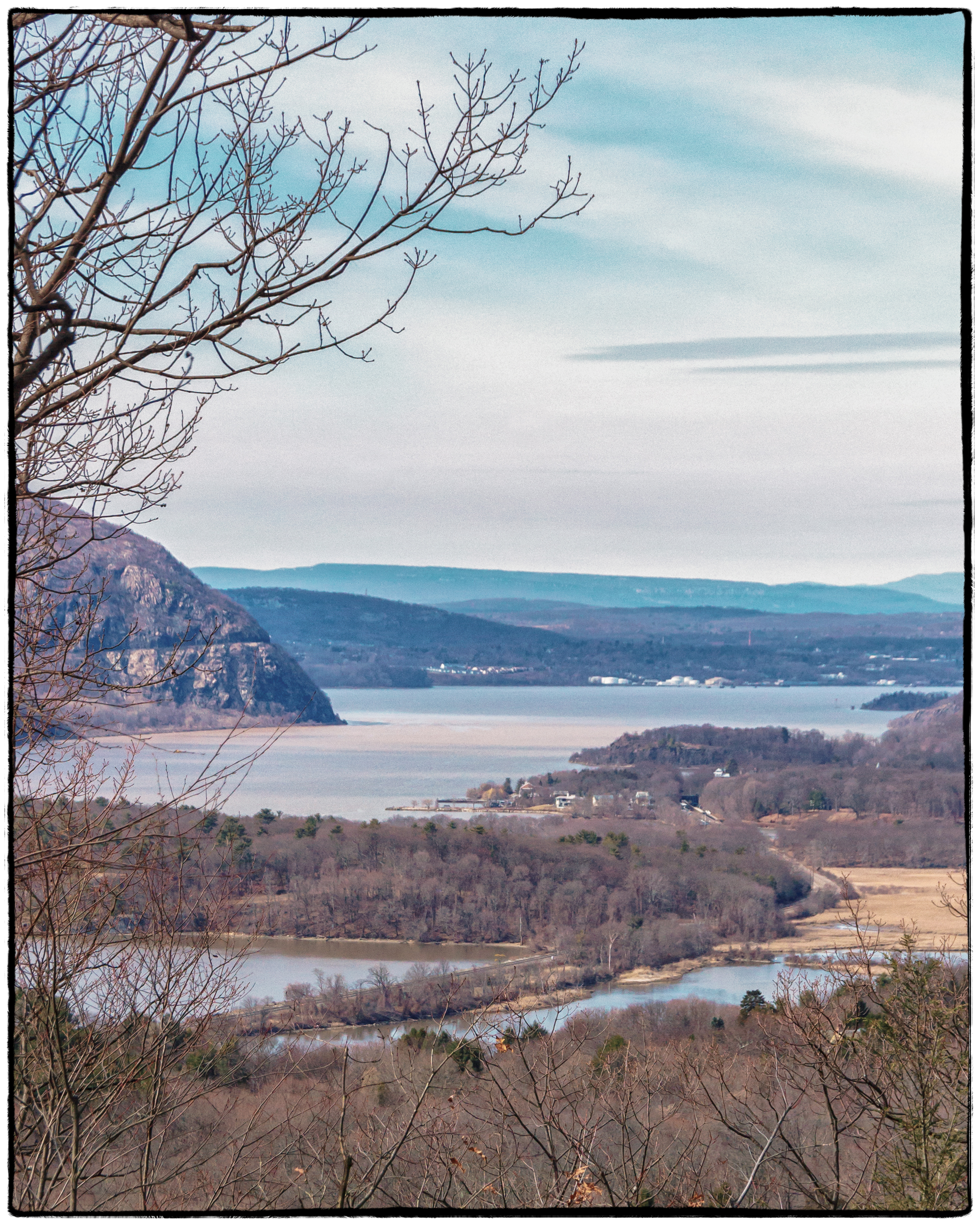
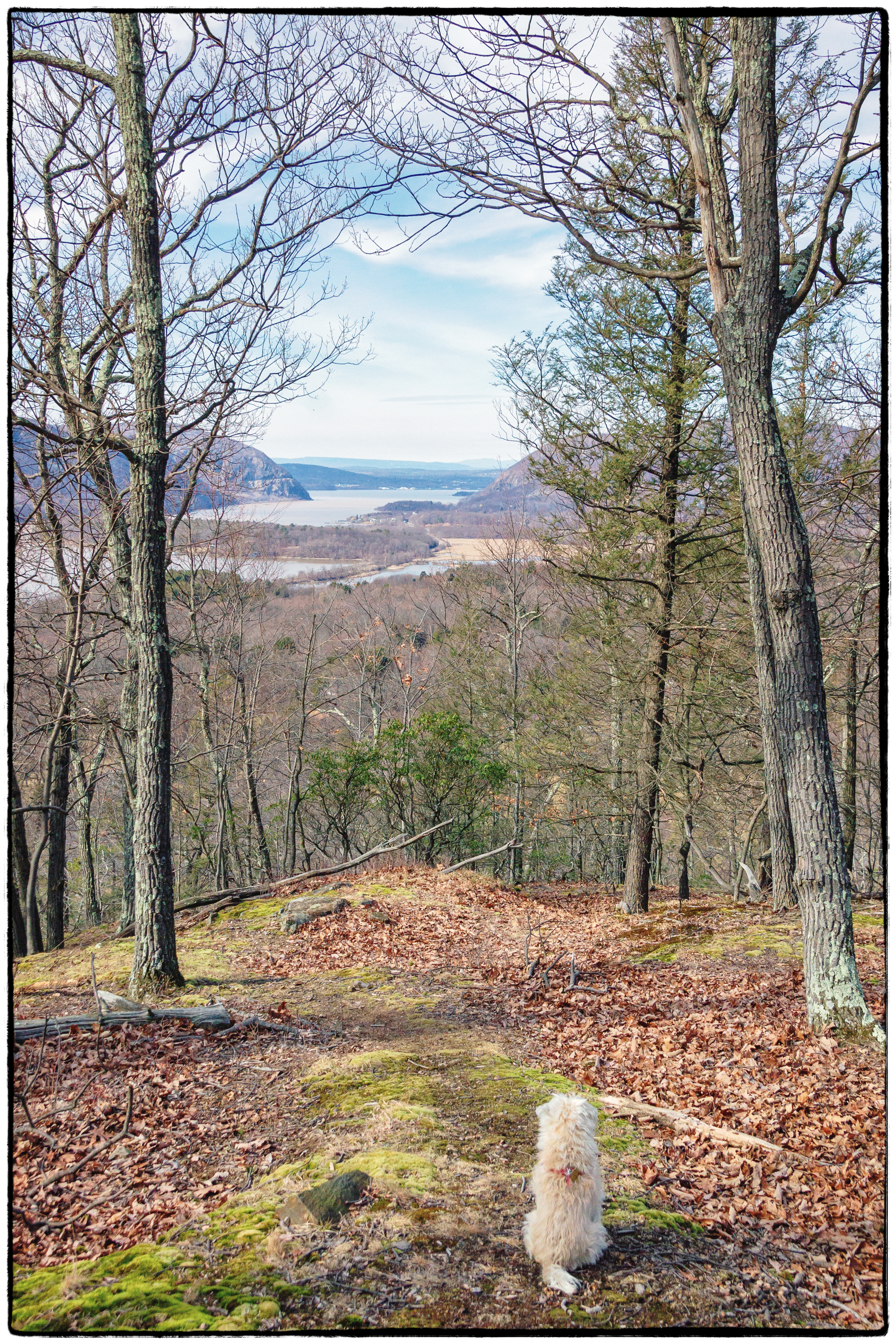
General Washington, returning from a meeting with General Rochambeau, had spent the night of September 24 in Fishkill with Generals Knox and Lafayette. Accompanied by Washingtons’s life guard, the group was riding south on the morning of September 25 to meet Arnold at the Robinson house and tour the fortifications at West Point. Sending aides ahead to announce a delay in arrival, Washington turned aside to inspect the eastern fortifications at North and South Redoubts. Just as Arnold was receiving the news of Andre’s capture, Washington was looking out over this very view from South Redoubt.
Washington arrived at the Robinson house too late to catch Arnold, who had already fled to join the British. Major Andres was hanged as a spy at Tappan on October 2, 1780.
The American Revolution was essentially won when British General Cornwallis surrendered at Yorktown, Virginian on October 19, 1781. Peace was declared at West Point on April 19, 1783, and the Treaty of Paris was signed on September 3, 1783.
Although the men stationed at the South Redoubt never saw combat here, their presence helped deter the British from splitting the colonies and played a part in the ultimate American victory.
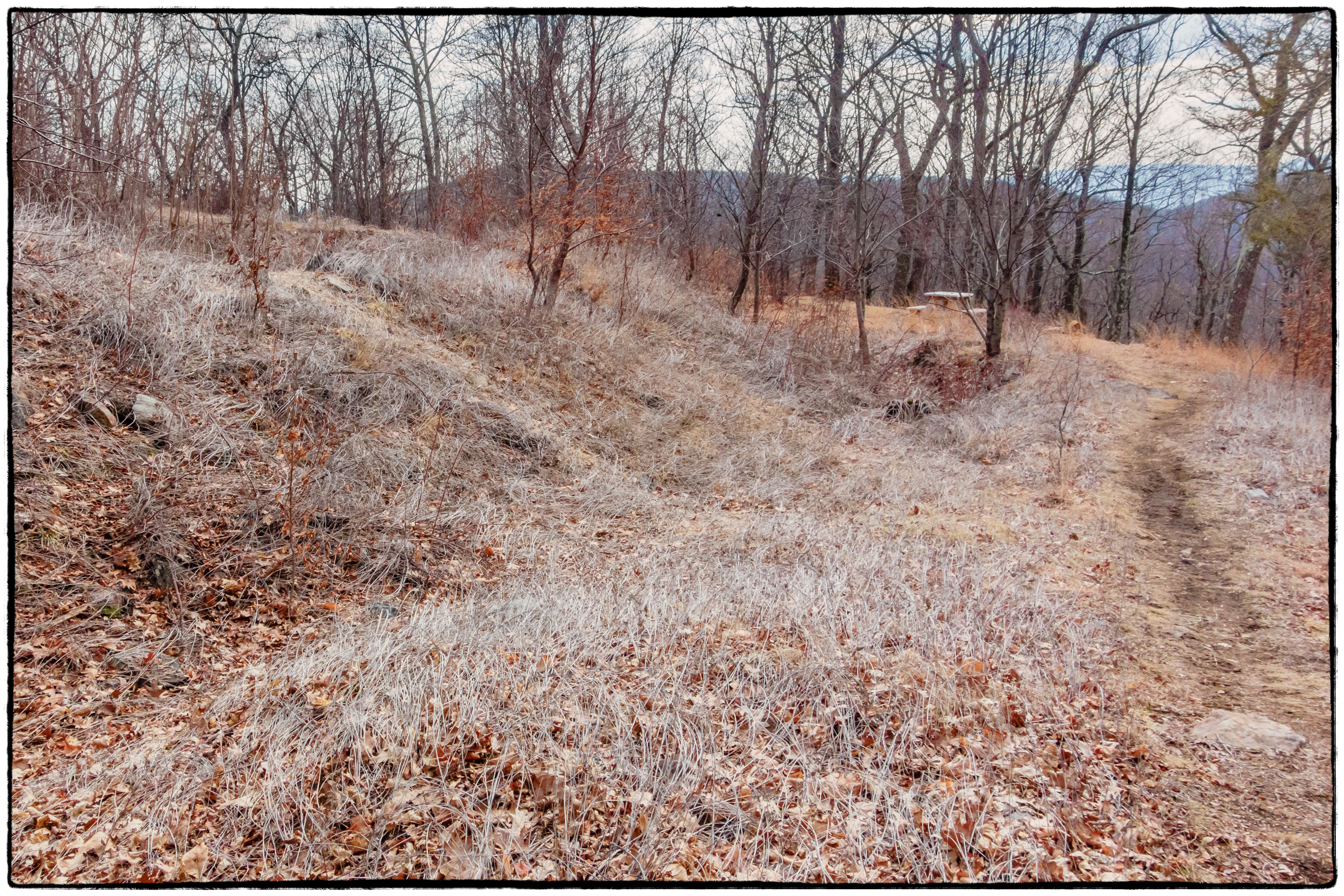
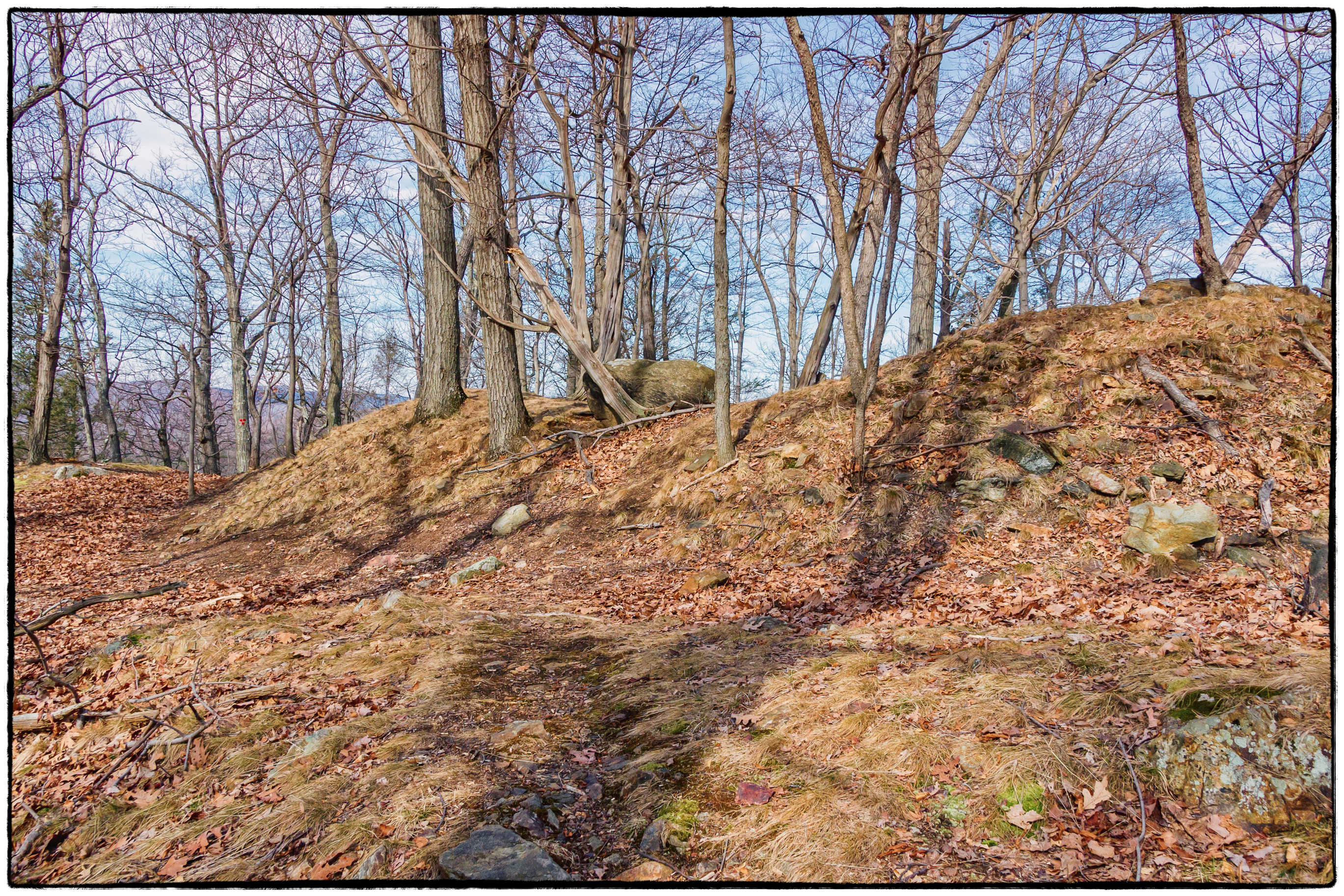
All that remains of the South Redoubt – grassy mounds.
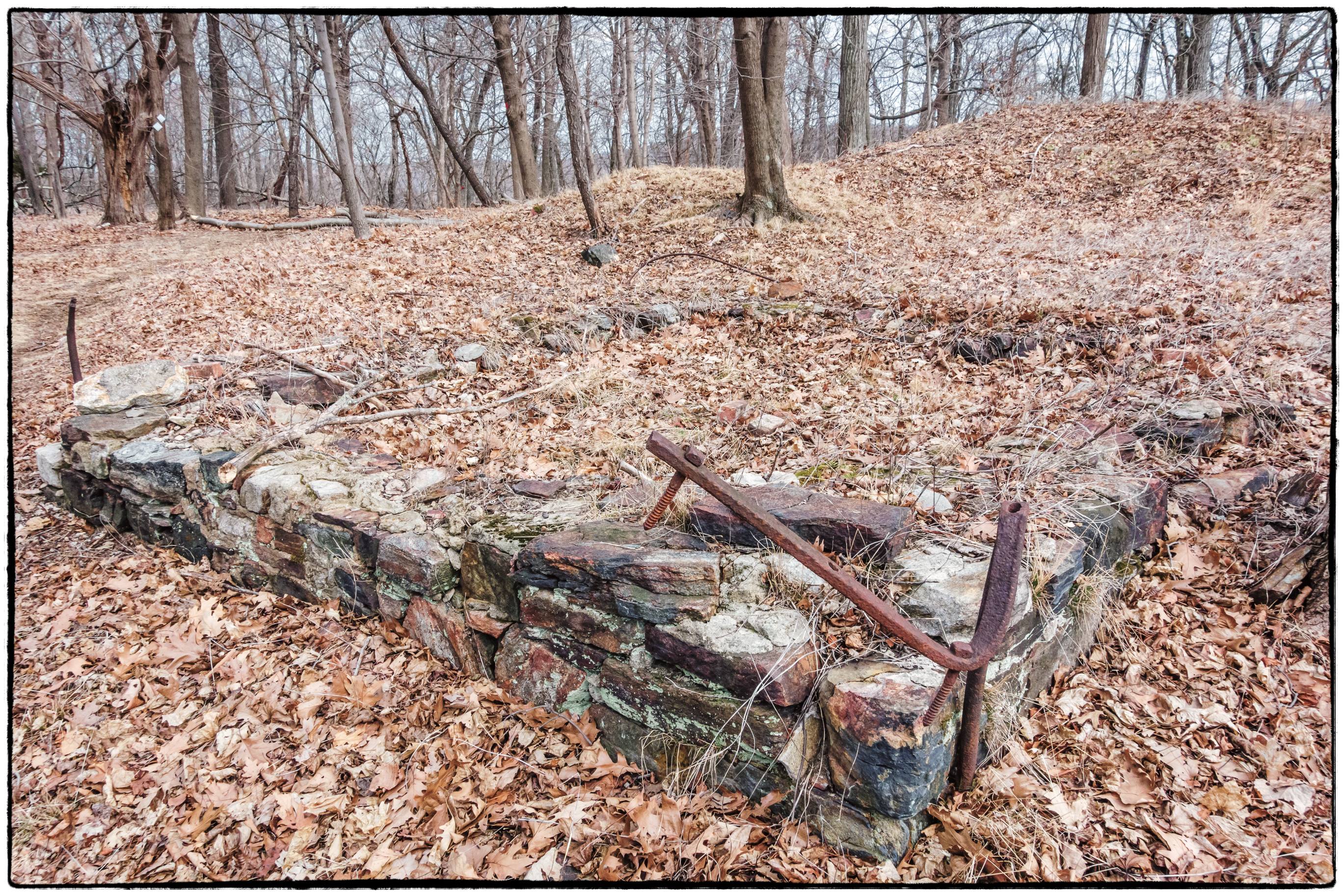
Remains of the foundations of Sloan’s observation tower. The same information board mentioned above states:
For 90 years from 1863 until 1956, the South Redoubt was part of an estate owned by Samuel Sloan and his children and grandchildren. Sloan was born in Lisburn, near Belfast, Ireland, on December 25, 1817 and came to the United States as an infant. First a clerk, then a merchant he was supervisor of King’s County in 1850-1851 and later a state senator from 1858 to 1859. A friend and colleague of J.P. Morgan, he was president of the Hudson River Railroad from 1855 to 1862 and was later president of the Delaware, Lackawanna and Western Railroad Company as well as many other local New York Sate railroads.
Sloan’s interest in the Highlands grew from his concern for the health of his children; two had died very young, and he believed in the beneficial effects of the Highlands air. In 1862, he bought a farm on Garrison’s River Road, later Route 9D and lived in the existing farmhouse while building a large Italianate hillside villa. Oulagisket, as he called it, was finished in 1864 (the name of the house was later changed to Lisburne Grange by his son, Samuel Sloan Jr.). Sloan also bought more property and built many houses for his adult children around the base of what became known as Sloan Mountain. A road to the South redoubt at its summit, as well as an observation tower was built in 1881-1882.
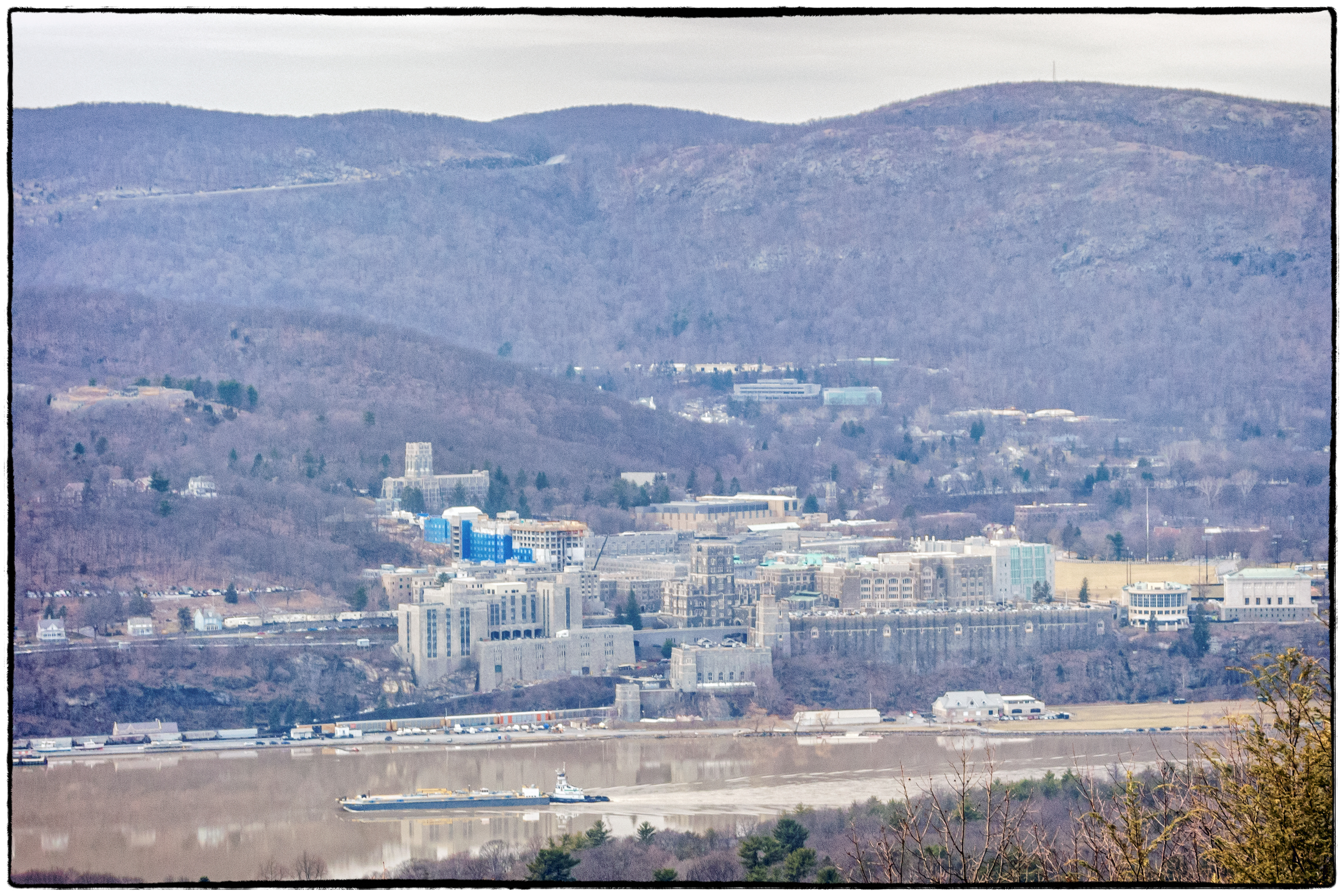
View of present day West Point from the South Redoubt.
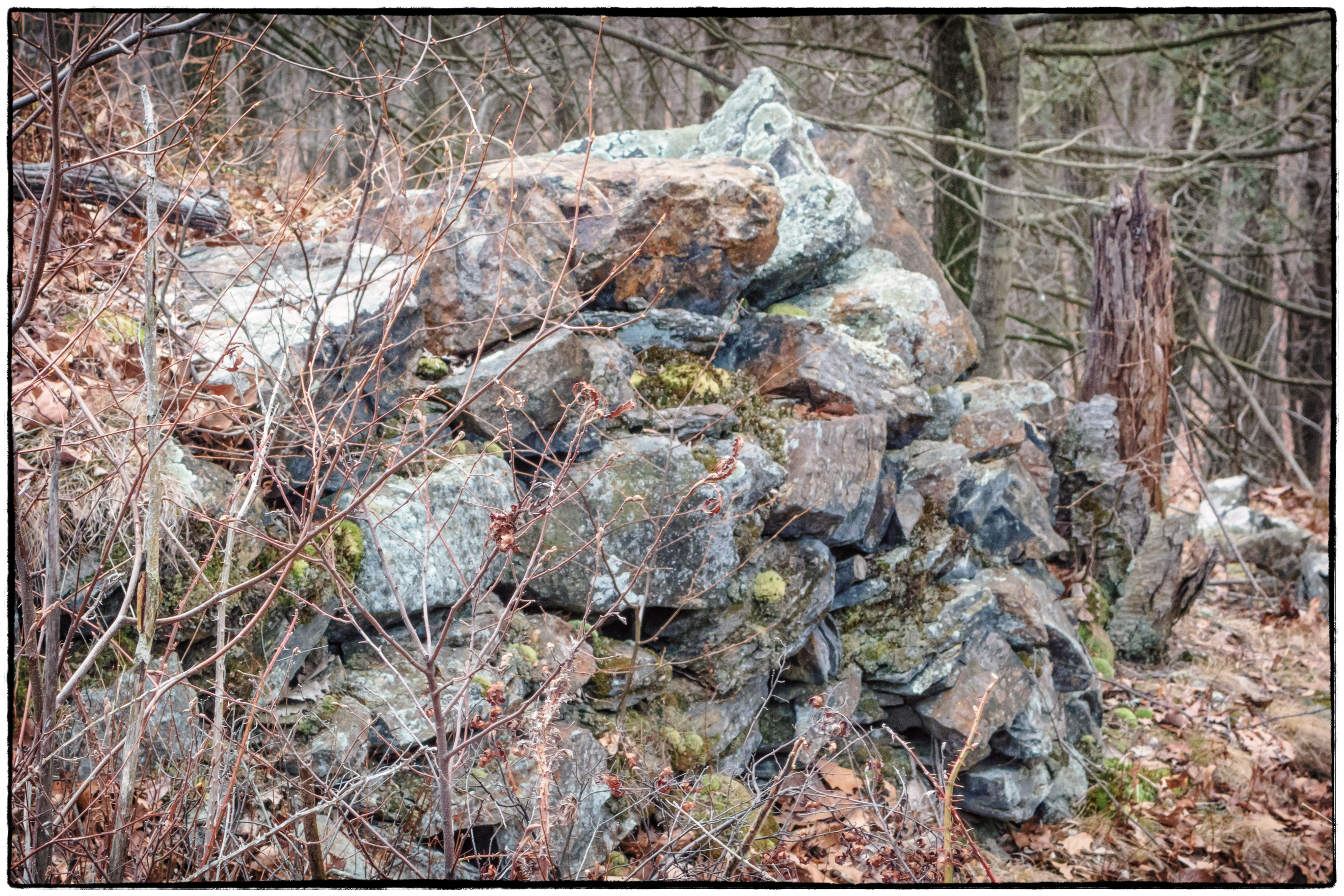
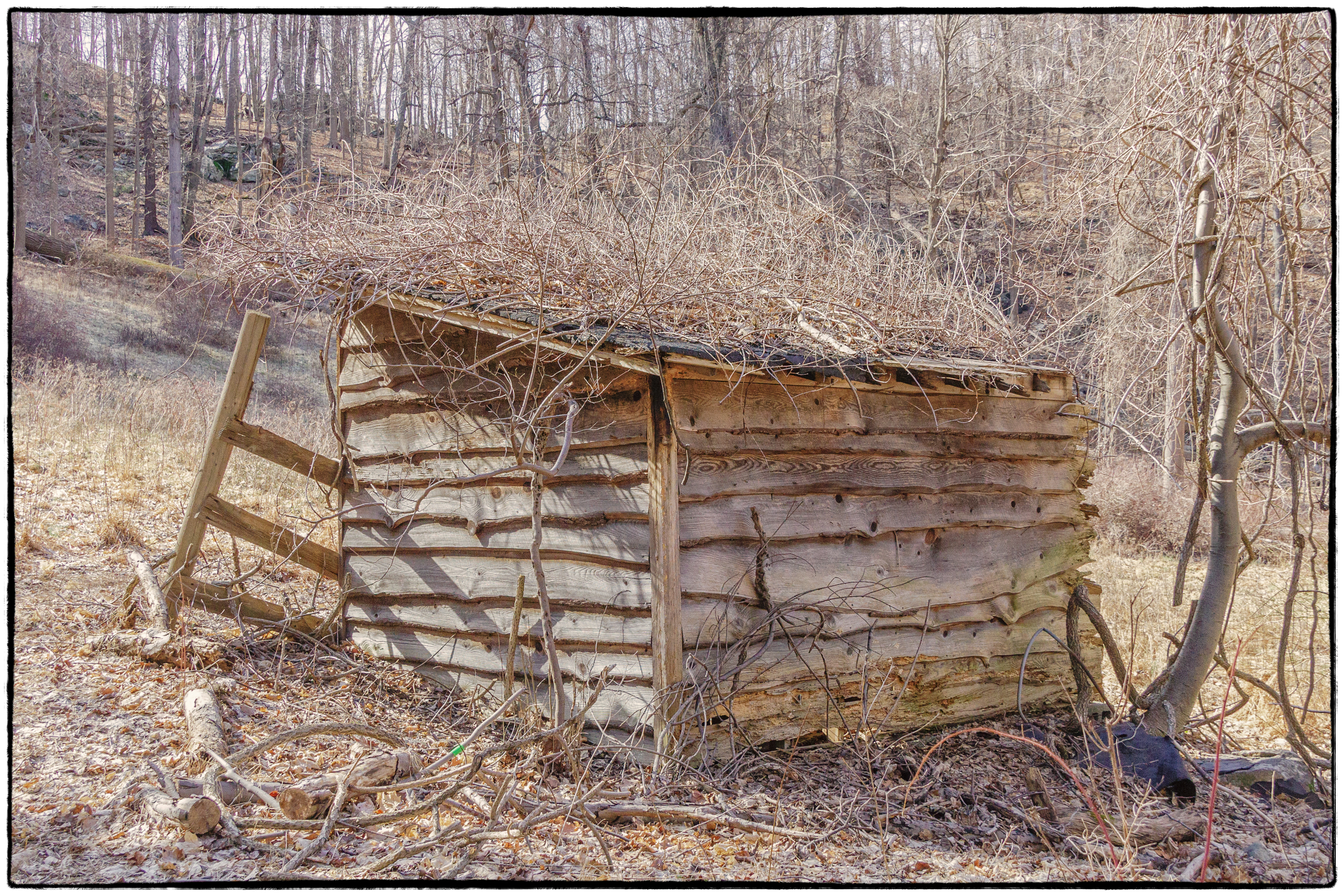
Remains of one of the batteries (I think). Somewhat out of focus. The focus locked onto the small twigs in the foreground rather than on the rocks as I’d intended. Is this because I wasn’t paying enough attention, or just that because of my deteriorating eyesight I just didn’t see them. Maybe both. In any case I’ll have to be more vigilant as this has happened to me before.