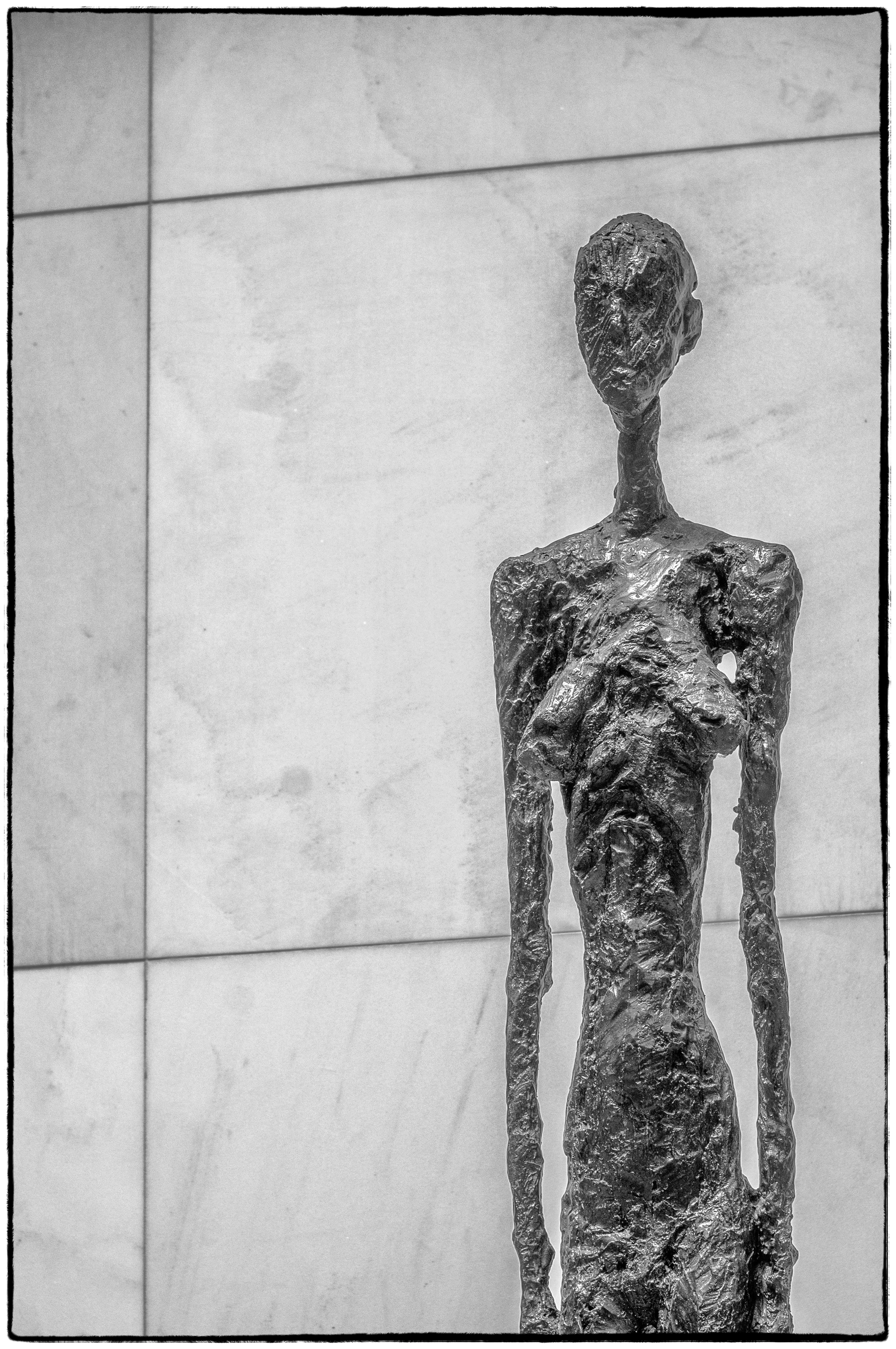
Taken August 2012 at the Museum of Modern Art in New York City. It’s certainly by Alberto Giacometti, but I’m not entirely sure what it’s called. I believe it’s Tall Figure III.
Photographs and thoughts on photography and camera collecting

Taken August 2012 at the Museum of Modern Art in New York City. It’s certainly by Alberto Giacometti, but I’m not entirely sure what it’s called. I believe it’s Tall Figure III.
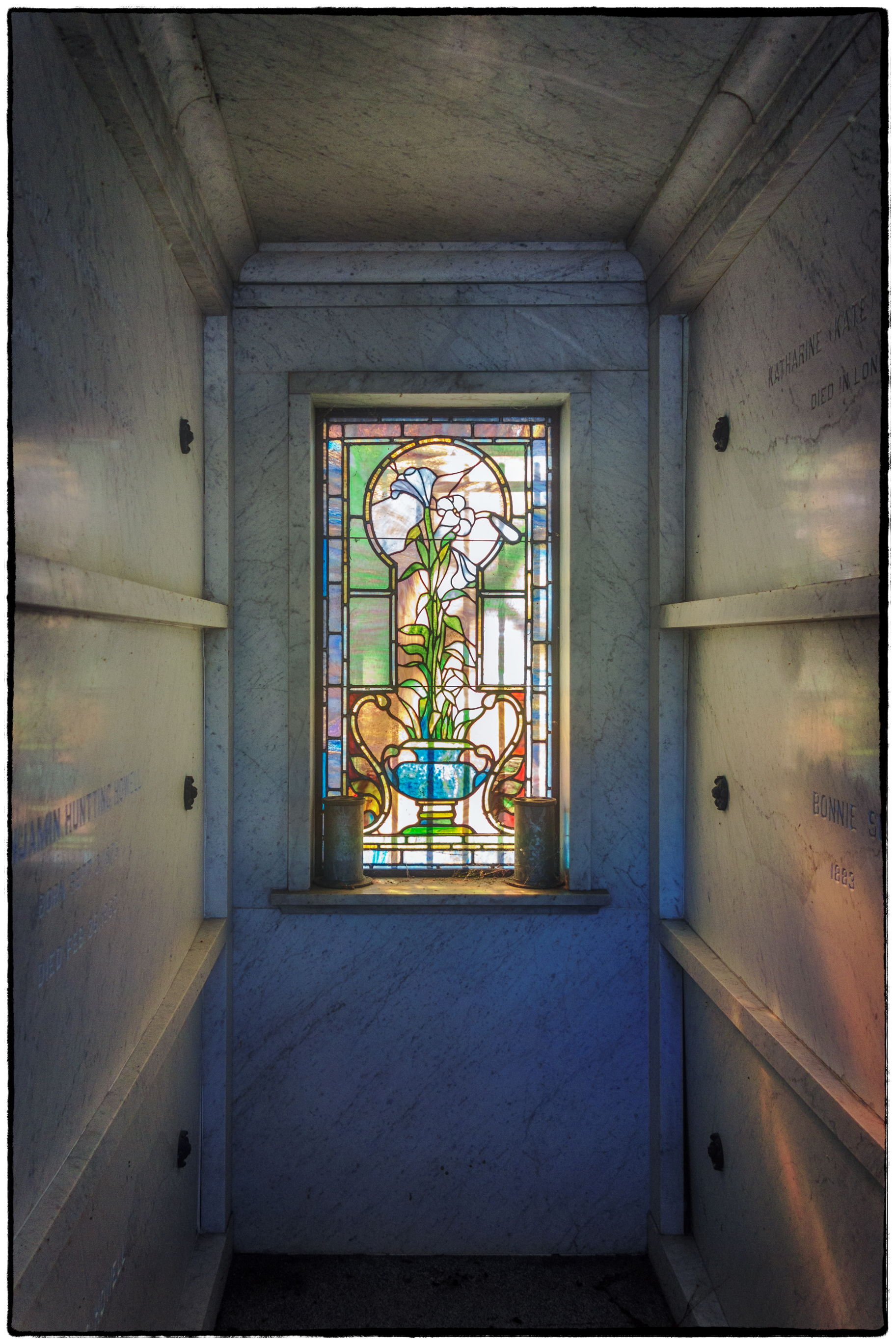
Another one from Sleepy Hollow Cemetery. I was walking the dog in the snow and I went behind this building. I noticed the stained glass window, which of course from the outside didn’t look too special. It occurred to me that if I went around to the front there might be a way of seeing into this mausoleum and getting the light shining through this window. Sure enough there was a entrance door with a couple of small windows. This is the view through one of the windows.
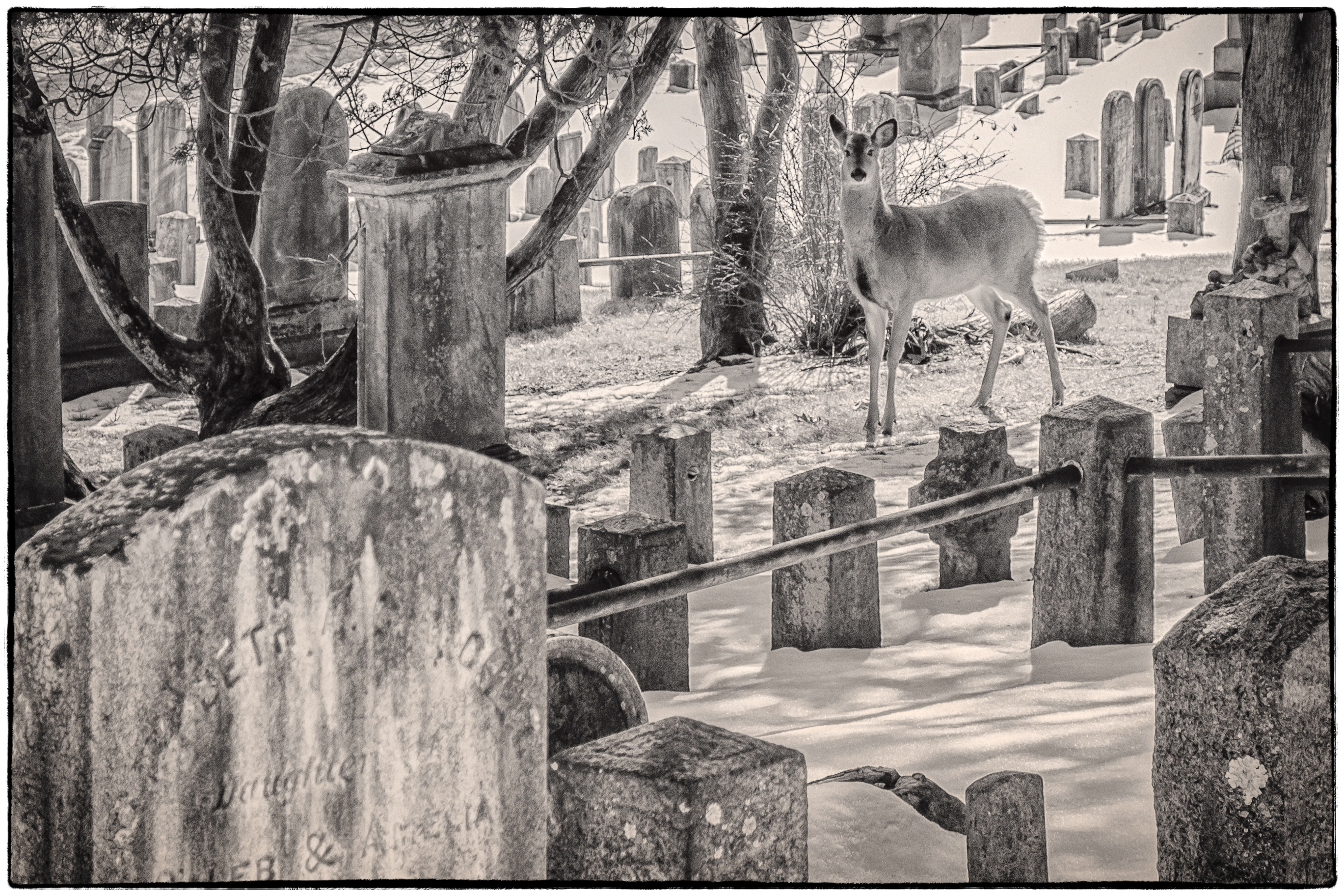
A while back I joined a Facebook group: The Hudson Valley in Pictures. One of the first pictures I posted got what seemed to me to be a very large number of “likes” (probably because the groups I usually belong too are much smaller than this one). This was pleasing. However, as I looked at the group more I noticed that while there are some extremely good pictures, there are also many that are quite mediocre – including some that got more “likes” than mine. This was a bit of a “downer” and I stopped posting to the group for a while. Recently I saw a picture of a few deer at the side of a road. It wasn’t particularly well exposed, or composed but it had a large number of “likes”. So I thought I’d post the color version of the above picture, a not too startling shot I’d taken at Sleepy Hollow Cemetery – just to see how it would do.
Now intellectually I know that the number of “likes” has little to do with the intrinsic worth of the photograph. However, as the notifications started coming in fast and furious I couldn’t help but feel my enthusiasm getting going. Would they keep going up? Would it surpass my previously best “liked” picture (it hasn’t done so far. After a fast start it seems to have stopped short of my record).
Silly isn’t it?

A Sleepy Hollow website describes the church as follows:
Founded around 1685, this is the church and churchyard that appear in Washington Irving’s short story “The Legend of Sleepy Hollow.” It is often confused with the adjacent but separate Sleepy Hollow Cemetery.
The church’s 3-acre burying ground is, of course, the purported haunt of the headless horseman, and also the resting place of local citizens who likely inspired Irving’s characters of Katrina Van Tassel, Brom Bones, and others in “The Legend of Sleepy Hollow.
More information can be found on Wikipedia.
I’ve taken pictures of the church before, but somehow was never happy with them. Somehow the angle wasn’t right. I’d never thought to go to the front of the church and walk a little north. I much prefer this angle.
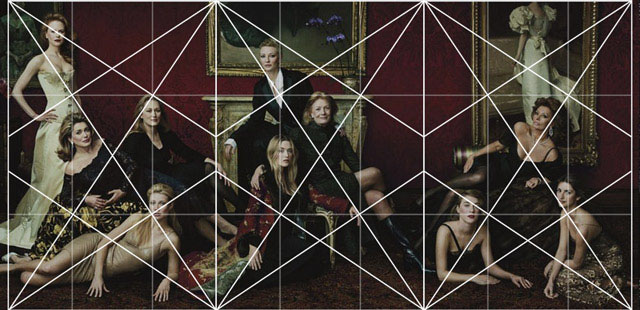
Source: 10 Myths About the Rule of Thirds. Photograph by Annie Leibovitz.
If what the the author of this post is trying to say is that there’s more to composition that blindly following the rule of thirds then I’d agree with him. I too have tended to over-rely on this rule. It’s a simple concept to follow and I believe can improve your photographs if you are just starting. The problem is, as the author suggests, that you for ever afterwards tend to see the world through rule of thirds gridlines and never get beyond that.
The difficulty I have with this article though is that the author attempts to replace the rule of thirds with yet another rule: dynamic symmetry, which seems infinitely more complex than the rule of thirds itself.
I would have thought that the message should have been “don’t rely on rules – they’re only suggestions” not “Ditch the rule of thirds and use DYNAMIC SYMMETRY”.
I very much agree with one of the comments: “Interesting article. One of the things i notice most is, if you draw enough lines everything is bound to line up with something.”
There is, indeed, more to composition that following rules. I’m still trying to understand what it is.
My name is Tavis Leaf Glover, and I’m an artist just like you, trying to create art that I can be proud of and share with the world. Though, something really hindered me in the beginning… the Rule of Thirds.
I want to shed some light on the Rule of Thirds Myths we’ve all been forcefully spoon fed during our creative infancy, which continues to linger as our compositions mature.
Perhaps we can change the future of art together if we help other artists abandon the rule of thirds and introduce them to the invaluable design techniques demonstrated throughout this article. I need your help because I can’t do it alone!
Like many other artists, I was brainwashed into thinking that the rule of thirds is an acceptable method of composing an image. I guess that depends on the standard of art you’d like to produce. Art at the Master Level, like Da Vinci, Bouguereau, Degas, Rubens, or art like a Sunday painter whose goal is to hang their painting in the local antique store… not the prestigious gallery or museum.