As mentioned in an earlier post, we recently went to a memorial service. While we were in the church I noticed this statue. I think that what attracted me was the light and the way that the statue almost seems to float.
Photographs and thoughts on photography and camera collecting

As mentioned in an earlier post, we recently went to a memorial service. While we were in the church I noticed this statue. I think that what attracted me was the light and the way that the statue almost seems to float.
Two posts on topics of interest to me: landscape photography and black & white photography recently caught my attention on Andrew Gibson’s blog:
The Power of the Black & White Landscape
How to Compose Black and White Landscapes.
To me the second of the two articles is the more interesting. Where the first merely encourages people to consider black and white as an alternative to color for landscapes, the second goes into much more detail about what makes a good black and white landscape photograph covering such topics as how to tell whether a photograph will work in black and white; using patterns, lines, shapes etc.; balance; tones; simplicity. Much of this is also applicable to color photography too, but here the author specifically discusses these issues in the context of black and white photoraphy.
As a bonus there are a number of spectacular black and white photographs in the two posts.
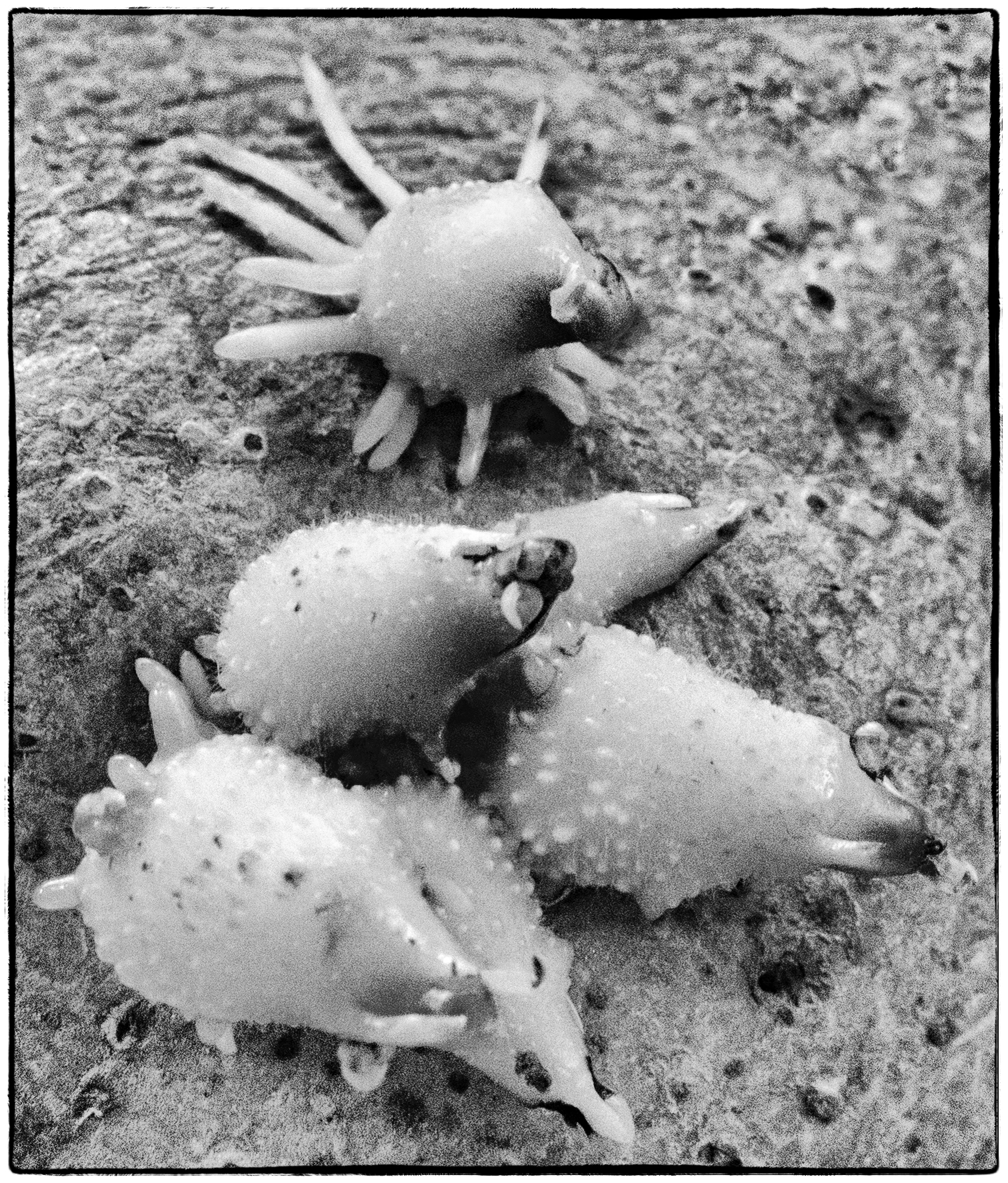
This is the 1000 post to this blog. The first post is dated 5 October 2011 and the 500th post is dated 28 December 2014. So it took me about three years to do the first 500 posts and a little over one year to do the second 500. Since my main objective in starting this blog was to make me keep taking pictures, I suppose I’ve been successful. In the 500th post I noted:
Sometimes I wonder if I’m just feeding the blog. Am I taking pictures just so that I can keep the blog up to date – i.e. am I just taking pictures for the sake of it rather than thinking through why I’m taking the picture? I also enjoy the post production part and from time to time wonder if I’m more of an ‘editor’ than I am a ‘photographer’. Am I just taking snapshots and then slightly improving them in post-production? Maybe time will tell.
I still have these concerns and I continue to search for a subject that I’m passionate about (I have yet to find one). All things considered I enjoy taking the pictures and maintaining this blog. It keeps my brain from ossifying and fills my time. So I see no reason not to continue with it.
Incidentally the picture above is of shoots on a potato. I saw it sitting on our kitchen counter and was struck by the strange forms – almost alien like.

When I added Glass, Brass & Chrome. The American 35m Camera by Kalton C. Laue and Joe A. Bailey to my Amazon wish list I didn’t have high expectations. The cover had a not terribly good black and white picture of a camera on it and somehow I got the impression that the whole thing was little more than a photocopy. As expected for a book on this subject there were few reviews. Still it was one of a relatively small number of books on camera collecting so I thought I’d put it on the list. Someone gave it to me as a Christmas present and I was pleasantly surprised to find that I really enjoyed it.
The first part provides an overall history of 35mm photography noting how at first many considered it to be a passing fad that would never replace larger negatives. Different types of lenses, coatings, shutters, rangefinders are described. The evolution of film, in its different formats (at first not standardized), from black and white to color is covered as is the development and growth of flash photography. A chapter is devoted to meters and the final chapter in this part covers development, printing and projection of 35mm film.
The second, longer part, describes each of the major 35mm camera manufacturers and their products with chapters devoted to Argus, Universal, Kodak, Perfex, Bolsey, Kardon, and Bell & Howell. A number of less successful cameras (Clarus, Vokar, Zephyr, Detrola, Spartus, Winpro etc.) are grouped together in a chapter entitled “Has-beens and never weres”. A chapter is also devoted to 35mm stereo cameras. The book concludes with a chapter dealing with Kodak Instamatic cameras.
The book was first published in 1972 and then was re-issued in 2002. There are many useful black and white illustrations. I found the book to be easy to read and free from a lot of the technical jargon that seems to infect books of this type.
One of the things that struck me was the author’s absolute certainty that the Kodak Instamatic System was the format of the future and that the standard 35mm cartridge was a thing of the past. Interestingly despite the advent of digital photography the 35mm cartridge is still with us in 2016 while the last Kodak Instamatic camera was sold in 1988 and 126 film was discontinued in 2006.

It’s a little depressing around here at the moment. Usually by this time we have a fair bit of snow. I’m not all that fond of snow but it does at least make the place look picturesque. At the moment there are just a lot of bare trees. I was therefore surprised to find that one of our neighbors had hung this candy cane on a tree adding a splash of color to the otherwise monochromatic scenery. With the camera I had with me I wasn’t able to blur the background as much as I would have liked and the twigs and branches are more than a little distracting. The fact that you can see them does, however, emphasize the contrast between them and the bright colors of the candy cane.