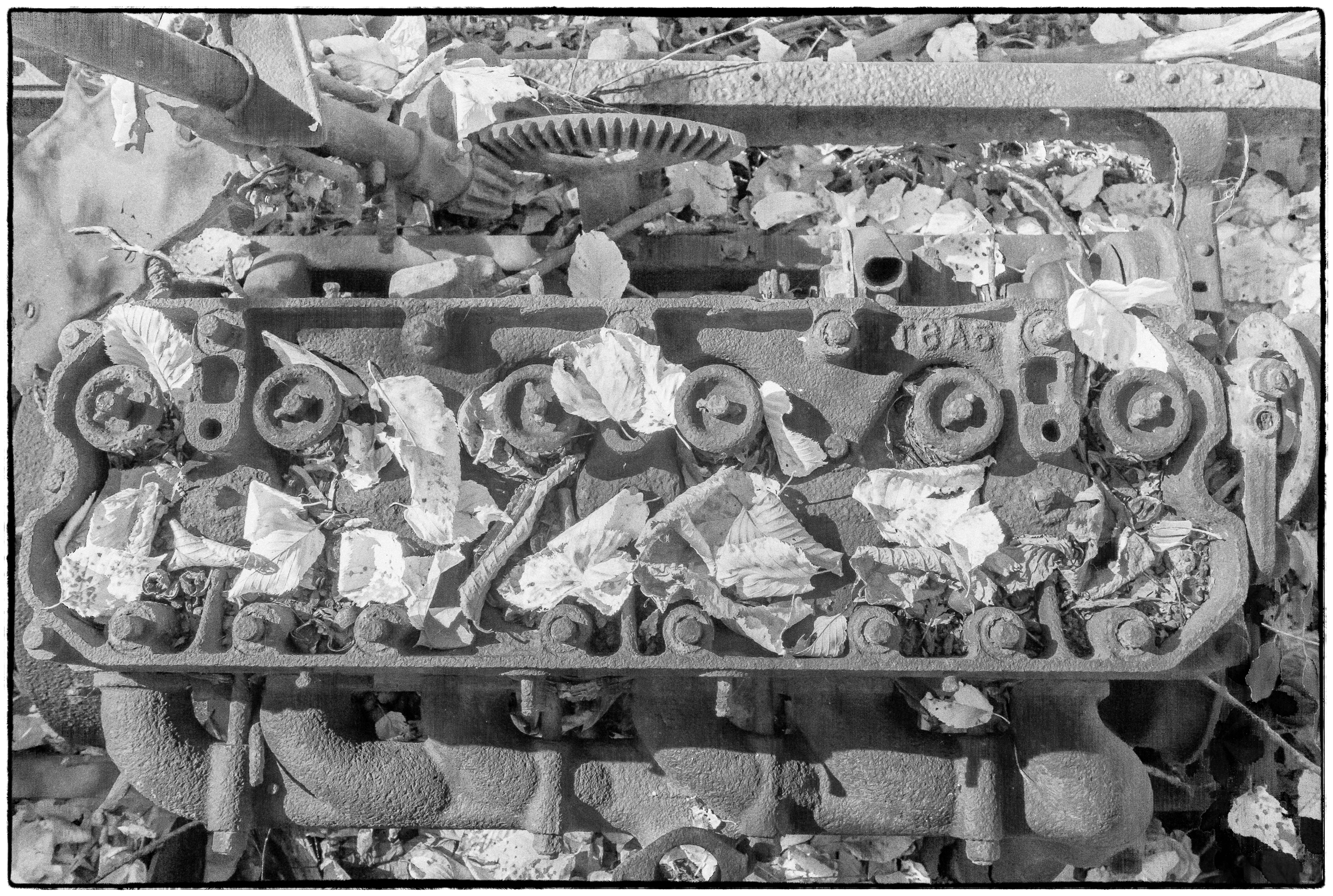
In an earlier post (see: Down the Roaring Brook Trail) I mentioned coming across an old, abandoned vehicle in the woods. Here are some more pictures of that same vehicle, this time showing closer in detail.


Photographs and thoughts on photography and camera collecting

In an earlier post (see: Down the Roaring Brook Trail) I mentioned coming across an old, abandoned vehicle in the woods. Here are some more pictures of that same vehicle, this time showing closer in detail.
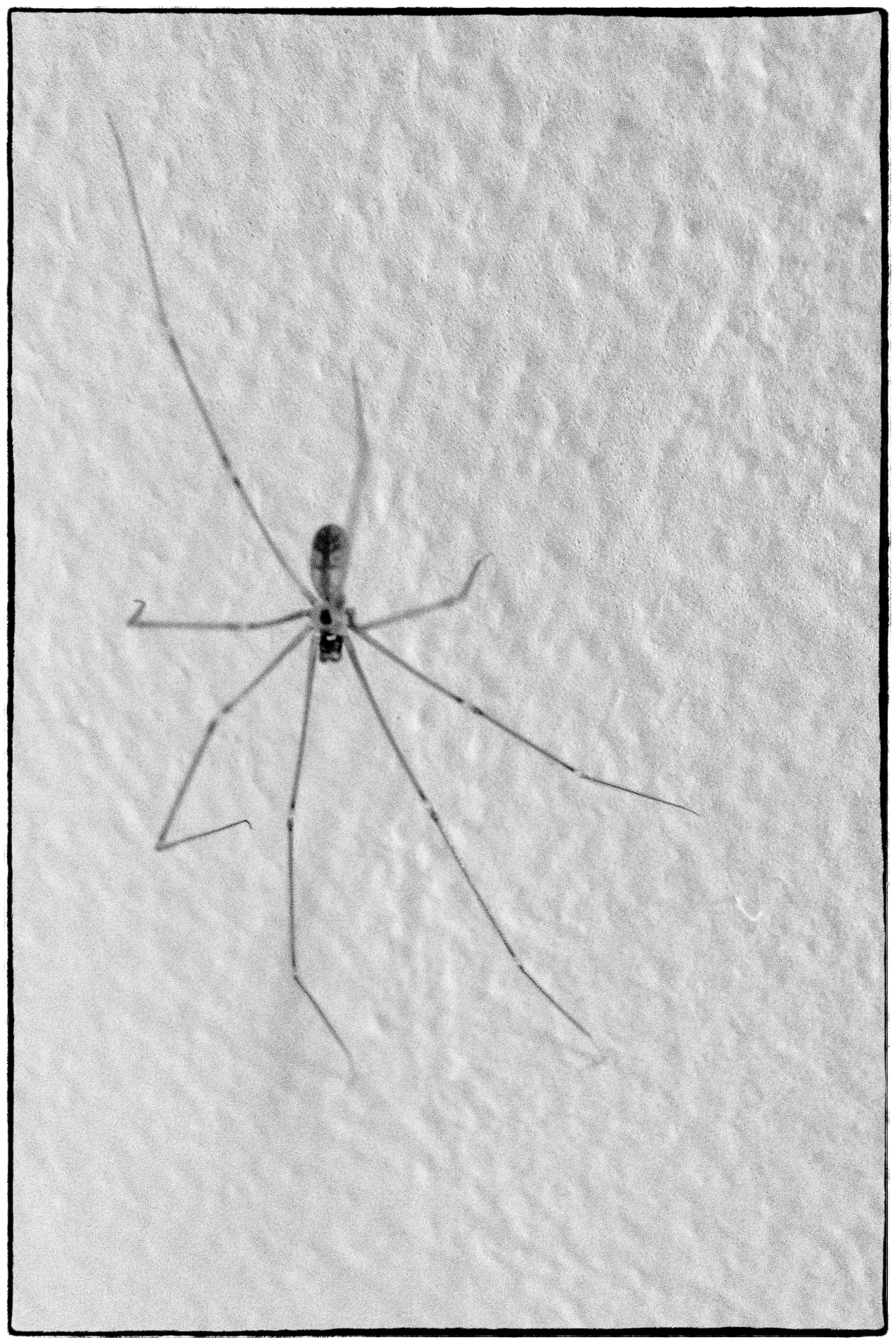
I just took this picture. My work area is down in the basement of our house. It’s only partially finished so we get a few bugs down there – especially spiders. Since I was a kid I’ve always liked spiders so it doesn’t particularly bother me when there are a few around.
This one was right in front of my desk. It always seemed to be in exactly in the same position so I began to suspect that it was dead. In any case I decided to take a picture of it. I tried using my DSLR with a zoom lens on a tripod, but I didn’t much like the results. So I reached for my RX-100 and moved it really close to take this picture.
Of course it’s not all that clear and it’s quite noisy, but I still like it – especially the way the spider stands out against the white wall.
Incidentally, when I moved in close to take this picture the spider scuttled away. I guess it wasn’t dead after all.
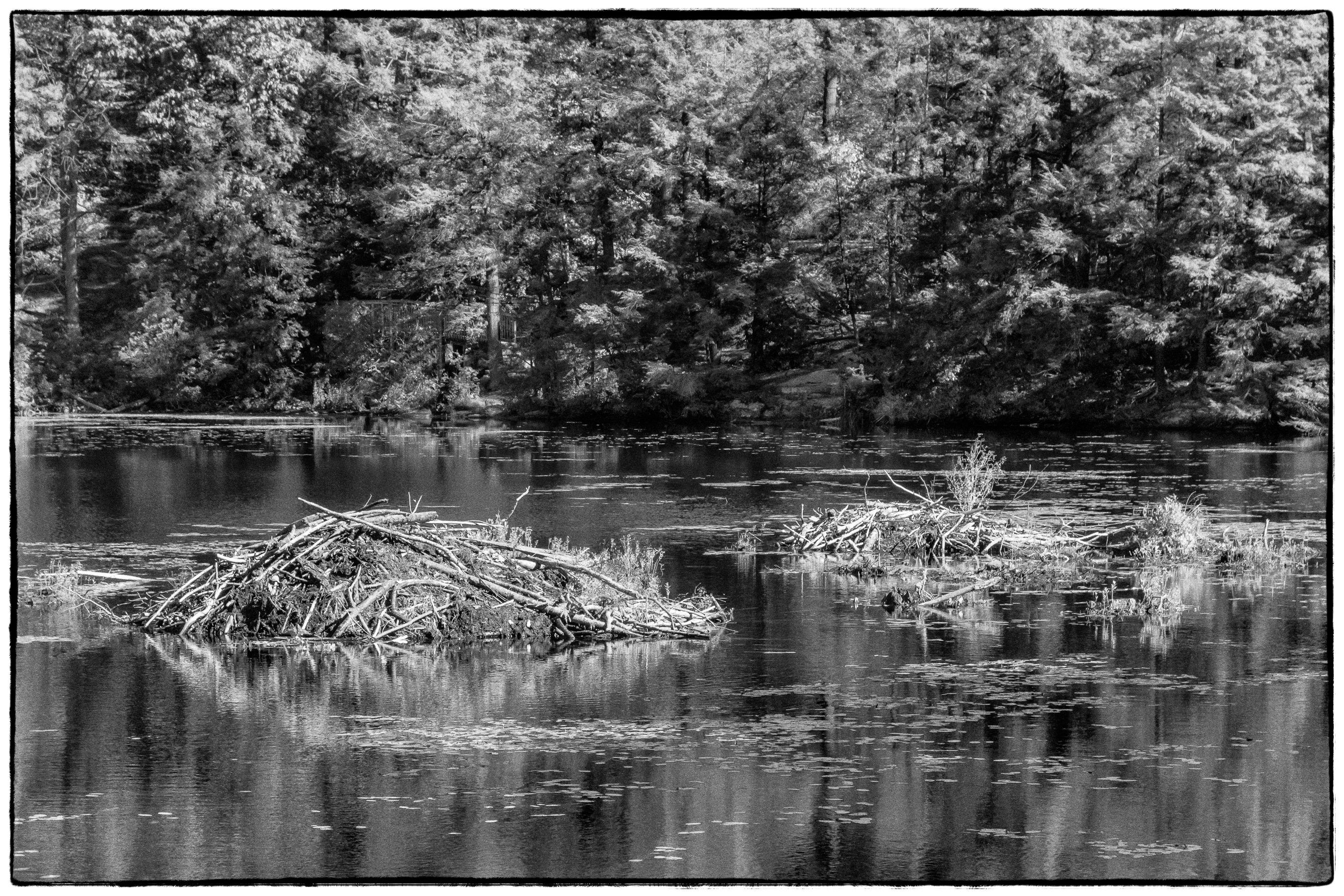
Unfortunately the Beavers seem to have disappeared. I used to see signs of Beaver activity in the form of recently chewed/downed trees. However, I haven’t seen any such activity for over a year. Maybe they’ve upgraded and moved on to larger premises.
According to Beavers, Wetlands and Wildlife beavers stay in the same wetland until the food runs out: “Beavers are vegetarians that often prefer to eat herbaceous plants, such as clover, grasses, raspberry canes and aquatic vegetation, instead of the green bark, leaves and twigs of fast growing trees, such as aspen and willows. Beaver can survive on the tubers of water lilies.They may take years or even decades”. They go on to say that beaver migrate:
By water or land, and if by land, this is where much mortality occurs from predators, such as coyotes, and accidents. They have been known to travel tens of miles. The two-year-olds usually leave home to find their own territory, and create new ponds by daming streams. At the same time, they often dig a burrow in the side of a bank, lay sticks on top and then burrow upward to start a lodge. As they build up the dam to increase the water level, the lodge becomes surrounded by water. If the waterway is a river they may just build a bank burrow.
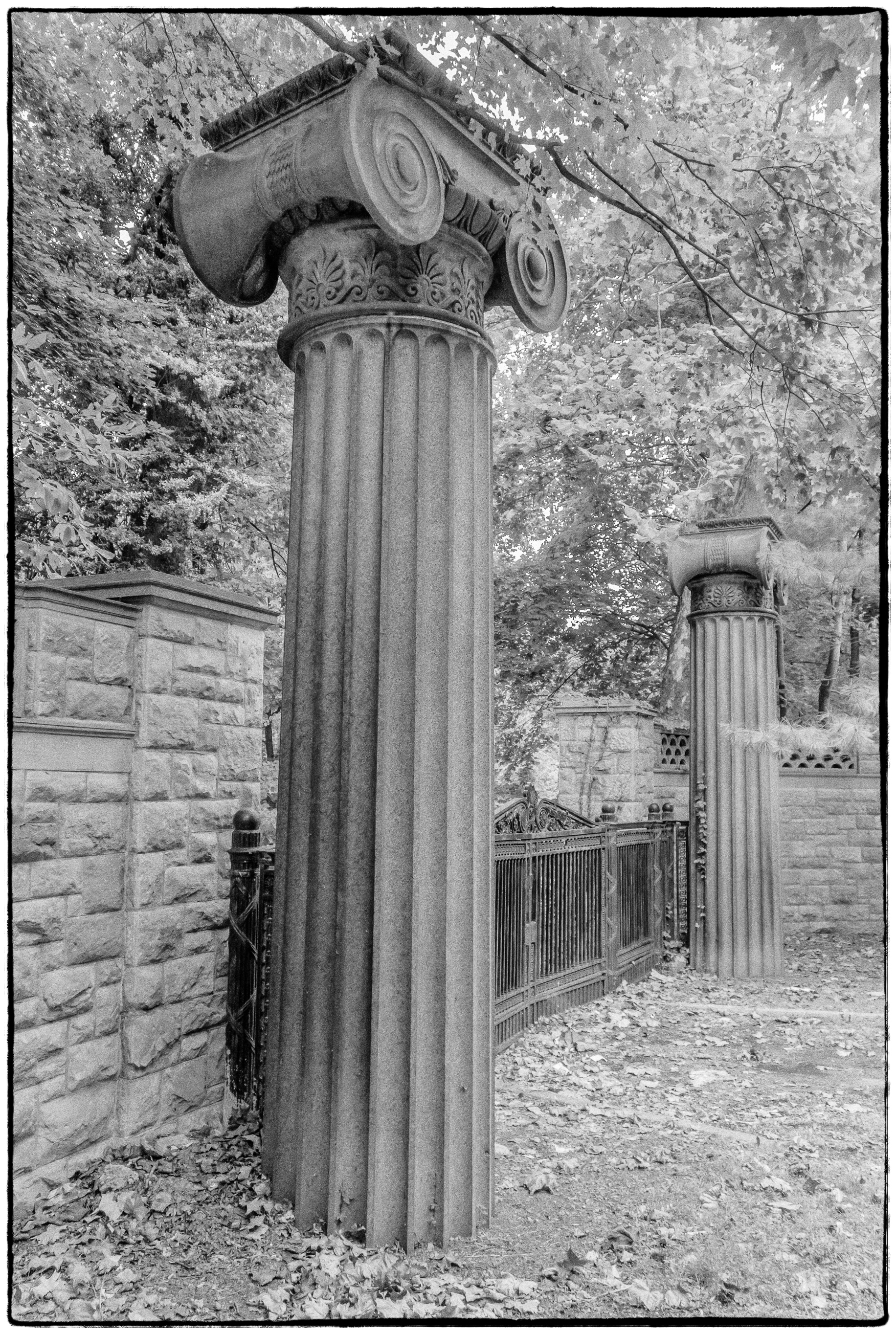
I’ve been living in Briarcliff Manor for about 18 years and noticed these two huge, fluted Ionic columns almost as soon as we arrived. However, until now I had never taken a picture of them.
If you’re travelling north on Route 9 from Tarrytown, just before you reach the intersection with Scarborough road you’ll see them on the left side of the road.
They frame the former main entrance to the Vanderlip mansion: Beechwood.
According to Wikipedia Frank Arthur Vanderlip, Sr. (November 17, 1864 – June 30, 1937) was:
… an American banker and journalist. He was president of the National City Bank of New York (now Citibank) from 1909 to 1919, and was Assistant Secretary of the Treasury from 1897 to 1901. Vanderlip is known for his part in founding the Federal Reserve System, and for founding the first Montessori school in the UNited States, the Scarborough School and the group of communities in Palos Verdes, California.
Born in rural Illinois, Vanderlip worked in farms and factories until beginning a career in journalism in 1885. His efforts in financial journalism led him to become Assistant Secretary of the Treasury until the National City Bank hired him. While president of the bank, Vanderlip worked with the Jekyll Island group to develop a federal reserve; Vanderlip’s later proposals also influenced the creation of the Federal Reserve System in 1913. His later life was focused towards developing Palos Verdes and creating the Scarborough School at his estate, Beechwood, in Briarcliff Manor, New York, as well as gentrifying the hamlet of Sparta nearby. In addition, he helped found and was the first president of Sleepy Hollow Country Club. Vanderlip died in 1937 in New York Hospital, after weeks of treatment there.
It goes on to say that:
In 1907, while Vanderlip was vice president of the First National City Bank (later Citibank), he had two columns from the headquarters 55 Wall Street shipped to Beechwood (55 Wall Street was being remodeled and the columns were re-spaced, with two left over). He had the columns placed two-thirds above ground in Beechwood’s entranceway off of Albany Post Road (now U.S. Route 9), an entrance which was later closed due to increasing traffic volume on Route 9 (the current entrance is off Scarborough Station Road).
The former entrance was designed by William Welles Bosworth
While walking along the Putnam County Trailway a while ago I noticed a path going off into the woods. I followed it for a while, but at that time the trees were bare, snow was on the ground and the trails were icy so I didn’t go too far. This time I approached the sanctuary from the other end (near where the old fairgrounds and racetrack used to be). In fall it’s a very pleasant place to walk. All told we walked for about two hours, covering all of the leave trail, yellow trail, and turtle trail.
According a brochure found at the trailhead:
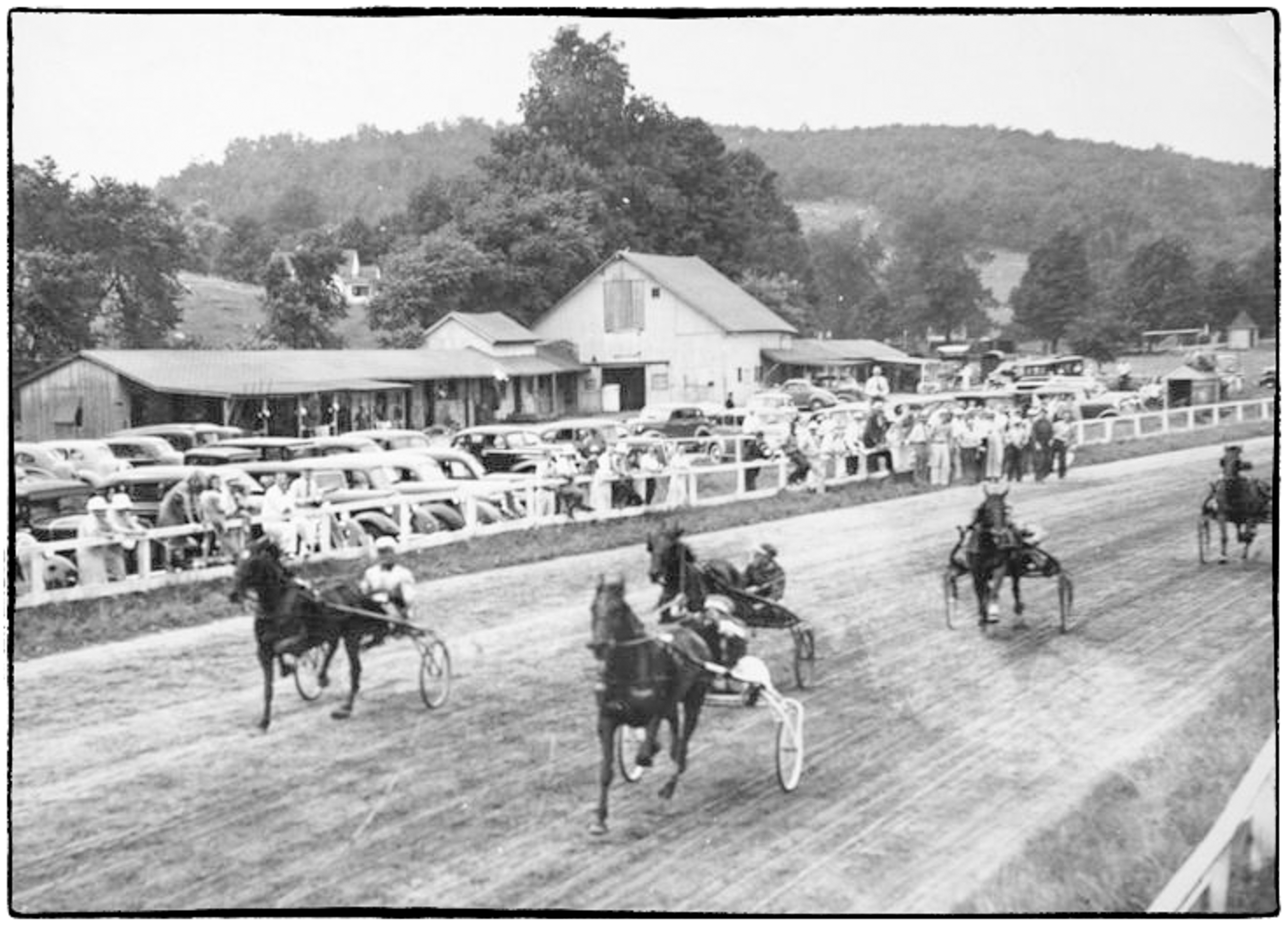
Fred L. Dill came to Carmel in 1933 after graduating with an Accounting Degree from Bentley College in Boston, Massachusetts. His father, Carl Dill trained and drove trotting horses and had moved his family from Goshen, NY to work at the horse racing track which was part of the Putnam County Fairgrounds located on a portion of this property. A faint outline of the old race track is still visible and is labeled “old racetrack” on the park map.
Upon completion of his first summer “swiping” horses and “mucking out” horse stalls, Fred decided the horse business was not for him. His dream was to be in business for himself. When working as office manager for American Oil in Carmel, he had the opportunity to manage Dain Supply and within 3 years was a partner in Dain and Dill. Eventually, Dain and Dill became Lloyd Lumber, a cash and carry lumber yard which grew into a chain of 21 stores in NY and CT.
Fred had achieved his dream of becoming a successful businessman, and he enjoyed using his financial success to benefit the Putnam County Community. The Fred Dill Wildlife Sanctuary and Outdoor Education Center is the last project Fred worked on before his death in 2004 at the age of 91. This property brought Fred to Putnam County and it gave him great pleasure to think of the many people who would walk the trails, enjoy the quiet, and learn about our local wildlife and history.
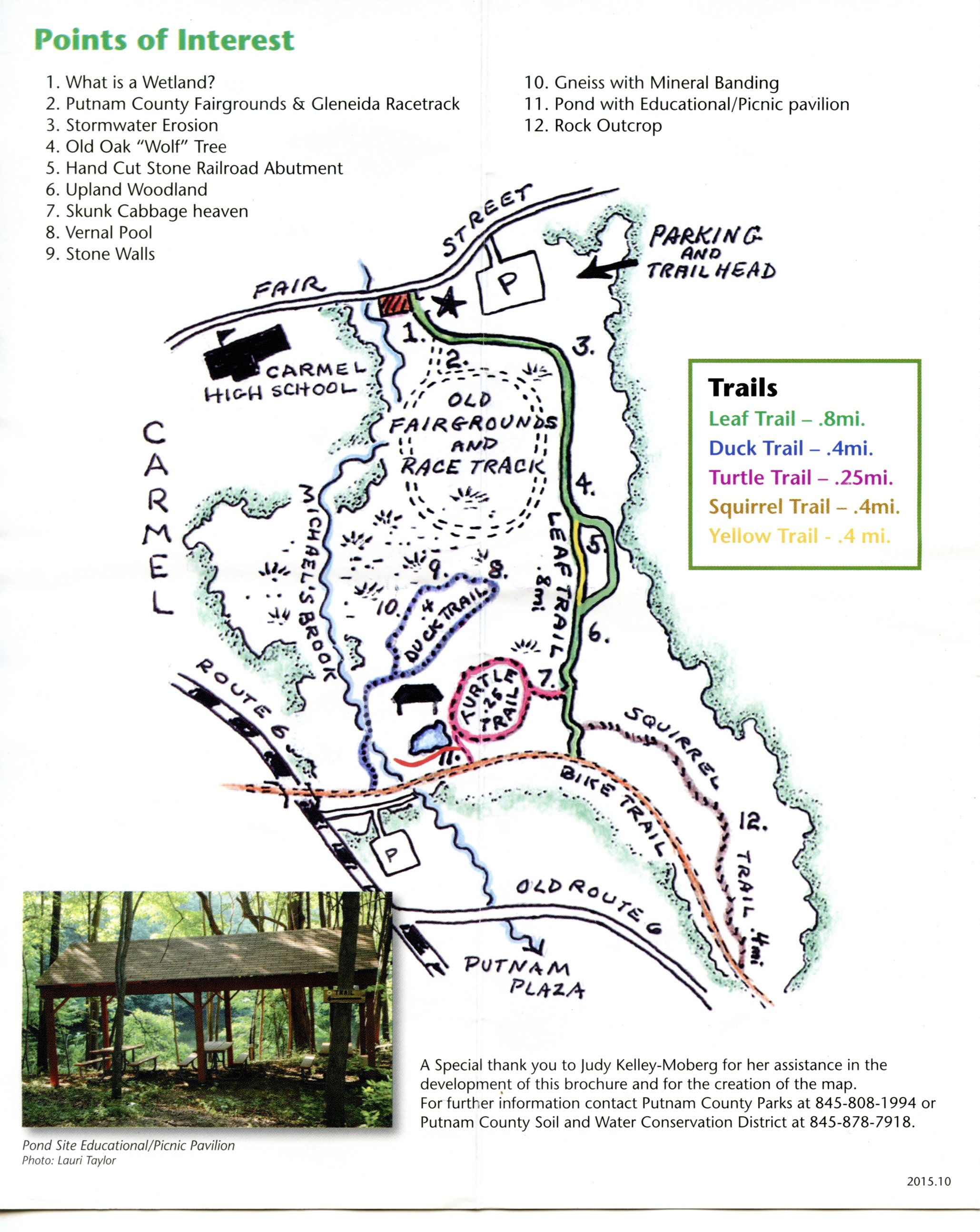
Source: Fred Dill Wildlife Sanctuary and Outdoor Education Center brochure
Around 1865 this property was acquired for the County Fairgrounds. A large building for exhibits was erected and a half mile race track was built on the low land directly in front of the exhibit building. A grandstand was later added. The original intent of the fair was to display prize livestock and produce. The decline of farming in the area left horse racing as the most important part of the fair. The Gleneida Racing Association held regular races at the track until 1932. Automobiles races on the track for a number of years in the 1930’s. Horses ere kept at the track and trained for harness racing until the 1960s
The fairground and racetrack have now been completely reclaimed by a marsh and other assorted brush. As mentioned above a “faint outline of the old racetrack” is still supposed to be visible, but I was unable to find it (I didn’t look all that hard though).