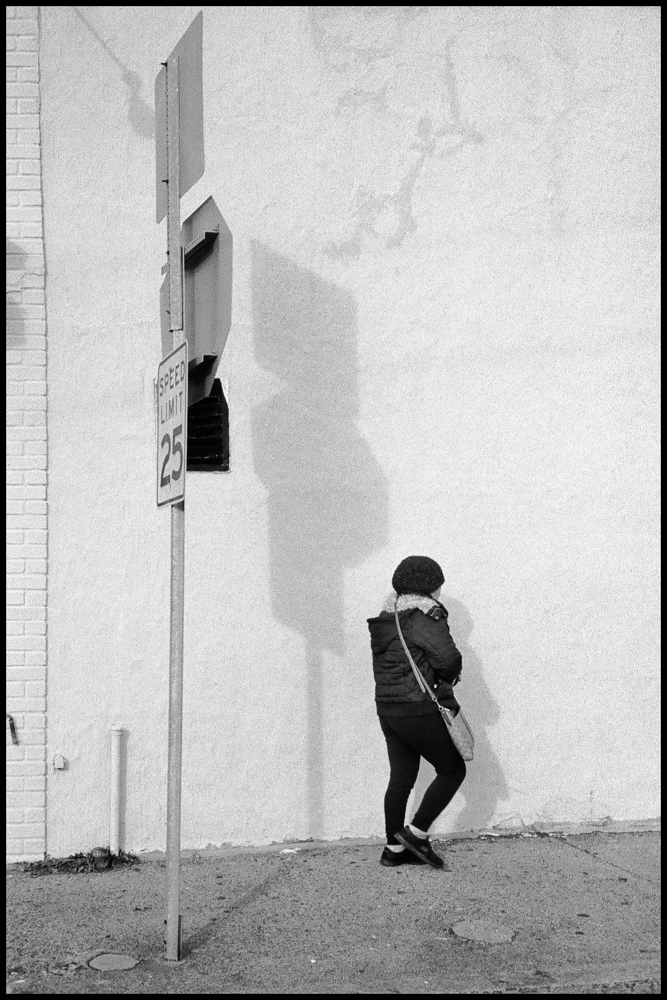
I was initially attracted to the way the sign cast a shadow on the white wall, but as I was taking the picture this woman walked by….
Taken with an Olympus Stylus Epic/MjuII and Kodak Tri-X 400.
Photographs and thoughts on photography and camera collecting
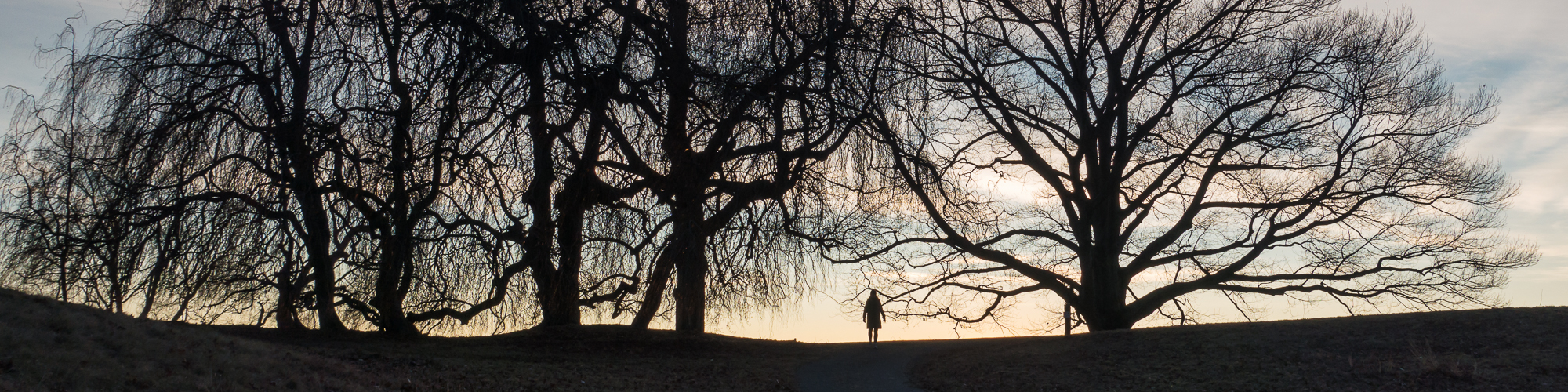
I was initially attracted to the way the sign cast a shadow on the white wall, but as I was taking the picture this woman walked by….
Taken with an Olympus Stylus Epic/MjuII and Kodak Tri-X 400.

Dummy with some interesting ‘balls’. Seen in a shop window almost directly opposite St. Francis of Assisi.
Taken with an Olympus Stylus Epic/Mju II and Kodak Tri-X 400.
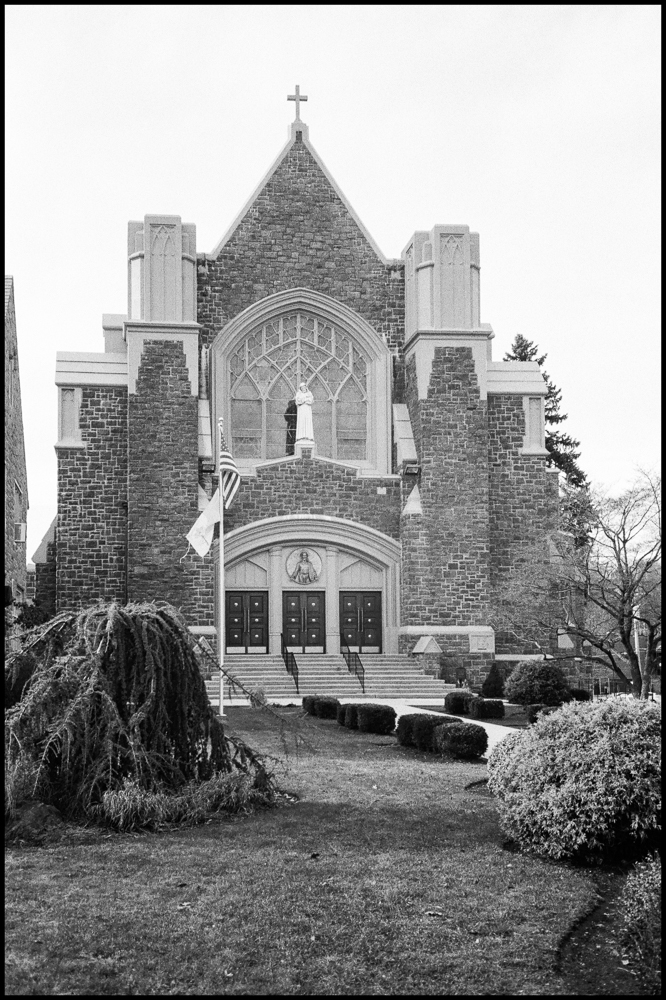
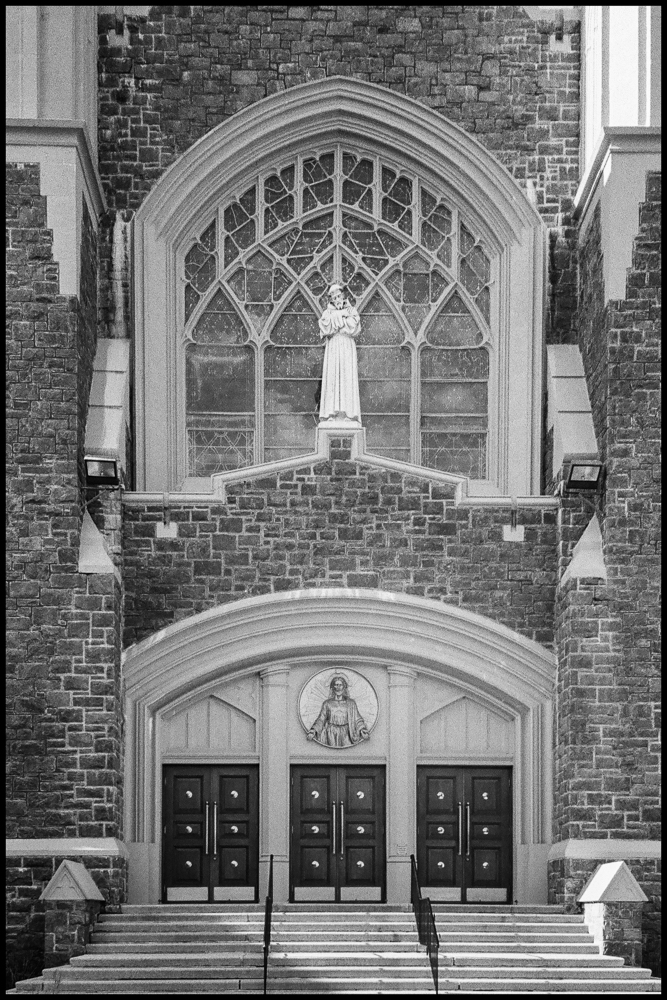
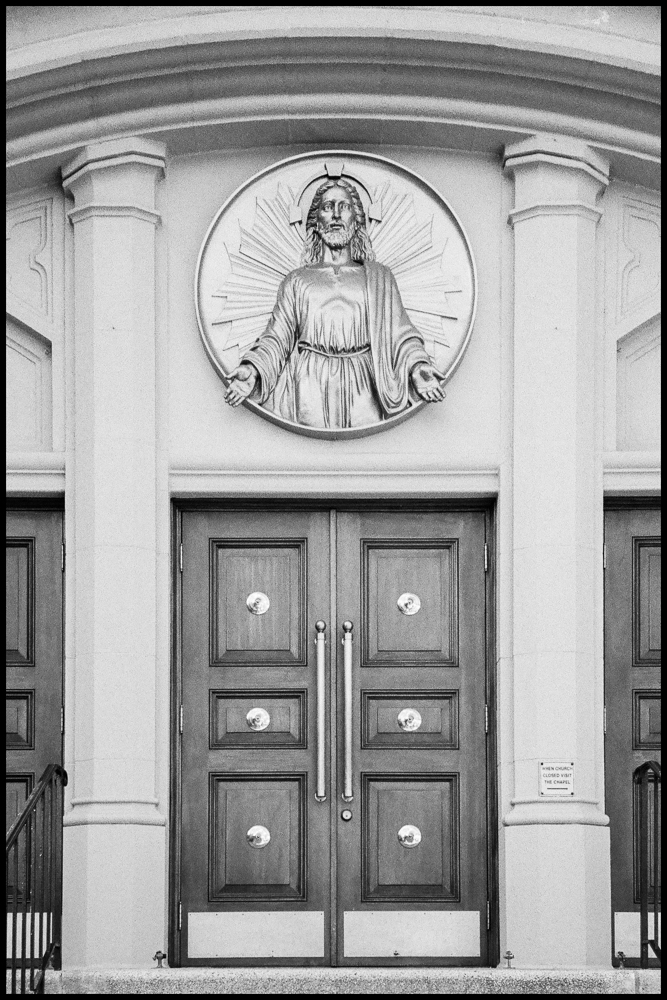
I was unable to discover much about the history of this church other than this short section in “History of Mount Kisco” by E Clarence Hyatt, 1893.
Father McGean of Sing Sing was the first Catholic priest to conduct services in Mount Kisco. This was in 1861. The nearest Roman Catholic church was at Croton Falls. It was a long distance for members of this society at Mount Kisco to go in attending their own church. Efforts were consequently made to have a church of their own at Mount Kisco, and a church was accordingly built in 1862 at the junction of Main and Green streets, costing about $2,500, and and in 1872 a parsonage was built costing about $3,500.
The church was burned on the night of Nov. 29th, 1886, and in the following year a larger and handsomer edifice was erected on the same site, and dedicated February 19th, 1888.
The church has a seating capacity of two-hundred and twenty, and a membership of two-hundred and fifty. The first pastor was Father McClellan of Sing Sing. The first resident pastor was Father Brennan. The pastors succeeding him were : — Father Henry Father Newman; “McCauley” Conroy; “Gregg” Wall
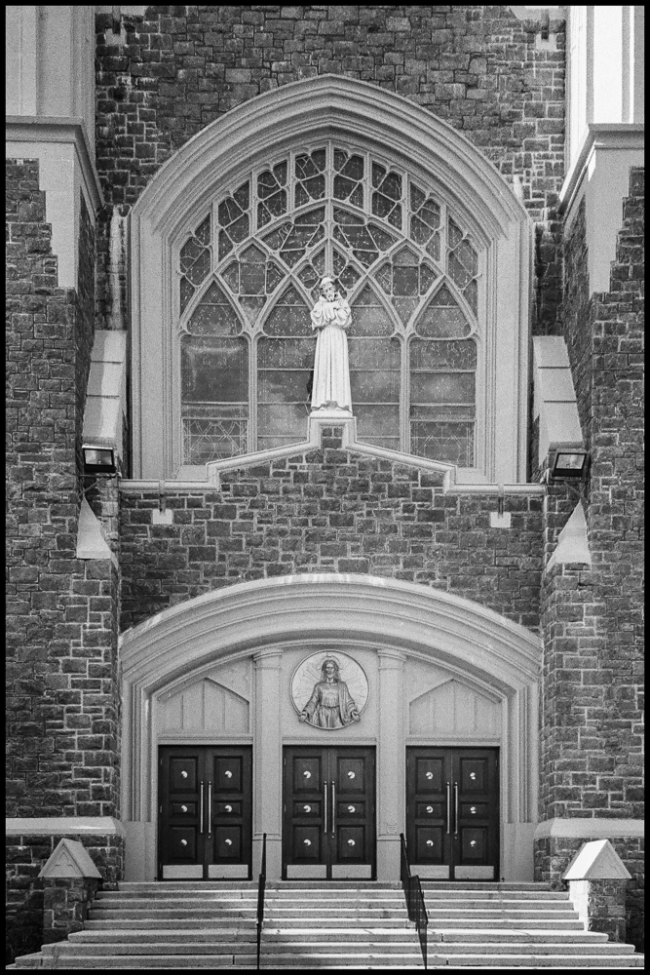
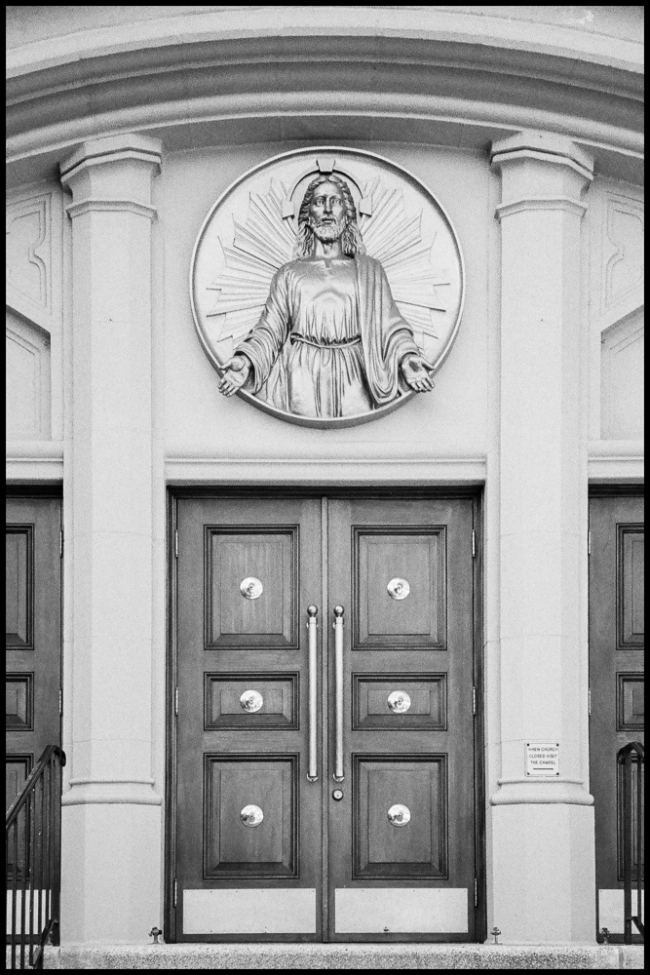
Taken with an Olympus Stylus Epic/Mju II and Kodak Tri-X 400.
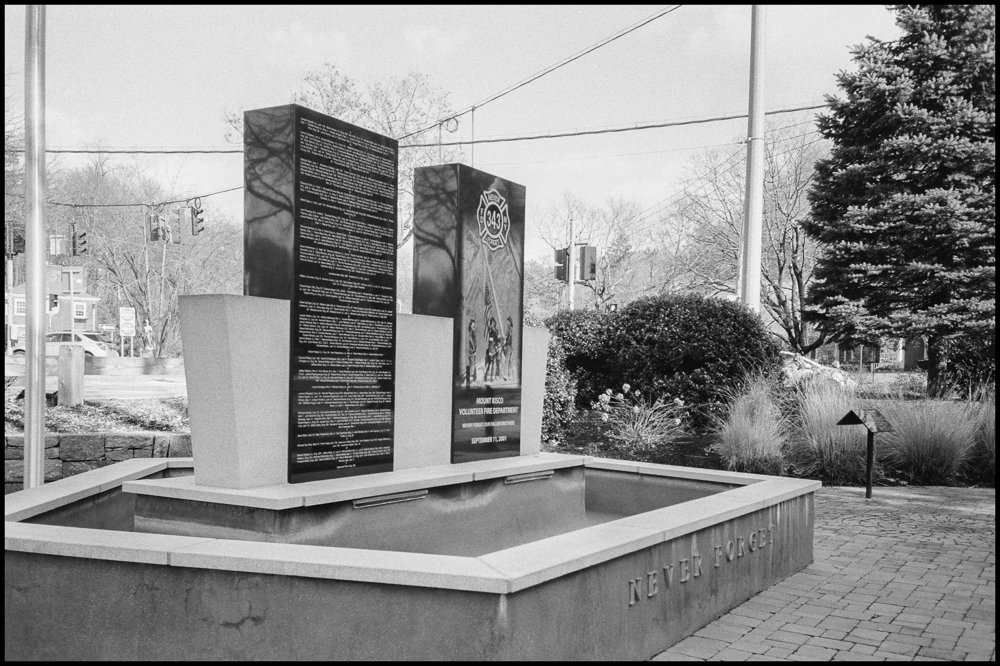
According to Picture this on Granite:
For this monument, Picture This On Granite (Note: Laser engraving specialists) was proud to help pay tribute and honor the Fire Fighters who risked their lives to save people caught in the September 11 2001 terrorist attacks. Our Graphic designer worked with the committee’s concept to further customize it in a black granite memorial resembling the Twin Towers.
The monument consists of black and gray granite with two 7-foot structures representing the twin towers of the World Trade Center, and a five-sided pool to represent the Pentagon, which was also struck in the terrorist attacks. Further explained on the informational plaques is that the gently swaying grasses in the perimeter garden represents the fields of the Shanksville, PA crash site. The gently flowing fountain waters, represent the continuity of life. The words « Never Forget » are a theme and the names of all the firefighters, as well as two men from the local fire protection district, who lost their lives, are engraved. The steel beam to the left of the monument was recovered from the World Trade Center site.
Groundbreaking was in November 2010; the Mount Kisco monument was completed and dedicated on the 10th anniversary of the attack, Sept 11, 2011.
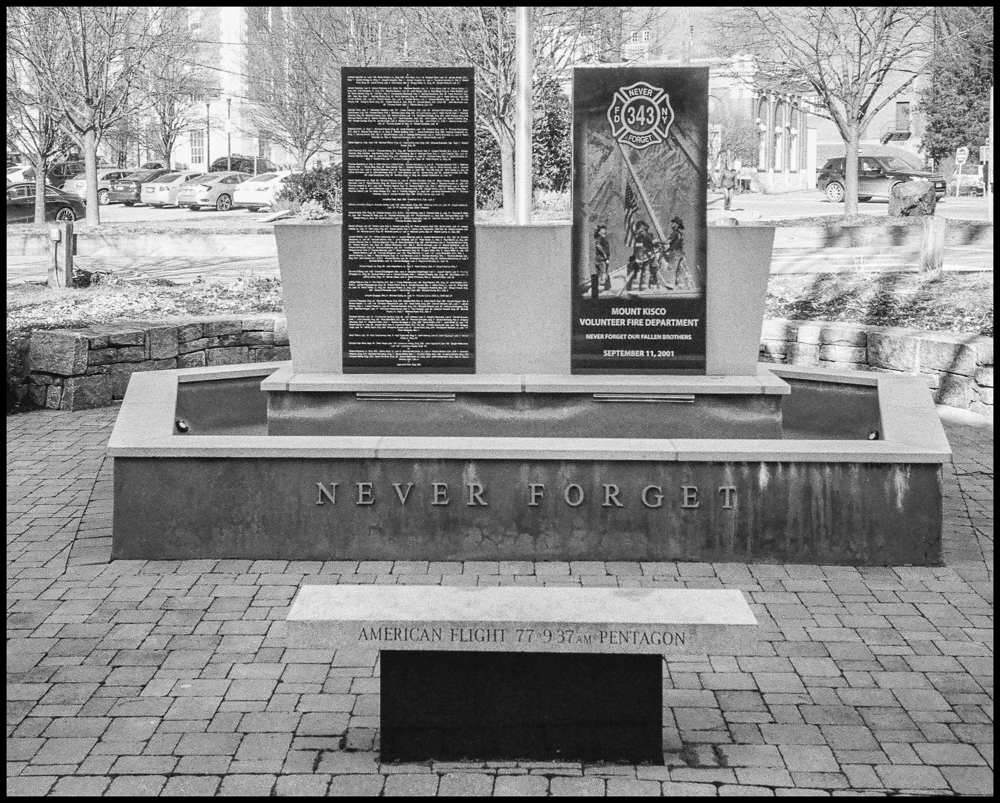
Taken with an Olympus Stylus Epic/Mju II and Kodak Tri-X 400.
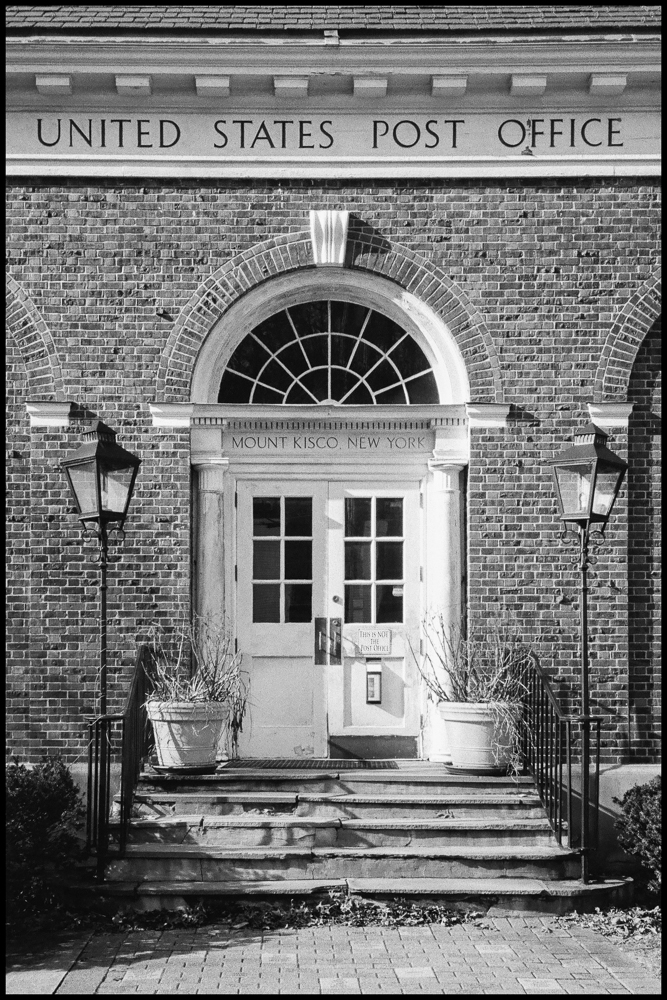
The large frieze towards the top of the building reads “United States Post Office”. But don’t be misled. If you look just below the right window in the door you’ll see a small sign, which reads “This is not the post office”.
Of course it once was, but now it’s occupied by Singleton, Davis and Singleton PLLCwhose web site states:
Our office, the Post Office, is a lot like us….firmly grounded in history and tradition. In a way, it precisely reflects our values and practice. To walk through our doors is to travel back to a time when quality and personal service mattered, when structures and relationships were built to endure for decades, and when a sense of community and stewardship was the bedrock of a strong society.
Famed architect, Mott Schmidt, designed the old Mount Kisco Post Office. As in many of his buildings, Schmidt deftly accommodated the requirements of modern life: a post office and municipal government office complex within the envelope of the 18th century idiom known as Georgian. Like many of his eclectic contemporaries, Schmidt demonstrated that with knowledge and creative adaptation, the style could not only endure, but also provide continuity with cultural traditions cherished by the residents of a town like Mount Kisco or Bedford, where he made his own home. This building compares favorably to other 1930s colonial revival public buildings, such as Cameron Clark’s Town Hall in Washington, Connecticut, and Aymar Embury’s Guild Hall in East Hampton, New York. Arched windows and classic lighting fixtures lend a welcoming air of old-world elegance. Inside, the building houses a grand piano, bronze postal boxes, and several historic WPA murals.
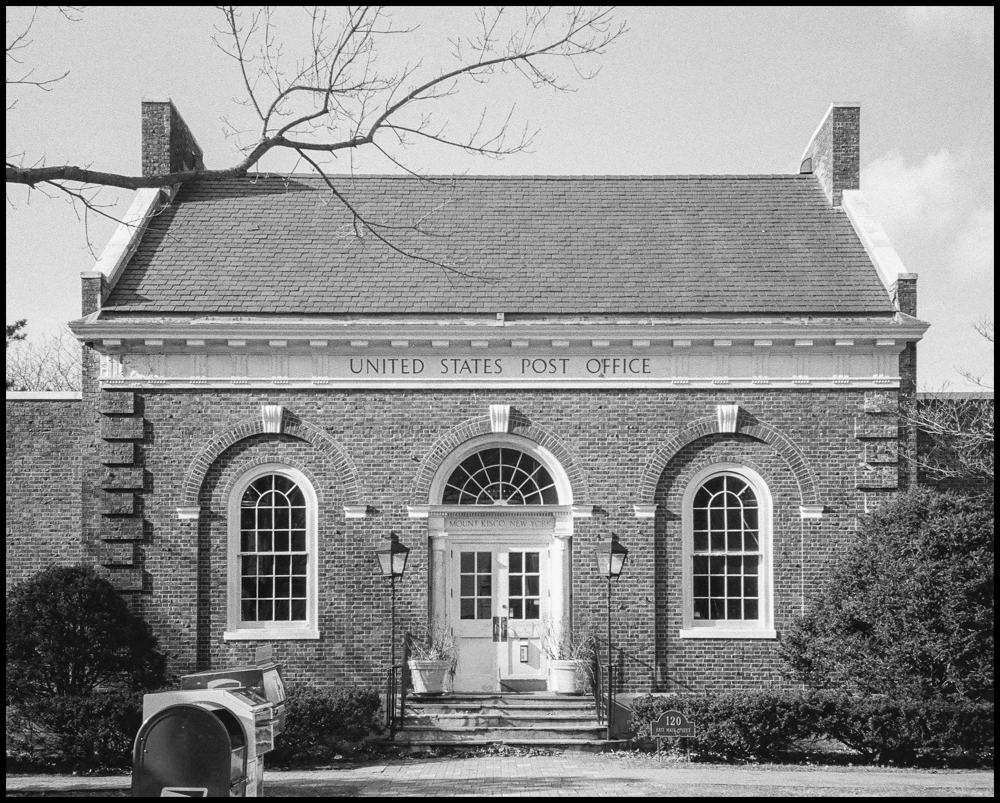
Taken with an Olympus Stylus Epic/Mju II and Kodak Tri-X 400.