Rocks in a car park

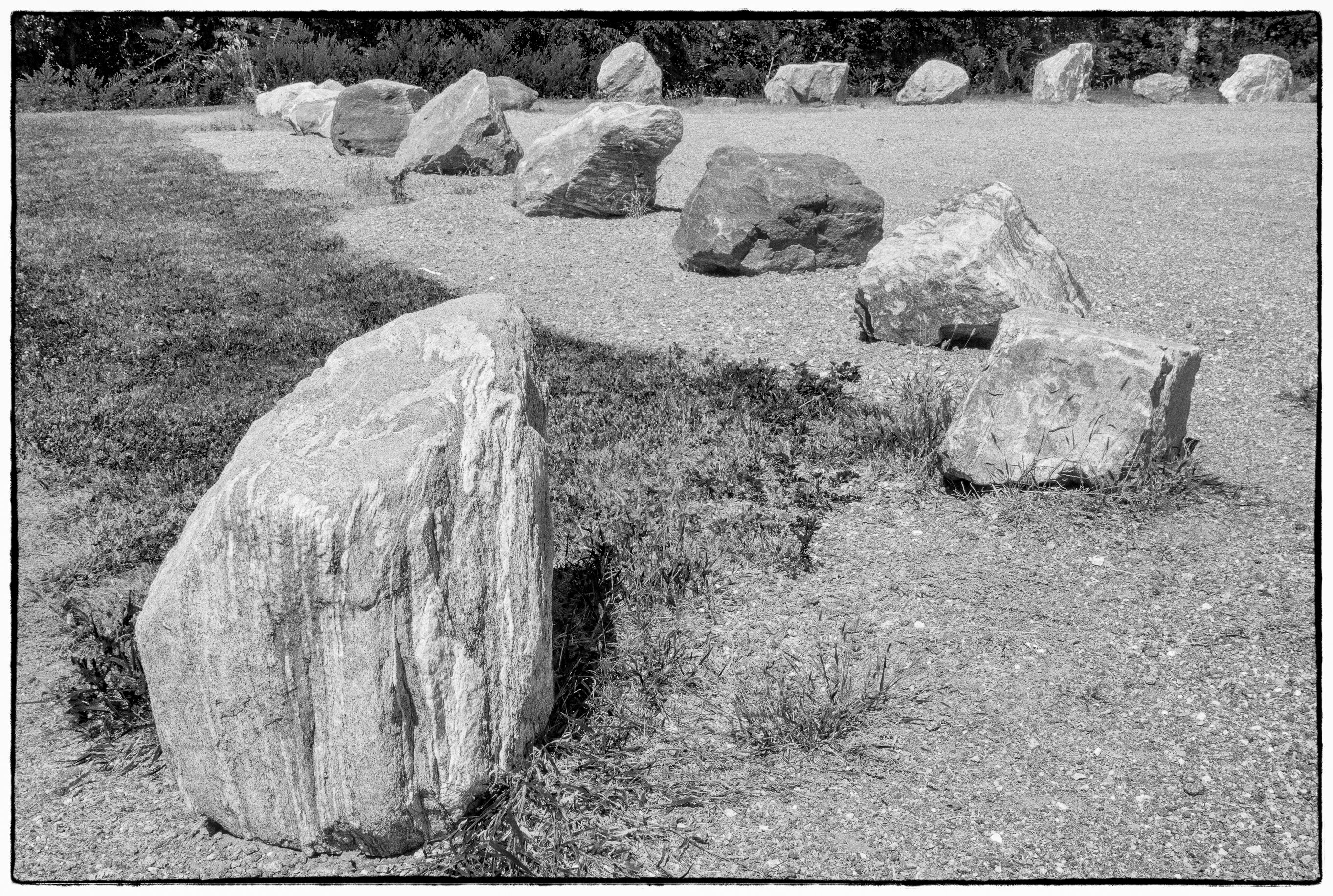
We’d been for a walk at the fairly recently opened (2016) Hollowbrook Trail, which turned out to be shorter than I’d anticipated. So we had to find somewhere else to meet our daily walk requirements. I chose to go to our town park: Leonard Wagner Memorial Park.

It’s a fairly short walk in the woods around the playing fields, and as we were returning I noticed these large rocks at the edge of a parking area. I like rocks (which is just as well as there are large numbers of them in Putnam County – Just ask anyone who’s tried to dig gardens) and I particularly liked the textures of these and the way they curved through the frame.

Taken with a Sony RX-100 M3

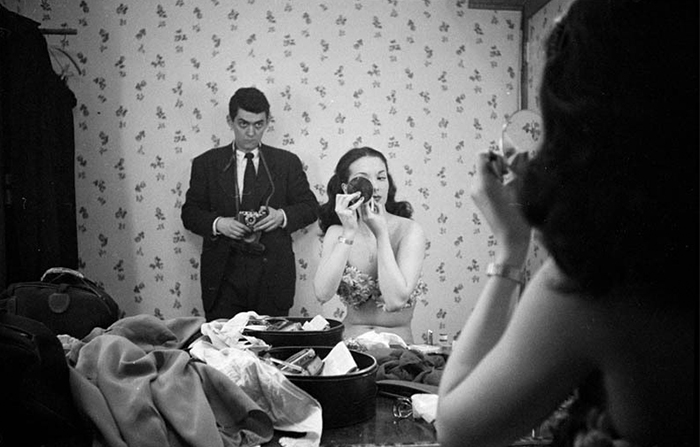
Stanley Kubrick, Photographer

Source: 17-Year-Old Stanley Kubrick’s Photos Of 1940s New York Prove That He Was Born Genius

Self Portrait with showgirl Rosemary Williams, 1948. Source: 17-Year-Old Stanley Kubrick’s Photos Of 1940s New York Prove That He Was Born Genius

I’ve always been a fan of Stanley Kubrick’s films, particularly “Doctor Strangelove“. While I was aware that he was a still photographer before he turned to making movies, I had seen very few examples of his work. This article from Bored Panda presents about 70 of them. While for the most part they’re not masterpieces, they’re not bad for a 17 year old either.

Before Stanley Kubrick directed arguably some of the best movies ever made like “2001: Space Odyssey” or “The Shining,” he was a simple teenager in New York looking for a job. But even then, when the 17-year-old got his hands on a photo camera, he couldn’t hide the talent within.

Bored Panda has gathered a collection of his photos of New York from 1945 to 1950, when he was working in the Look magazine. During that time Stanley got many insights into what makes a photograph work: “I think aesthetically recording spontaneous action, rather than carefully posing a picture, is the most valid and expressive use of photography.”

He quickly made a name for himself by telling stories through photos, which eventually led him to moving pictures and his place in the filmmakers’ hall of fame.
Oh, and if you’re into street photography as well, let Stanley himself give you a tip: “Think up ideas for stories, go out and shoot them, and then send them into the magazines. I was lucky; I figured that out when I was young.”

Source: 17-Year-Old Stanley Kubrick’s Photos Of 1940s New York Prove That He Was Born Genius.

A walk around Teatown – Fishing at Vernay Lake

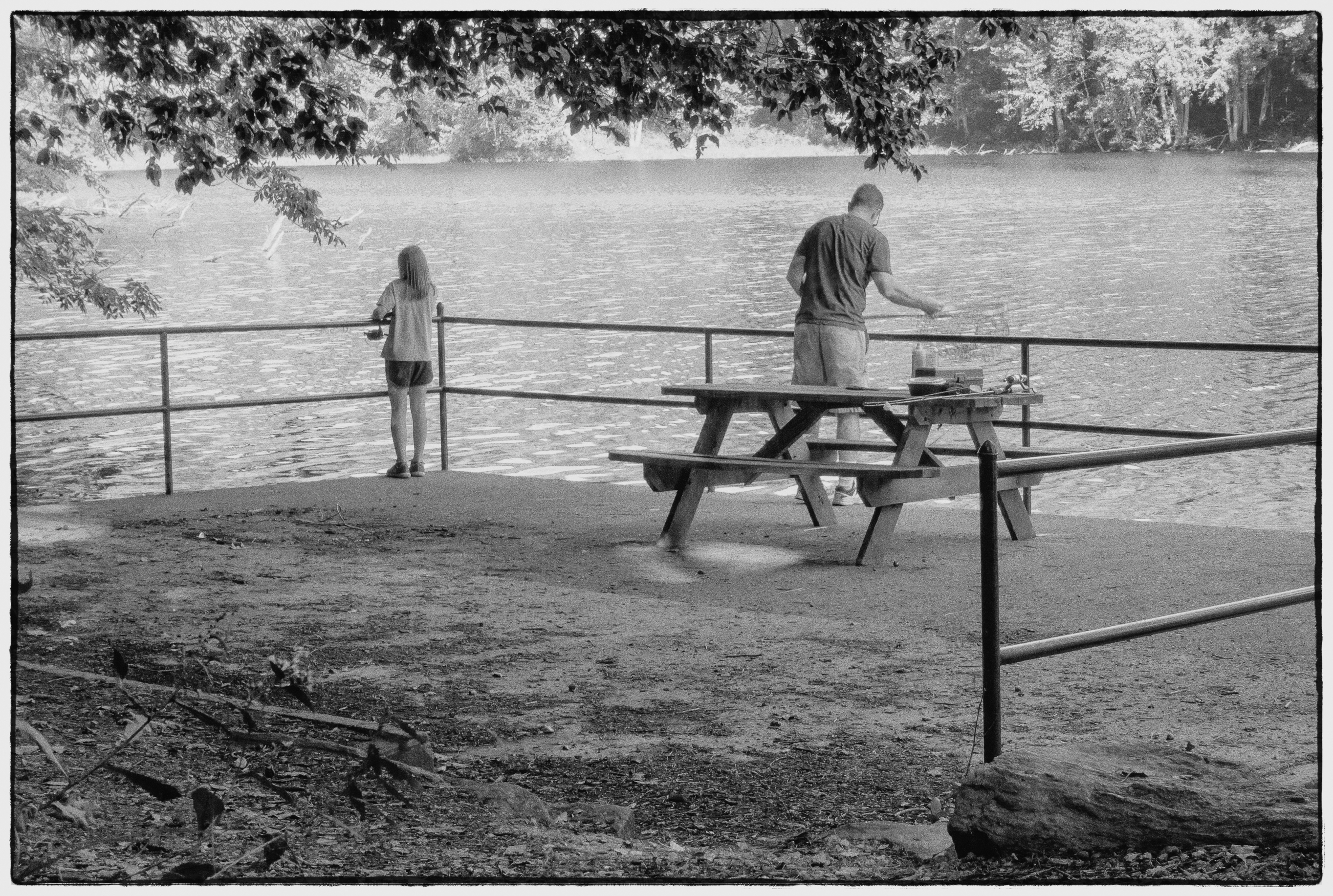
As mentioned in the previous post (See: A walk around Teatown – Shadow Lake) you pass Vernay lake at the beginning of the Twin Lakes Loop trail and then return to it at the end. As I passed it on the way out I noticed these two people, presumably a father and daughter, fishing. On the way back about two hours later I passed them again, still fishing.

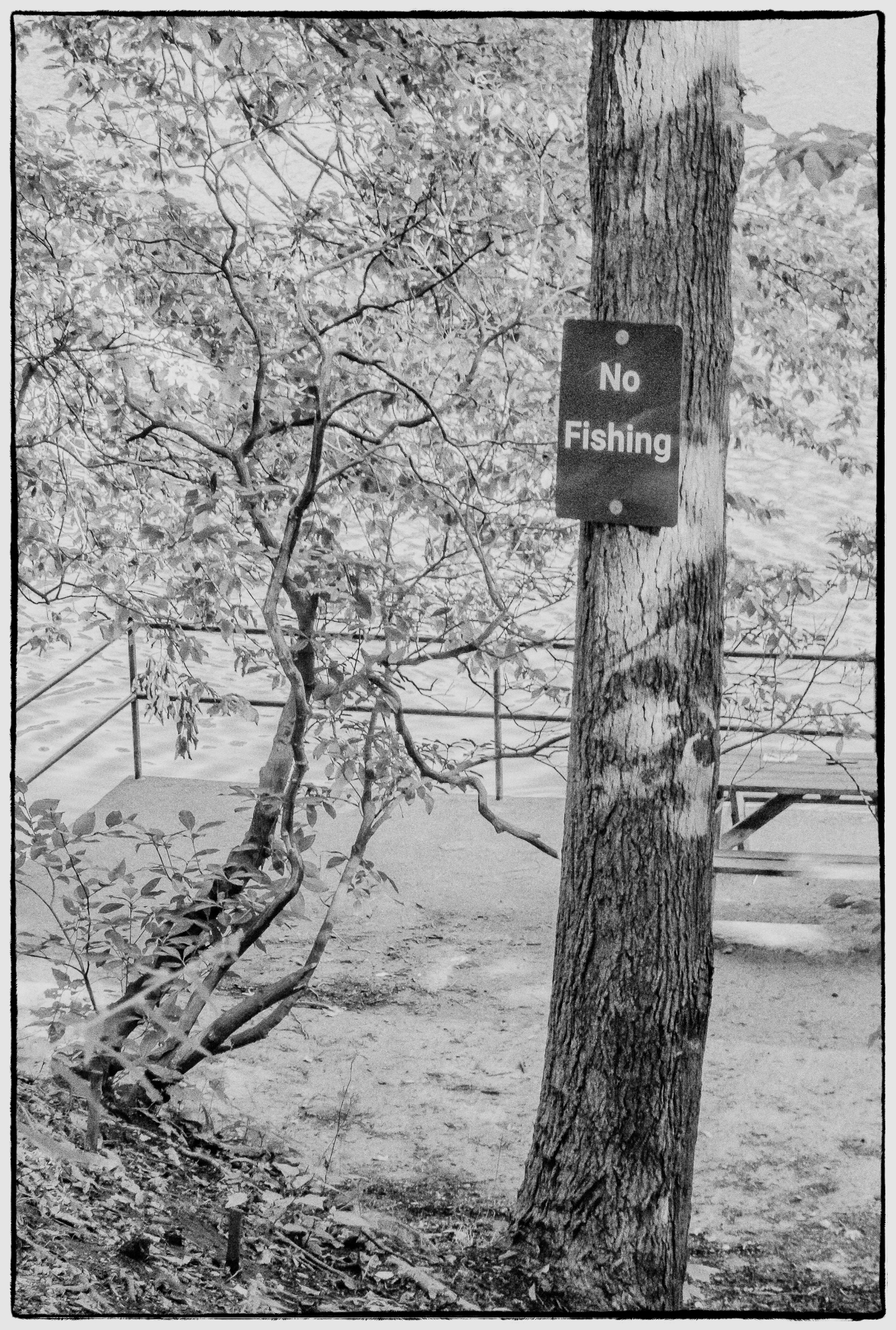
Unfortunately, you’re not allowed to fish in Vernay lake, as the sign (see picture below) right next to where they were fishing indicates. Maybe they missed it (although it’s hard to see how they could have as it’s right next to the trail as it descends to the lake). As I passed a woman (presumably from the Teatown administration) came along and very politely shooed them off.

I guess they managed to get at least two hours fishing in, which is not too bad. It’s about 1 hour 45 minutes too much for me. I’m not a fan of fishing. My cousin was an avid fisherman and when I was a child he once took me to a fishing competition. After about three days (at least that’s how long it felt to me. It was probably only a couple of hours) it ended and I won a prize! I was the only person not to catch anything! Maybe it was that experience that put me off fishing.

Taken with a Sony RX-100 M3

Geneva – Old Town, Statue in La Treille

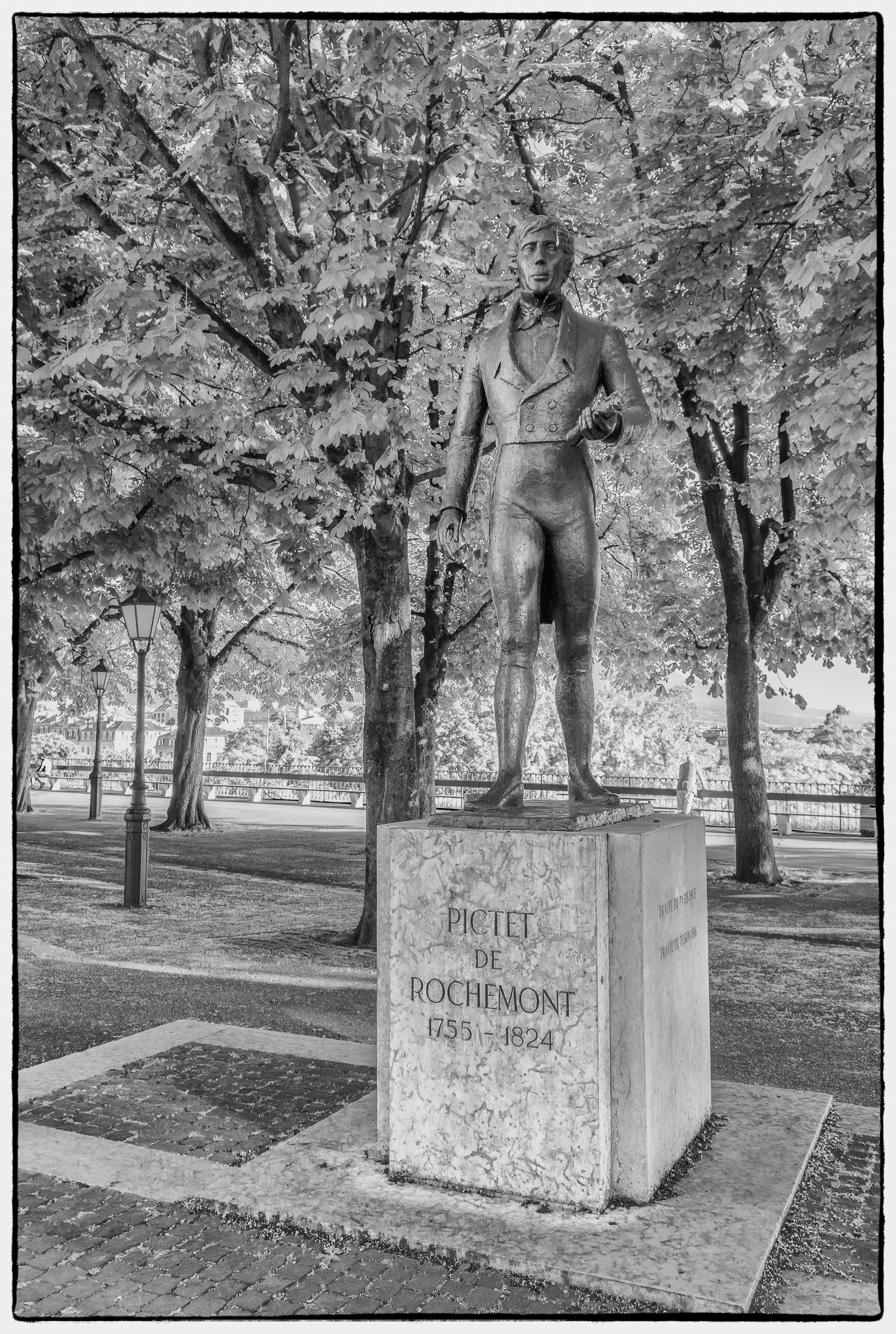
Even though it was some distance I’d decided to walk home and leaving the Old Town I passed through “La Treille” (the Arbor), a pleasant, leafy tree covered “promenade” (i.e. walking area) overlooking the Parc des Bastions. Walking through I came across this statue of Charles Pictet de Rochemont.

Britannia.com describes him as follows:

Charles Pictet de Rochemont, (born Sept. 21, 1755, Geneva, Switz.—died Dec. 28, 1824, Lancy), statesman and diplomat who prepared the declaration of Switzerland’s permanent neutrality ratified by the great powers in 1815.

After serving in the French army, Pictet settled in Geneva in 1789 and reorganized the militia. He was arrested during the Reign of Terror (1794) in Geneva following the French Revolution and subsequently was imprisoned. With the reestablishment of the Republic of Geneva after the retreat of Napoleon’s armies (1813), he resumed political activity, taking part in the provisional government created in December 1813.

In January 1814 Pictet argued on behalf of Geneva’s independence and union with the Swiss Confederation before the allied sovereigns at Basel and later obtained recognition of his canton’s independence in the Treaty of Paris (May 1814). In October 1814 he was delegated to the Congress of Vienna, where he helped secure Geneva’s attachment to the reconstructed Swiss Confederation; and at the Paris peace conference (August–November 1815) that followed Napoleon’s defeat at Waterloo, he served as representative of the whole confederation. He personally redrafted the act that was accepted as the basis of permanent Swiss neutrality by the powers on March 20, 1815. His last diplomatic mission—to Turin (January–March 1816)—secured a rectification of the Swiss-Sardinian frontier (Treaty of Turin, March 1816).

Wikipedia provides additional information.

In the background you can just make out a bench. But this is not just any bench. It’s arguably the longest wooden bench in the world. According to Atlas Obscura:

Behind Geneva’s city hall is La Treille Park, a lovely and sunny square, whose perimeter is lined by (debatably) the longest wooden bench in the world. Built in 1767, the bench is 413 feet long, and made of 180 wooden boards.

The title for the world’s longest bench is evidently a prize highly sought. Many countries claim to have the longest bench of some sort – Spain says its Gaudi-inspired art-piece bench in Barcelona is the longest, Russia claimed to have had the longest painted bench, before it was broken into 100 different sections and spread throughout Moscow, and France claims to have the longest concrete bench which overlooks the sea in the city of Marseille.

No matter where the title truly lies, there is no question that this Swiss bench is the perfect spot to relax and take in the view of the Salève and Jura mountains under the shade of chestnut trees. It’s said that the chestnut’s first bloom announces the arrival of spring in Geneva.

Taken with a Sony RX-100 M3

Geneva – Old Town, St. Pierre Cathedral

According to Wikipedia:

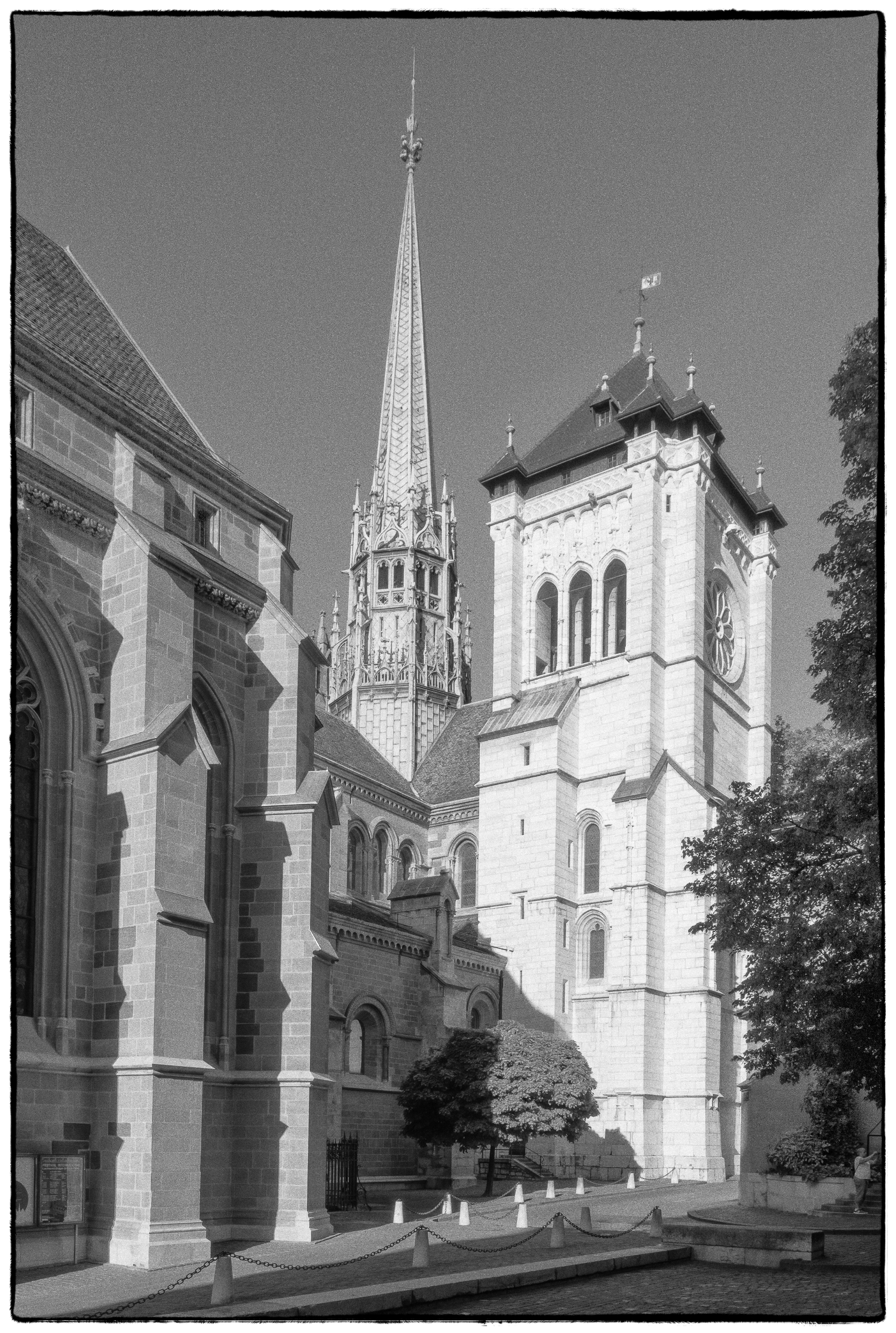
The St. Pierre Cathedral is a cathedral in Geneva, Switzerland, today belonging to the Reformed Protestant Church of Geneva. It is known as the adopted home church of John Calvin, one of the leaders of the Protestant Reformation. Inside the church is a wooden chair used by Calvin.

It was begun under Arducius de Faucigny, the prince-bishop of the Diocese of Geneva, around 1160.[citation needed] It was originally built in Romanesque style and was completed a hundred years later in Gothic style. A Neo-Classical main facade was added in the 18th century.

The area beneath the Cathedral has recently been excavated extensively, revealing a history of the site dating back to the time of the Roman Empire. From the 8th to 10th centuries it was one of three cathedrals to coexist on the site. The present building has grown from a cathedral devoted to ecclesiastical use and an early Christian funerary cult; the other two structures, subsumed in the 12th century by the growth of the surviving building, were apparently for different uses, one for public sacraments and the other for church teachings.

The German painter Konrad Witz painted an altarpiece, the so-called St. Peter Altarpiece, for the Cathedral in 1444, now in the Musée d’Art et d’Histoire, Geneva, which contains his composition, the Miraculous Draught of Fishes.

Currently, every summer a German Protestant minister is present, making it possible to hold bilingual services and meetings of both German and French Protestant worshippers.

If you can get past the atrocious grammar, an article on the Geneva.info site provides additional information.

I’ve never really liked this cathedral. I don’t care for the mix of styles and I find the interior rather bare and uninteresting (the Calvin influence I imagine. I believe that most of what was decorative was destroyed during the Reformation). I prefer my cathedrals to be more ornate.

Taken with a Sony RX100 M3