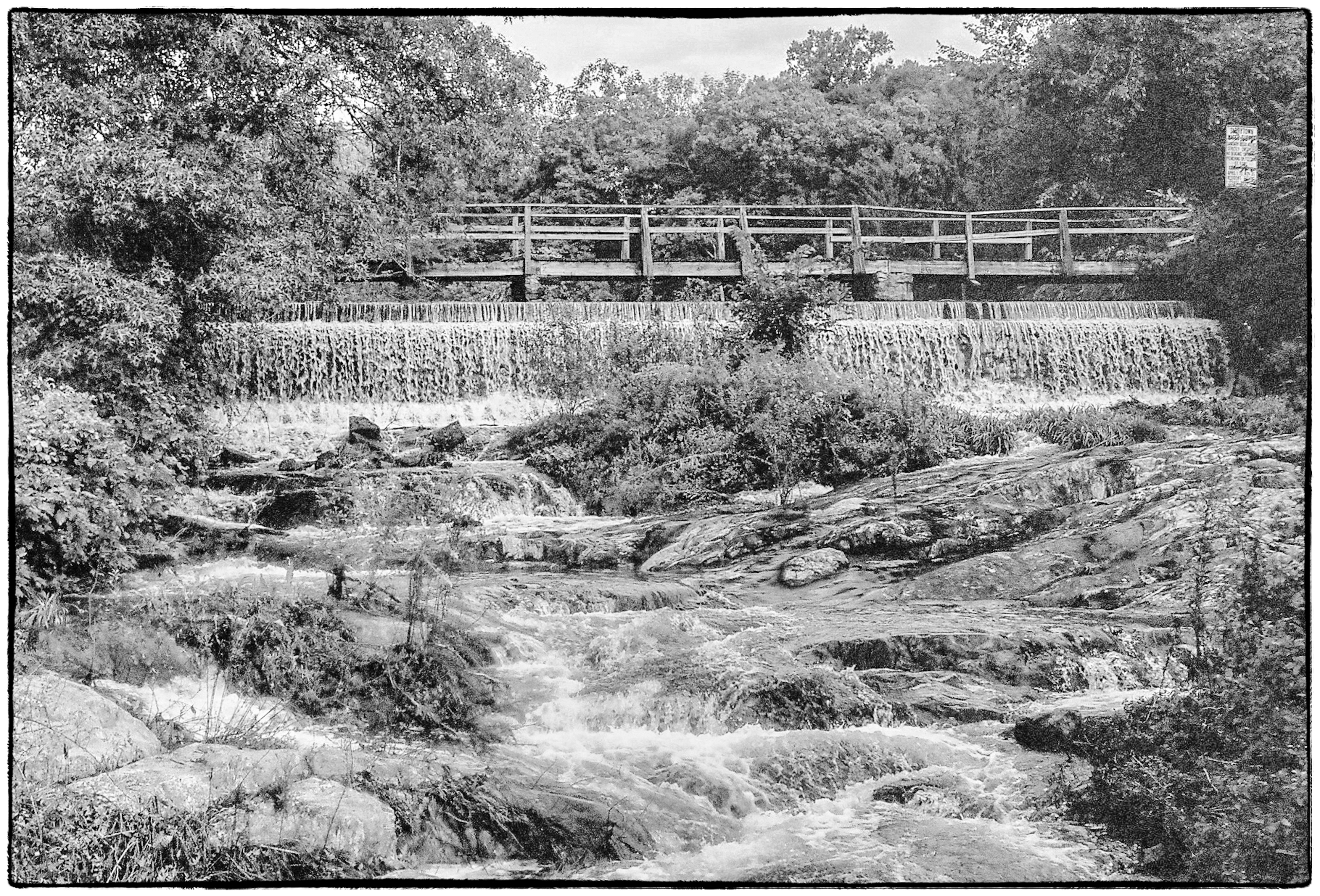
As I recall this was taken in the early days of my camera collecting (September, 2011 I think) with a Zorki 4 rangefinder camera and a 50mm f/2 Jupiter-8 Former Soviet Union lens – one of the earlier chrome models. I believe the film used was Kodak T-MAX 400, but I’m not entirely sure. I believe this to be so because I have a note saying that it is. However, it doesn’t look to me like a picture taken with a Jupiter-8. It looks to me more like the other lens I was using around that time: an Industar 61.
Buster
This is our friend’s dog, Buster. He can look a little ferocious at times, but he’s actually quite sweet. He’s a French Bulldog (known in French as a “Bouledogue Français”). Quite rambunctious when he was younger, as he’s aged he’s become more mellow.
Garden Club Meeting
My wife and I are members of our local garden club, which recently held a presentation on “Birds of the Hudson Valley”. Here two of the participants are watching the presentation. The garden club also has its own closed Facebook Group, but the club’s chairperson didn’t want this picture to be posted.
I wonder why?
The England of My Childhood
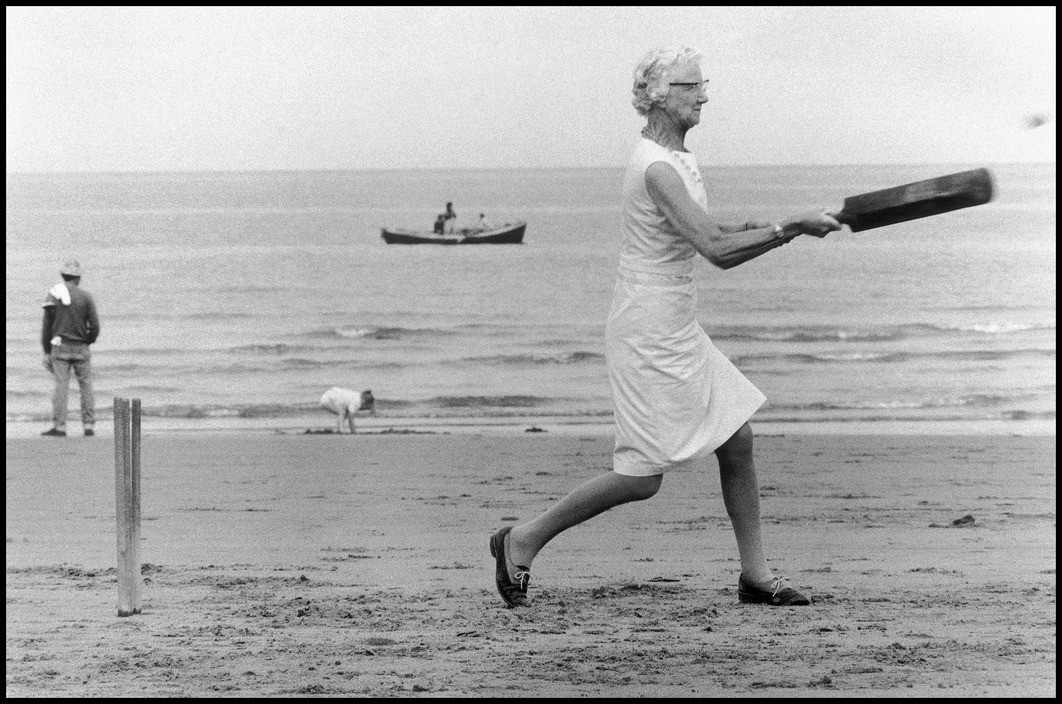
Ian Berry | The English. An elderly woman plays cricket with her family on the beach. Whitby, England. 1974. © Ian Berry | Magnum Photos
Ian Berry’s 1978 book sees him return to his homeland after many years abroad to both document and rediscover the English way of life…After a decade of travelling and living in Africa and then Paris, Magnum photographer Ian Berry conceived of The English as a project that would enable him to both document and rediscover the country in which he was born and grew up. “It seemed like a good idea to do something on the English before my eyes got too jaded,” Berry remembers whilst speaking to us about the project today. Returning to London in the mid-Sixties to become the first contract photographer for the Observer, he received a commission from the Whitechapel Gallery in 1972 to photograph the local area. His images capture the unique character of the East End and the diversity of its residents, both well-established and recent arrivals.
Source: Ian Berry’s Personal Exploration of English Life • Magnum Photos
This is the England I remember from my childhood.
Croton Point – Yew Trees
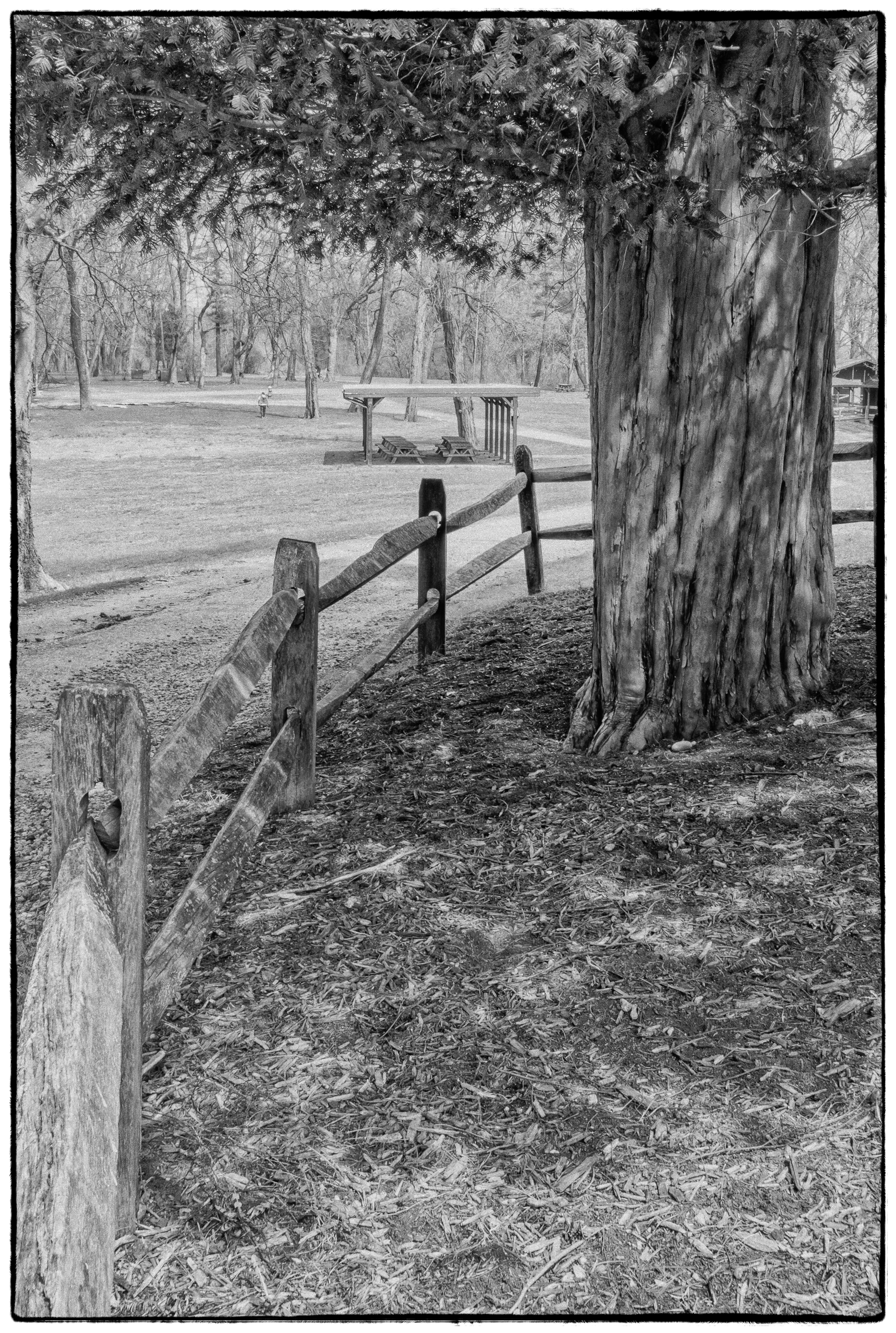
In the previous post (See: Croton Point – Cabins) I referred to a piece by Sarah Gibbs Underhill (a descendant of the original owners of “Interwasser”, a mansion, which once stood on Croton Point) in which she said: “The four yew trees are still standing, and have grown to heights of 60 to 100 feet. Since this species can live to be up to 1,000 years old, I have undertaken the task of tending to their health.”
As the photographs in this post show, the yew trees are, indeed, still there. A nearby plaque reads:
Historic Croton Yews. These four ENGLISH YEWS (taxus baccata) were planted by Dr. Richard Underhill in the mid 1800s when he lived here with his family. Their mansion stood nearby overlooking the Hudson River. The yews were purchased for thirty-seven and 1/2 cents each from a nursery in Flushing, NY. They are now on the New York State Historic Tree Register.
In the old days my country, the United Kingdom (although it wasn’t known as such at the time), was known for its use of the longbow (e.g. as at the Battle of Agincourt). Longbows were generally made from Yew trees.