Some of my favorite pictures of 2024 – Black and White


Self Portrait. Briarcliff Manor, NY. October 18, 2024.


Dove Silhouette. Briarcliff Manor, NY. April 28, 2024.


Railroad Tracks, Croton-Harmon Station. Croton-on-Hudson, NY. August 25, 2024.


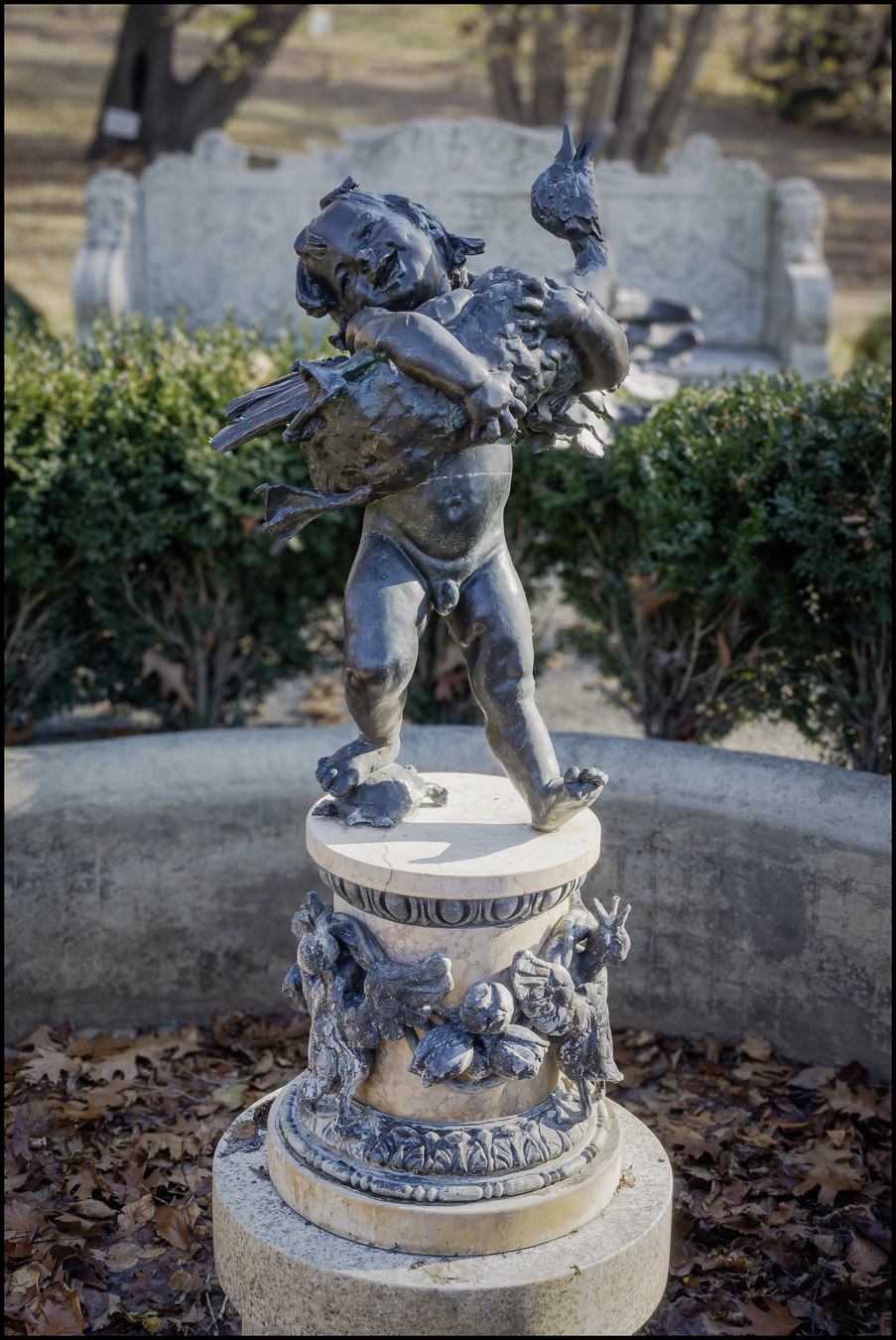
Statue, All Souls Cemetery, Pleasantville, NY. February 7, 2024.


The Rising. Kensico Dam Plaza. March 13, 2024.


Luna. Sleepy Hollow, NY. October 13, 2024.


Building Facade in Manhattan. NY, NY. April 29, 2024.


Double-arched Bridge. Ossining, NY. November 17, 2024.


Sing Sing Prison. Ossining, NY. June 24, 2024.


Grasses in a vernal pond. Briarcliff Manor, NY. March 9, 2024.


Tree Trunks. Briarcliff Manor, NY. November 1, 2024.


Photographs inside “Mudville”. NY, NY. August 10, 2024

Taken with a variety of cameras and lenses

In Tarrytown/Sleepy Hollow – Philipsburg Manor

Historic Hudson Valley describes Philipsburg Manor as follows:

Find a New Perspective on Colonial New York.

Cross the millpond bridge to Philipsburg Manor, a mill and trading complex where an enslaved community lived and labored for generations.
Learn about the enslaved individuals who worked on the property in the year 1750, and whose family relationships and personal histories are revealed in primary documents.
Step into the gristmill and learn about the life of Caesar, the enslaved miller, whose unmatched expertise contributed to the wealth of the Philipse family but benefited him not at all.

Visit the dairy in the cellar of the Manor House, where a commercial butter production was operated by Dina, Massey and Sue, three of the women enslaved by the Philipses at the site.

Discover the many ways the enslaved community at Philipsburg Manor maintained family networks, shared their cultural heritage, and expressed their fundamental humanity in opposition to the inhumane system that bound them.

For more information on Philpsburg Manor see: A Visit to Philipsburg Manor.


Taken with a Sony A7IV and Nikon Micro Nikkor 55mm f3.5

In Tarrytown/Sleepy Hollows – Statues outside Immaculate Conception Church

These three statues stand outside a church, the name of which I’m having trouble with. The header on the church’s website refers to: “St. John Paul II Maronite Catholic Church at Immaculate Conception”. Other parts of the site refer only to “The Church of the Immaculate Conception”.

There’s section on The History of the Maronites, part of which reads:

The Maronite Church dates back to the early Christians of Antioch where “they were called Christians for the first time” (Acts 11:26). She still uses as her liturgical language, Syriac, a dialect of the Aramaic that Jesus Himself spoke, and takes her name from the hermit-priest, Saint Maron, who died in 410 AD. Within a few years after Saint Maron’s death, over 800 monks adopted his way of life and became known as the Maronites. Later, the Muslim invasions (7th-10th Centuries), coupled with conflicts from within the Byzantine Empire, caused the Maronites to flee the plains of Syria and their churches and monasteries, to the natural protection of the mountains of Lebanon where they first lived in caves and grottos, and then later built small churches and monasteries. By 687, Maronites organized themselves around Saint John Maron, whom they elected Patriarch of the vacant See of Antioch and thus developed as a distinct Church within the Catholic Church.

. To read more about the history of the Maronite church see here.

There’s also a section on what the site refers to as the Westchester Mission, which I take to mean the history of this particular church rather than this much longer history of the Maronite Church in general. This section reads:

The Westchester Maronite Catholic Mission (WMCM), as it was originally known, was founded by several Westchester families. The idea of a Maronite Church in Westchester began in 2002. First mass took place at the Trinity Church in Mamaroneck NY in April 2002. Bishop Gregory Mansour officially created the Westchester Maronite Catholic Mission in June 2006. Regular masses started once a month, then starting in 2007 twice a month. September 2007, Mission home moves to the Sisters of Divine Compassion – Good Counsel Campus on 55 North Broadway, White Plains NY. In July 2011, the mission is named after Saint John Paul II.

Through the commitment of its parish members, the Westchester Maronite Catholic Mission’s home was established at the Immaculate Conception Church at 199 North Broadway, Sleepy Hollow NY in April 2013. In August 2014, the Mission acquires the Immaculate Conception Church from the Archdiocese of New York and becomes the Saint John Paul II Parish at the Immaculate Conception.


There’s also an interesting section, featuring a few black and white pictures on the art and design of the church which reads:

It is believed that our Church was designed by James Renwick, Jr. (1818–1895, Architect Columbia College 1836, M.A. 1839), who also designed the Smithsonian “Castle” in Washington and St. Patrick’s Cathedral in New York among many other landmarks in New York City and Westchester area.

A leader of multiple architectural movements in the 19th-century United States, James Renwick, Jr., elevated contemporary regard for the profession through his designs for high-profile buildings such as the Smithsonian “Castle” in Washington and St. Patrick’s Cathedral in New York. Renwick’s great success was especially noteworthy given that he was, in a sense, a hobbyist: He had no formal architectural training and did not need to work to support himself, but rose to the top of his field on the strength of his engineering background, historical knowledge, and refined sensibilities. Renwick was 25 when he won his first commission, in 1843, to build New York’s Grace Episcopal Church (Broadway and 10th Street); the popular design brought him instant renown and is an early marker of the Gothic revival period. He used a related style when designing St. Patrick’s, the largest Catholic cathedral in the United States. Begun in 1858 and completed 21 years later, the cathedral was modeled on a German forebear but incorporated French and English elements as well. Responsive to both changing tastes and the desires of his patrons, Renwick also worked in the Romanesque, as exemplified by the red-sandstone Smithsonian Institution building (1855), and in later years helped introduce the Second Empire style to America, as at Washington’s original Corcoran (now Renwick) Gallery (1871). For several years the supervising architect for New York’s Commission of Charities and Correction, Renwick designed public buildings on Roosevelt, Randall’s, and Ward’s islands. He also designed the original Main Building (1865) on the Vassar College campus in Poughkeepsie, N.Y. A house built for his parents at 21 5th Avenue—the first on its 9th Street block—was later occupied for a time by Mark Twain.

The church’s home page can be found at: https://www.johnpaul2parish.org/

Taken with a Sony A7IV and Nikon Micro Nikkor 55mm f3.5

In Tarrytown/Sleepy Hollow – Patriots Park

During the Revolutionary War Major John André of the British Army was captured, disguised in civilian clothing, at this site by three Patriot militiamen. They found papers on him that implicated him in espionage with Benedict Arnold, a high-ranking officer of the Continental Army. After a military trial André was executed; Arnold defected to the British and lived his remaining years after the war in England.

A memorial was erected on the site in 1853, on land donated by some members of the local African American community. It was one of the earliest monuments to honor any event of the Revolutionary War. Later it was expanded and incorporated into Brookside Park, a late 19th-century Beaux-Arts residential development by the firm of Carrère and Hastings. Still later it became the campus of two different girls’ boarding schools, one of which was attended by Lauren Bacall. It became a park and took its current name in the middle of the 20th century, and all buildings but the gatehouse were demolished.

Note the statue commemorating Andre’s capture in the top left corner of the first picture.

It has a special meaning for me. For a long time in the 1990s and early 2000s I pretty much lost interest in photography. Then I left my camera in a taxi in Geneva, Switzerland in 2010 (I eventually got it back thanks to the effort of one of my sons-in-law), but before I did, I bought a new camera: a Panasonic Lumix LX-3 and somehow it reignited my interest.

I had a serious illness in 2020 and wasn’t able to get around much. After I recovered this was the first place I went to take some pictures.


Taken with a Sony A7IV and Nikon Nikkor Micro 55mm f3.5

An Organ Recital

Last weekend I went to an organ recital at the Briarcliff Manor Congregational Church. I’ve been to some local events in the past and was not always impressed by the performances. I will not quickly forget a performance of Hande’s Messiah. The singers were whoever showed up and wanted to sing. I read that the orchestra was anyone who wanted to play. No auditions necessary.

But this was very different. The two performers clearly knew what they were doing and delivered an excellent performance. The organ is an amazing instrument, but it looks exceedingly difficult to play.

I really enjoyed it.


Taken with a Sony A7IV and Rokinon/Samyang AF 75mm f1.8 FE