Why I collect cameras and this blog’s 4,000th post

First an unrelated comment: I started this blog over ten years ago, and this is the 4,000 post. I’m amazed I’ve been able to keep it up.

Back to the topic I’ve never been a collector. Until I started collecting cameras I had never collected anything. But there’s something about cameras, particularly older cameras that fascinates me. I don’t buy cameras because I think they’ll make my photographs any better. I occasionally buy a camera because because I feel I need it take on a new challenge. For example, about a year ago I bought a camera that had fast autofocus, high burst rate, accurate tracking. I bought this with a 150-600 lens because I wanted to try bird photography and I felt that I didn’t have a camera/lens combination that would be able to do this. But I know that most of cameras I purchase will not make my photography one iota better.

But this is rare. I generally by used, older film and digital cameras because I just like them. I like the brass and the chrome, I like the way they feel, the sound of the shutter, all the buttons and dials etc. I’m not the kind of collector who just likes the way something looks and doesn’t actually use it for its original purpose. I like my cameras to work (how else would I be able to figure out what all the buttons and dials do), but I’m not too fussed about how they look.

I recently came across an article on Casual Photophile that I found quite interesting. It’s titled “It’s Okay to Like Cameras More Than You Like Photography“. I wouldn’t entirely agree with him. In my case it’s more like “I like cameras as much as I like photography”, but I can see where he’s coming from.

In the article he says:

People sometimes ask me what I do for work. Good question. What is my job at Casual Photophile. Author, editor, founder, photographer; these apply, sure. But let’s be honest. It’s more accurate when I attach my name to the job title that I invented when I started this site. If I’m anything at all, I’m a Professional Camera Liker.

But now and then I get the impression that, for some people, this isn’t enough. You see it in the comments here on occasion. But the tension between “craft” and “collecting” is most apparent in the wider online world, on places like Instagram and YouTube, where it’s easy to stumble into arguments between those who identify as photo-centric and those who identify as camera-centric within the hobby/profession of photography.

The whole conflict is kind of pointless, but it’s also prevalent enough that, here I am, writing an article about it.

To start, let me state my position: I like cameras more than I like photos. I can hear the collective gasp!

But I’m not alone. Plenty of my readers simply love playing with cameras. We love the feel of them, the noises they make, the history of the machines and the people who made them. We stare into the crystal depths of the 55mm F/1.2 Nikkor, lost in the dusky innards of the optical assembly which we know, because we care about things like that, is a double Gauss design comprised of seven elements in five groups.

I must say that I agree.

Above a few of my much larger camera collection: Rolleiflex Automat B (MX-EVS in North America); Nikon D80, Vest Pocket Kodak, Olympus 35RC, Leica 1a, Olympus Stylus Epic, Pentax Auto 110.
New World Record price for a Camera

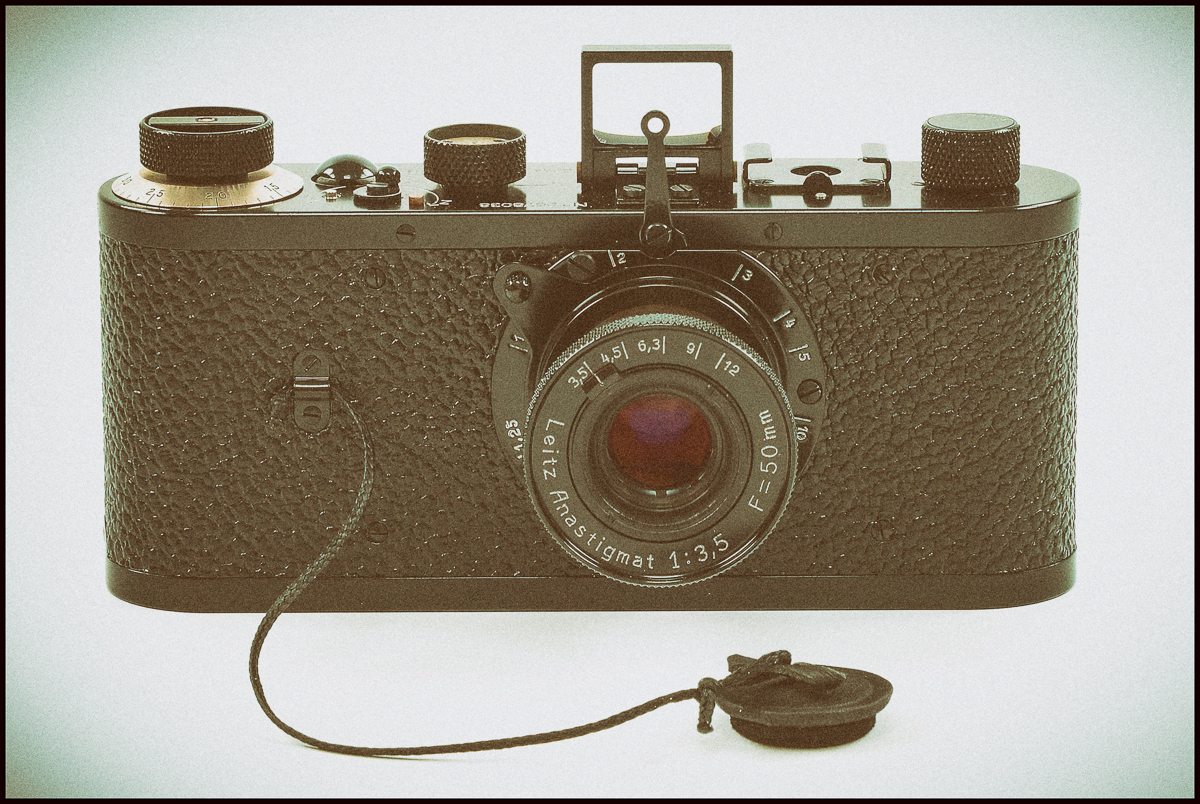
“The serial production of the Leitz Camera, or Leica for short, the world’s first 35mm camera, is considered a milestone of modern photography. Before the first cameras were available in the mid-1920s, Ernst Leitz produced around 23 models of the prototype 0 series in 1923 and 1924. One of these rare cameras – the 0-series no. 105 – has now been sold at the 40th Leitz Photographica Auction for a price of € 14.4 million (about $15 million) including buyers premium. The 105 has thus broken the world record for the most expensive camera of all times.

Number 105 belonged to Oskar Barnack, who had designed the “Liliput camera” shortly before the First World War. It was the prototype of the Leica and thus also the prototype of the 35 mm camera per se. Barnack captured numerous motifs from his family life with the 0 series No. 105. He used the experience he gained in the process in the further development of the camera and its subsequent models. Barnack’s name is engraved on the top of the viewfinder of no.105.

The historical significance of the camera and its direct connection to Barnack were reflected in its pre-determined estimate of 2,000,000 to 3,000,000 euros. “To put these numbers into perspective: The most expensive camera in the world to date – also a 0-series, serial number 122 – was sold at the 32nd Leitz Photographica Auction in 2018 for 2.4 million euros including buyers premium,” said Alexander Sedlak, Managing Director of Leica Camera Classics, an Austrian subsidiary of Leica Camera AG. Leitz Photographica Auction operates under the umbrella of Leica Camera Classics.

“We are fully specialised in historical cameras and accessories. It was therefore a special pleasure for us to be able to auction Oskar Barnack’s personal camera, a prototype of the camera generation that laid the foundation for modern photography in the mid-1920s, as part of our anniversary auction,” said Sedlak. The intangible value – the historical significance – of 0 series no.105 goes far beyond the sum of € 14.4 million for which this camera was ultimately sold. Nevertheless, the world record sum proves the continuous trend of the last few years: “The prices are rising – the interest in vintage cameras is greater than ever before.” (Leica)

The picture above is not of the actual camera. Rather it’s a photograph of a replica introduced by Leica in the year 2,000. Out of production now for some time it can be found used for around a mere $2,000.

A walk to Ossining – Old Croton Aqueduct Trail

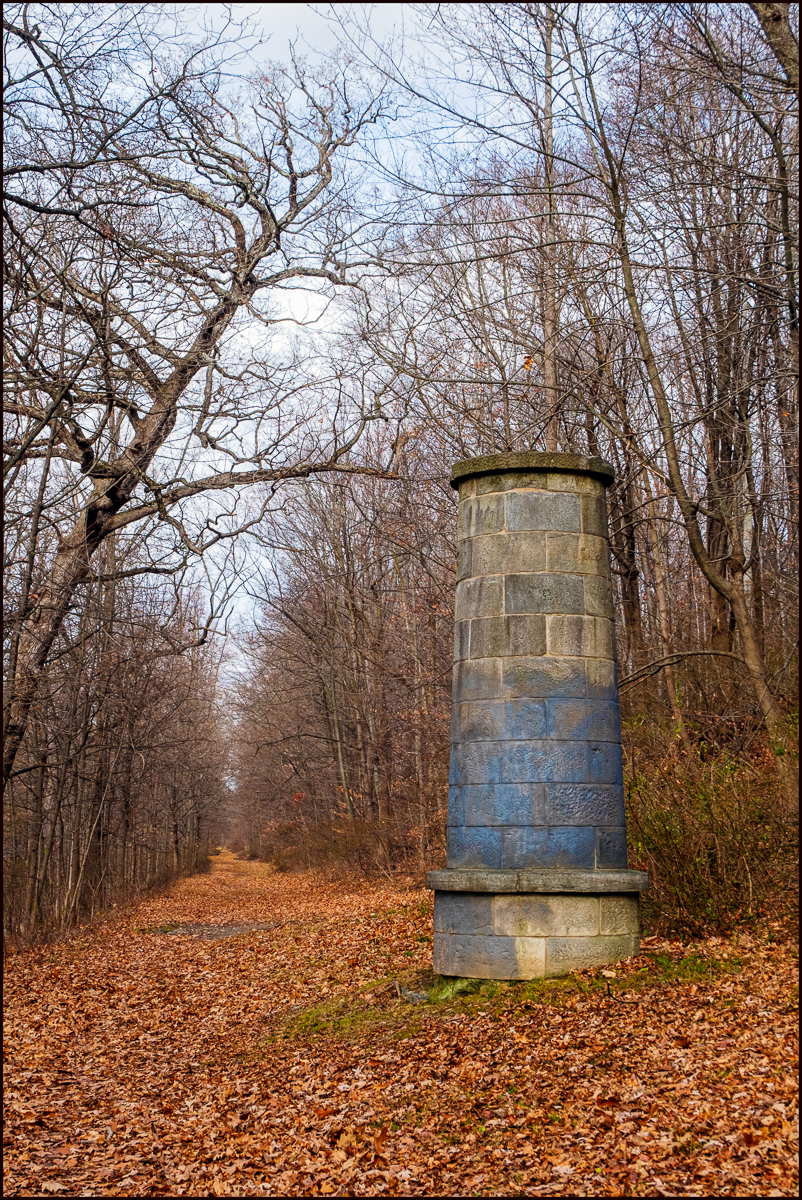
A short walk South along Route 9 from the blue house, the Old Croton Aqueduct trail crosses the road. I turned onto this and headed towards home. Above: One of the 21 ventilators,conical stone towers about 20 feet high, that were placed about a mile apart along the Aqueduct “to give free circulation of air through the Aqueduct,” in the words of the chief engineer John Jervis.


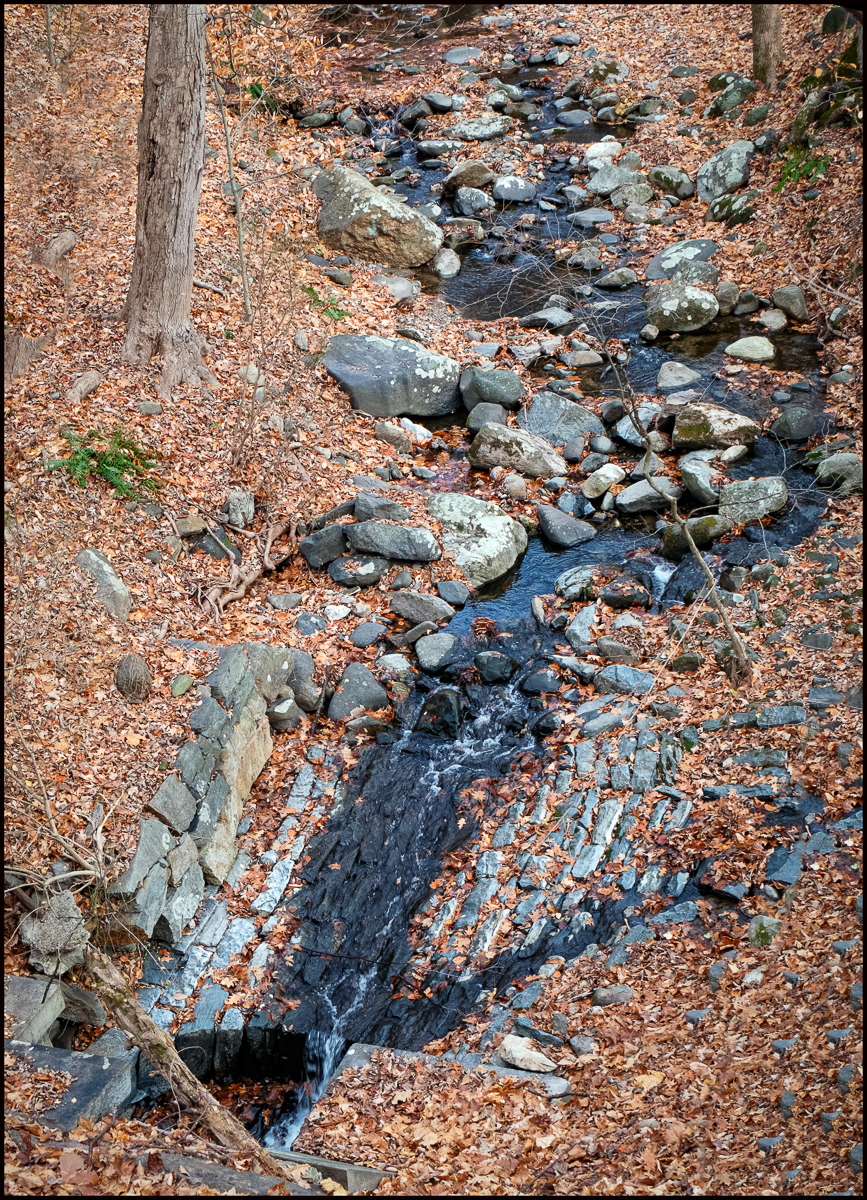
Sparta Brook as it passes under the Old Croton Aqueduct trail.

Taken with a Fuji X-E3 and Fuji XC 16-50mm f3.5-5.6 OSS II

Bakelite Cameras

I started collecting cameras around 2011. My first serious camera was a Minolta Hi-Matic 7sII given to me by my late wife. So I thought I would focus my collection on compact rangefinder cameras (e.g. Canon G-III, Olympus 35 RC etc.). After acquiring a number of these I switched to full size rangefinder cameras (FEDs, Zorkis, Canon P, Nikon S2 etc. I even got a Leica) What then followed were forays into classic SLRs (e.g. Nikon F, F2 etc.); autofocus SLRs (e.g. Nikon N90x, Canon Eos Elan II, Minolta Dynax 5 etc.); Medium Format cameras (e.g. Rolleiflex, Minolta Autocord etc.). I even picked up a number of Point and Shoot cameras (e.g. Olympus Stylus, Olympus Stylus Epic, Olympus XA2 etc.

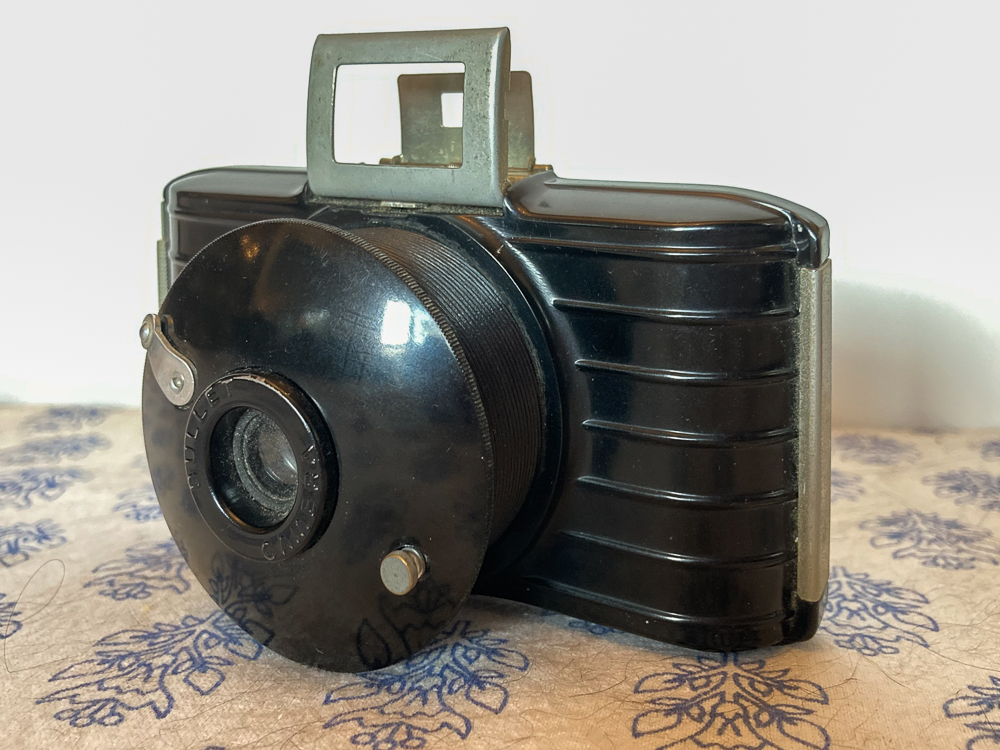
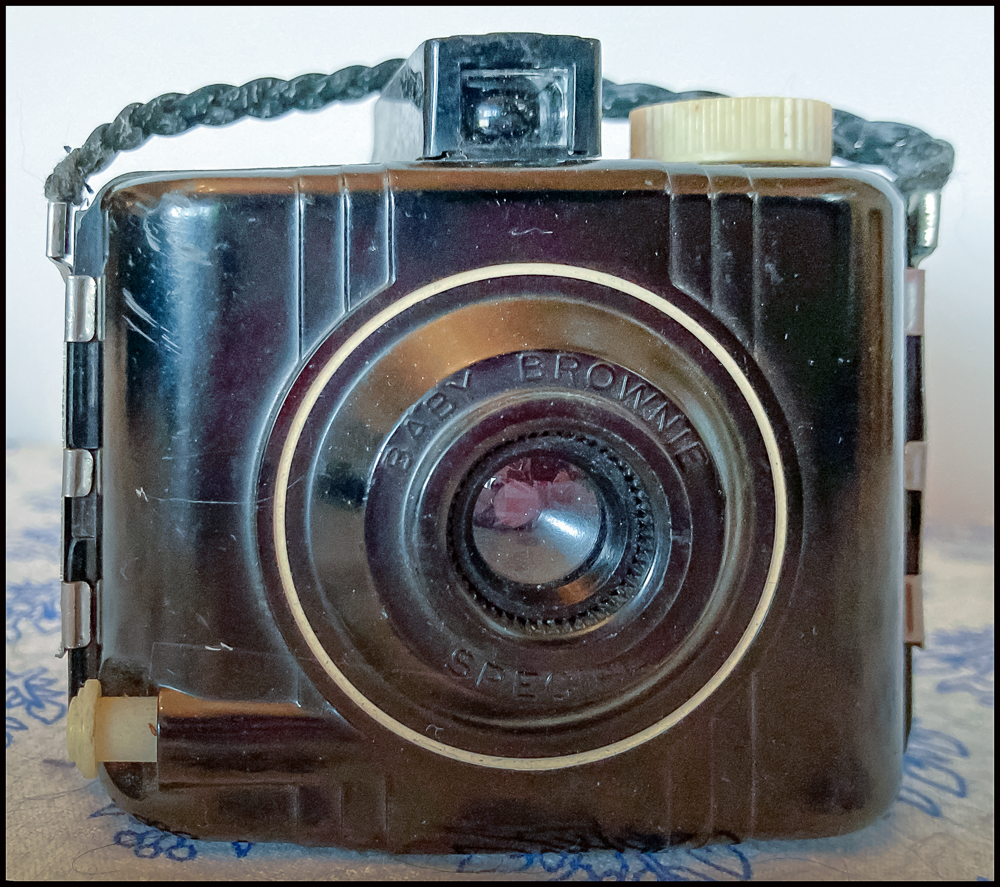
Recently I started to think about what other kinds of cameras I could collect. Then I noticed that somewhere along the line I’d acquired a few bakelite cameras, two of which appear above (a Kodak Bullet) and below (a Kodak Baby Brownie). Maybe I’ll collect some of these. Why? They’re usually quite inexpensive; many of them have lovely art deco designs; I love the shiny (usually but not always) black plastic.

So what is bakelite and how was it used in cameras:

THE FIRST TRULY SYNTHETIC PLASTIC
In 1907 Leo Hendrick Baekeland, a Belgian chemist working in New York, invented the first entirely synthetic plastic. It was a thermosetting phenolic resin patented in 1907 under the name Bakelite. It was made by combining phenol and formaldehyde using heat and pressure. Once the resin hardened, it could not be re-melted by the application of heat. This discovery was of profound importance and effectively gave birth to the modern plastics industry.

BAKELITE CAMERAS
Camera makers soon realized that the properties of this phenolic resin were ideally suited for the use in cameras. Bakelite was opaque, sturdy, durable and could be moulded to any shape. Early Bakelite cameras tended to be phenolic imitations of their metal and cardboard counterparts. However, in 1934 something truly remarkable happened. The industrialist Walter Dorwin Teague designed a camera that was better suited to the characteristics of the new material. This was the Baby Brownie – a black phenolic box with a distinctive vertical ribbing.

Other great designs followed. The Agfa Trolix of 1936 had curved size sides, rounded corners, decorative ribs and a shiny surface all typical of the 1930s streamlining. It is made from Trolitan plastic which is the German equivalent of Bakelite. Such features would have been very difficult to realise in metal.

Another outstanding design of the period was the 1937 Purma Special. This camera took the form of an elegant curved and tapered rectangular case of Bakelite. Unlike most other models the film advance mechanism, shutter lever and shutter release button did not protrude from the body. Again, these features would have been more difficult and costly to realise in metal. (Art Deco Cameras)

Taken with an Apple iPhone 8 (second version).

Do you like old cameras?

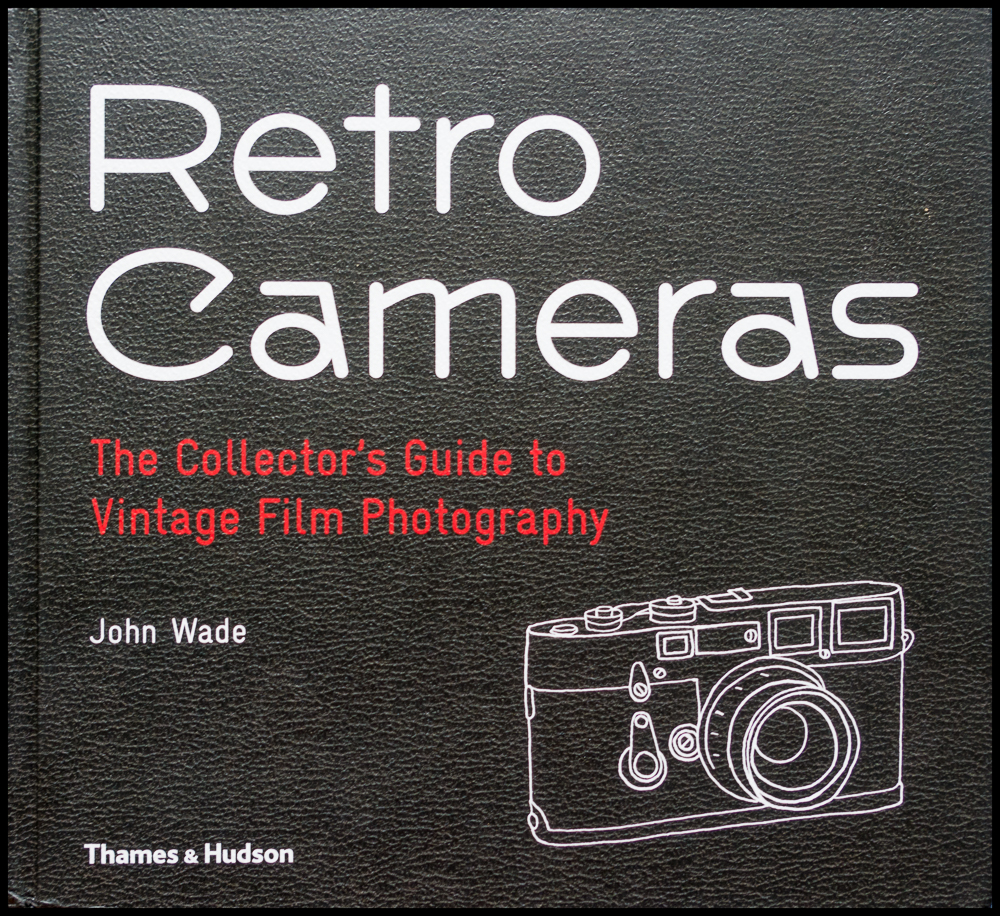
If so then this might be a book for you. It tells the story behind 100 vintage film cameras.

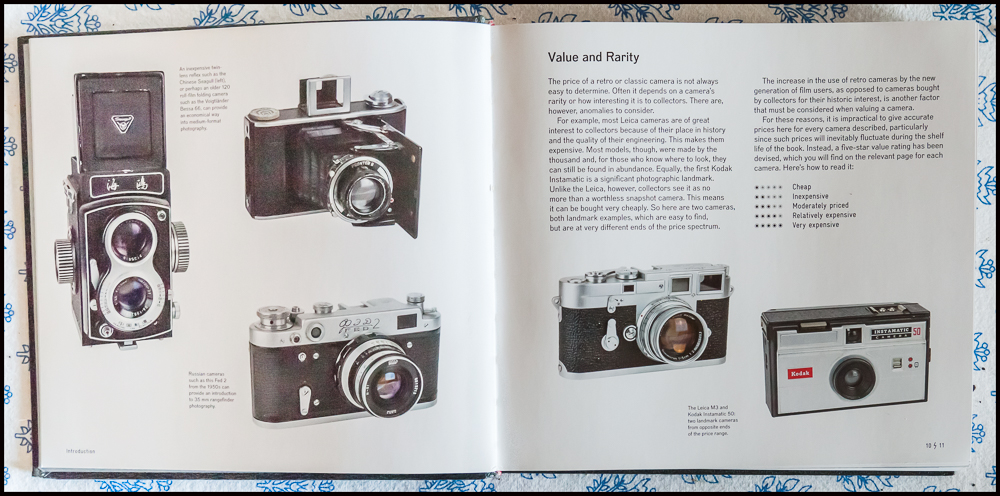
An introduction touches on issues of value and rarity and then goes on to explain the purpose and structure of the book:

After discussing some of the often forgotten basics, each section deals with a type of camera and how to use it, aiming at the photographer contemplating using a manual or semi-automatic film camera for the first time. The cameras listed are all practical propositions for a retro photographer with a reasonable budget. Each one has been carefully chosen as a typical example of a camera from its era. A comprehensive glossary at the end of the book gives definitions of terms that might be unfamiliar to photographers in the digital age.

This is followed by a section on each type of camera:

  • 35mm single-lens reflex
  • 35mm rangefinder cameras
  • 35mm viewfinder cameras
  • Roll-film single lens reflex
  • Sheet and roll-film folding cameras
  • Twin-lens reflex
  • Instamatic cartridge cameras
  • Stereo cameras
  • Panoramic and wide-angle cameras
  • Miniature cameras
  • Instant picture cameras

The book concludes with a section on retro accessories (exposure meters; rangefinders; flashguns, tripods, filters, close-up attachments, focal-length adapters, stereo accessories.

The book is nicely made with a good, solid cover and glossy pages. It’s also lavishly illustrated.

While the selection seems a little idiosyncratic I doubt that you’ll ever one that all retro camera aficionados will agree on.

There’s a useful review of the book on Cameralabs. It concludes as follows:

There’s no shortage of camera history books around, but few that look this good. Of those that do, Retro Cameras stands out for Wade’s curation, compiling a compelling collection of well-known and unusual models with great-looking product photography throughout and just the right amount of text to inform without becoming a dry reference volume. Recommended whether you’re a collector, historian, camera geek or lover of a good coffee table book. Suffice it to say, it’s a great gift for photographers who love older cameras.

I couldn’t agree more.