Olympus Mju (Infinity Stylus) II Zoom 80 – Results

Here are some results from my July film camera (See: July Film Camera – Olympus Mju (Infinity Stylus) II Zoom 80).

I’d taken a some pictures (in Croton-on-Hudson and while walking to meet a friend in Ossining, NY). Then I went with my wife to Muscoot Farm to see a friends’ paintings – part of a water color exhibition being held there. I was getting close to the end of a 24 exposure roll so I decided to quickly finish it off so I could send it to be processed. I got up to 24 exposures, and then past. Fine, I thought, you usually get a few extra exposures. But then the the exposure counter kept on going. I glanced at the small window in the back of the camera and confirmed my suspicion that I had put in a 36 exposure roll (I have a number of very old rolls of Kodak Gold. I don’t know where they came from, but when I’m trying out a new camera I just grab one of them). As I’m never sure how well a “vintage” camera will work, I don’t usually spend too much time on getting a great shot. This time, however, I was definitely “snap happy”, just wanting to finish the roll and get it off. I suppose I was using the camera as intended: point shoot, point shoot, point shoot…So how did it all come out?

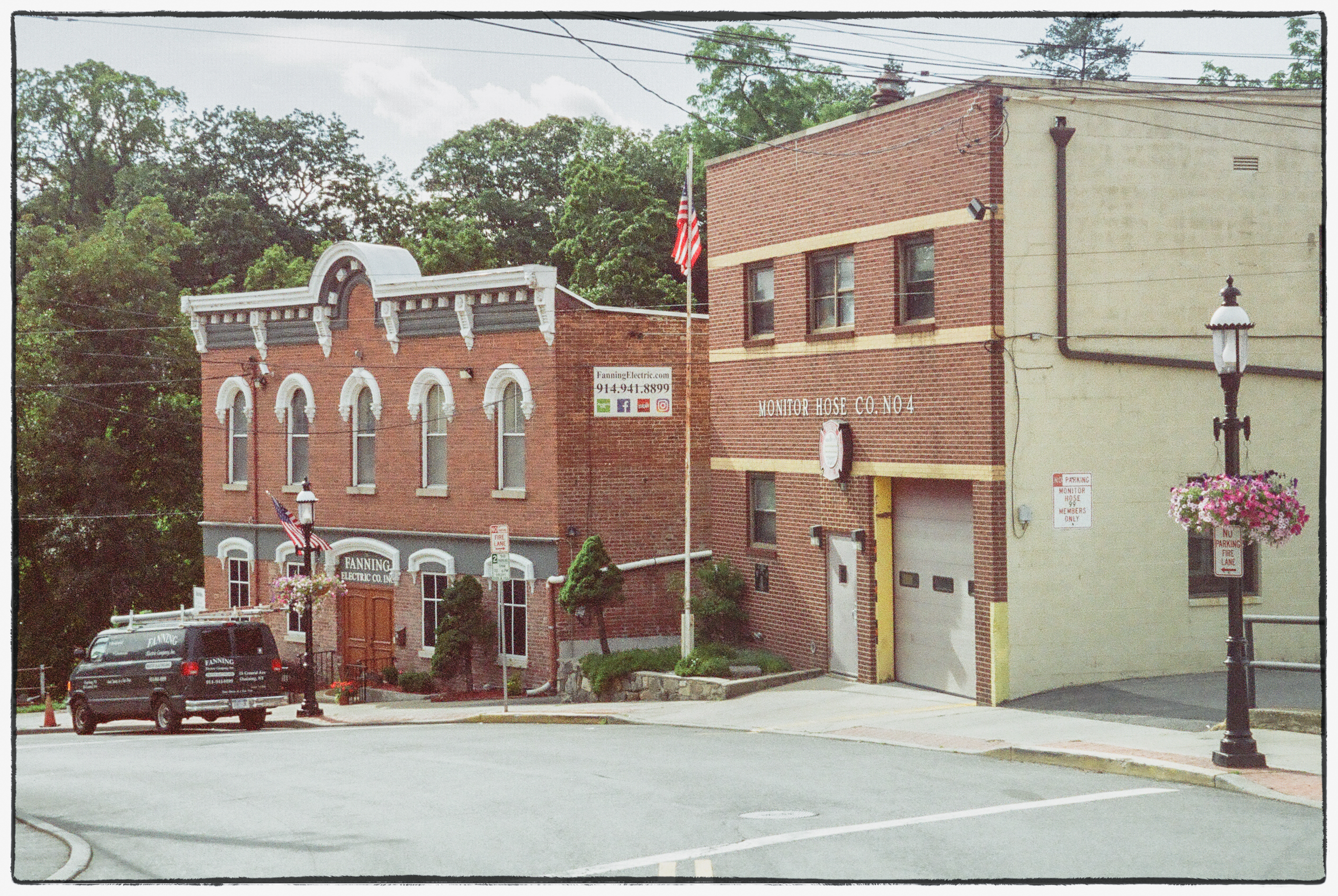
Not too bad as it turns out. Of the 36 exposures there were about 16 I liked. Of the remaining 20 I rejected 7 because I’d taken more than one picture of the same subject and I liked another better. The pictures were OK, but I liked others more. That left 13, 4 of which I rejected because of poor composition (i.e. my fault rather than the cameras); 5 because of blur (possibly because the camera had selected a slow shutter speed); and another 4 where the exposure was way off.

The camera is certainly capable of taking decent pictures. However, I did have some problems with focus/exposure. I’m not entirely sure which one it was because it seemed to happen most when I tried to focus on bright objects (e.g. a bright, white building in full sun, a white flower etc.). The resulting image came out very badly overexposed, to the extent that I couldn’t really determine whether it was in focus or not.

I also experienced the same problems as I’d had the Olympus Infinity Stylus and Olympus Infinity Stylus Epic: the inconvenience of having to turn off the flash every time I turned the camera on; the complete lack of any kind of information re shutter speed and aperture.

In addition this particular camera suffered from the light leak problem I mentioned in my earlier post. I’d had this in mind when I took the pictures and had composed somewhat less tightly than I usually do. This allowed me to crop out the leak on most of the exposures.

I felt that the lens was not as sharp as that on the Stylus and the the Stylus Epic, particularly at the long end of the zoom where it was soft.

On the plus side I was pleased with the one flash exposure I took.

I’m not likely to use cameras of this nature very much as I don’t like the lack of feedback on shutter speed/aperture. If I were to use one I would be more likely to use either the Stylus, or the Stylus Epic because of their better lens and the fact that the zoom isn’t all that helpful. And then there’s the light leak. That would be enough to prevent me from using the camera regularly. So all things considered it’s decent picture taker, but not for me.

Above Ossining, NY Street Scene
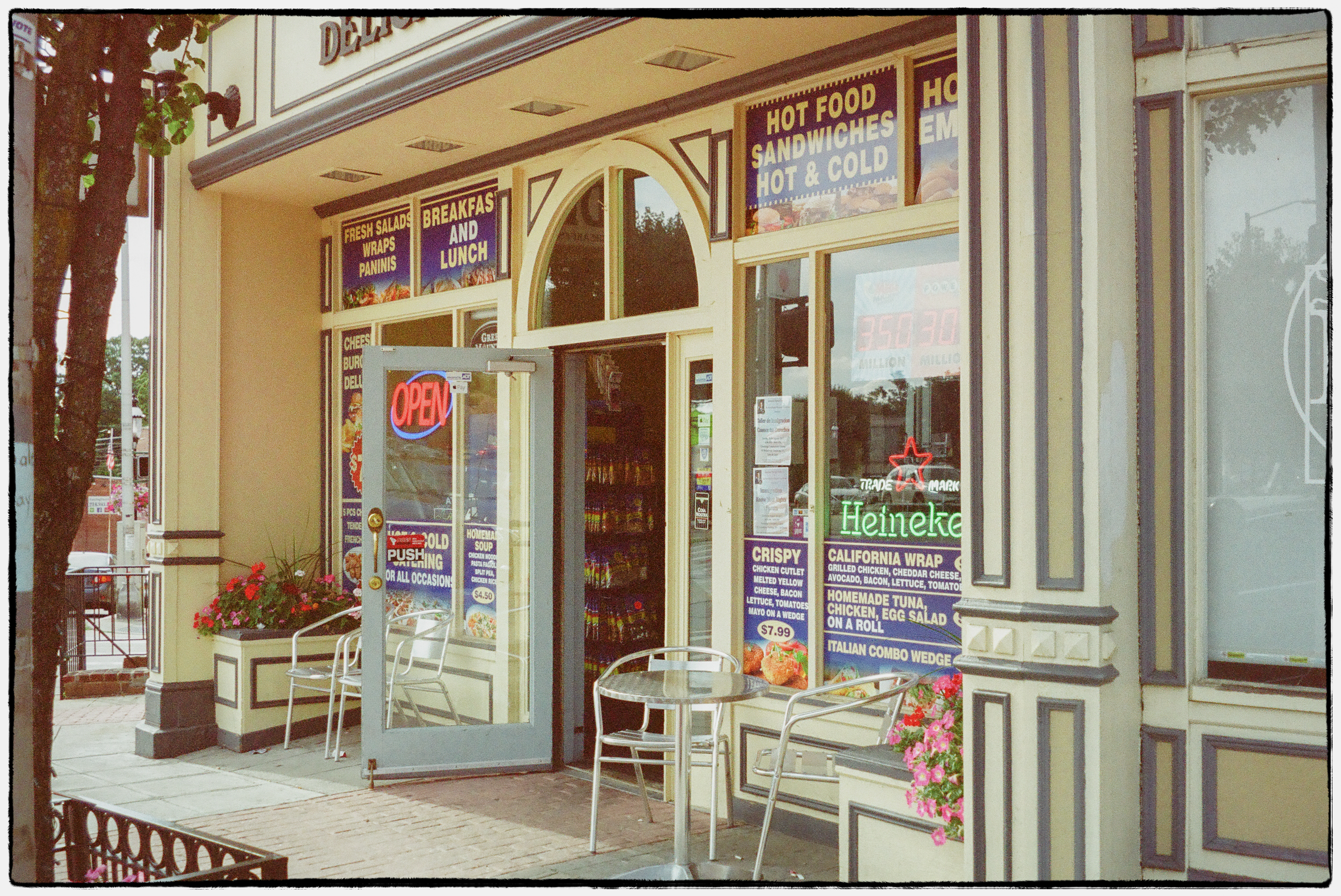
Ossining, NY Storefront.
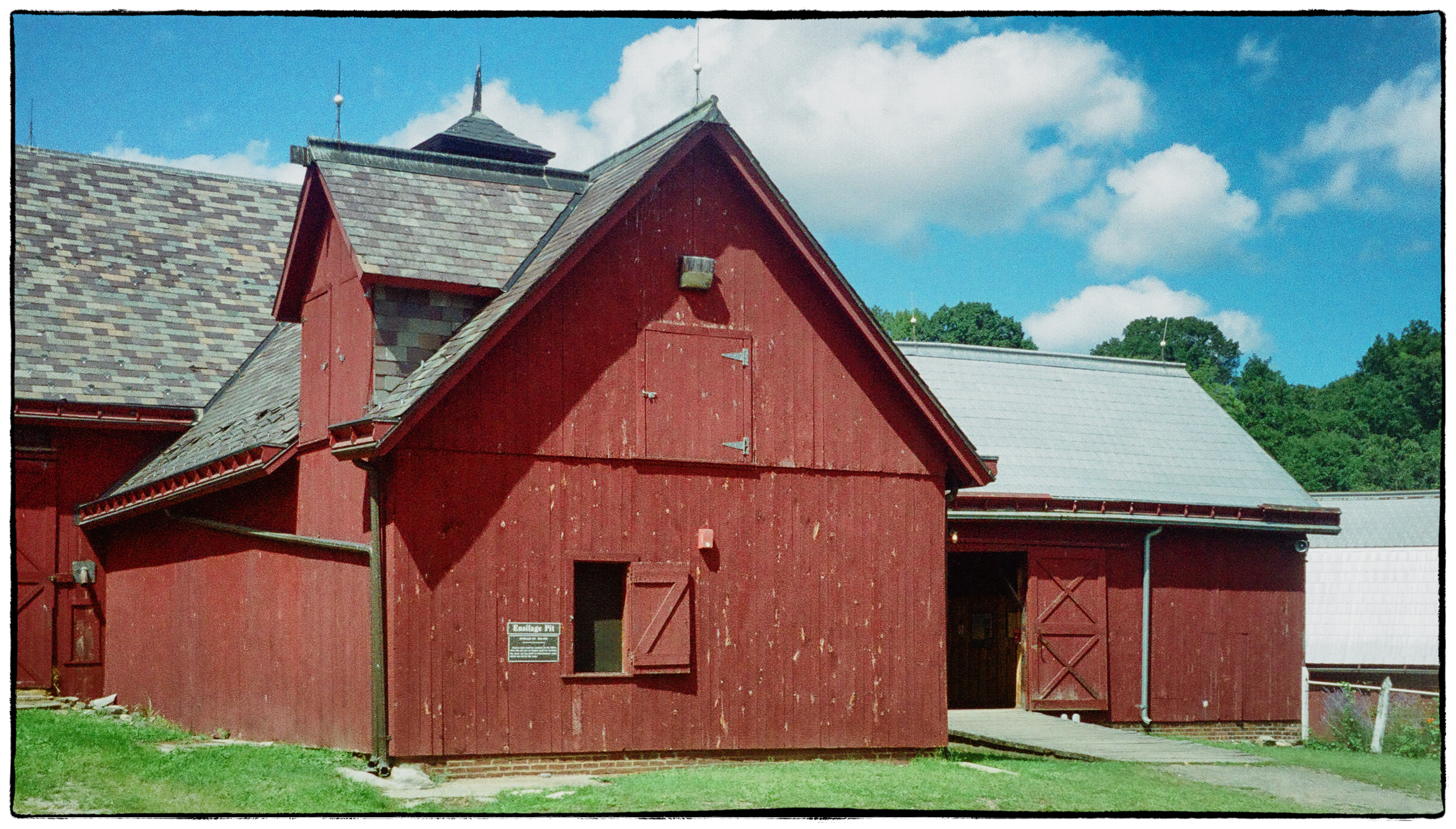
Muscoot Farm, Red Barn.
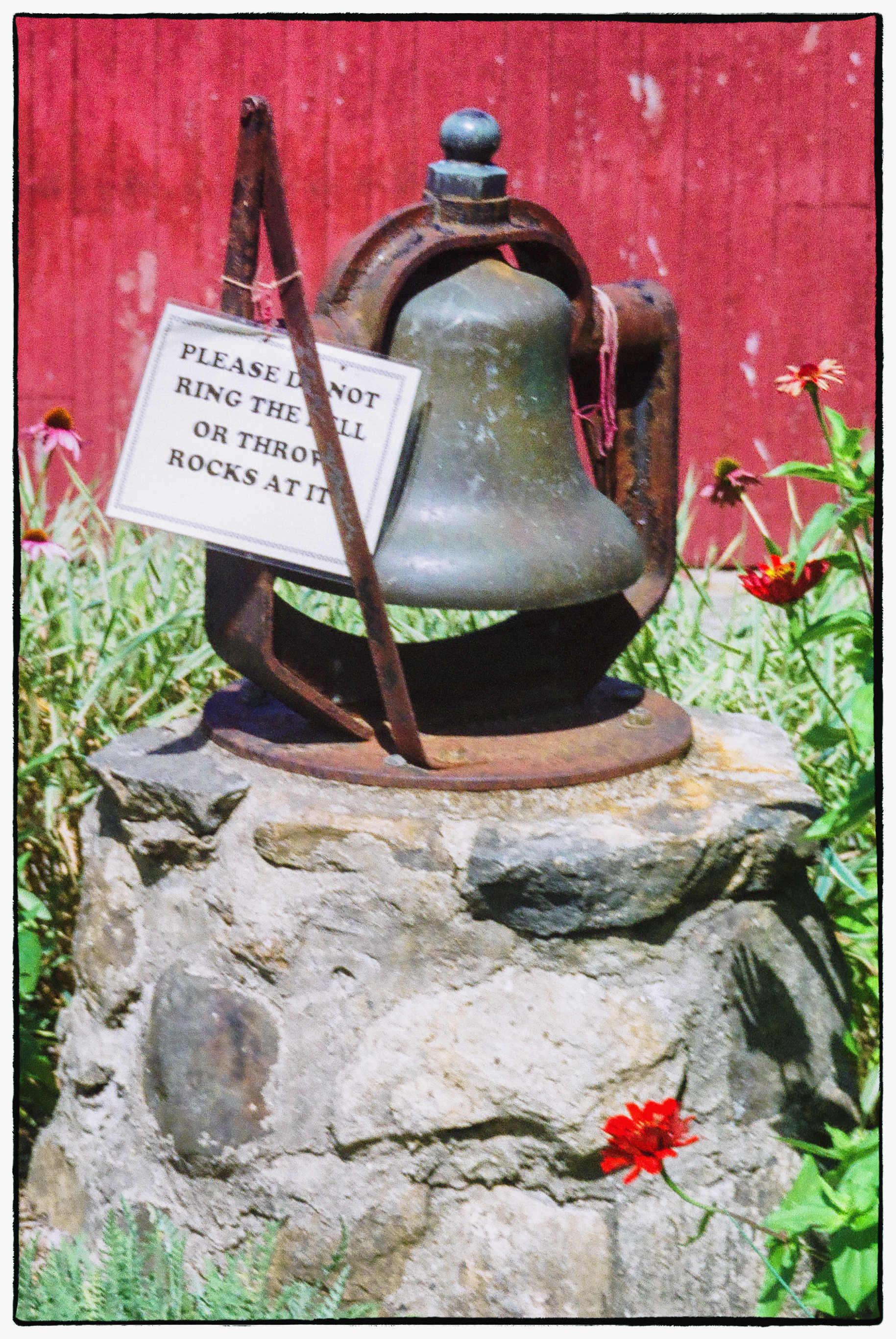
Muscoot Farm, Bell and Sign.
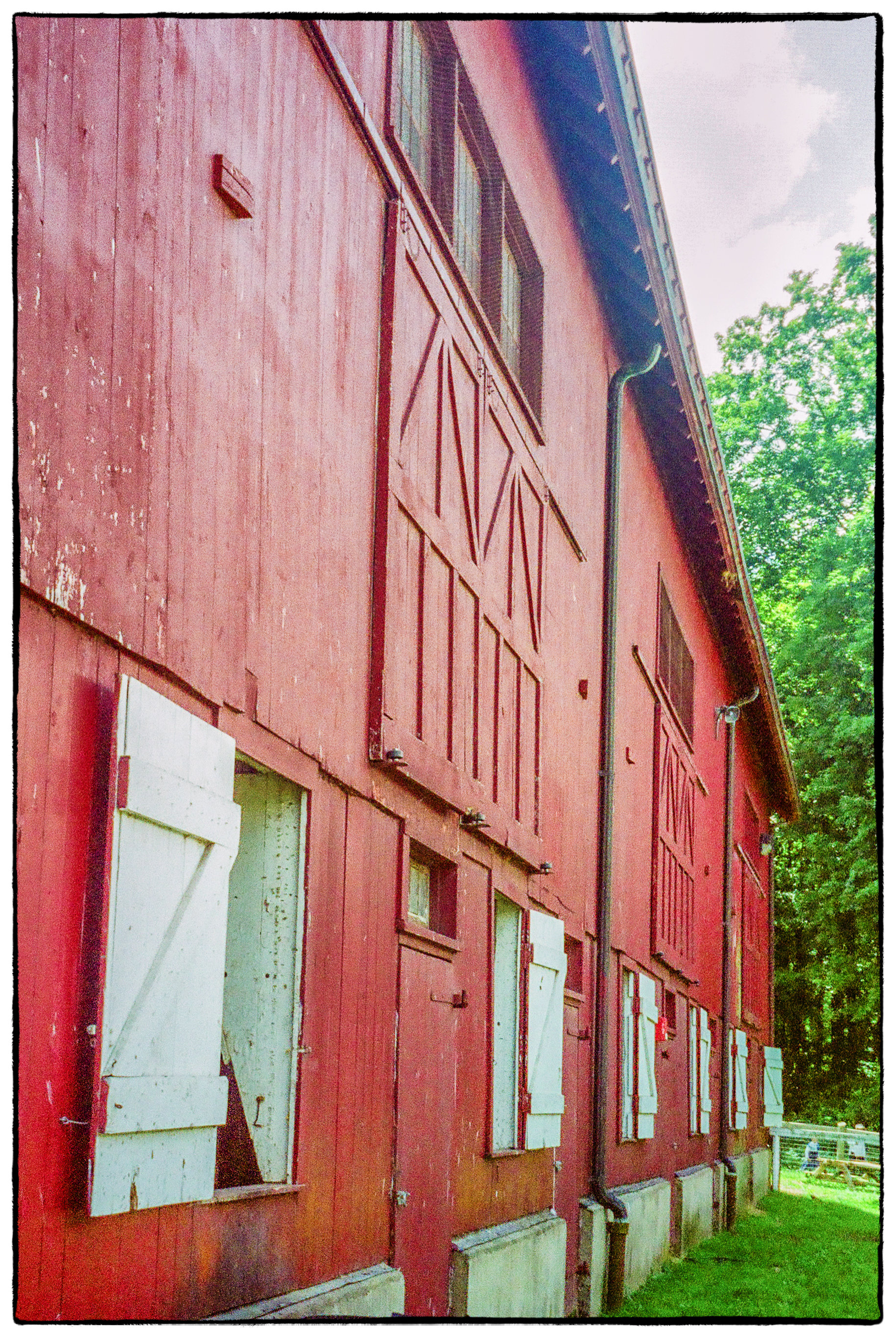
Muscoot Farm, Another Red Barn.
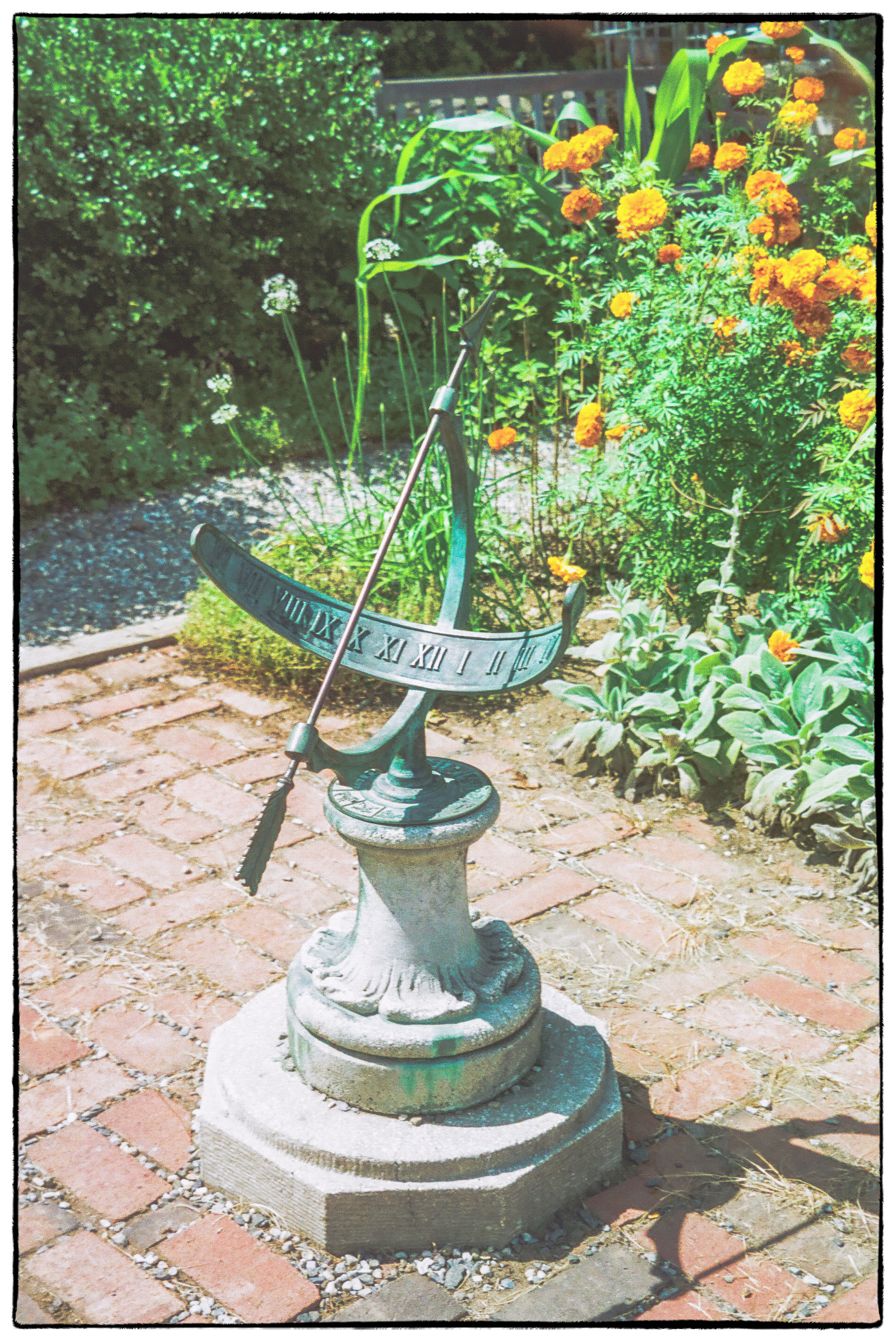
Muscoot Farm, Sundial.

For more pictures taken with this camera see:

Gustavo

This my friend Gustavo. We’d arranged to meet at 3 Westerley (See: Sunset Drinks at 3 Westerley and Sunset Drinks at 3 Westerley part II) for drinks and a meal.

For a variety of reasons I don’t take many pictures of people. And I don’t usually like using on camera flash, or for that matter any kind of flash – mostly because I’m largely inept in terms of flash photography. However, on this occasion I’d been talking to Gustavo about why I still use film cameras and I suddenly had the urge to take his picture with a film camera. It was too dark to do anything but use the flash, so contrary to my usual usage I didn’t turn it off and just took the picture with the flash on.

In my opinion it came out remarkably well, without the harshness and extreme contrast that you usually find with on camera flash.

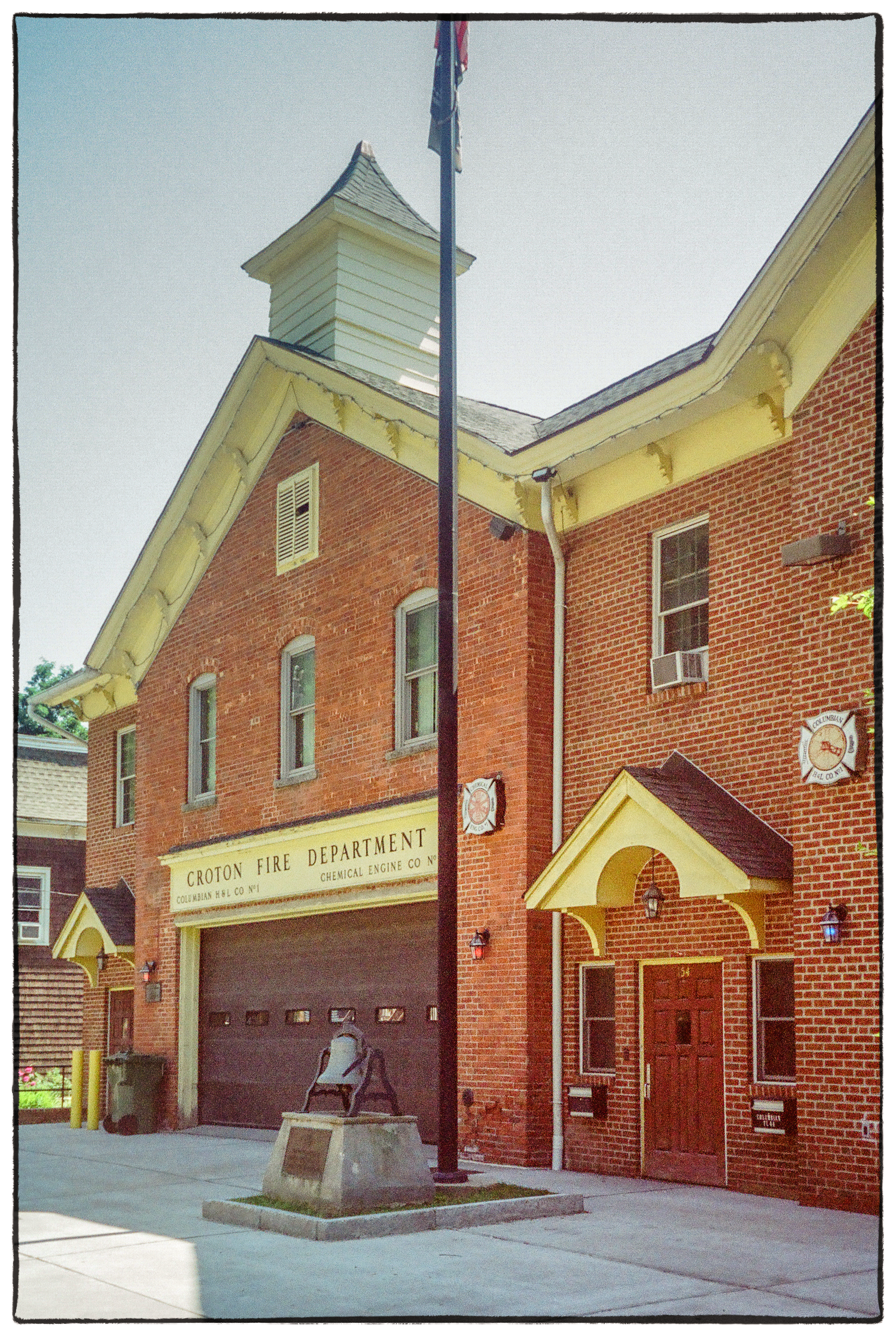
Croton-on-Hudson – Fire Department, Hook and Ladder Company No. 1. Chemical Engine Company No. 1

The Croton-on-Hudson Fire Department has a lengthy, and interesting section on its history, which includes a number of fascinating historical photographs. I’ve included a summary below, but it’s well worth taking the time to read the entire section.

“Washington Hand Engine Company” founded in 1891 after an inadequate response to a fire. Soon afterwards additional companies were started: “Independent Fire Company” and “Columbian Hook and Ladder Company”.

Because of a poor water supply a The Independent Fire Company adopted a chemical (“soda-acid”) system changed its name to “Chemical Engine Company No. 1“ in 1907.

The Department was motorized in the period between 1917 and 1923 and an alarm system including a steam whistle was also installed during the 1920s. Hydrants were also becoming more widespread.

With the merger of the Croton and Harmon communities, a need for a third pumper company, Harmon Engine Company No. 3 was founded in 1922.

In 1953 two way radio was introduced, in 1954 the first air-pack and the first true ambulance.

The 1970s saw the entry into service of a new ladder truck. Harmon Engine accepted a new pumper.

Washington Engine’s firehouse was replaced with a new building in the 1980s and the department also began to experiment with the use of a water tanker, the first of which had a 2,700 gallon tank.

In June of 1990, the department welcomed a new addition in the form of a 1990 International / Emergency Equipment Inc. 3,300 gallon Tanker/Pumper. In 1992, the Department celebrated its 100th anniversary. The 1990s also saw the introduction of Thermal Imaging Cameras, increased training requirements and the use of “Firefighter Assist & Search Teams (FAST).”

Two events, which I didn’t include in the summary, but which nonetheless are still worth reading involved aircraft:

On October 9, 1972 an air show was the major attraction in Croton, during which the crowd watched as a plane crashed in to the Croton Reservoir. Rescue crews sped into action while the Mastor of Ceremonies, Geraldo Rivera, called for a moment of silent prayer for the pilot. Though search crews scoured the area, the wreck was never found.

October 14, 1986 began like any other day for most people, but it quickly became a day for the department to remember. On that day, a small airplane became lost in the dense fog, which blanketed the area. At 10:25 AM it crashed into the house at 31 Elmore Avenue. The pilot died in the crash, the only resident home at the time escaped unharmed while neighbors turned in the alarm. When the department arrived on the scene, flames were rapidly consuming the home. Under the command of Chief Gerald A. Munson, crews advanced multiple hose lines, and the department brought the fire under control quickly, saving most of the structure.

Taken with an Olympus Infinity Stylus Epic Zoom 80

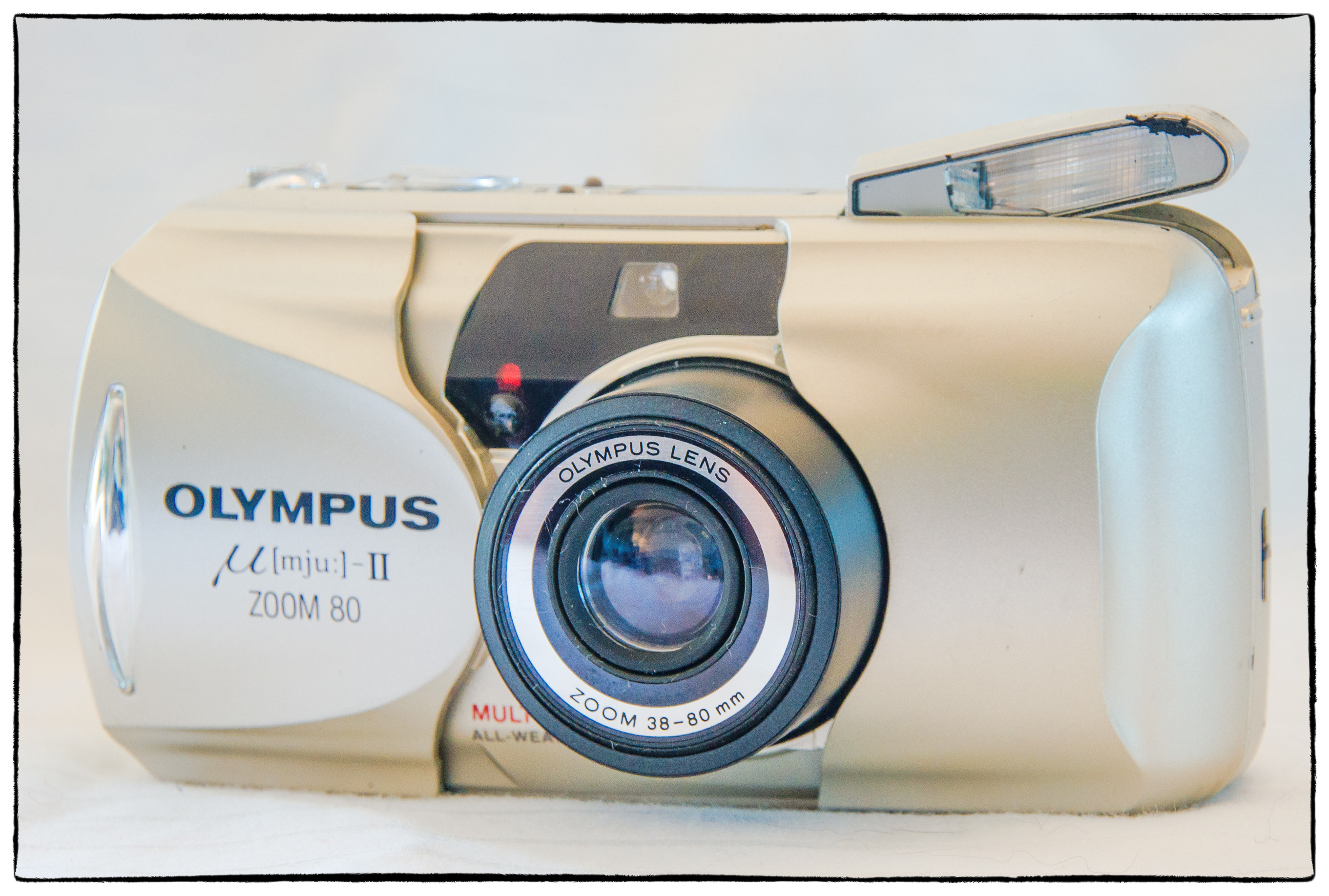
July Film Camera – Olympus Mju (Infinity Stylus) II Zoom 80

Unlike the Mju (Infinity) and Mju II (Infinity Stylus Epic), which both have fixed 35mm lenses (at f3.5 and f2.8 respectively) this one has a 38-80mm, f/4.5-8.9 zoom (5 elements in 4 groups) focusing to two feet and with apertures from f/4.5-8.9. I bought it at a nearby Goodwill store for the astronomical price of $1.99 in great cosmetic condition.

There’s not really a lot you can say about this camera. It’s a pretty standard Olympus camera of the period with a sleek, still fairly modern (it was manufactured from 1999-2003) look. It’s small and fits easily into a pocket and has the standard sliding door design. Slide the door to the right and with a whir the lens extends and a flash pops out.

The camera top has rocker switch which allows you to zoom the lens. When you do the lens extends about an inch more bringing its total length to about two inches. Right next to the zoom switch is the fairly large shutter release, and to the left of that a couple of small buttons, one of which controls the self timer and remote, and the other the flash (on, redeye reduction, off). This latter button also allows you to set an infinity mode and a night scene mode. Between these two buttons and the flash sits a small LCD, which shows which frame you’re on (or ‘E’ of if no film is in the camera) and also displays the various icons indicating which options (flash, self timer etc.) you’ve chosen. I have the quartz date version so the LCD also displays the date and time.

Just behind, and a little lower than the LCD is a viewfinder and two small buttons (mode and set) for setting the quartz date options. The viewfinder has no framelines, but it does have marks for parallax concentration. It’s fairly bright and clear and displays a central cross.

When you half-press the shutter release one or both of to LEDs light up. A green LED indicates that focus has been achieved, and an orange one warns of a slow shutter speed (suggesting that flash should be used or the camera stabilized).

The rear door has a small window to show you what film is in the camera. Film loading is easy: pull up on a small tab on the left side of the camera and the back opens; put in the film; extend the leader and then close the door. The film then advances to the first frame and a number ‘1’ appears in the LCD on top. ISO (50-3200) is set automatically based on DX code (if the film is not DX coded a default of 100 is set). After the shutter release has been pressed the film advances automatically and when you reach the end of a roll rewinds automatically

There’s a tripod socket on the right side of the base, a film plane indicator to the left and right next to it a tiny button for rewinding the film mid-roll. On the right side of the body a door to the battery compartment opens to allow you to insert a single CR123 battery. Some models have a panorama switch, but apparently mine doesn’t. That’s OK as I wouldn’t have used it anyway. The camera claims to be weather proof.

That’s really about it.

Using it was easy and everything appeared to work as anticipated (of course I won’t really know until I get the film back). The viewfinder was, in my opinion, better than that of last month’s Mju I. Even with my glasses on I could see the entire frame and both LEDs. I have the usual complaint (common to all Olympus Infinity models I think) that when you turn on the camera it defaults to having the flash on. So if you don’t want it on (which I don’t almost all of the time) you have to remember to turn it off. I also have my usual quibble about all point and shoot cameras i.e. that it bothers me that I don’t know what aperture/shutter speed the camera is selecting.

I’ve read that there’s a more serious problem with this camera. Apparently over time the light baffles around the lens deteriorate and let light in. This seems to be a common problem, but of course I won’t know if mine suffers from it until after the film has been developed. Apparently there’s no easy solution for this problem.

Jim Grey has an interesting review of this camera on Down the Road. In his initial paragraph he writes:

I wonder if the Olympus Stylus Epic Zoom 80 ever really had a chance, given that it was introduced in 1999. Within a few years everybody who bought auto-everything 35 mm cameras like these would be ditching them for digital cameras. If the number of these cameras available on eBay at any moment is an indication, Olympus sold a ton of these cameras. That they all seem to be in like-new condition says a lot about their unfortunate place on photography’s timeline. This camera’s time in the sun was so short that many of them show up on eBay with marketing stickers still on their faces.

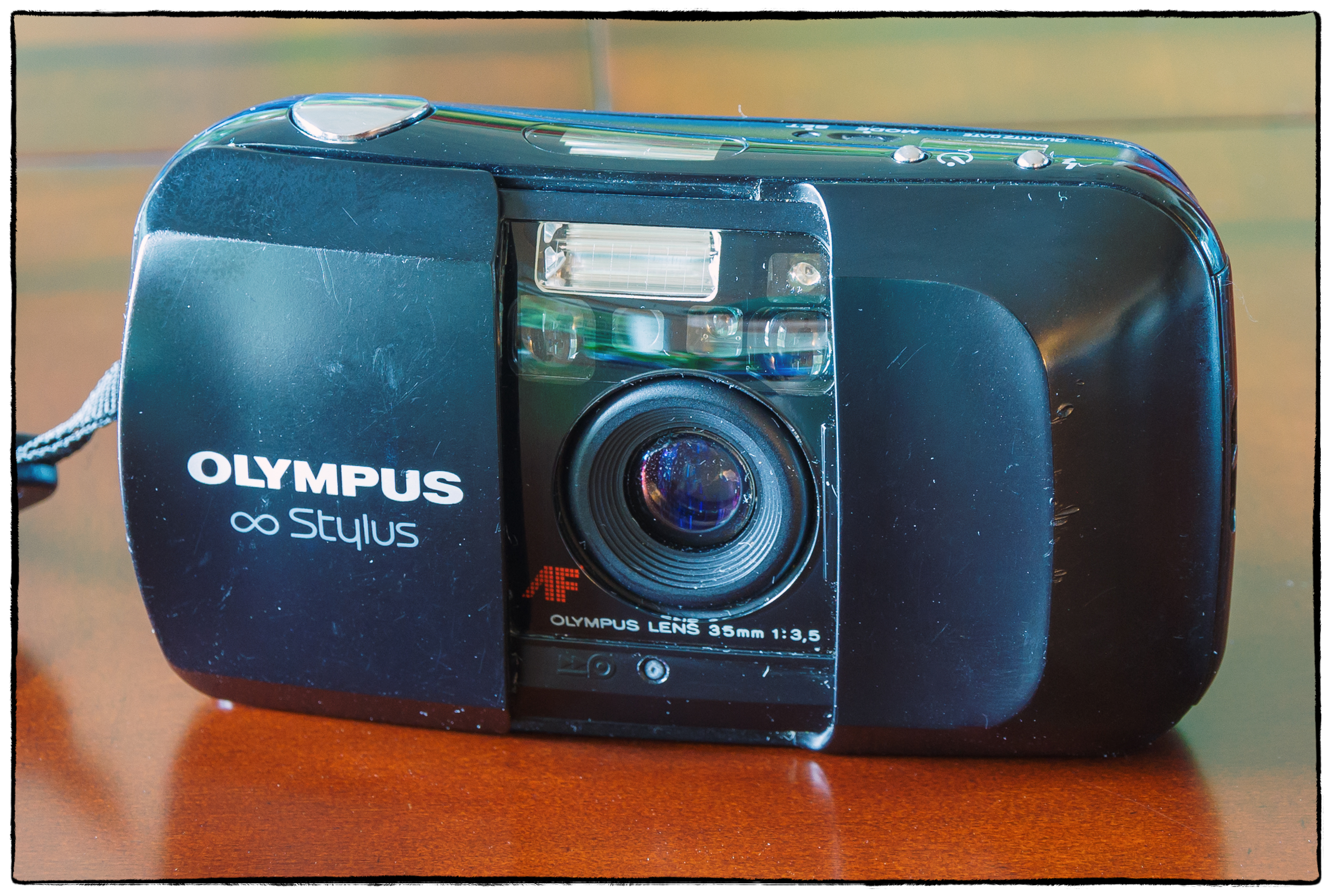
June Film Camera – Olympus Infinity Stylus

This is the original Olympus Infinity Stylus (known outside the US as ‘Mju’), not the rather more famous (and more expensive) Infinity Stylus Epic (see Back to film: Olympus Stylus Epic and Finally found something at the thrift store.  It’s known outside the US as ‘Mjuii’). I have two of them: one I bought myself (it was really inexpensive) and the other was given to me by a friend.

There’s not much to say about this camera (and in any case it’s all been said already in the many reviews on the Internet) so I’ll just provide a short summary of my impressions.

Visually it’s an attractive camera, all curves and shiny black bakelite. Yet it feels solid, like something that won’t break all that easily. It has the signature – also found on the Stylus Epic, the XA (see: Olympus XA) and many other compact Olympus cameras) Olympus sliding door. When opened it turns on the camera. The Infinity Stylus is quite small and fits easily into a trouser pocket. In terms of features it’s quite spartan having only three main buttons on the top plate: one to control the various flash options (I don’t like small on camera flash and so don’t use it), one to control the self timer, and the other the shutter button. Mine is the quartz date version so it also has a small window for you to see how the date options are configured and two really tiny (you have to set them with a pointed object such as a pen) buttons for changing and setting the date options. I don’t like date backs so the first thing I did was to turn this off. There’s also a small LCD on top which tells you the status of the battery; how the flash is set; and which frame you’re on. Film loading is easy: just slide the catch on the left side of the camera up to open the back; put the film cartridge on the left side; extend the leader to the appropriate point and close the back. There’s a fairly loud ‘whirring’ sound, which eventually stops and you see the number ‘1’ appear in the LCD. The ISO (ISO 50-3200) is set automatically using DX codes and there’s a small window in the back where you can see what film is in the camera.

The lens is a 35mm f3.5 and is reputed to be quite good. Reading around I’ve discovered that it focuses down to 1.1 feet. Focus and exposure are locked together with a single half press of the shutter. When the shutter button is fully pressed the picture is taken and the camera automatically advances to the next frame. Shutter speeds range from 1/15 to 1/500 of a second, but neither shutter speed nor aperture are displayed anywhere. All you get is a green light to show that focus has been locked and an orange light to indicate that a flash is required.

A few quibbles. As been said in all of the many reviews, the most annoying feature is that when you turn on the camera the flash is set to ‘automatic’. As mentioned above I don’t like on camera flash, so I have to remember to turn the flash off every time I turn on the camera on. It’s not hard to do – just two presses of a small button – but you have to remember to do it. I also found the viewfinder to be a bit ‘touchy’. If you don’t get your eye in just the right place it tends to black out (either partially or completely) and you have to move your eye around to see through it again. Another consequence of this is that I found it hard to see the two (green and orange) lights. I knew there was a green light when focus was acquired, but I just couldn’t see it until started to move my eye around to find it. I imagine that focus was locked even if I couldn’t see the light, but more worrisome was that since I’d turned the flash off the ‘need flash’ light never came on. I imagine it’s possible that I’ll end up with a blurry pictures because the camera selected a slow shutter speed.

Still, as the saying goes, the proof of the pudding is in the eating, and we’ll see more when I get the results back.

I have to apologize for the poor quality of the picture. I usually take more time – arranging the background, putting the camera on a tripod, focusing manually etc. However, I was in a bit of a rush and since I’d recently acquired a camera with better high ISO performance (more on that later) I thought I’d try just hand holding it. Well, while the camera’s performance is certainly better, mine isn’t. I still can’t hand hold slower shutter speeds and consequently the image is not as sharp as I would like it to be. Update: I redid the picture – this time with the camera on a tripod.