Film Camera 2018/2 – Minolta STsi – Results

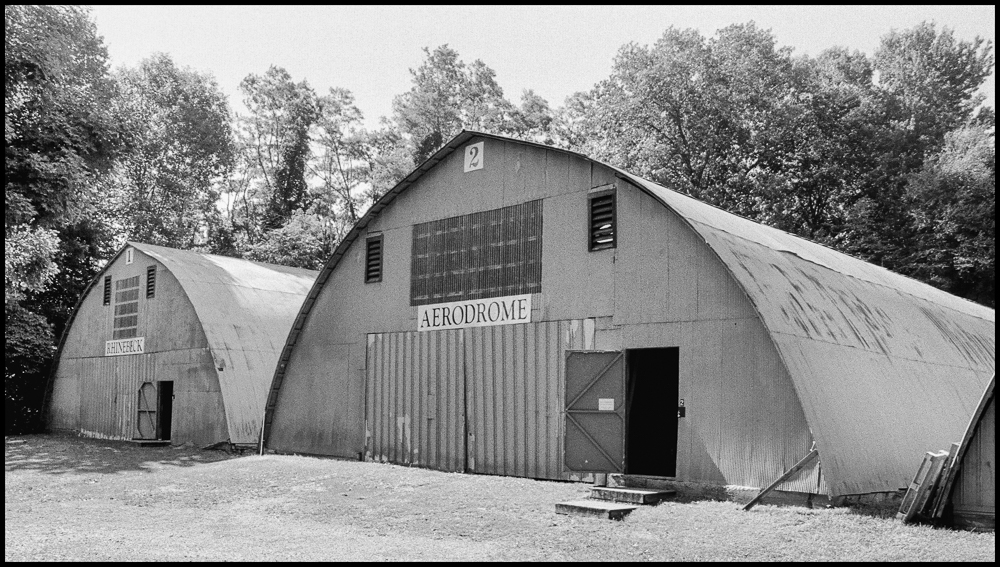
The pictures were taken at the Old Rhinebeck Aerodrome. Above two of the three hangers, which, in addition to the main display area, contain the collection of vintage aircraft. The bulk of the collection shares a building with the gift shop. These are two of three other hangers. The first contains aircraft from the the Pioneer Era (1900-1913). The second features aircraft from World War I (1914-1918); and the third (not shown) displays aircraft from the Golden Age (1919-1940).

For the purpose of trying out this camera I chose the Minolta AF 28-80mm f3.5-5.6. Before when I’ve done such ‘try outs’ I’ve mostly (but not always) used whatever film I happen to have lying around – generally some kind of inexpensive print film. If after use I’ve felt that the pictures would look better in black and white I’ve converted them. However, this time I decided to use a black and white print film – specifically Kodak Tri-X.

The first thing I noticed was that when I looked through the viewfinder the image was not as bright as I expected. In fact it looked tinted. Was there a filter on the lens – no. I’m at a loss as to why it looked like this, but it didn’t seem to have any impact on the results. Would I have noticed something if I’d used color film? (Update: I just tried the lens on my Sony A77II and the colors looked fine).

Otherwise the camera was easy to use. Because it’s small and light it was easy to carry around. In poorer light the AF could ‘hunt’ a bit, but nothing too bad. Generally the camera found and confirmed autofocus pretty quickly.

When I got the negatives/scans back I noticed that they were all very contrasty, but nothing I couldn’t tame in lightroom. Was this because it was a bright, sunny day and there were quite strong contrasts? Was it because Tri-X is by its nature quite contrasty? Could it have had something to do with the tint I was seeing through the viewfinder?

I found the camera pleasant to use and not once did I think “Oh how I wish that I had this feature or that feature that my more fully featured cameras have but this one doesn’t”. It may be an entry level camera, but it seemed to have everything I needed.
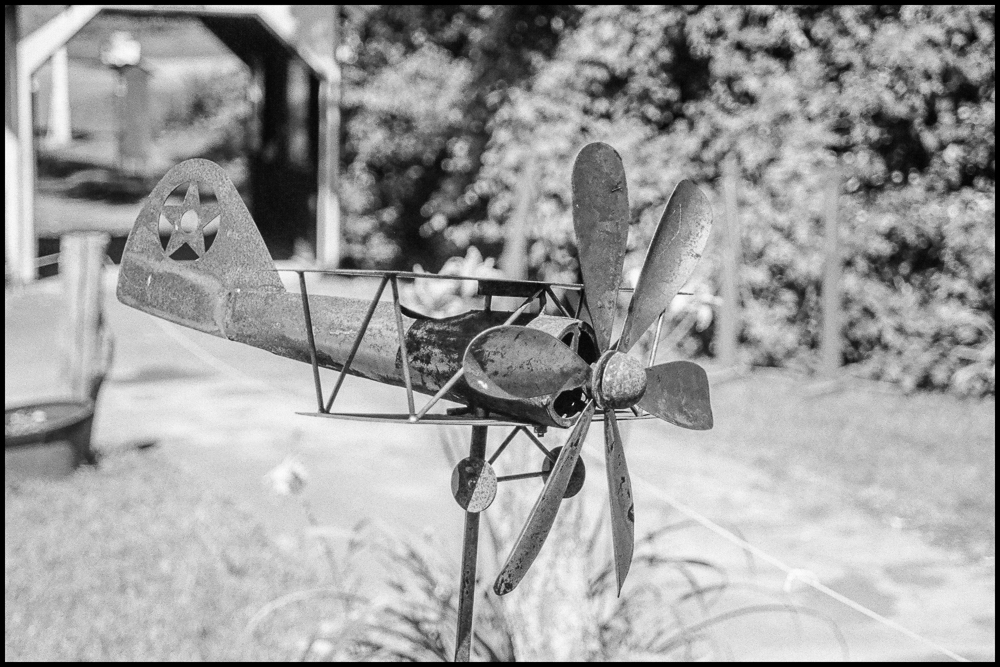
Aircraft mobile.
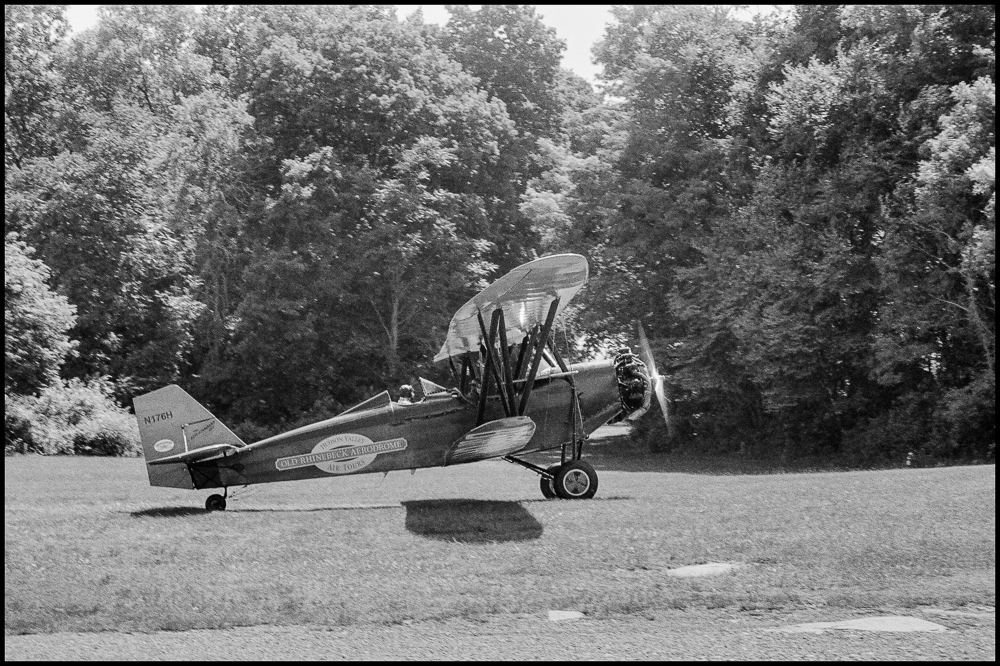
Since the airshows are on weekends I didn’t expect to see anything flying…until I heard the sound of this New Standard D-25 warming up. Here it is starting to taxi.
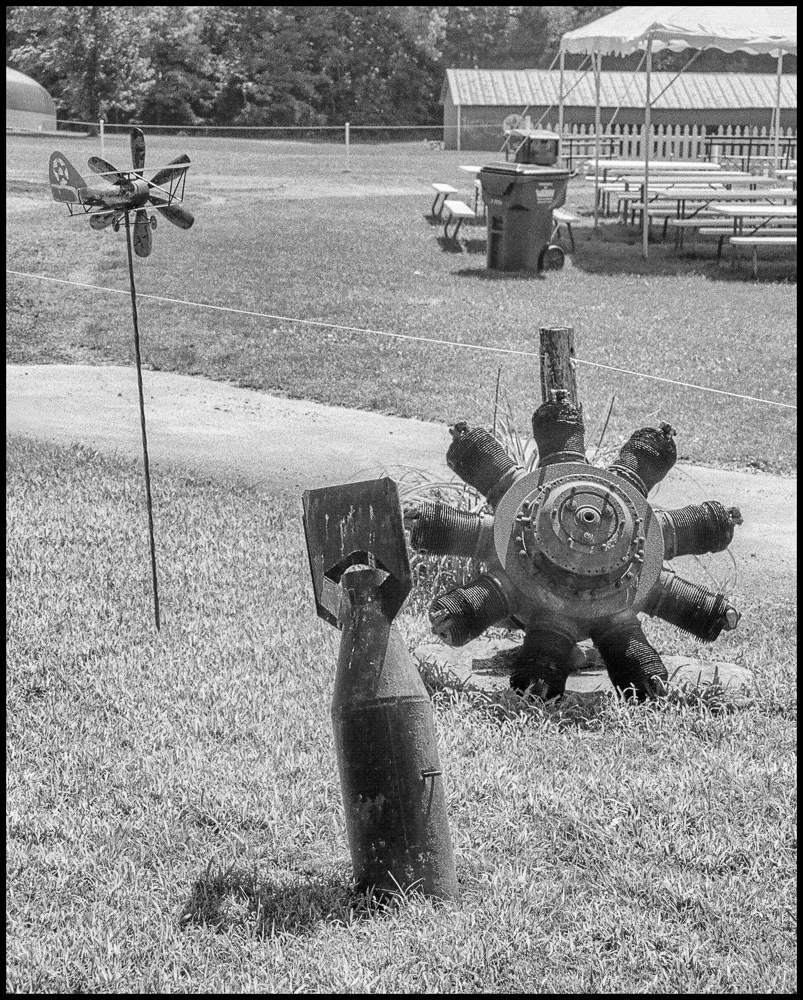
Bits and bombs.
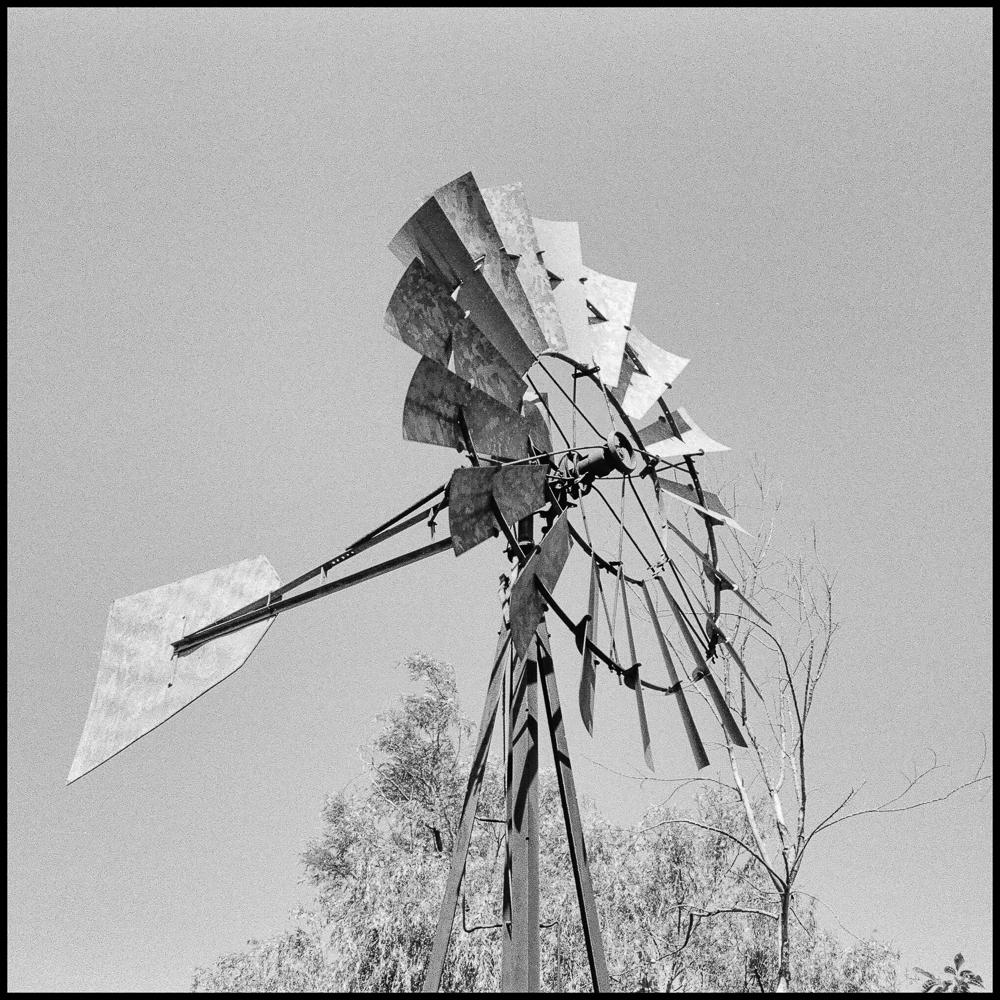
Windmill.
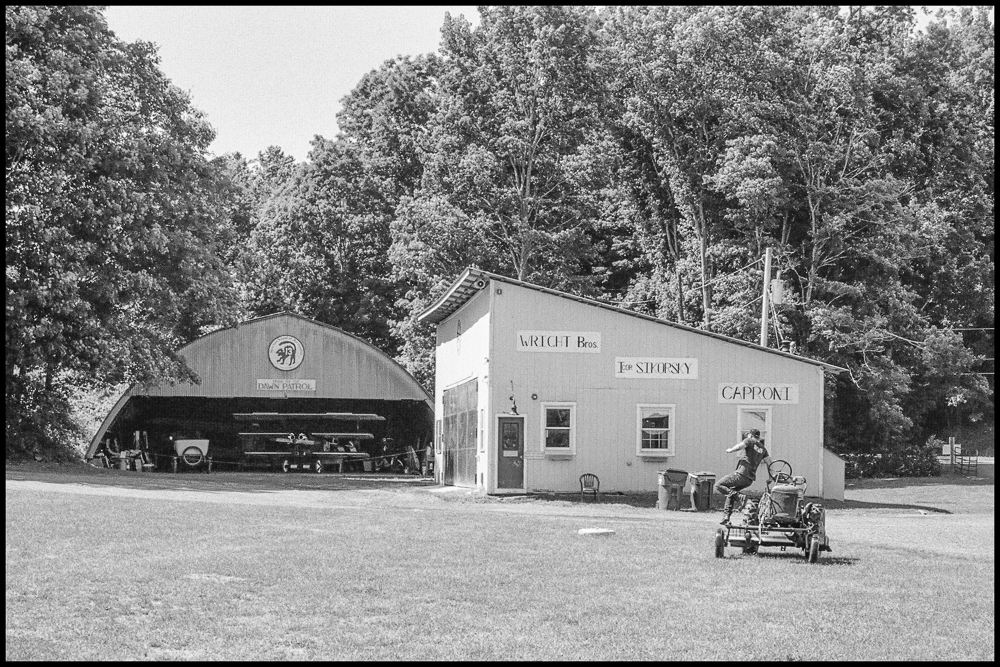
Man descending from a tractor with the Red Baron’s Fokker Tri-plane in the background.

See also the following posts taken with the same camera/lens/film combination:
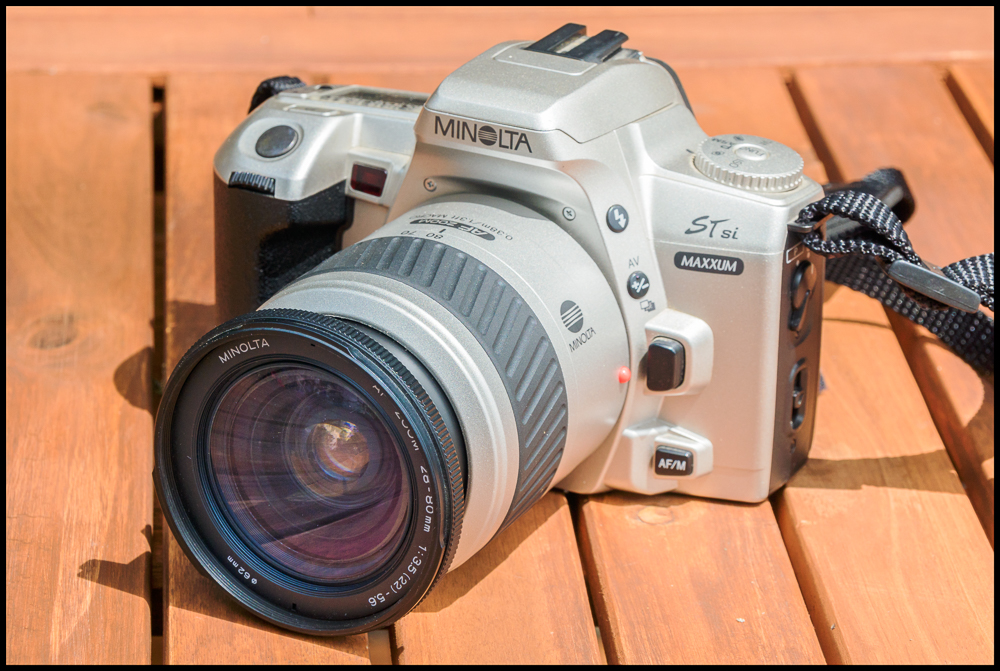
Film Camera 2018/2 – Minolta STsi

I wasn’t really interested in another Minolta body, but what caught my eye was what came with it: A Minolta AF 50mm F1.7 Lens; Minolta AF Zoom 28-80mm f3.5-5.6; Minolta AF Zoom 70-210mm f4.5-5.6 plus other assorted goodies – all for an extremely low price. I have an old A-mount camera (specifically a Konica Minolta Maxxum 5D). I’ve been thinking of giving it away to one of my grandkids (if any of them are willing to accept such old technology of course), but I didn’t want to sacrifice any of my Sony/Minolta lenses. These seemed to be a good solution.

According to camera-wiki.org The STsi was:

…an entry level autofocus 35mm film SLR camera using the Minolta AF mount, manufactured by Minolta and released in 1999. In the Americas it was known as Maxxum STsi and in Japan it was called α Sweet S (Alpha Sweet S).

The electronic controlled shutter is vertical travelling with speeds from 20s to 1/2000 sec, plus bulb and a flash sync of 1/90 of a sec. The metering is a TTL based system using a 8 segment silicon photo cell. It has a sensitivity of 1 to 20 EV and in spot mode 4 to 20 EV (ISO 100, 50mm f/1,4. Metering is based on using DX encoded film, which can also be manually set from 6 to 6400 ISO in 1/3 inc. The exposure modes include, program, aperture priority, shutter priority, manual exposure along with settings for portrait, landscape, close-up, sport, night. The film transport has a motorized drive with film automatically advancing after exposure. Drive modes includes single frame, continuous for up to 1 fps, self-timer and multiple exposure. The built-in flash has a GN of 12. The camera is powered by two CR2 batteries.

For a full list of specifications see here.

As you’ll see from the specs it’s quite small and light, somewhat ‘plasticky’ feeling (as I suppose were most of the cameras from this era) but nonetheless with quite a solid feel. A dial on the top left of the camera allows you to select from various options: manual ISO selection; Flash options; Exposure modes – it has the usual array of exposure modes including Programme, Aperture priority, Shutter priority and Manual selected by using the ‘func’ button in the center of this dial in conjunction with the dial on the front right of the camera. Options for drive mode and wireless flash are also controlled from here. Scene modes are available including: portrait, landscape, macro, sport and night. There’s also an option for spot metering. If you get stuck and want to return to the programme mode just press the large button marked ‘P’. On the left near the lens barrel there are two buttons, one to pop up the flash and the other for exposure compensation. On the bottom left you find a switch to toggle between manual and autofocus. The fairly large and bright viewfinder displays the following information: Autofocus frame; LEDs for AE lock, aperture, shutter speed, flash ready. On the left side of the body there’s a dial to switch between regular and panorama mode. Mine has a date back, which I’ll never use.

Although this might be an entry level camera there’s plenty of functionality to play with. It’s much less spartan than the Canon EOS 888 I looked at last September (see September Film Camera – Canon EOS 888).

So now to try it out.

Picture taken with a Sony A77II and Tamron A18 AF 18-250mm f3.5-6.3.

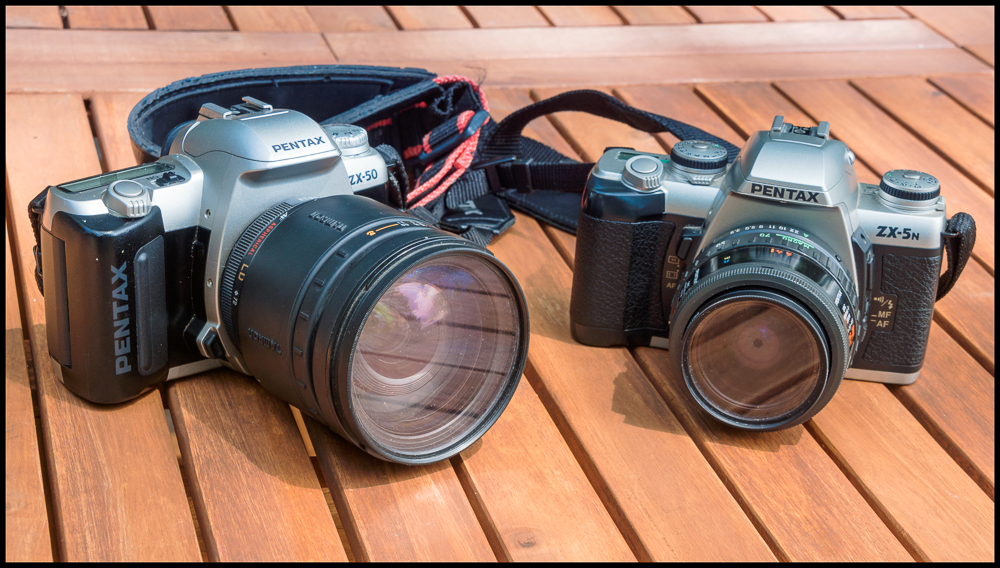
A couple of Pentax autofocus SLRs

For a while now I’ve been developing a liking for autofocus SLRs. There are two reasons for this: 1) I seem to have completely missed the autofocus SLR era going directly from a manual focus Canon AE-1 to digital; 2) Nobody seems to want to lower end models so they’re often ridiculously inexpensive.

So when I saw these two Pentax AF SLRs, each with its own lens, going for a low price I couldn’t resist. It was fairly obvious that the seller knew little about cameras so I was taking a chance, but seemed to be worth a gamble. I already had an adapter for Pentax lenses so if worst came to the worst I could use them with my Sony NEX 5n.

The two cameras are a Pentax ZX-5N and a ZX-50 and the lenses a SMC Pentax-F Zoom f3.5-4.5 35-70mm and a Tamron AF Aspherical LD 28-200mm f3.8-5.6.

When they arrived the bodies had a very solid feel to them and seemed to be in excellent shape. Unfortunately, the worst did come to the worst. The ZX-5N was dead on arrival. The mirror was stuck in limbo and after some research I discovered that this is a common problem with the ZX series cameras. Apparently a plastic part in the mirror motor breaks rendering the mirror inoperative. Parts are no longer available so there’s not much you can do about it. The ZX-50 seemed at first as if was working until a pressed the shutter release. Then there was a ‘whirring’ sound just like the ZX-5N was producing so I guess it was the same problem.

So neither of the bodies worked so on to trying out the lenses. I quickly got my adapter and tried both lenses on the Sony NEX 5N. They both fitted and worked well – phew!

So if there’s a message here it’s probably that it’s wise to avoid Pentax ZX series cameras, attractive though they may be.

I’ve tried out the lenses a bit more extensively now, but that’s the subject for another post.

Taken with a Sony A77 II and Tamron A1 AF 18-250mm.

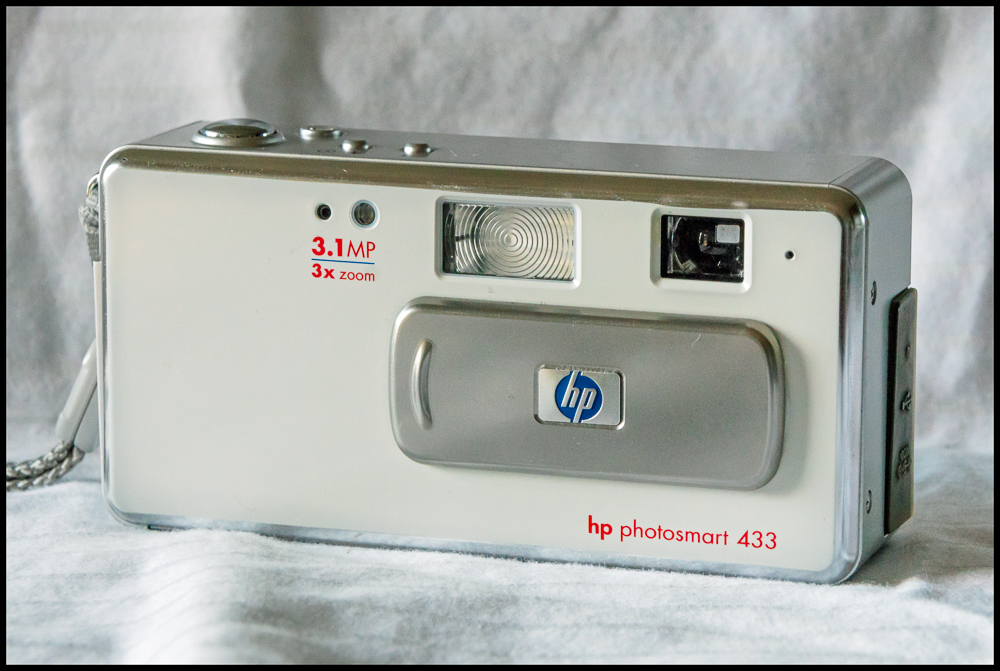
HP Photosmart 433

I generally use either fairly recent generation digital cameras (e.g. Sony A77II; Sony RX-100; Sony NEX 5N) or any of a quite large number of old/vintage film cameras. In this case the camera is also fairly old (I don’t know exactly how old, but the date on the accompanying manual is 2003), but rather than being a film camera it’s digital.

It’s a HP photosmart 433 and it was given to me by a friend. It’s quite small (4.6in x 2.2 in x 1.5in deep) and light (0.44lbs) and has a 3.1 megapixel, 1/27 inch CCD sensor and uses standard AA batteries.

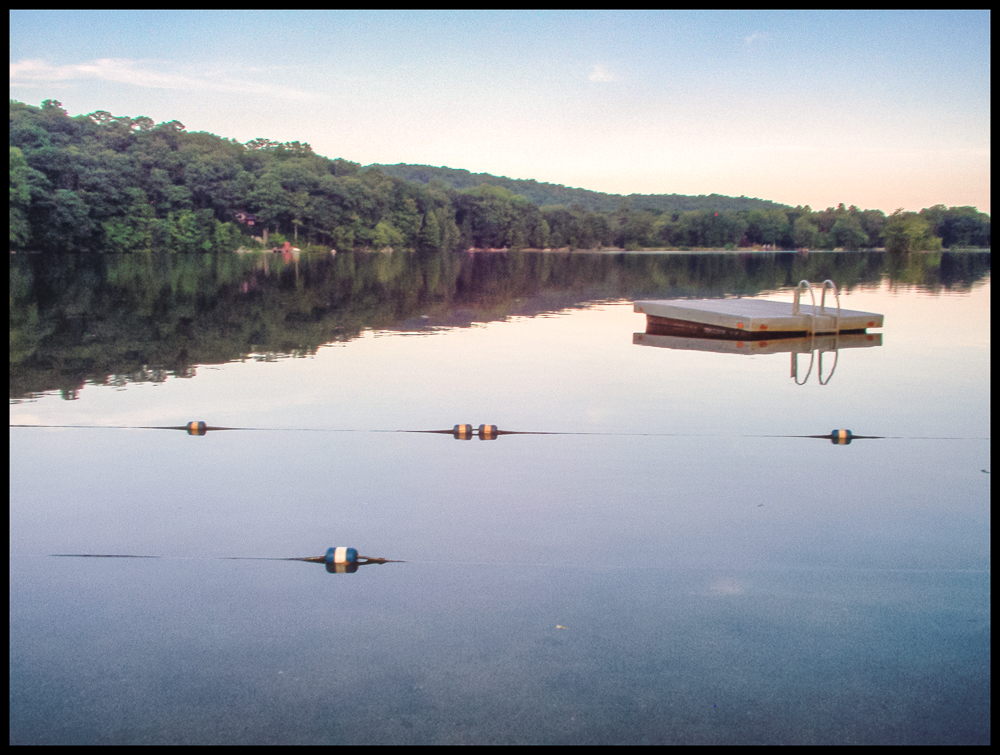
Floating dock at Spur Beach.

It also has a tolerably large and bright optical viewfinder and a tiny (1.5 inch diagonal, 61,600 pixel screen). The lens is fixed focus with an f4.0 aperture. Shutter speeds range from 1/1.5-1/1000 seconds. The camera also has a built in flash with a range of 8ft.

Quality settings are: Super-fine JPEG 2048 x 1536; Fine JPEG 2048 x 1536; Normal JPEG 640 x 480. It also has video capture (.avi) at 320 x 240 – 15 fps. ISO ranges from 100-400.

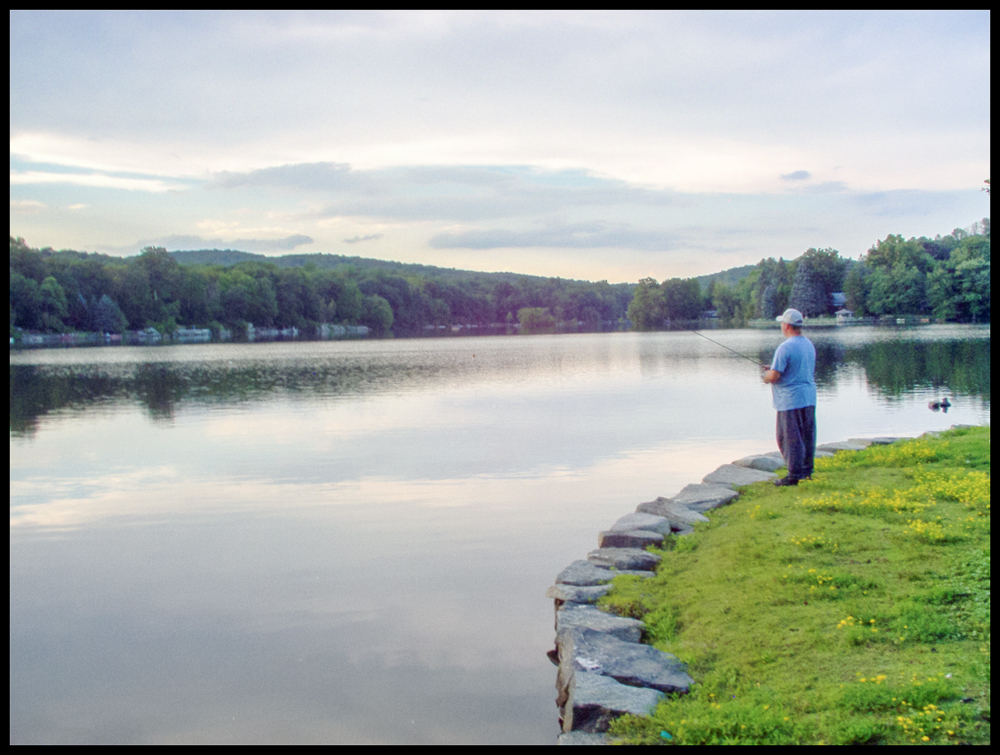
Fisherman at Spur Beach.

Exposure compensation in the ±2 EV range, in 1/2 EV steps is available view a menu option.
Exposure is fully automatic and action and night (via the flash settings) modes are also available. There’s also a black and white mode and a self timer.

The camera does not offer an optical zoom. Instead a digital zoom (up to 3.0x) is provided.

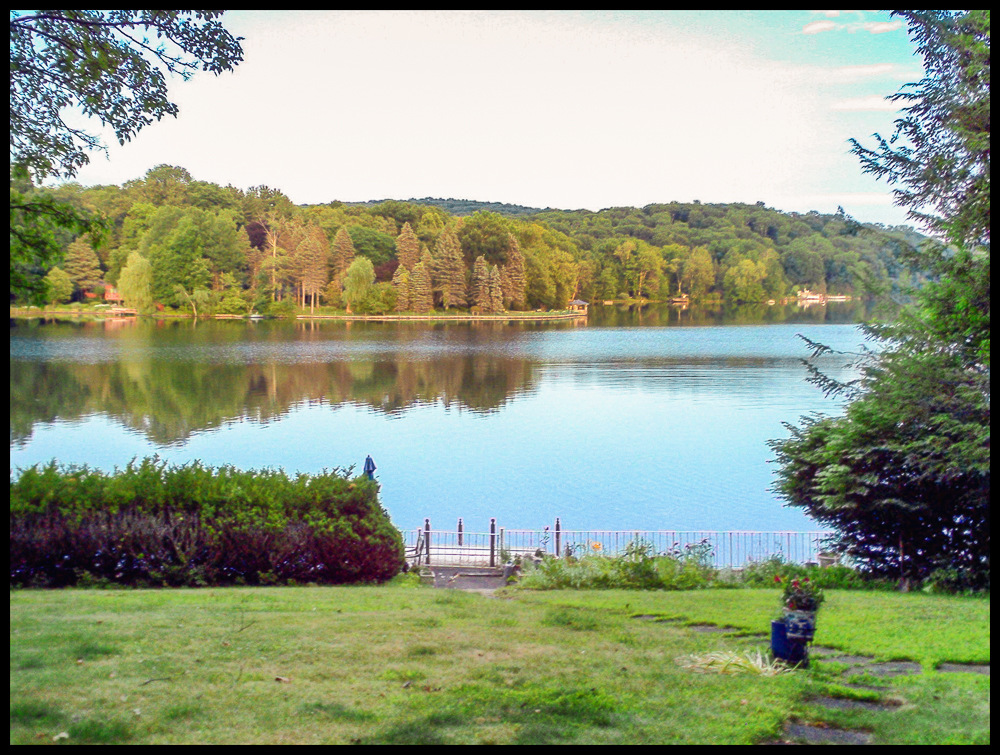
Lake view from our house.

Images are stored in memory (16mb) and on an SD card.

Digital Print Order Format (DPOF) support is also provided.

Floating dock at Moon Beach.

Why did I even try this antediluvian digital camera? Well, I like a challenge and I truly believe that it’s not the camera that makes a picture – it’s the photographer. I believe a reasonably competent photographer should be able to get a decent picture from any camera. How did I do? Probably I’m not as competent as I sometimes think I am and I wasn’t too pleased with the results. I didn’t really give myself a fair chance though. I took the camera with me while walking the dog and just took a few snapshots while walking around my neighborhood. I didn’t read the manual and I didn’t even go through the various, but few menu options available.

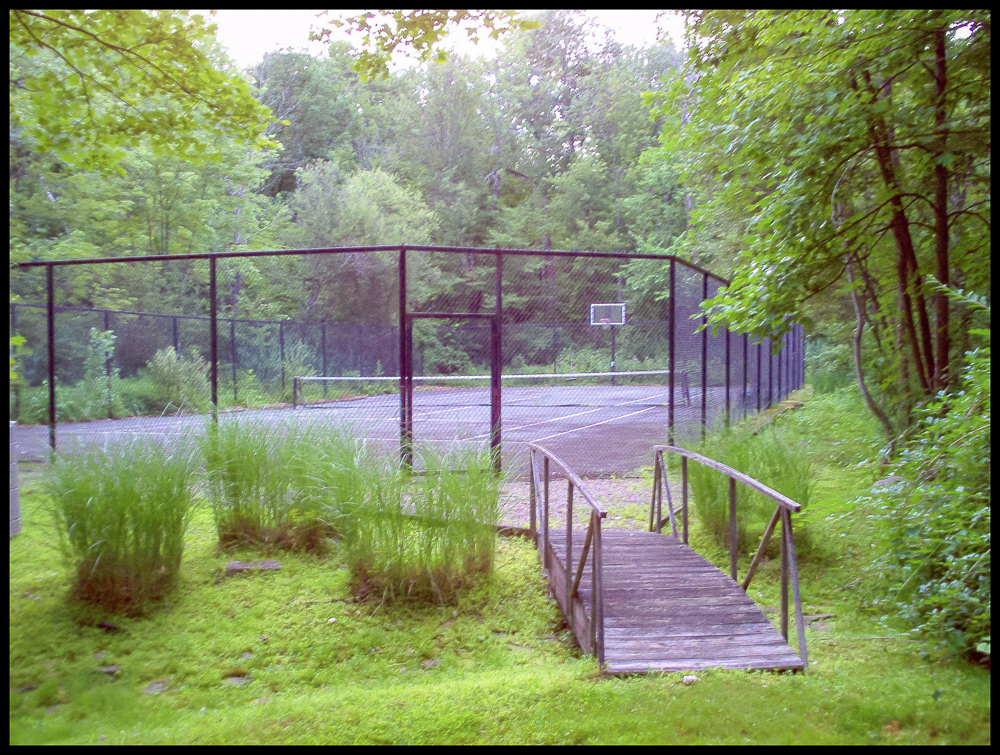
Tennis court.

The LCD is so small and has such a low resolution that it’s virtually useless. I hate digital zooms and so didn’t use it. The optical finder wasn’t bad, but I had to be careful to keep my finger away from the lens. The camera seems to have a very poor dynamic range: anything the least bit “contrasty” and the highlights were badly blown. Perhaps the exposure compensation could have helped here had I only known that it existed. I was also a bit frustrated that the camera resets a number (but not all) of the settings when you turn it off. I was particularly annoyed that the flash reset to auto when I always want it to be set to off (shades of the Olympus Infinity Stylus Epic). I only discovered later that by holding down the ‘OK’ button while turning on the camera will retain the settings from the previous session.

Guardian Lion.

By fully familiarizing myself with the camera; picking my subjects better; choosing to shoot in better light etc. I could perhaps get better results – but why bother. This particular camera is never likely to become my ‘go to’ camera. I might give it one more go before I put it out to pasture though.

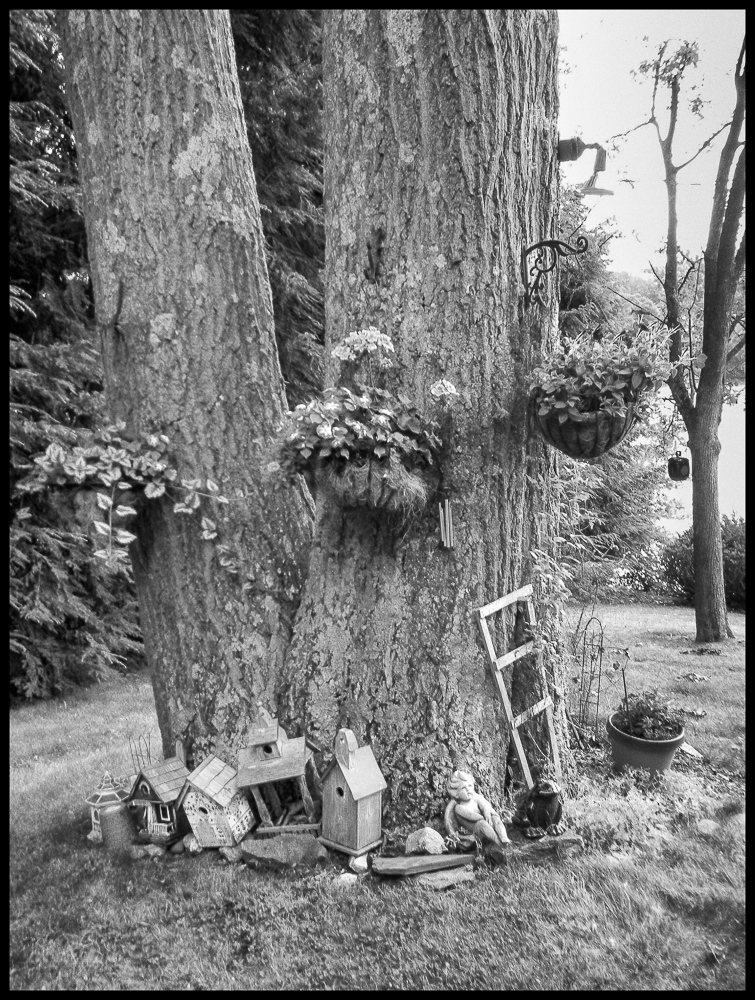
Around our tree. An example of the camera’s black and white mode.

One final anecdote to end this post. When my friend gave me the camera he initially wanted to keep the 32 gigabyte card that came with it. Unfortunately, I had to point out the it wasn’t a 32GB card but rather a 32 MEGABYTE card.