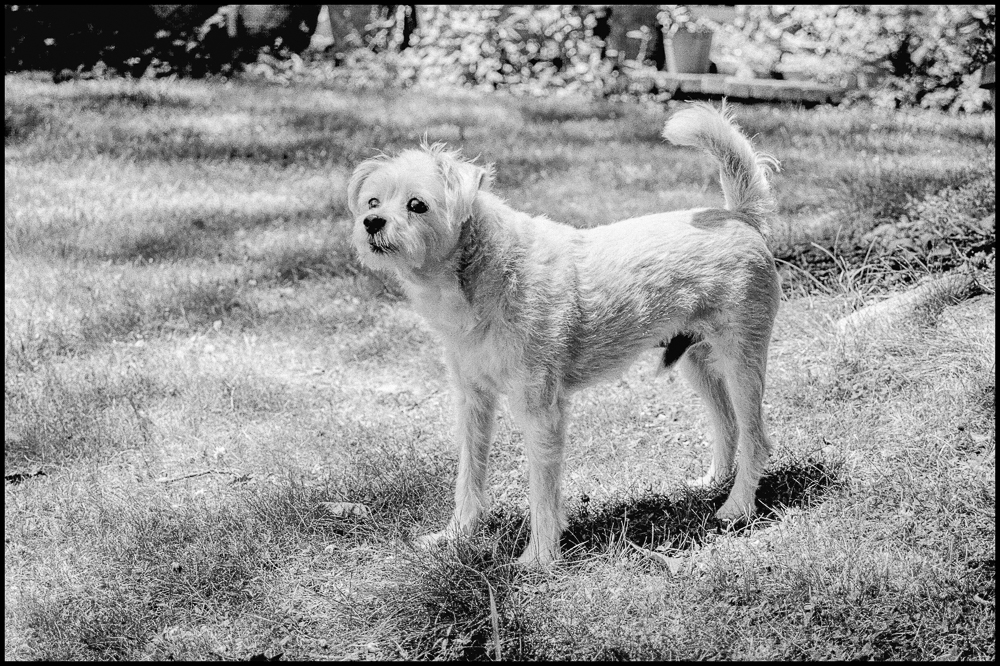
A walk around brewster – Brewster Presbyterian Church

According to the church’s website:

The first church in what is now Putnam County, New York was gathered by the Rev. Elisha Kent, who came from Newtown, Connecticut Colony. The earliest known meeting of the “Church of Christ on Philipse’s Patent” occurred on September 11, 1743. In 1793 the congregation constructed its third meeting house, now known as Old Southeast Church, a national landmark on the east side of Route 22, about three miles north of the village.

In 1830 the church called Robert B. E. McLeod to its pulpit. By the early 1850s, populations had shifted and most members now lived south of the church. Rev. McLeod’s health was failing and services were being held irregularly. The church building was in need of repairs, and a movement was begun to move the church closer to the majority of the congregation.

In 1853, 26 members sent a petition to the Presbytery of Bedford seeking to organize a new church at South East Center. Efforts by the Presbytery to prevent a division of the old church at Southeast failed, and on June 14, 1853 the Central Presbyterian Society of Southeast was organized. Services were held in the Temperance Hall at Sodom until the church building across the street was dedicated on June 28, 1854.

With the coming of the railroad populations again shifted, this time west. In 1882 the congregation voted to move to the village of Brewster. Property was purchased on Main St. and on Oct. 3, 1882 the cornerstone of our present house of worship was laid. The first service was held on June 29, 1884, and the church was dedicated and incorporated in 1886. In 1922 the church was renamed as the Brewster Presbyterian Church.

In 1961, the Old Southeast Church congregation disbanded, leaving this congregation to continue over 260 years of a living tradition of Presbyterian faith, worship and life.

I’m not sure what architectural style is at represented here, but I find it quite attractive.

Taken with a Nikon N6006 and Nikon 50mm f1.8.
A walk around brewster – Overview

The Village of Brewster is quite close to where I live, but although I’ve been various locations on the outskirts I’ve never been to the center.

According to Wikipedia:

The village of Brewster derives its name from that of the landowner, Walter Brewster, who invited the New York and Harlem Railroad to build a depot on his property. Brewster’s Station, New York, (sometimes just “Brewster’s”) appeared on maps, on postcards, and in directories of Putnam County throughout the second half of the 19th century. It was officially incorporated as the Village of Brewster, New York, in 1894.

In 1886, historian William Smith Pelletreau published The History of Putnam County, New York. In his second chapter on the town of Southeast, he wrote: “The land now [1886] embraced within the limits of the village of Brewster consists of a farm which was sold by the commissioners of forfeiture to Peleg Bailey, in 1781. A portion of it afterward passed into the possession of Bailey Howes, his grandson, who sold 98 acres to Gilbert Bailey on April 1, 1833. Two other tracts containing 39 acres were sold to Gilbert Bailey, by William P. Downs and Frederick Parks in 1838. On the 17th of February, 1848, Gilbert Bailey sold the whole tracts, estimated at 134 acres, to James and Walter F. Brewster, for the sum of $8,000.”

“At the time of the purchase, the New York and Harlem Railroad was finished and trains were running as far as Croton Falls. The road was surveyed as far as Pawling, and the prospect of its being continued to that point seemed certain, and to the new purchasers of the farm it seemed just the place for a station.”

“The New York and Harlem Railroad was finished to this place and the depot was built in that year, and what is now [1886] the Main street was opened, for the purpose of allowing the stages from Danbury to come to the station. Previous to this the firm of Crosby and DeForest had run a line of four horse stages to Croton Falls, from Danbury. The first new house in the place was built by Walter F. Brewster, in 1850 and stood in front of the present [1886] Methodist church.” That house, now listed as the Walter Brewster House on the New York State and national historic registers, is owned by the Landmark Preservation Society of Southeast.

“The Harlem Railroad’s extension of its mileage in 1849 proved advantageous to Mr. Brewster, who needed all sorts of materials in his building activities. Large shipments were billed simply to ‘Brewster’s Station’ for lack of better designation. This is the apparent origin of the village’s name, which many years ago was shortened to Brewster.”

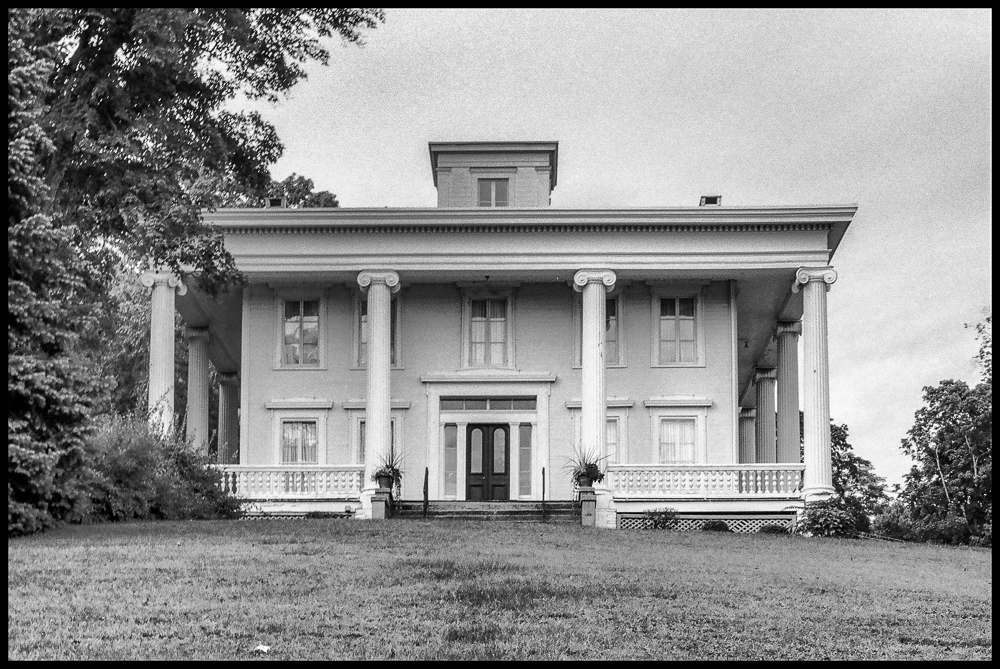
Above the Walter Brewster house.

Taken with a Nikon N6006 and Nikon 50mm f1.8.
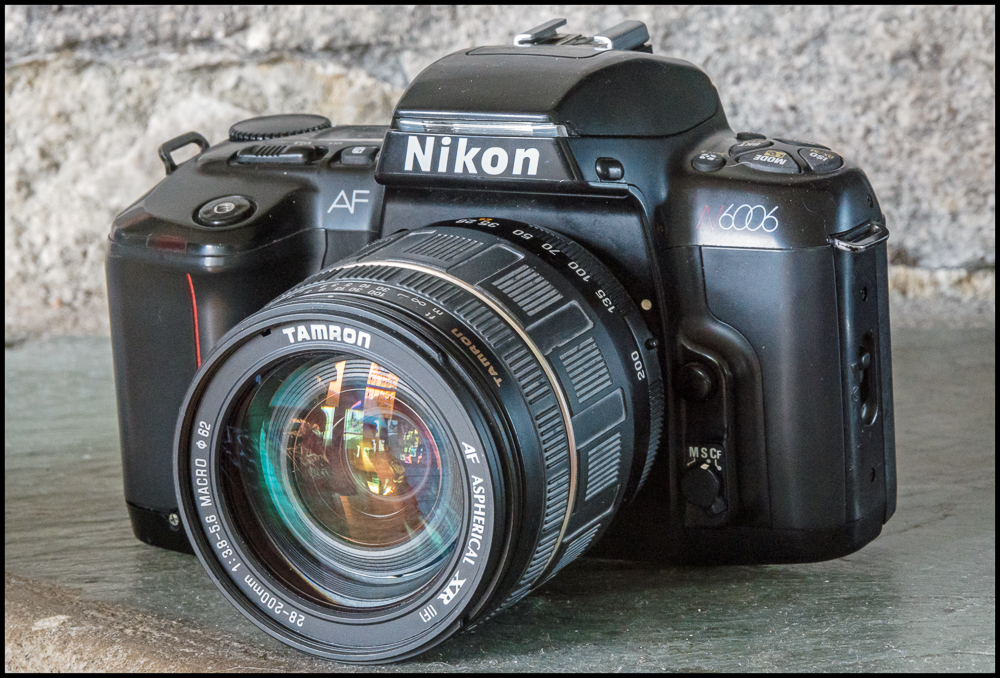
Film Camera 2018/3 – Nikon N6006

I didn’t particularly want this Nikon body. I was more interested in the lens. But the price of the body plus lens was so attractive that I decided to go for it.

The Nikon N6006 (also known as the F-601 outside of the US) was launched in 1990. The Nikon F4 was at the pinnacle of the Nikon product line. Below it was the ‘prosumer’ Nikon N8008. Then came the N6006 aimed at advanced amateurs. Finally came the N4004 targeted at the beginner end of the market.

The N4004 was the first, coming out in 1987, and started to take on the modern camera “look”: electronic film advance; thicker grip and the newly introduced command dial to allow multiple functions without dedicated dials.

Then in 1988 came the Nikon N8008 with its four-button cluster on the left side and the command dial on the right. PASM shooting modes were introduced. This layout has not changed much since.

Enter the Nikon N8008, in 1988, with the new “push-button” interface and the new “matrix“ metering, which measured five segments and then averaged them to give the correct exposure.

In 1990 the N6006 was introduced featuring the same controls, and also including a built in flash, burst mode (2 frames/second rather than the N8008‘s 3.3), a slower shutter speed (1/2000 rather than the N8008‘s 1/8000). It was sold as a less sophisticated alternative to the N8008 but in fact had improved matrix metering and a predictive autofocus system that could track moving subects.

It continued to be produced from 1990-1994.

For more information see the appropriate section on the Malaysian Internet Resources site.

An Oldie: Woman and Child

Taken in Kathmandu, Nepal around 1999 most likely with a Canon AE-1. I don’t remember what lens was used, but it was probably either a Canon 50mm F/1.4 FD or a Vivitar 70-210mm.

Strangely for that time period the negative had been scanned to Kodak Photo CD. I think this is the only time that I did this. Although the scans are not particularly high resolution (1536×1024) the overall quality is very good.