Evangelical Lutheran Church of St. Peter the Apostle, Rhinebeck

As I was leaving Old Rhinebeck Aerodrome I noticed this lovely old stone church directly across the road.

A plaque on the side of the building reads:

The Evangelical Lutheran Church of St. Peter the Apostle known for more than a century as The Stone Church. Within its walls stood the first church built in 1730 by the Palatine Settlers to whose memory this tablet is erected by Chancellor Livingston Chapter, Daughters of the American Revolution and the State of New York, 1928.
According to Wikipedia:

Britain had offered its North American colonies as a refuge to Palatine Germans who fled to escape religious persecution following the War of Spanish Succession in the early 18th century. After years in work camps to pay back the cost of passage, in a failed attempt by the British to produce naval stores on the lands of the Livingston family in today’s Columbia County, some of the Germans settled in today’s Rhinebeck, swelling the population of an area lightly settled by the Dutch a few decades before.

In 1715, the Lutheran Germans built a church to share with members of the Dutch Reformed Church until they could establish their own. They were able to do this 14 years later, in 1729. The next year they built their first church on the site of the current building, midway between the two small settlements in the region along the Albany Post Road. At that time the main entrance was in the center of the eastern wall, and there was no tower.

By 1786 the congregation had grown to the point that a new building was necessary. It followed the meetinghouse plan, with the exception of the corner tower. The parsonage came later, in 1798, when The Rev. Friedrich Quitman, a man reported to be of high regard within American Lutheranism of the time, was hired as pastor. His son John, later to serve as a general in the Mexican-American War and as governor of Mississippi, was born in the house that year.

Later in Quitman’s pastorate, in the early 1820s, the congregation hired a local builder named Stephen McCarty to do $3,000 ($61,000 in contemporary dollars) worth of renovations to the church. Following the plans of Christopher Wren’s churches in London, its original plan was altered to make it more formal. The original side entrance was closed off, longitudinal aisles were introduced and the pews arranged to focus attention on the pulpit. The tower was added as well.

After Quitman’s death in 1832, the congregation built the school building. In 1843 all walls save the west one were resurfaced in stucco, and Venetian shutters (currently stored in the tower) were added to the windows. The growth of the villages and the subsequent establishment of Lutheran churches in them led to a decline in membership at St. Peter. In 1860 the church broke with the Lutheran Synod, making it hard to find a new pastor and costing it more members.

Renovations continued apace. In 1870 a new pulpit, platform and accompanying furniture were installed. The current pipe organ came along in 1882. Stained glass windows, since removed, were installed in 1890, the last major alteration to the original building.

Around that time, John Jacob Astor bought much of the land in the area for his estate, which had been home to most of the remaining congregants, and later demolished the residences. This exacerbated the decline in membership. The church was still able to continue as a weekly church until 1939, when its members finally went back to the quarterly meetings, the minimum activity necessary to qualify as a separate church.

The area’s Lutheran churches still hold occasional services there, and a small local church meets there. The parsonage and school have been used by the Museum of Rhinebeck History since 1993.

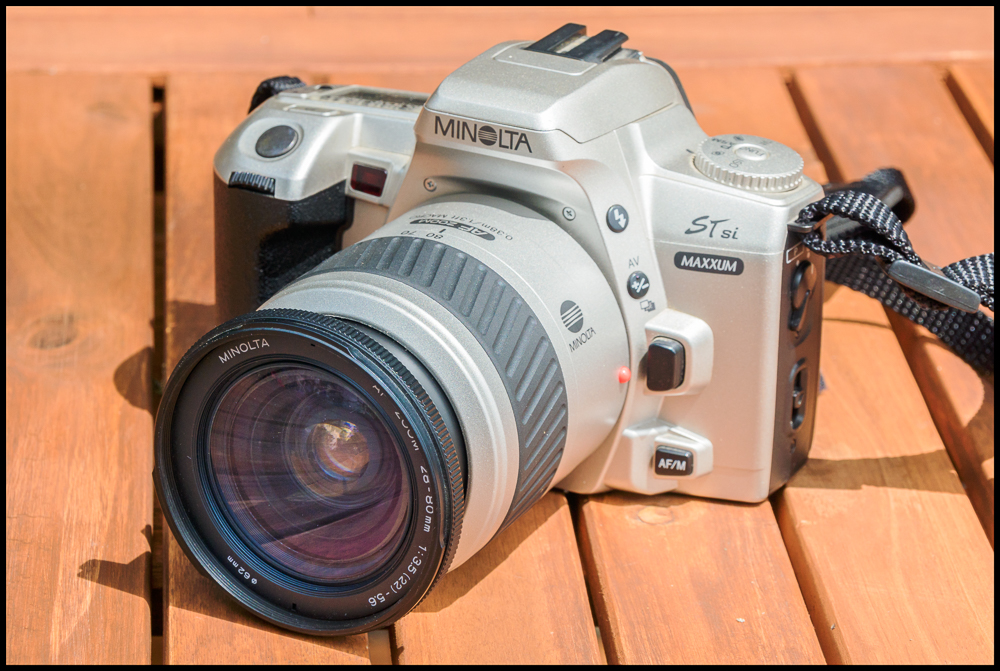
Taken with a Minolta STsi and Minolta AF Zoom 28-80 f3.5-5.6.
Film Camera 2018/2 – Minolta STsi – Results

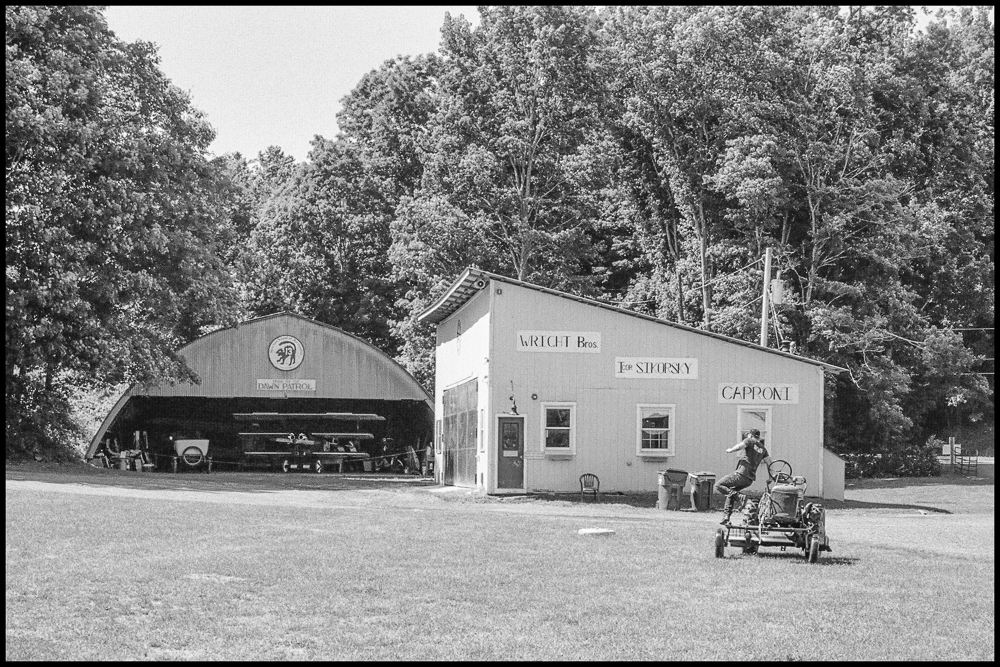
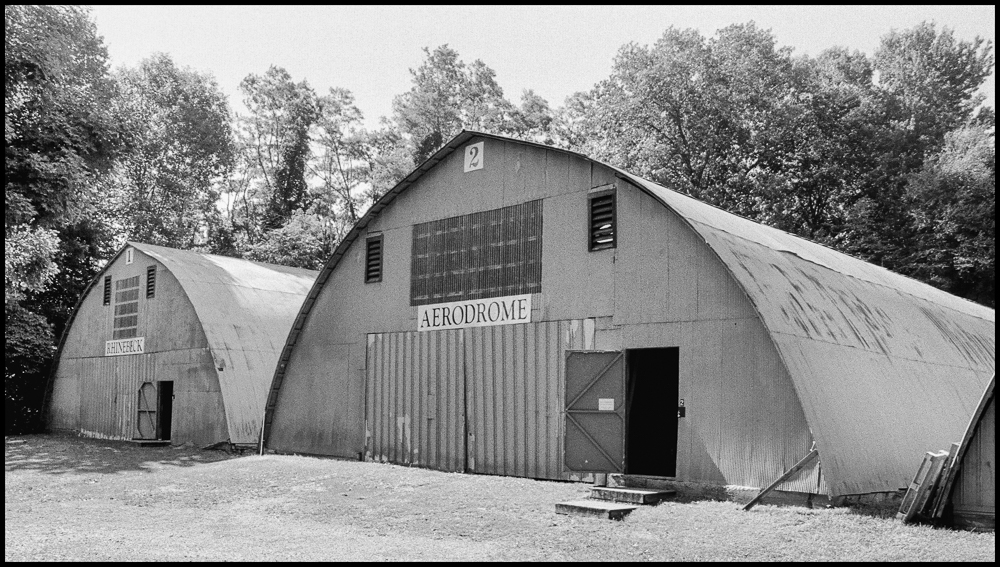
The pictures were taken at the Old Rhinebeck Aerodrome. Above two of the three hangers, which, in addition to the main display area, contain the collection of vintage aircraft. The bulk of the collection shares a building with the gift shop. These are two of three other hangers. The first contains aircraft from the the Pioneer Era (1900-1913). The second features aircraft from World War I (1914-1918); and the third (not shown) displays aircraft from the Golden Age (1919-1940).

For the purpose of trying out this camera I chose the Minolta AF 28-80mm f3.5-5.6. Before when I’ve done such ‘try outs’ I’ve mostly (but not always) used whatever film I happen to have lying around – generally some kind of inexpensive print film. If after use I’ve felt that the pictures would look better in black and white I’ve converted them. However, this time I decided to use a black and white print film – specifically Kodak Tri-X.

The first thing I noticed was that when I looked through the viewfinder the image was not as bright as I expected. In fact it looked tinted. Was there a filter on the lens – no. I’m at a loss as to why it looked like this, but it didn’t seem to have any impact on the results. Would I have noticed something if I’d used color film? (Update: I just tried the lens on my Sony A77II and the colors looked fine).

Otherwise the camera was easy to use. Because it’s small and light it was easy to carry around. In poorer light the AF could ‘hunt’ a bit, but nothing too bad. Generally the camera found and confirmed autofocus pretty quickly.

When I got the negatives/scans back I noticed that they were all very contrasty, but nothing I couldn’t tame in lightroom. Was this because it was a bright, sunny day and there were quite strong contrasts? Was it because Tri-X is by its nature quite contrasty? Could it have had something to do with the tint I was seeing through the viewfinder?

I found the camera pleasant to use and not once did I think “Oh how I wish that I had this feature or that feature that my more fully featured cameras have but this one doesn’t”. It may be an entry level camera, but it seemed to have everything I needed.

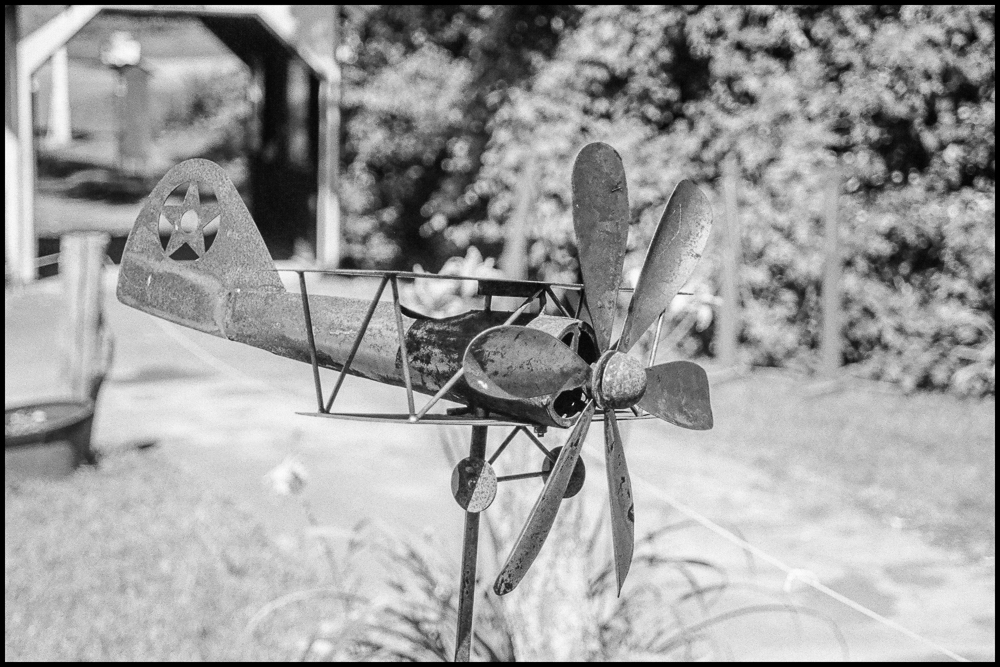
Aircraft mobile.

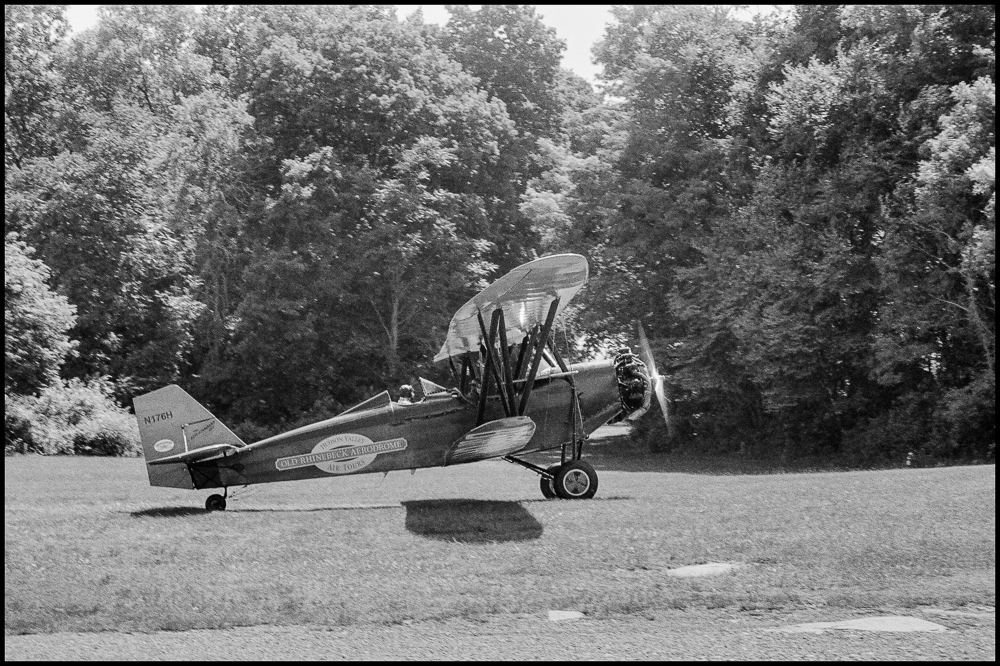
Since the airshows are on weekends I didn’t expect to see anything flying…until I heard the sound of this New Standard D-25 warming up. Here it is starting to taxi.

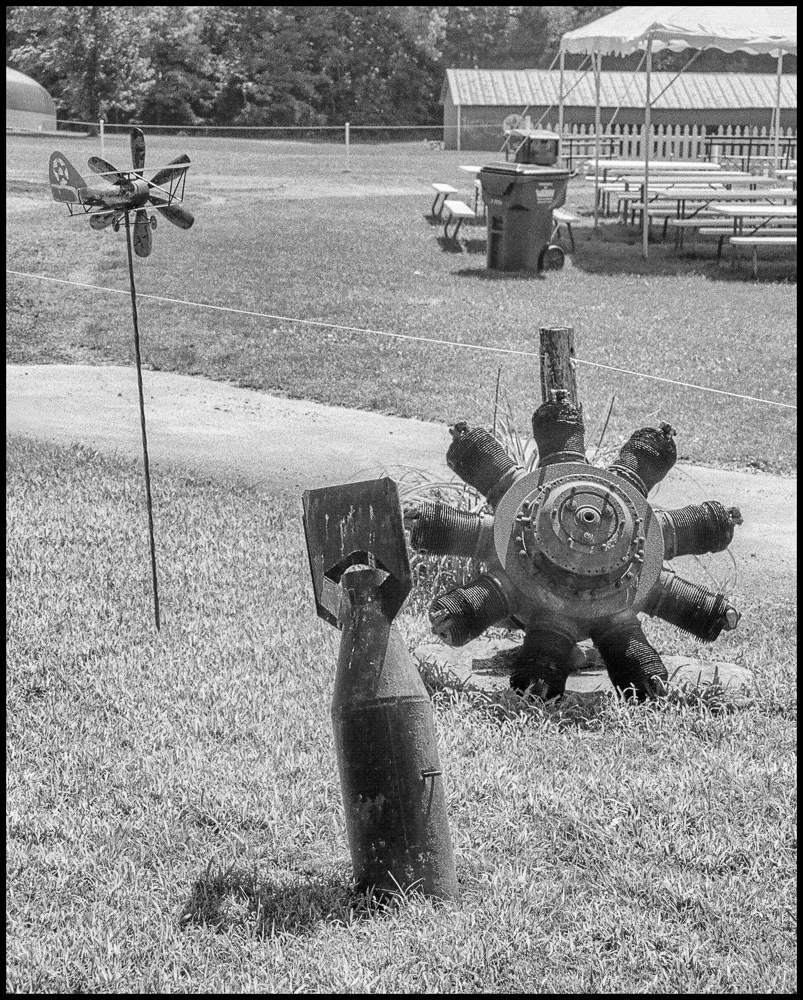
Bits and bombs.

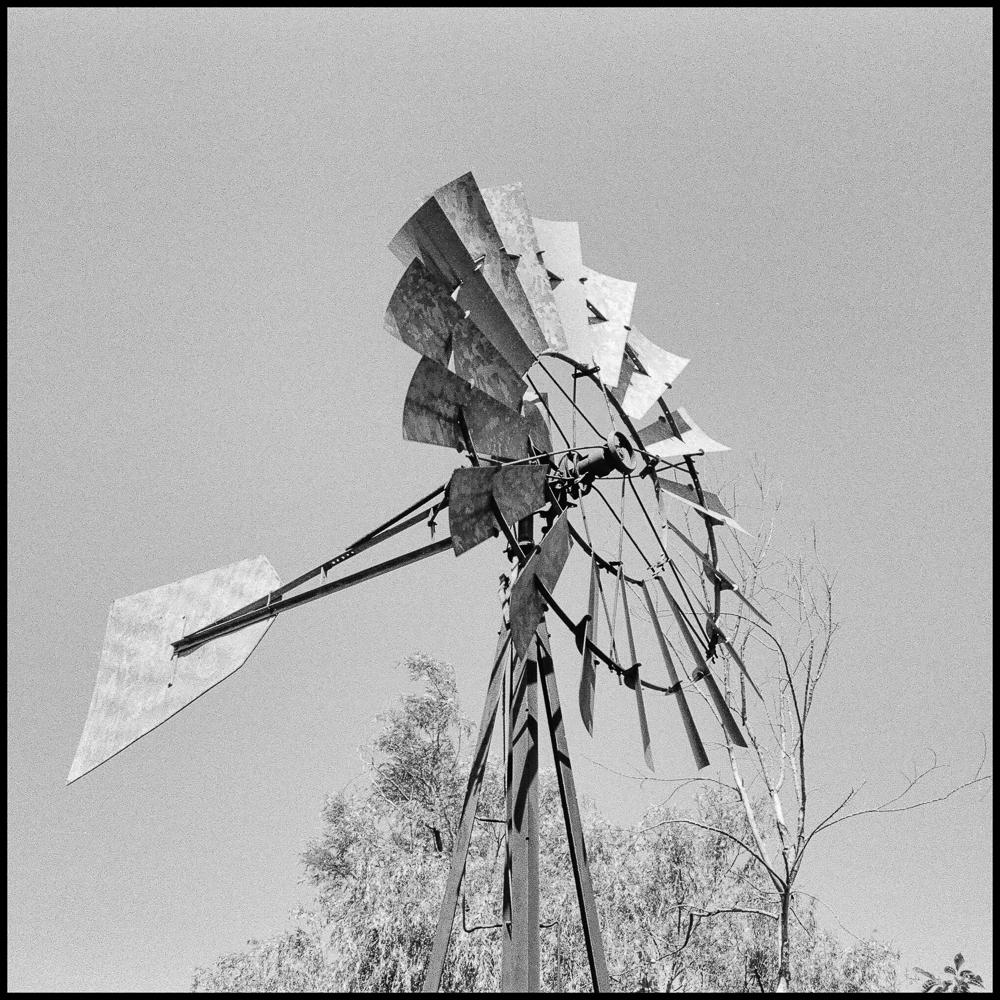
Windmill.

Man descending from a tractor with the Red Baron’s Fokker Tri-plane in the background.

See also the following posts taken with the same camera/lens/film combination:

Film Camera 2018/2 – Minolta STsi

I wasn’t really interested in another Minolta body, but what caught my eye was what came with it: A Minolta AF 50mm F1.7 Lens; Minolta AF Zoom 28-80mm f3.5-5.6; Minolta AF Zoom 70-210mm f4.5-5.6 plus other assorted goodies – all for an extremely low price. I have an old A-mount camera (specifically a Konica Minolta Maxxum 5D). I’ve been thinking of giving it away to one of my grandkids (if any of them are willing to accept such old technology of course), but I didn’t want to sacrifice any of my Sony/Minolta lenses. These seemed to be a good solution.

According to camera-wiki.org The STsi was:

…an entry level autofocus 35mm film SLR camera using the Minolta AF mount, manufactured by Minolta and released in 1999. In the Americas it was known as Maxxum STsi and in Japan it was called α Sweet S (Alpha Sweet S).

The electronic controlled shutter is vertical travelling with speeds from 20s to 1/2000 sec, plus bulb and a flash sync of 1/90 of a sec. The metering is a TTL based system using a 8 segment silicon photo cell. It has a sensitivity of 1 to 20 EV and in spot mode 4 to 20 EV (ISO 100, 50mm f/1,4. Metering is based on using DX encoded film, which can also be manually set from 6 to 6400 ISO in 1/3 inc. The exposure modes include, program, aperture priority, shutter priority, manual exposure along with settings for portrait, landscape, close-up, sport, night. The film transport has a motorized drive with film automatically advancing after exposure. Drive modes includes single frame, continuous for up to 1 fps, self-timer and multiple exposure. The built-in flash has a GN of 12. The camera is powered by two CR2 batteries.

For a full list of specifications see here.

As you’ll see from the specs it’s quite small and light, somewhat ‘plasticky’ feeling (as I suppose were most of the cameras from this era) but nonetheless with quite a solid feel. A dial on the top left of the camera allows you to select from various options: manual ISO selection; Flash options; Exposure modes – it has the usual array of exposure modes including Programme, Aperture priority, Shutter priority and Manual selected by using the ‘func’ button in the center of this dial in conjunction with the dial on the front right of the camera. Options for drive mode and wireless flash are also controlled from here. Scene modes are available including: portrait, landscape, macro, sport and night. There’s also an option for spot metering. If you get stuck and want to return to the programme mode just press the large button marked ‘P’. On the left near the lens barrel there are two buttons, one to pop up the flash and the other for exposure compensation. On the bottom left you find a switch to toggle between manual and autofocus. The fairly large and bright viewfinder displays the following information: Autofocus frame; LEDs for AE lock, aperture, shutter speed, flash ready. On the left side of the body there’s a dial to switch between regular and panorama mode. Mine has a date back, which I’ll never use.

Although this might be an entry level camera there’s plenty of functionality to play with. It’s much less spartan than the Canon EOS 888 I looked at last September (see September Film Camera – Canon EOS 888).

So now to try it out.

Picture taken with a Sony A77II and Tamron A18 AF 18-250mm f3.5-6.3.