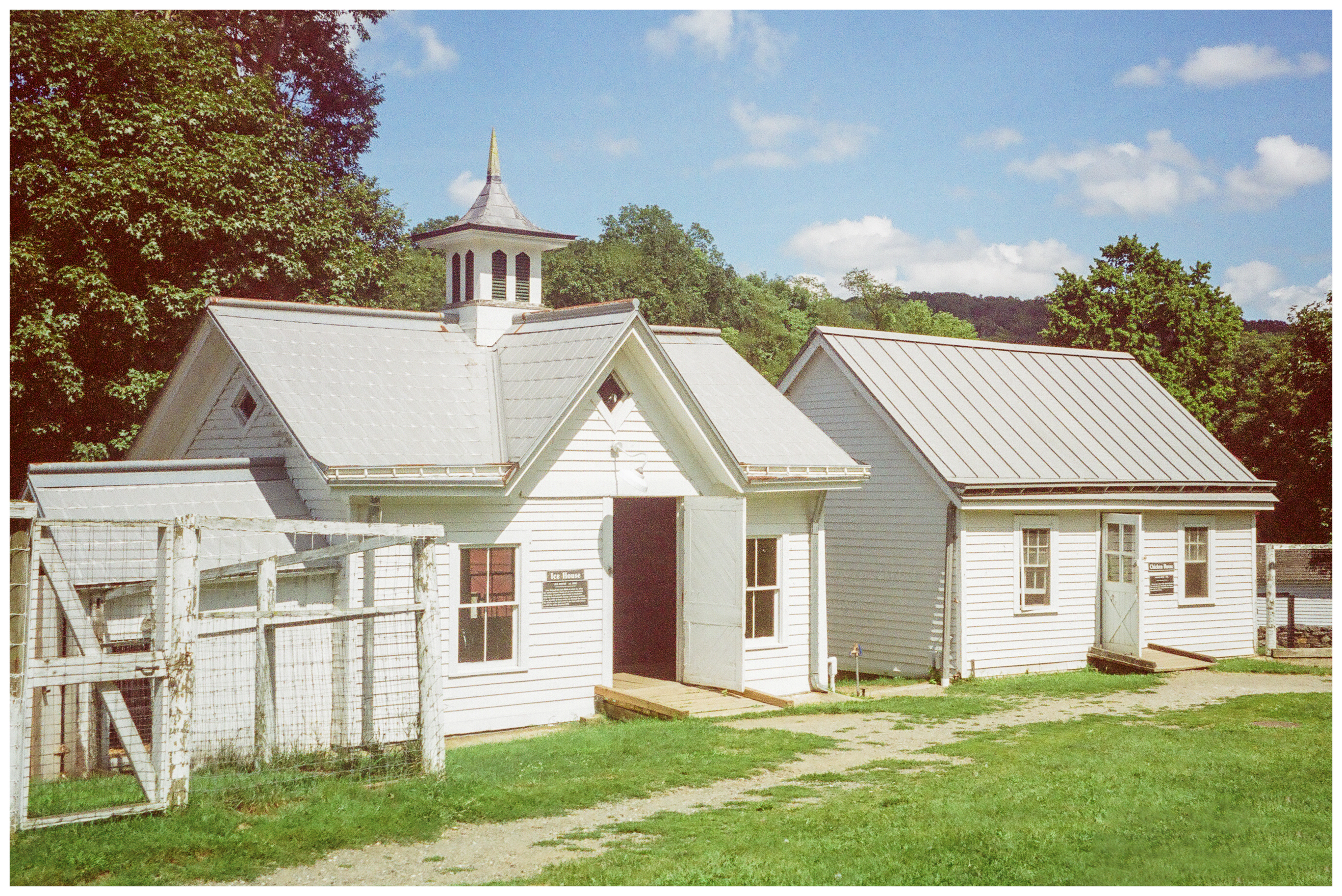
Ice house and chicken house at Muscoot Farm.
Taken with an Olympus Infinity Stylus Epic Zoom 80
Photographs and thoughts on photography and camera collecting

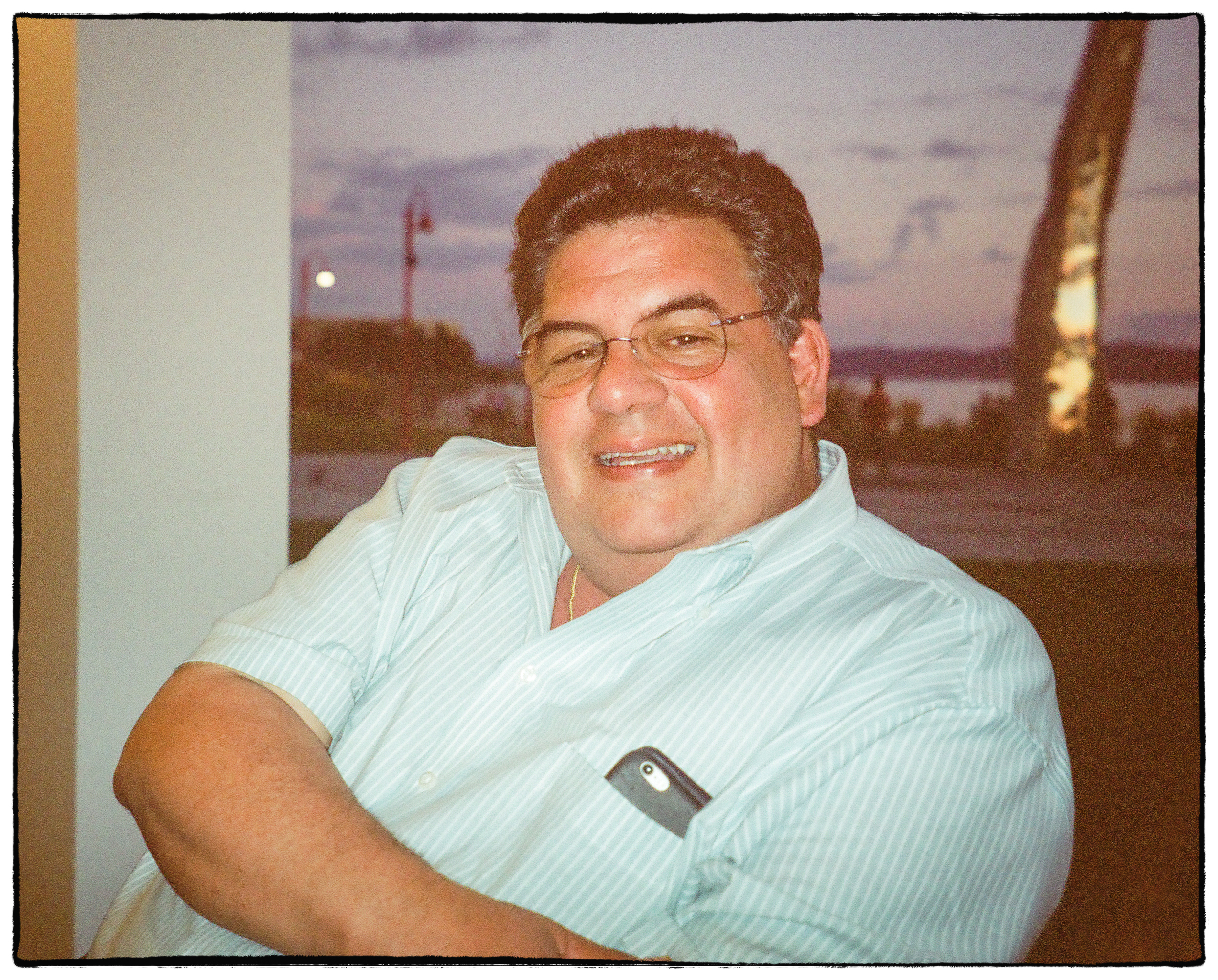
This my friend Gustavo. We’d arranged to meet at 3 Westerley (See: Sunset Drinks at 3 Westerley and Sunset Drinks at 3 Westerley part II) for drinks and a meal.
For a variety of reasons I don’t take many pictures of people. And I don’t usually like using on camera flash, or for that matter any kind of flash – mostly because I’m largely inept in terms of flash photography. However, on this occasion I’d been talking to Gustavo about why I still use film cameras and I suddenly had the urge to take his picture with a film camera. It was too dark to do anything but use the flash, so contrary to my usual usage I didn’t turn it off and just took the picture with the flash on.
In my opinion it came out remarkably well, without the harshness and extreme contrast that you usually find with on camera flash.
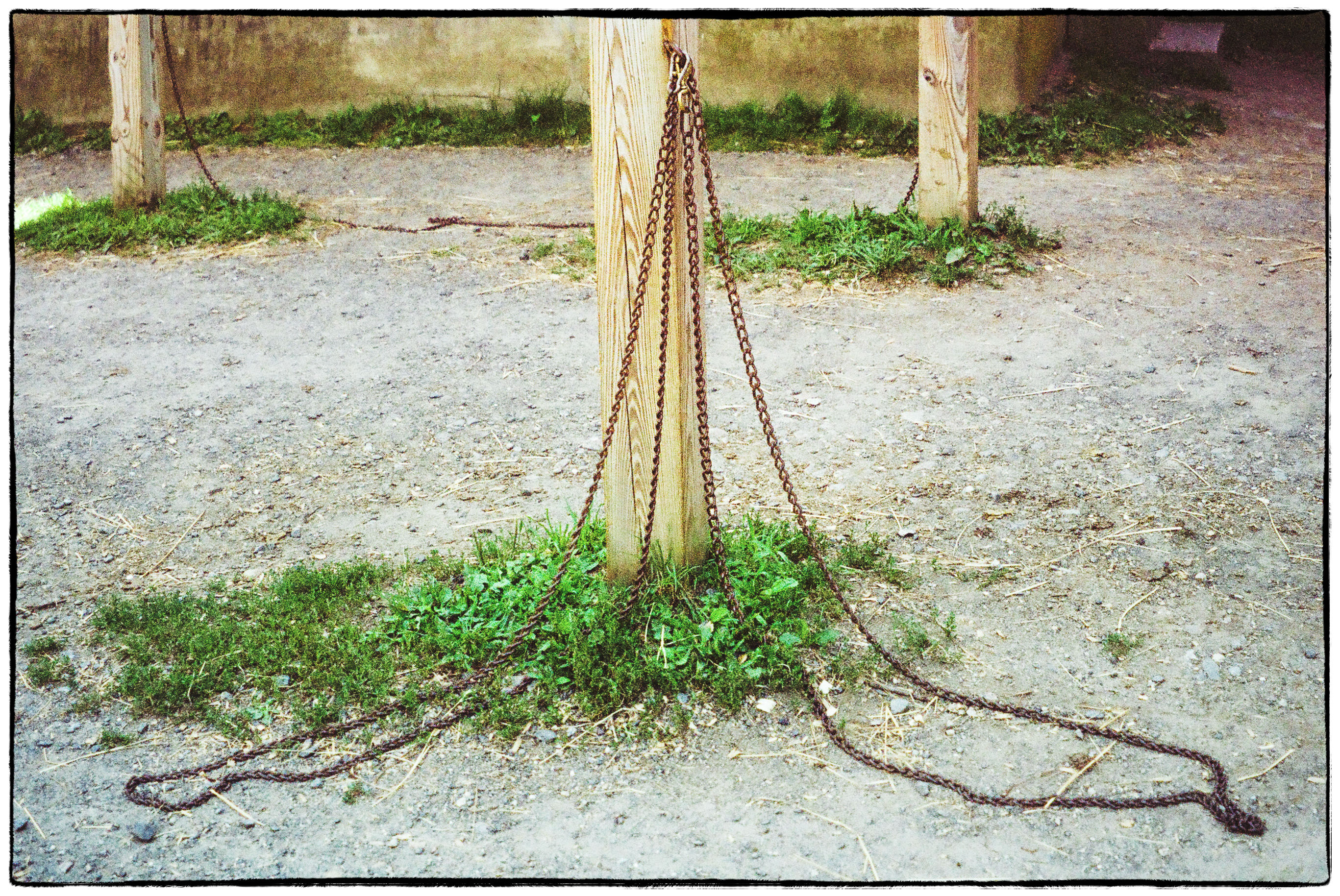
Taken at Muscoot Farm with an Olympus Infinity Stylus Epic Zoom 80.
I’m not entirely sure why I find this so appealing. Maybe something to do with the three upright posts with the chains hanging from them. It asks the question: what are the chains for? I also found it interesting that each of the posts has a small patch of greenery below it, while the rest of the ground is largely dirt. Why does this patch of green remain under each of the posts? There’s also something about the elegant, curved lines of the the chains themselves that I found attractive.
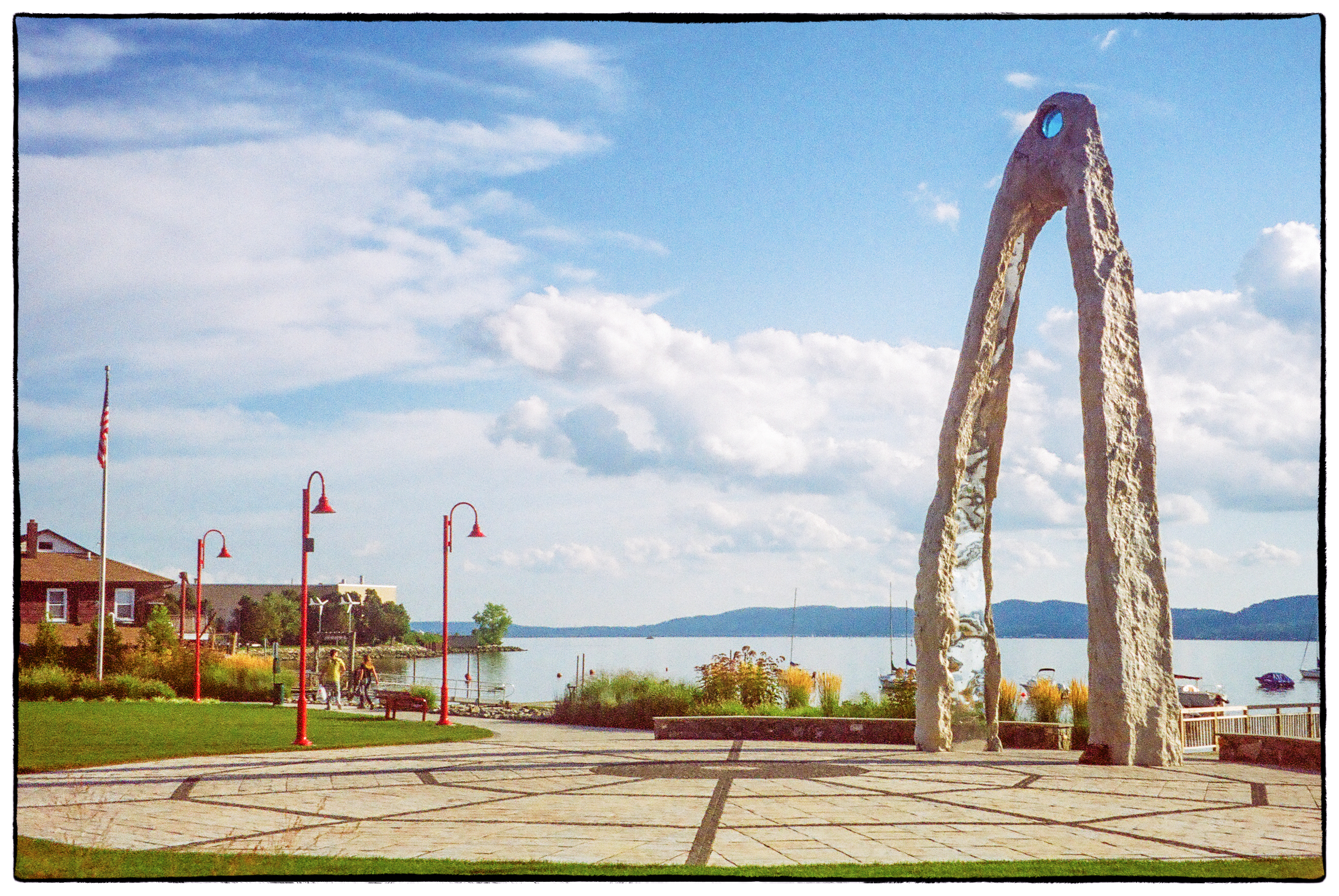
It’s interesting to compare this with a similar shot posted earlier: Sunset Drinks at 3 Westerley. Where this picture was taken with a film camera, the earlier one was taken with a digital Sony RX-100. The earlier shot was also taken about an hour later, when the light was much more interesting.
Taken with an Olympus Infinity Stylus Epic Zoom 80.
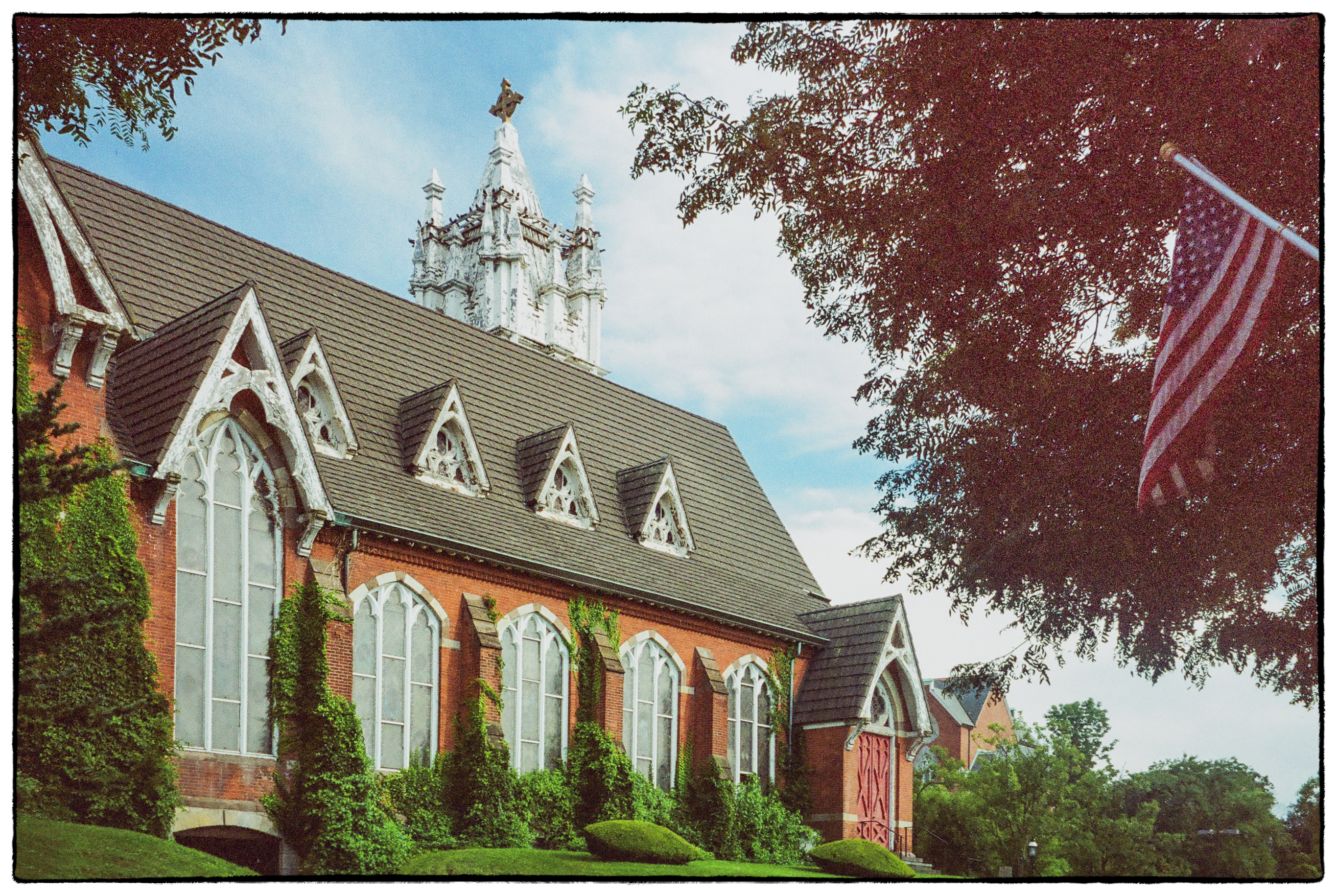
According to the church’s website:
Elijah Hunter, a captain in the Revolutionary War who founded Ossining, started holding Baptist prayer meetings at his house in 1786. This grew rapidly, and four years later, 33 congregants formally incorporated the church. They continued to meet in homes until Hunter donated the land for a small meeting house on the present site in 1815. During the early years, slaves and their masters attended services. Both were considered full members of the congregation, and treated equally in the church.
The original building was altered in 1834, and again in 1850. Originally the church had no facility for baptisms, so those took place in a small cove on the Hudson River just south of where the village’s train station is now. In 1865 the present white marble baptistry was installed.
By that time the church was beginning to outgrow its original structure, and the congregation began considering a new one. Brooklyn architect J. Walsh’s Gothic Revival design, with triangles and quatrefoils representing the Trinity and the four Gospels respectively, was dedicated in 1874. It had cost $75,000 ($1.59 million in modern dollars) for local contractor John Hoff to build. The church was able to finance it purely from donations from the congregation, without taking out a mortgage.
Later in the 19th century the church continued its early tradition of support for the local African-American community. At its centennial celebrations in 1890, an itinerant African-American minister requested the church’s help in establishing a ‘black’ Baptist Church in the village. First Baptist and its congregation responded, and Star of Bethlehem Baptist Church was established on South Spring Street. It continues to hold services today.
In 1916 the church was wired for electricity. Almost a century later, after its 200th anniversary celebrations, the church and donors were able to restore all the original stained glass windows. There have been no significant alterations to the building other than those.
Two significant features of the building, in addition to its Gothic design and the beautifully carved interior woodwork, are the steeple and the stained glass windows. It is truly one of the most recognizable buildings in Ossining.
Apparently Mr. Hunter, in addition to founding the church, was also quite a successful spy. According to an article on the New York History Blog entitled Elijah Hunter: Revolutionary War Spy:
Early in the War Elijah Hunter, served as lieutenant and as captain of Grenadiers at the Battle of White Plains. He was also a delegate to the Assembly of Westchester County. However, his most important service was a civilian when he supervised a network of counterintelligence agents operating in the Fishkill area. He later worked for the American side as a spy and double agent in New York City and there exists a number of letters and other related documents in the George Washington papers that reference Hunter’s role as a secret agent. One of these is Washington’s letter to Hunter in which the General attaches exaggerated information about the strength of the American forces in the lower Hudson valley area. He intended that it fall into the hands of the British and force them to keep a large force pinned down in New York City to defend the it and unavailable to assist General John Burgoyne’s forces who were marching down from Canada. In part the letter says:
“Inclosed (sic) you will find a return of the troops fit for duty under my immediate command. For the reasons I mentioned to you the other day I have not the least objection to our real strength being known, and it will be well for you to inform that you came by the knowledge of it from inquiry and your own observations of the troops when under arms upon which you formed an average estimate of the force of each regiment in the different Brigades; to give your account, the greater air of probability you may observe that the Officers are very incautious in speaking of the strength of their regiments. “
Taken with an Olympus Infinity Stylus Epic Zoom 80.