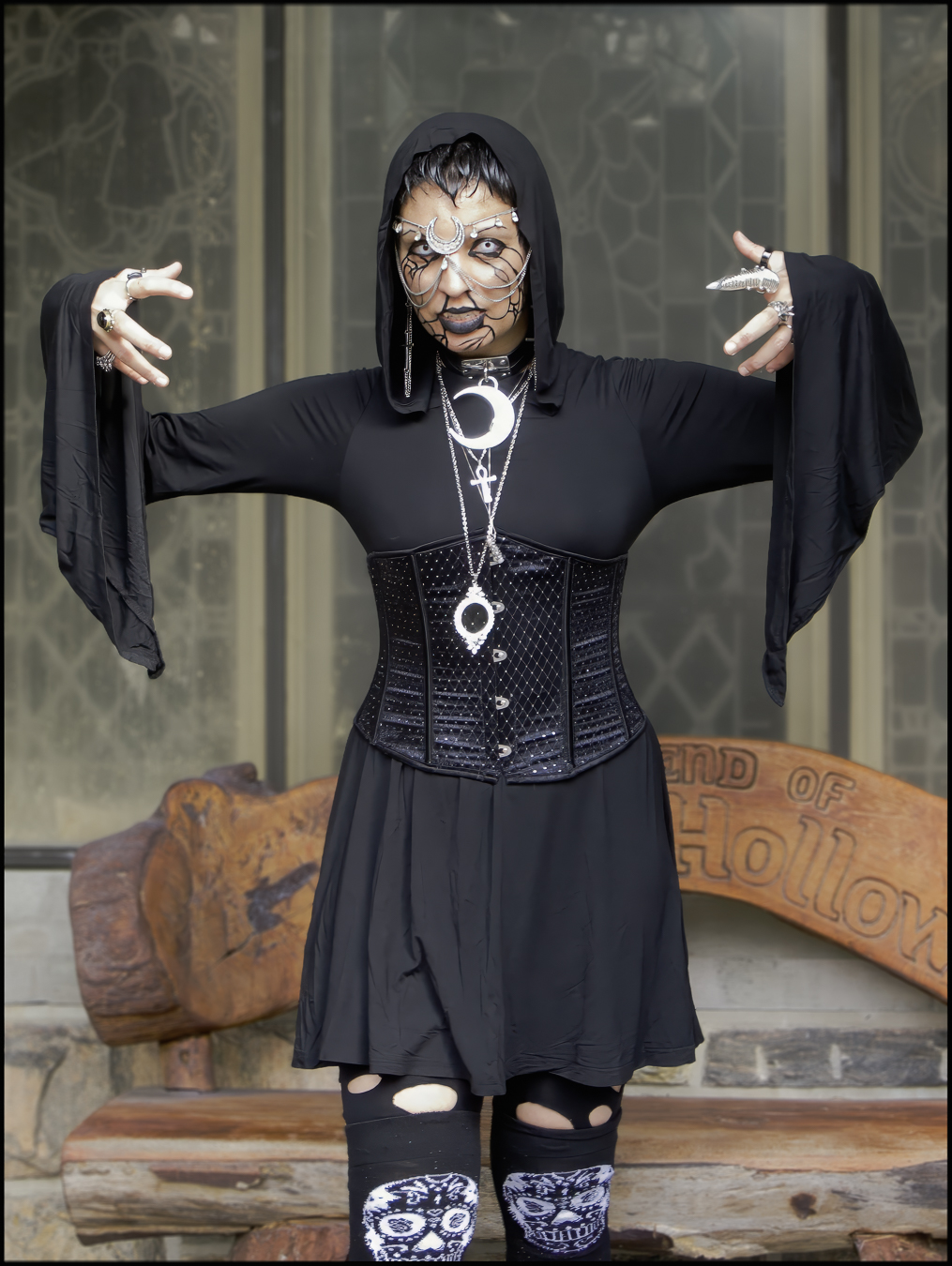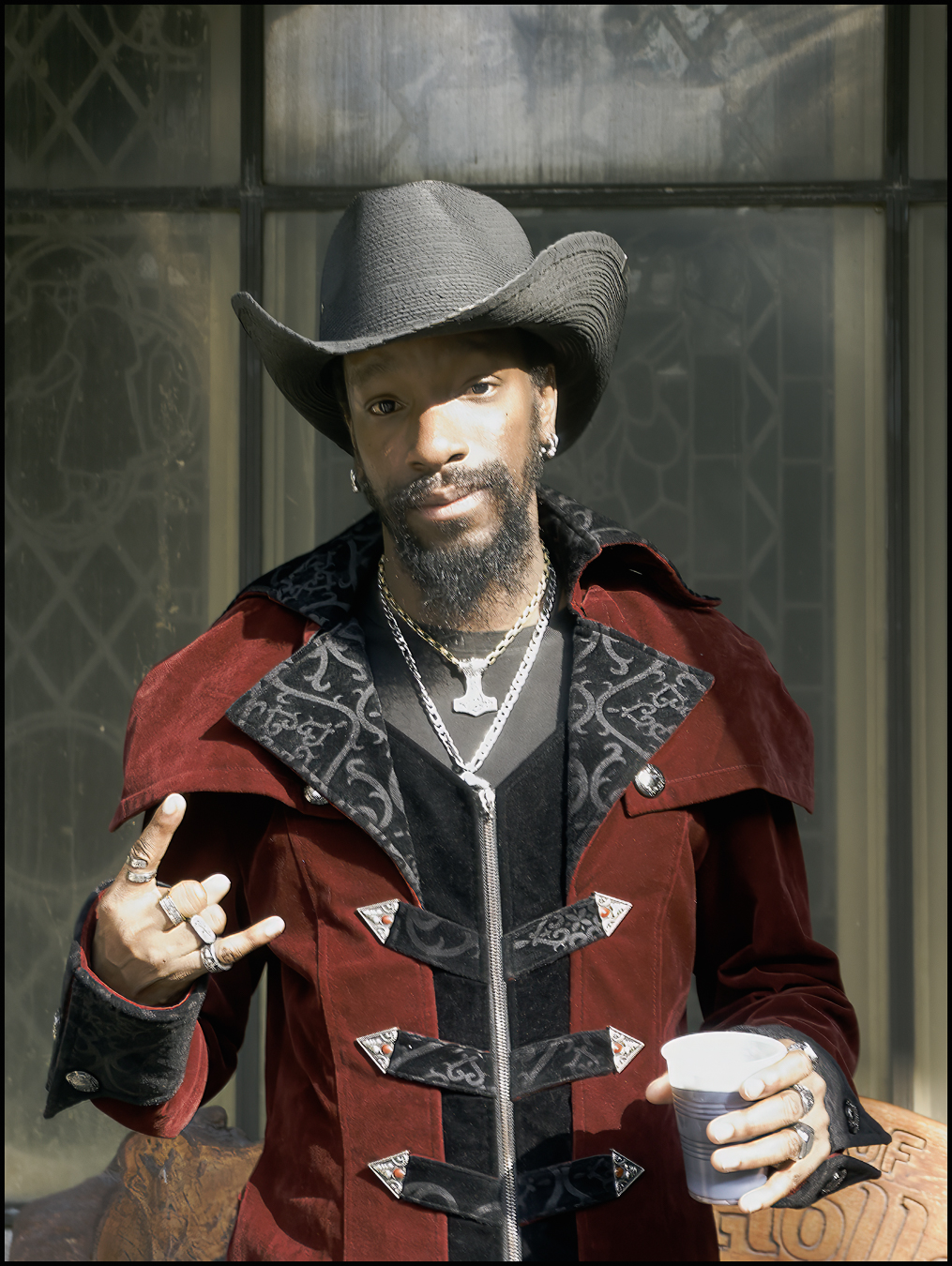
In New York City with Jasmine – In Chinatown

My feet were no longer hurting (much). I wasn’t thirsty, but I was starting to get hungry. Luckily Jasmine appeared with a couple of her friends. We had a drink (or in my case another drink) and after a while one of her friends left. We went to Chinatown with the other friend (who I’ve known since she was about 14 and at the International School in Geneva with Jasmine).

The chosen venue was Dim Sum Go Go. You can see the sign behind me in the fifth picture. There we met Jasmine’s friend’s two sons.

Lin Ze Xu. According to Wikipedia (which has a lot of additional) information:

Lin Zexu (30 August 1785 – 22 November 1850), courtesy name Yuanfu, was a Chinese political philosopher and politician. He was a head of state (Viceroy), Governor General, scholar-official, and under the Daoguang Emperor of the Qing dynasty best known for his role in the First Opium War of 1839–42. He was from Fuzhou, Fujian Province. Lin’s forceful opposition to the opium trade was a primary catalyst for the First Opium War. He is praised for his constant position on the “moral high ground” in his fight, but he is also blamed for a rigid approach which failed to account for the domestic and international complexities of the problem. The emperor endorsed the hardline policies and anti-drugs movement advocated by Lin, but placed all responsibility for the resulting disastrous Opium War onto Lin.


Picture courtesy of Jasmine.


And that was about it for this particular trip. The next morning, we had breakfast, and after that I went back to Grand Central Terminal and took my train home.

Taken with a Sony RX10 IV

In New York City with Jasmine – Around The Frederick

Jasmine had a few things to do so I walked around for a while taking pictures in the area around the Frederick Hotel. I saw the picture above from the window of my room at the Frederick (See: In New York City with Jasmine – Our next hotel, The Frederick) and had to go down and take a closer look.


Strange vehicle


Woman in a pocket park


The David N. Dinkins Manhattan Municipal Building. According to Wikipedia (which has a lot more information):

The David N. Dinkins Municipal Building (originally the Municipal Building and later known as the Manhattan Municipal Building) is a 40-story, 580-foot (180 m) building at 1 Centre Street, east of Chambers Street, in the Civic Center neighborhood of Manhattan in New York City. The structure was built to accommodate increased governmental space demands after the 1898 consolidation of the city’s five boroughs. Construction began in 1909 and continued through 1914 at a total cost of $12 million (equivalent to $269,713,000 in 2023).

Designed by McKim, Mead & White, the Manhattan Municipal Building was among the last buildings erected as part of the City Beautiful movement in New York. Its architectural style has been characterized as Roman Imperial, Italian Renaissance, French Renaissance, or Beaux-Arts. The Municipal Building is one of the largest governmental buildings in the world, with about 1 million square feet (93,000 m2) of office space. The base incorporates a subway station, while the top includes the gilded Civic Fame statue.

The Municipal Building was erected after three previous competitions to build a single municipal building for New York City’s government had failed. In 1907, the city’s Commissioner of Bridges held a competition to design the building in conjunction with a subway and trolley terminal at the Brooklyn Bridge, of which McKim, Mead & White’s plan was selected. The first offices in the Municipal Building were occupied by 1913. In later years, it received several renovations, including elevator replacements in the 1930s and restorations in the mid-1970s and the late 1980s. The New York City Landmarks Preservation Commission designated the building a landmark in 1966, and it was listed on the National Register of Historic Places in 1972. In October 2015, the building was renamed after David N. Dinkins, New York City’s first African-American mayor.


The David N. Dinkins Manhattan Municipal Building (foreground) and the World Trade Center Building (background)


New York County Supreme Courthouse. According to Wikipedia (which has more information):

The New York State Supreme Court Building, originally known as the New York County Courthouse, is located at 60 Centre Street on Foley Square in the Civic Center neighborhood of Manhattan in New York City. It houses the Civil and Appellate Terms of the New York State Supreme Court for the state’s First Judicial District, which is coextensive with Manhattan, as well as the offices of the New York County Clerk.

The granite-faced hexagonal building was designed by Guy Lowell of Boston in classical Roman style and was built between 1913 and 1927, completion having been delayed by World War I. It replaced the former New York County Courthouse on Chambers Street, popularly known as the Tweed Courthouse. Both the interior and exterior are New York City Landmarks: the exterior was designated on February 1, 1966 and the interior on March 24, 1981.

“Saint Andrew Roman Catholic Church. The Church of St. Andrew is a Roman Catholic parish church in the Roman Catholic Archdiocese of New York, located at 20 Cardinal Hayes Place, Manhattan, New York City. It was established in 1842. The present building was erected in 1939 through a joint effort involving Maginnis & Walsh and Robert J. Reiley in the Georgian Revival architectural style.

In August 2015 St. Andrew’s parish merged with that of Our Lady of Victory on William Street to form the Parish of Our Lady of Victory and St. Andrew. In 2020(?), St. Andrew’s Church was closed to the public when the Sisters of Life were given the building. In 2023, both parishes were merged with St. Peter’s Church at 22 Barclay Street.

St. Andrew’s parish was founded by Rev. Andrew Byrne. Local Catholics had purchased the old Universalist Church, known as Carroll Hall, which then Bishop John Hughes dedicated on March 19, 1842. In 1844, Byrne was named the first bishop of the Diocese of Little Rock. In 1858 extensive street improvements carried away so much of the old structure that it was found necessary to purchase the adjoining lot. According to Remigius Lafort, George Washington once dwelt in a house on this site. The remodeled St. Andrew’s was dedicated October 20, 1861.

On February 25, 1875, during a Lenten service at which about 1200 worshippers were assembled, the building next to the church suddenly collapsed. As a result, the roof of Saint Andrew’s caved in on those gathered, killing five and injuring at least 29.

Father Luke Evers initiated the “Printers’ Mass”, held at 2:30 a.m. on Sunday morning. An adaptation approved by Pope Leo XIII, this allowed Catholic workers at nearby Printing House Square, where The Sun, The New York Telegram, The New York Times, and the New York World newspapers were then published, to fulfill their Sunday obligation by stopping by on their way home after the Saturday night press runs. The “Printers Mass” also drew railway workers, postal employees, policemen, firefighters, brewery and saloon workers. The practice soon spread to other cities. This tradition continued for more than 50 years, and the church became known as “The Printers’ Church. Some six years later a similar accommodation would be made for the theatrical community with the establishment of the “Actors’ Chapel” at St. Malachy’s.

Evers was also chaplain at The Tombs.

In 1892, the address listed was on Duane Street at the corner of City Hall Place (now Cardinal Hayes Place).[6] The present building was erected in 1939 through a joint effort involving the famous Boston firm Maginnis & Walsh and Robert J. Reiley of New York. It is one of the best examples of the Georgian Revival architectural style in New York. St. Andrew is the only New York City church to be designed by Maginnis & Walsh. The church was erected near the site of the infamous Five Points slum. The selection of the site for the church was near where Cardinal Hayes was born.

The church is located near New York City Hall and 1 Police Plaza, along with several other courthouses such as the New York County Courthouse and Thurgood Marshall United States Courthouse. Above the entrance to the church, an inscription in Latin reads “Beati qvi ambvlant in lege Domini,” which means “Blessed are they who walk in the law of the Lord.” (Adapted from Wikipedia)

Taken with a Sony RX100M3

In New York City with Jasmine – 9/11 Memorial

I’d been to the memorial before, back in October 2013: (See: New York 9/11 Memorial).

According to Sowing Seeds of Faith:

The 9/11 Memorial is no ordinary tourist attraction. We were enjoying the sights and sounds of New York City but once we stepped on “Ground Zero” the laughter and chatter ceased. We were fellow mourners paying our respects. The 9/11 attacks killed 2,977 people from more than 90 countries. Everyone over the age of twenty still remembers where they were on September 11, 2001. How could you visit New York and not feel compelled to see where most of 9/11 occurred?

The 9/11 Memorial opened exactly ten years after the attacks. There are two pools set in the foundation of the former twin towers. Thirty-foot waterfalls – described in the brochure as the largest in North America – pour into the pools and then vanish in the center.

The names of every victim are inscribed in bronze around the pools. Not in alphabetical order as you would expect but based on “layers of meaningful adjacencies” that reflect where victims were on 9/11 or as relationships with others killed. To find specific names you go online or use a nearby electronic directory. Each name has a symbol beside it. For example: S-50 means South Pool, panel 50.

As I leaned over the wall to gaze at the waterfall, I couldn’t help but rub my hand over the engraved names and pronounce each one out loud. There were miniature American flags embedded in the lettering of a few. Some of the names were familiar. Like many churches, ours regularly listed the names to pray for their families.

Surrounding the pools are many precisely placed trees planted with the purpose of adding a sense of peace and serenity. All but one are Swamp White Oaks. But a solitary pear tree is the “Survivor Tree.” Badly damaged, near death, the tree was discovered by workers shortly after the tragedy and nursed back to health. The “Survivor Tree” is now over 30 feet tall and stands as a testimony to the fortitude of he survivors that is such an important part of the 9/11 story.


Taken with a Sony RX10 IV

In New York City with Jasmine – DJango

As mentioned in an earlier post, the reason we stayed at The Roxy was because we were going to spend the evening at, Django, a jazz club on the lower level of the hotel.

Django’s website describes the club as follows:

Descend into The Django and you’ll feel like you’ve entered another world. The subterranean jazz club, with its vaulted ceilings and exposed brick walls, was modeled after the boîtes of Paris. The venue consists of two cocktail bars, open dining space and a stage for live performances with the ne plus ultra: a state-of-the-art Meyer Sound system. The Django has become a place to call home for musicians and audiences alike. Providing opportunities for rising stars, seasoned performers, and eager audiences to enjoy a range of jazz music 7 nights a week complemented by a hand-crafted cocktail program by award-winning mixologist Natasha David and an elevated dinner menu.

We were supposed to see two performers: Loston Harris and Benny Benack III. Before going down to the club we met with some of Jasmine’s friends in the lobby, one of them Scott McDermott a well-known photographer. I don’t get a chance to talk to other photographers, especially those of Scott’s caliber and I was really enjoying the conversation. Unfortunately, this meant that we were rather late and, I believe, missed most of the first set.

However, we were able to watch all of the second set. I’m not usually a fan of Jazz, but I enjoyed Benny Benack (see pictures below, except for the first two).


Taken with a Sony RX100M3

A visit from Alexander

Alexander is my grandson. He’s the only male (among seven females in my immediate family). He recently graduated from University in the UK and has come here, I imagine, to explore his American Roots (his mother was born in the USA).

I went into New York City (Manhattan) to see him. We had a pleasant lunch and a few beers at The Perfect Pint on 45th street between second and third avenues.

I haven’t seen him for a sometime so I’m glad that he’ll be in New York for a while.

Taken with his phone. I don’t know what brand/model it was.