Trying out Infrared Photography – A New Photobook

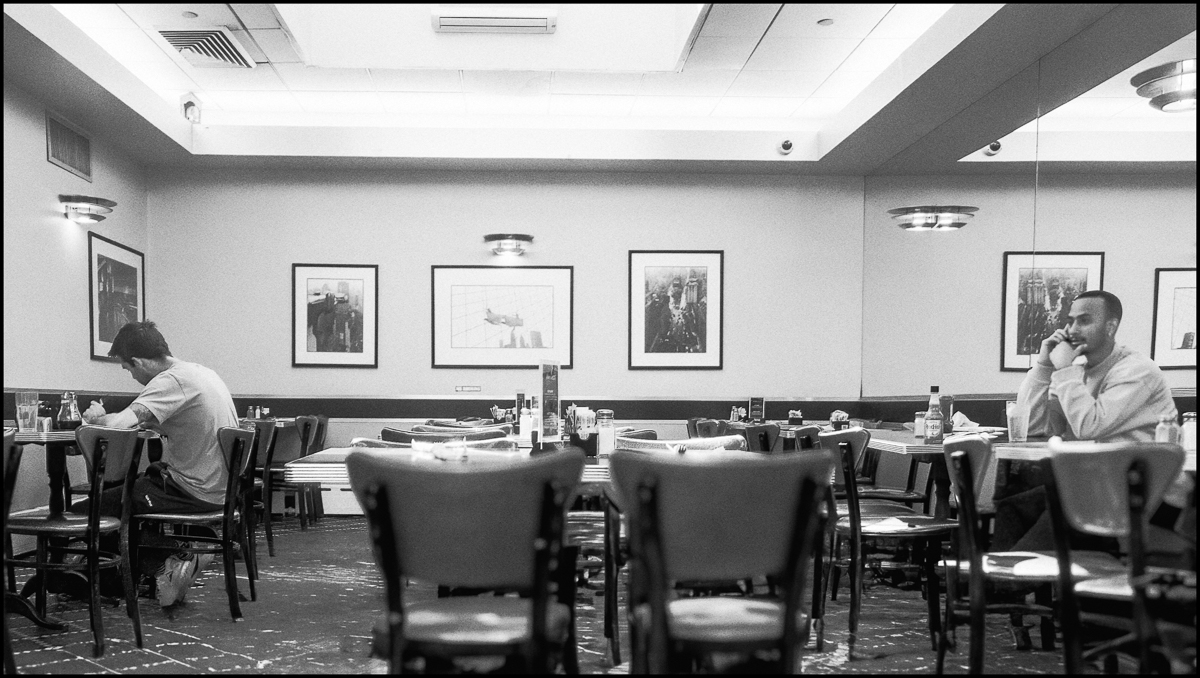
I was now producing reasonable infrared photographs. But this was, after all, coming from a 20 year old camera with an old 8 megapixel sensor. Sure the pictures looked OK on screen, but how would they look printed?

So I decided to make a photobook and found that the answer to the above question was…not at all bad!

So far my efforts have all produced black and white images. My next attempt will attempt to produce the type of false color pictures often associated with infrared photography.

And I’m enjoying infrared photography so much that I’m seriously considering acquiring a modern, infrared converted camera.

Stay tuned.

Interesting video

Back in April I posted about a photographer, whose work I generally respect, but who seems to have a strong aversion to people who use phone cameras (See: A rant). He seems to feel that you can’t be a ‘real’ photographer if you use a an iPhone. In another post (See:You’re a photographer. You’re not a Photographer) I noted that I don’t feel that the quality of your photograph depends on the tool you use.

So I think that this guy should take a look at the above video, which contains some amazing photographs taken with an iPhone.

His website can be found at Eric Mencher Photography.

Confused by Sony cameras. This will help.

I have a number of Sony cameras, both full frame and APS-C, but I’ll be the first to admit that Sony offers so many options: full frame vs APS-C; low cost vs expensive; still vs video; hybrid; optimized for video; optimized for stills; optimized for fast action etc. that it can be difficult to choose.

I find this video from Tony and Chelsea to be incredibly useful in sorting out all of the options.

You’re a photographer. You’re not a Photographer.

Earlier this month I published A Rant. I let loose on a photographer whose work I largely respect and admire except when he goes on at length along the lines of “Your not a photographer if you use an iphone; don’t print your work; don’t use a sophisticated camera etc. You can fill in the blanks.

He’s at it again, this time on his YouTube channel.

This time he made me think about who is a photographer and who isn’t. He seems to feel that unless you reach a particular standard (presumably defined by him) you’re not fit to call yourself a photographer.

I don’t agree.

As far as I can tell a photograph is “a picture made using a camera, in which an image is focused onto film or other light-sensitive material and then made visible and permanent by chemical treatment, or stored digitally.”. Photography is “the art or practice of taking and processing photographs.” It follows that a photographer is someone who practices the art or practice of photography. So everyone who practices photography is a photographer. The word “photography” was created from the Greek roots φωτός (phōtós), genitive of φῶς (phōs), “light” and γραφή (graphé) “representation by means of lines” or “drawing”, together meaning “drawing with light”.

So let’s have no more of this “You’re not a photographer if…”. If you’re using a camera to take/make/capture (whichever you prefer) something, then you’re a photographer.

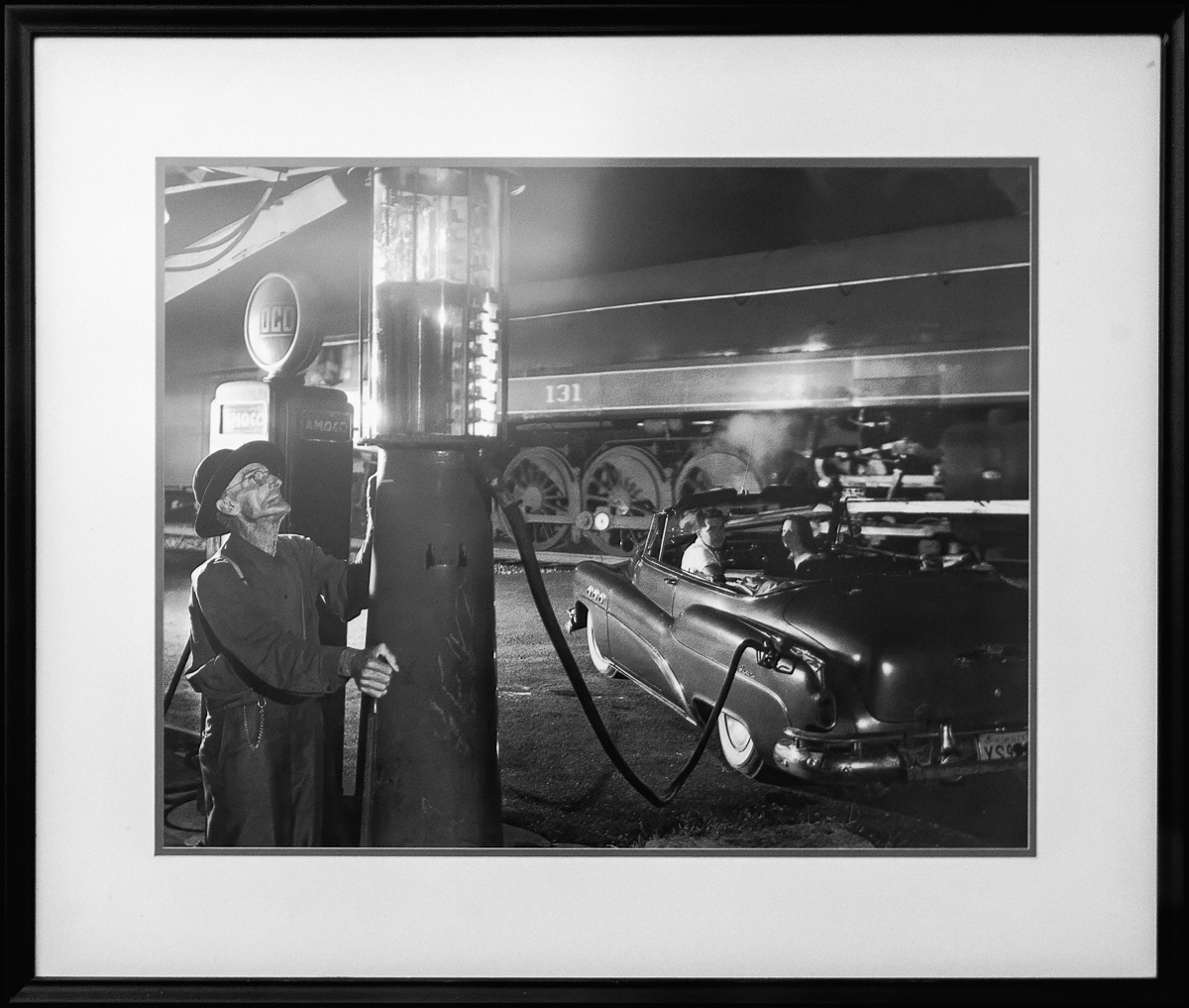
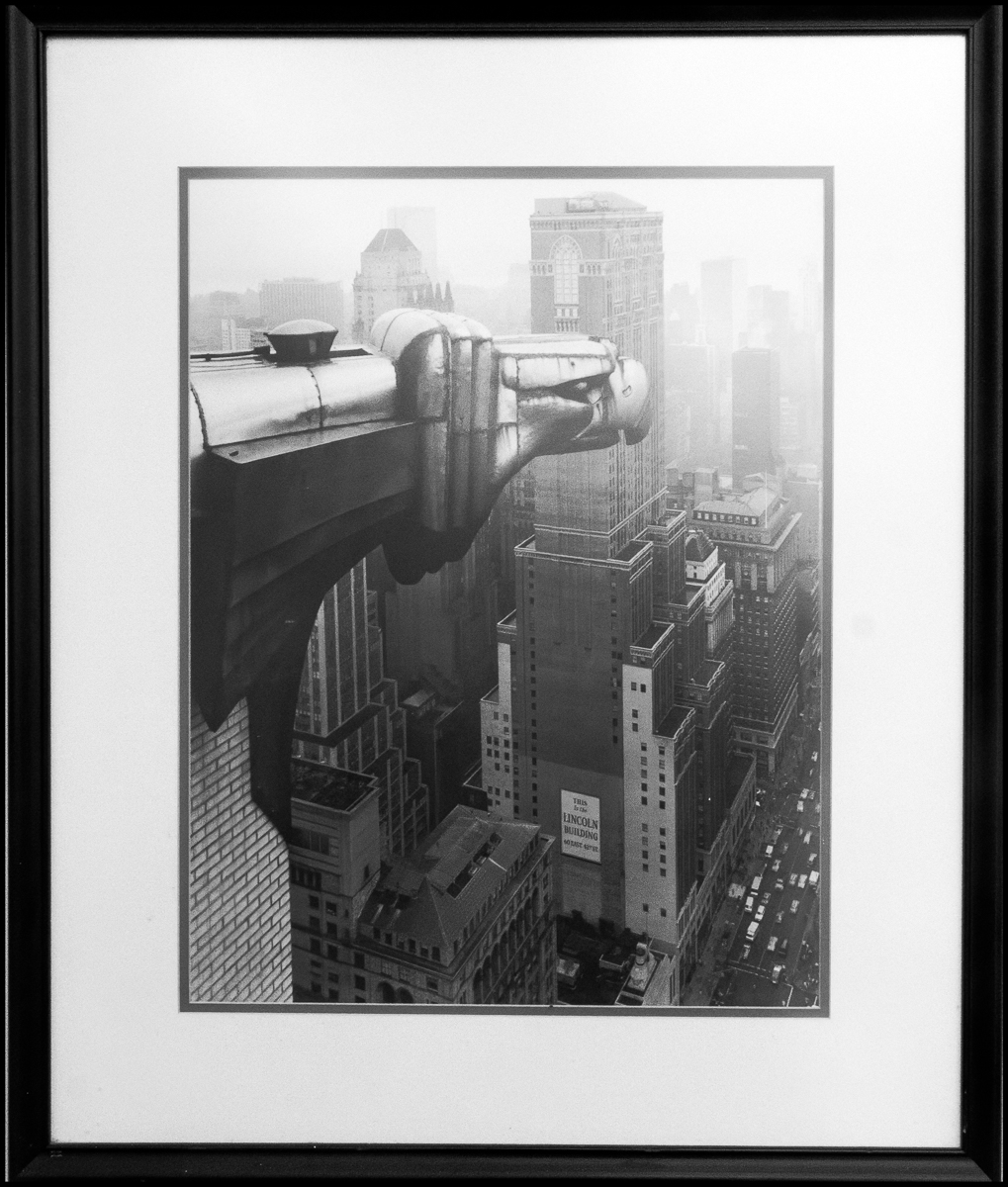
To me photographers fall somewhere along a whole spectrum depending on their talent, skills, experience etc. On one end are the truly bad photographers (see picture on the left above taken by me sometime in the 1980s), on the other are people like Robert Frank (see picture on the right above) who’s acknowledged to be a superb photographer. All other photographers are somewhere in between.

So it’s not a question of “You’re a photographer – You’re not a photographer”. Rather it’s “You’re a bad photographer; You’re a mediocre photographer”; You’re a good photographer” etc. “I think that’s what my blogging/Youtubing friend is getting at.

Still more postcards – this time by Ansel Adams


I recently posted about Cornelia Cotton and her wonderful used book store/gallery in Croton-on-Hudson (See: Cornelia). While there I bought an Ansel Adams Yosemite National Park Postcard Folio Book.

It consists of 25 postcards (23 photographs, a title page, and an introduction). I think there were supposed to be more. The title page mentions “Front Cover Photograph: Clearing Winter Storm, Yosemite National Park, California, 1944″ and “Back Cover Photograph: Ansel Adams by Mimi Jacobs” (Mimi Jacobs took a number of photographs of Adams. Since I don’t know which one was included in this collection I can’t provide a link), both of which seem to be missing. I’ve included five images here to give you a feel for what they’re like. Of course my low resolution scans from my cheap, poor quality scanner don’t come close to doing justice to the the postcards themselves.

My interest in photography started around 1978 when my wife gave me a brand new Minolta Hi-Matic 7sII. Maybe I mentioned that I would like a camera? Maybe she just thought it would be a good idea? Little did she know what a monster she was unleashing. Not long before, an Ansel Adams print (Moonrise, Hernandez, New Mexico) had sold for what then seemed to be the astonishing amount of $71,500 (the same print sold for $609,600 in 2006 and the current most expensive photograph is Le Violon d’Ingres (1924) by Man Ray, which sold in 2022 for $12,400,000). Around that time a friend lent me one of Adams’s books (I believe it was “The Camera“). With my new found enthusiasm for photography I wanted to be Ansel Adams, to make those lovely black and white photographs. Over the years my interest for landscape photography has waned a bit. I live in the rather picturesque Hudson Valley so I still take plenty of landscape pictures, but my photographic interests have broadened to include street photography, macro photography, nature photography etc. I still like black and white photography though and to me he’s still the master of that.

Curiously, while I was working on these images ended up temporarily in a folder, which also contained ten black and white pictures I’d taken of the New Croton Dam. Of course they weren’t anywhere near as good as the Adams photographs. But I was pleased to see that they didn’t look that bad either – at least as seen in low resolution on screen. I’m sure that Adams prints would blow anything I could produce out of the water.


Half Dome and Clouds, Yosemite Park, c.1968, Ansel Adams.


Merced River, Cliffs, Autumn, Yosemite National Park, 1939, Ansel Adams.


Fern Spring, Dusk, Yosemite National Park, c.1961, Ansel Adams.


Dogwood, Yosemite National Park, 1938, Ansel Adams.


Mirror Lake, Mount Watkins, Spring, Yosemite National Park, 1935, Ansel Adams.

The complete set Copyright 1996 by the Trustees of the Ansel Adams Publishing Rights Trust. Published by Little, Brown and Company.