Crossing the road

I was walking from my house along Main Street, Ossining, NY down to the Hudson where I would have my usual Sunday lunch by the river. I was a bit early, and the restaurant would not be open for a while, so I decided to sit and watch the world go by. I found somewhere to sit that was somewhat higher than usual. I thought it might give me something different from my usual eye level (sometimes low to the ground) perspective.

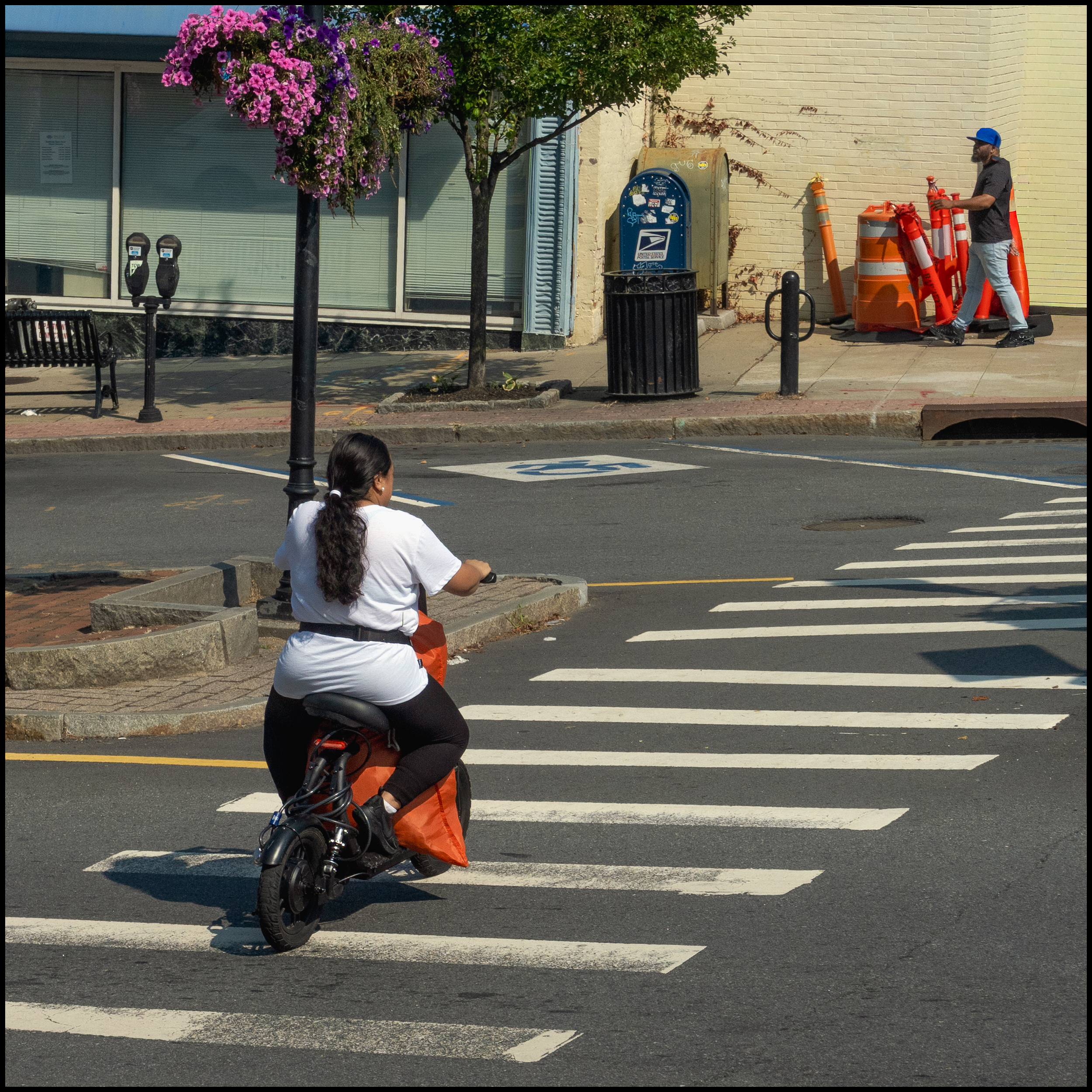
At a certain point a woman drove across this crossing on a…well, I don’t exactly what to call the things she was riding on – maybe some kind of scooter. I thought it might make a nice picture. I liked the diagonal line of the crossing, and the man on the other side of the road.

Taken with a Sony RX100 MVII.

The smoker

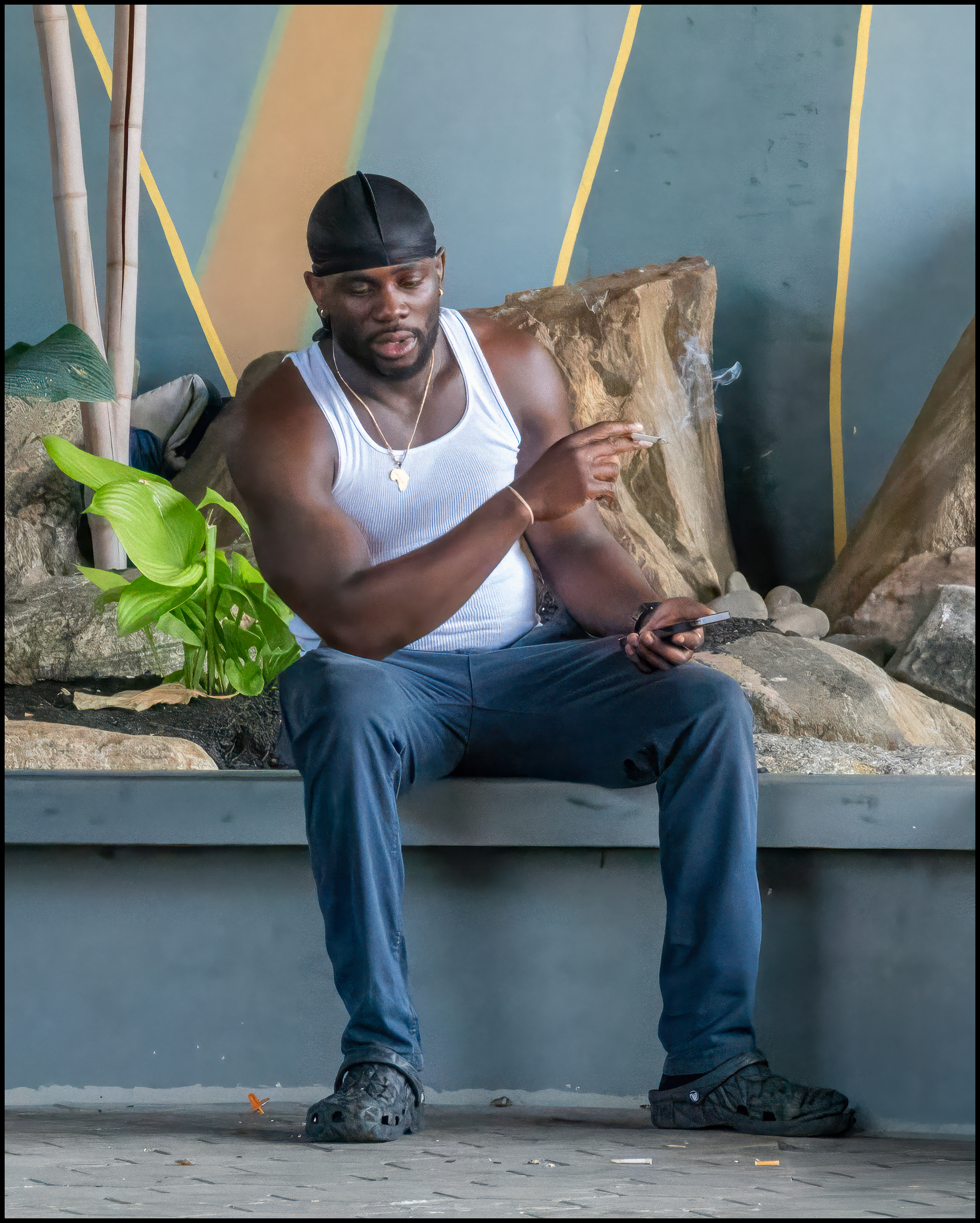
I came across this guy in Henry Gourdine Park.

Ossining’s Henry Gourdine Park is a small riverfront park in the Old Village with beautiful views of the Hudson River, paved paths for walking, benches for watching the sunset, and a neat playground. Located in front of the Ossining Train Station, the park is adjacent to the 3 Westerly Bar & Grill, the Harbor Square apartments, the Ossining Boat and Canoe Club, and the Louis Engel Waterfront Park. Since the park is so close to Louis Engel next door, you can easily visit both at once.

Henry Gourdine was a legendary Hudson River fisherman, storyteller and Ossining resident who died in 1997 at age 94. A fisherman from age 17, he also made and repaired his own nets, built boats, worked as a carpenter between fishing seasons, and relished passing on stories and wisdom to others.

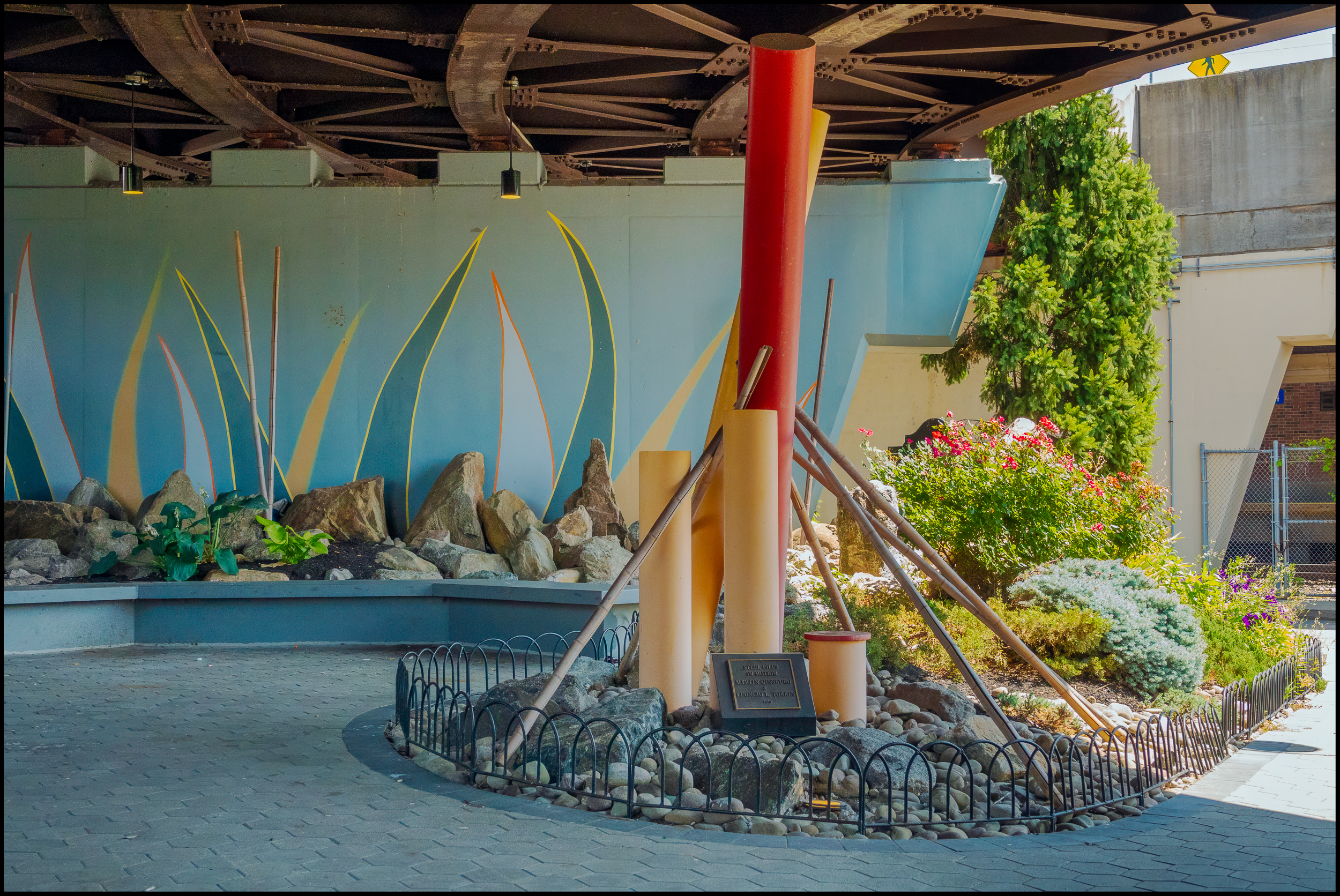
In the part of the park nearest to the train station there’s a tiny area covered by an overpass that takes the road over the railroad tracks. It’s a nice shady place to sit in hot weather (which we’ve had a lot of lately). I was sitting there when I noticed the subject of this photo. I suspect that he was an employee of 3 Westerly Bar and Grill taking a break. He certainly walked off in that direction when he’d finished.


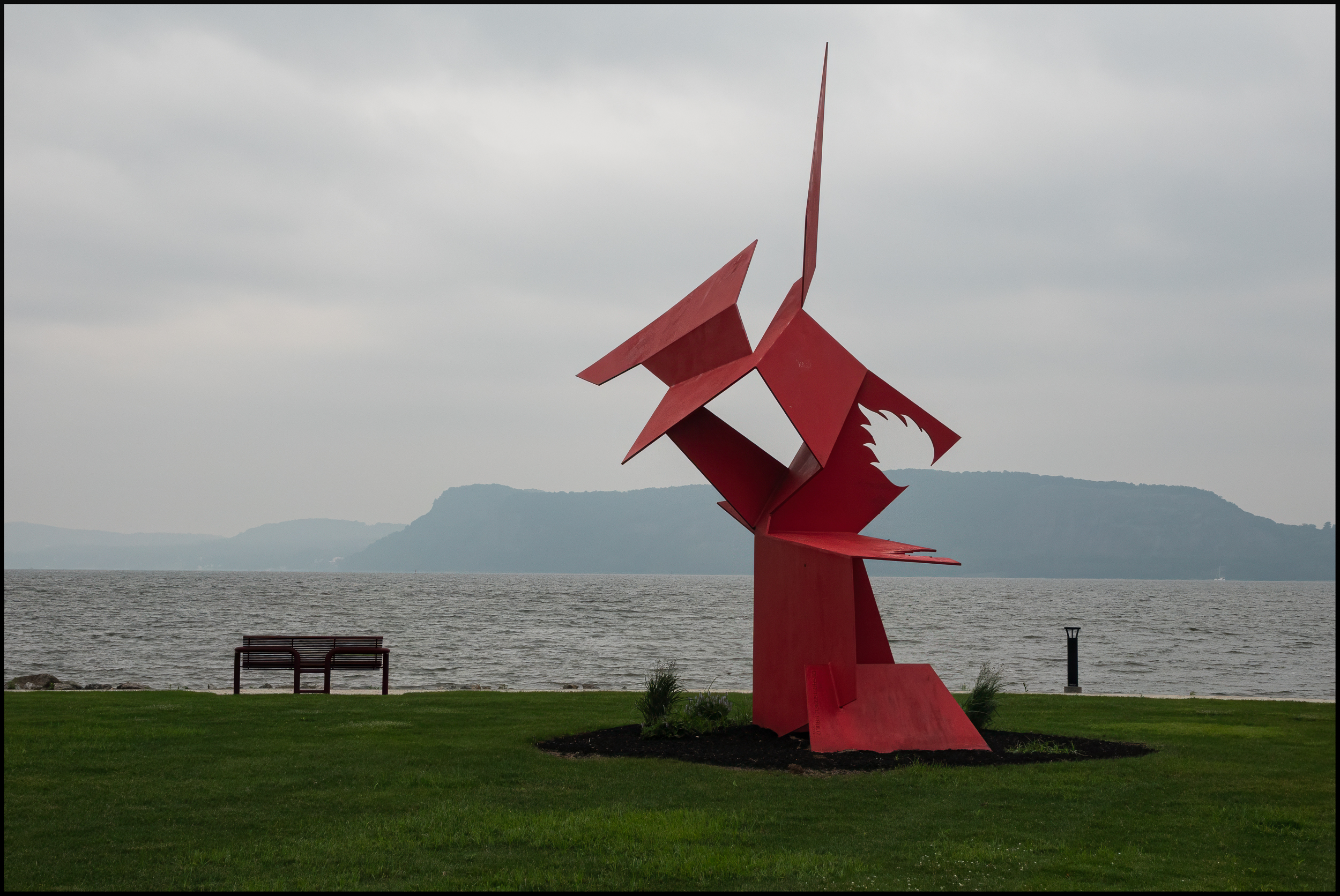
Statue in the park. It’s called: “The angel


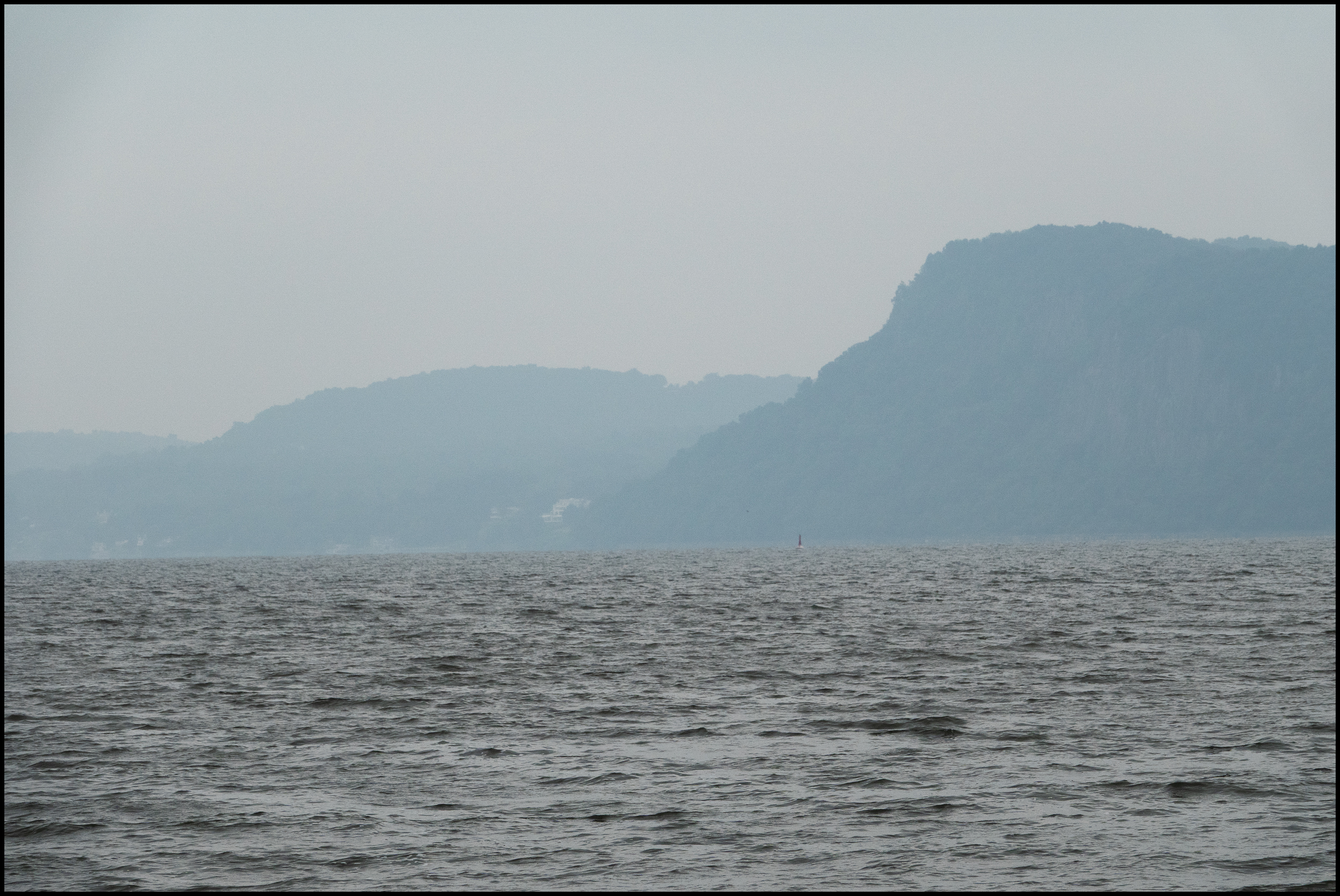
Hudson View from the park.


The bit of the park under the overpass.

Taken with a Sony RX10 IV

Seeing a Broadway Show – On to Bryant Park


I intended my make my first stop to be at Bryant Park, but first a picture (above) taken right outside Grand Central Terminal

Bryant Park is a 9.6-acre (3.9 ha), privately managed public park in the New York City borough of Manhattan. It is located between Fifth Avenue and Avenue of the Americas (Sixth Avenue) and between 40th and 42nd Streets in Midtown Manhattan. The eastern half of Bryant Park is occupied by the Main Branch of the New York Public Library. The western half contains a lawn, shaded walkways, and amenities such as a carousel, and is located entirely over an underground structure that houses the library’s stacks. The park hosts several events, including a seasonal “Winter Village” with an ice rink and shops during the winter.

The first park at the site was opened in 1847 and was called Reservoir Square due to its proximity to the Croton Distributing Reservoir. Reservoir Square contained the New York Crystal Palace, which hosted the Exhibition of the Industry of All Nations in 1853 and burned down in 1858. The square was renamed in 1884 for abolitionist and journalist William Cullen Bryant. The reservoir was demolished in 1900, and the New York Public Library’s main branch was built on the site, opening in 1911. Bryant Park was rebuilt in 1933–1934 to a plan by Lusby Simpson. After a period of decline, it was restored in 1988–1992 by landscape architects Hanna/Olin Ltd. and architects Hardy Holzman Pfeiffer Associates, during which the park was rebuilt, and the library’s stacks were built underneath. Further improvements were made in the late 20th and early 21st centuries. (Wikipedia)

The above mentions: “a period of decline”. That doesn’t quite tell the full story. By the 1960s, Bryant Park had deteriorated badly. When I arrived in New York in 1974 it had been taken over by drug dealers and the homeless. In was considered to be somewhere that ordinary people and visitors should avoid.

The park was substantially renovated and rebuilt during the 1980s and re-opened to acclaim in the early 1990s. The dramatic improvement in the park led to an equally dramatic rise in real estate values in the surrounding area. By 1993, the area had become a highly desirable office area, and formerly vacant office space around the park was being filled quickly. The Park is used mostly as a passive recreation space. It is one of the world’s busiest public spaces. Now more than 12 million people per year visit the park and enjoy gardens with seasonal displays, free daily amenities, cultural programming, exercise classes, and much more!


The Winter Village


Plastic igloos where you can sit and eat or have a drink while protected from New York winters.


Statue of William Earl Dodge by by John Quincy Adams Ward. It was cast in 1885 and dedicated on October 22 of that year. The statue was initially installed in Herald Square, having been financed by Dodge’s admirers and friends. It was moved to Bryant Park in 1941 and was renovated in 1992 by the Bryant Park Restoration Corporation.


The Josephine Shaw Lowell Memorial Fountain, a memorial to Josephine Shaw Lowell, a social worker active in the late 19th century. The fountain was designed by architect Charles A. Platt and dedicated in 1912.


Coins in the fountain.


One of the numerous decorative planters scattered around the park.

Taken with a Sony RX100 MVII

A Walk through Peekskill – McGregory Brook

I was walking back down it was much easier going down than going up) along Central Ave. to catch my train I heard the sound of running water. I looked across the street and noticed a pocket park with a couple of benches, and an information board (see below). In case you can’t make out the rather small text it reads:

McGregory Brook flows from the hills just east of Peekskill to the Hudson River at Riverfront Green Park. Kitchawank people, of the Wappinger confederacy, inhabited the area surrounding McGregory Brook and nearby Annsville Creek prior to Dutch settlement, led by Jan Peeck.

King William III of England granted 1,500 acres to Hugh MacGregorie in 1692, and the brook became the boundary between the original settlement known as Peekskill and surrounding Van Cortlandt lands. Numerous mills and factories diverted McGregory Brook for power, including Dain’s Lumber Company, Naylor Brothers machine shops, Mackellar’s Mills, and Union Stove Works. For many years, Peekskill residents drew water from the Tan Yard Spring, which also surfaced near this site.

Today, McGregory Brook enters a series of culverts at Field Street, flows beneath Downtown Peekskill, and emerges just east of this site. Remnants of industrial infrastructure can still be seen from the footbridge overlooking the waterfall.

Although McGregory Brook is no longer visible on most maps, FEMA’s 100-Year Flood Map clearly shows the pathway of McGregory Brook from Penelope Pond to the Hudson Riverfront. The lack of sunlight inhibits the brook’s natural ecosystem. While few fish, amphibians, or aquatic invertebrates inhabit the brook, filamentous green algae thrives on its surfaces, likely supported by nutrient enrichment from stormwater runoff and other sources.

For more information about Peekskill’s waterways and all of its natural features, explore the Peekskill National Resource Inventory at www.peekskilnri.com. For more information on Peekskill’s rich history, visit the Peekskill Museum at 124 Union Avenue.


Taken with a Sony RX10 IV

A Visit to Boston – Day Two – Norman B Leventhal Park

According to the park’s website:

“In the heart of the financial district, nestled among the high-rise office buildings, lies a lush oasis of green, a testament to the ingenuity and creativity of a group of people, both public and private, who joined together to foster this unique vision. What had previously been a decrepit and unsightly garage, is now an award-winning and inviting park set above a new underground parking garage. The Norman B. Leventhal Park is supported, structurally and financially, by Garage at Post Office Square, a 1,400-space parking garage.’

The Urban Land Institute describes it as follows:

“The 1.7 acre park’s centerpiece is a walk-through sculptural fountain, so whimsically friendly that in the summertime, office workers eating lunch often kick off their shoes to dip their feet in the fountain. A few yards away is a 143-foot-long formal garden trellis, supported by granite columns, draped with seven species of vines. The jewel-like Great Lawn, raised above the walkways by a granite curb, provides a relaxed retreat. More than a hundred different species of plants, flowers, bushes and trees are within the park. It features custom wrought-iron fencing and specially designed drainage gates. Seating styles fit every posterior and mood – stately teak benches, curving steel settees, movable cast-iron café chairs with tables, hundreds of linear feet of inviting polished granite wall and half an acre of lawn, all meticulously maintained” (Urban Parks and Open Space, Urban Land Institute, 1997).

My Canadian friend had some business with a US bank so we walked around looking for it. Eventually we found it and she went in. While we were waiting, we sat in the park and talked. After a while a guy came up and spoke to us. Apparently, he was from Sudan. At first the conversation was fairly innocuous, but after a while he accused us of “not respecting” him and started hurling abuse at us. Thankfully, he walked away at that point. At that point we needed a change and moved to another part of the park, where there was a pleasant cafe (Sip Cafe) with an outdoor seated area where we waited until my friend had finished her business.


Taken with a Sony A6000 and 18-135mm f3.5-5.6 OSS