Lasdon Park and Arboretum – Overview

I’d been to the Lasdon Park and Arboretum a couple of times: once for an antiques fair; and once for a concert. This time I wanted to take a look at something I’d bumped into while browsing the internet: the Trail of Honor.

According to the Park’s website:

The Lasdon estate, originally called Cobbling Rock Farm, was acquired by William and Mildred Lasdon in 1939. The main house of the estate was built in 1933 by Dr. Voislawsky after the original house was destroyed by a fire. The house is modeled after George Washington’s home in Virginia.

William Lasdon is known for establishing a major pharmaceutical company and for his philanthropist endeavors. The Lasdon estate was simply used as a country retreat. The Lasdon family had great interest in horticulture and loved to travel. Along these travels, they brought back many tree specimens and planted them at the estate.

In 1976, William Lasdon created the Mildred D. Lasdon Bird and Nature Sanctuary. This is a twenty-two acre preserve which was donated to the county. There is an intricate system of trails that run through an array of wildlife habitats. Many different species of birds, and up to twenty different types of warblers can be observed there during migration.

When William Lasdon died in 1986, Westchester County purchased the estate for $4.2 million. Several companies were interested in using the 234 acres to put up condominiums. The county wanted to obtain this land in order to preserve the land and history of the area. For the most part, the formal grounds remain as they were designed initially. Westchester County has been continuously developing and embellishing the collections on the property.

The William and Lasdon Memorial Garden site was donated by their daughter, Mrs. Nanette Laitman. This is the main garden present at the front of the estate. It is a one-acre garden created in memory of Mr. and Mrs. Lasdon.
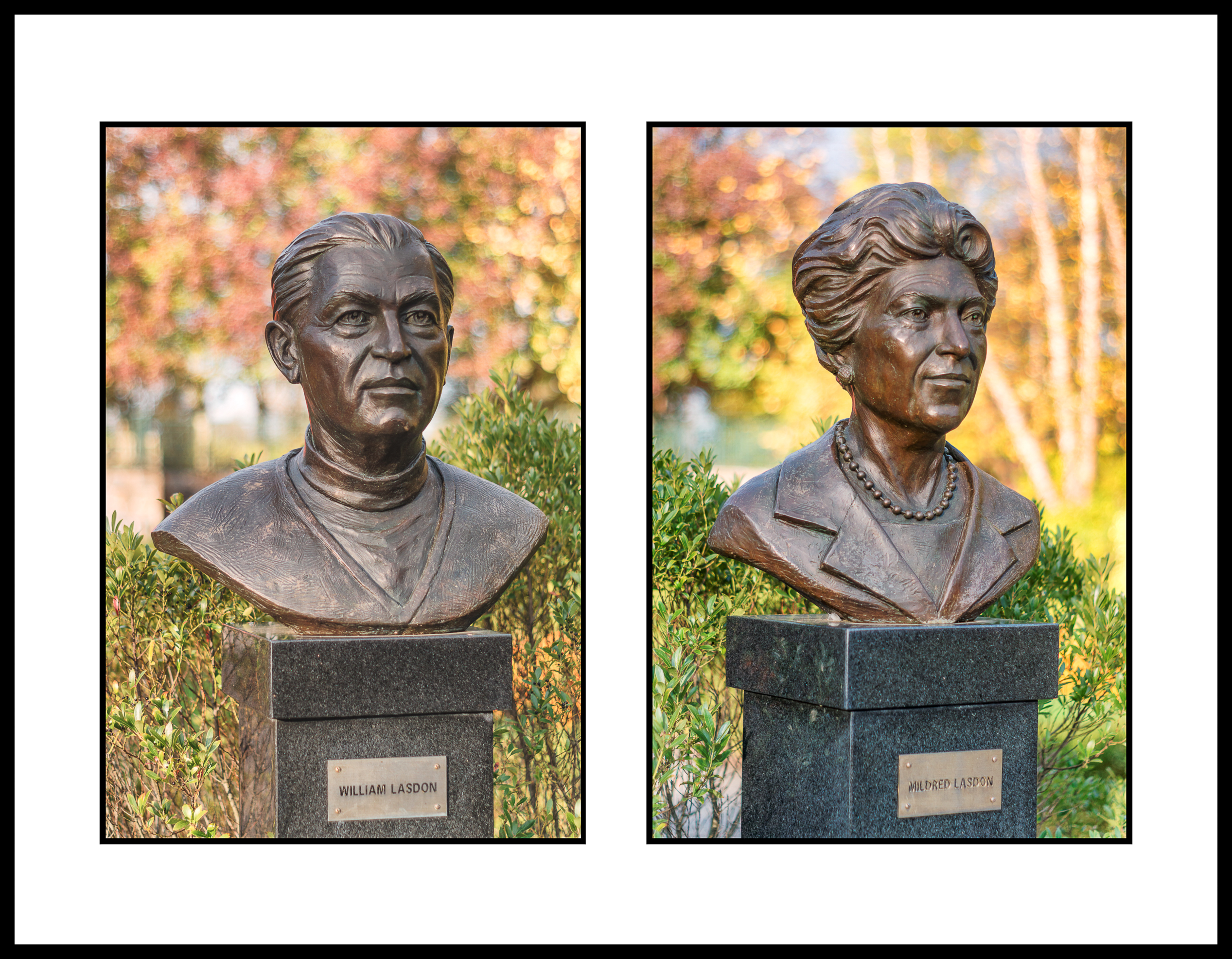
The two busts (above) of William and Mildred Lasdon stand at the entrance of the Lason Memorial Garden.

The Lasdon Garden Shop.

All pictures in this series taken with a Sony A77 II and Minolta 50mm f1.7.
A Walk Through Croton-On-Hudson – Vassallo Park

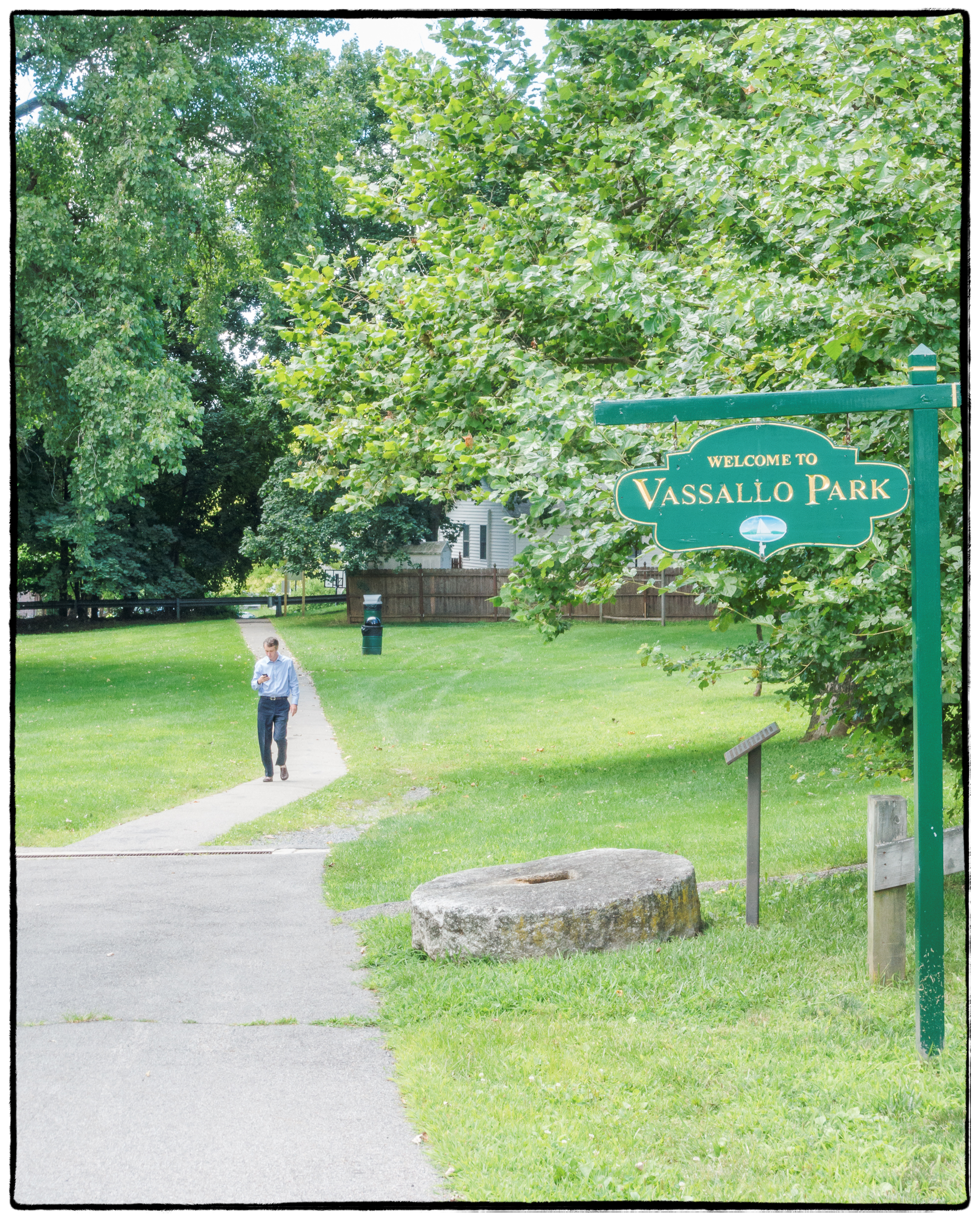
I’m afraid that the Town of Croton-on-Hudson is not a very “dog-friendly” town. It seems that dogs are not allowed in any of their parks, including this one: Vassallo Park. It’s quite a small park with very little to commend it other than a rather impressive old tree and a millstone.

A nearby sign reads:

A millstone from the Early Grist Mill on the Croton River. It was saved by John B. Goldsborough, Superintendent of Building the New Croton Dam, that was completed in 1907. It was moved from the site of the family home on Grand Street in Croton to this park in 1989.

A nearby sign reads:

The National Arborist Association and The International Society of Arboriculture jointly recognize this significant tree in this bicentennial year as having lived here at the time of the signing of our constitution.

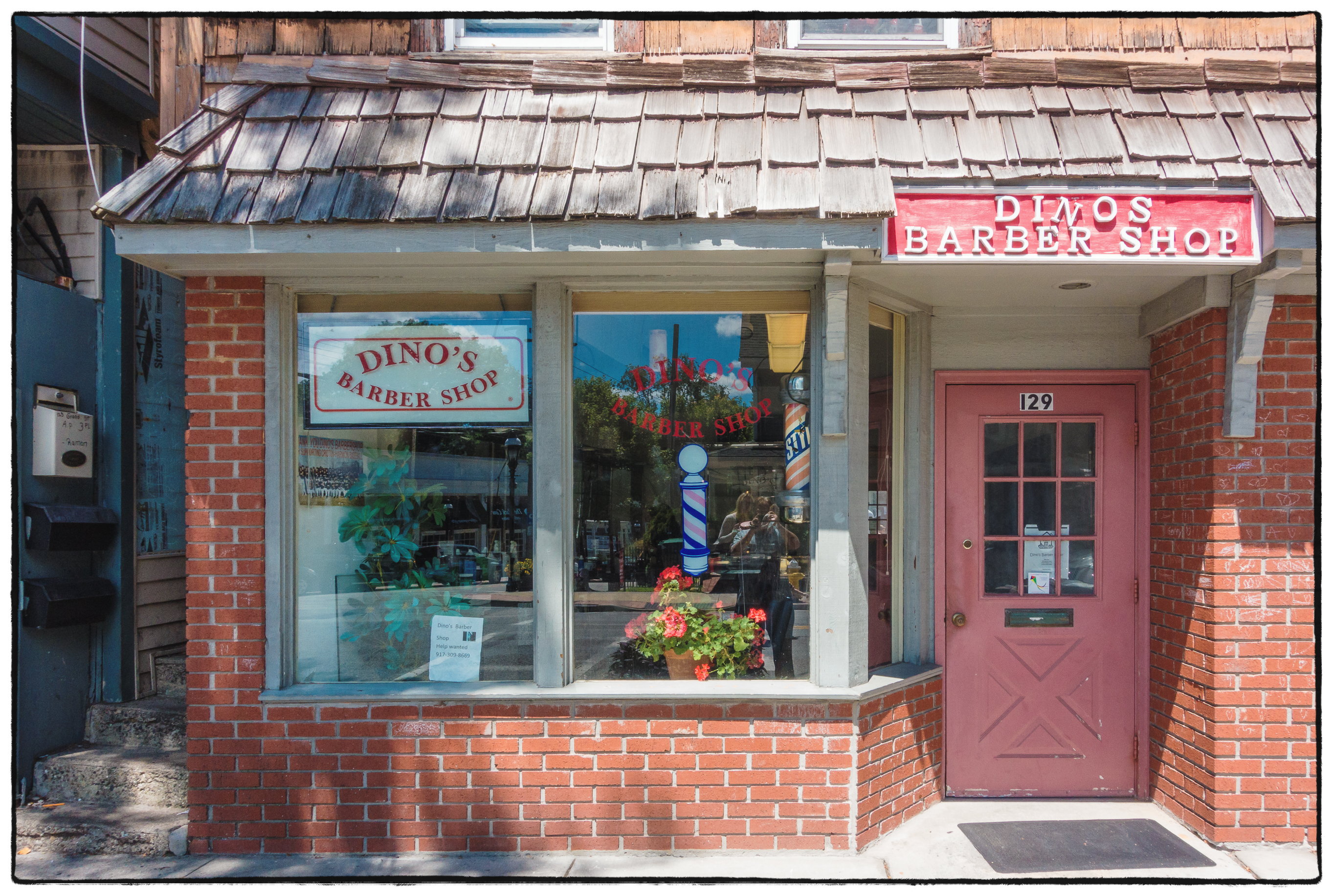
I should point out that although the Town of Croton-on-Hudson does not seem to be dog friendly, the people certainly are. It was quite a hot day when I did this walk, and numerous shops had placed bowls of water outside for thirsty passing canines.

Taken with a Sony RX-100 M3

A Walk Through Croton-On-Hudson – Asbury United Methodist Church

According to the church’s website:

In the middle of the 18th century, Methodist Circuit Riders often stopped at Van Cortlandt Manor House, where a corner bedroom was kept in readiness for traveling dignitaries. So often was the room occupied by such men as George Whitfield and Francis Asbury that it became known as “Prophets Corner”.

By 1780 a formally organized Methodist Society existed and began plans for its first church building. In 1777, Pierre Van Cortlandt, first Lieutenant Governor of New York, ceded to the community of Croton Landing a piece of property on a high knoll overlooking the Hudson River. The prominent Van Cortlandt family also contributed to the building of the Methodist Chapel. The exact date of the building cannot be determined, but records tracing the production of nails used in the Chapel place the date of construction between 1779 and 1781. The property as a whole was placed under the supervision of the Methodist Church by the will of Brigadier General Philip Van Cortlandt, who died in 1831.

Bishop Francis Asbury recorded in his journal in 1795,”I had a comfortable time in Croton Chapel with Romans 1:16.” Asbury made other visits to the chapel and Van Cortlandt Manor and must have greatly influenced the Bethel Methodist Episcopal Church, for when they erected their second building, his name was given to the society.

By 1875 the society had outgrown Bethel Chapel, so it was decided to build a new church at the foot of the hill. Land was purchased from the Barlow estate and construction began as early as 1875 on the present building. For a short time the church was known as Memorial Methodist Church, but with the dedication of the new building in 1883, the name Asbury Methodist Episcopal Church was adopted.

In 1891 a parsonage was built next to the church. The building is now used for a commercial office with an apartment on the second floor. The present parsonage on Grand Street was purchased in 1963.

In 1912, a pipe organ was installed in the Asbury Church Sanctuary as a gift from Andrew Carnegie. The basement of the building was dug out and finished as a social hall and the kitchen at a later date. In 1948 the Chancel was completely remodeled and the pipe organ removed.

The present education wing, formerly the County Trust Company, was purchased in 1968 and completely renovated and was ready for dedication by the summer of 1969. Consecration services were held June 22, 1969 with Bishop LLoyd C. Wicke presiding.

Taken with a Sony RX-100 M3.