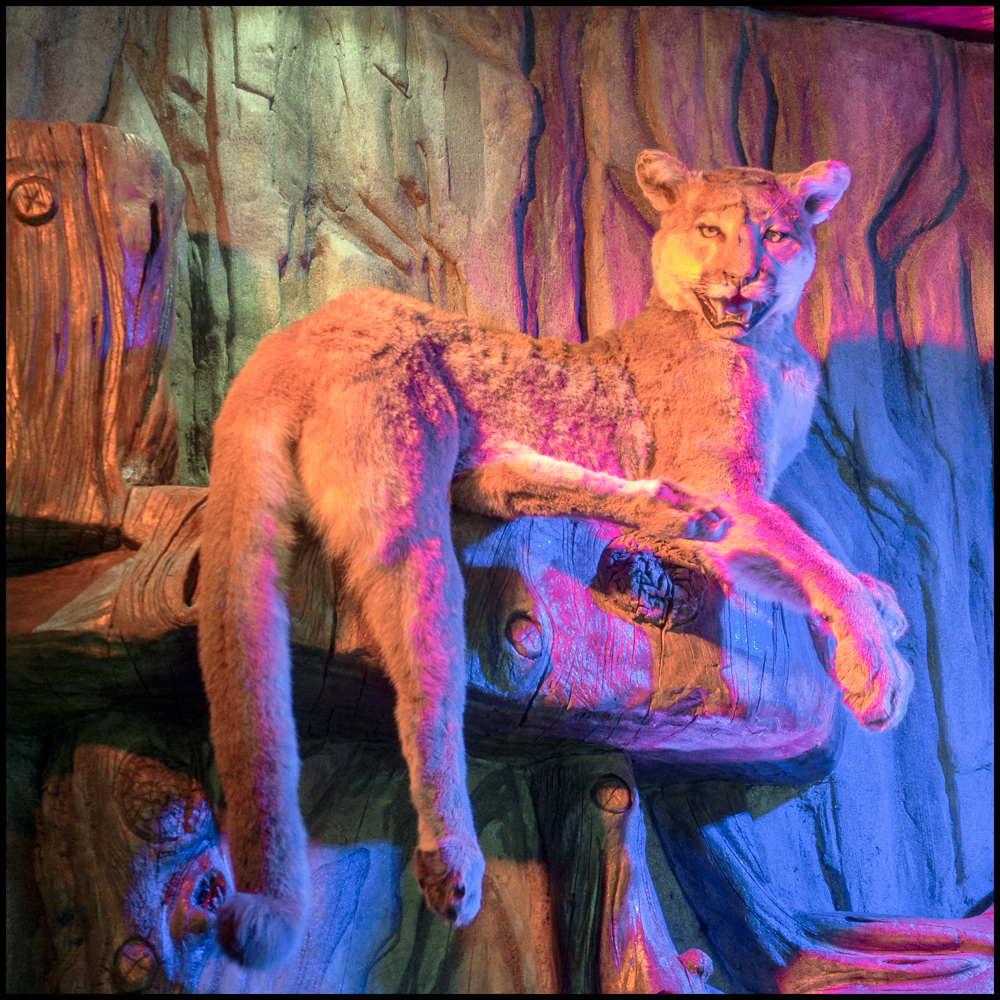
One of the first exhibits we came across was the Bison Range.
According to Wikipedia:
The Bison Range is in the northeast corner of the zoo, and has been a feature of the zoo since its opening. The range initially served to breed Plains bison, who were in danger of becoming extinct in the United States. Today, the exhibit continues to hold one of the few large herds of bison in U.S. zoos. In 1913, at the behest of the American Bison Society, fourteen bison were transported from the range to Montana’s National Bison Range, as well as to Wind Cave National Park in South Dakota.
The zoo has played an important role in Bison conservation:
In 1905, the zoo’s first director, William T. Hornaday, along with President Theodore Roosevelt and other conservationalists, created the American Bison Society (ABS) in an attempt to save the American bison from extinction. The bison had been depleted from tens-of-millions of animals to only a few hundred by the end of the 19th century due to westward expansion. The society worked to breed the species in captivity as well as raise public awareness, raise money to create protected reserves, and reintroduce bison back into the wild. On October 11, 1907, the first reintroduction of bison began when the zoo sent six males and nine females, by rail, to the Wichita Mountains Wildlife Refuge in Oklahoma. Seven days later, the animals were successfully reintroduced to the park. By 1935, the society, who had successfully carried out several more reintroductions from bison kept in zoos and ranches, considered their work done and disbanded that year. In 2005, the Wildlife Conservation Society resurrected and re-purposed the ABS to, “help build the social and scientific foundations for the ecological restoration of bison,” and, “restore bison ecologically, not just animals in pens but actual functioning animals in the larger landscape,” (Keith Aune, WCS bison coordinator). According to a study published in 2012, virtually all wild and captive bison in the United States are hybrids with cattle genes, with the exception of the two distinct breeding populations within Yellowstone National Park and their descendants. The cattle genes entered the bison population due to private ranchers hybridizing their bison to make them more docile, with some of these animals being accidentally reintroduced by the ABS. In response, in the fall of 2011, the WCS arranged for a herd of female bison originating from the American Prairie Reserve to be sent to the Colorado State University’s Animal Reproduction & Biotechnology Laboratory to be used as surrogates in an attempt to transfer the fertilized embryos of genetically pure bison. After an ultrasound showed one female to be pregnant, the herd was moved to the zoo where, on June 20, 2012, the calf was born. The herd is kept in an off-exhibit section of the zoo and the goal is to eventually create a breeding herd of genetically pure bison through embryo transfers with the surrogate hybrid bison.
Taken with a Sony Alpha 500 and Minolta 100-200mm f4.5 AF.