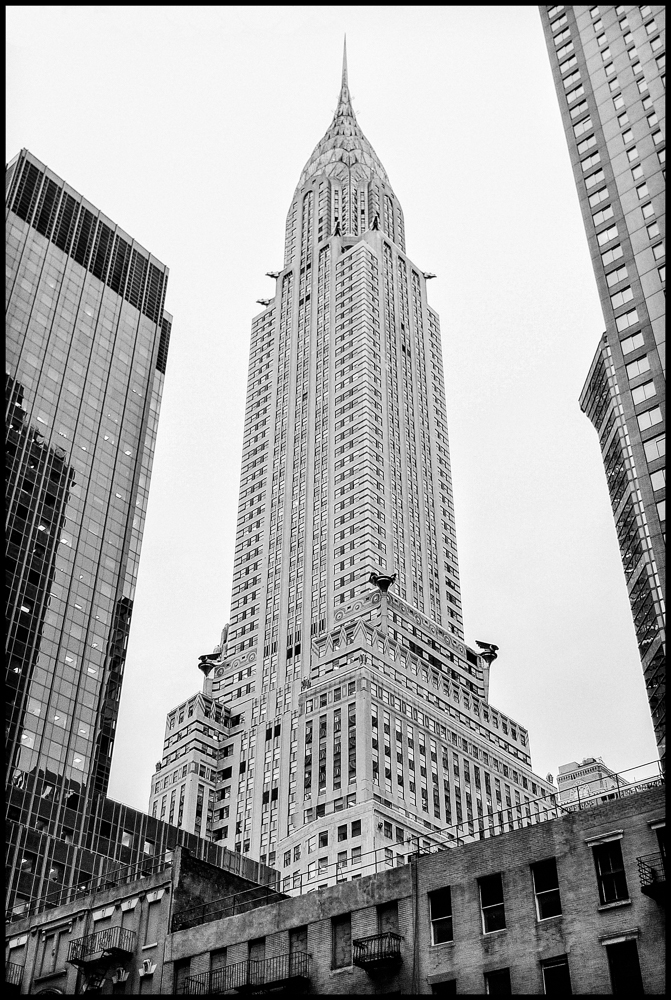
Chrysler Building

An early (taken a couple of days after I bought it) picture taken with the Panasonic Lumix LX-3. Among its many impressive features the camera was known for its dynamic black and white mode.

According to Wikipedia:

The Chrysler Building is an Art Deco–style skyscraper located on the East Side of Midtown Manhattan in New York City, at the intersection of 42nd Street and Lexington Avenue in the Turtle Bay neighborhood of Manhattan. At 1,046 feet (318.9 m), the structure was the world’s tallest building for 11 months before it was surpassed by the Empire State Building in 1931. It is the tallest brick building in the world with a steel framework. As of 2018, the Chrysler is the eighth-tallest building in the city, tied with The New York Times Building.

Originally a project of real estate developer and former New York State Senator William H. Reynolds, the building was constructed by Walter Chrysler, the head of the Chrysler Corporation, and served as the corporation’s headquarters from 1930 until the mid-1950s. The Chrysler Building’s construction was characterized by a competition with 40 Wall Street and the Empire State Building to become the world’s tallest building. Although the Chrysler Building was built and designed specifically for the car manufacturer, the corporation did not pay for its construction and never owned it, as Walter Chrysler decided to pay for it himself, so that his children could inherit it.

When the Chrysler Building opened, there were mixed reviews of the building’s design, ranging from its being inane and unoriginal to that it was modernist and iconic. Perceptions of the building have slowly evolved into its now being seen as a paragon of the Art Deco architectural style; and in 2007, it was ranked ninth on the List of America’s Favorite Architecture by the American Institute of Architects.

This building was only about four blocks from where I worked. I walked past it every day and yet I have very few pictures of it. The tragedy of modern life (particularly in New York City). Everything moves so quickly that you have no time to “smell the roses”.
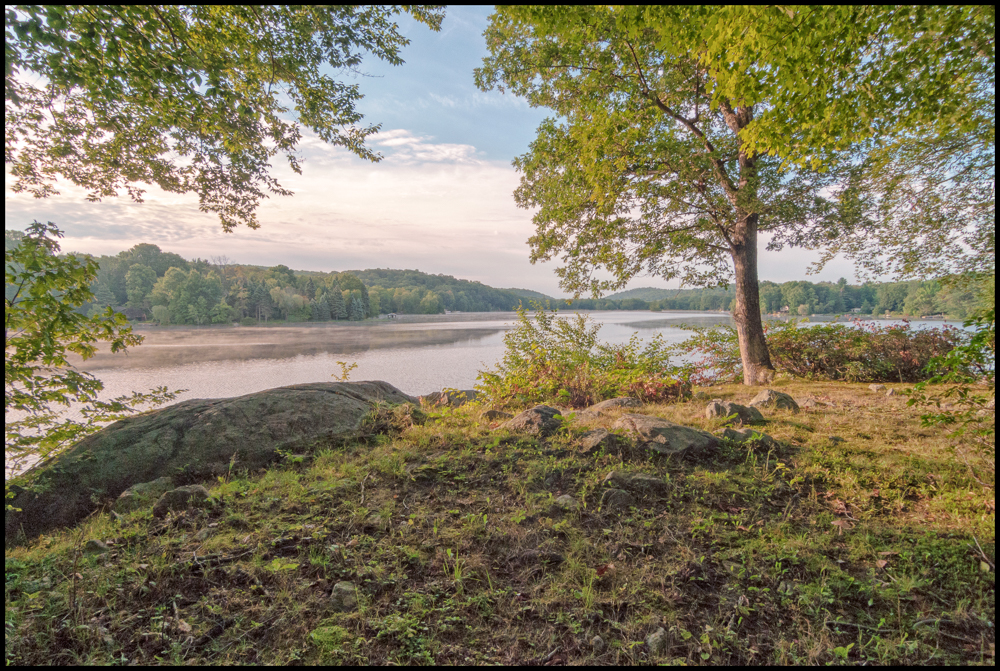
Roaring Brook Lake View

This was taken from our neighbors garden early in the morning of 20 August, 2012 with a Panasonic Lumix LX-3. I may have already posted this. I searched thoroughly through the almost 6,000 images scattered across 2,600 posts, but I couldn’t find it. If this is a duplicate then my apologies.

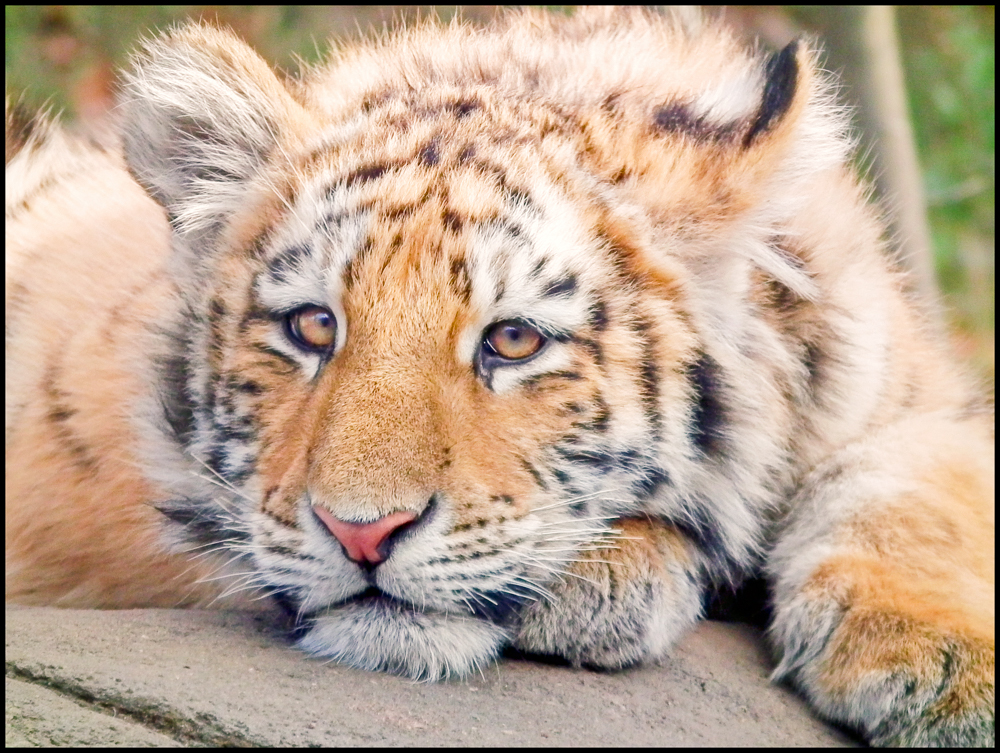
Tiger

Taken at the Bronx Zoo, New York City back in November, 2010 with a Fujifilm Finepix HS10. I was never able to relate to this camera, used it only a couple of times and eventually gave it to my brother in law.

In the right circumstances though it was able come up with a decent picture although if you ‘pixel peep’ you’ll see that it suffers from the “smearing”, “watercolor” look typical of small sensor cameras.

The frustrations of being an “artist”

I recently came across an interesting post from Andrew Molitor on his blog: Photos and Stuff. It’s titled: I am a snob.

He provides a few examples to illustrate the problem he’s addressing:

Along the way I figured out enough about Ansel Adams style landscape photography to know that I could probably, by applying myself diligently for a year or two, get good enough to churn out black and white landscapes of a certain caliber more or less at will. Perhaps not Adams, but anyways Picker and a whole lot of other acolytes. Pick up a copy of LENSWORK and you’ll see a lot of this stuff. This is not because I am special, it is because I am a normally competent human being. Almost anyone can learn this. There are 1000s, maybe 10s of 1000s of people out there banging out this material on a regular basis.

Basically, though, I am lazy. I don’t want to do all that hiking, and I don’t want to arrange my life such that I would be able to do all that hiking. It takes more than normal abilities with the camera, it takes a commitment and a lifestyle that I found unappealing.

The same story can be applied to, say, photographs of models. Again, I learned enough along the way to see that if I applied myself for a year or two I could get Quite Good at it and then I could churn out Fashion Styled photographs, or Figure Studies, or whatever. Again, the skills necessary to grind out the pictures are a minor part of it, it’s the business of rearranging my life to make room for a lot of hired models and lights and enormous octoboxes that I found uninteresting.

Ditto macro photography. I never did make a serious attempt at wildlife photography, but by now I see the pattern. I could buy the gear, devote some time to learning some skills, and then I could rearrange my life, and lo, I could churn out endless Birds In Flight or whatever.

And goes on to say something important:

The question arises naturally: if I am so damned serious about photography, why am I so unwilling to rearrange my life a bit in order to do it better, to produce better photographs?

It is, essentially, because I perceive the kinds of pictures I could have made down any of those paths as not worth the trouble. They would have been fine pictures, but they would have been just like a lot of other pictures put out there by a lot of other normally competent people who applied themselves rather more diligently that I am willing to apply myself.

I have exactly the same problem. Through study, practice and decent gear I can become reasonably proficient in most genres of photography. But unfortunately, from my studies of great photographers I know that I’m not likely to reach their exalted levels.

So what to do if you know that the chances are that your pictures are not often likely meet your aspirations. As one of the comments to his post says: “Sounds like the perfect recipe for frustration …”. Indeed it is, but the alternative would be to stop entirely and I can’t do that. So I’ll just keep plugging away and hope that I’m able to produce pictures, which show improvement over time even if they aren’t masterpieces.

Mr. Molitor puts it much better then I can (in one of the comments):

Well, there are two parts to my response here.

1. This is the system, the philosophy, I use to judge other people’s work. It is, essentially, the belief that some work is better than other work, together with the idea that there is some very very good work indeed.

So, that part impinges on my picture-taking not at all!

2. It does affect my aspirations for my own work as well, of course. If we take as my personal Mt. Everest something like “to make something as good as Minamata” well that’s pretty demoralizing on the face of it.

Still, I am having a good time doing a lot of practice climbing and summiting smaller peaks and so on. If I continue to work my way up, making better work, well, I may never end up at the top of Everest, but I will still be pleased with myself.

Having a very high goal maybe just means never running out of things to do?

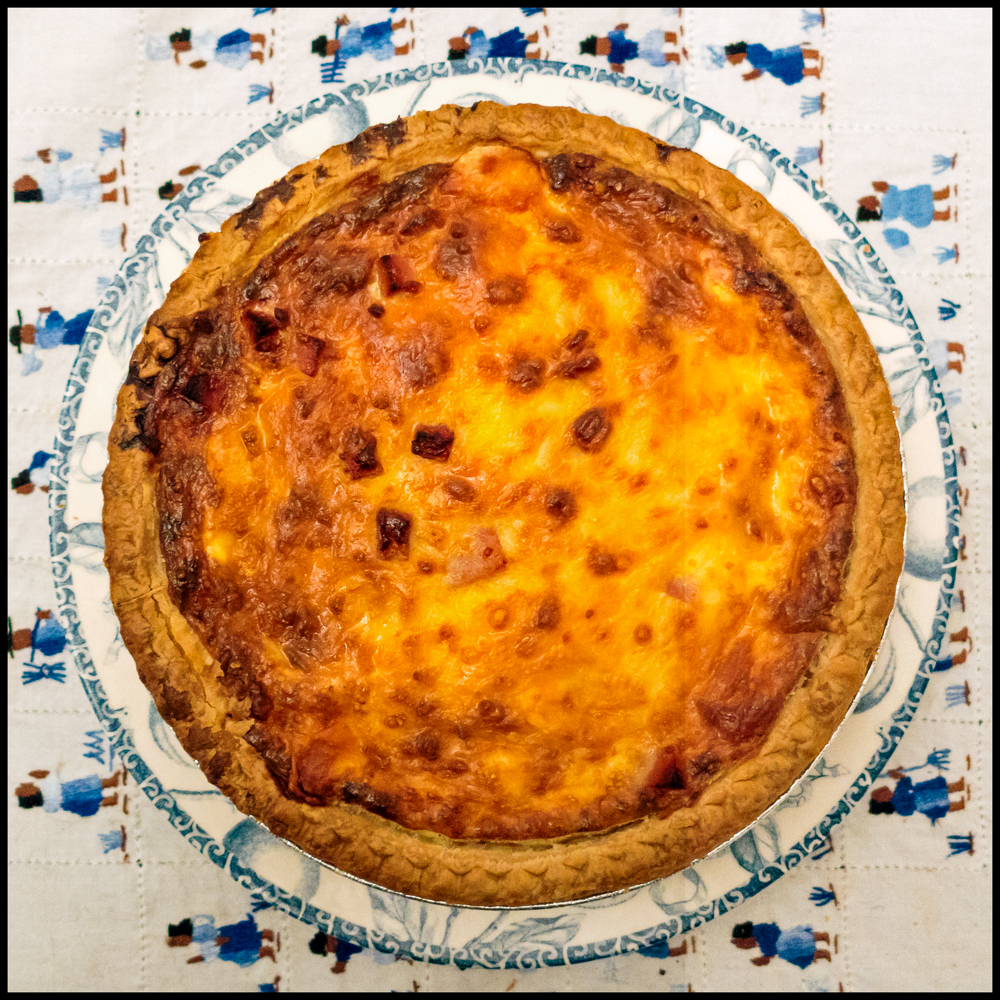
So why the quiche at the top of this post? He uses the example of a quiche in his post, but I’ve already quoted too much so you’ll just have to read it.

Taken with a Sony RX-100 M3.

Blue and White

I’ve mentioned in earlier posts that my wife collects blue and white china and administers a Facebook group for lovers of such china.

From time to time she asks me to take a picture of some of it.

She set this up. I just took the picture.

Taken with a Canon 5D and Canon EF 50mm f1.8.