Roaring Brook Lake Regatta

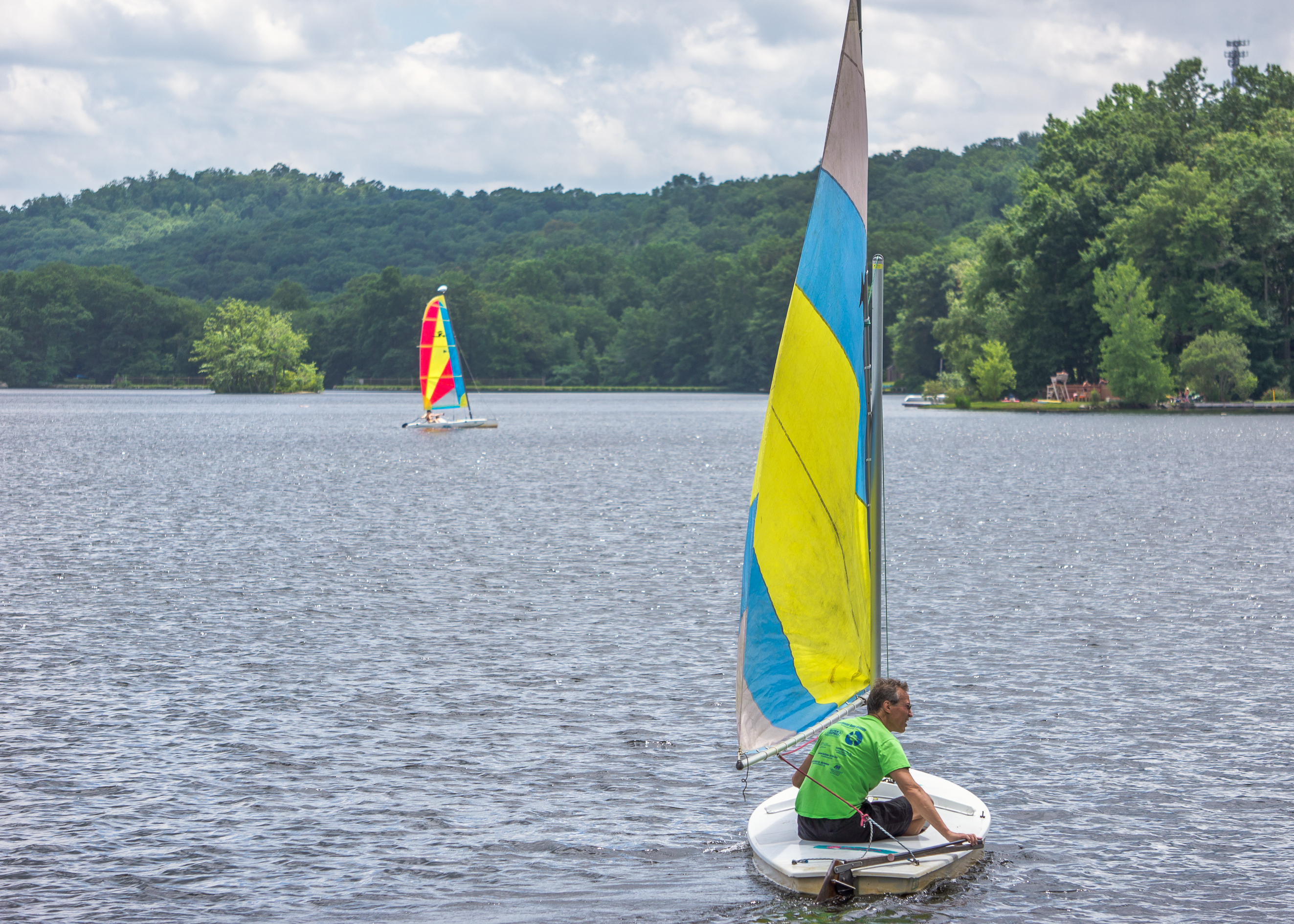
Our first “Roaring Brook Lake Regatta” took place  July 20. When we lived on Lake Geneva in Switzerland every year they had something called the “Bol d’Or” where several hundred sailboats of all shapes and sizes raced from one end of the lake to the other and back. It was really quite spectacular. I suppose we were expecting something along these lines – but of course with fewer boats. I understand from old time residents that once upon a time there were quite a few boats, but this is no longer the case. In fact the sailboat with the pennants in the picture was the only one to turn up and it never left children’s beach. So it was more of a party on children’s beach. Cold drinks and other snacks were served and later there was a barbecue. There were swimming races for the kids. Everybody seemed to be having a great time. It just wasn’t what I thought of as a regatta. Here are a few snapshots:


Balloon Arch near the entrance to Children’s Beach


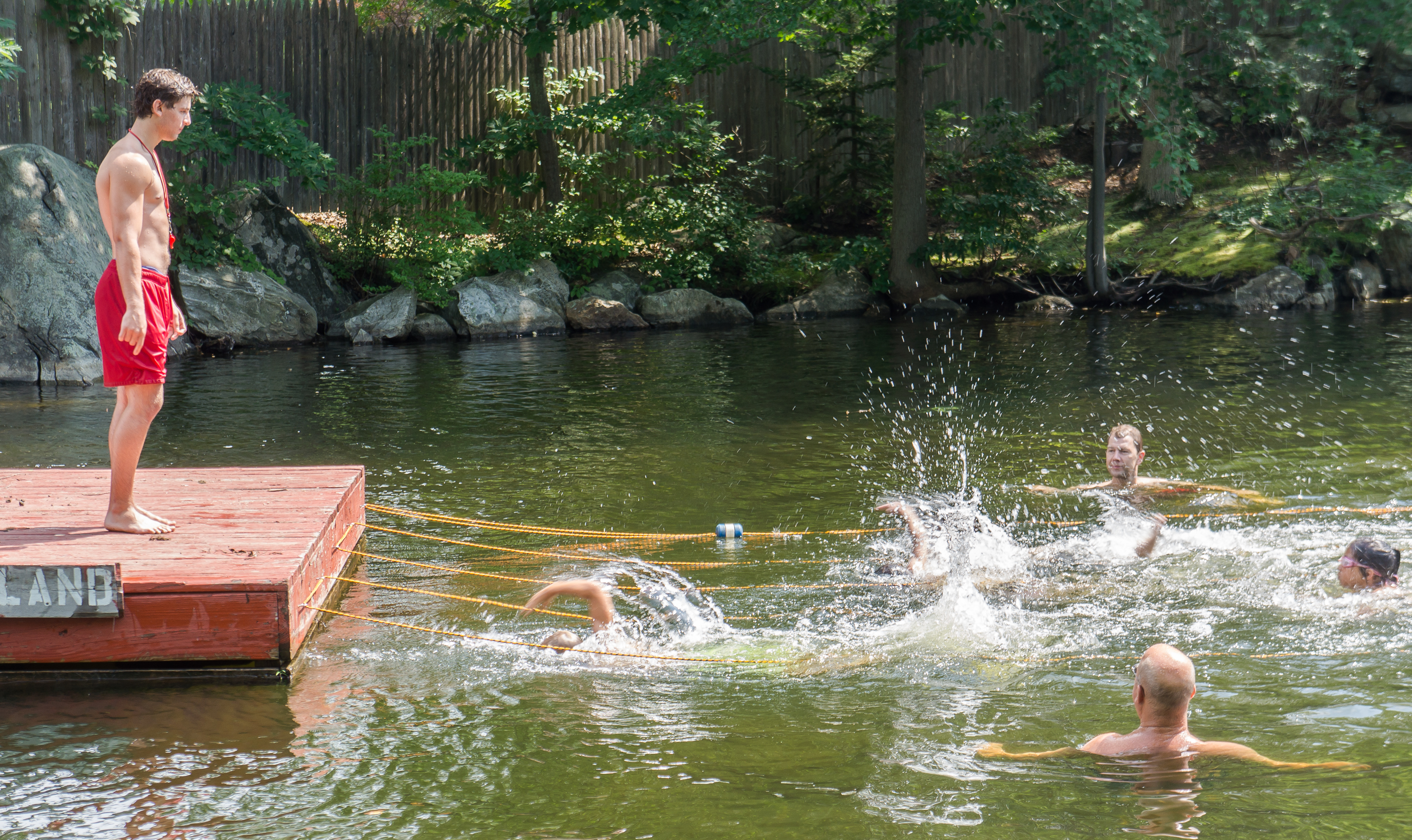
Waiting for the swimming races to begin.


And they’re off!


The end of a race


Family fun in the water


Nail hammering contest

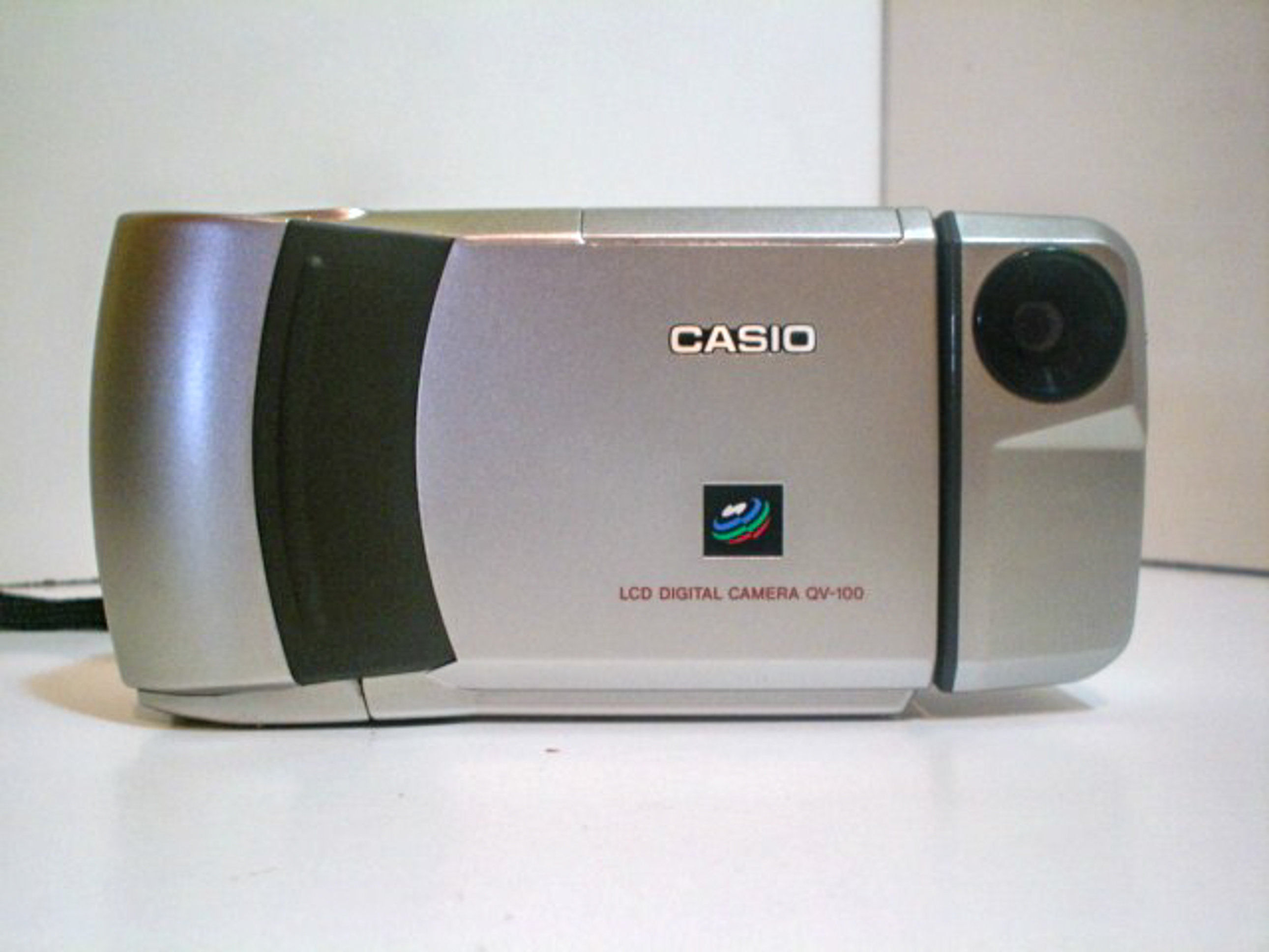
Gone but very definitely not forgotten (even though I’ve tried) – Casio QV100


This is a third of a series of posts. The first covered some cameras, which I liked but which I no longer have. The second covered a camera, which I still have but which I find hard to like. In this post we look at a camera, which I no longer have and which I didn’t really like. In fact I’d consider it to be absolutely the worst camera I’ve ever owned. Also one of the most expensive. It’s a Casio QV100. I don’t actually have a picture of it. I’ve tried my best to blot out the memory so I’ve had to “borrow” one from the internet. I “borrowed” the camera photograph from Alistair Patterson’s photostream on flickr, where you will also find a very interesting (and probably more balanced) review of the camera.

Cast your mind back to 1996. I was living in Geneva, Switzerland at the time. I’d been using film cameras (Minolta Hi-Matic 7sii and Canon AE-1) for some time. I was working in IT and now here was a digital camera. I can’t remember what it cost, but I do recall that it was very expensive – more expensive than most of the cameras I’ve bought. But I couldn’t resist it. Among other things it was the first camera with an LCD screen. You could actually see the pictures you were taking!!

I don’t have any pictures taken with this camera. I remember having it, but I had forgotten the model number. We moved back to NY late in 1998. Some boxes were not unpacked immediately and went into our garage. We (my wife and I) were cleaning out the garage the other day and we found some boxes untouched since 1998. In one of these boxes was the manual for the QV100. I no longer have the camera. I gave it to my older daughter who took it back to the UK where it is stolen. Probably the best thing that could have happened to it. I feel sorry for the thief.

So what was wrong with the camera? Well… pretty much everything. The specification in the manual says that this was a “Digital (JPEG based)/Field Recording” system. It had a “built in “32 mbit flash memory” capable of storing “64 fine” (fine being 640×480) images. The manual further claims approximately “150 minutes continuous operation … for about 96 images (one images per minute)”. It had a “61,380 1.8 inch TFT low-glare colorLCD”. Shutter speed “1/8 – 1/4000 second”

My memory is that the image quality was terrible and that the battery seemed to last about five minutes. Maybe I was doing something wrong.

Perhaps I’m being unfair. This was after all in the infancy of digital cameras and the technology had probably not advanced to the stage where it was truly usable. My fault for getting in too early.

I always say that it’s not the technology that matters. It’s the person using the technology and I’m sure there are people who produced lovely pictures using this camera. Unfortunately I wasn’t one of them. There is a flickr group for the QV100. It has two members. Take a look at the pictures. Judge for yourself. Note: I just took a look at this group again and noticed that many of the pictures are not actually taken with a Casio QV100. I thought they looked too good. Strange.

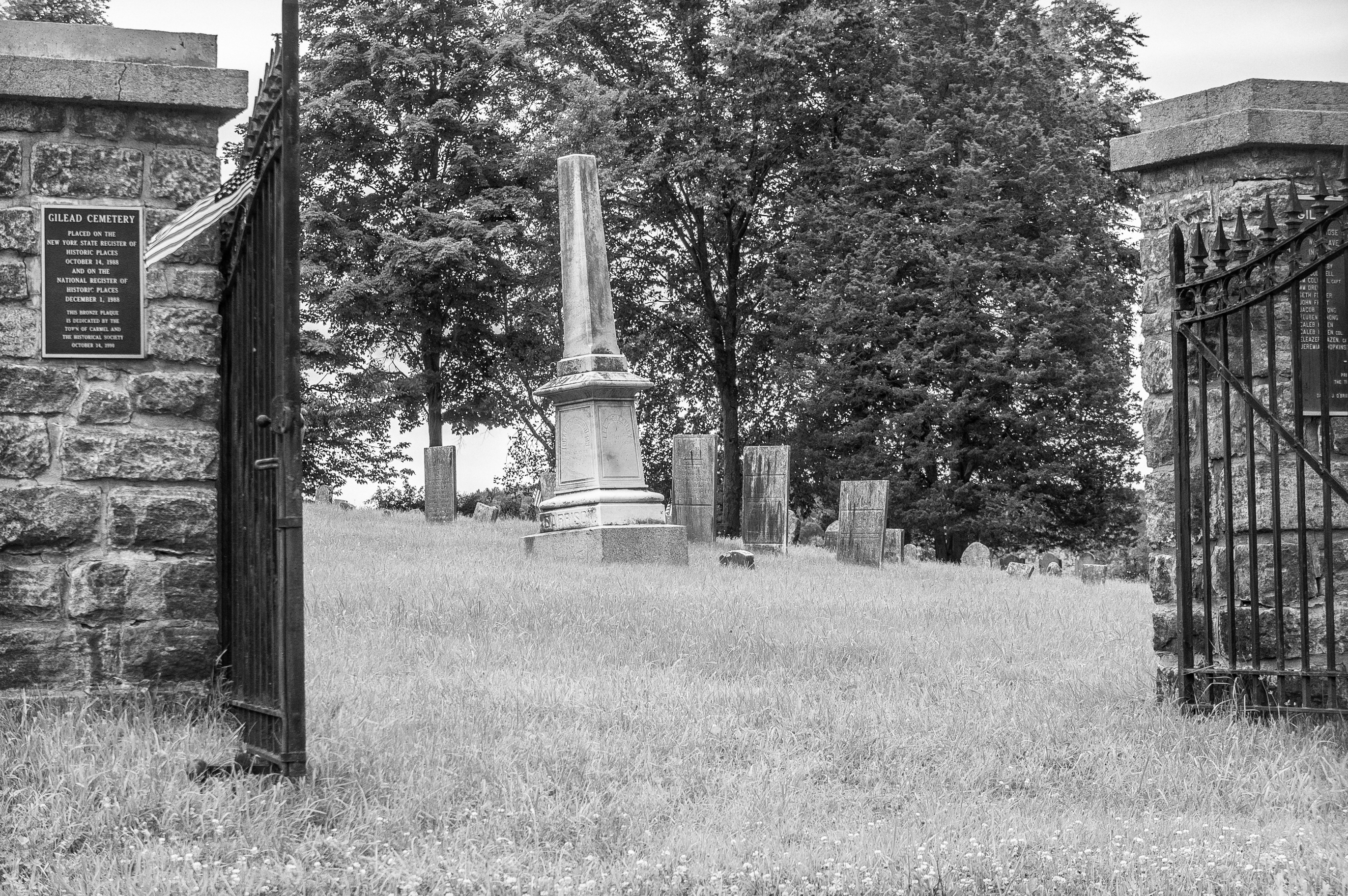
Gilead Cemetery Carmel, NY


A plaque on one of the entrance pillars reads: “Gilead Cemetery. Placed on the New York State Register of Historic Places October 14, 1988 and on the National Register of Historic Places December 1, 1988. This bronze plaque is dedicated by the town of Carmel and the Historical Society, October 14, 1998”. Ken Warnecke of Mahopac researched and wrote the original 1988 proposal for listing the Gilead Cemetery on the State and National Registers. It contains a lot of information about the cemetery as well as an old photograph of the cemetery – interestingly the huge trees, which are so striking (see below) are absent from this photograph.


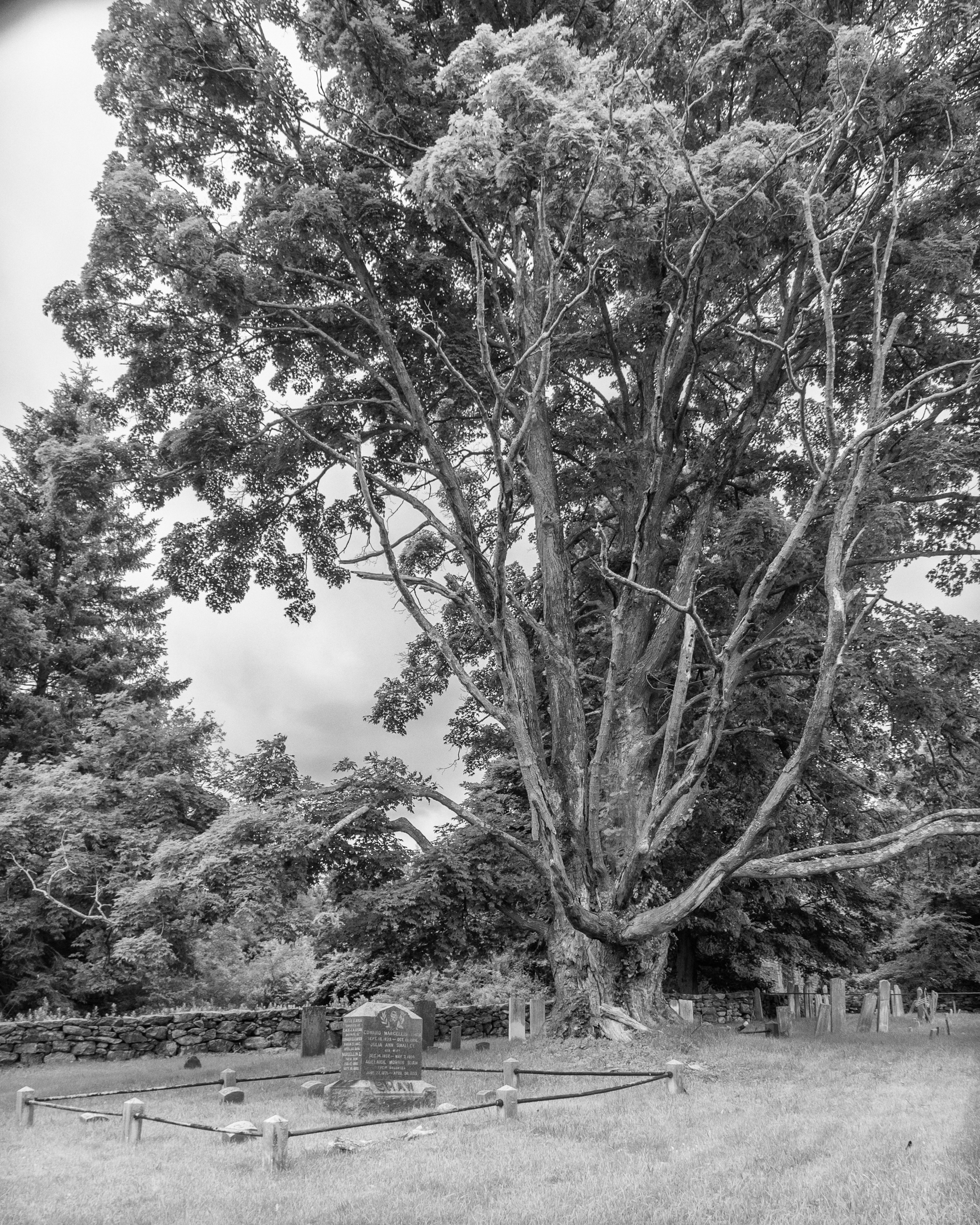
The large trees are quite striking. This one is apparently a 75 foot sugar maple.


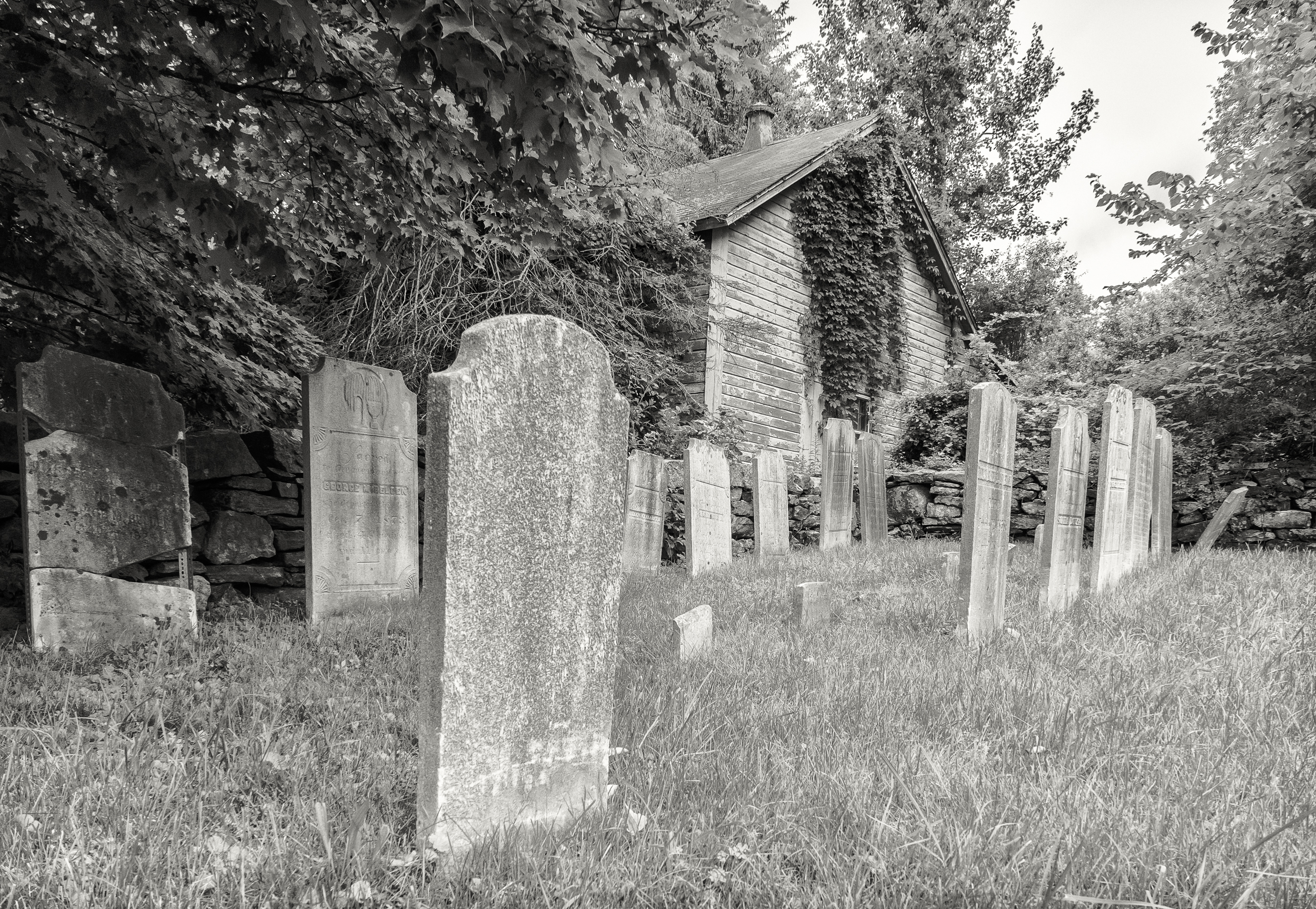
Gravestones with ivy covered building. North-west corner.


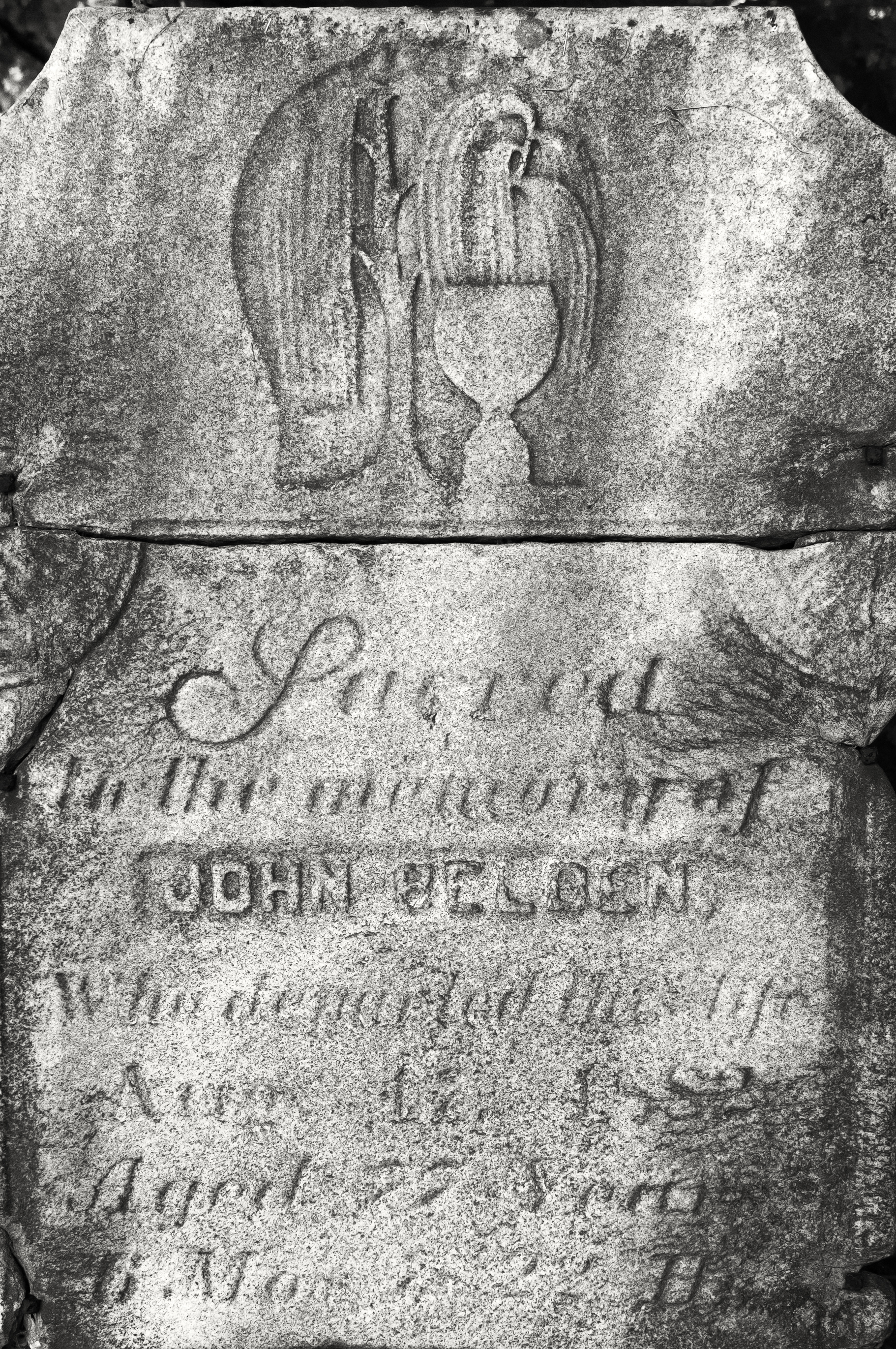
John Belden. Died 1882. Doesn’t appear to be anyone of significance but then he was only “22 years and six months” old when he died. Interesting design on the gravestone.

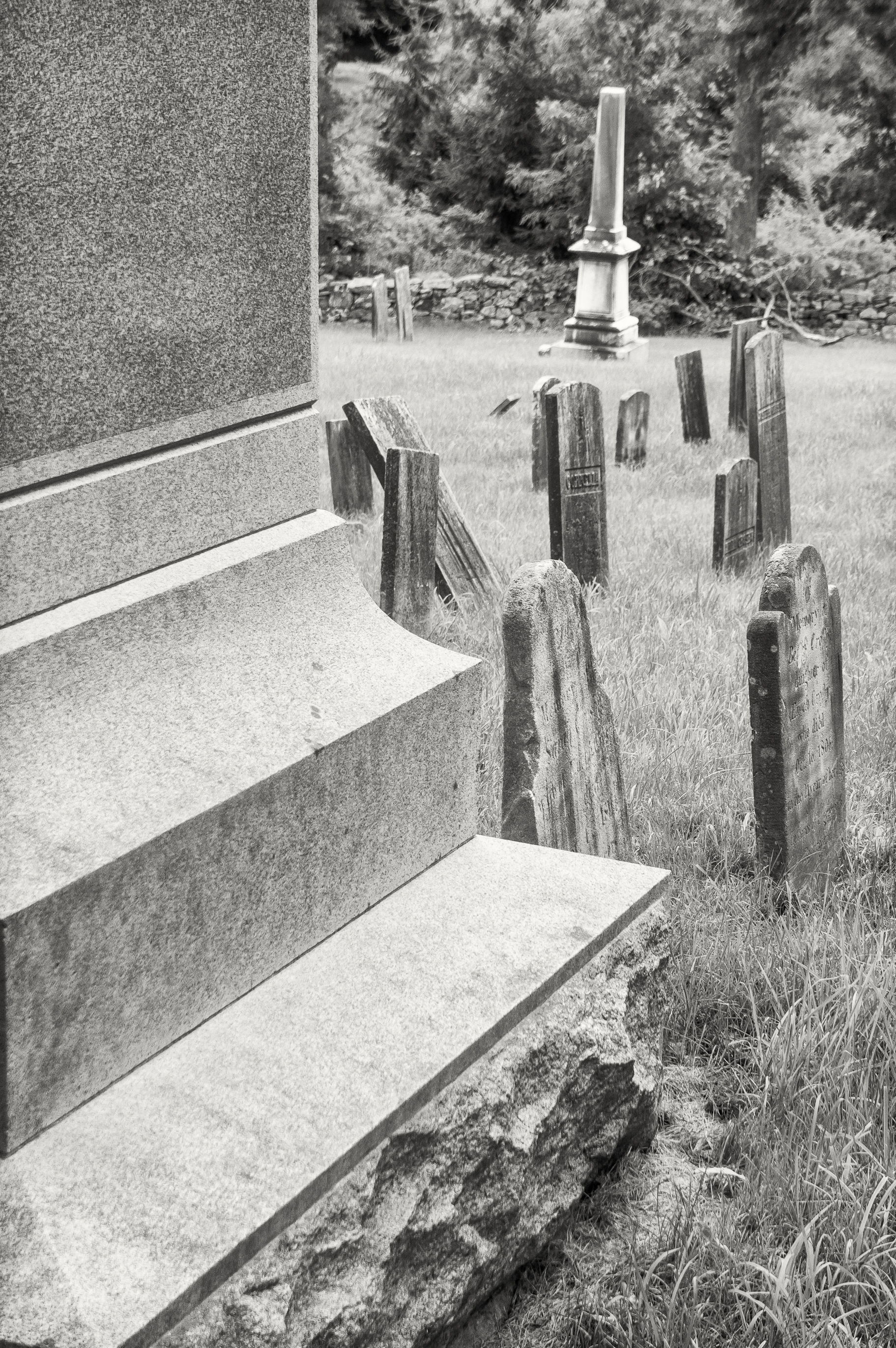
The monument to the left in the foreground is to “Revolutionary War Soldier and Spy. During the Revolutionary War, Enoch Crosby fought in Northern New York during his first enlistment and after his enlistment was up he returned to Carmel, New York, where he decided to enlist again. While enroute to enlist he met up with a group of Tories who took him as one of the their own and took him to their secret meeting. After the meeting Enoch reported them to the authorities and they were arrested. He was recruited by John Jay to spy for the Continental Army and his spying uncovered many British Spys and Tories, eventually he was uncovered and beaten one time and left for dead and shot another. He lived to see the end of the War and lived out his life in Putnam County, New York. Famed author James Fenimore Cooper wrote a book titled “The Spy” believed to be about Enoch Crobsy’s war heroics.” (bio by: Curt Benge)

via Enoch Crosby (1750 – 1835) – Find A Grave Memorial.


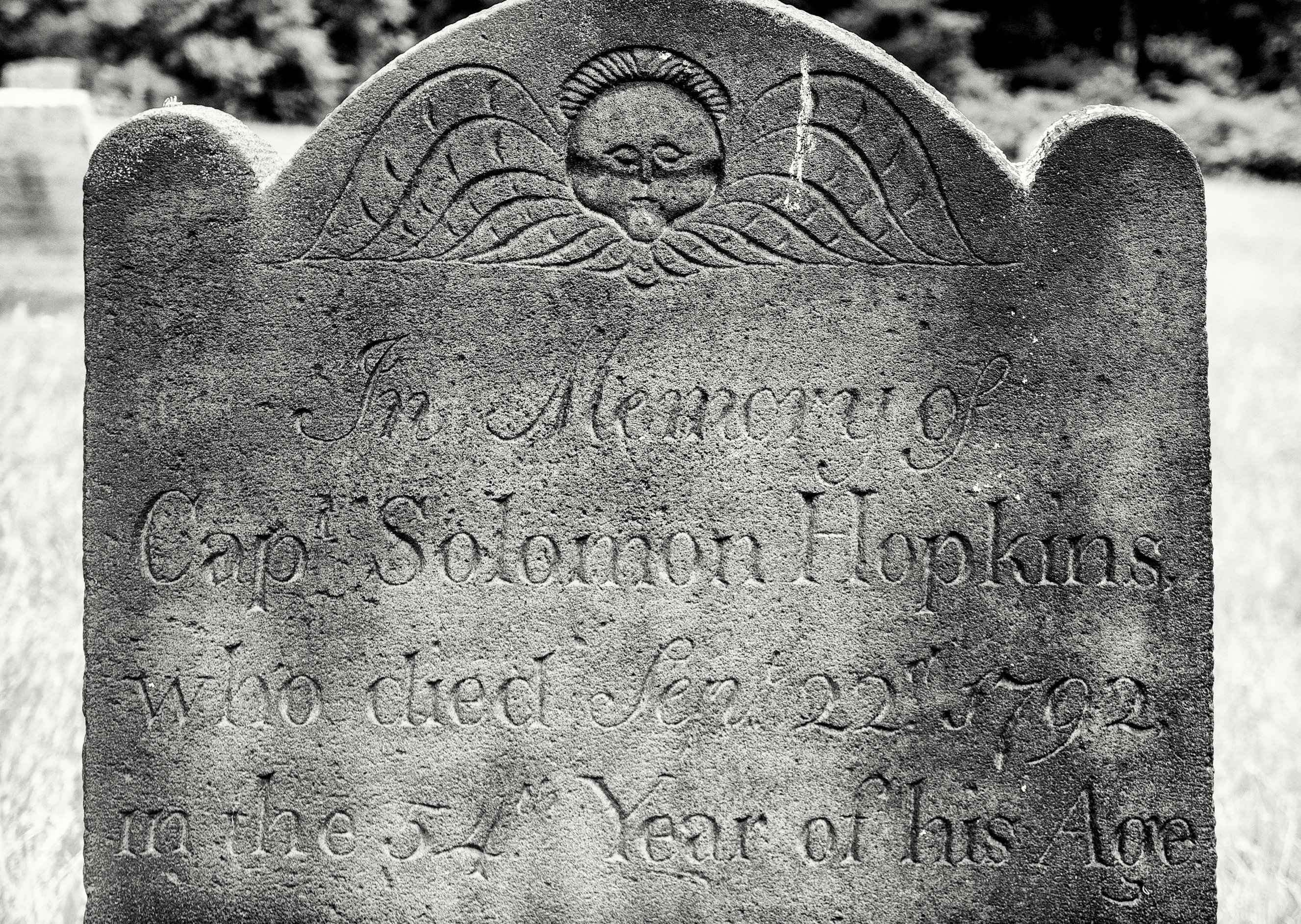
Solomon Hopkins. Born: May 31, 1739 Barnstable, Mass. Died: Sep. 22, 1792, New York, USA. He served in the Revolutionary war. His wife, Elizabeth Crosby Hopkins, was Enoch Crosby’s (see above) sister. She is also buried in the cemetery along with their son Jeremiah Hopkins (1762 – 1829). Interestingly while the gravestone refers to “Captain” Hopkins the plaque at the bottom laid by the West Point chapter of the Daughters of the American Revolution refers to “Lieutenant”.

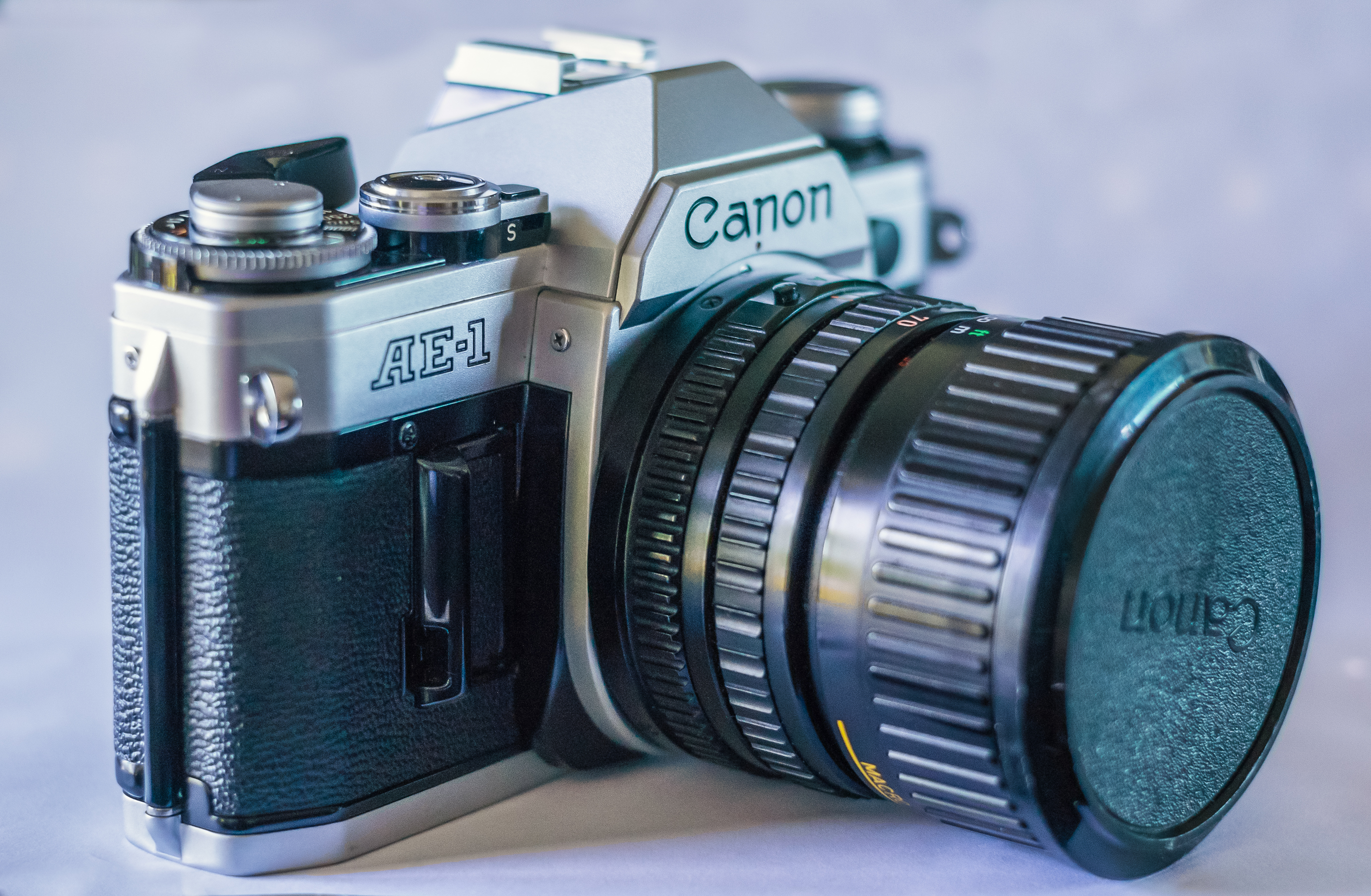
Canon AE-1


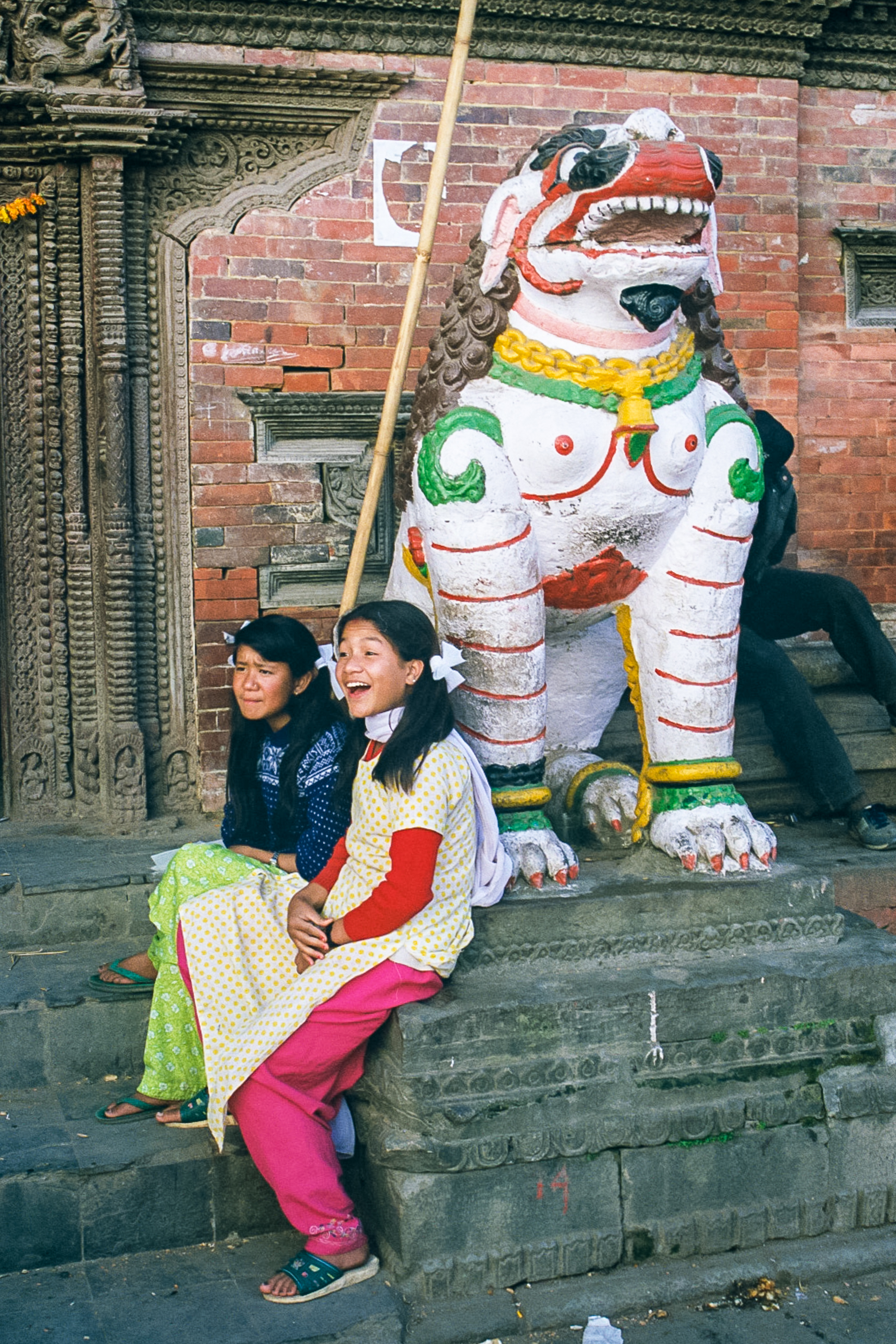
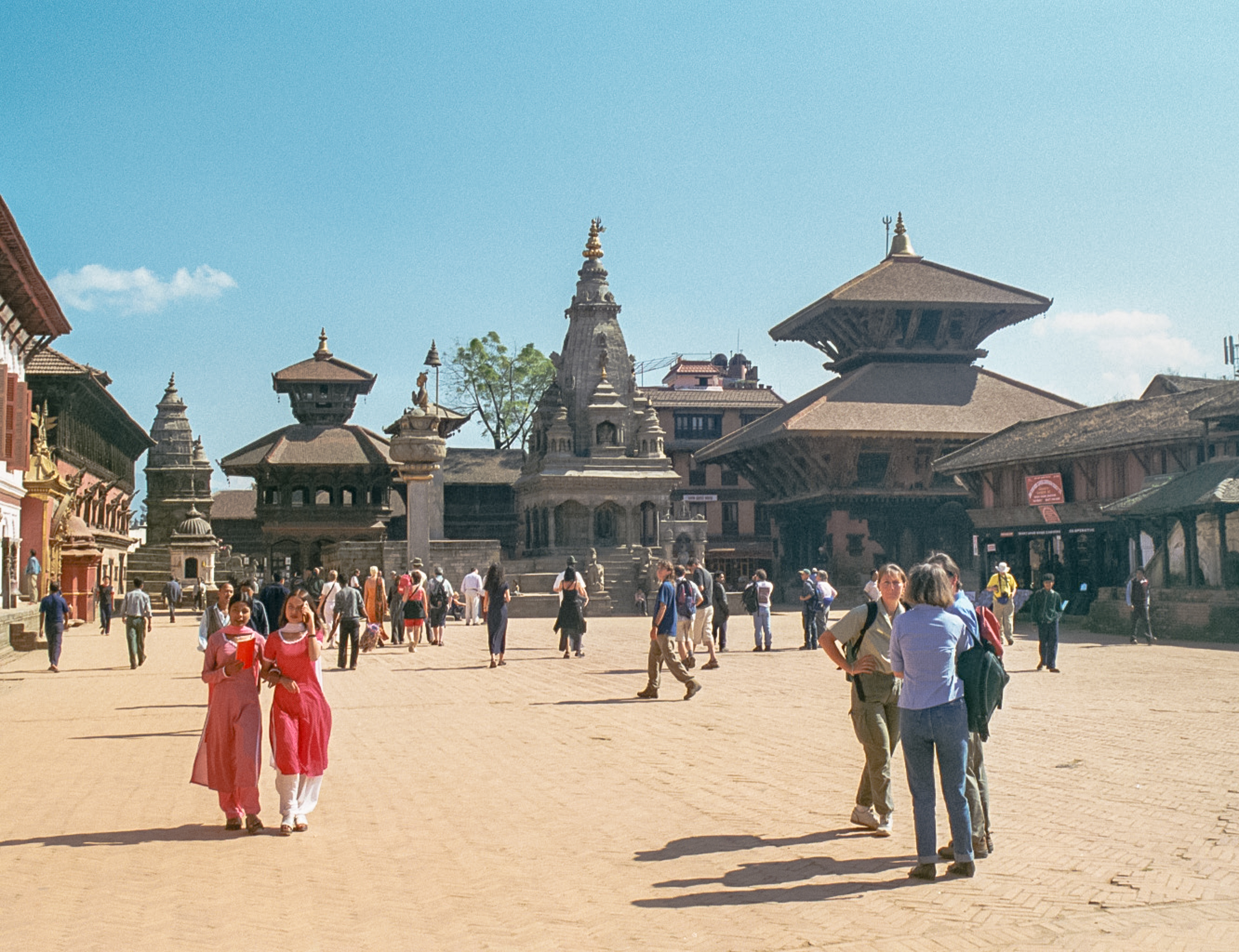
In an earlier post I mentioned that my first camera was a Minolta Hi-Matic 7sii. After a while I started to feel that I was a bit limited by this camera and its fixed 40mm fixed lens. To be honest I think that I just really wanted an interchangeable lens SLR. I was fascinated by the Canon A-1 and it’s electronic wizardry, but I couldn’t afford one at the time. So I bought a second hand Canon AE-1. It worked well enough but it wasn’t in terrific condition cosmetically. It served me well for years though. About 30 years later I took it out. The light seals had deteriorated and the “gunk” had managed to get all over the mirror. I also found two 50mm f1.8 FD lenses. I have no idea why I had two. The apertures on both were completely frozen. After checking around I found that AE-1’s are not particularly expensive. So I bought an AE-1 body and a couple of lenses and also the A-1 body that I had always wanted. Lovely camera – but that’s a topic for another post. I still didn’t throw away the old AE-1 body though. Maybe one day I’d find a way to clean it. So it sat around in a bag. The lower level of our house recently flooded and one of the items affected was the old Canon AE-1, which was soaked. The insurance gave me $120 to replace it. I’m not entirely sure that the pictures below were taken with this camera. It was either this one or the Minolta and I don’t think I would have been able to get this close with the Minolta – so I’m guessing it was the Canon.


Street scene – Kathmandu


Women by a temple


Street Scene – Bhaktapur


Woman with child


Mother and baby Giraffe


Elephants


Zebras