Swirls

I was walking along carrying the camera when I inadvertently pressed the shutter release. Didn’t even know I’d taken a picture. Then when reviewing the pictures I’d take I came across this “swirly”, colorful picture, which I quite liked. I enhanced the colors a bit to make them stand out a bit more. Not me usually sort of picture, but possibly a happy accident.

Rockwood Hall Foundation and Trees

I seem to be coming to Rockwood Hall quite a lot and have already posted at least five times (I can think of a couple more but I can’t easily find them because the word ‘Rockwood’ doesn’t appear):

Bridge to Nowhere.
Rockwood Hall – Evening.
A Walk to Rockwood Hall.
Winding Path – Rockwood Hall.
Rockwood Hall – July 6, 2011 – early evening

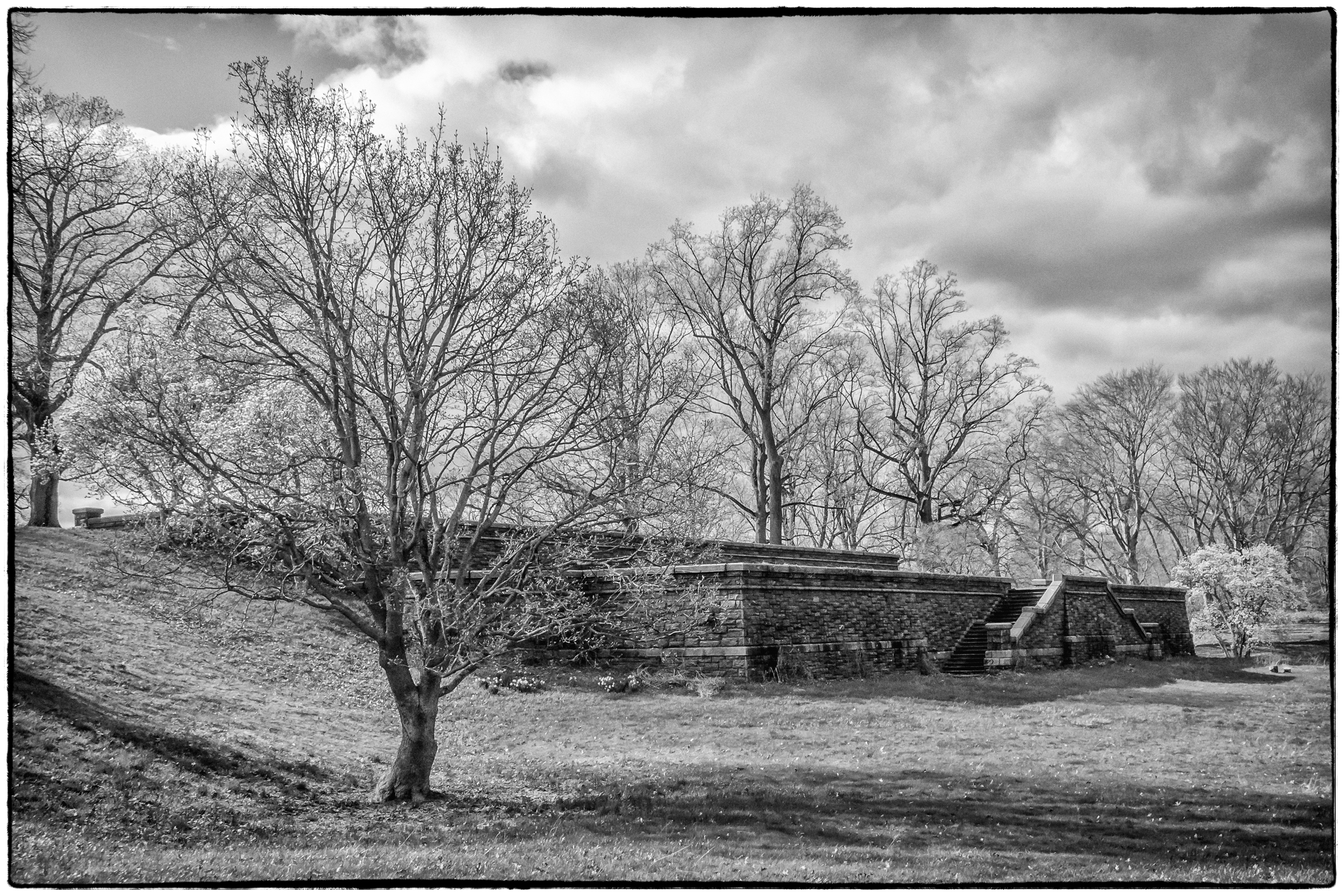
This picture is taken across the grassy area looking towards the foundations of the former mansion i.e. in the direction of the Hudson, which is hidden from view on the other side. I like the way the foundations are framed by the trees. I imagine I’ll come again. It’s quite close and it’s a lovely place to walk around, take pictures (there are so many things to take pictures of) or even just to sit and read while admiring the stunning view of the river.

Empire State Building

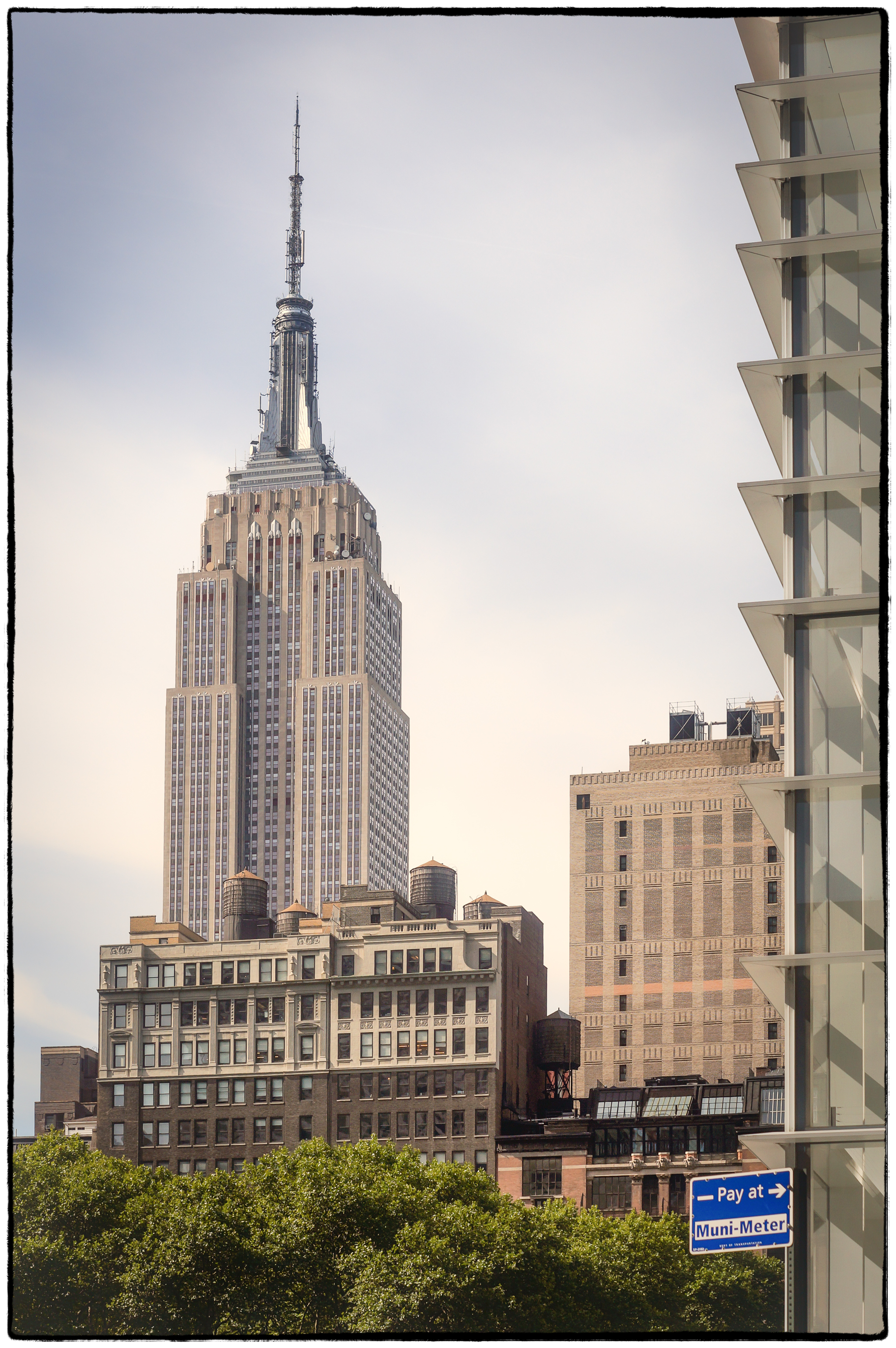
The metadata associated with this image contains no information on the lens, which means it must have been a legacy lens used with an adapter. Unfortunately, I don’t recall what lens it was and I didn’t carry a notebook to record it. This is a pity because it seems to be quite a good lens – very sharp.

Rye Playland

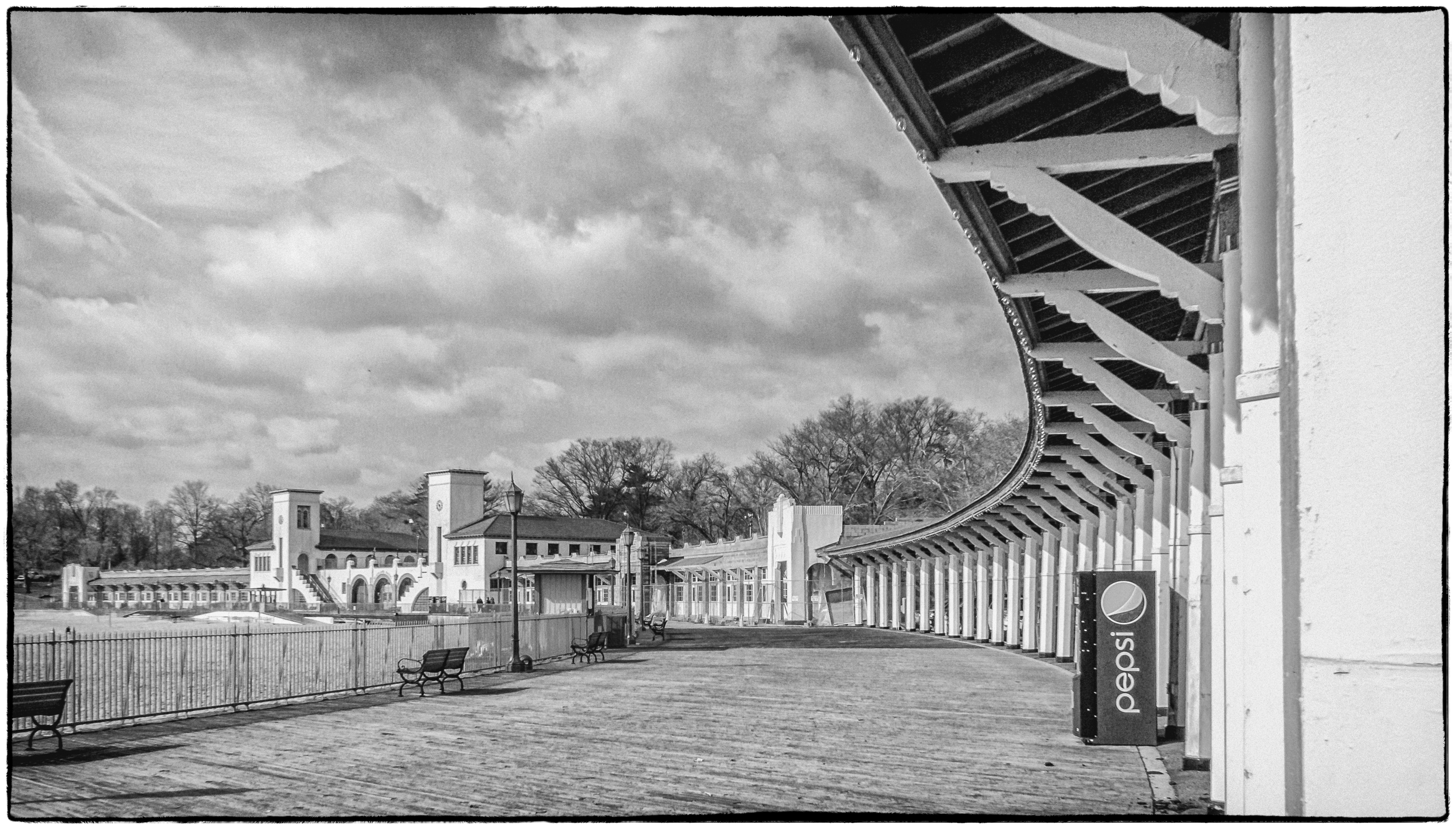
Rye Playland. Familiar to anyone who has seen the movie: “Big“. According to Wikipedia:

In the late 19th and early 20th centuries, Playland’s waterfront area of Westchester County, New York along the Long Island Sound was the site of a growing collection of recreational developments, including hotels, resorts, and “amusement areas”. Local residents concerned about what a County report described as “unsavory crowds” induced the Westchester County Park Association to purchase two existing theme parks, Rye Beach and Paradise Park, and planned a local-government-sponsored amusement park in their stead.

Frank Darling, a veteran park manager with experience at Coney Island and the British Empire Exhibition at Wembley, was hired to design and run the new park, called Playland. Construction commenced in September 1927 and was completed in six months. A design firm was commissioned to decorate the entire park in the Art Deco style.
The park began operation on May 26, 1928. The original design included a boardwalk, ice-skating rinks, a swimming pool, and two beaches, as well as amusement park rides, some of which are still in use.

The “Ice Casino”, built in 1929, originally contained a main ice rink as well as a full dance floor on the second floor that functioned as a dance hall through the 1940s and ’50s. It also had a full service fine-dining restaurant and an outdoor café. It had smaller dining rooms upstairs for upscale private dinners. A renovation in the 1970s added a kiddie rink as well as a mid-sized ice rink. A renovation to the main ice rink that included a new surface, boards and glass was completed in 2007 for the Empire State Games.

Playland is home to the “Grand Carousel,” a 1915 Mangels-Carmel carousel. It has four rows with 48 jumpers, 18 standers and three chariots. It was originally in New Haven, Connecticut, and moved to Playland when the park opened in 1927. The Grand Carousel has a rare band organ built by the Gavioli company in Italy. The organ enclosure features two male figures that strike bells in time to the music while the central female figure moves a baton. The Grand Carousel contains designs including those on the horses that are completely hand-carved and painted by Charles Carmel from Brooklyn, New York. The horses possess many unique traits that include elaborate “fish scale” blankets, inlaid gemstones, armor and lolling tongues on several.

Playland is also home to one of only three “Derby Racers” still in existence. The Derby Racer was built in 1927 for Playland by Prior & Church with horses carved by Marcus Charles Illions, a turn of the Century New York carousel horse carver. The Derby Racer rotates at 25 miles per hour (40 km/h) – three times the speed of a normal carousel. The horses move back and forth as well as up and down, simulating a true gallop as it races around the track. The other “Derby Racers” are located at Cedar Point, in Sandusky, Ohio; and Blackpool Pleasure Beach, in Blackpool, Lancashire, United Kingdom.

The Dragon Coaster, Playland Amusement Park’s iconic attraction, is a wooden roller coaster which was opened in 1929. Designed and built by amusement ride creator Frederick A. Church (also the co-inventor of the Derby Racer) the Dragon Coaster has approximately 3400 feet of track and is approximately 85 feet tall at its highest point. It has a tunnel along its span, a common feature of wooden roller coasters from the 1920s. The tunnel resembles the body of a dragon and the opening of the tunnel resembles a dragon’s mouth, it has eyes that light up and it blows steam from its nostrils. Playland Park removed the classic Prior and Church trains in 1989 and replaced them with Morgan trains because the P.T.C.s did not have up-to-date safety technology such as lap bars and other items. The Dragon Coaster is still in operation to this day and is classified as one of the park’s seven “classic” rides, along with The Whip, & Ye Olde Mill (an indoor dark boat ride involving gnomes.)

Playland is also home to the Kiddie Coaster, built in 1928. It is an ACE Coaster Classic.

In 1966, a fire claimed some of Rye Playland’s attractions, including the original Bumper Car ride, and the “Magic Carpet” Funhouse.

Playland was declared a National Historic Landmark in 1987.

Taken with a Fuji HS10, a camera I never quite warmed to.

Window at Scarborough Post Office

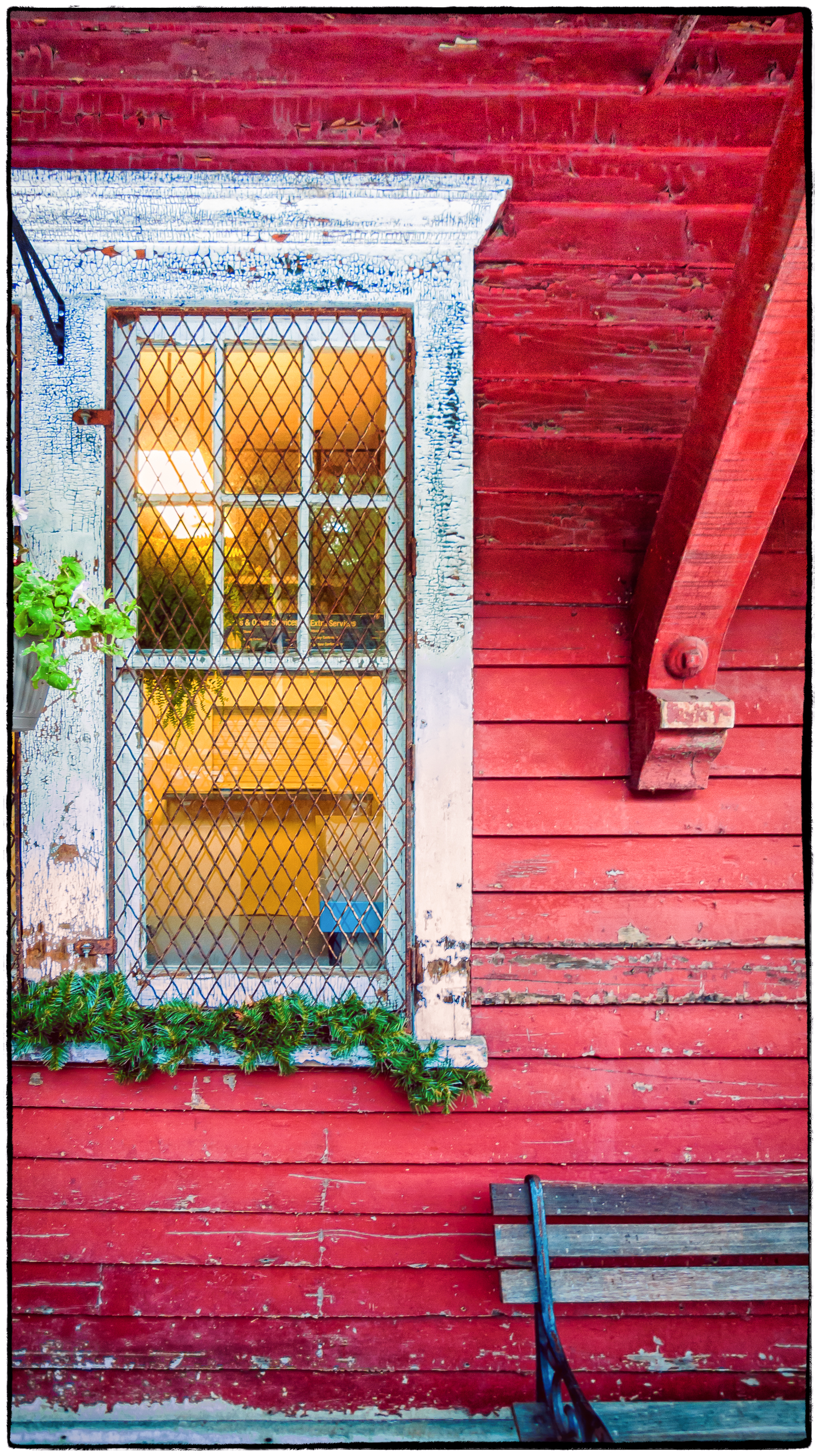
I took this on my way to work one morning in 2011. It’s a window at the Scarborough Post Office right next to the Scaraborough Metro North Station where I used to catch my train every morning. In fact what is now the Post Office was once upon a time the railway station itself. I found the colors and the textures to be appealing.

As Wikipedia says:

The first station building was built by the Hudson River Railroad sometime before 1860, and acquired by the New York Central and Hudson River Railroad in 1869. The station was named “Scarborough” until 1867. On July 16 of that year and until November 26, the area was officially called Weskora. The Scarborough station was accordingly changed by local government officials to “Weskora”, and changed back in December 1867.
The Scarborough post office dates to December 3, 1864, when the U.S. Postal Service established a “catch and throw” office there in the same small building as the earlier established station. A hook was installed along the tracks to hang mail bags to be grabbed by workers on the passing trains for outgoing mail distribution; in turn workers threw mail bags off the train for incoming mail distribution. The first postmaster of the Scarborough Post Office facility was James Van Velsor who had an annual salary of $200 ($3,900 today) in 1873.

A large thunderstorm occurred in the area on August 4, 1898; the newly-renovated station building, built in 1893, was struck by lightning and burned to the ground. At the time, the building also housed Scarborough’s post office. Mail was destroyed although registered mail and money was being kept at the postmaster’s house each night; damage amounted to $5,000 ($141,700 today) and the post office opened the next day, with mail being held in a pushcart. The building was reconstructed identically to its predecessor.

In 1909, after the community of Scarborough was incorporated into the village of Briarcliff Manor in 1906, the New York Central and Hudson River Railroad put up a sign reading “Briarcliff West” at the station. Soon afterward, attributed to the neighborhood’s pride over their name, that sign was thrown into the Hudson River and replaced with the original Scarborough sign.

The Briarcliff Manor village government purchased the station building in 1961 to house its Scaroborough post office. The building was used as a filming location in 1966, in the first episode of the television soap opera Dark Shadows as the Collinsport train station.