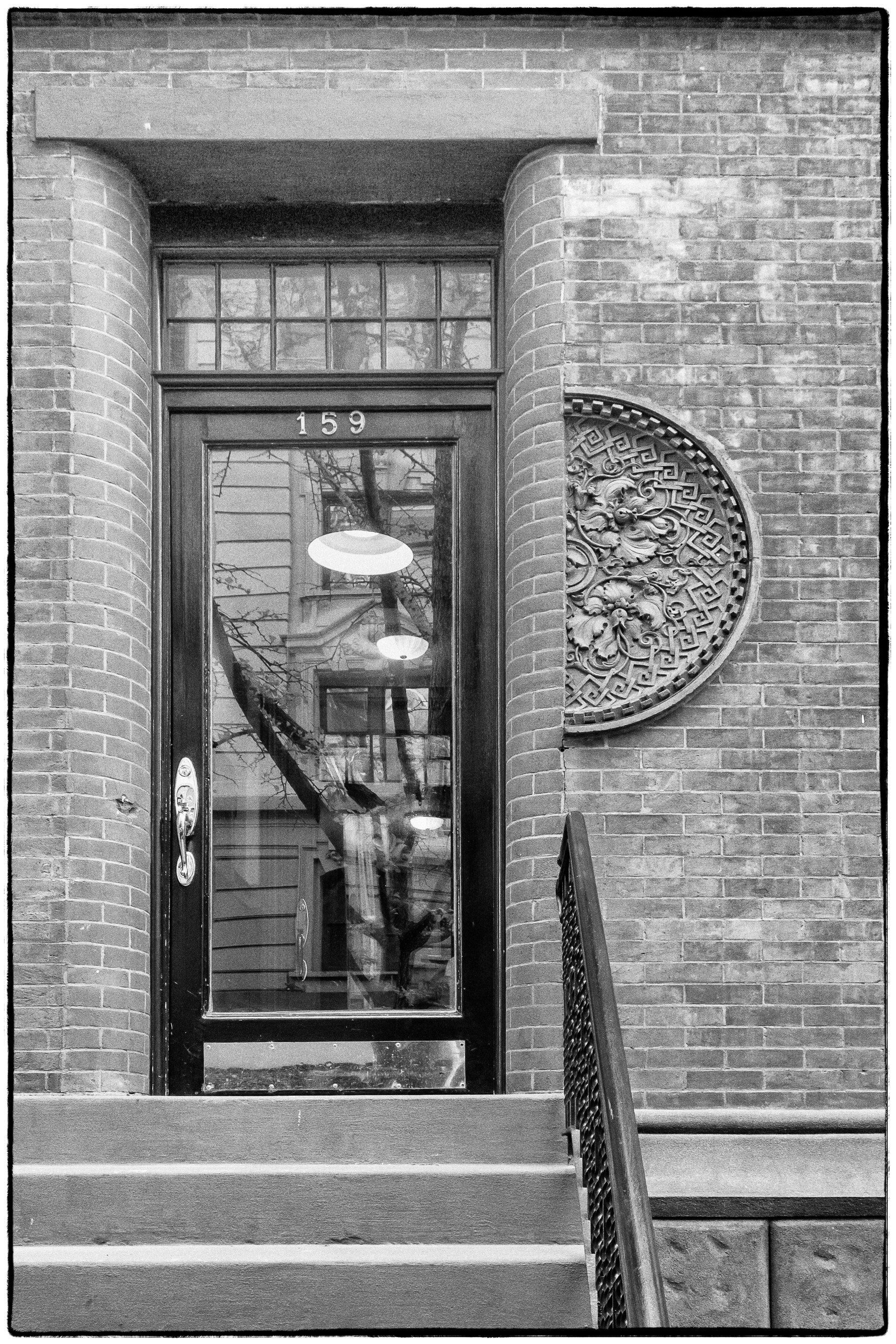
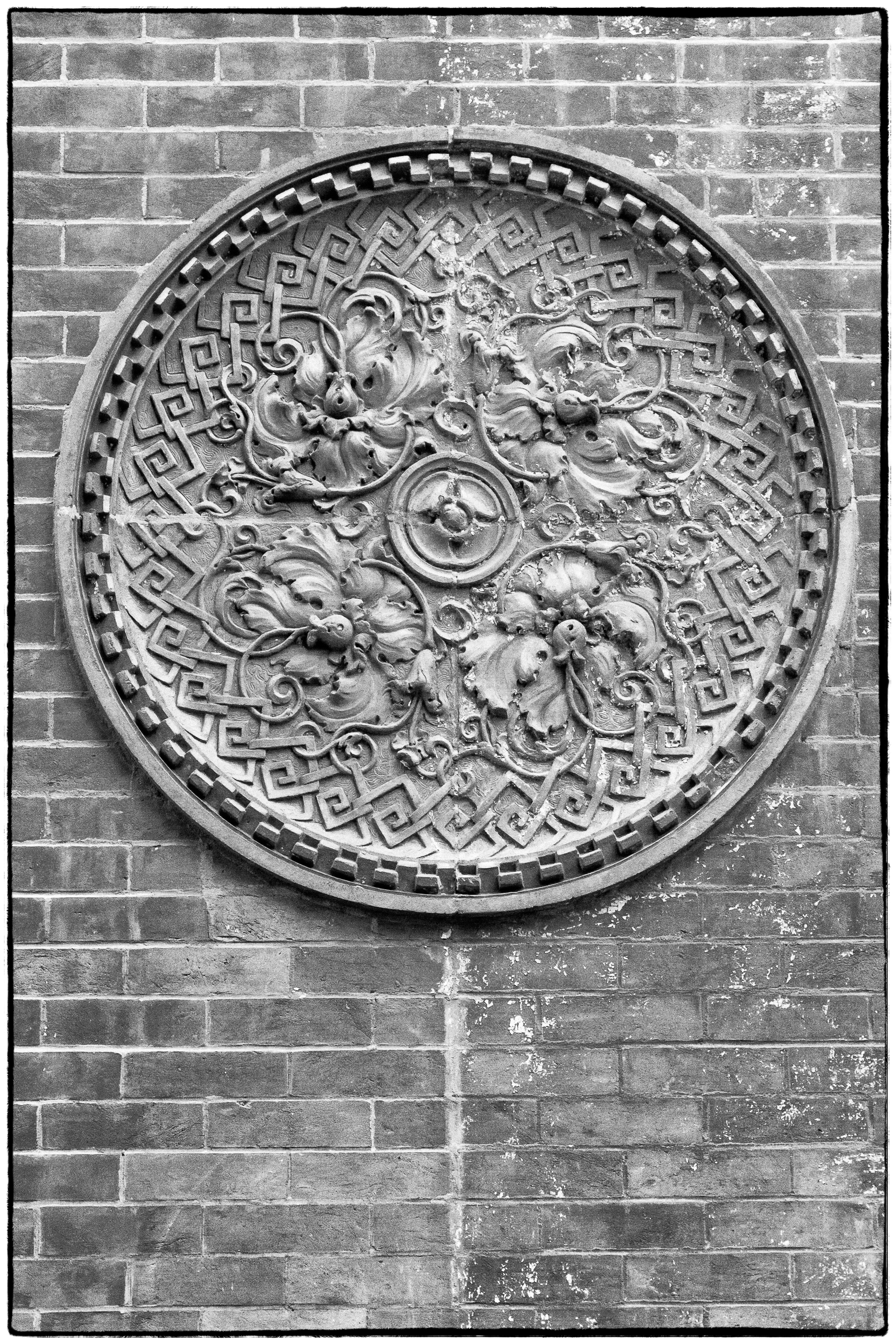
I think I was attracted to the half circular decoration to the right of the doorway. Farther down the wall to the right is a similar decoration, but this time a full circle.
Photographs and thoughts on photography and camera collecting

I think I was attracted to the half circular decoration to the right of the doorway. Farther down the wall to the right is a similar decoration, but this time a full circle.
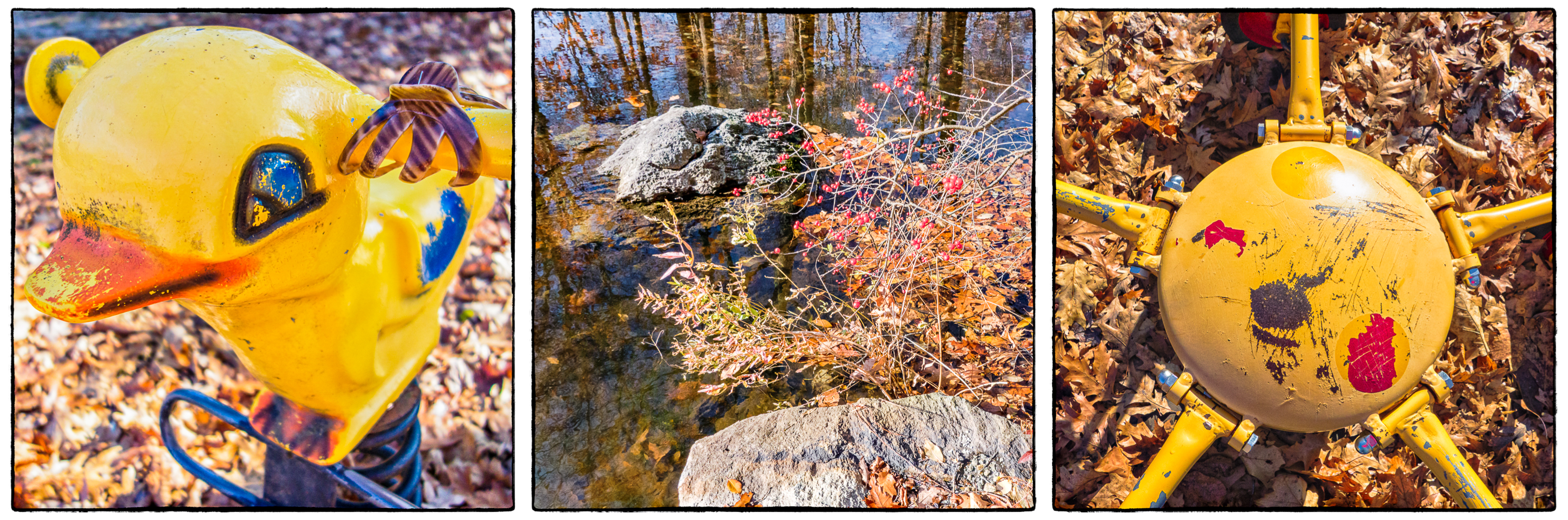
It’s now that time of year when all the leaves have fallen from the trees and everything looks rather drab and colorless. So during one of my walks I started to look for things that would add a little color to my life. I found these at nearby Children’s Beach. From left to right: children’s playground animal; bright red berries by the side of the brook; another children’s playground machine – seen from above.
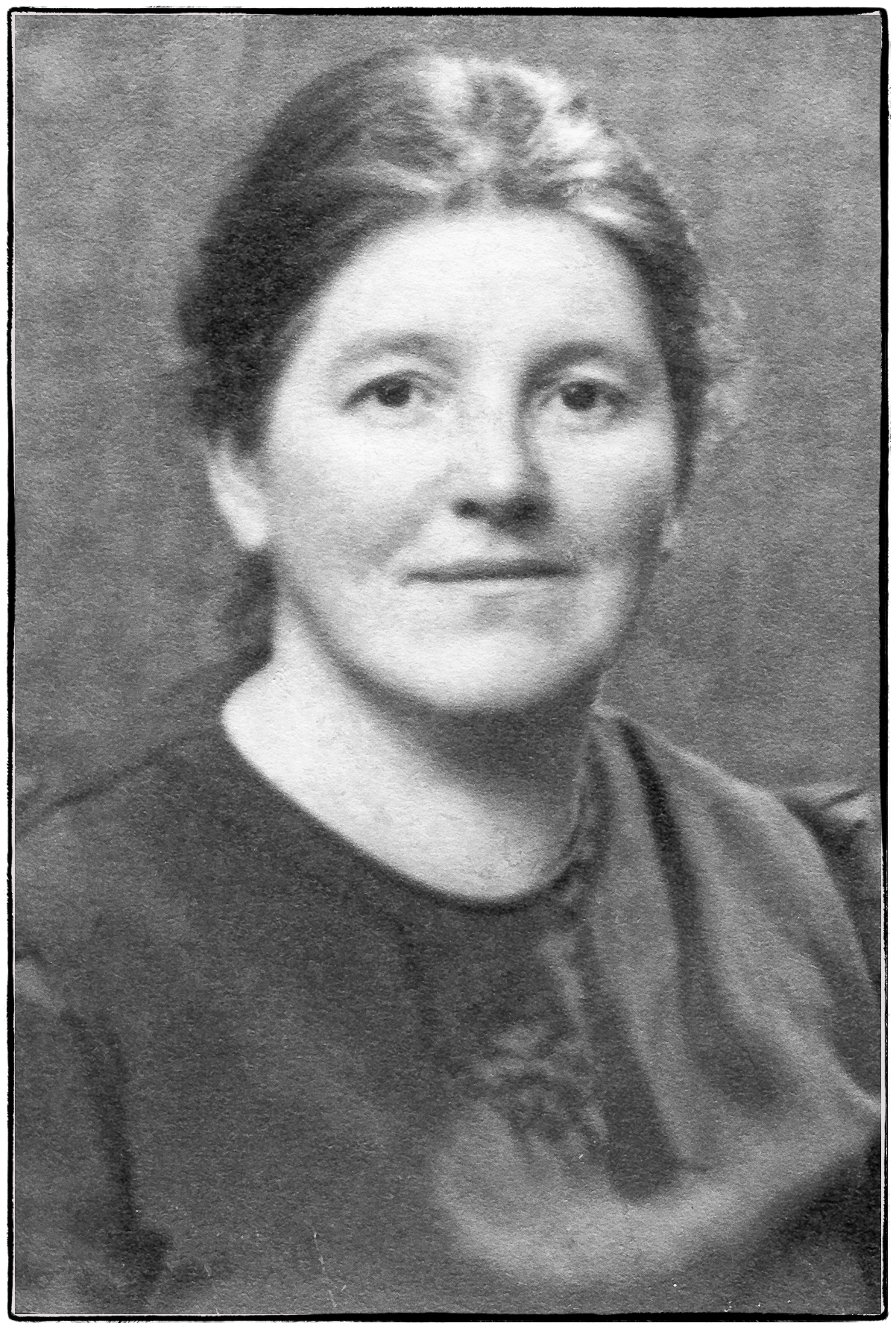
As I came downstairs this morning I passed this picture in a frame on a shelving unit. The picture had slipped and was now crooked in the frame. So I decided to take it out and straighten it. Then it occurred to me that I should probably scan it and post it to this blog.
It’s a picture of my grandmother on my fathers side and as I was scanning it I realized how little I knew about her. Since I’d always known her as ‘grandma’ I did’t even know what her real name was.
So I did some browsing around on the internet and this is what I discovered. She was originally Mary Elizabeth Poole (born 1898) and in 1918 she married George Dale. They had two children: my father, Thomas (born 1919) and my aunt, Bessie Margaret (born 1925). From what my father told me his father died (I don’t know when, but apparently from Peritonitis). Subsequently my grandmother married again – this time in 1930 to a certain John W. Watts. They had two children: My aunt, Kathleen Joan (born 1930) and my uncle, Albert John (born 1935). Unfortunately, Mr. Watts was not long for this world either. I recall my father telling me that he died in a mine accident. In 1937 she married again to a Mr. William Smith. Perhaps seeing the writing on the wall he took off never to be seen again. According to my father he was a thoroughly unpleasant person so his disappearance was no great loss.
My grandmother passed away at the age of 83 in 1981. Our wedding also took place in NY in 1981 and I recall that my grandmother was very sick at the time. My father thought about cancelling their trip to NY. However, his sister encouraged him to go as nobody knew how long my grandmother would linger and that in any case she didn’t recognize anyone at that point. She passed away while they were in the US.
I wasn’t particularly close to her. She lived nearby, but her home was far enough away to discourage my father from visiting frequently. I remember her as a fairly terrifying old lady. She was heavily involved in the local church (she was a church warden) and owned a farm. By the time I knew her she’d gone through three husbands and raised four children while running a working farm (that’s probably why she was so tough). When I was a kid I remember playing in the hay barns and watching her milk cows. Later she sold much of the property, but retained the farm house. My Aunt Bessie, her husband (we always referred to him as John or Johnny, but I find from my research that his name was actually George) and their five children Clifford, Margaret, Peter, Geoffrey and Gillian. I remember that we would usually visit on Sunday lunchtime and the meal was always the same: canned salmon doused in malt vinegar, lettuce and bread and butter. Every time we went there I hoped that, for once, it would be something different, but it never was.
The photograph has the words ‘Mother, 1942’ in my father’s handwriting on the rear. While I was scanning it I noticed that there was also a faint inscription on the front: “To Thomas with…”. You can just see the top of a second line, but someone has trimmed the photograph and it’s impossible to read what it says. My mother called my father Tom, his friends called him Tom or Tommy, but I never heard my grandmother call him anything other than Thomas.
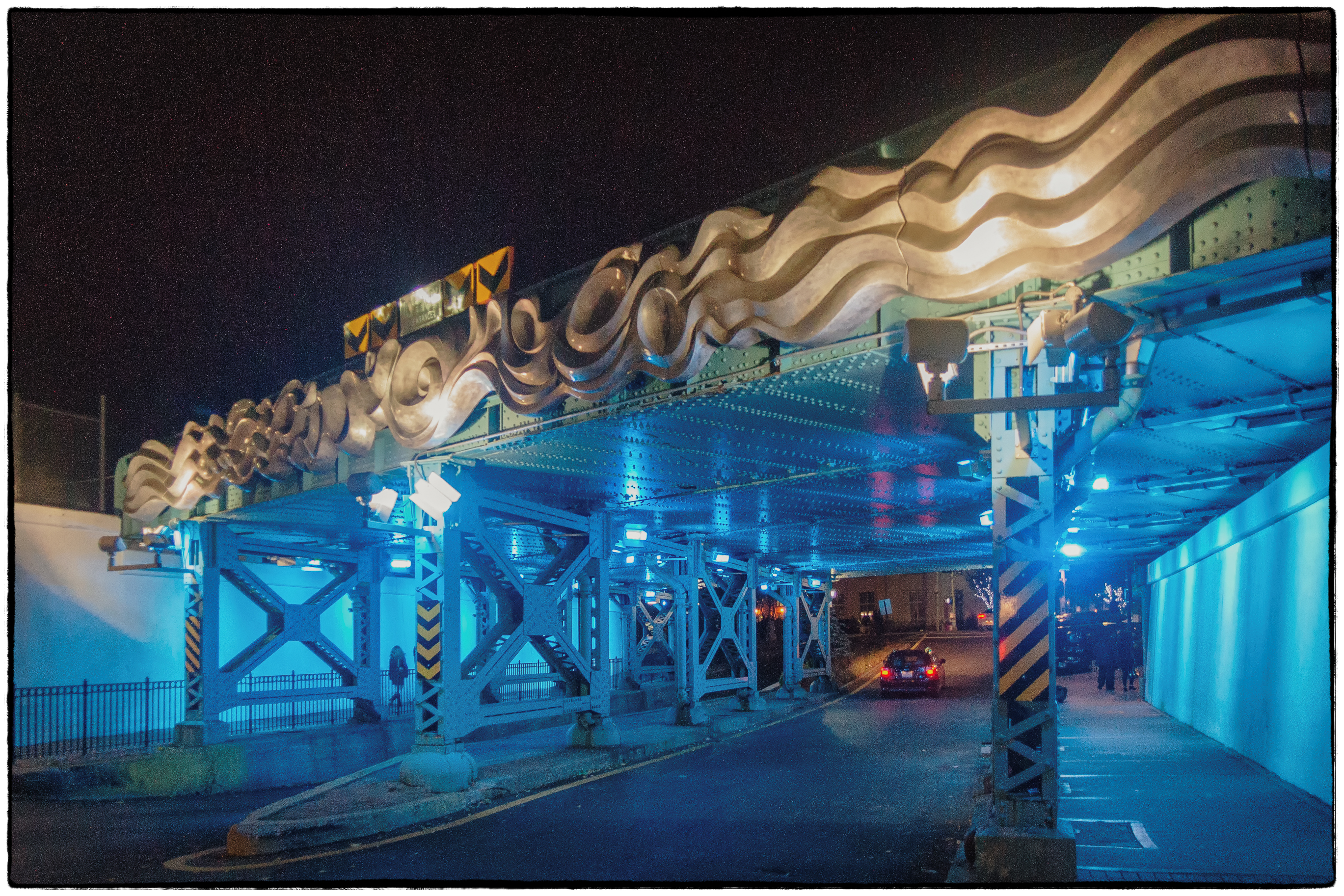
Taken by the Ferry Terminal near to Yonkers Metro North station after we returned from a cruise on the Hudson. I was attracted to the bright blue color and the wavy decoration.
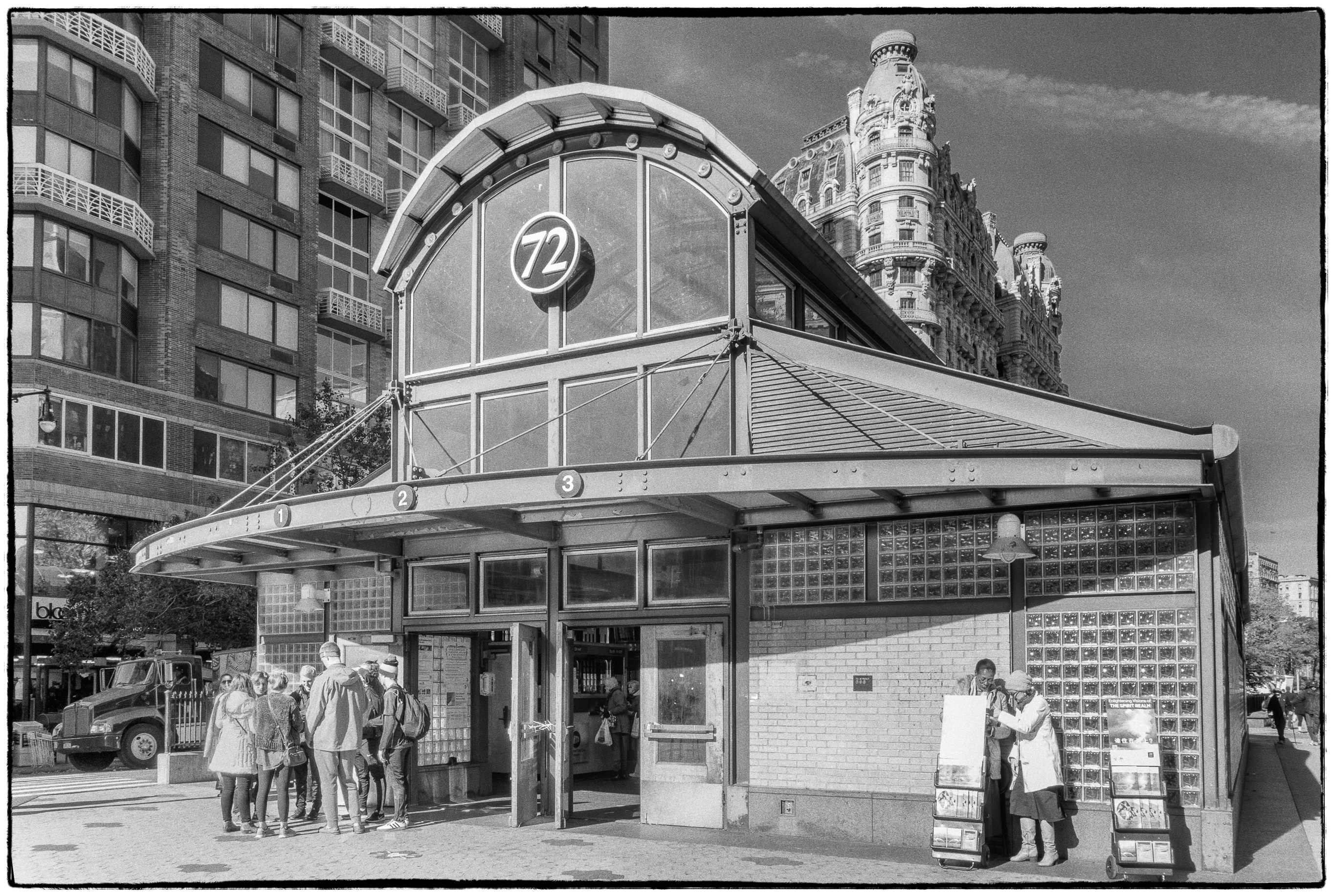
A different kind of New York City subway station.
According to Wikipedia:
The 72nd Street station opened on October 27, 1904, as part of the original subway, with trains running from Brooklyn Bridge to 145th Street. The original configuration of the station was inadequate by IRT standards. It had just one entrance (the control house on the traffic island between 71st and 72nd Streets, now listed on the National Register of Historic Places), and the platforms and stairways were unusually narrow. There were no crossovers or crossunders as the control house had separate turnstile banks and token booths for each side. Express trains ran on the innermost two tracks, while local trains ran on the outer pair.
During the 1950s, the New York City Transit Authority (now the Metropolitan Transportation Authority, or MTA) considered converting the station to a local station by walling off the express tracks from the platforms. This would have coincided with 59th Street–Columbus Circle, which is a major transfer point to the IND Eighth Avenue Line, becoming an express stop.
A substantial renovation was completed on October 29, 2002, providing a new, larger control house on the traffic island between 72nd and 73rd Streets and slightly wider platforms at the north end of the station. This control house has two staircases and one elevator from each platform going up to a crossover, where on either side a turnstile bank leads to either 72nd or 73rd Streets. Only the southern turnstile bank has a staffed token booth and the elevators make this station ADA-accessible. This control house has an artwork, Laced Canopy by Robert Hickman, which consists of a mosaic pattern on the central skylight; if looked at in the right way, the knots within the pattern make up the notation for an excerpt of Verdi’s Rigoletto. The original control house was renovated and now has a total of five staircases: two to the southbound platform and three to the northbound platform. These staircases go up to a crossover, where on the north side, an unstaffed turnstile bank leads to 72nd Street and on the south side, three High Entry/Exit Turnstiles lead to 71st Street. This control house has artful wrought iron pillars, dating back to the days of the original subway system, as well as decorated ceiling beams.
The is the new control house. The old control house is across the street.