The Front Page

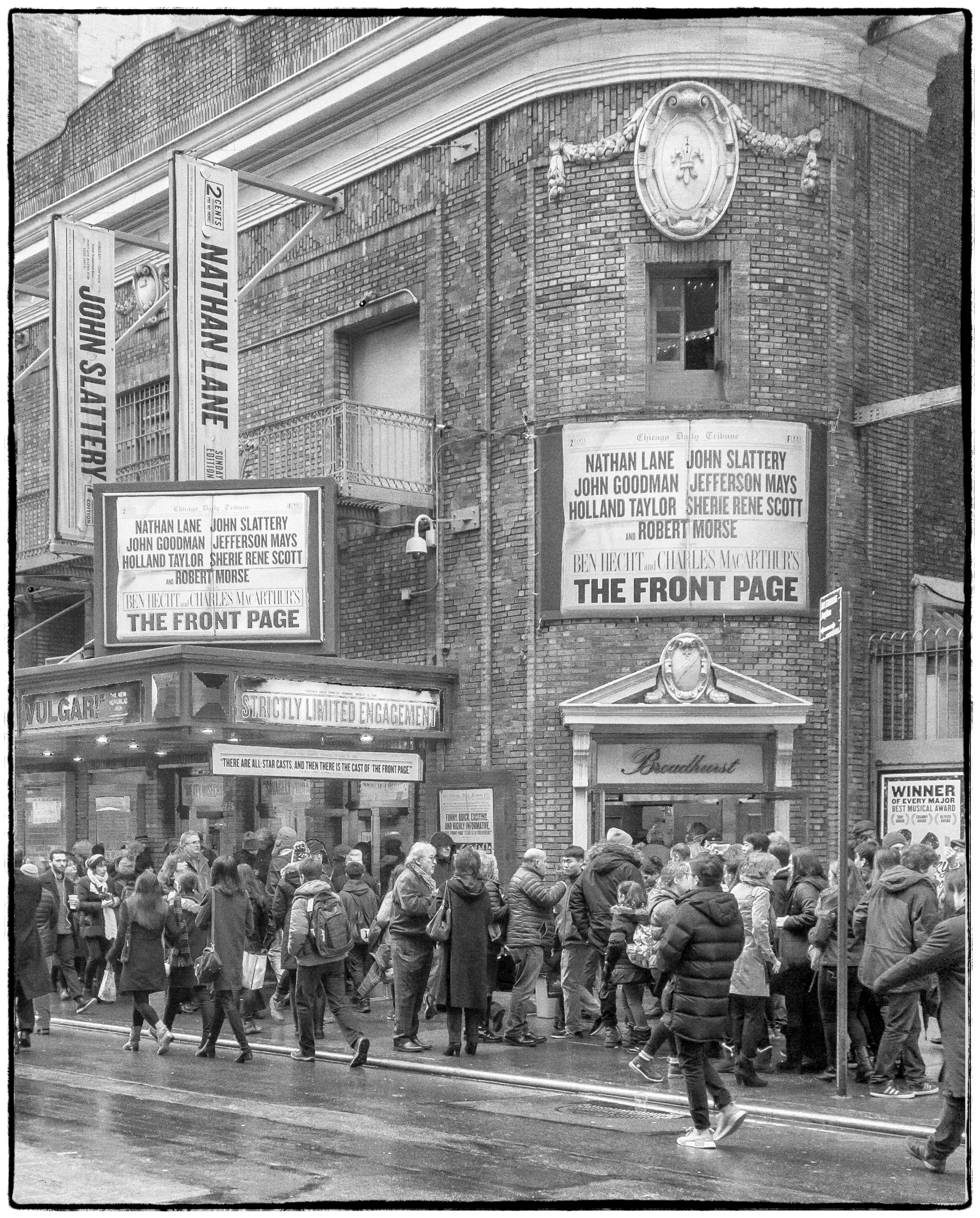
We went into the city on Christmas Eve to see “The Front Page” at the Broadhurst Theatre on 44th Street between 7th and 8th Ave. This production starred Nathan Lane (awards too numerous to mention) and other well known actors such as John Slattery (Mad Men, Iron Man 2, Ant Man); John Goodman (Roseanne, The Big Lebowski, Argo); Robert Morse (Tony awards for How to Succeed in Business Without Even Trying; Tru); and Jefferson Mayes, who we had previously seen in a “tour de force” performance playing eight different roles in “A Gentleman’s Guide to Love and Murder” (based on one of my all time favorite movies, the English classic “Kind Hearts and Coronets” from 1949..

The first act was a bit slow and I was starting to get a bit worried that we wouldn’t like it. It’s was not my wife’s choice to see this and I feared the consequences if it turned out to be lousy. However, things picked up in the second act and by the third the house was “rolling in the aisles”. Nathan Lane was, as always, brilliant.

Afterwards we had an excellent dinner at Michael Jordan’s Steakhouse in Grand Central Terminal.
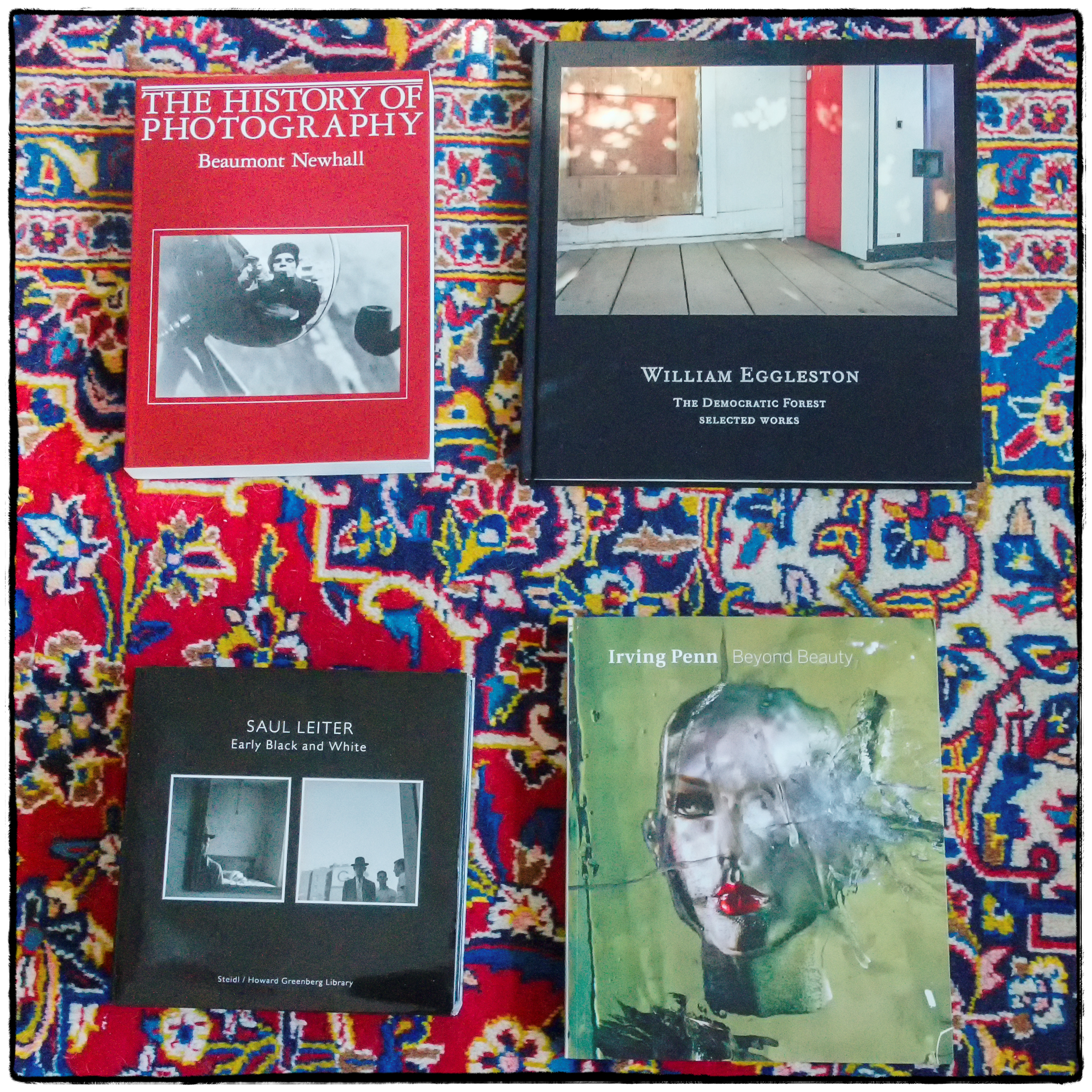
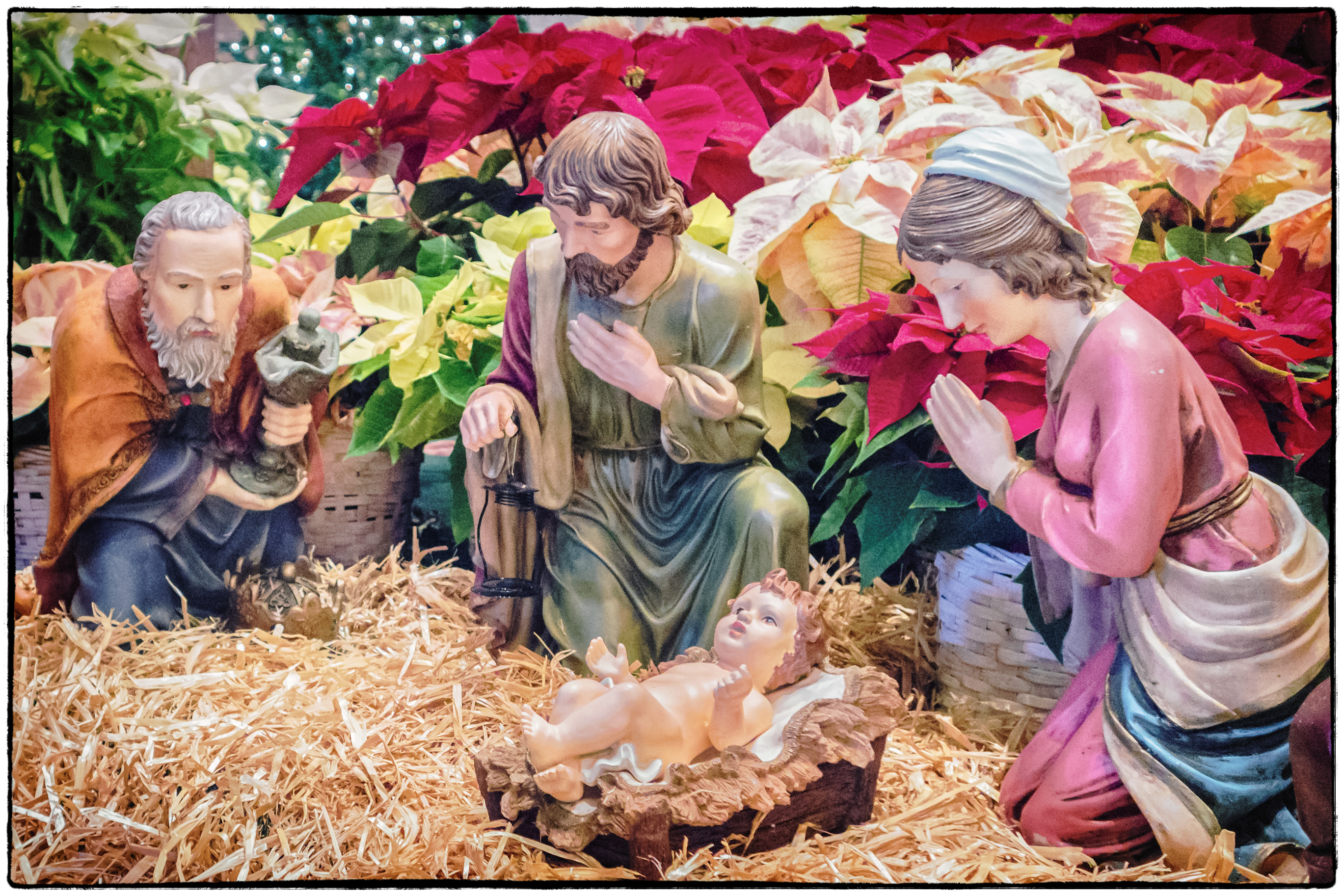
A few photography related Christmas presents

My family finds it difficult to decide what to get me for Christmas. I like CDs; books; photography related items. In the past that have bought me CDs and books that I already have and photography related stuff that I didn’t really want. So now I make an Amazon.com wishlist every year. This too can have its problems. Some items have been on the list for years and nobody buys them. Another case in point: I’ve been reading a four book series on the Overland Campaign of the US Civil War. I’ve read the first volume and started the second one. I got the fourth one as a Christmas present, but I’m missing the third one. I guess I’ll have to buy it myself. Generally, however,this scheme works well.

This year I got four photography related books. In case you can’t read the titles they are:

The History of Photography: From 1839 to the Present. Beaumont Newhall.

The Democratic Forest. Selected Works. William Eggleston.

Early Black and White. Saul Leiter.

Beyond Beauty. Irving Penn.

More to follow when I’ve had a chance to spend more time with them.

Skier on the ice

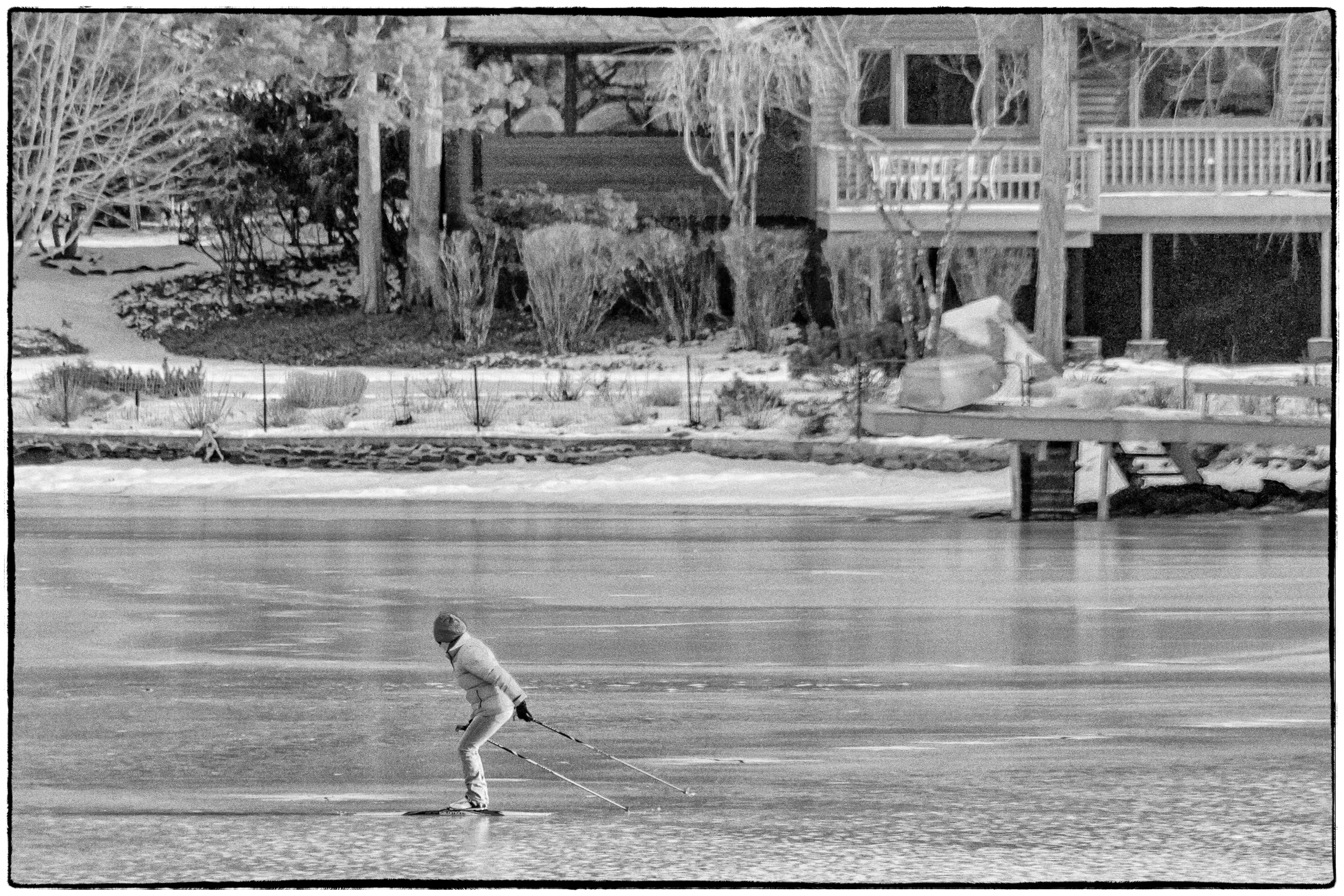
Our lake is now completely frozen. However, we’ve had a few ‘warmish’ days with temperatures well above freezing. Usually people don’t go onto the lake until we’ve had several days of below freezing temperatures. So I’d be a little concerned that the ice is not all that thick at the moment.

My wife was in the living room when she noticed some movement on the lake. It turned out that it was this woman skiing on the lake. I grabbed a camera and went out to take a picture – in my haste almost falling over on the icy, still partly snow covered lawn. Apparently the woman in the picture is not concerned with the possible danger.

Not the brightest period in US history: Dorothea Lange’s photographs of Japanese internment camps

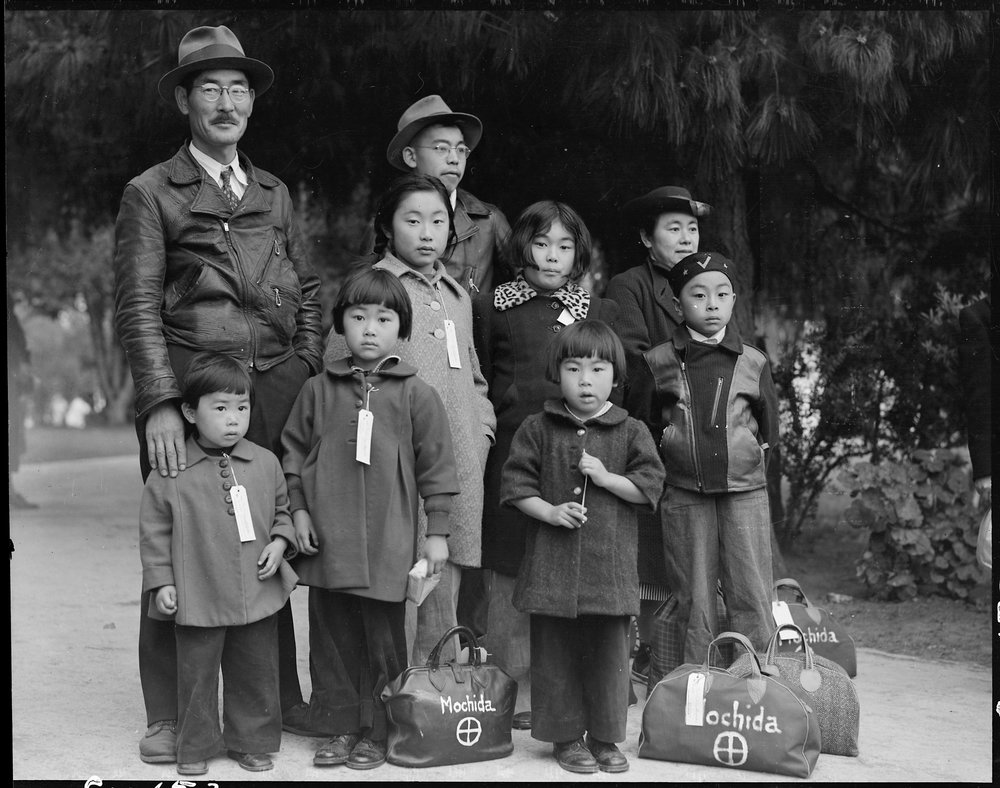
May 8, 1942 — Hayward, California. Members of the Mochida family awaiting evacuation bus. Identification tags are used to aid in keeping the family unit intact during all phases of evacuation. Mochida operated a nursery and five greenhouses on a two-acre site in Eden Township. He raised snapdragons and sweet peas. Evacuees of Japanese ancestry will be housed in War Relocation Authority centers for the duration.

Dorothea Lange—well-known for her FSA photographs like Migrant Mother—was hired by the U.S. government to make a photographic record of the “evacuation” and “relocation” of Japanese-Americans in 1942. She was eager to take the commission, despite being opposed to the effort, as she believed “a true record of the evacuation would be valuable in the future.” The military commanders that reviewed her work realized that Lange’s contrary point of view was evident through her photographs, and seized them for the duration of World War II, even writing “Impounded” across some of the prints. The photos were quietly deposited into the National Archives, where they remained largely unseen until 2006.

Source: Dorothea Lange’s Censored Photographs of FDR’s Japanese Concentration Camps — Anchor Editions