Eighteen Arhats: Overview

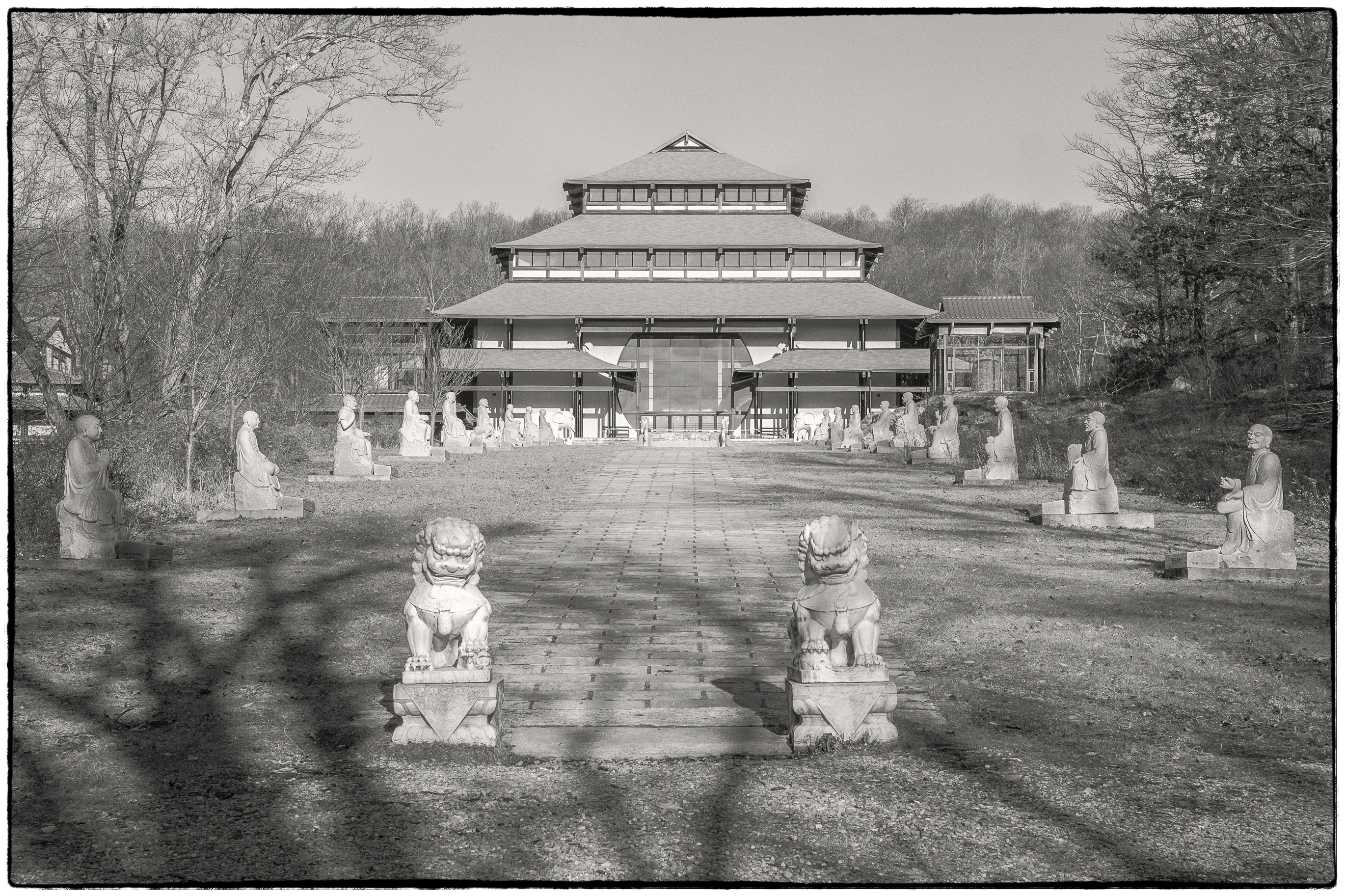
We recently took our elder daughter to nearby Chuang Yen monastery. As we were walking up from the car park to the Great Buddha hall we were looking at the statues on both sides of the walkway. I had previously taken pictures of a couple of them and now it occurred to me that it might be a nice little project to take a picture of each of them – eighteen in all.

I was originally going to call this ‘Eighteen Buddhas’, thinking that each of the statues was of the Buddha, but in a different pose. Then my wife remarked that the number eighteen must have some significance so I looked it up and found that it did.

As Wikipedia says:

The Eighteen Arhats are depicted in Mahayana Buddhism as the original followers of the Buddha who have followed the Eightfold Path and attained the Four Stages of Enlightenment. They have reached the state of Nirvana and are free of worldly cravings. They are charged to protect the Buddhist faith and to await on earth for the coming of Maitreya, a prophesied enlightened Buddha to arrive on earth many millennia after Gautama Buddha’s death and nirvana. In China, the eighteen arhats are also a popular subject in Buddhist art, such as the famous Chinese group of glazed pottery luohans from Yixian of about 1000.

And, indeed, each of the statues had, at its base, a stone plaque describing the follower to which it referred. In subsequent posts I’ve used these descriptions – broken English and all.

And I changed the post title to “Eighteen Arhats”
John Cohen at L. Parker Stephenson Photographs in New York

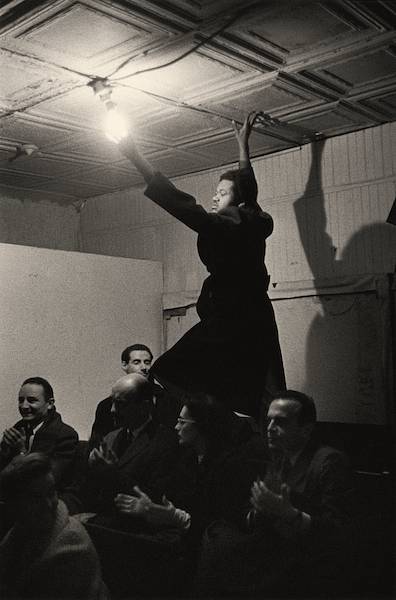
Bob Thompson, The Burning Building, 1959, Tanager Gallery, 1959 by John Cohen, courtesy of L. Parker Stephenson Photographs

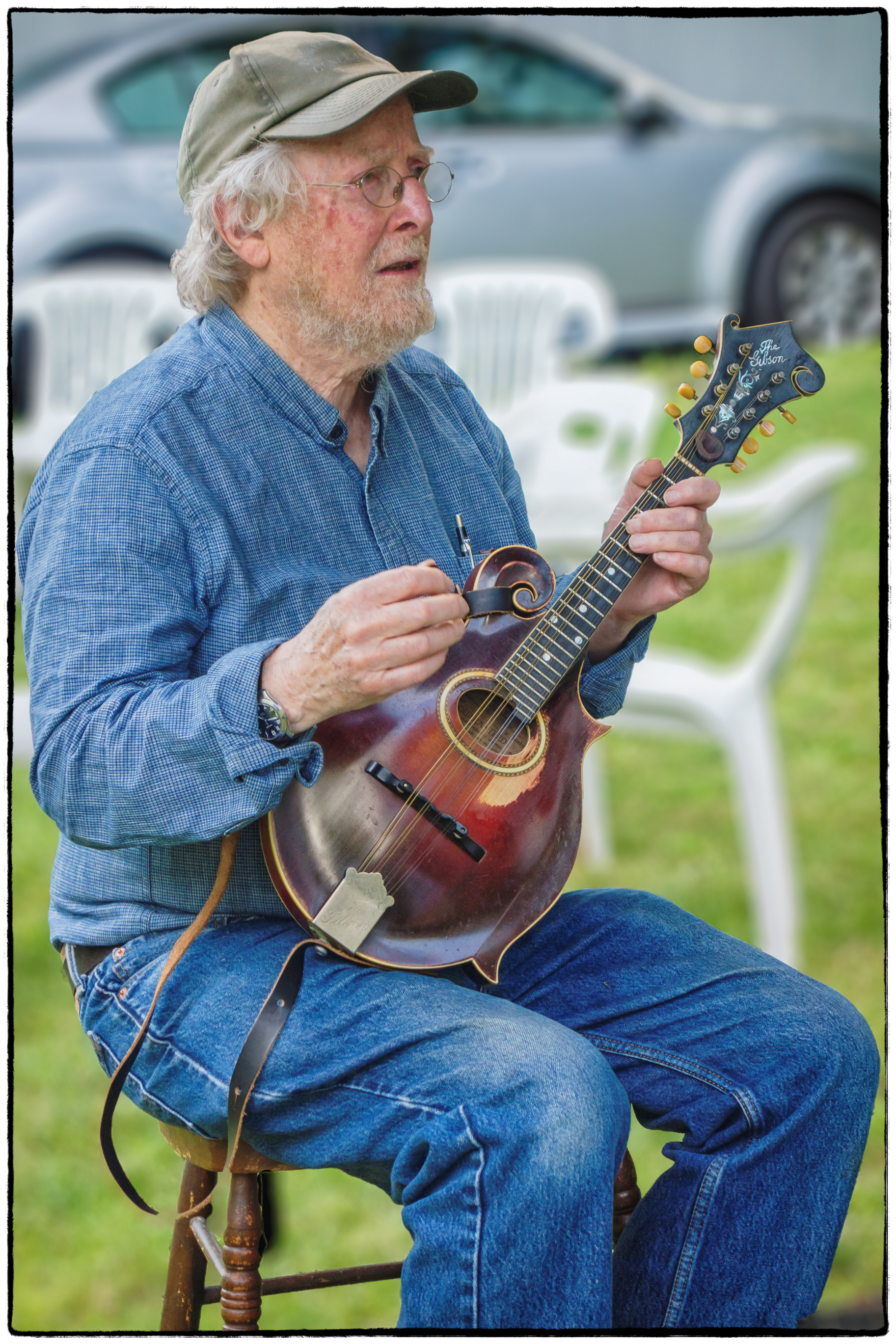
John Cohen lives near us and often performs at the Tompkins Corners Cultural Center, which opened not too long ago in the Tompkins Corners Cultural Center (formerly the Tompkins Corners Baptist Church). Here’s a picture of him performing:

The late 1950’s and early 60’s was the booming period of artistic freedom — and freedom will only get better from that era.Photographer John Cohen witnessed the shift of the New York social landscape — normal society was becoming a community of artists, writers and musicians whom cohabit along New York’s East 10th Street. The birth of Abstract Expressionism owes its creation through the works of Philip Guston and Frank Kline. The Beat Movement was also in its early days. John Cohen was both an observer and participant of such a divided time.

Catch the on-going show John Cohen: The 10th Street Art at the L. Parker Stephenson Photographs in New York.

Source: The Early Photographs of John Cohen · Lomography

Thousand lotus terrace

I recently visited the Chuang Yen monastery again.

As I was leaving I noticed an area that I had not so far visited. It’s called the Thousand Lotus Memorial Terrace and the Chuang Yen website describes it as follows:

The Thousand Lotus Memorial Terrace is a service Chuang Yen Monastery provides.

Twice a year, in the spring and autumn, there are ceremonies during which the ashes of the deceased are placed in the Thousand Lotus Memorial Terraces. In Mahayana Buddhism, being grateful to all sentient beings is strongly emphasized, especially to our parents. According to one of the Mahayana Sutras, we should be grateful to our parents, and also to sentient beings, the king or minister of the Triple Gems. They are our providers who also protect and guide us in every aspect of life. These memorial terraces, therefore, enable us to express our love for and gratitude to our parents, and to teach or show our next generation how to be grateful to their elders.

There are two Thousand-Lotus Memorial Terraces situated on the northwestern slope of Chuang Yen Monastery. They face southeast and are built with granite. The half circle design and the statue of Amitabha Buddha which overlooks the terrace and symbolizes the Western Paradise in Pure Land Buddhism.

I didn’t have a wide enough lens with me to capture the terraces in their entirety so I focused on the detail above. As a result of this I didn’t even notice the Buddha statue mentioned above. I’ll have to go back and have a look. Until I can get a few more pictures you can find some here.

Amawalk Hill Cemetery – The big surprise

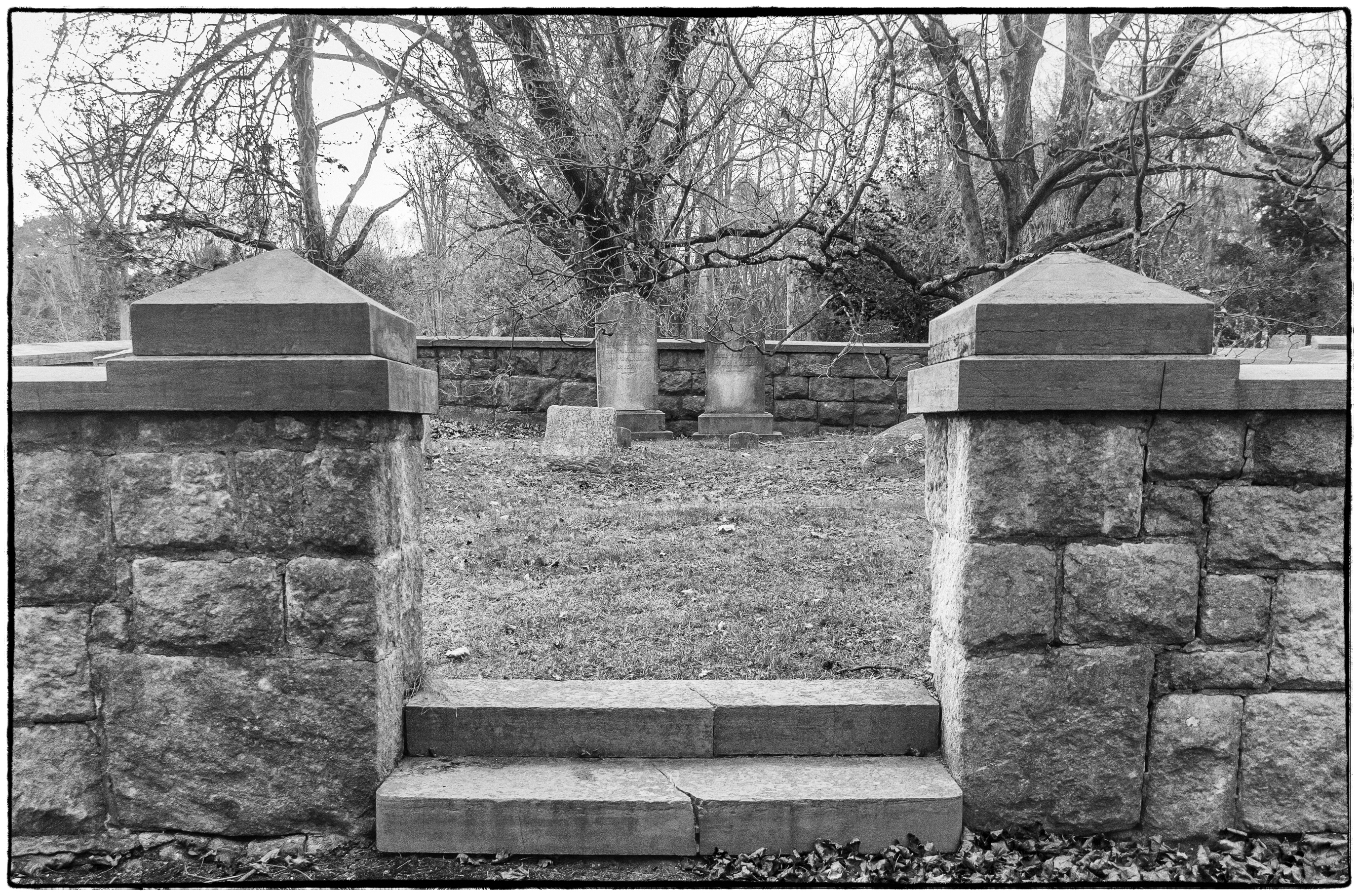
In the overview post to this series of pictures on Amawalk Hill Cemetery I mentioned that I had a big surprise in store. As I was walking around I noticed what looked like a large glass display case. It seemed such a strange thing to come across beside the gravestones in the woods that I went over to look. Inside were a number of photographs and as I continued looking it gradually dawned on me that I was familiar with them: they were the work of Robert Capa. Why were they here. Obviously my brain wasn’t working too well. Then it hit me: they were there because it was here that Capa was buried. Sure enough there was his gravestone.

I’m passionate about photography and here was the last resting place of one of the all time greats. Time magazine recently published its list of the 100 most influential photographers of all time and Capa is one of only three photographers to have more than one picture included (the other two are Eddie Adams and Margaret Bourke-White).

Many of his photographs are well-known, but the one below is possibly the most famous. He was killed in 1954 at the age of 40 in Thai Binh, Vietnam after he stepped on a landmine while photographing the France/Vietnam war.

FRANCE. Normandy. June 6th, 1944. US troops assault Omaha Beach during the D-Day landings (first assault). Source: © Robert Capa © International Center of Photography/Magnum Photos via OmegaPhotoBlog

So here we have a Jewish photographer of Hungarian origins buried in a quaker cemetery. I wondered why? According to the Wikipedia entry on the Amawalk Friends Meeting House:

In 1954 war photographer Robert Capa, whose gritty “Magnificent Eleven”, taken under heavy German fire, are considered iconic images of the Normandy landings during World War II, died after he stepped on a land mine in Vietnam while covering the First Indochina War. John Morris (as I’m writing this post Mr. Morris just celebrated his 100th birthday a week ago), Capa’s editor at Life magazine in London during the Normandy landings and at Magnum Photos at the time of his death, felt that a Quaker funeral would be a fitting tribute to Capa, a nonobservant Jew who had immigrated from Hungary. Morris’ reasoning was that, even though Capa had not been a Quaker, he sought to promote peace through his depictions of the horrors of war. As a member of the Purchase Quarterly Meeting, which oversaw Amawalk, he arranged for a Quaker service there. At the service, Capa’s brother Cornell said Kaddish. A young Dirck Halstead was among the attendees.

The few remaining members of the Amawalk meeting allowed Capa to be buried in their cemetery. Later his mother and sister-law were buried in the same plot, and Capa’s biographer Richard Whelan joined them when he died. In 2008 Cornell, who had founded the International Center for Photography during the intervening years, was laid to rest alongside his brother. None of them were Quakers.