A Hike. Part 1

We live in close proximity to Fahnestock State Park. In fact it has been possible to walk into the park, but only if you’re willing to dash across the Taconic State Parkway during a lull in the traffic. That, however, has now changed. The park has recently acquired some new land south of where I live. Now it’s possible to walk into the park without crossing the Taconic.

I was therefore excited to hear that our local property owners association was organizing a hike into this new area – particularly since I suspected that there was something I really wanted to see along the way (See next post: A Hike. Part 2.)

Unfortunately, we were going through a very busy period at that time and I felt that I couldn’t devote the time required (around three hours) for the entire hike. As we were waiting to begin I mentioned this to one of the organizers and said that I might only do part of the hike and then return. She said that this would not be possible. At first I thought she was joking, but gradually realized that she as quite series. OK – so it was either do the full hike, or don’t go at all. I wouldn’t go at all, so I asked where the hike started so that I could later follow the trail myself and was told that that wouldn’t be possible either. I was getting annoyed by this point. I later came to understand that she felt responsible for the hikers and and for making sure that none of them wandered off on the as yet unmarked trails. She wasn’t to know that I spend a lot of my time walking in the woods and don’t tend to get lost. After consulting my wife (who encouraged me to do the entire hike) I decided to go along and I’m glad I did.

Above – at the beginning of the hike Sam describes our route.

The group takes a breather.

Old stone bridge over Roaring Brook. It looks as if a road once went over this bridge. Nowadays you can’t continue as the Taconic State Parkway gets in the way.

He went thataway!

To the delight of all concerned and particularly the children, Sam finds some tadpoles and a frog.

The group navigates one of the last uphill stretches, of which there were many.

Taken with a Sony RX-100M3.
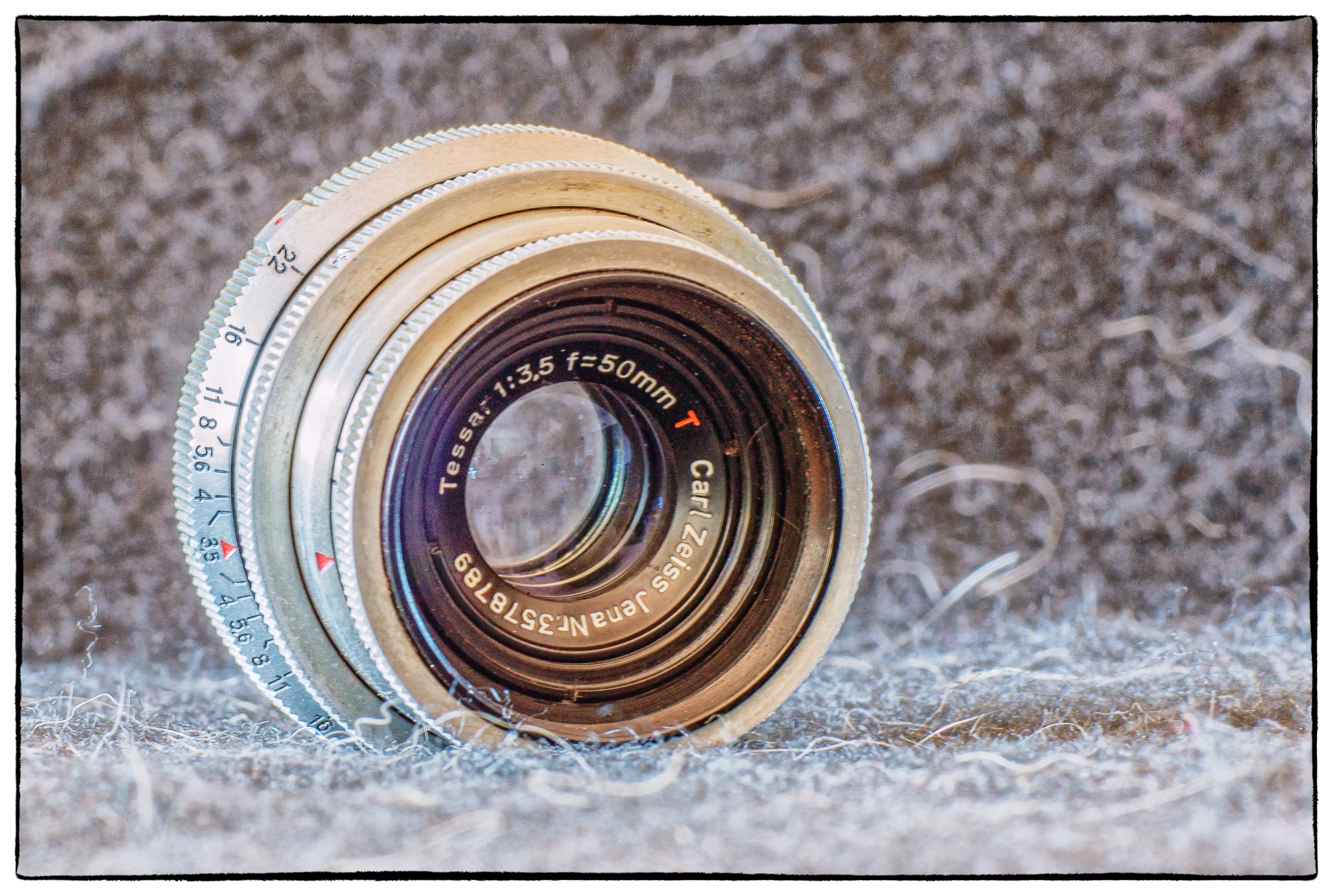
Carl Zeiss Jena 50mm f3.5 T Tessar

This came attached to an Exa (See:New Acquisitions – Exakta Varex/VX IIa and Exa August 10, 2015) that I acquired in 2015, but had never used. I decided to give it a try right after I had tried out the Ludwig Peronar I mentioned in an earlier post (See: Ernst Ludwig 50mm f2.9 Peronar). The two lenses are very similar, both in appearance and in size. But in most other respects they are light years apart. Where the peronar was extremely soft and difficult to focus, the Tessar is remarkably sharp.

It’s a solid, metal lens with four elements in three groups. Quite small (of course the adapter for the NEX makes it much larger. I’d guess about twice as large), it focuses down to about two and a quarter feet. It’s comfortable in the hand and smooth to focus. Apertures range from f3.5 to f22 without defined stop intervals. I also found the out of focus areas to be appealing and was impressed by the color rendition.

I really liked this lens. It’s still on my NEX.

Taken with the above lens on a Sony NEX 5N.

Arthurium and blue and white cat.

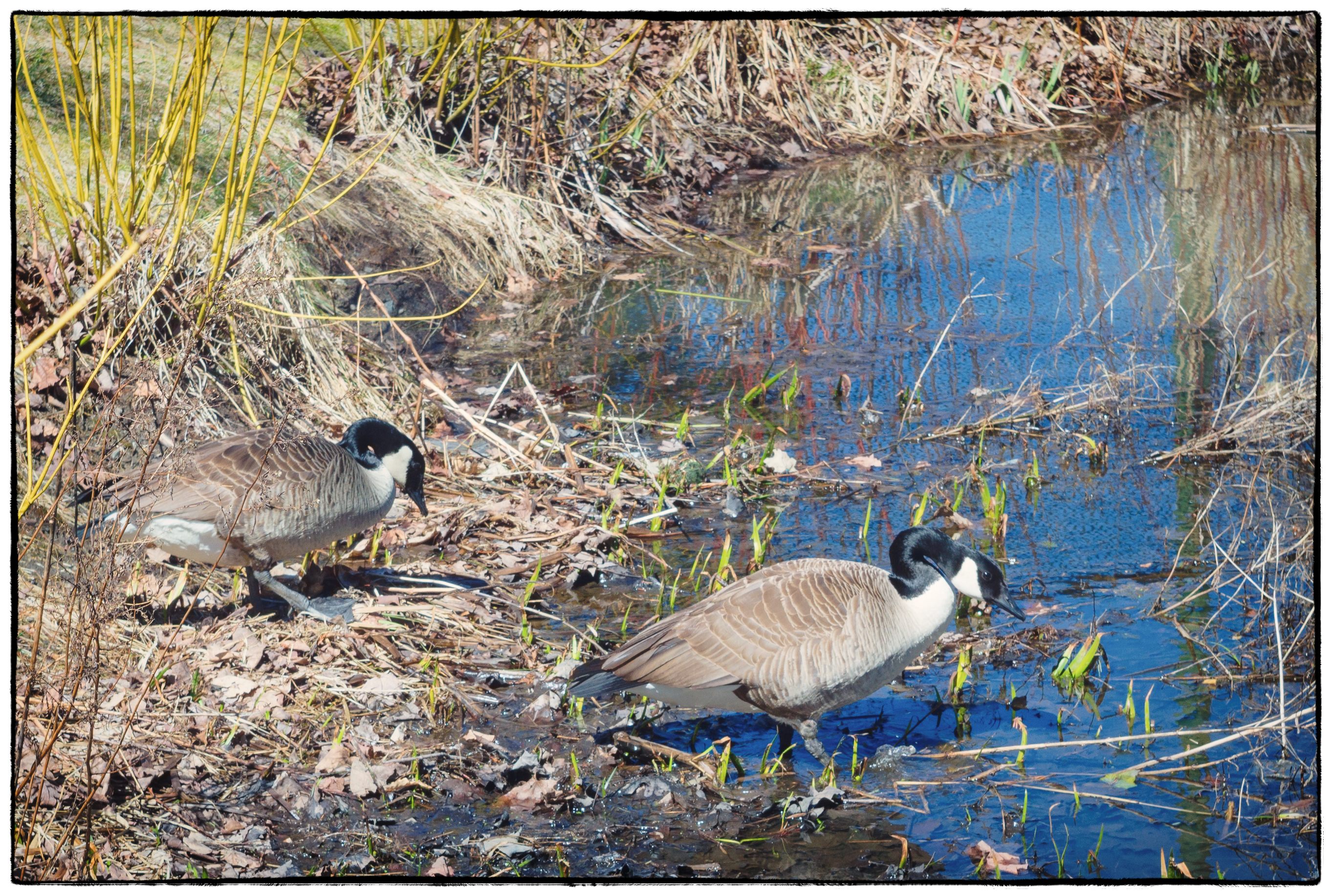
Geese.

Old Trunk.

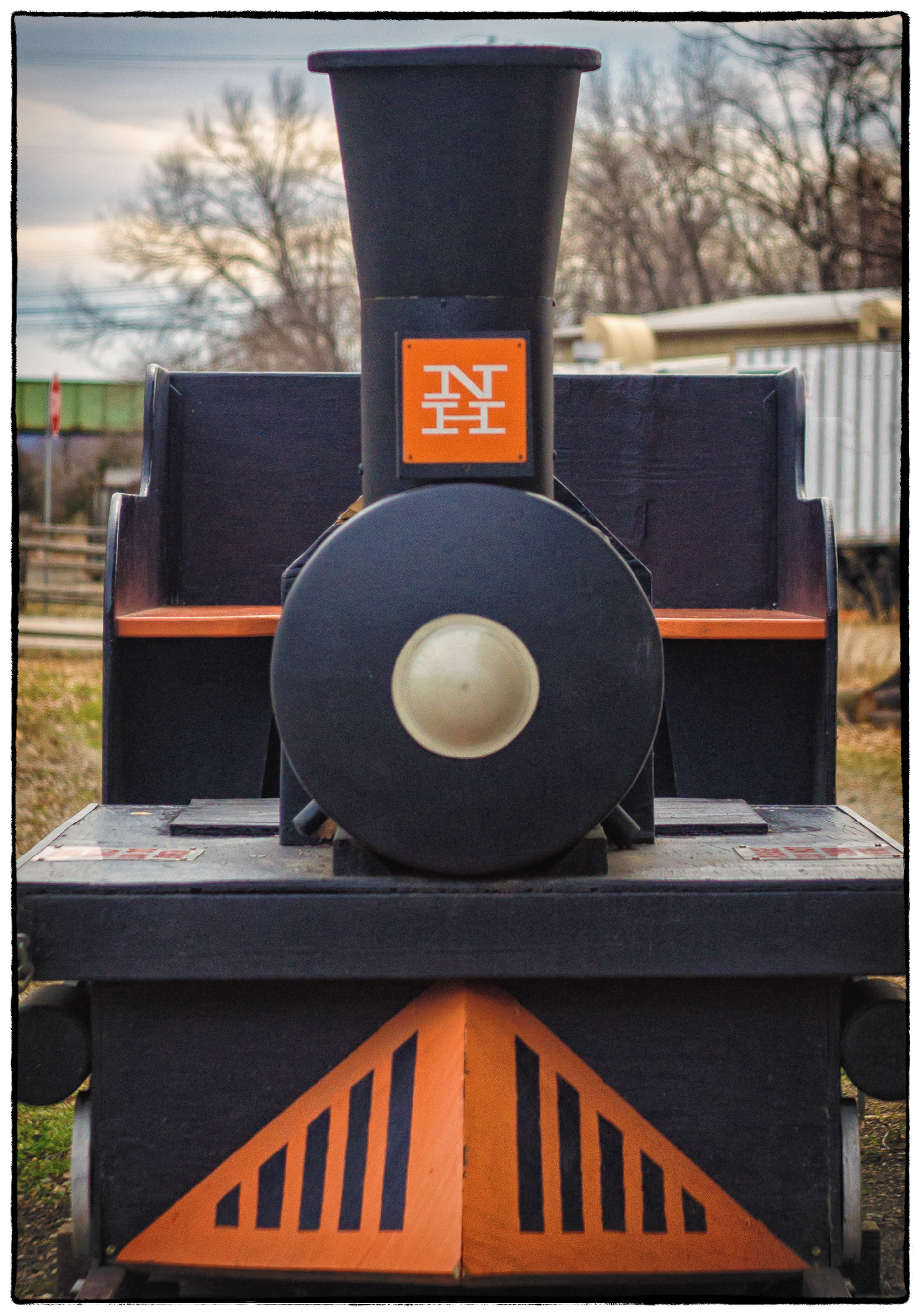
Model Locomotive.

For other posts related this lens see:

Hopewell Junction Depot
Vernal Pond
Lichen
Blue and Red Hydrant
First Day of Spring

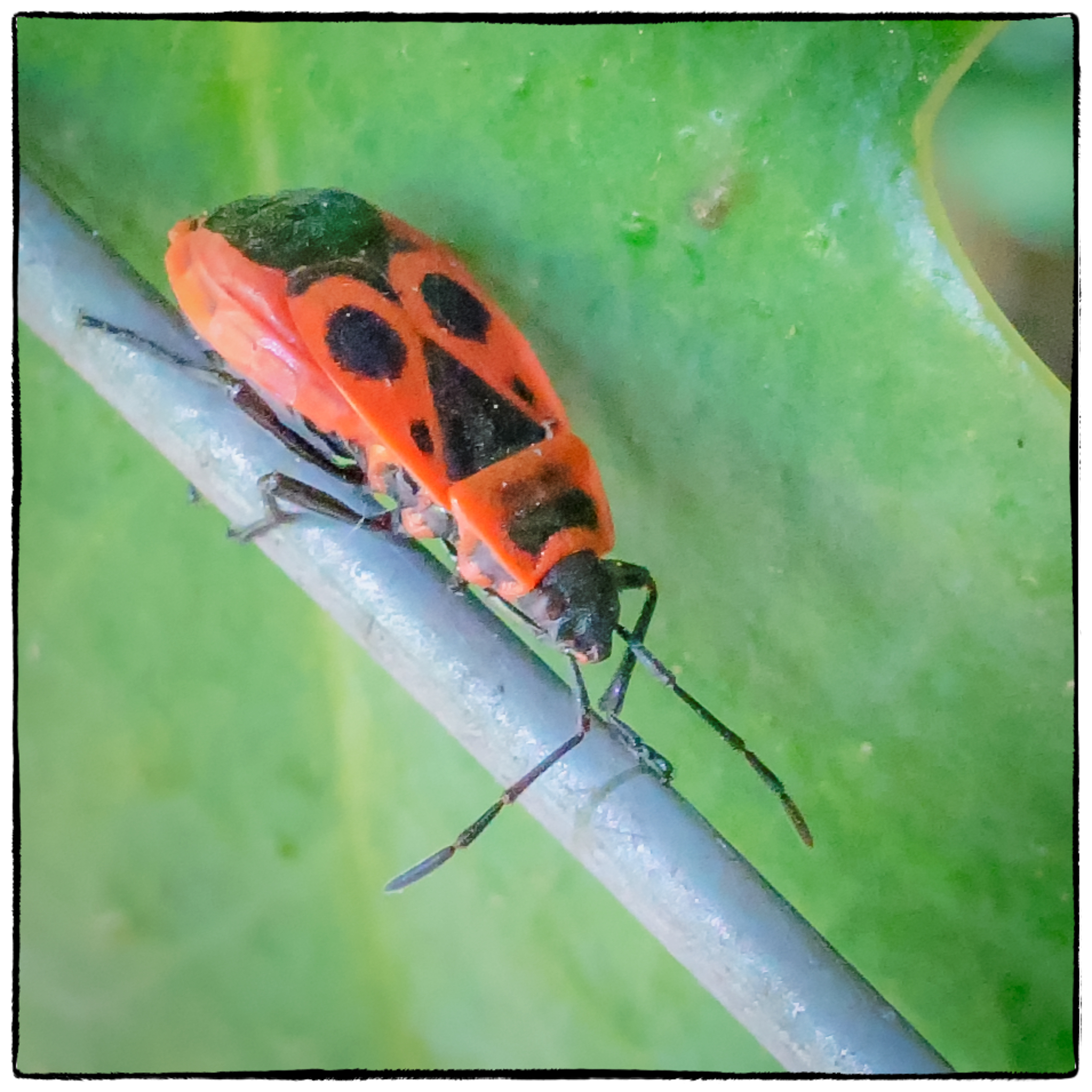
Red and Black Bug

My eye was initially attracted to the bright colors of this red and black bug against a green leaf. As I looked more closely, however, I noticed what looks very much like a skull pattern on its back. Looking at the black parts and moving from left to right we have: Hair, two round eyes, a triangular nose and down-turned mouth. Spooky!

After doing a bit of research I’ve concluded that it’s a Lygaeus equestris – commonly known as a black-and-red-bug, which sounds about right.

According to inaturalist.com:

These bugs can reach about 11 to 12 millimetres (0.43 to 0.47 in) in length. They have a characteristic red-black pattern, fully developed wings and long, powerful legs. The hemelytra have two transverse bands that reach the margin and a round white spot on the membrane. Scutellum is without bristles but with tiny hairs. The black band close to the eye is wider than the same.

This species is very difficult to differentiate from Lygaeus simulans, that has a scutellum with long bristles, antennae with angulous tubercles and a larger red area on the head.

The red-black pattern has a deterrent effect and serves to protect the insect (Mullerian mimicry or Batesian mimicry). By storing the toxic ingredients of their food plants, they are unpalatable to potential predators.

These bugs feed on plant juices, particularly milkweed (Vincetoxicum hirundinaria), Spring pheasant’s eye (Adonis vernalis) and sometimes also on dandelions.

Heavy crop of a picture taken with a Sony RX-100 M3