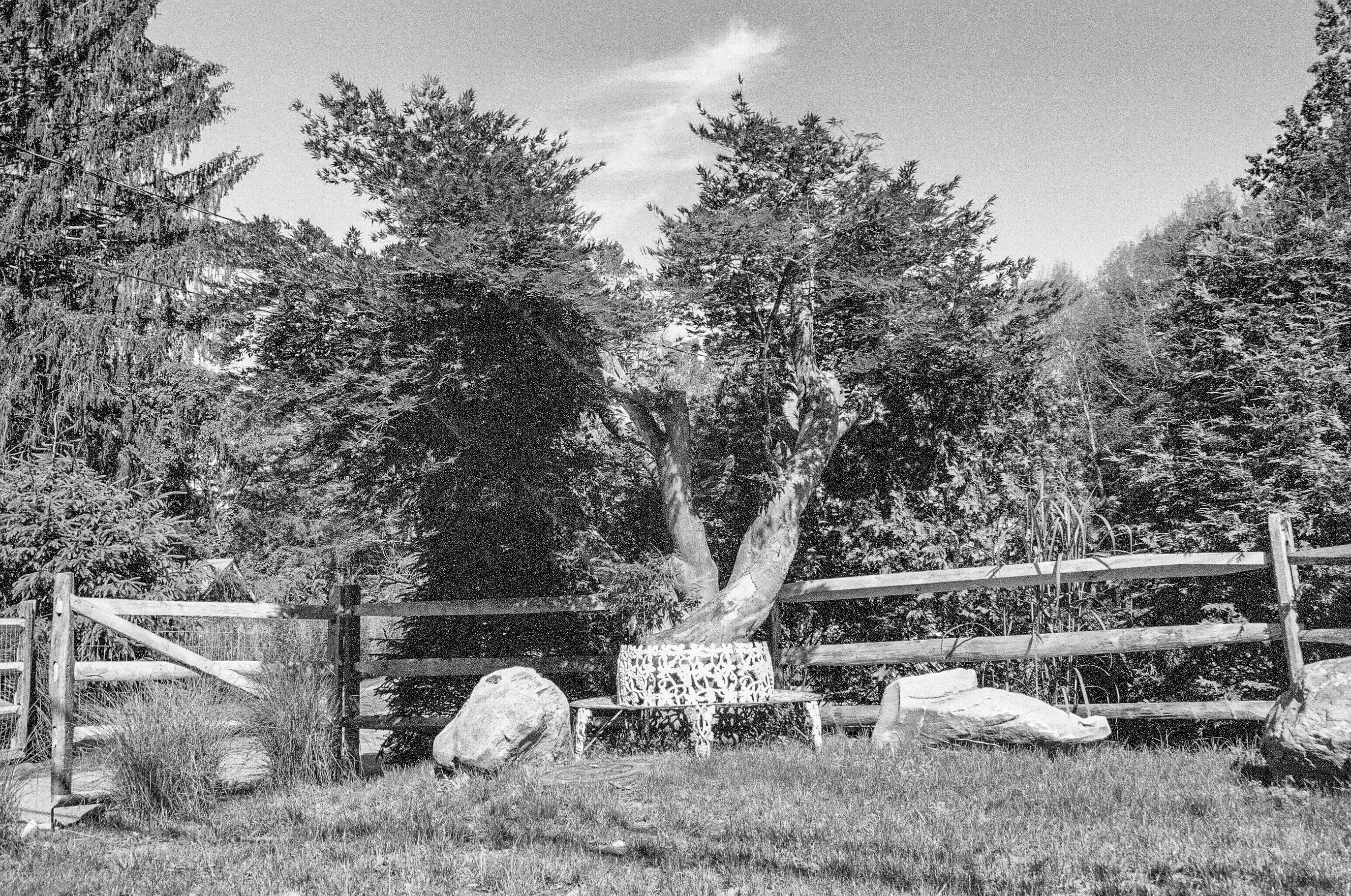
Above, Seat and Tree, Peekskill Hollow Road.
To try out the Maxxum 5 I first took a few pictures here and there, and then decided to go to Oscawana Park. It’s situated on the site of the former McAndrews estate. Mcandrewsestate.org describes the site as follows:
In the woods of Westchester County, in a place that was once Oscawana-on-Hudson NY, are the remains of a grand 75 acre estate. It was once owned by Guillaume Reusens, a Belgian diplomat, tobacco baron, and breeder of fine race horses. His estate featured a huge Victorian mansion, a full sized race track complete with an elaborate two story judges’ stand, fountains, the Colonial Fox / Cruger mansion, several other homes, and all the livestock, machinery, and staff needed to run a large working farm.
The McAndrews Estate, formerly known as Long View or Reusens Farm, was maintained and sustained by Guillaume Reusens and his descendants for 70 years. But in the 1960’s – the property was abandoned. It fell into disrepair and was looted, vandalized, and set ablaze. It became a haven for curious teenagers. Its once open fields and avenues overgrown; its buildings crumbling and rotting.
By 1970 Westchester County had condemned and purchased the property from the McAndrews family, and then demolished almost all of the buildings and structures that remained. For the past 40+ years the property has remained open to the pubic as unincorporated park land. Where once there were open fields and stunning river views, there is now a towering forest. Generations of local residents have walked its trails, explored the ruins, and wondered about the history of this unique and mysterious place.
I’d read that there were some interesting ruins and for once I managed to get up early enough to “catch the light”. This was where I made my first mistake: it was much darker under the leafy canopy than I had anticipated. The light was also very contrasty. I’d loaded the camera with an old (I don’t know what effect the age of the film might have had on the results) roll of BW400CN C-41 black and white film. My second mistake (related to the first mistake) was not to have taken something to stabilize the camera (e.g. a tripod or monopod). My third mistake was stubbornly taking along the lens that came with the camera: a Minolta 28-100 AF lens f3.5 (22)-f5.6 D lens. I imagine that this was the camera’s original kit lens and that it’s quality is probably mediocre at best. So the end result was that I was trying to take mostly landscape type pictures, most of which required a lot of depth of field while hand holding the camera at shutter speeds that were way too slow.
So how did the camera do. First it was a pleasure to use. It’s very small and easy to hold. Focus was fast and responsive. Even though I was was rather unfamiliar with the camera I was easily able to locate and operate the various dials and buttons. It was all quite intuitive.
The end results were (for the reasons above) rather patchy. You can see from the first few pictures (taken when the light was decent) that the camera is capable of delivering good results. When we hit the difficult lighting conditions as Oscawana Park, I (note I’m saying I and not the camera) struggled to get a decent depth of field at a tolerable shutter speed. Many of the pictures were either not sharp throughout (too little depth of field) or fuzzy because of camera shake resulting from the slow shutter speeds. The camera also seemed to have trouble with the very contrasty light.
I really liked the camera and don’t feel that I really gave it a chance to show what it could do. I think I’ll try it again in better lighting. I may even take it back to Oscawana Park, but in different light (a cloudy day might soften the contrasty light) and with a tripod.
I should note that I also had a Sony NEX 5N with a 50mm f1.9 Schneider Kreuzenach Retina-Xenon with me. This camera/lens combination didn’t do any better with the difficult lighting. In fact my impression is that the Maxxum 5 produced more impressive results. And, of course the 75mm equivalent Xenon wasn’t much help with the landscape type pictures I wanted to take (i.e. I couldn’t usually get far enough back to get the view I wanted without ending up in the bushes – or more likely the poison ivy. That was my fourth mistake – wearing shorts rather than trousers and exposing myself to noxious plants and ticks carrying Lyme disease).
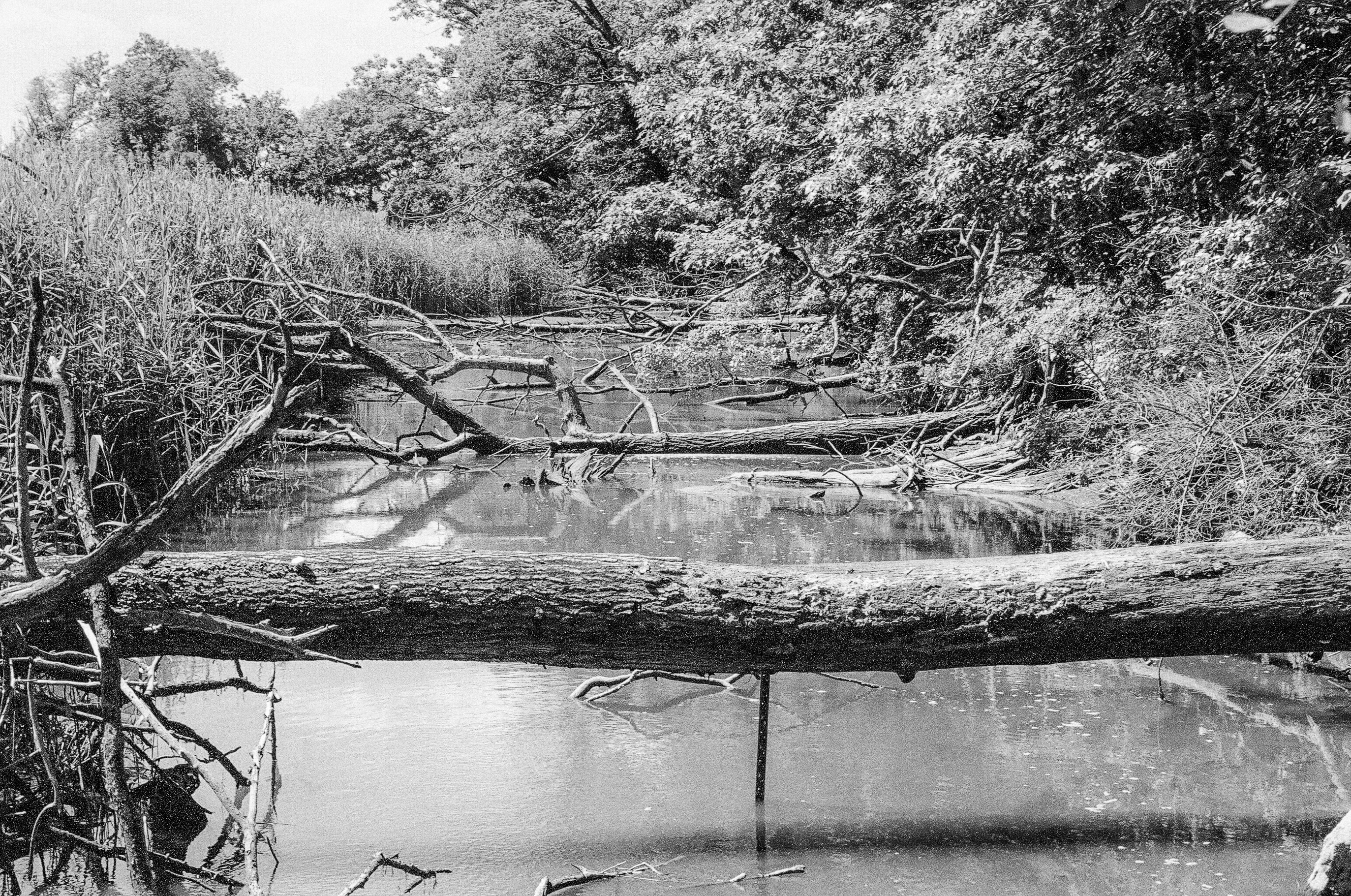
Log bound stream.
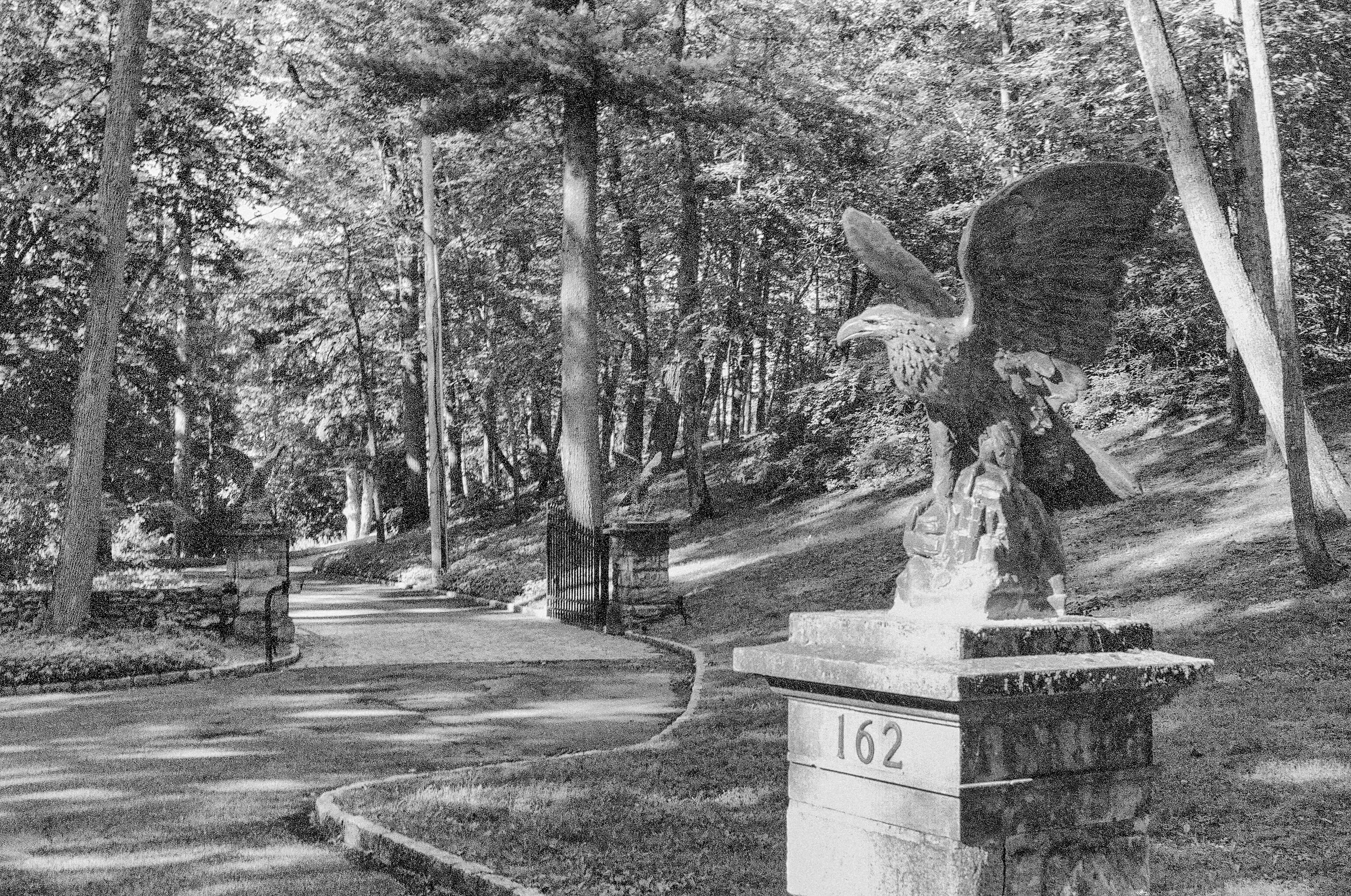
Eagles on Old Briarcliff Road, Briarcliff Manor.
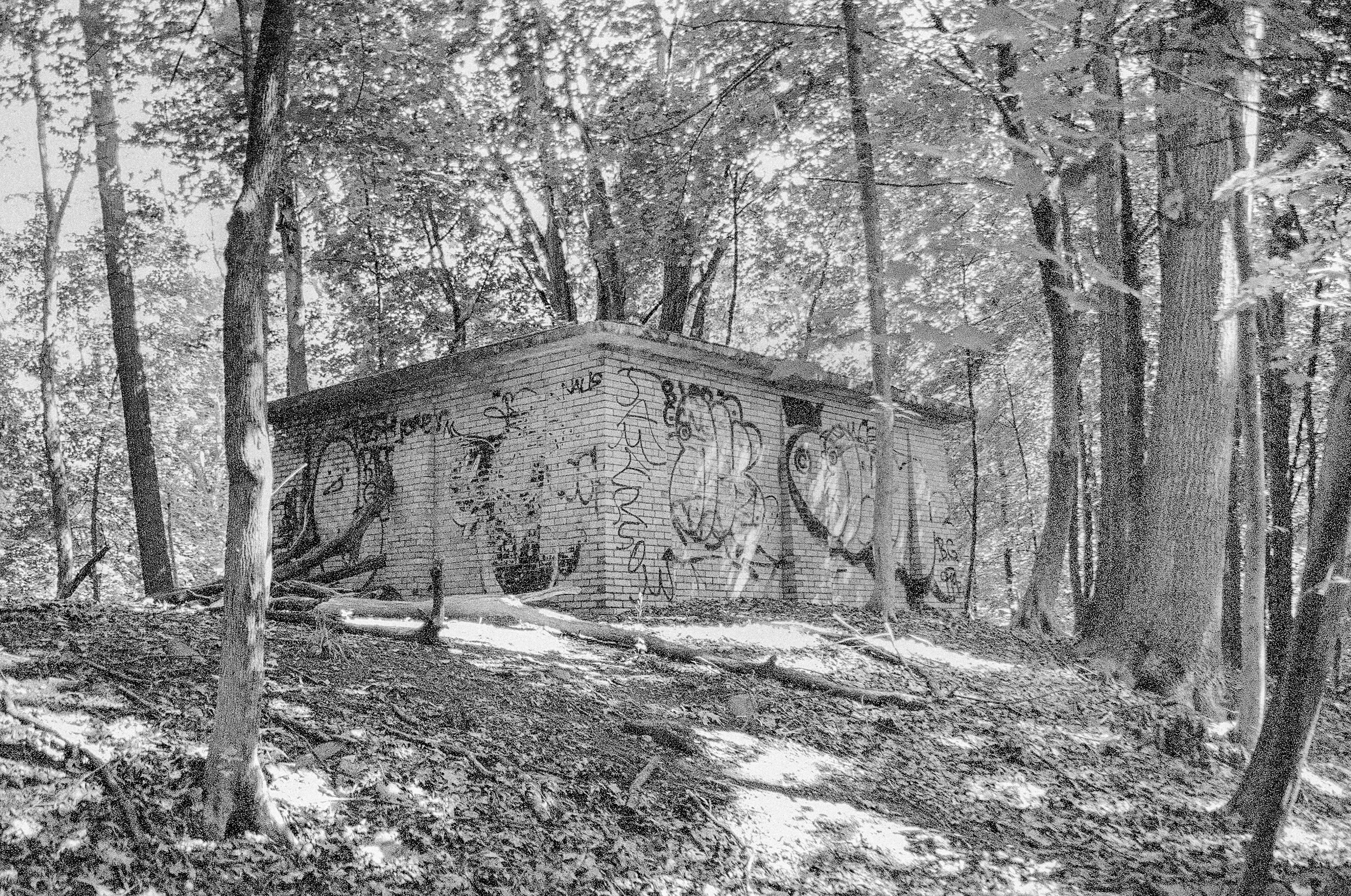
Oscawana Park, Race Track Reservoir.
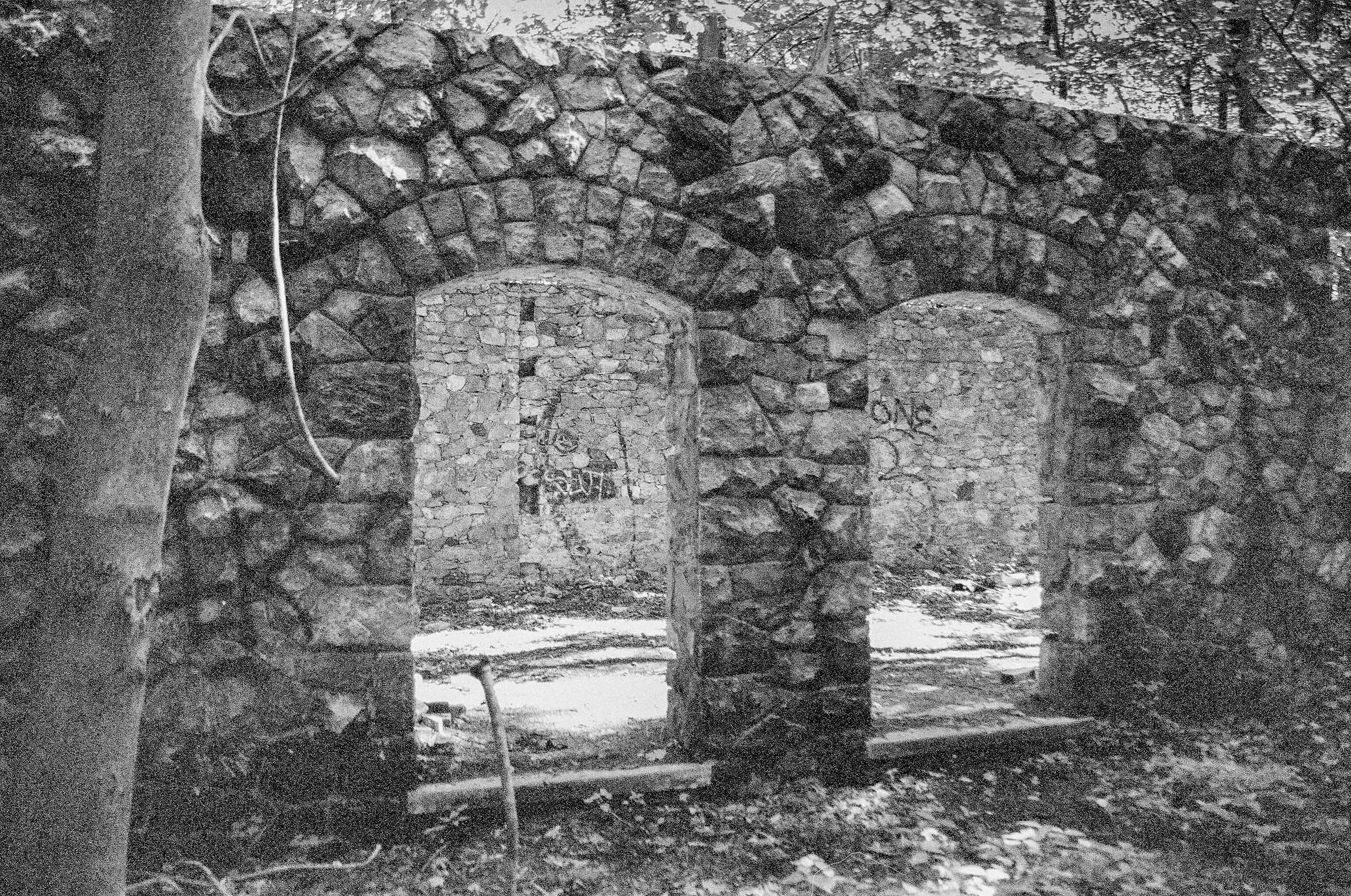
Oscawana Park, Old Cow Barn.
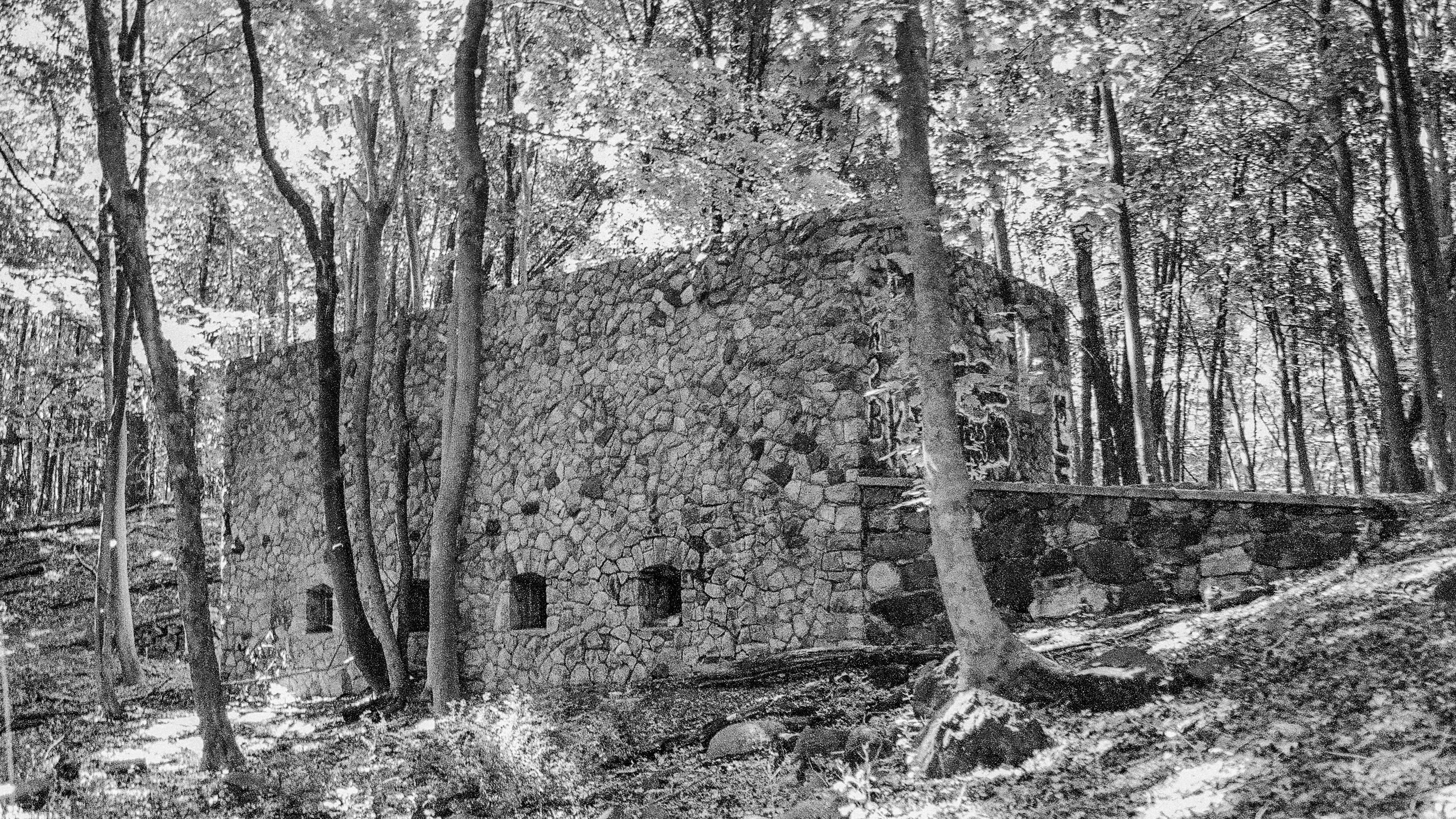
Oscawana Park, Old Cow Barn – Rear View.
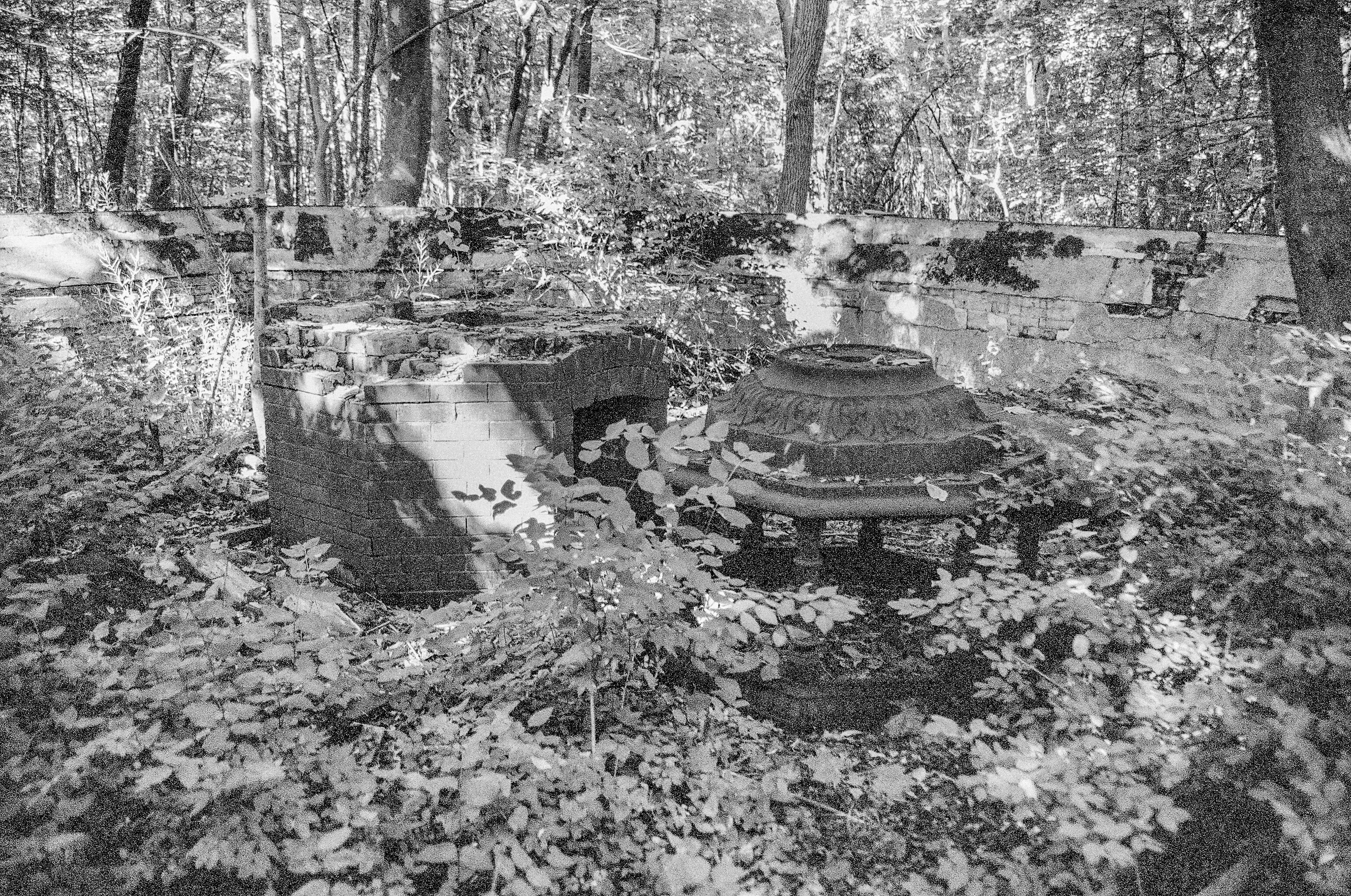
Oscawana Park, Old Fountain.
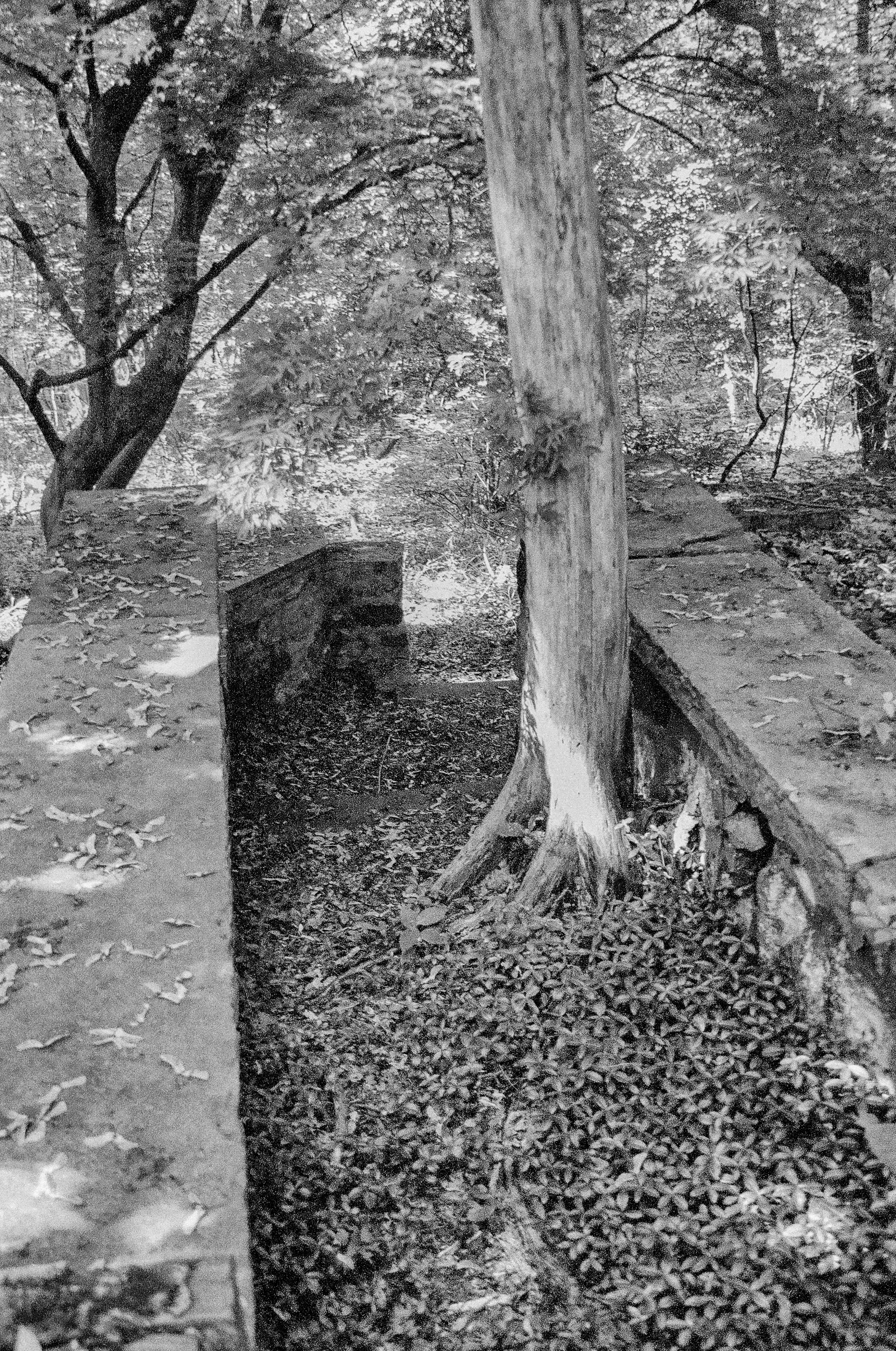
Oscawana Park, Ruined Staircase.
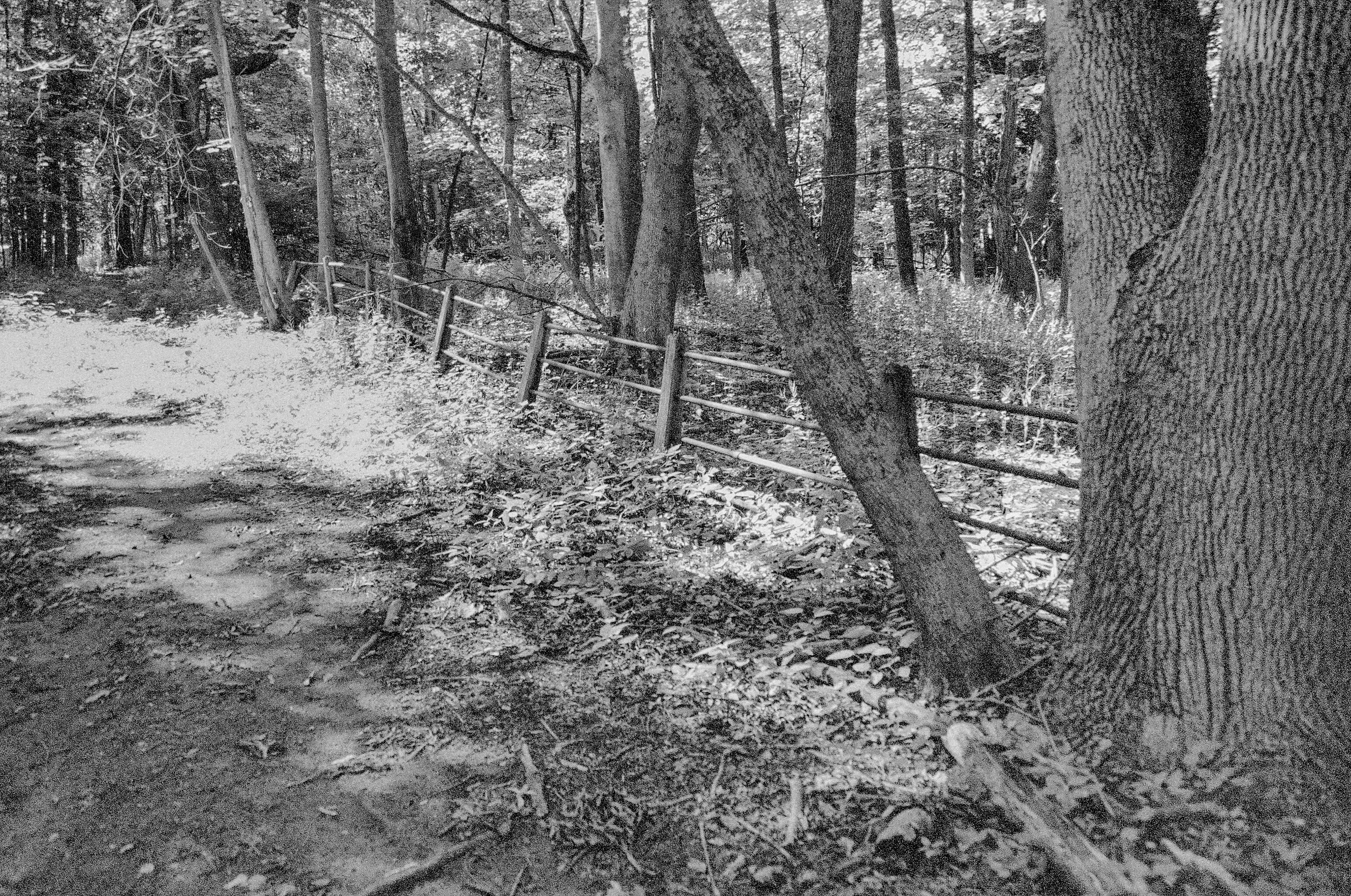
Oscawana Park, Remains of the Racetrack.