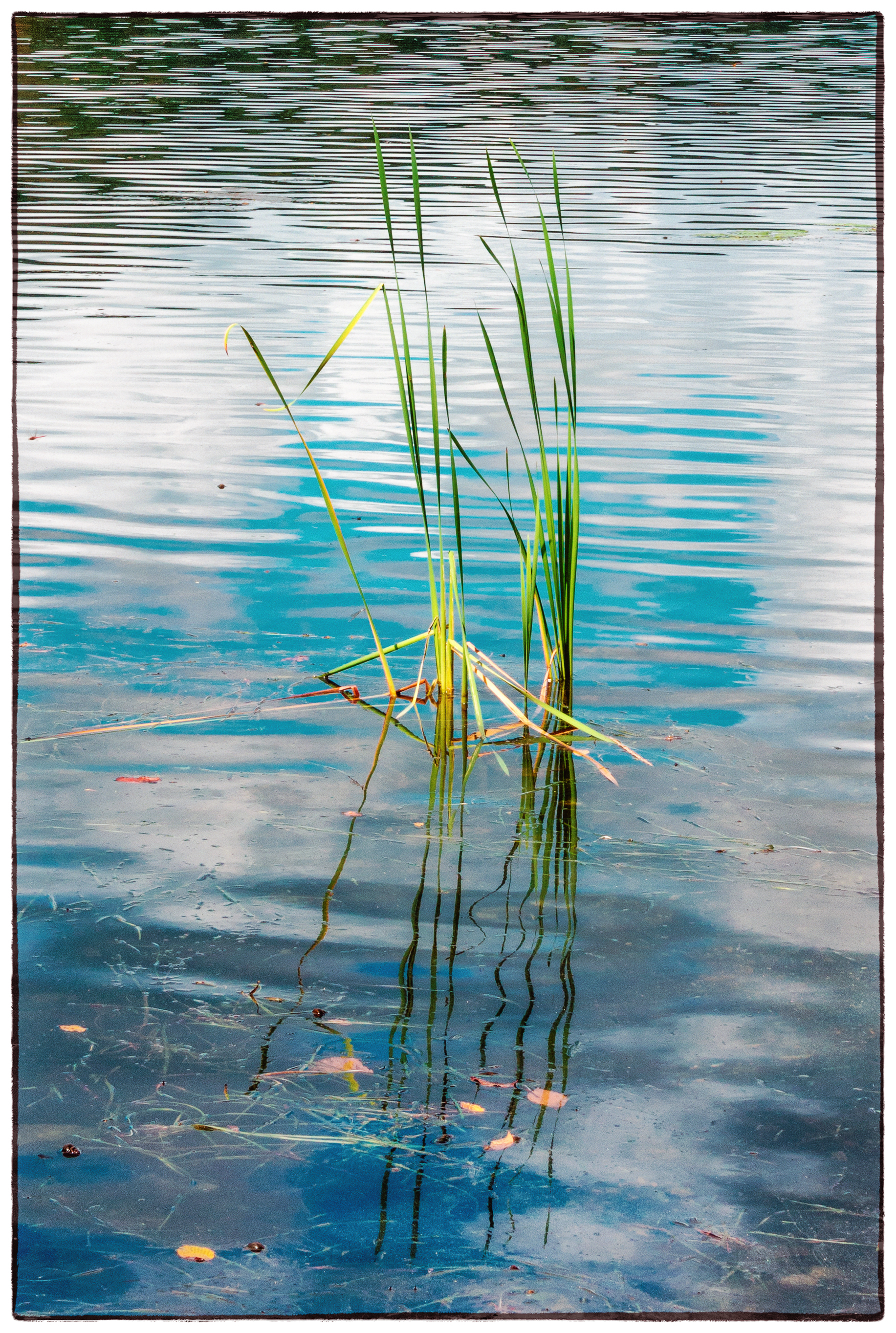
I liked the ‘minimalist’ composition and the attractive colors.
Taken with a Sony RX-100 M3.
Photographs and thoughts on photography and camera collecting

I liked the ‘minimalist’ composition and the attractive colors.
Taken with a Sony RX-100 M3.
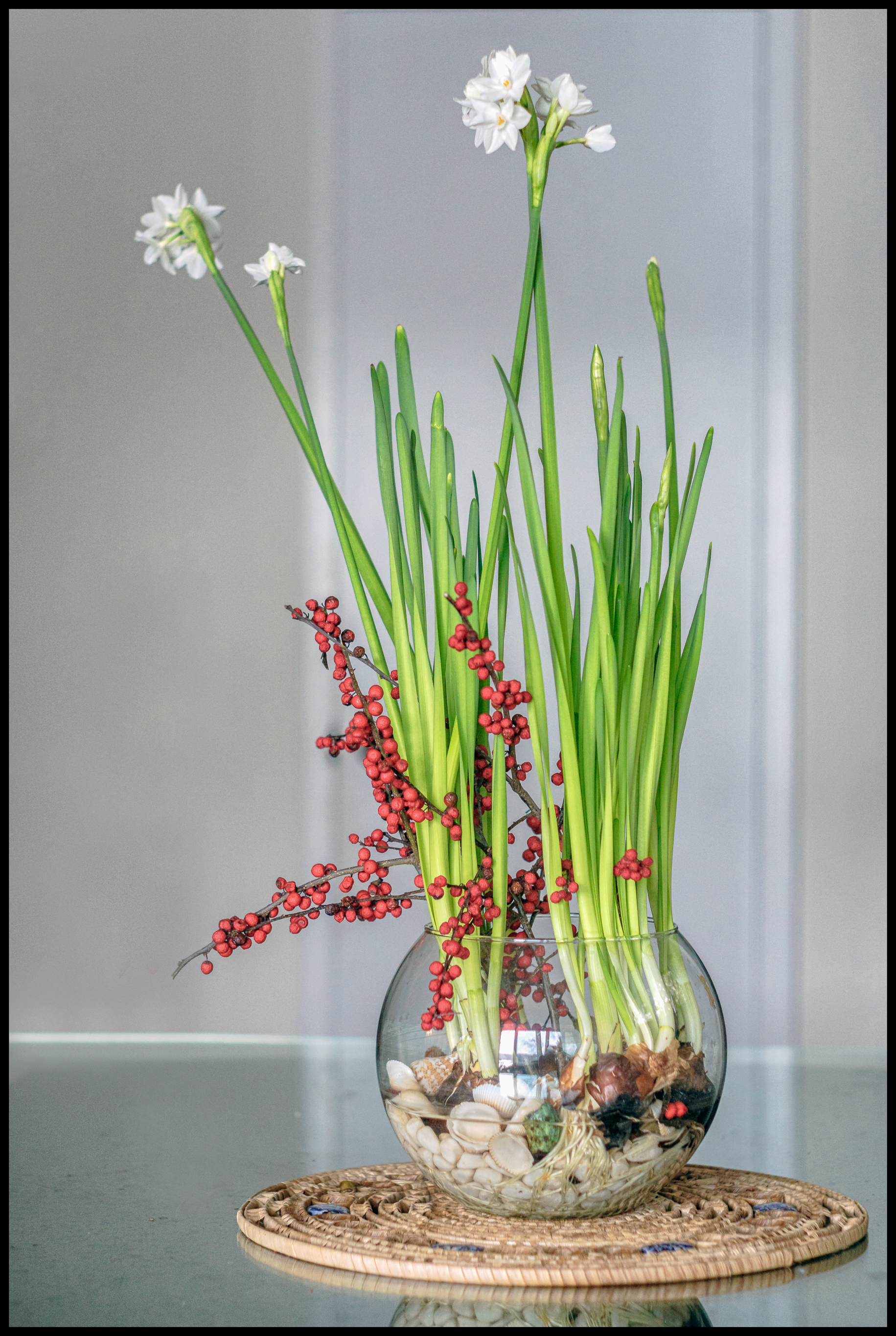
Also known as the ‘Paperwhite’ narcissus. According to Wikipedia:
Narcissus papyraceus (from papyrus and aceus; meaning paper-like), one of a few species known as paperwhite, is a perennial bulbous plant native to the western Mediterranean region, from Greece to Portugal plus Morocco and Algeria. The species is considered naturalized in the Azores, Corsica, Texas, California and Louisiana. The white flowers are borne in bunches and are strongly fragrant. It is frequently grown as a house plant, often forced to flower at Christmas.
Paperwhites are part of the Narcissus genus which includes plants known as daffodils.
This particular Christmas centerpiece was made by a friend and sold at the annual wreath and calendar sale organized by our local garden club.
According to Wikipedia:
In Greek mythology, Narcissus (/nɑːrˈsɪsəs/; Greek: Νάρκισσος, Nárkissos) was a hunter from Thespiae in Boeotia who was known for his beauty. He was the son of the river god Cephissus and nymph Liriope. He was proud, in that he disdained those who loved him. Nemesis noticed this behavior and attracted Narcissus to a pool, where he saw his own reflection in the water and fell in love with it, not realizing it was merely an image. Unable to leave the beauty of his reflection, Narcissus lost his will to live. He stared at his reflection until he died. Narcissus is the origin of the term narcissism, a fixation with oneself and one’s physical appearance or public perception.
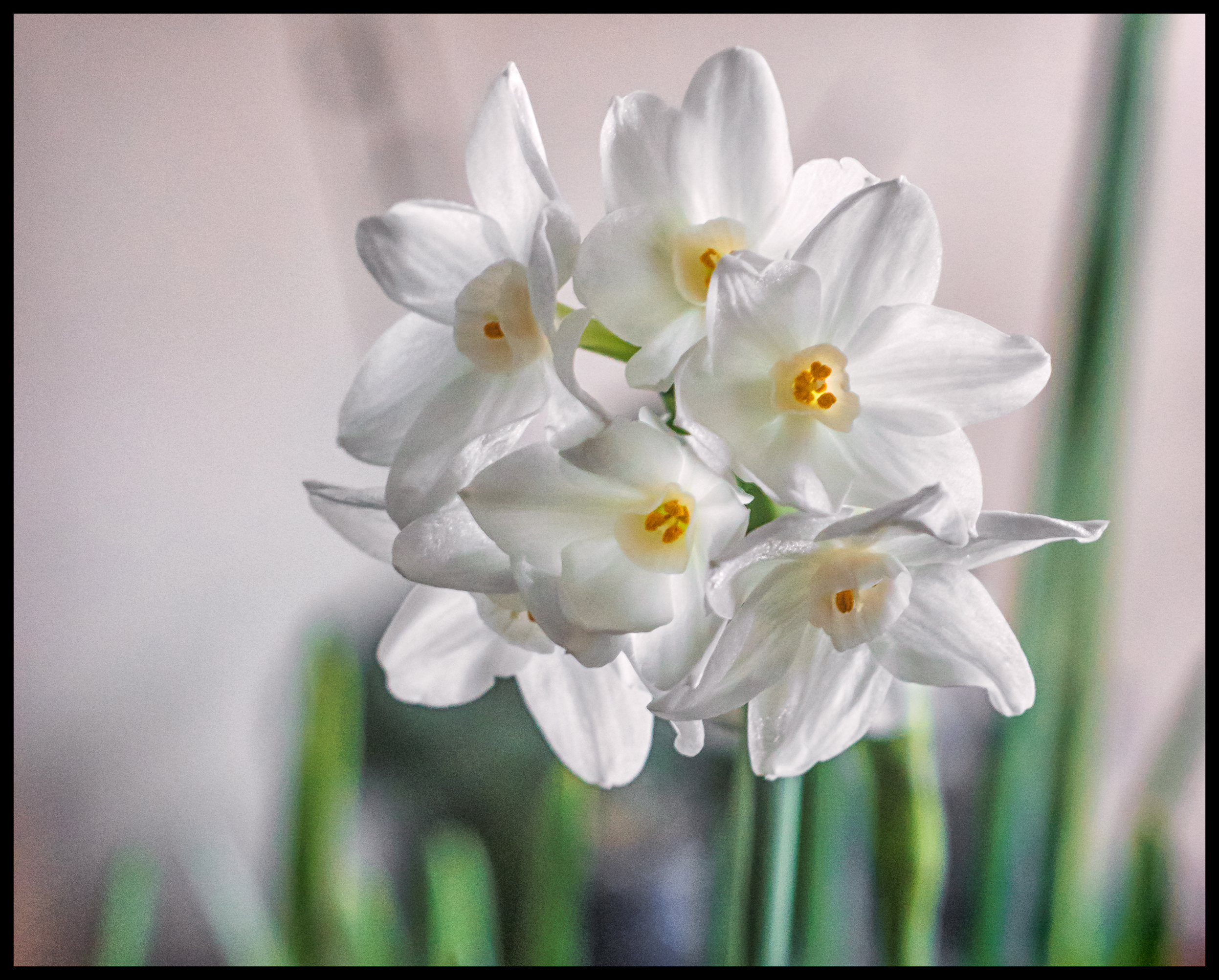
Taken with a Sony Alpha A77 II and Minolta Maxxum AF 50mm f1.7.
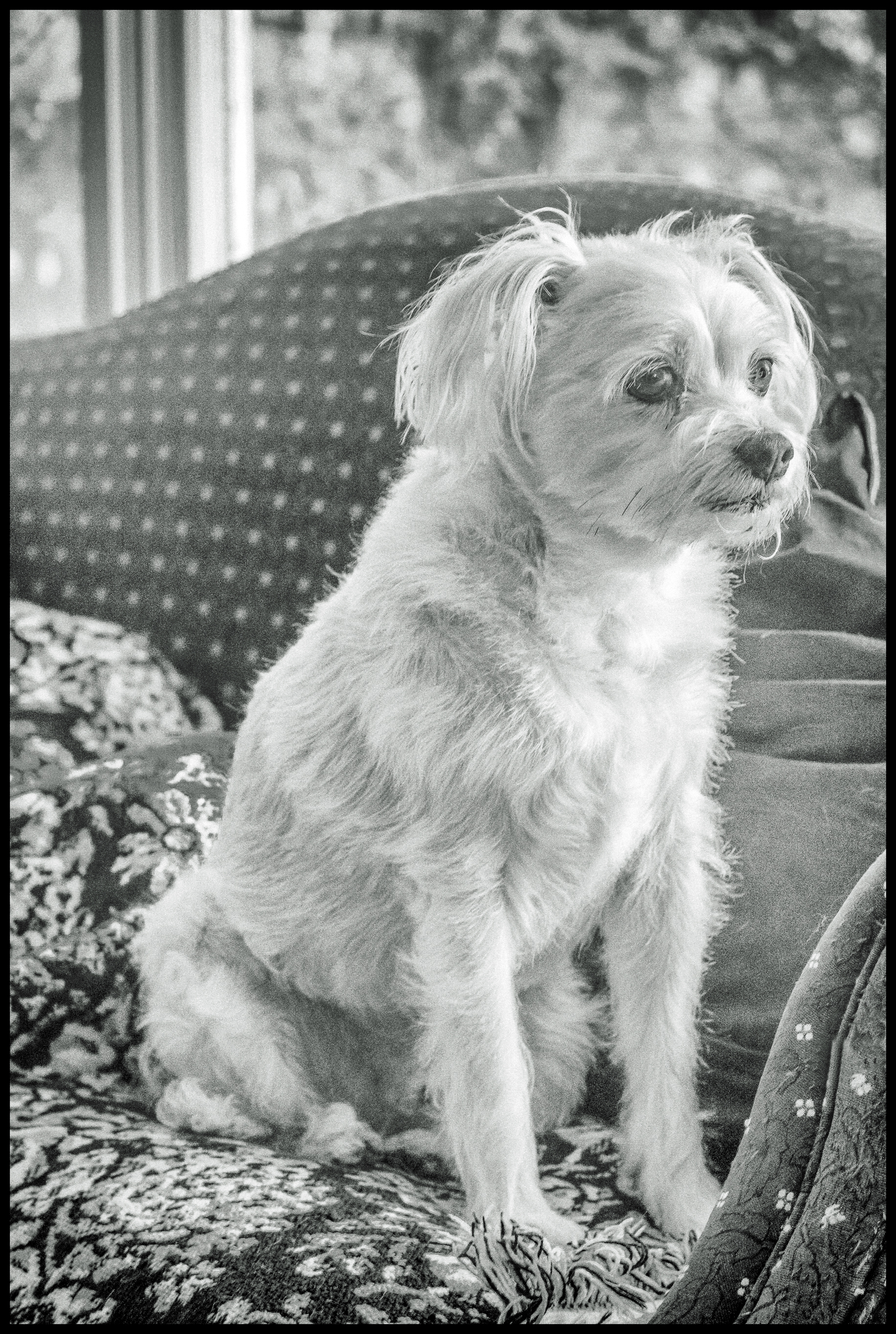
Although Winter has not yet officially started, it certainly feels as if it has. It’s been cold and a bit snowy of late (not too bad yet though) and I haven’t been venturing very far afield. Consequently, I’ve been reduced once again to taking pictures in, and around the house. This one is of our dog, Harley.
He looks a bit suspicious to me. I think he knew what was coming. Within minutes of this picture my wife had reindeer antlers on his head for a Christmas picture (which I won’t be posting here). He’s a good dog though and put up with it with his usual grace and dignity.
Taken with a Sony Alpha A77 II and Minolta Maxxum AF 50mm f1.7 lens.
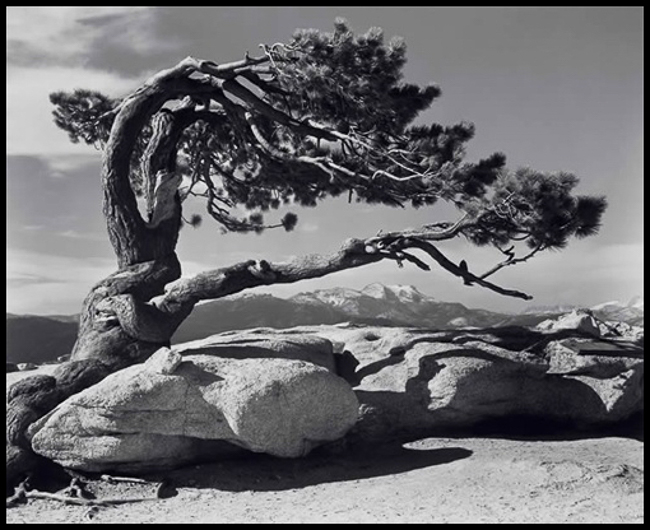
Jeffrey Pine, Sentinel Dome. Source: Ansel Adams Galleries
I got the idea for this post from a video that I came across on the internet. I was well worth seeing so I thought I would post a link to it. However, as I started to do so it occurred to me that I might have posted about this video before. I checked and indeed I had (see Ansel Adams: A Documentary Film 2002).
So instead this post revisits my love/hate relationship with Ansel Adams. Actually ‘hate’ is the wrong word. Even when I’m ‘down’ on Adams I don’t ‘hate’ his work. It’s just that once upon a time I thought he was THE great photographer. This was in the late 1970s-early 1980s. My wife had recently bought me my first serious camera (a Minolta Hi-Matic 7sII) and I was new to photography. At that time Adams was (and continues to be) immensely poplar. A print of “Moonrise, Hernandez, New Mexico” sold at auction in 1981, for a then record price for a photograph – $71,500 (doesn’t seem much now when Rhein II by Andreas Gursky is fetching in excess of $4 million!). This was the kind of photographer I wanted to be. I wanted to make (Adams himself preferred the verb to ‘make’ a photograph rather than to ‘take’ one) landscape photographs like these.
Over the years I learned more about photography and famous photographers and discovered that even though to this day I continue to photograph landscapes, my passion for landscape photography pales in comparison to Adam’s. Other genres started to interest me. Other photographers began to interest me and I started to turn away from Ansel Adams. I began to think of him as more of a superb technician than a great creative photographer.
Then in the late 1990s-late 2000s I almost entirely lost interest in photography, ‘making’ pictures only when required to document travel and family events. Starting around 2010 my interest was re-kindled and since then I’ve been taking pictures, collecting cameras and reading about famous photographers like there’s no tomorrow.
So where do I stand on Adams now. My collection of photography books includes Examples: The Making of 40 Photographs (a great book). I’d also read Looking at Ansel Adams: The Photographs and the Man and I have a copy of Ansel Adams: 400 Photographs. In preparation for this post I read his autobiography: Ansel Adams: An Autobiography.
I also did quick and totally unscientific test. I looked at all of the photographs in “Ansel Adams: 400 Photographs” one evening. The next day I repeated this exercise noting down those that if felt, from a quick perusal, had moved me. Only 24 had.
Of course there’s much more to Ansel Adams than just his photographs. He was an accomplished pianist (headed for a career as a concert pianist before photography became his passion). Judging from his autobiography he was no slouch at writing either. He was a tireless advocate for the environment, a founder member of the West Coast circle of photographers Group f64 that also included (among others) Edward Weston and Imogen Cunningham, a founder of ‘Aperture‘ magazine. He was also an educator and a prolific writer. Adams, along with Alfred Stieglitz, probably had the most impact on the evolution of photography in the United States.
His best photographs are superb! However, I feel that the totality of his work falls behind other great American photographers like Paul Strand and Edward Weston. Neither of these photographers had the same overall impact on photography as a whole though.
Regrettably the tree in the picture above has now gone. According to the Ansel Adams Gallery:
Though Adams’ photograph made the Jeffrey Pine famous, it was long an icon for photographers visiting Yosemite ; Carleton Watkins photographed it in 1867. the easy hike to reach Sentinel Dome from the Glacier Point road, the tree became a popular destination; over the years, thousands of visitors carved their initials into it. Despite the efforts of park rangers who carried buckets of water to it, the tree perished in the drought of 1976-77 and fell in August 2003.
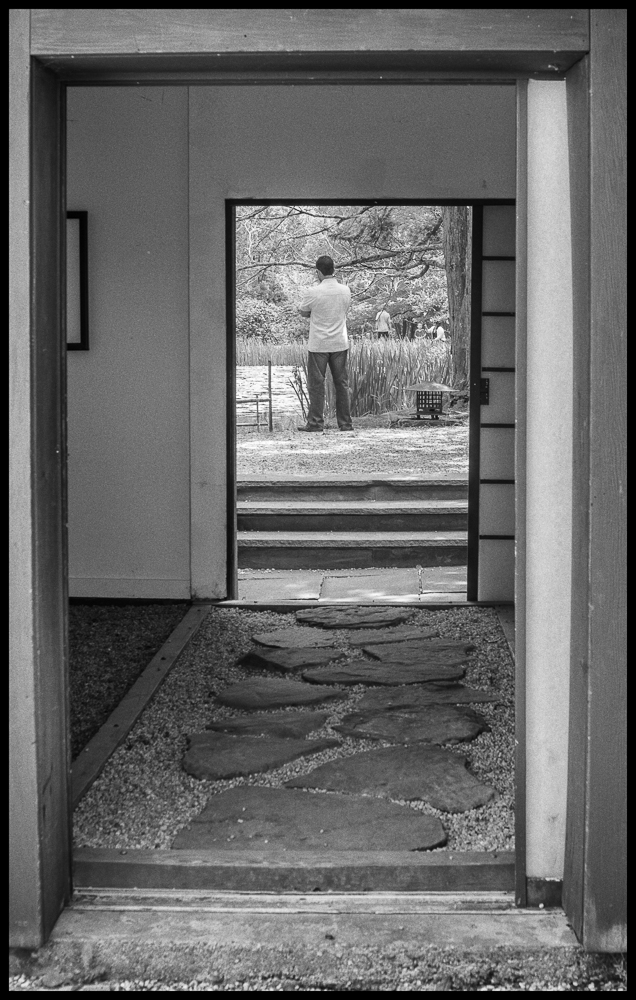
I like the way the two doorways, the standing man, and the figures in background make a diagonal that leads your eye through the picture. Also the way the two doorways frame the standing man. I also like the textures of the door step, stepping stones and gravel.
Taken at the Hammond Museum and Japanese Stroll Garden in May, 2012 with a Sony Nex N and Sigma 30mm f.2.8 DN (I think).