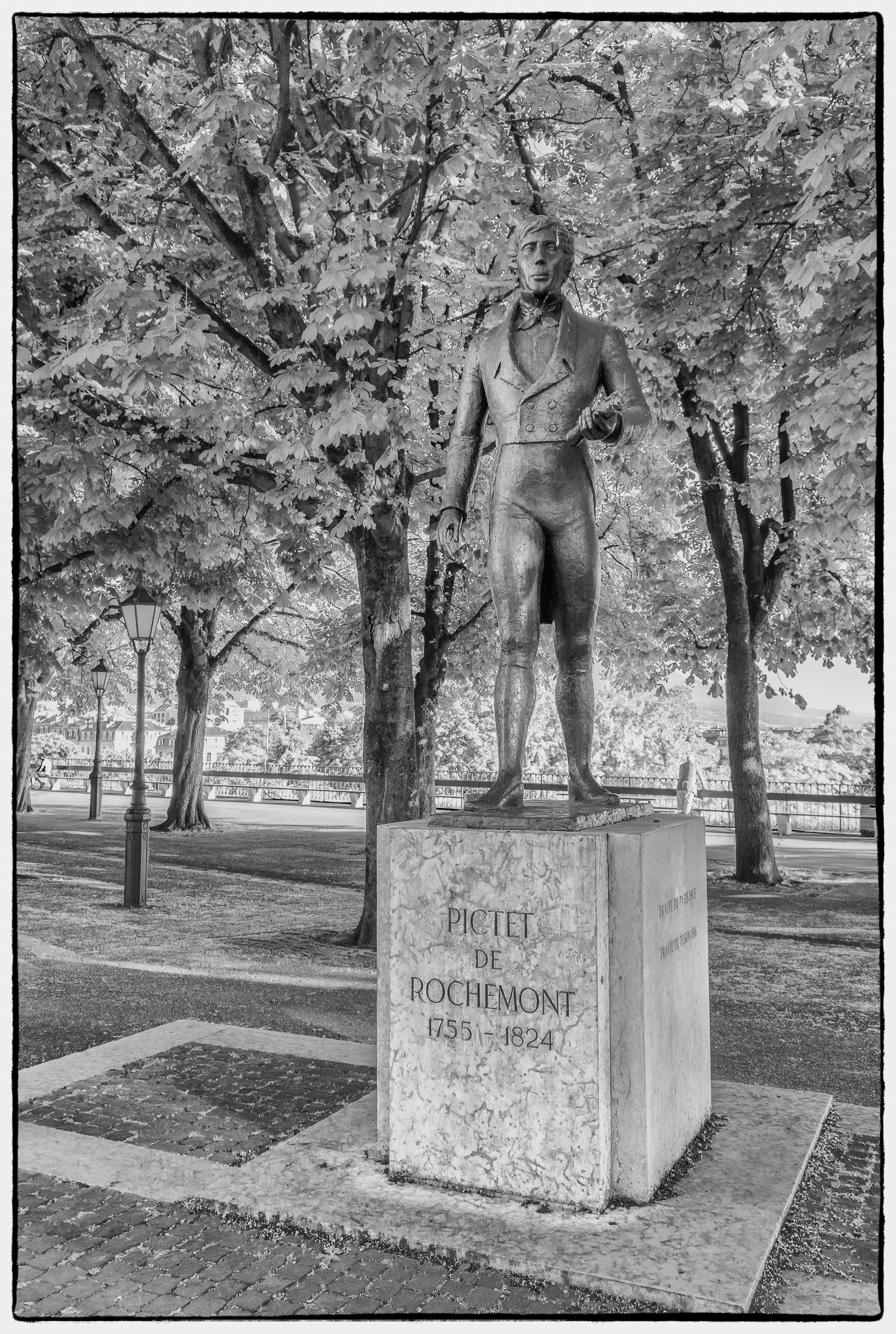
Geneva – Old Town, Statue in La Treille

Even though it was some distance I’d decided to walk home and leaving the Old Town I passed through “La Treille” (the Arbor), a pleasant, leafy tree covered “promenade” (i.e. walking area) overlooking the Parc des Bastions. Walking through I came across this statue of Charles Pictet de Rochemont.

Britannia.com describes him as follows:

Charles Pictet de Rochemont, (born Sept. 21, 1755, Geneva, Switz.—died Dec. 28, 1824, Lancy), statesman and diplomat who prepared the declaration of Switzerland’s permanent neutrality ratified by the great powers in 1815.

After serving in the French army, Pictet settled in Geneva in 1789 and reorganized the militia. He was arrested during the Reign of Terror (1794) in Geneva following the French Revolution and subsequently was imprisoned. With the reestablishment of the Republic of Geneva after the retreat of Napoleon’s armies (1813), he resumed political activity, taking part in the provisional government created in December 1813.

In January 1814 Pictet argued on behalf of Geneva’s independence and union with the Swiss Confederation before the allied sovereigns at Basel and later obtained recognition of his canton’s independence in the Treaty of Paris (May 1814). In October 1814 he was delegated to the Congress of Vienna, where he helped secure Geneva’s attachment to the reconstructed Swiss Confederation; and at the Paris peace conference (August–November 1815) that followed Napoleon’s defeat at Waterloo, he served as representative of the whole confederation. He personally redrafted the act that was accepted as the basis of permanent Swiss neutrality by the powers on March 20, 1815. His last diplomatic mission—to Turin (January–March 1816)—secured a rectification of the Swiss-Sardinian frontier (Treaty of Turin, March 1816).

Wikipedia provides additional information.

In the background you can just make out a bench. But this is not just any bench. It’s arguably the longest wooden bench in the world. According to Atlas Obscura:

Behind Geneva’s city hall is La Treille Park, a lovely and sunny square, whose perimeter is lined by (debatably) the longest wooden bench in the world. Built in 1767, the bench is 413 feet long, and made of 180 wooden boards.

The title for the world’s longest bench is evidently a prize highly sought. Many countries claim to have the longest bench of some sort – Spain says its Gaudi-inspired art-piece bench in Barcelona is the longest, Russia claimed to have had the longest painted bench, before it was broken into 100 different sections and spread throughout Moscow, and France claims to have the longest concrete bench which overlooks the sea in the city of Marseille.

No matter where the title truly lies, there is no question that this Swiss bench is the perfect spot to relax and take in the view of the Salève and Jura mountains under the shade of chestnut trees. It’s said that the chestnut’s first bloom announces the arrival of spring in Geneva.

Taken with a Sony RX-100 M3

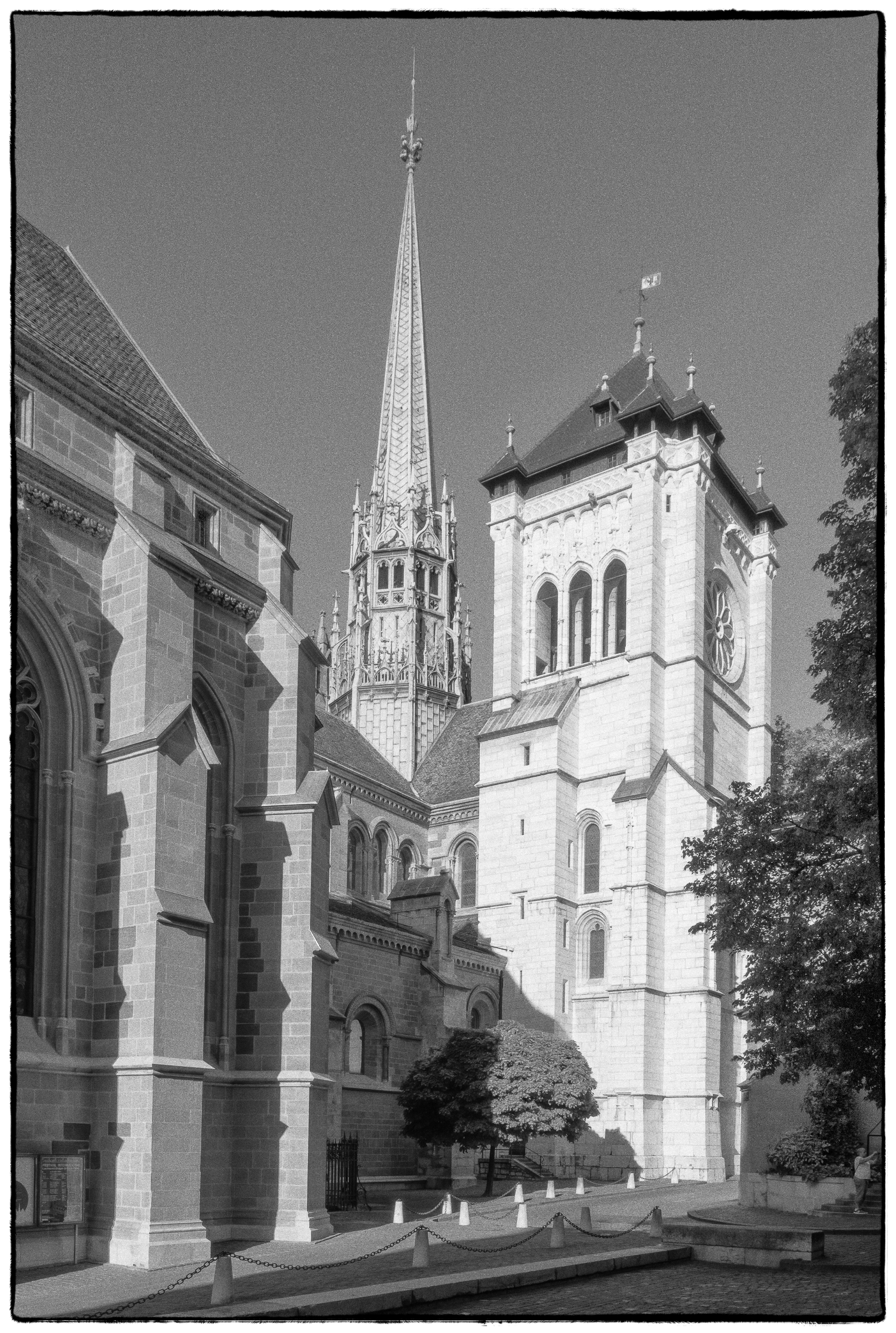
Geneva – Old Town, St. Pierre Cathedral

According to Wikipedia:

The St. Pierre Cathedral is a cathedral in Geneva, Switzerland, today belonging to the Reformed Protestant Church of Geneva. It is known as the adopted home church of John Calvin, one of the leaders of the Protestant Reformation. Inside the church is a wooden chair used by Calvin.

It was begun under Arducius de Faucigny, the prince-bishop of the Diocese of Geneva, around 1160.[citation needed] It was originally built in Romanesque style and was completed a hundred years later in Gothic style. A Neo-Classical main facade was added in the 18th century.

The area beneath the Cathedral has recently been excavated extensively, revealing a history of the site dating back to the time of the Roman Empire. From the 8th to 10th centuries it was one of three cathedrals to coexist on the site. The present building has grown from a cathedral devoted to ecclesiastical use and an early Christian funerary cult; the other two structures, subsumed in the 12th century by the growth of the surviving building, were apparently for different uses, one for public sacraments and the other for church teachings.

The German painter Konrad Witz painted an altarpiece, the so-called St. Peter Altarpiece, for the Cathedral in 1444, now in the Musée d’Art et d’Histoire, Geneva, which contains his composition, the Miraculous Draught of Fishes.

Currently, every summer a German Protestant minister is present, making it possible to hold bilingual services and meetings of both German and French Protestant worshippers.

If you can get past the atrocious grammar, an article on the Geneva.info site provides additional information.

I’ve never really liked this cathedral. I don’t care for the mix of styles and I find the interior rather bare and uninteresting (the Calvin influence I imagine. I believe that most of what was decorative was destroyed during the Reformation). I prefer my cathedrals to be more ornate.

Taken with a Sony RX100 M3

Geneva – Old Town, Jeremie Statue

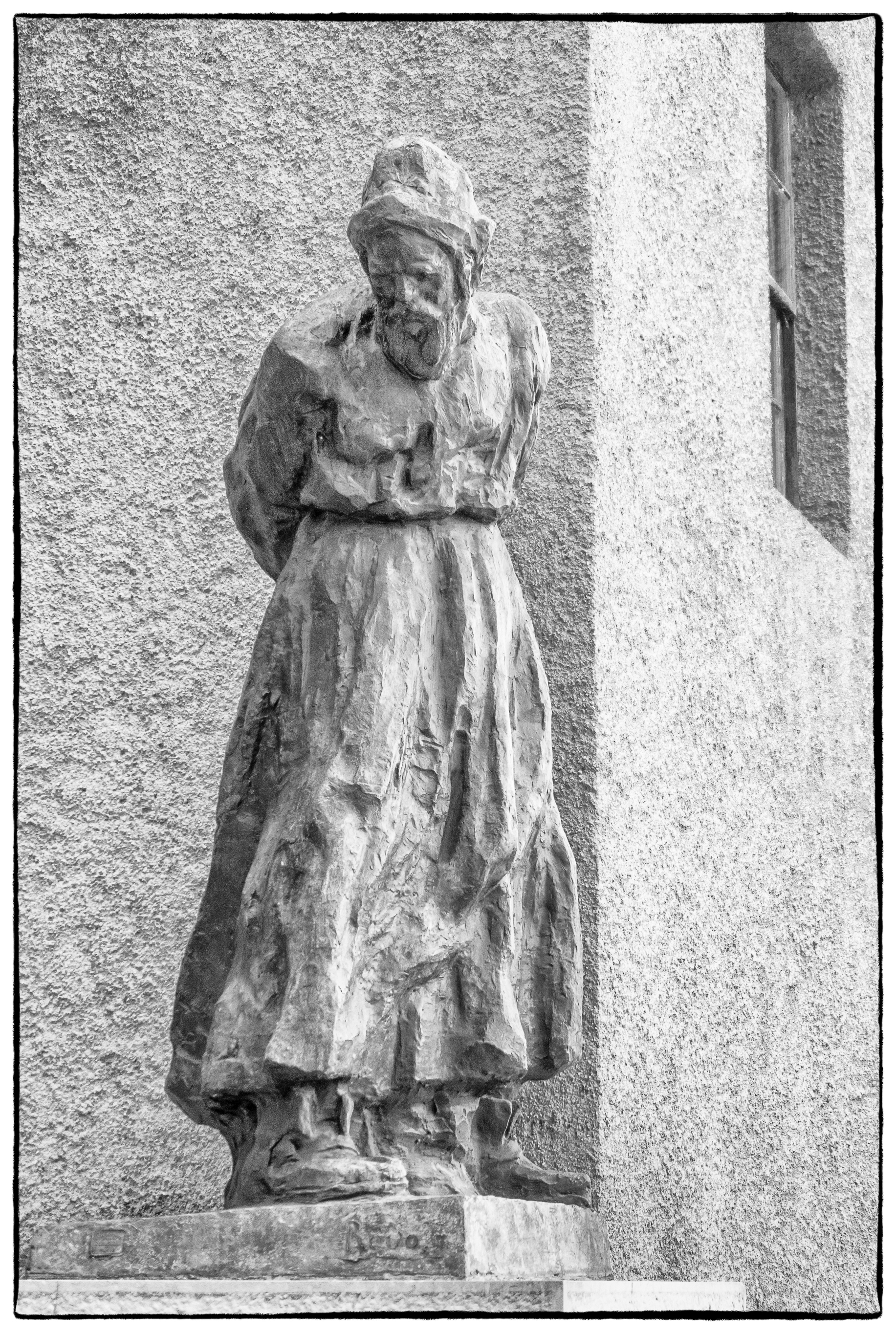
This statue of the Old Testament prophet, Jeremiah stands directly across from the St. Pierre Cathedral. It’s the creation of Auguste de Niederhäusern, better known as Rodo. According to Wikipedia:

Auguste de Niederhäusern, better known as Rodo (2 April 1863 – 21 May 1913) was a sculptor and medalist active in Switzerland and France.

Rodo was born in Vevey, and in 1866 moved with his family to Geneva. He attended the École des Arts industriels (1881) and the École des Beaux-Arts (1882) under the direction of Barthélemy Menn, then studied at the Académie Julian with Henri Chapu (1886) and again at the École des Beaux-Arts under Alexandre Falguière. For six years he worked in Auguste Rodin’s studio.

In 1895 he received a commission for the Paul Verlaine monument in the Jardin du Luxembourg, which was finally inaugurated in 1911. He died in 1913 during a visit to Munich.

On the occasion of an exhibition of his works in 2001 Swissinfo.ch published a short article entitled: Geneva celebrates the “Hodler of sculpture”, which provides additional information.

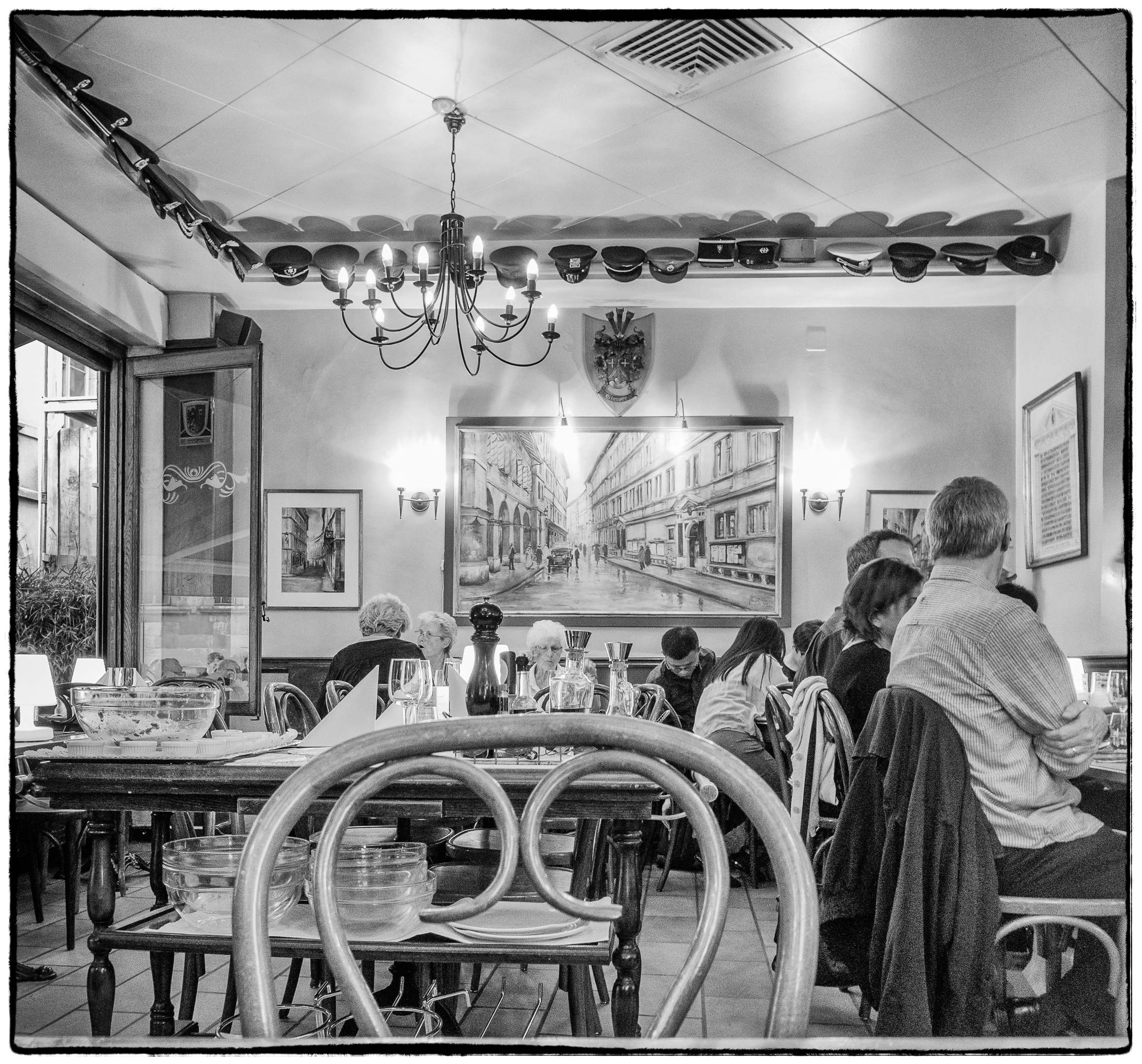
Geneva – Old Town, Fondue at the Restaurant de l’Hotel de Ville

I love cheese fondue! My preference is for the fondue at the Café du Soleil in Petit-Saconnex, near where I used to work (it was also a favorite after work watering hole for myself and my colleagues). Unfortunately, time was getting short during our visit and our daughter and her family were incredibly busy so it was starting to look as if I wouldn’t be getting to the Café du Soleil.

I didn’t want to miss my fondue though. I’d met with some friends for a drink at Brasserie du Molard and afterwards decided to walk back through the old town and back home. I was hungry and knew of a couple of places that had decent fondue. One was “Les Armures” near the old armory and the other was the “Restaurant de l’Hotel de Ville

I decided on the “Restaurant de l’Hotel de Ville”, whose website provides the following historical information (translated from the original French):

The current building was constructed in the XVIth century for Count Calandrini hence the name of this house adjoining the “Maison Tavel”. Around the year 1600, the current restaurant was the city’s guard room and soldiers in armor gathered here to eat. According to state archives, a public house was opened around 1700, and then a bar, to which was added a few frugal meals. It was only in the years 1800-30 that a brewery (making beer) came into being.
 
Nowadays, it is a Café-Restaurant-Brasserie, operated for 24 years by Mr. Jean-Yves Glauser and his family, who through their immense popularity have given a true soul to this Geneva institution, which is affectionately called the Brasserie of Father Glôzu.
 
Inevitably the restaurant is part of the Geneva’s political and international life as the Republic’s parliament is directly opposite. Encountering heads of state or other famous people in the restaurant is not uncommon. Film and theater stars mix with other customers.

I was surprised to read that the restaurant is owned by the town of Geneva.

Taken with a Sony RX100 M3.