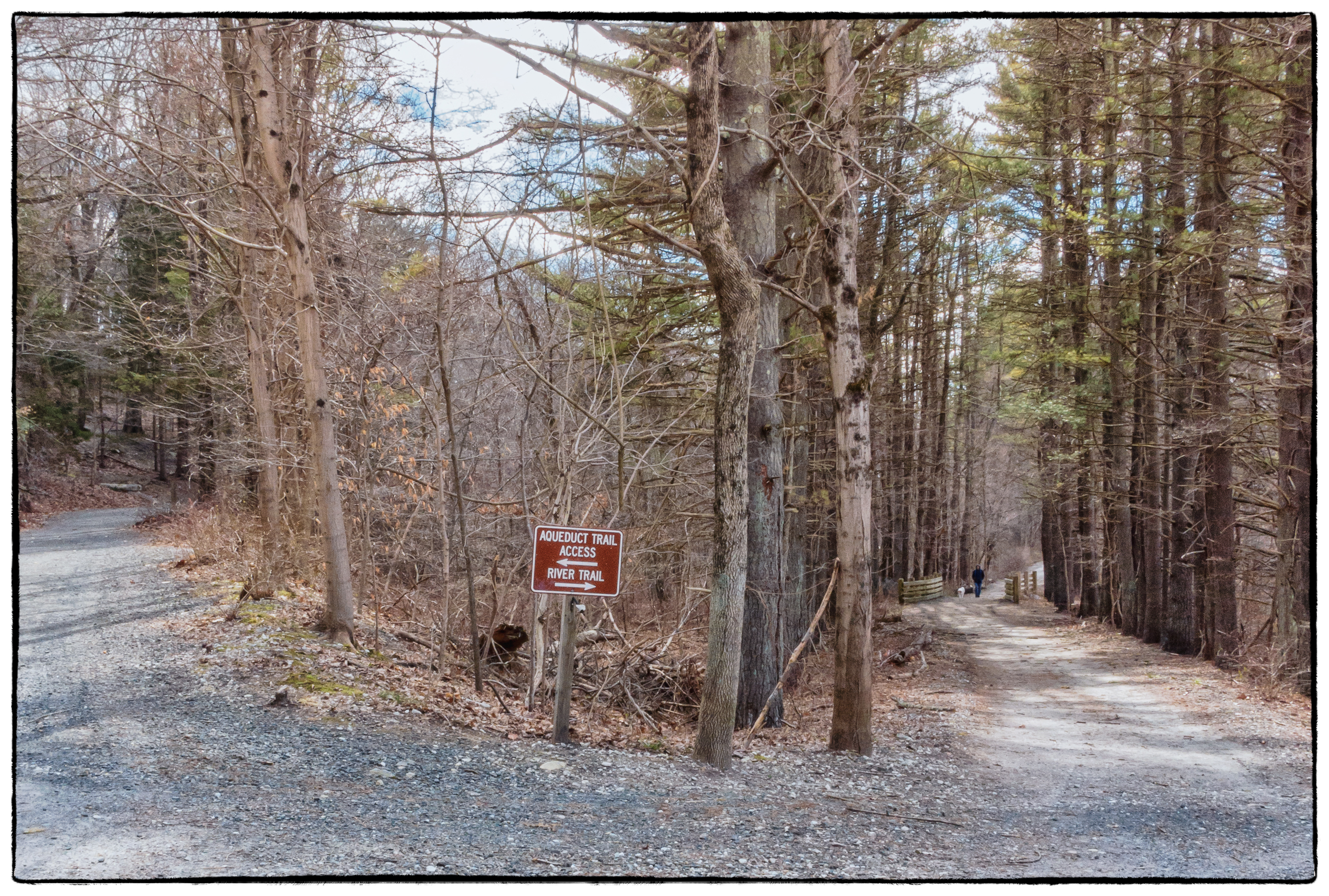
Croton Gorge – A fork in the road

Or perhaps more accurately a fork in the trail. This was taken just after a series of cold, gloomy, wet days. I was getting tired of walking the dog around the lake, but couldn’t think of anywhere else that wouldn’t be extremely muddy.

My wife remarked: “Why don’t you go to Croton”. She probably meant “Croton Landing”, which is a flat, paved stretch along the banks of the Hudson. She prefers this type of environment for walking rather than the undulating, rocky, root bound trails that I favor. It was a windy day and I thought that a walk along the Hudson might be just a bit too windy. However, “Croton” was not such a bad idea so I went to “Croton Gorge” instead. Starting off down the trails I soon came to this fork.

Robert Frost’s famous poem came to mind:

Two roads diverged in a yellow wood,
And sorry I could not travel both
And be one traveler, long I stood
And looked down one as far as I could
To where it bent in the undergrowth;

Then took the other, as just as fair,
And having perhaps the better claim,
Because it was grassy and wanted wear;
Though as for that the passing there
Had worn them really about the same,

And both that morning equally lay
In leaves no step had trodden black.
Oh, I kept the first for another day!
Yet knowing how way leads on to way,
I doubted if I should ever come back.

I shall be telling this with a sigh
Somewhere ages and ages hence:
Two roads diverged in a wood, and I—
I took the one less traveled by,
And that has made all the difference.

Robert Frost: The Road Not Taken

Another sage (Yogi Berra) is reputed to have said: “When you come to a fork in the road, take it”.

Yet another wag noted “Two roads diverged in a wood, and I—I took the one less traveled by, and now I don’t know where the f@*k I am.”

I took the trail to the right and it took me to an old building overlooking the Croton River, and (since I didn’t continue along the “River Trail”) eventually back to the “Aqueduct Trail” and the Croton Dam.
Martin Parr on Photographic Clichés

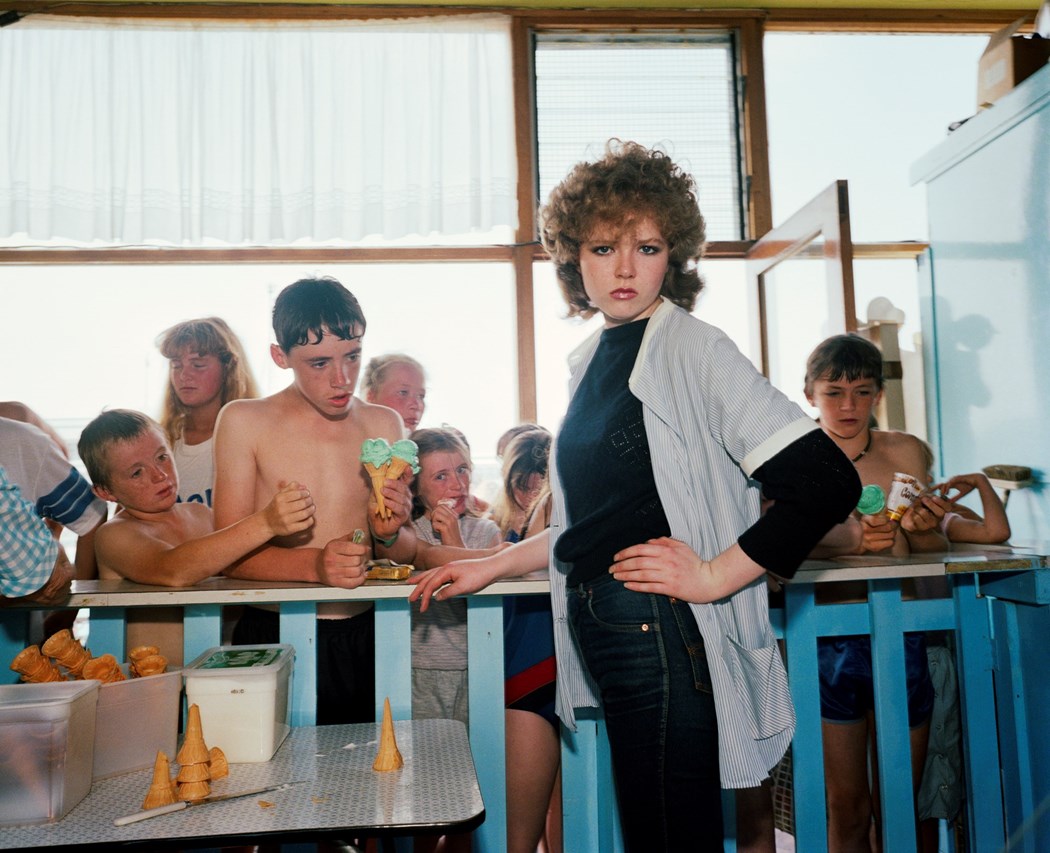
New Brighton. From ‘The Last Resort’. 1983-85 copyright Martin Parr / Magnum PhotosPhotography by Martin Parr

Thank you Martin Parr! This is a point that I too have made.

The Fine Art and Documentary photographers take great pride in thinking themselves superior to the other main genres of photography, such as the family snap shooter or the amateur photographer, as personified by camera club imagery. However, after 30/40 years of viewing our work, I have come to the conclusion that we too are fairly predictable in what we photograph.

Nowadays so many photographs are taken, in every conceivable genre that every subject has been ‘done to death’. Every subject is a cliché. My photographs are not terribly memorable because their subjects are clichés. They’re uninteresting because they’re not all that good. He goes on, with typical Parr humour, to provide a great list:

The above ground landscape with people; the bent lamppost; the personal diary; the nostalgic gaze; the quirky and visually strong setting; the street; the black and white grainy photo; the new rich; I am a poet; the modern typology; the staged photo; the formal portrait; the long landscape.

Source (for both quotes): Photographic Clichés | Martin Parr

The only thing I’d disagree with is his last paragraph:

But if we think of what is going on in our world, there seems to be many subjects which are avoided, because we all need that echo of familiarity to help us have the confidence to make a body of work. We want to emulate the impact that these images had on us, and this can be as restricting as it can be liberating.

Here he seems to imply that there are indeed subjects, which are not clichés and that you just have to look for them. I’m not convinced! To go back to his list – I don’t think there’s anything wrong with shooting black and white grainy photos, but if you do you have to be better than (or at least just as good as) Daido Moriyama. Again it’s not the subject, it’s the talent behind the picture. As in most fields very few photographers can be considered as truly great. The rest of us are just followers. Just don’t tell me that your pictures of people on the street are infinitely superior to that guys pictures of sunsets, just because his subjects are “clichés” and yours aren’t.

The Guardian has just done a piece on Parr to mark his winning:

…the outstanding contribution to photography prize at the 2017 Sony World Photography awards. Parr is being recognised for the impact he has had over more than 40 years both on photography as a medium, and on photographers. A special presentation of his work will be shown at Somerset House in London as part of the annual Sony World Photography Awards exhibition. See: Martin Parr’s outstanding contribution to photography – in pictures

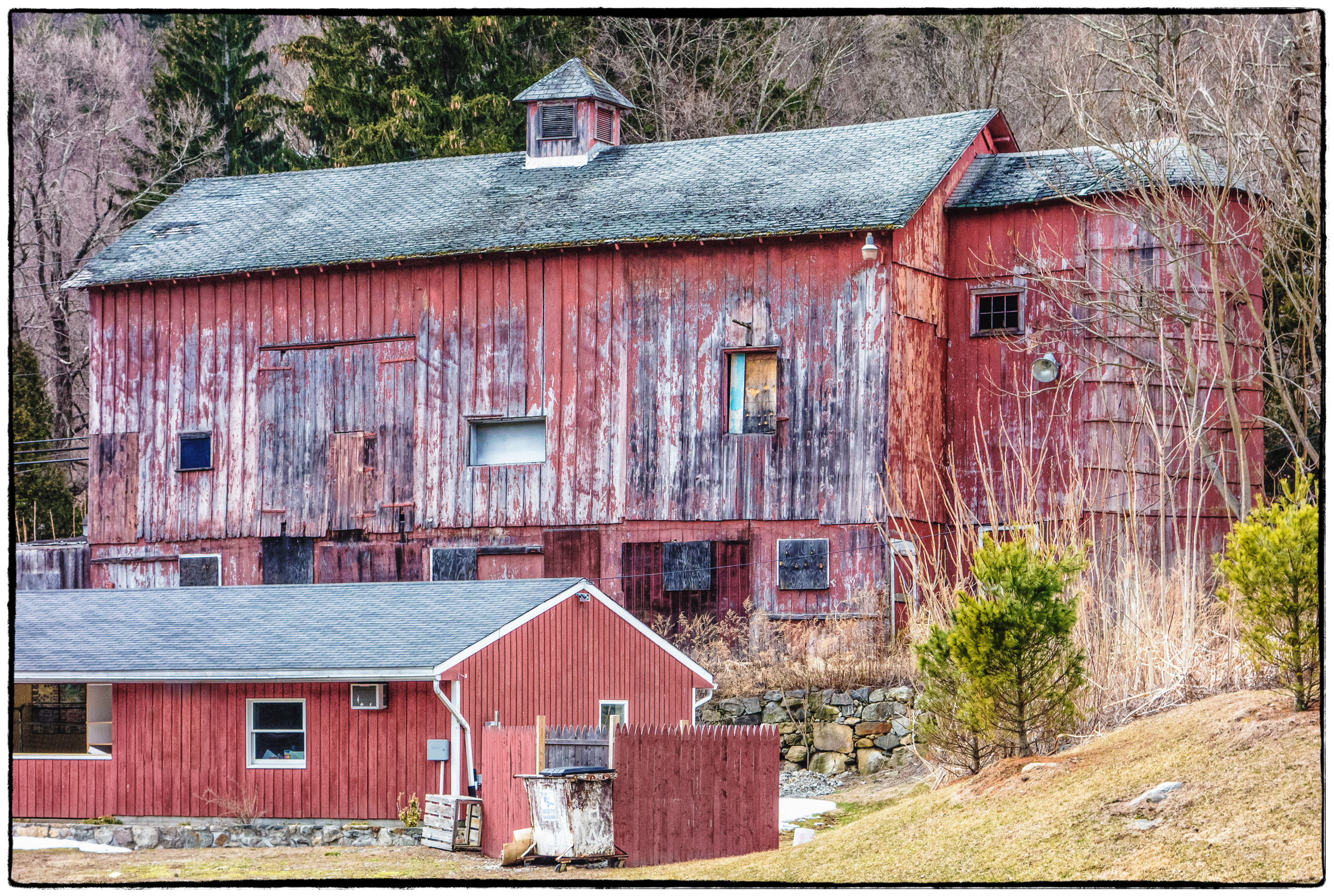
Why are barns in the US always red?

According to the Farmers Almanac:

Ever wonder why old barns are usually red in color? Red is (or, perhaps, was) a popular color for barns due not to its color shade but for its usefulness.

Many years ago, choices for paints, sealers and other building materials did not exist. Farmers had to be resourceful in finding or making a paint that would protect and seal the wood on their barns. Hundreds of years ago, many farmers would seal their barns with linseed oil, which is an orange-colored oil derived from the seeds of the flax plant. To this oil, they would add a variety of things, most often milk and lime, but also ferrous oxide, or rust. Rust was plentiful on farms and because it killed fungi and mosses that might grow on barns, and it was very effective as a sealant. It turned the mixture red in color.

When paint became more available, many people chose red paint for their barns in honor of tradition.

Another source describes a more complex situation involving “the physics of dying stars“.

Picture taken at the intersection of Peekskill Hollow Road and Bryant Pond Road with a Sony RX-100M1.

Minolta 70W Riva Zoom – Results

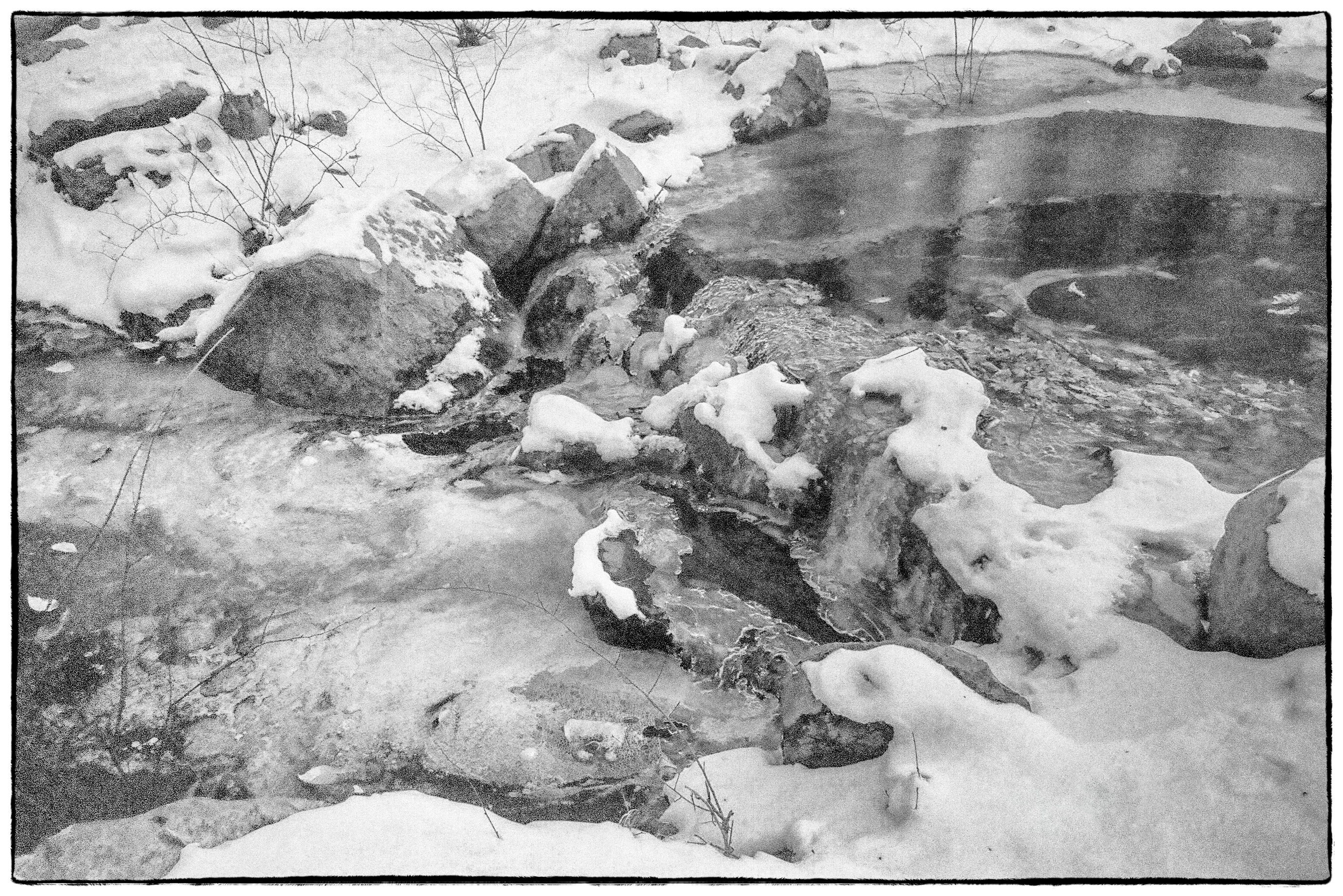
Icy Roaring Brook

I described my experience using my February film camera in February film camera – Minolta 70W Riva Zoom. I now have the results back so how did it come out?

First I was right that the first six frames had been taken by the friend who have given me the camera. There was a nice picture of a young woman sitting in a pool of light, playing with some toys; a picture of my friend’s father; and a quite spectacular picture of my friend with a very colorful, almost psychedelic vignette. I don’t even know how you’d achieve this effect. It looks like lens flare or a light leak, but it extends around all of the edges of the frame. The final three pictures included another, less successful, picture of the woman in the pool of light and a couple of pictures attempting to capture fast moving kids.

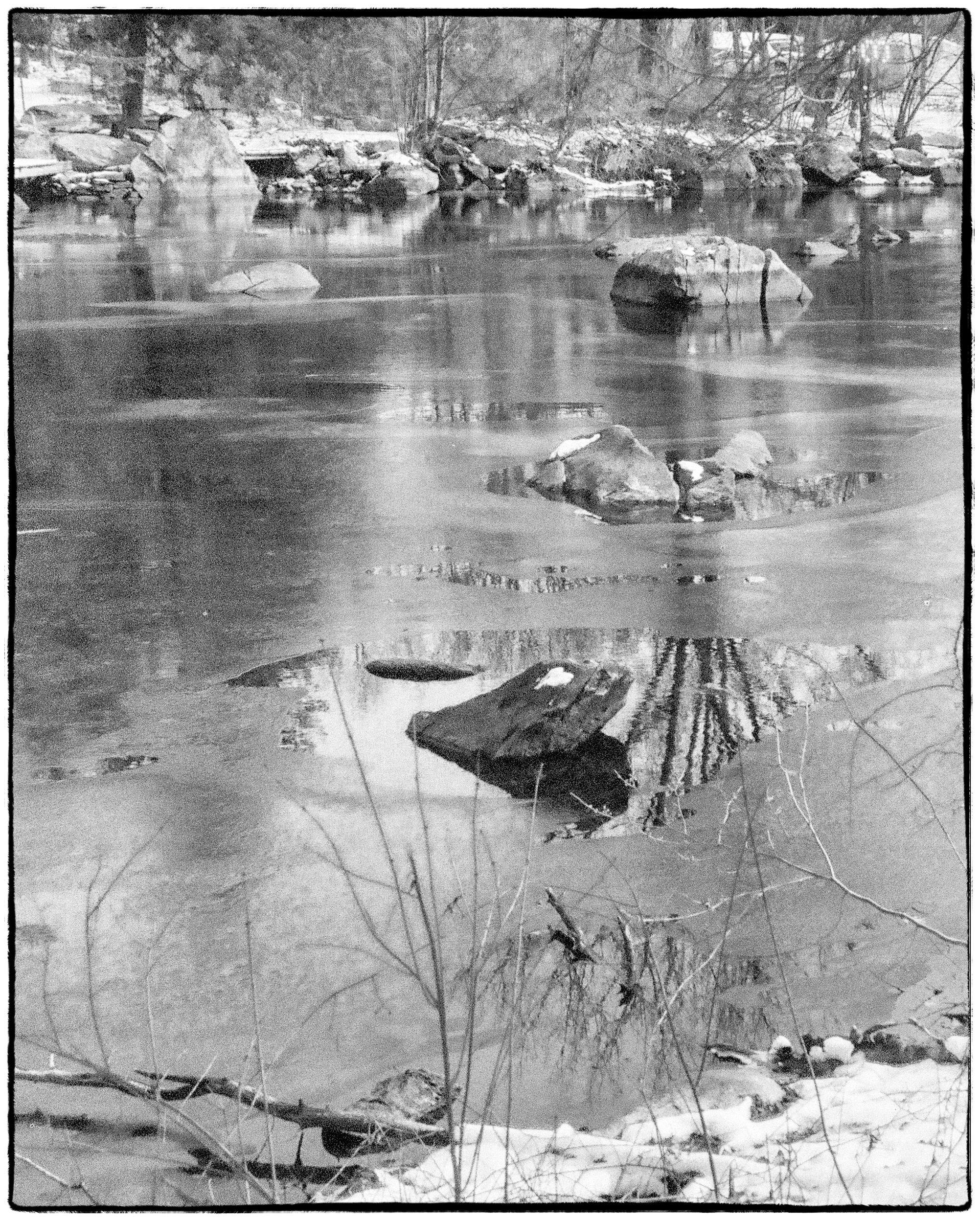
On to the pictures I took. I mentioned in the earlier post that the film was old. My friends’ pictures confirmed this. However, I don’t think it was as old as I thought it was i.e. probably more like 15 years than 25 years. I think the age had caused some deterioration of the film itself with some of the negatives showing actual damage. There were also some strange colors. At first I thought this was also because of the age, but then I came across a frame that had been taken in bright sunlight and the colors were fine. I’m guessing that the very contrasty, snowy content of most of the pictures was too much for this camera. The bright snow probably caused the camera to badly underexpose and the combination of the likely budget film (Black’s Astral) and the attempt to recover the underexposure caused the poor colors/contrast. Anyway I wasn’t able to correct the colors, so I decided to convert the images to black and white. The results are below. Not the best I’ve ever seen, but not the worst either. I imagine that for the point and shoot audience for which it as intended i.e. taking snapshots outside in sunny weather it was probably adequate as long as you don’t take it out of its comfort zone.

Using it was a fun experiment, but I don’t see myself taking it out again.

Rocks in the Cove

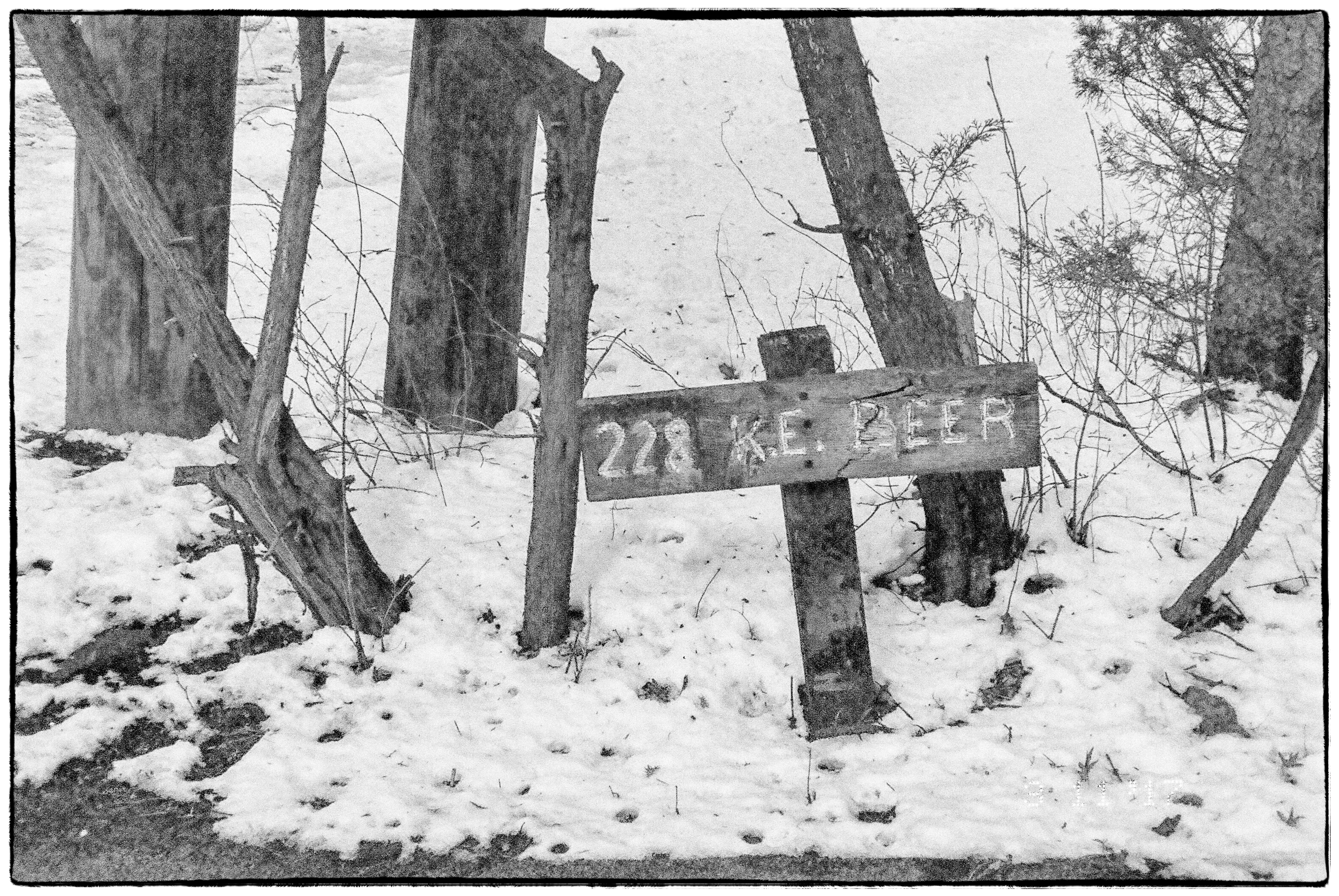
Sign outside our neighbors house. Ironic because of my fondness for the beverage.

Rocks in the snow

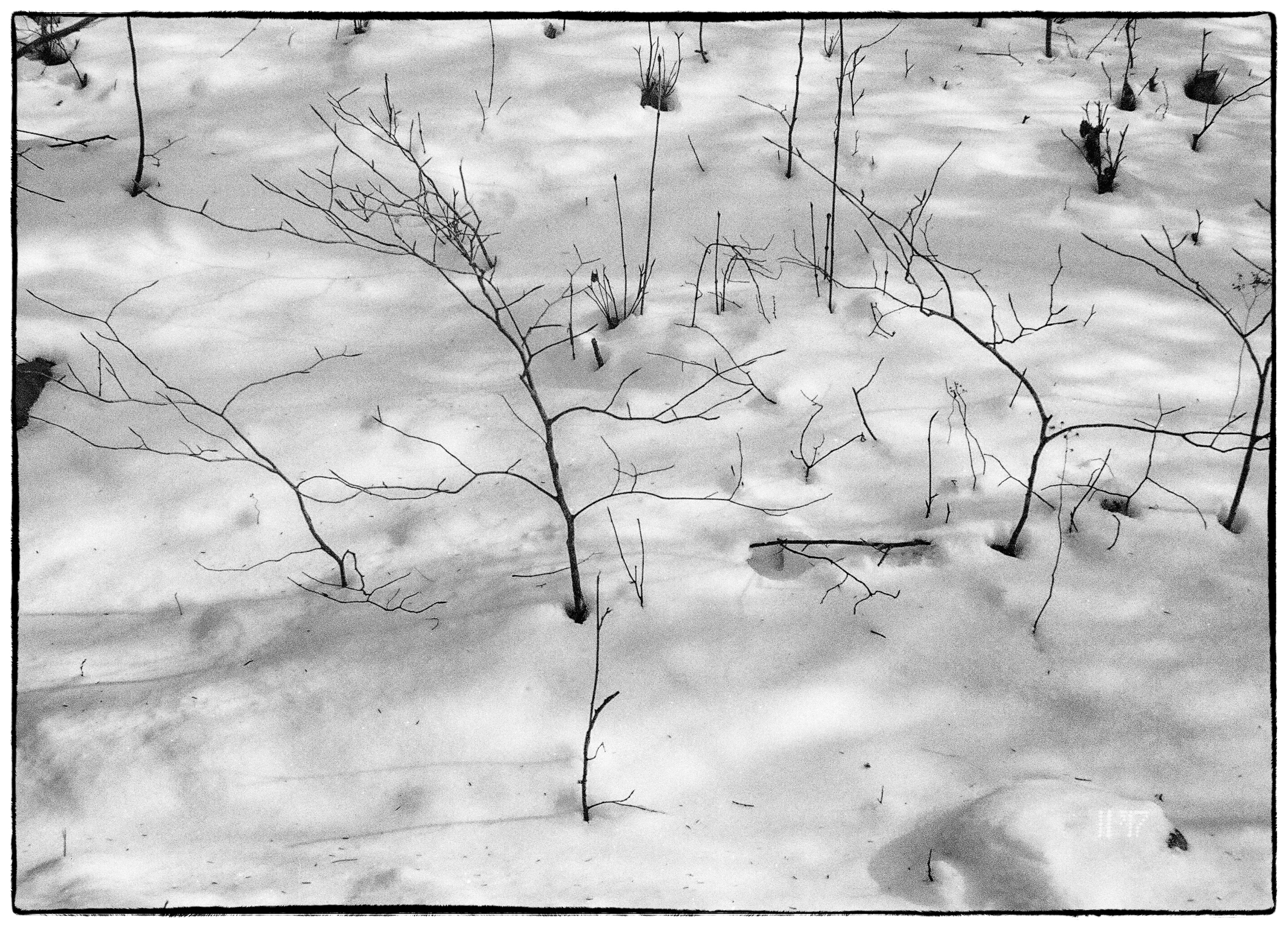
Twigs in the snow

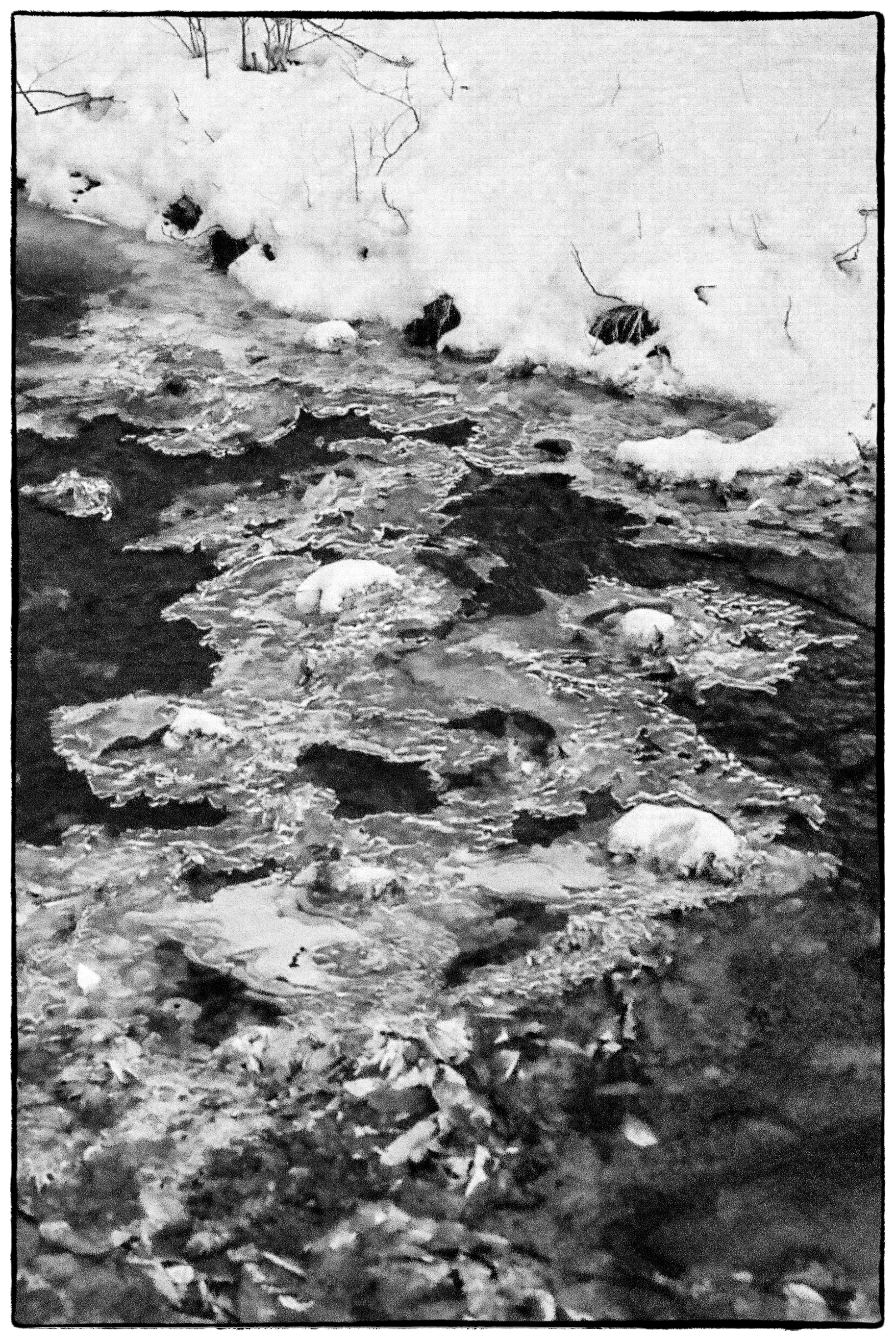
Icy Stream

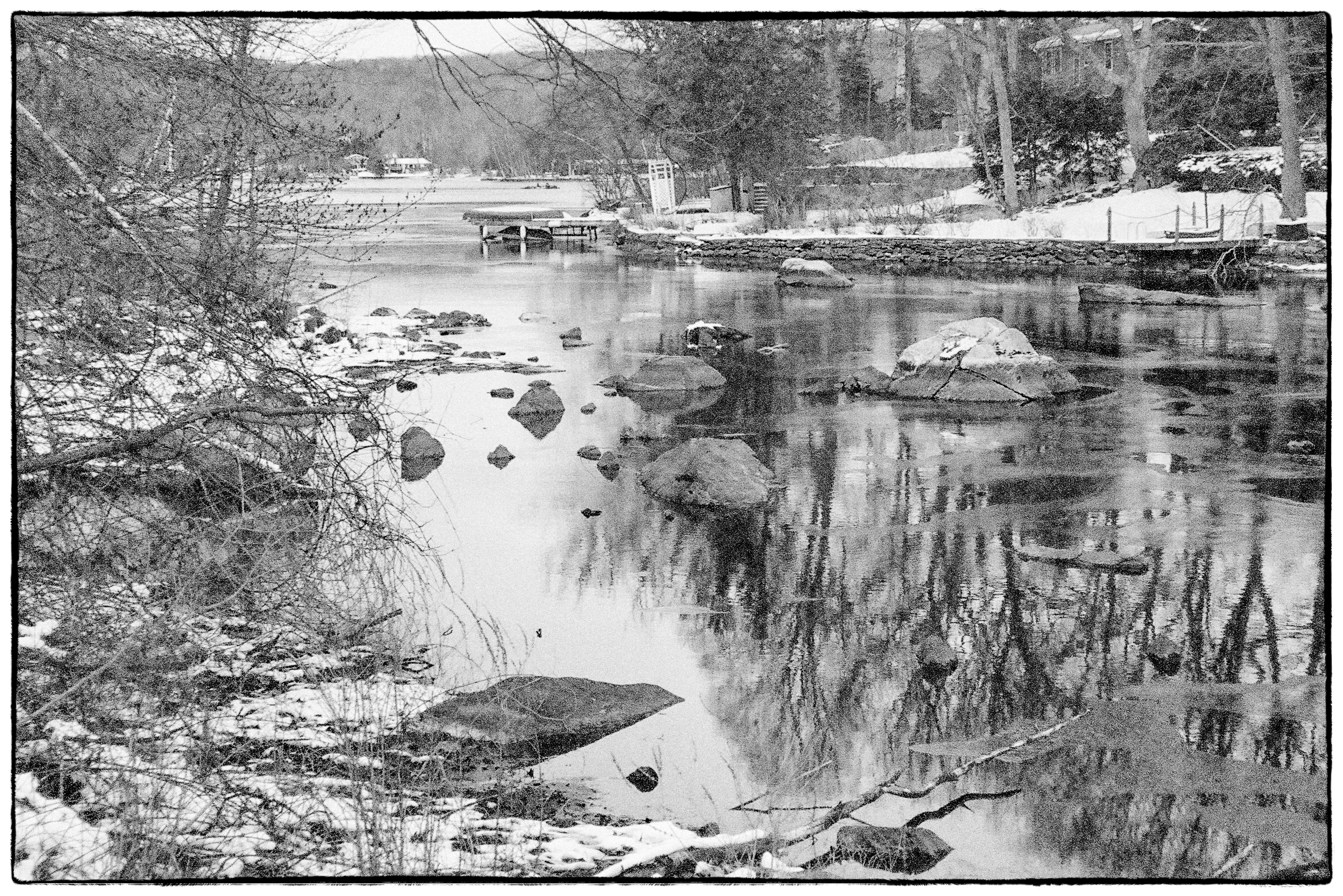
The Cove

First day of spring

In previous years I’ve done posts on the first day of Spring with pictures of a snow storm. Today it’s a glorious sunny day with nary a cloud in sight. True, we still have about five inches of snow on our patio, but it’s melting fast and a week ago it was 15 inches.

I’ve made a path through the snow to the dock and I’m going to get myself a ‘nice cuppa’ tea and go down there to drink it.

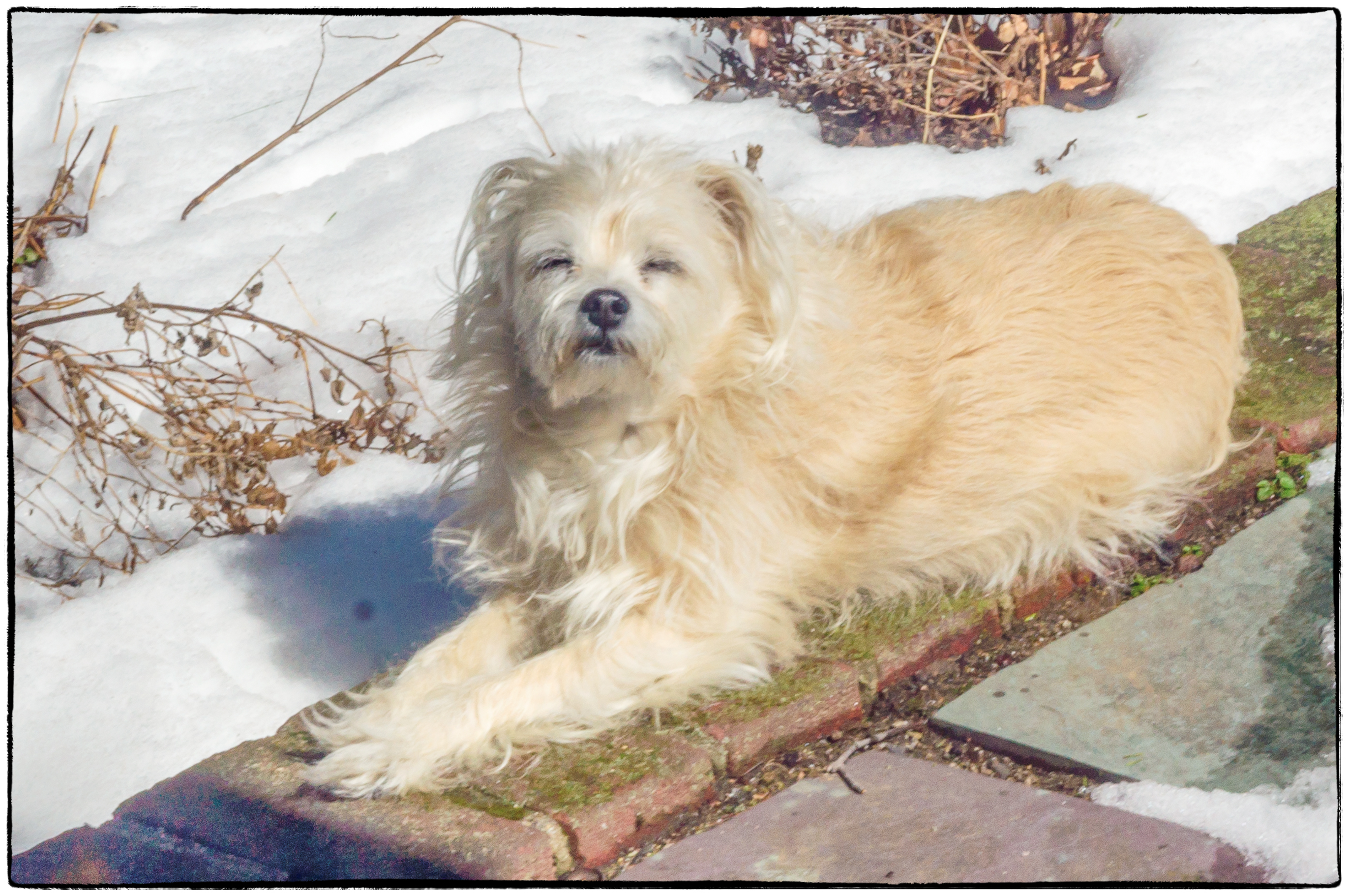
Meanwhile Harley has been enjoying sitting outside in the sun. Picture taken rather hastily (before his expression changed) through our front window – with a Sony NEX 5N and a recently acquired Carl Zeiss Jena 50mm, f3.5 Tessar T. The picture’s a bit soft, but I just love the expression. He could barely keep his eyes open. The lens is actually quite sharp but for some inexplicable reason I chose to set the aperture at f22, which caused the camera to set a shake inducing low shutter speed.

Now off to the dock!