According to Visit Sleepy Hollow website:
Today’s villages of Sleepy Hollow and Tarrytown are descendants of this colonial-era farming, milling, and trading center. In 1653 Frederick Philipse came to the Dutch colony of New Netherland as a carpenter for the Dutch West India company. Through canny business skill, an astute sense of politics, and two very advantageous marriages, Philipse came to control 52,000 acres of what is now Westchester County. When the British evicted the Dutch and renamed the colony New York, Philipse switched his allegiance to the British crown and business continued as usual. His heirs were less fortunate in reading the winds of change—they sided with the British during the American Revolution and lost everything in the aftermath.
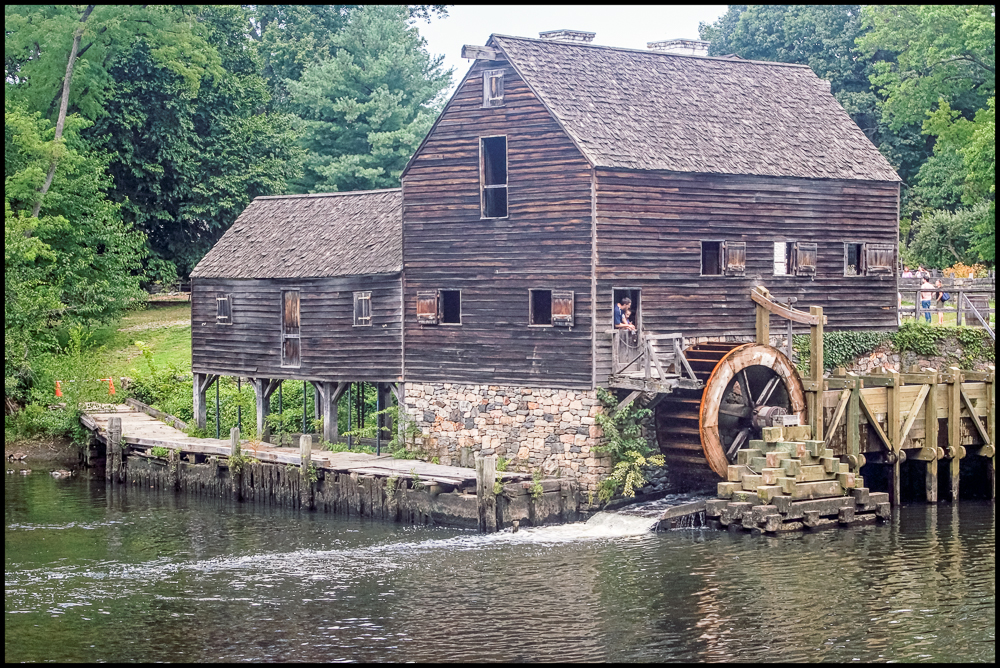
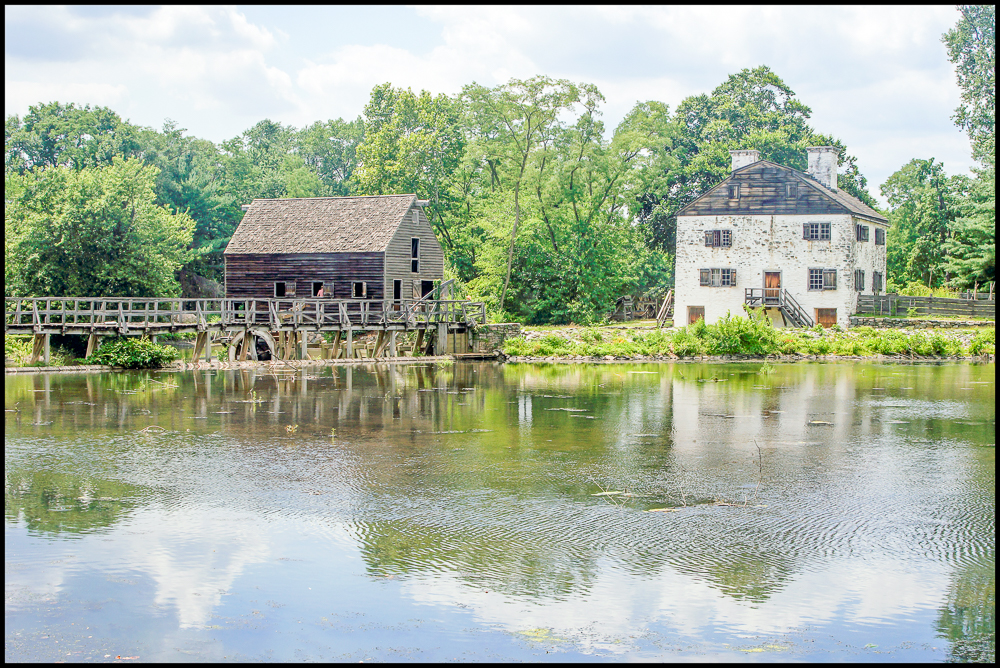
Philipse’s trading center has been restored to its appearance in 1750 when it was home to several hundred tenant farmers and two dozen African slaves. Programs and events show how Dutch, African, and Native American cultures became entwined at this colonial outpost.
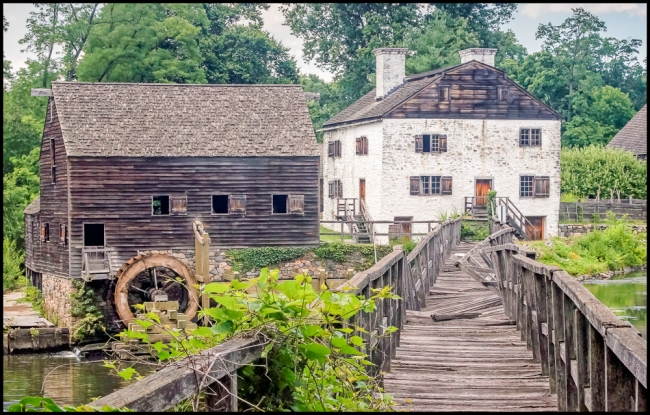
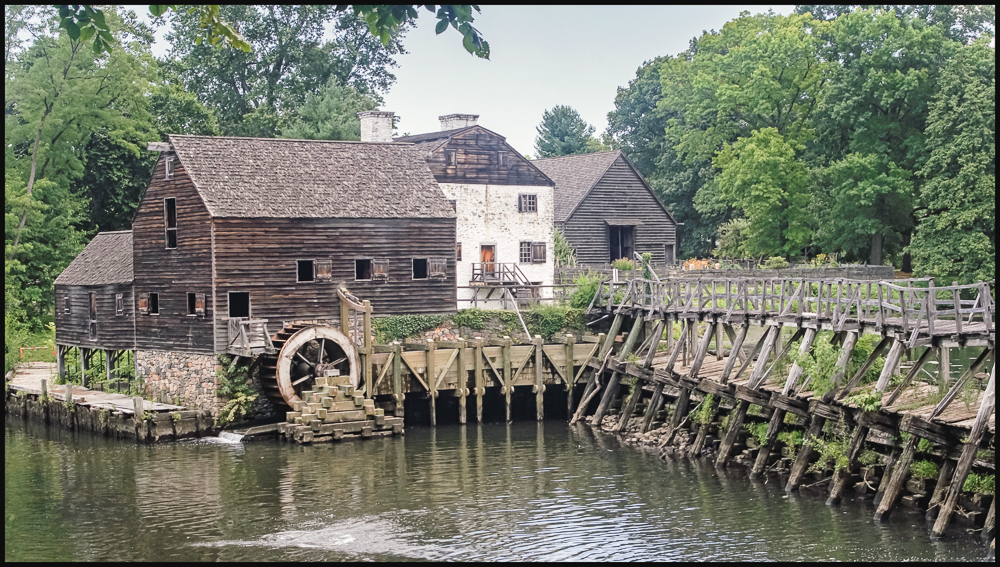
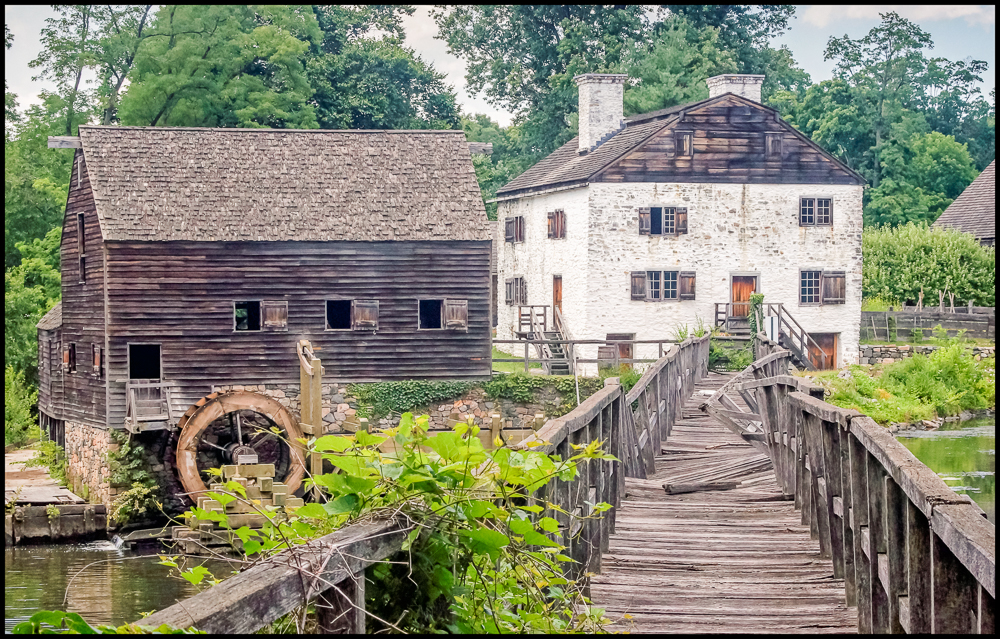
The picture above shows what was once the main entrance to the site from the visitor’s center. It was damaged in a storm (I don’t remember which one) and has yet to be repaired. Visitors now take a different route, which is a pity because this wooden bridge was a spectacular introduction to the site.
The mill is mentioned in the climactic scene at the end of the Legend of Sleepy Hollow:
An opening in the trees now cheered him with the hopes that the church bridge was at hand. The wavering reflection of a silver star in the bosom of the brook told him that he was not mistaken. He saw the walls of the church dimly glaring under the trees beyond. He recollected the place where Brom Bones’s ghostly competitor had disappeared. “If I can but reach that bridge,” thought Ichabod, “I am safe.” Just then he heard the black steed panting and blowing close behind him; he even fancied that he felt his hot breath. Another convulsive kick in the ribs, and old Gunpowder sprang upon the bridge; he thundered over the resounding planks; he gained the opposite side; and now Ichabod cast a look behind to see if his pursuer should vanish, according to rule, in a flash of fire and brimstone. Just then he saw the goblin rising in his stirrups, and in the very act of hurling his head at him. Ichabod endeavored to dodge the horrible missile, but too late. It encountered his cranium with a tremendous crash,—he was tumbled headlong into the dust, and Gunpowder, the black steed, and the goblin rider, passed by like a whirlwind.
…
The old country wives, however, who are the best judges of these matters, maintain to this day that Ichabod was spirited away by supernatural means; and it is a favorite story often told about the neighborhood round the winter evening fire. The bridge became more than ever an object of superstitious awe; and that may be the reason why the road has been altered of late years, so as to approach the church by the border of the millpond. The schoolhouse being deserted soon fell to decay, and was reported to be haunted by the ghost of the unfortunate pedagogue and the plowboy, loitering homeward of a still summer evening, has often fancied his voice at a distance, chanting a melancholy psalm tune among the tranquil solitudes of Sleepy Hollow.
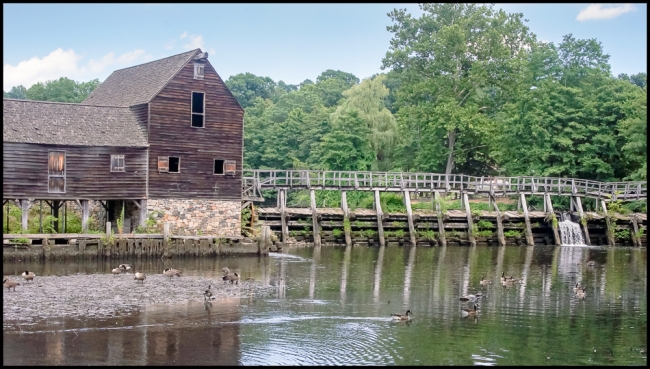
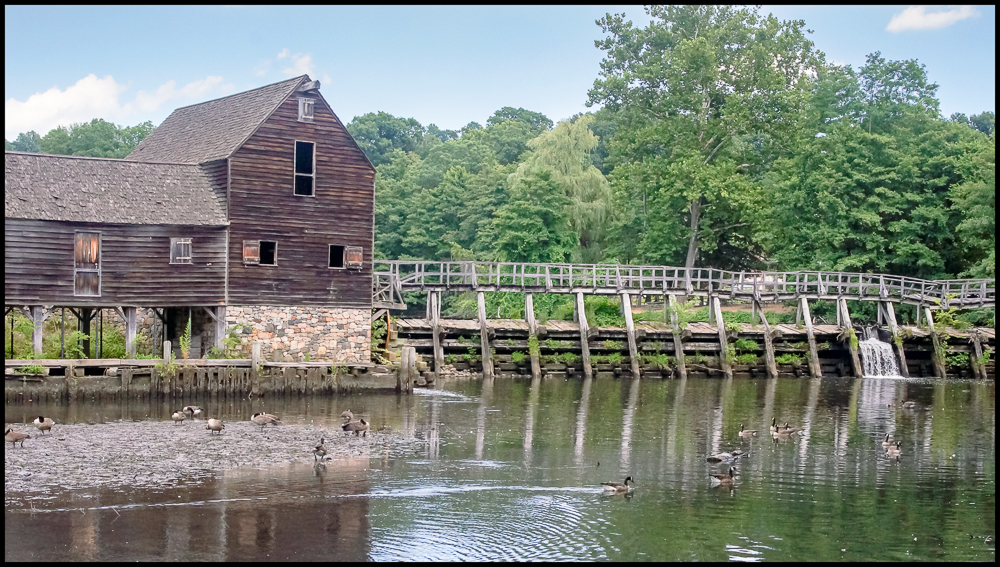
The bridge mentioned above is long gone, as is the school house, but the church (The Old Dutch Church) remains as does the Pocantico River which flows by it and into the mill pond.
Taken with an SMC pentax-f 35-70mm f3.5-4.5 on a Sony NEX 5n.