A Postcard

A while ago a friend of mine gave me a set up cards, each one with a different example of his wildlife photography. I was impressed by this and for some time have wanted to try something similar myself.

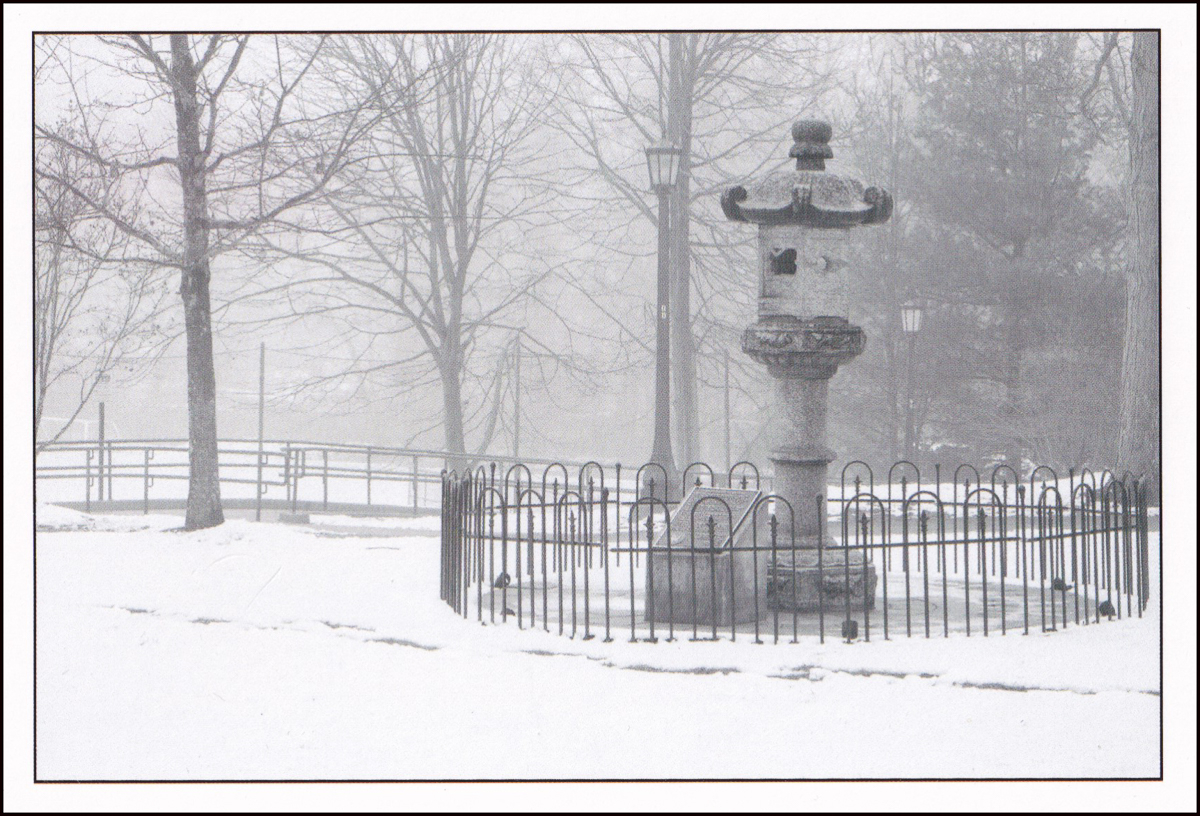
I came up with the idea of a collection of postcards, each one showing something related to my village. These could be either a number of postcards all with the same picture, or each with a different picture.

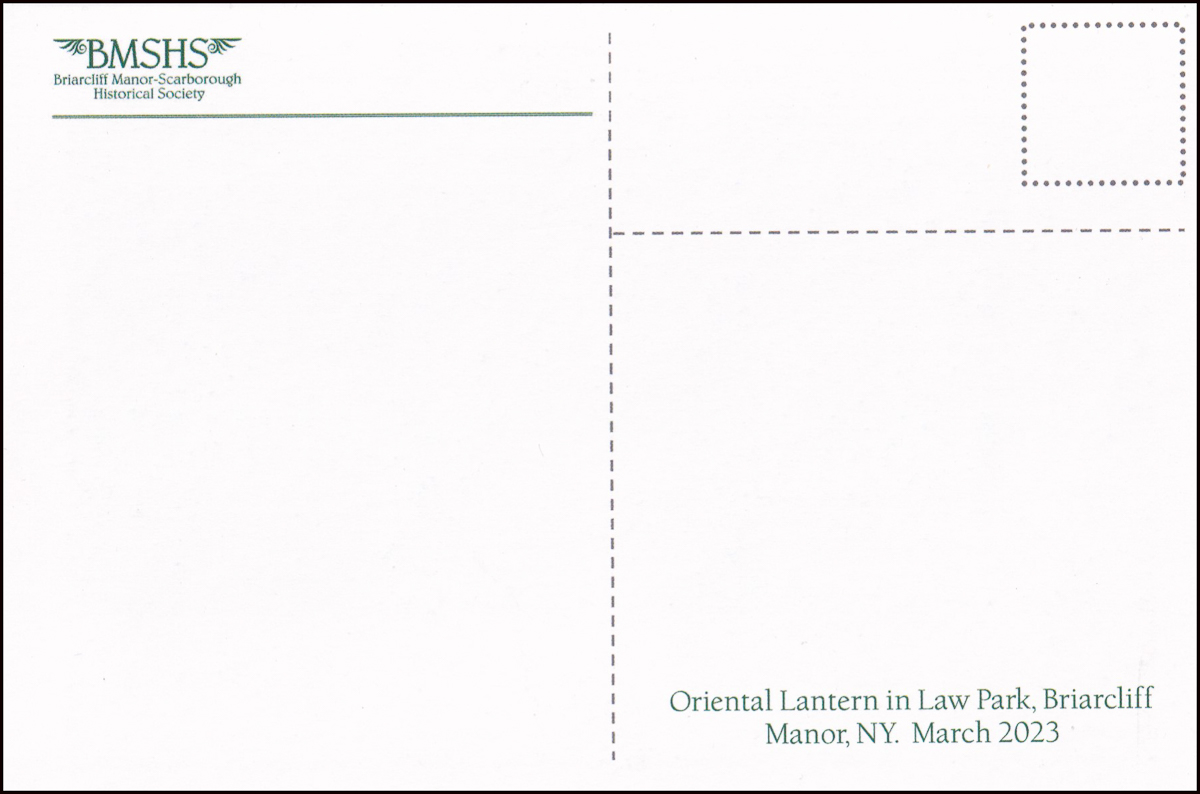
This is my first attempt. Generally I’m quite pleased with it – except for the dotted lines on the rear. If I were to do it again I’d go with solid lines instead.

After I’d finished with this I asked myself: “Does anyone actually send postcards anymore”? I raised this with another friend and he suggested notecards rather than postcards. He may be right. I’ll give it a try.

Some new photobooks

Although I have a lot of fun sharing photographs on social media, I like to see my photos in print. I could print them, frame them and put them on the walls of my house. But I don’t actually have a lot of wall space for displaying photos so that’s pretty much out. I could just print them (maybe frame them) and then give them to friends e.g. when invited to a party I could print along a framed print instead of a bottle of wine? But I’m pretty sure that they’d appreciate the wine more than the framed photograph. Or I could print them, put them in a folder or a box and then probably forget about them entirely until I discover them ten years from now…if I’m still around.

Instead of any of the above options I’ve decided to do photobooks instead. Over the years I’ve done a number of glossy photobooks, but I’ve discovered that they take me a long time to complete. They’re also quite expensive and I have a knack for getting something wrong e.g. I might find that a typeface I thought looked good on screen didn’t work well in print; or I get the spacing wrong; or while proofreading I catch most of the grammatical/spelling mistake but inevitably miss a few etc. Then I have to go back, and fix these problems and re-order the book. Let’s say I spent $60 on the first photobook. Now I have to spend another $60.

Instead I’ve decided to try ‘zines’. While they’re not as nice looking as photobooks I can produce one fairly quickly and they don’t cost very much (the examples in this post each cost no more than $15). So even if I have to redo them I’m only out $30. Of course if I really like one I can use the ‘zine’ as a proof copy, and quickly transform it into a more flashy photobook.

So far it’s working pretty well. I’ve recently done four ‘zines’ in two series.

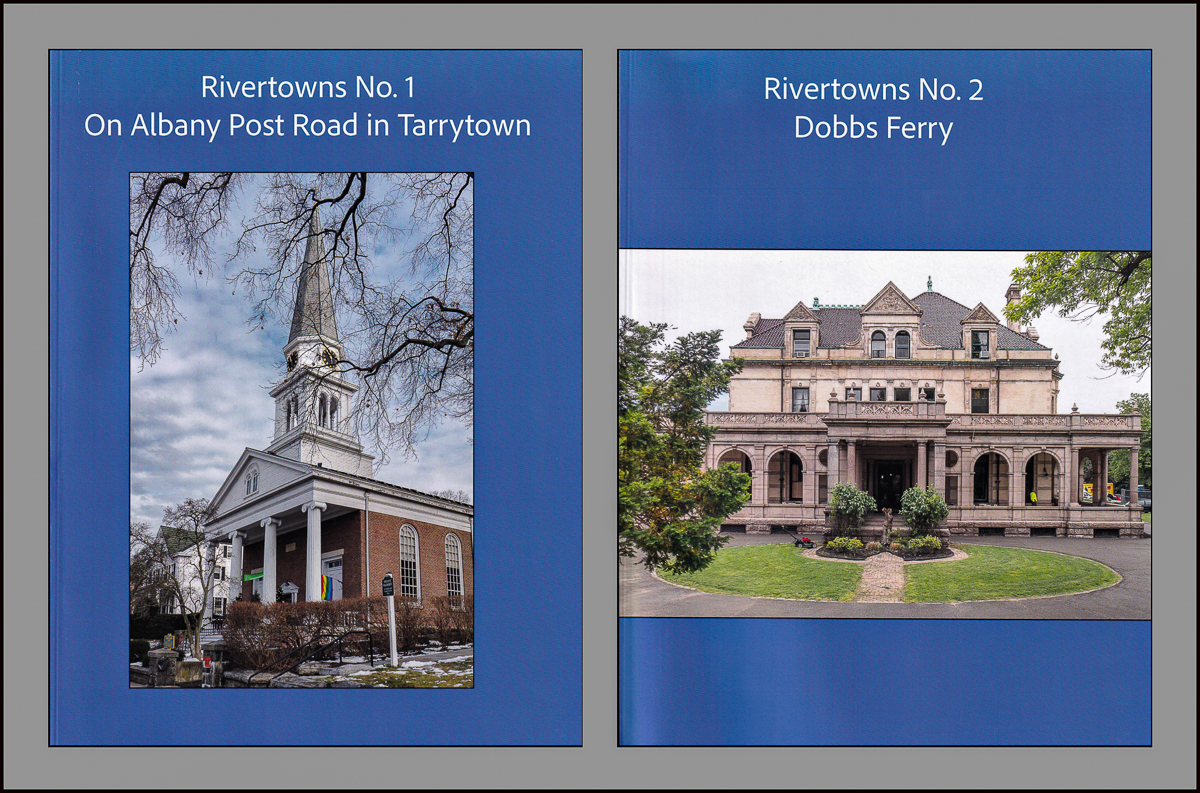
I’ve lived in the Lower Hudson valley for the past 23 years. For much of that time I commuted into New York City for work. I was lucky that the commute was a very pleasant one. The New York Metro-North Railroad Hudson Line runs right next to the Hudson River and for much of it’s length offers picturesque views across the Hudson to (among other things) The Palisades; The Hudson Highlands; Storm King Mountain etc. Over the years I’ve visited and photographed many of the towns along the river. I anticipate doing a number of these ‘zines’ – each one focusing on a single town (or part of a town as some of them are quite large). For the same reason I’ve decided to focus on those areas, which are close enough that I can comfortably walk to them from the railroad station. With my customary lack of creativity I’ve decided to call this series “Rivertowns”. So far I’ve done two in this series: “On Albany Post Road in Tarrytown” and “Dobbs Ferry”. This series combines photographs with quite a lot of text describing them.

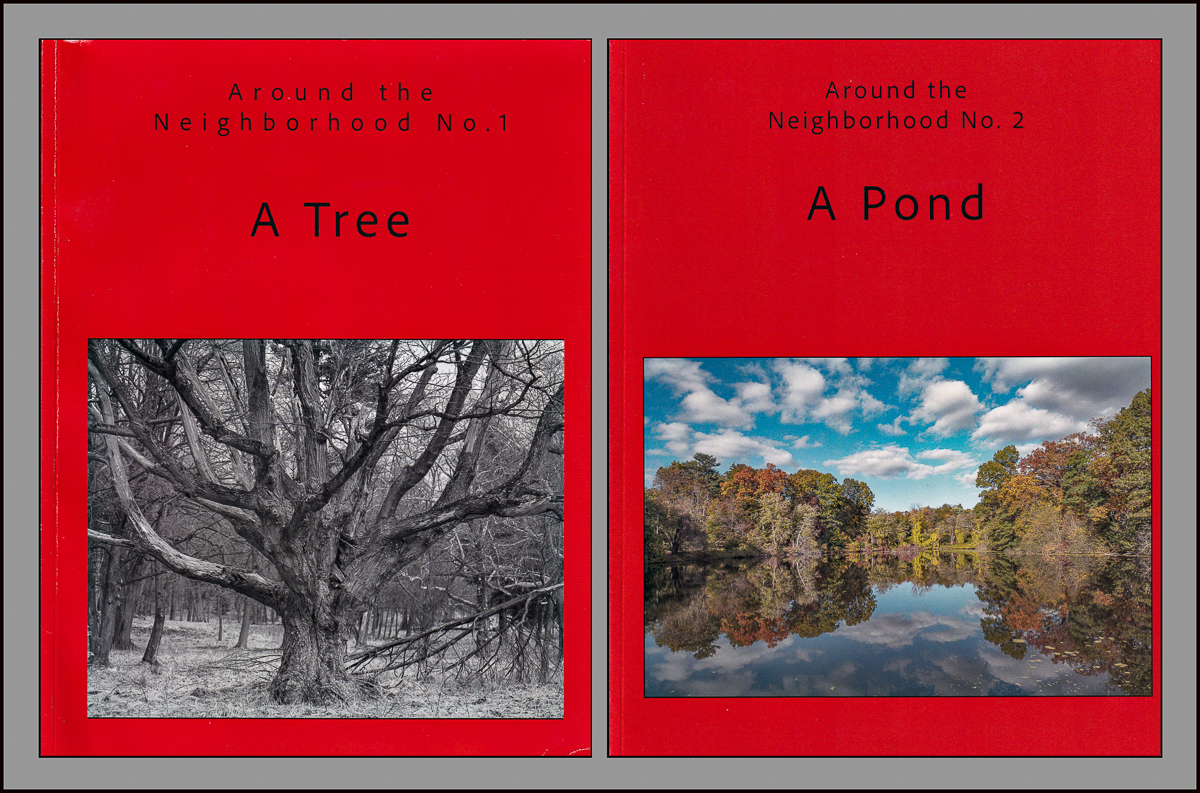
During COVID it was not possible to travel as much as I had been doing. I therefore confined myself to walks in the immediate vicinity of my house and started a series of photographs, which I decided to call “Around the Neighborhood”. I defined this as meaning anywhere that I could walk back and forth to from my house. So far I’ve done two ‘zines’ in this series. The first, entitled “A Tree” has as its subject a single tree in a nearby woodland. I’d already taken a number of pictures of this but on this occasion I decided on the spur of the moment to attempt an exercise that I’d recently read about. This exercise consisted of taking thirty six photographs of a single subject all at once. Quite easy at first, but after about twenty photographs increasingly more difficult. In fact at that point I almost gave up, but I stuck with it and in the end found it to be quite useful. I’m the kind of person who will walk up to a subject, take a few pictures and then move on. This exercise made me slow down and look more carefully. Indeed, towards the end I was noticing things, which I had already walked past a couple of times. The second, entitled “A Pond” focuses on a sad, lonely looking pond. What makes it interesting is that it’s on the site of the former Briarcliff Lodge, a 1902 vintage luxury resort in the village of Briarcliff Manor, New York where I live. It’s said that this pond was once the Lodge’s swimming pool. Local legend has it that if you were to dive to the bottom you’d find tiles.

A newly acquired lens

I decided I needed an ultrawide lens for my Fuji cameras. It’s a Fuji XF 10-24mm f4 R OIS (the earlier version rather than the later version that among other things improved the weather sealing that many complained about the lack of, something that’s not all that important to me.

There’s a useful review of it on Optical Limits. The conclusion reads:

If you read our analysis so far, you may have noticed a few negative findings but this has to be seen in a context. Ultra-wide lenses are never flawless and the Fujinon XF 10-24mm f/4 R OIS is actually one of the best representative of its species. It is very sharp in the image center and the border- and corner quality is very decent. Lateral chromatic aberrations are also low. Yes, image distortion and vignetting can be very noticeable at the extreme wide end but most users will probably take advantage of image auto-correction here anyway. In terms of build quality, we are highly impressed. Fujinon lenses are better than most here anyway but Fujifilm has reached a new level here. However, even so it is a bit disappointing that they didn’t provide weather sealing. While it isn’t something unusual anymore, we certainly appreciate the image stabilizer which actually lifts the low light capabilities of this zoom lens beyond the two ultra-wide prime lenses (Zeiss Touit 12mm f/2.8 and Fujinon XF 14mm f/2.8 R) of the system. If you are still not convinced by now … the author will keep the lens in his private stock. Consequently … highly recommended!

I’d agree. To me it feels relatively light, sturdy, well balanced and very comfortable to use. I can see it staying on my Fuji X-E3 for quite a while.

Taken with a Sony A7IV and Venus Optics Laowa 85mm f5.6

Kodak Six-20

With the acquisition of this camera I’ve broken two of my rules for collecting cameras.

The first is that I would not acquire a camera that I could not or would not use. I’ve on occasion acquired a camera that was supposed to be working, but turned out to be non-functional. However, I’ve never bought a camera that I knew I wouldn’t use. I think it’s unlikely (but not impossible) that I will use this one. Although you never really know until you try to use it, I believe this camera works. Unfortunately, the film (620 film) was discontinued in 1995. Although the actual film is the same as 120 film (which is still available), the spools are different. The 620 spools are slightly shorter and have a smaller diameter. It is possible to cut down a spool of 120 film to fit or to re-spool some 120 film onto 620 spools in a darkroom or changing bag. Some people do this and sell the result, so it is still possible to get this film. However, it’s difficult to find and expensive. More important, I’ve read that the camera takes terrible pictures. I’m might get my hands on a roll of 620 film and try it out, or because of the apparently poor quality of the images I might not bother. I haven’t decided yet.

Second, I had long ago decided not to collect Kodak Folding Cameras. While they certainly have their charm I was afraid of going down that particular rabbit hole in case I couldn’t make my way out.

So why then did I acquire this camera? The reason is that I’ve decided to start collecting bakelite and art-deco cameras. This one is an excellent example of the latter. Unfortunately, these cameras tend to be old and use film that is difficult (and in many cases impossible) to obtain. Most of them look great though.

I’ve found a great site: Art Deco Cameras, which has a wealth of information on such cameras and how to use them. I imagine it will become my guide to finding addition leads.

This one is a Kodak Six-20 and according to Art Deco Cameras:

The Six-20 Kodak was introduced in 1932 but from 1933 it was redesigned to become the Six-20 model C. It is a self-erecting folding camera. It has angled ends to the body which is covered with pig-grained leatherette. It has a brilliant finders that swivels to cater for both portrait and landscape views. It does not have a folding frame finder. It features black enameled side panels with nickel lines. The shutter plate is octagonal with chrome and black enamel deco pattern as well as bright red highlights. It has a swiveling red window cover. The struts are chrome and ornate unlike the redesigned Model C which are quite plain.

It supported two combinations of lens and shutter. These are a Doublet lens coupled with Kodon shutter or a Kodak Anastigmat f/6.3 with a Kodon shutter.

I believe mine is the former i.e. the one with the doublet lens, which is a pity because if I did choose to use it I’m sure the latter would produce better images.

Art Deco Cameras also rates the cameras as to the extent to which they have the characteristics of an art-deco Camera and describes this camera as follows:

Iconic: Famous, well-known and celebrated

  • Produced during the main Art Deco period.
  • Octagonal face plate design with red highlights.
  • Ornate chrome struts.
  • Angled ends to body.
  • Enameled side panels with nickel lines.
  • Raised diamond and octagonal motifs
  • Pig-grained leatherette
  • Octagonal film winder
  • Chrome and black enamel brilliant finder

Taken with a Sony A7IV and Venus Optics Laowa 85mm f5.6