
I really liked the look of this rocky outcrop with its white-blossomed tree. To me it really cried out for a black and white treatment.
Taken with a Fuji X-E3 and Fuji XF 10-24mm f4
Photographs and thoughts on photography and camera collecting

I really liked the look of this rocky outcrop with its white-blossomed tree. To me it really cried out for a black and white treatment.
Taken with a Fuji X-E3 and Fuji XF 10-24mm f4

The Briarcliff Manor Congregational Church is holding its annual Rummage Sale this weekend, 29 April 2023. This is a big event in the village. Many people donate and a lot of people volunteer their time to organize and layout all of the donations. I’m told that it raises quite a lot of money for the village.
My friend wanted to go there to talk to people about some stuff she wanted to donate so along I went.
The picture above was taken inside the large Parish Hall. I liked the triangular forms, the colored glass and the way the wide angle lens caused distortions such as the lamps looking as if they are defying gravity and tilting sideways, when of course in reality they were vertical.
Below pastor, Todd Farnsworth (here showing his humorous side) and, I assume, a volunteer whose name I, unfortunately did not get. This shows only a tiny portion of the donations. The Parish Hall was full of tables with donations of all kinds on them as well as masses of clothing on racks.

In addition to its website the Church also has a Facebook Page.
Taken with a Fuji X-E3 and Fuji XF 10-24mm f4
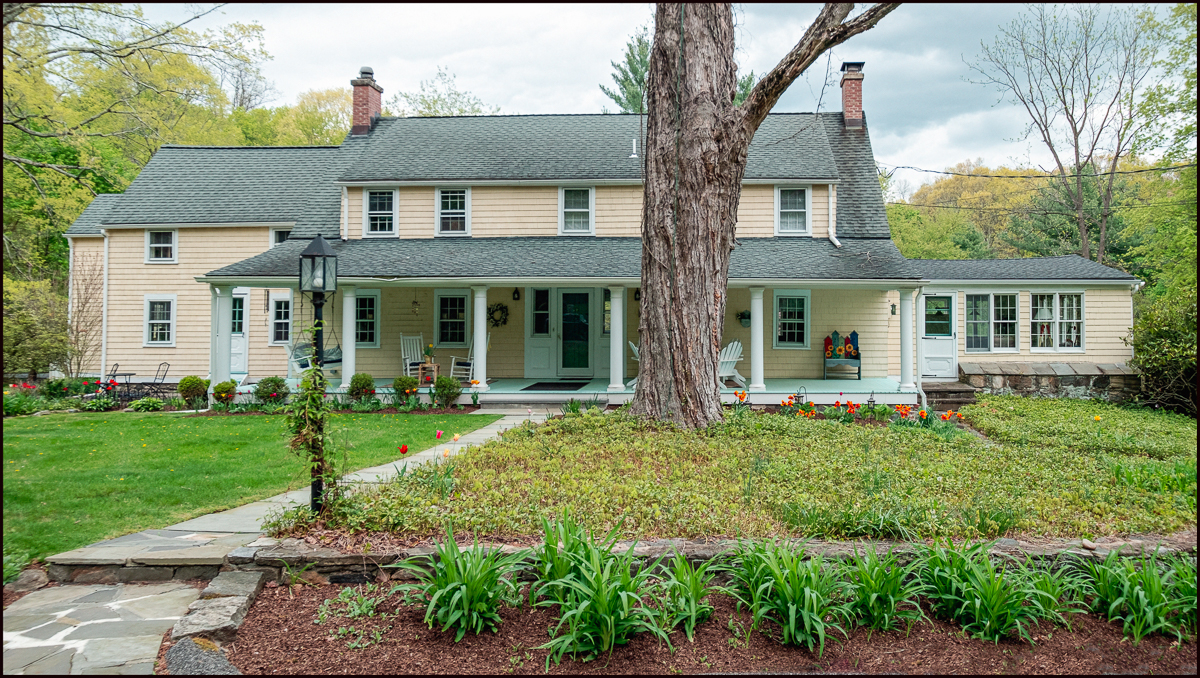
The Washburn House is one of the earliest homes in Briarcliff Manor. It was sold by the New York State Commission on Forfeiture to Joseph Washburn in 1775.
According to Mary Cheever’s wonderful history of Briarcliff Manor – “The Changing Landcape” (copies are available at the Briarcliff Manor-Scarborough Historical Society):
After the battle of White Plains in 1776, General George Washington set up headquarters just north of Peekskill. British headquarters were in New York City. Both armies needed provisions, and some farmers, millers and teamsters were released from active duty to get grain to the Croton River Mill and make flour for Washington’s army. Other noncombatants, particularly some Quakers managed to do well, but Westchester as a whole, for some seven years was “Neutral Ground” between the enemy camps, and suffered greatly from raids and pillage by marauders claiming allegiance to both sides. These were called Cowboys and Skinners, because they stole and skinned cattle and sold hides and meat to the armies. Livestock and provisions of all kinds were stolen and farms were burned and abandoned. When the end of hostilities was declared in 1783, the countryside was in ruins. The story of a typical atrocity was told by Joseph Bowron Washburn at the 1875 Centennary of Reuben Washburn at his house on Washburn Road in Briarcliff: “Joseph, our grandfather, lived in this house, kept bachelor hall until he was married to Freelove Matthews in 1775. The first of fourteen children was Reuben. This farm belonged to ‘Philipse Manor’ and once a year Joseph went to the manor house near Tarrytown to pay his rent. Joseph, who lived in this war, suffered severely from lawless bands of skinners, who robbed and beat him nearly to death for his money. He gave them the silver and they beat him still more for his gold. He refused to give that up“. He was then hung from an apple tree”. Fortunately, after the rascals departed, Washburn’s family returned in time to save his life
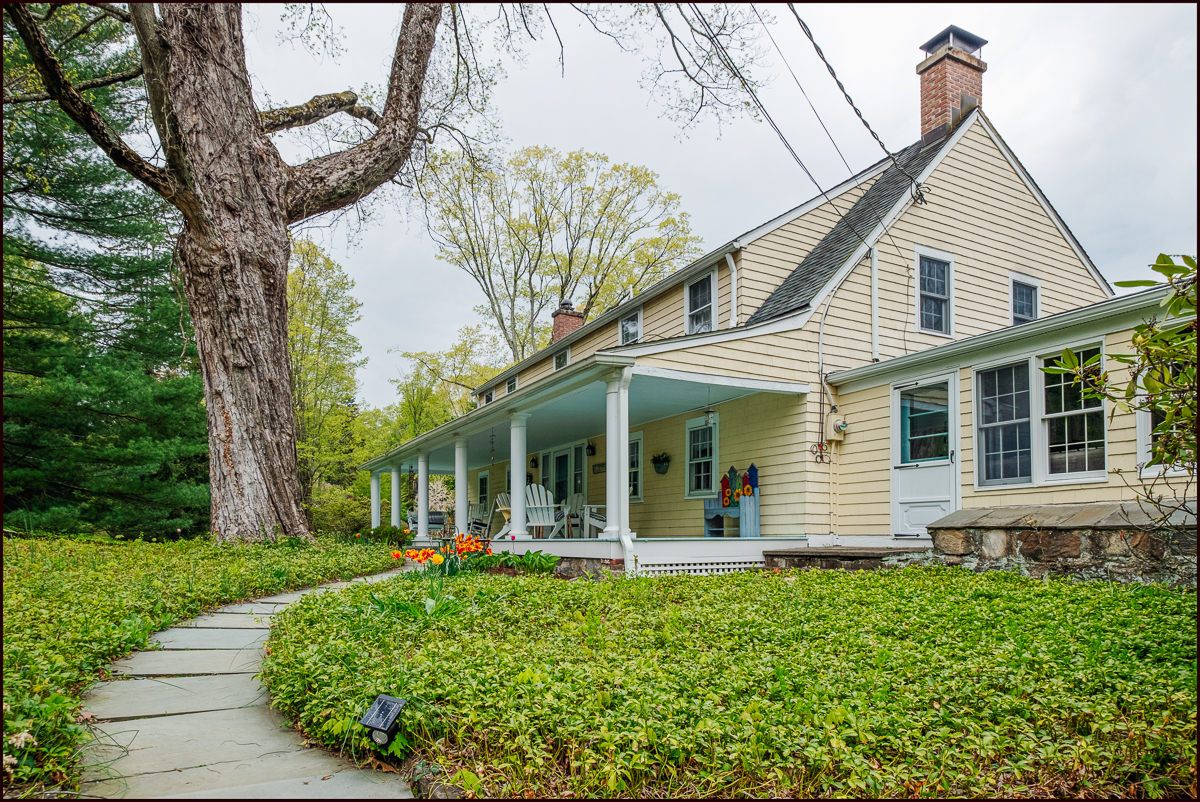
Taken with a Fuji X-E3 and Fuji XF 10-24mm f4

We had a little bit of excitement at the Historical Society (BMSHS) the other day. The BMSHS shares a building with the Briarcliff Manor Library, The Vescio Community Center and the Briarcliff Manor Recreation Department.
I was sitting in the Historical Center when there was a loud bang and all the fire alarms went off. Of course we all had to evacuate the building (luckily the weather was quite pleasant) and wait for the powers that be to arrive. Above: the first to arrive, the Fire Chief.


Briarcliff Manor’s fire company existed for more than a year before Briarcliff Manor’s incorporation. Frederick C. Messinger (a fireman in Kingston for ten years) and thirteen local men founded the private fire company in 1901. Thirty-six men became the company’s charter members on March 4, 1902, and dues were set at 25 cents per month. On April 15 of that year, the company took the name Briarcliff Steamer Company No. 1. The company’s first equipment was a 1901 hand-drawn chemical apparatus, with a tank containing a mixture of water and sodium bicarbonate. Sulfuric acid would be added to the tank, creating carbon dioxide, which would propel the solution through the hose and help extinguish the fire. That first apparatus was white, which Messinger thought more visible than the conventional red in a village without street lights, and the village’s engines remain white.


Taken with a Fuji X-E3 and Fuji XF 10-24mm f4

This picture stands outside the door of the Eileen O’Connor Weber Historical Center, which houses the Briarcliff Manor-Scarborough Historical Society. We don’t quite know what to do with it. I imagine it was given to the Society at some point. I have no idea who the children are, but I find the picture profoundly disturbing!
Taken with a Fuji X-E3 and Fuji XF 10-24mm f4