Confused by Sony cameras. This will help.

I have a number of Sony cameras, both full frame and APS-C, but I’ll be the first to admit that Sony offers so many options: full frame vs APS-C; low cost vs expensive; still vs video; hybrid; optimized for video; optimized for stills; optimized for fast action etc. that it can be difficult to choose.

I find this video from Tony and Chelsea to be incredibly useful in sorting out all of the options.

Another recently acquired old camera: Sony R1

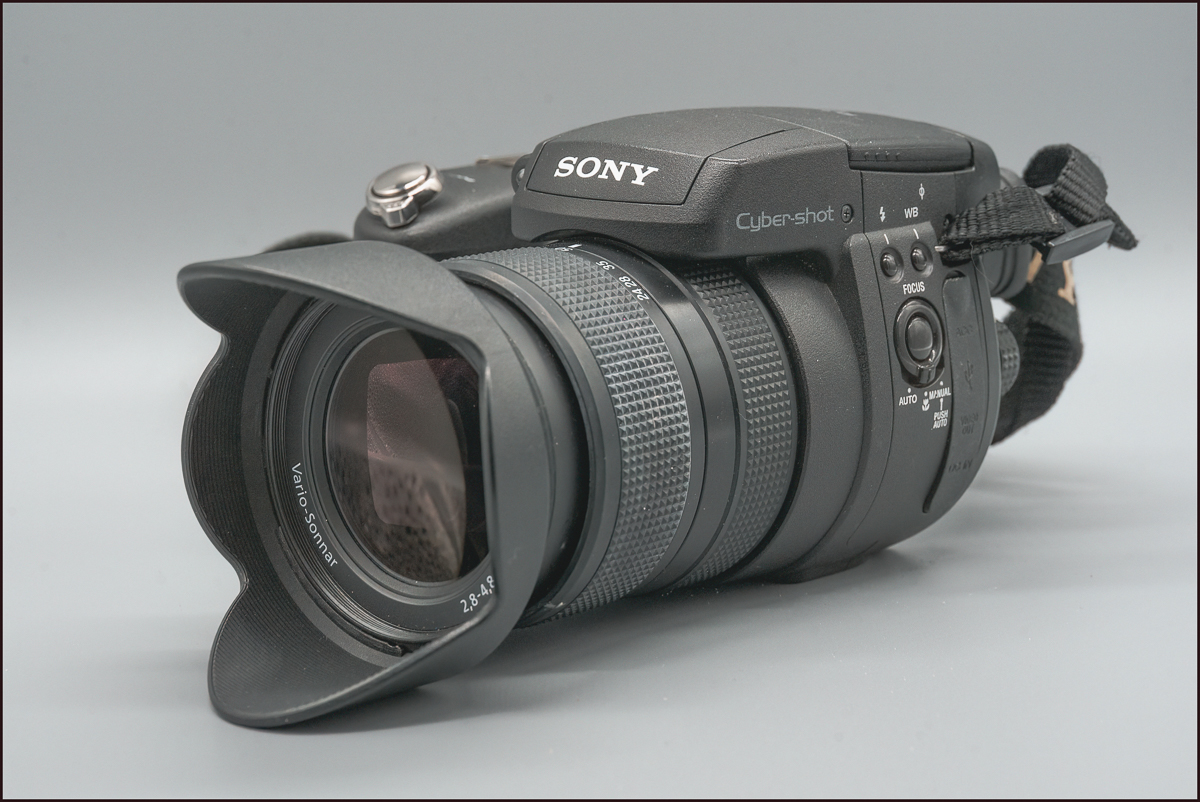
It’s a Sony R1, a bridge digital camera announced by Sony in 2005. It features a 10.3 megapixel APS-C CMOS sensor, a size typically then used in DSLRs and rarely used in bridge cameras, which at that time typically used much smaller sensors This was the first time such a large sensor was incorporated into a bridge camera. Besides the APS-C sensor, the DSC-R1 also featured a 35-120mm equivalent Carl Zeiss Vario-Sonnar T* lens, which was reputed to be very good. At the camera’s launch one reviewer said the lens alone was worth the asking price.

There’s a excellent review on DP Review. Make sure you read it now!! Amazon, the owners of DP Review, are shutting it down imminently – see here for more information.

The conclusion of the review reads:

I’ll start as I shall no doubt finish this little piece of editorial, the lens is worth the price of the DSC-R1 alone. That fact is not to be underestimated, it’s a great lens which provides you with a very useful 24 – 120 mm zoom range (which will be sufficient for the majority of users). Doing the math it’s pretty clear that you have to spend a fairly considerable sum on lenses for a D-SLR to get close to this range and the quality of the DSC-R1’s lens.

The DSC-R1 has been around for several years, the mythical fixed lens digital camera with a large (APS sized) sensor, but only in the minds of many of us. Thankfully Sony were brave enough to do it, to try something totally new and rekindle interest in the ‘prosumer’ fixed lens market which had pretty much been ignored since sub-$1000 digital SLRs came along. I’m glad to report as a prosumer / fixed lens digital the DSC-R1 is so much better than anything that came before it, it’s really not worth comparing it to cameras like the DSC-F828, there’s only so much you can do with a small sensor.

So yes, the DSC-R1 provides you with excellent images via a great lens and noise levels at higher sensitivities which would be impossible to achieve with any other fixed lens digital. However, it’s a little tougher these days, digital SLR’s are truly affordable and their performance has come on in leaps and bounds. Sony played the megapixel game (they had to) and fitted the DSC-R1 with a sensor which would ‘out-number’ cameras like the EOS 350D, however the reality is that (a) the step from 8 MP to 10 MP is so slight so as to be hardly noticeable and (b) the Canon has better in-camera image processing.

So here we come up to the issues. Firstly the DSC-R1’s ISO 800 and 1600 aren’t as good as the Canon (forget ISO 3200). When we first received the R1 we had hoped it would at least be a match but unfortunately it’s not. At ISO 800 images are perfectly usable but you’ll be aware that some detail will be ‘smudged’ by the high ISO NR system. At ISO 1600 you could face some fairly noticeable chroma mottle noise in shadows, something you just won’t get from the Canon.

The second issue is image processing, take a RAW out of the DSC-R1 and run it through Adobe Camera RAW and you can see just what that lens / sensor combination is capable of, however you really need to be pretty dedicated to shoot RAW all the time, 20 MB per RAW file and around 9 seconds to write; I did note that some of our forums users are converting the Sony RAW files to Adobe DNG to save space. That’s not to say JPEG’s aren’t good, they are very good, but you get a whole new appreciation for just how much crisper images could look converting in ACR.

About three quarters of my way through this review my mind was set on a ‘Recommended’ rating, and for a long time that’s how it sat. Then I started to put together the price comparison table (page 20) and I soon realized just what you’re getting. At $1000 you simply can’t get close to the coverage and quality of that lens. Add to that the usable high sensitivities, great build quality, a package which is ‘all in one’, resolution just better than an EOS 350D and final results which can be extremely good indeed. Certainly there are a few niggles with the rest of the camera but at the price they can easily be excused. Hence it’s a bit of a split rating, if you’re an absolute perfectionist who doesn’t mind spending more on lenses and shoots a lot at ISO 1600 you may wish to consider something else, for everyone else I have no hesitation in Highly Recommending the DSC-R1.

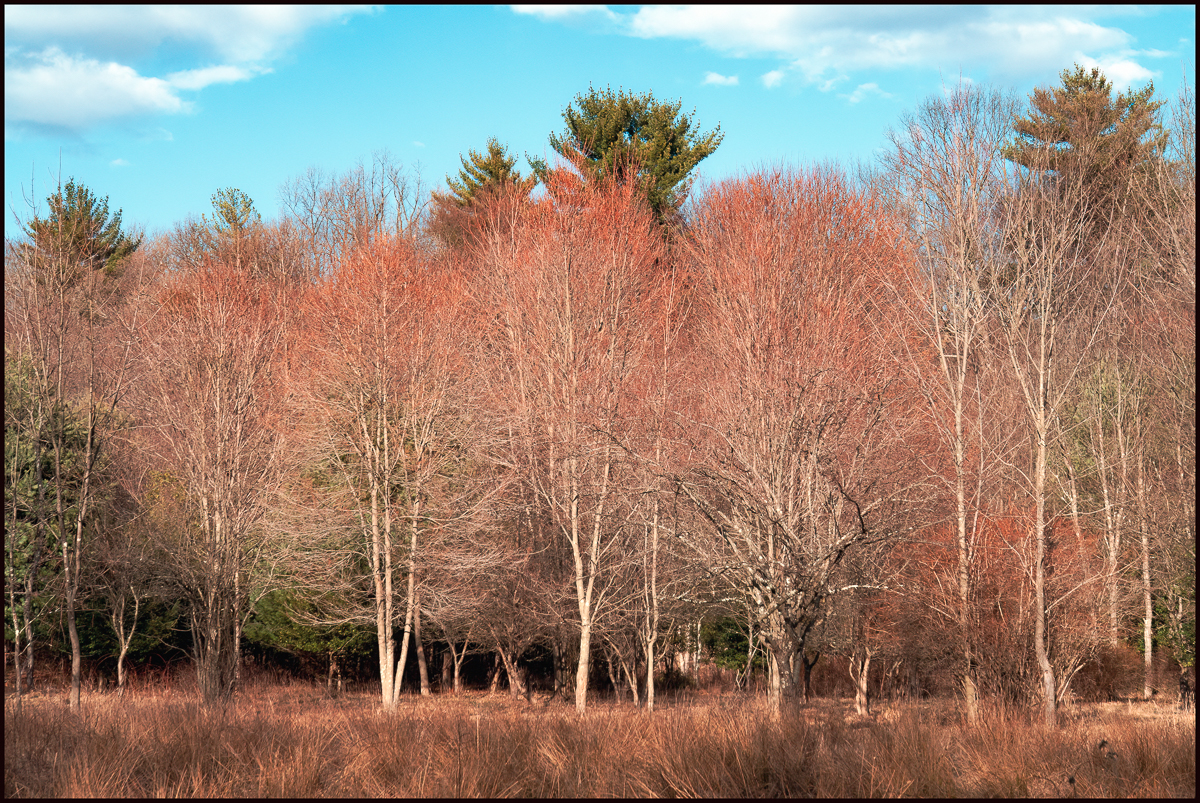
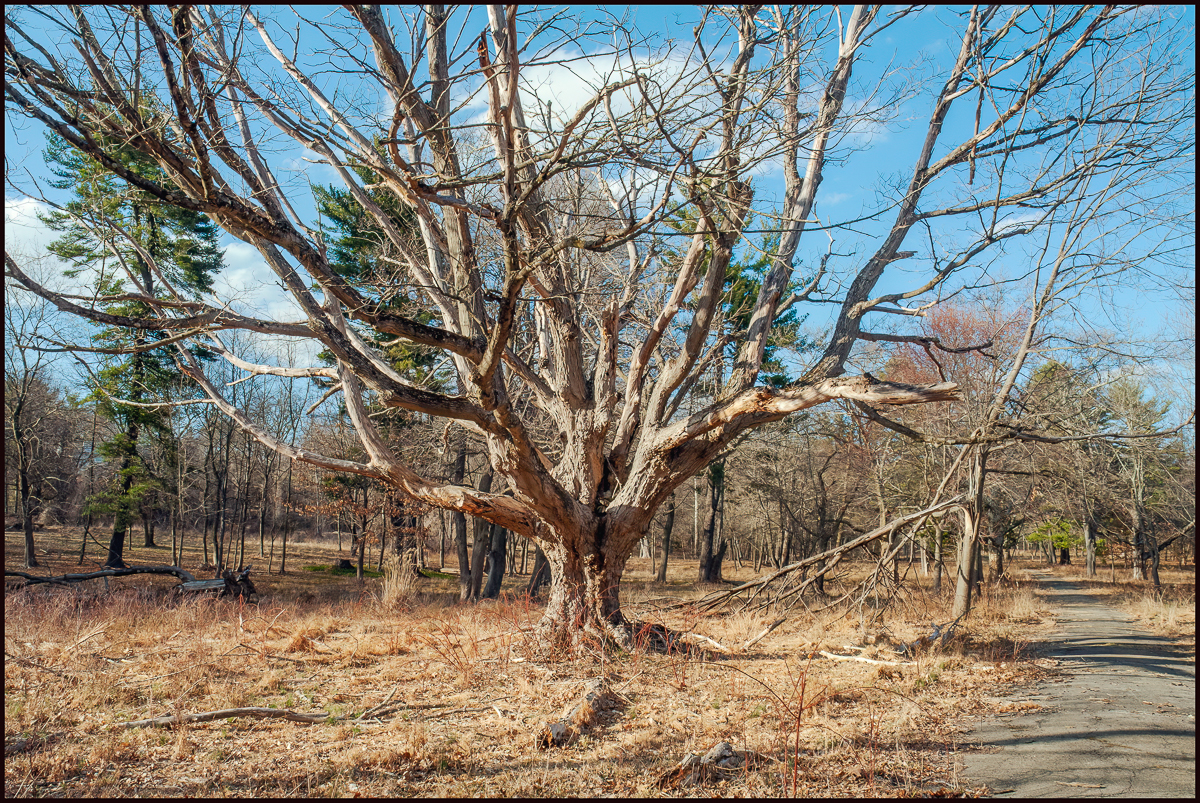
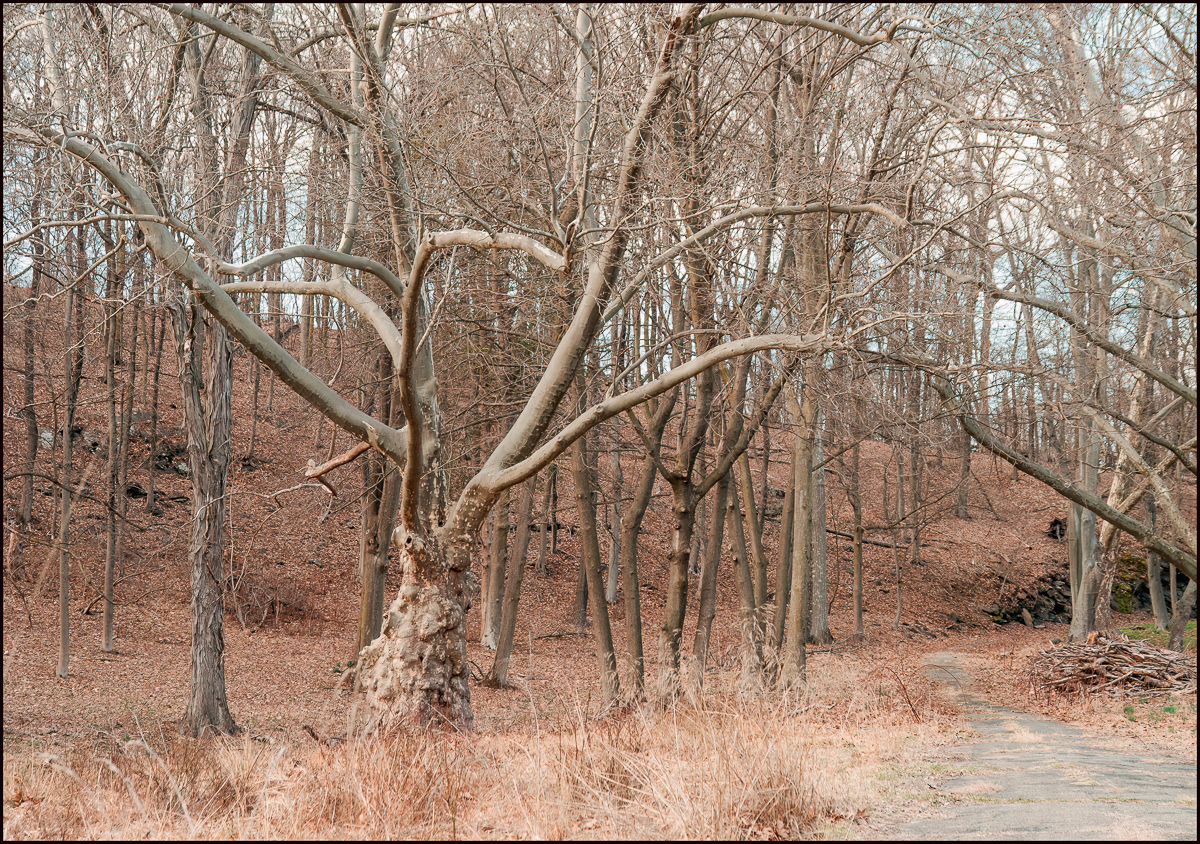
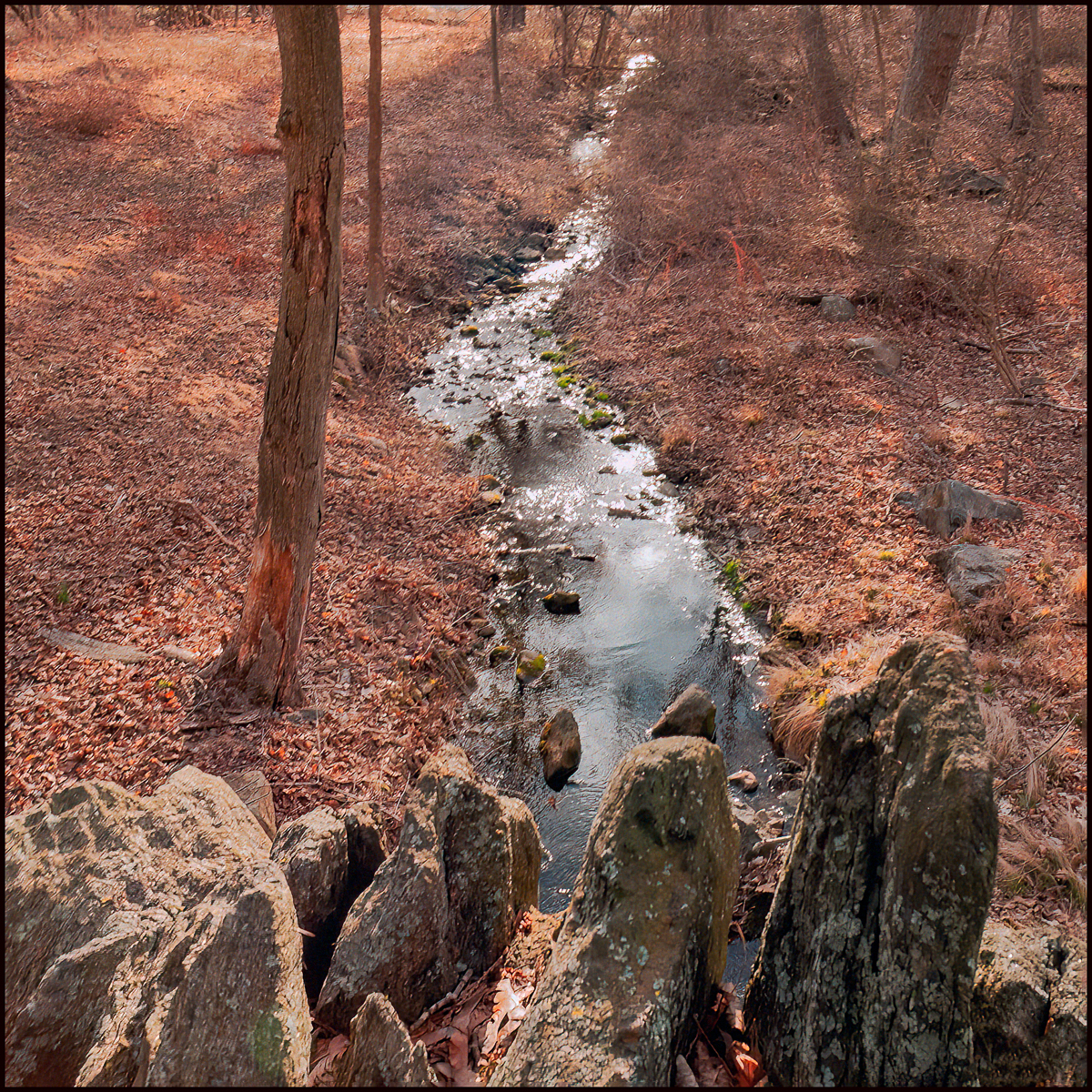
Of course I was keen to try it out so I immediately went to some nearby woodland. I can confirm that it works perfectly. Of course its very old technology so I found a few things frustrating: Low noise levels up to ISO 400, usable but NR affected ISO 800, noisy ISO 1600; Odd top mounted LCD location, which some may not like but which I find quite appealing; Both LCD and Electronic Viewfinder far below those of current cameras; Raw files are enormous for a 10 megapixel camera; slow burst rate (which doesn’t bother me); no bracketing (which does); autofocus not up to current standards. I did struggle to find focus a few times, but that’s probably me, not the camera. About what you would expect from an 18 year old camera.

On the positive side I really enjoyed using it. Its a fun camera that does everything I need in most circumstances. It’s relatively light and comfortable to use. A lot of my photography is intended for use on social media so the 10 megapixel sensor is not much of a hindrance. I don’t usually take pictures of things that move around quickly (e.g. small birds – or any size birds for that matter; car races; athletes etc.) so the older, slower focus is not a problem. And if I really want to take pictures of fast moving objects I have other cameras/lenses for that purpose. The 24-120 zoom range is useful.

And even from a very cursory use the lens appears to be everything that the reviewers say it is.

Below a few examples. I’ll probably add some more after I’ve used it more are gotten familiar quirks.


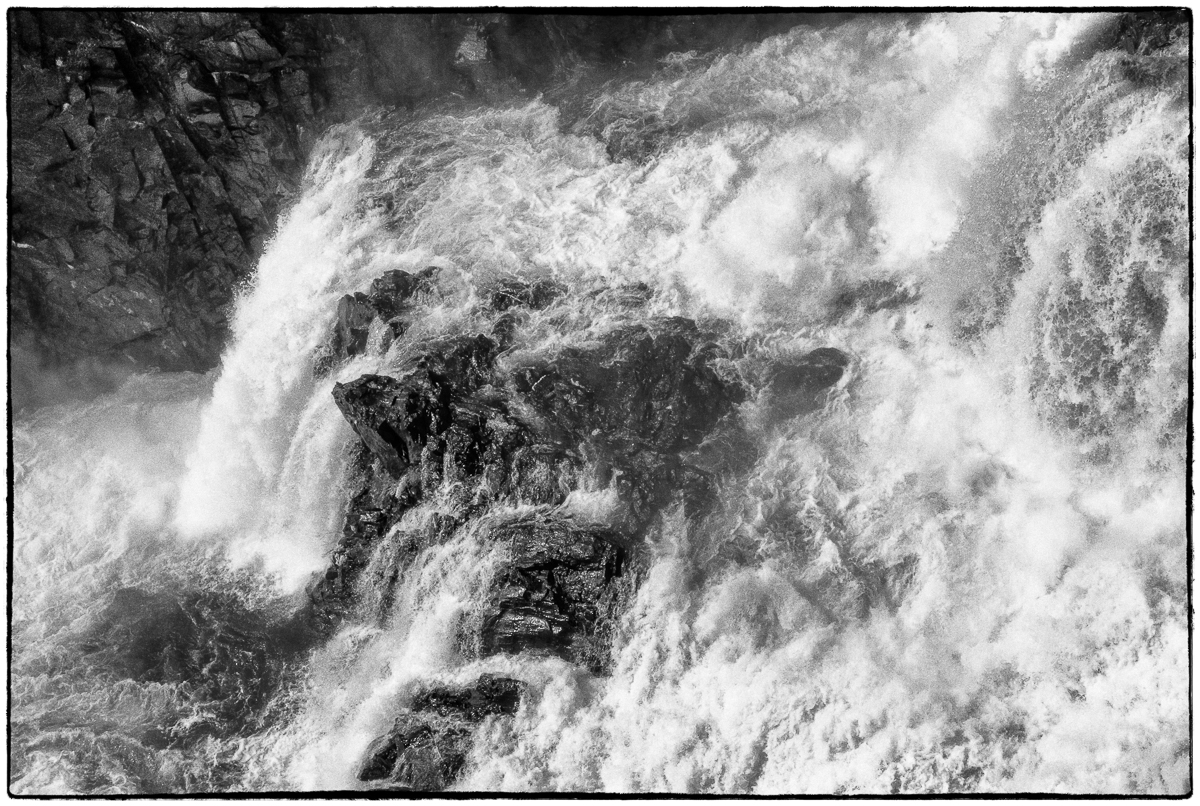
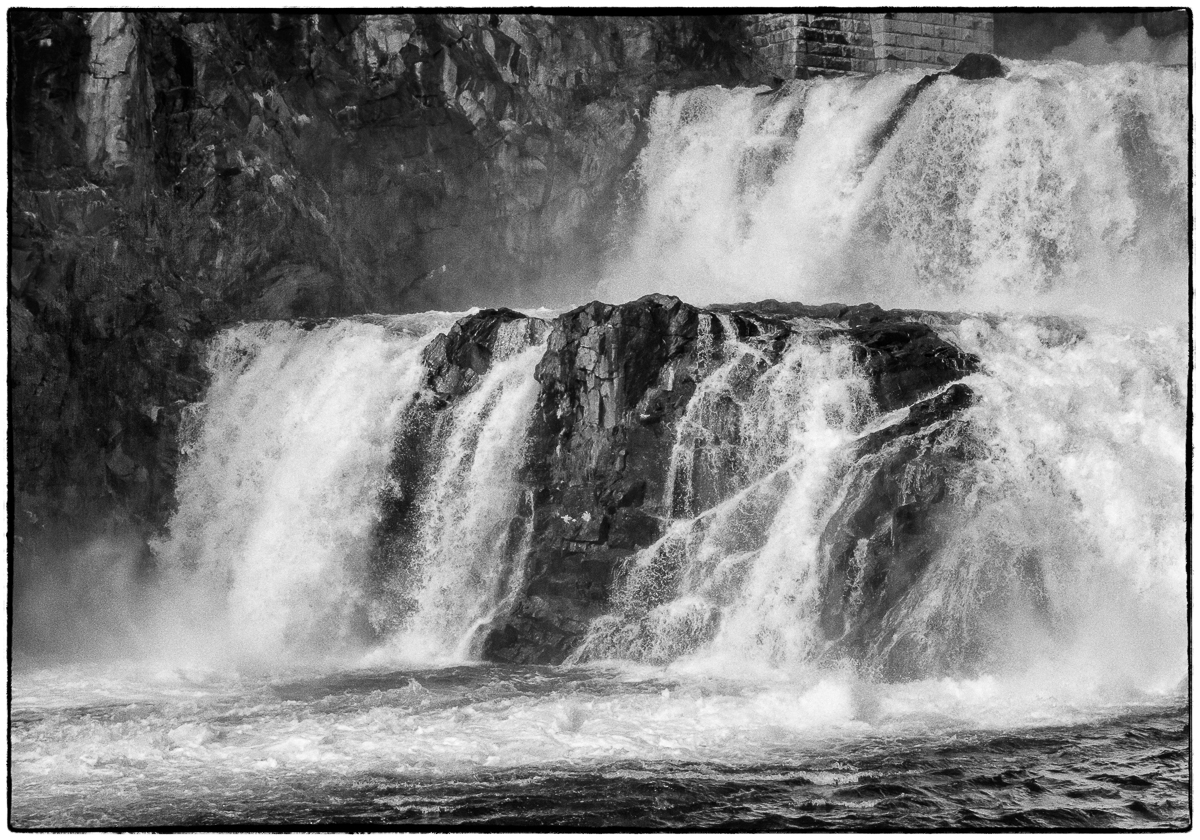
Picture of the camera taken with a Sony A7IV and Venus Optics Laowa 85mm f5.6. All other picture taken with the Sony R1

You’re a photographer. You’re not a Photographer.

Earlier this month I published A Rant. I let loose on a photographer whose work I largely respect and admire except when he goes on at length along the lines of “Your not a photographer if you use an iphone; don’t print your work; don’t use a sophisticated camera etc. You can fill in the blanks.

He’s at it again, this time on his YouTube channel.

This time he made me think about who is a photographer and who isn’t. He seems to feel that unless you reach a particular standard (presumably defined by him) you’re not fit to call yourself a photographer.

I don’t agree.

As far as I can tell a photograph is “a picture made using a camera, in which an image is focused onto film or other light-sensitive material and then made visible and permanent by chemical treatment, or stored digitally.”. Photography is “the art or practice of taking and processing photographs.” It follows that a photographer is someone who practices the art or practice of photography. So everyone who practices photography is a photographer. The word “photography” was created from the Greek roots φωτός (phōtós), genitive of φῶς (phōs), “light” and γραφή (graphé) “representation by means of lines” or “drawing”, together meaning “drawing with light”.

So let’s have no more of this “You’re not a photographer if…”. If you’re using a camera to take/make/capture (whichever you prefer) something, then you’re a photographer.

To me photographers fall somewhere along a whole spectrum depending on their talent, skills, experience etc. On one end are the truly bad photographers (see picture on the left above taken by me sometime in the 1980s), on the other are people like Robert Frank (see picture on the right above) who’s acknowledged to be a superb photographer. All other photographers are somewhere in between.

So it’s not a question of “You’re a photographer – You’re not a photographer”. Rather it’s “You’re a bad photographer; You’re a mediocre photographer”; You’re a good photographer” etc. “I think that’s what my blogging/Youtubing friend is getting at.

A tale of two tombstones and the fall of a great banking dynasty

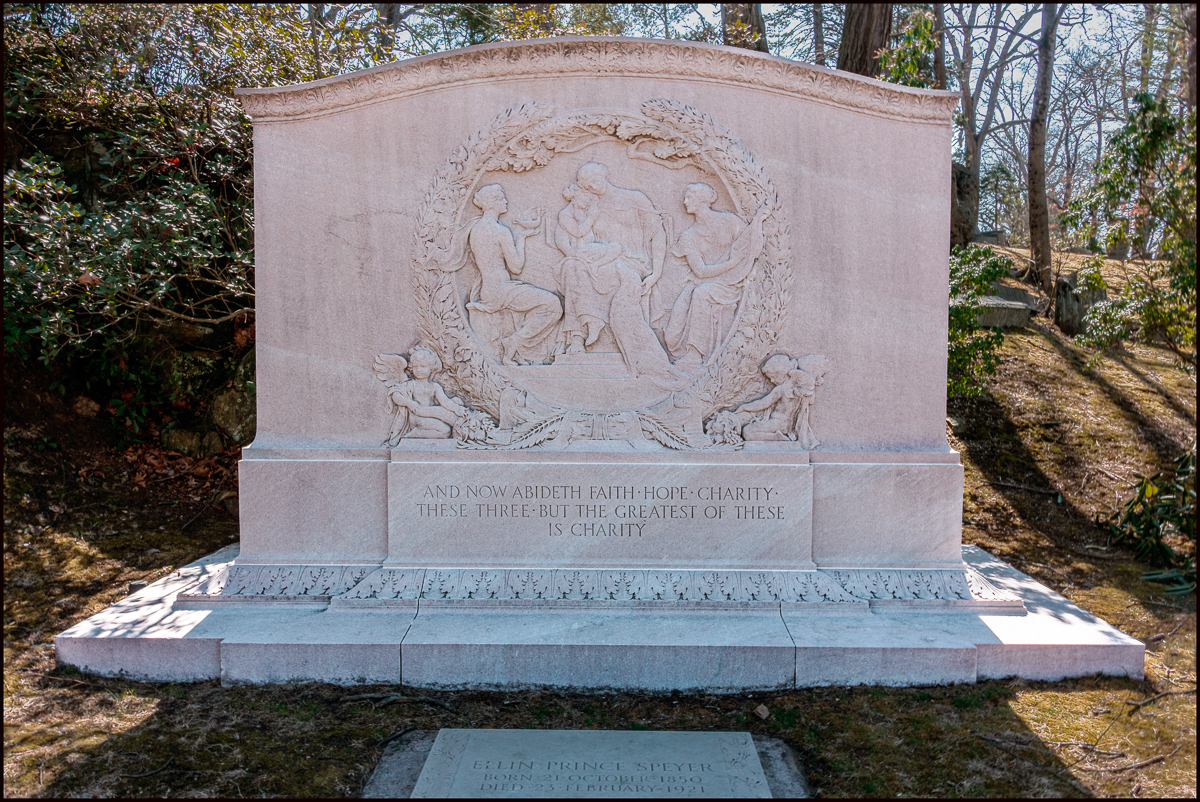
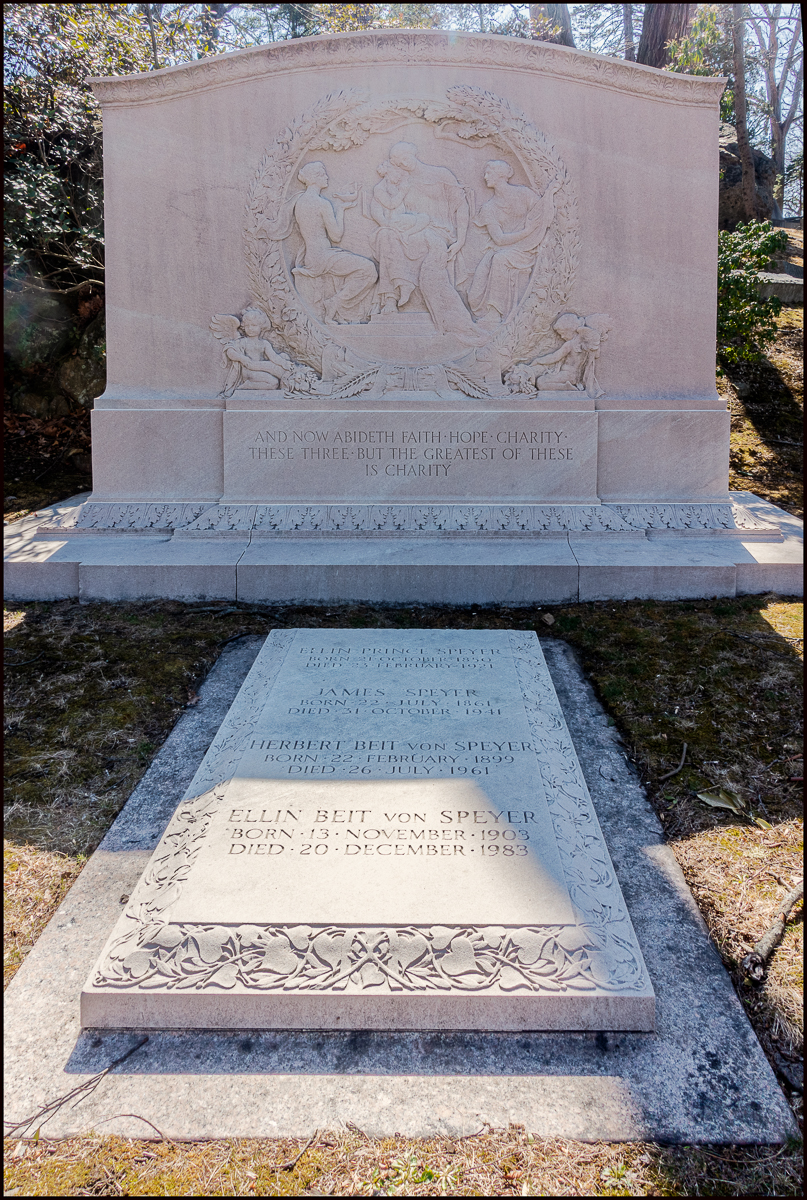
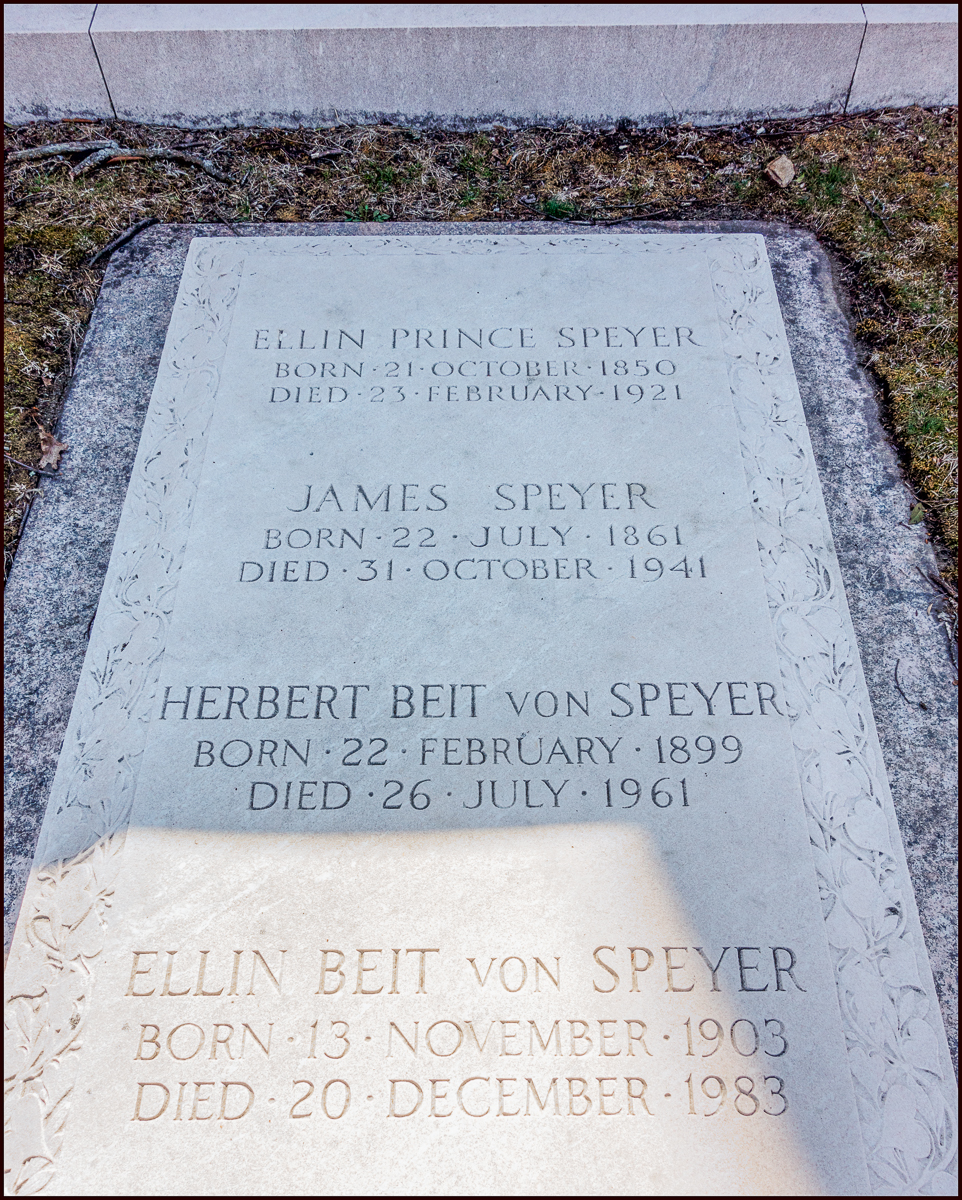
In an earlier post (See: V. Everit Macy Grave Site) I mentioned that I had been surprised to find not only that the Speyer grave site was right next to it, but also that I had already taken a picture of it. The gravesite contains the graves of James Speyer, Ellin Prince Speyer (his wife), Herbert Beit von Speyer (his nephew, his obituary can be found here) and Ellin Beit von Speyer (his niece). For more on the Speyer family see here.


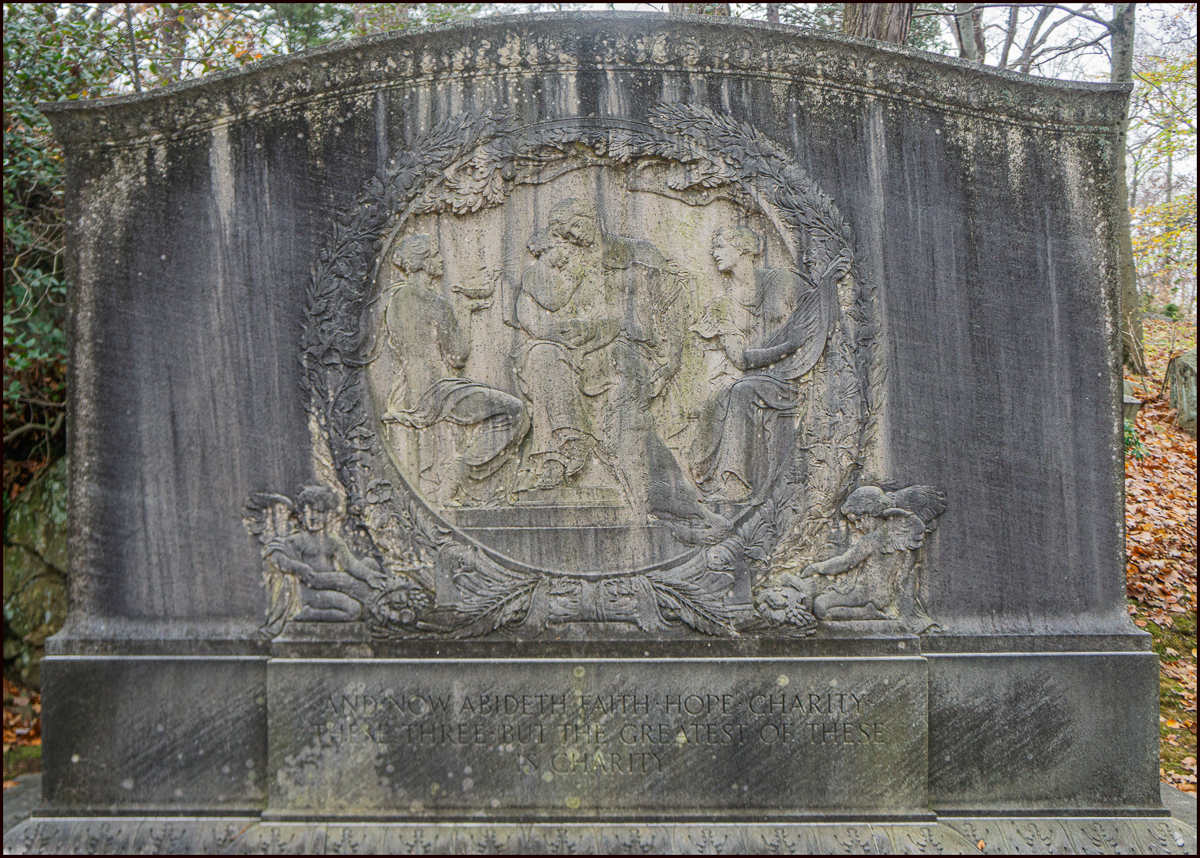
One of the reasons I might have missed this grave site may be that back in 2020 when I was last there it didn’t look the way it does now. You can see from this picture that it was rather dirty. The picture at the top of this post shows it as it looks today. It’s obviously been cleaned recently. Another reason might have been that I was rather taken by the impressive carving and didn’t think to look down at the grave.


I’ve mentioned in earlier posts that I’m particularly interested in the Speyer Family because my house is on the site of Waldheim, the mansion built by James Speyer in Briarcliff Manor, NY. I even have some vestiges of former estate buildings in and around my garden (See: Some Ruins). Because of this interest I recently acquired a copy of “The Fall of the House of Speyer. The Story of a Banking Dynasty” by George W. Liebmann. I haven’t read it yet, but it looks interesting. The book sleeve describes it as follows:

The dramatic story of the last fifty years of the Speyer investment banking family, a Jewish family of German descent, is surprisingly little known today, yet at the turn of the twentieth century, Speyer was the third largest investment banking firm in the United States, behind only Morgan and Kuhn, Loeb. It had branches in London, Frankfurt and New York, and the projects it financed included the Southern Pacific Railroad, the Los Angelese Aqueduct, the London Underground, the infrastructure of the new Cuban Republic, and the major railroads of Mexico, Brazil, Bolivia, Ecuador, and the Philippines. Later, it was the first major banking firm to finance Germany’s Weimar Republic, as well as providing the League of Nations loans to Hungary, Greece and Bulgaria and the newly invented revenue bonds for the Port of New York Authority.

Equally remarkable were the philanthropy achievements of the two brothers who ran the firm – James Speyer in New York and Edgar Speyer in London – and their families. These included sponsorship of the London Proms, the King Edward VII and Poplar Hospitals and the Whitechapel Art Gallery in England; The University Settlement, the Speyer Animal Hospital, the Speyer School for Gifted and Talented Children, the Provident Loan Society and the Museum of the City of New York in the United States and the University of Frankfurt and the sulfa drug research of Paul Ehrlich in Germany.

Yet, the firm was doomed by the nationalist passions aroused by World War I. Its English partner was denaturalised and exiled; its American partner enjoyed reduced standing because of its German ancestry; and the firm’s Frankfurt branch withered from want of capital and closed with the coming of the Third Reich, its German partner fleeing into exile. The firm was dissolved in 1939, just before the outbreak of war, and a surprisingly anticlimactic end to one of the great international banking houses of modern times.

Once I’ve finished it I’ll donate it to the Briarcliff Manor-Scarborough Historical Society.

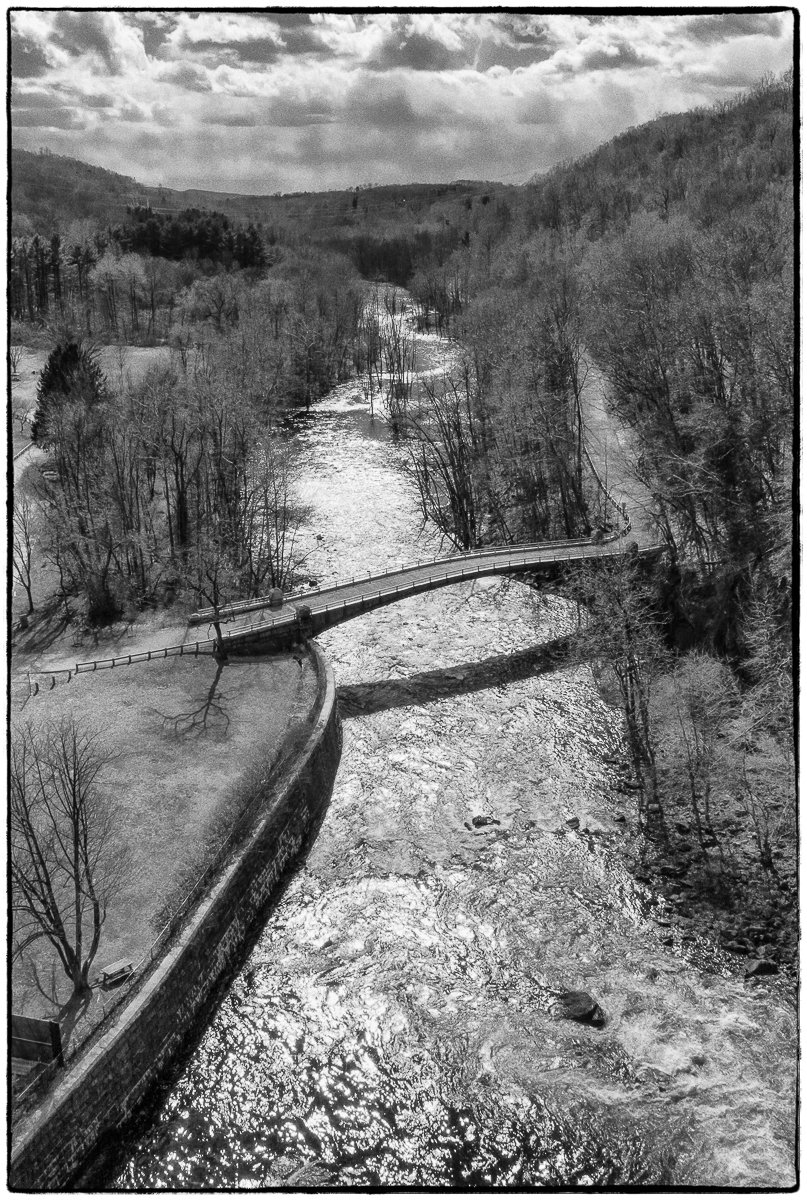
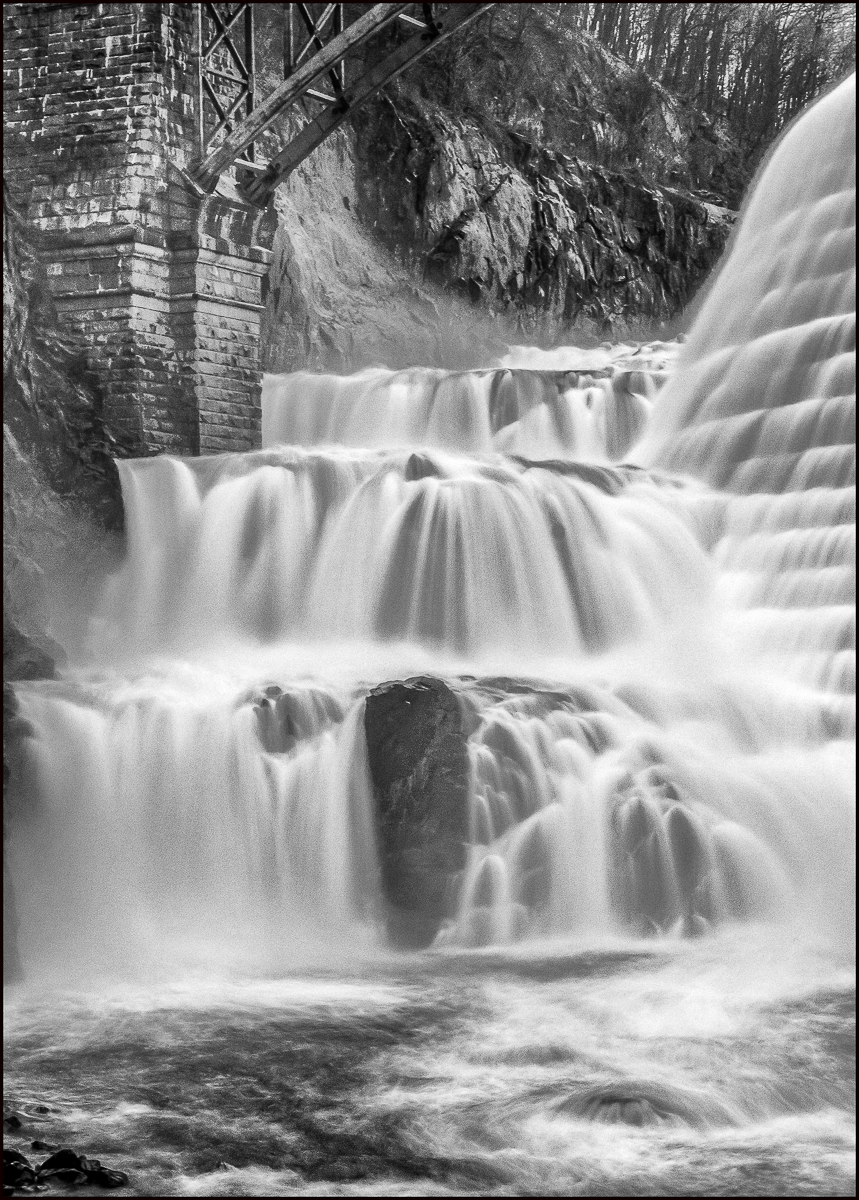
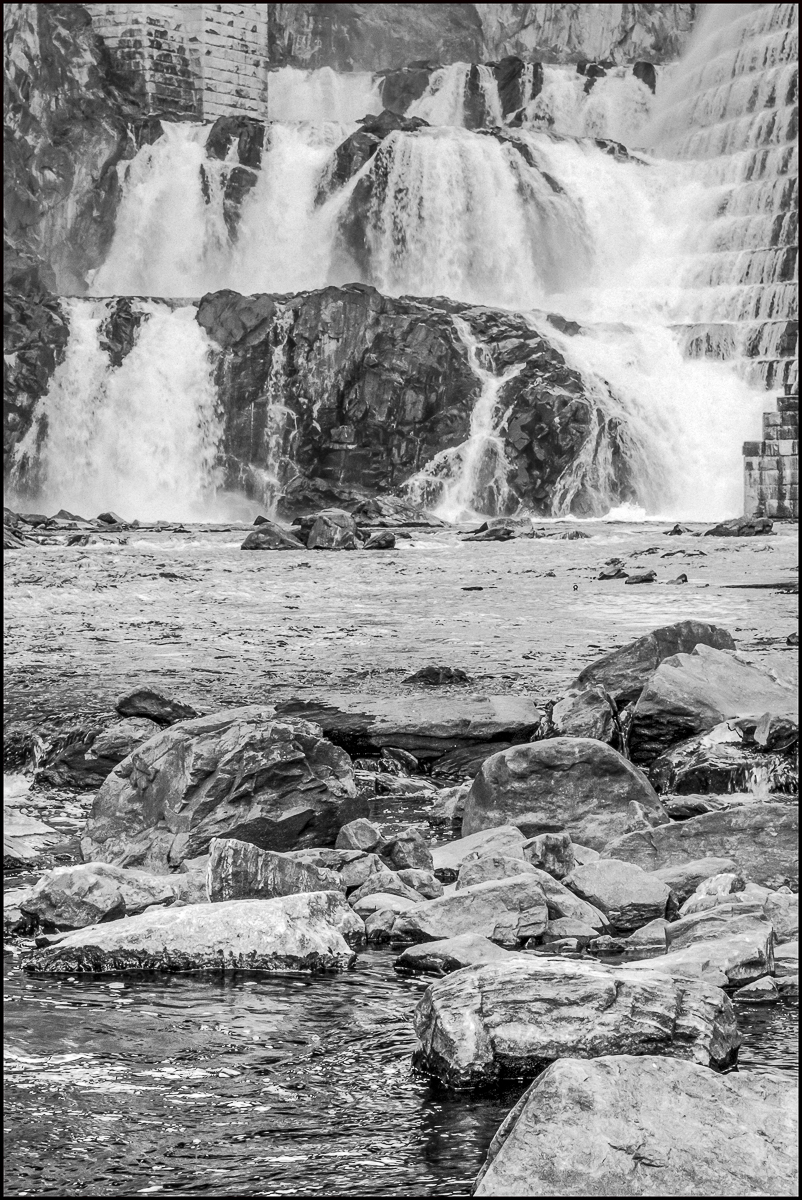
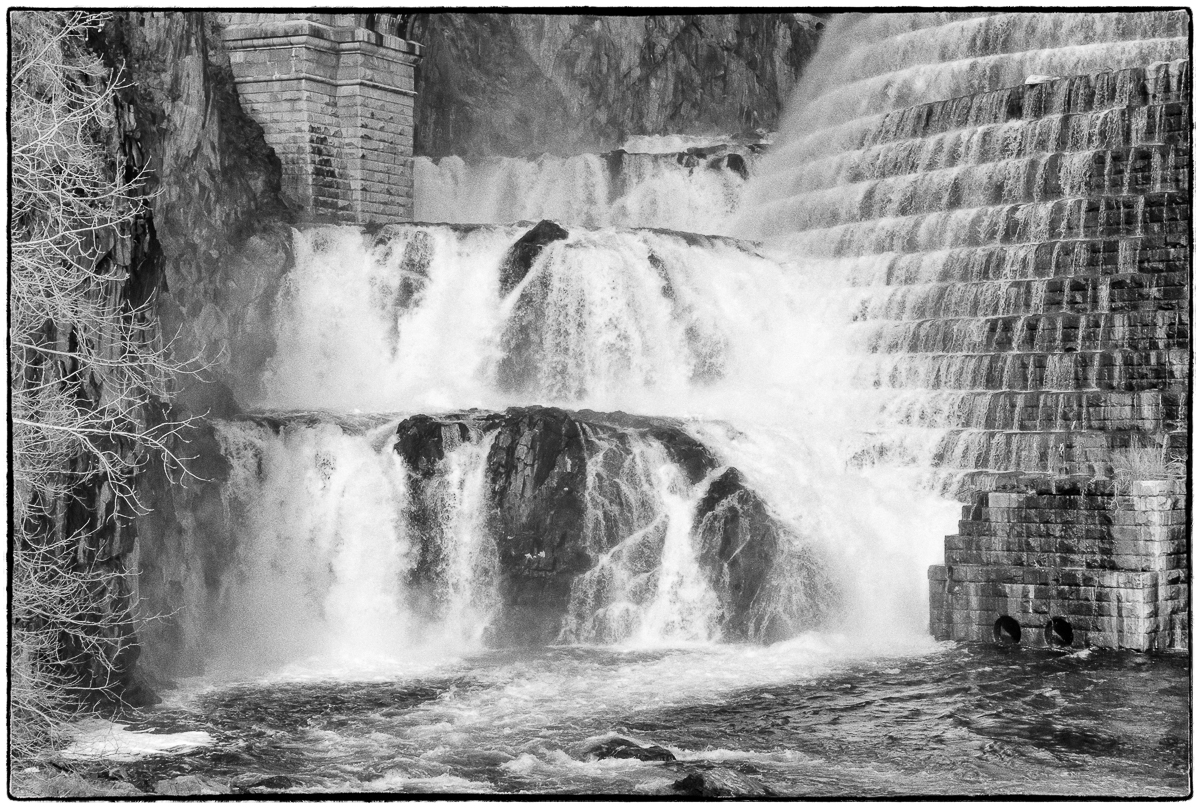
First three pictures taken with a Sony RX100 M3, fourth picture with a Sony A6000 with Sony E 18-55mm f3.5-5.6 OSS.