A Cat falling asleep

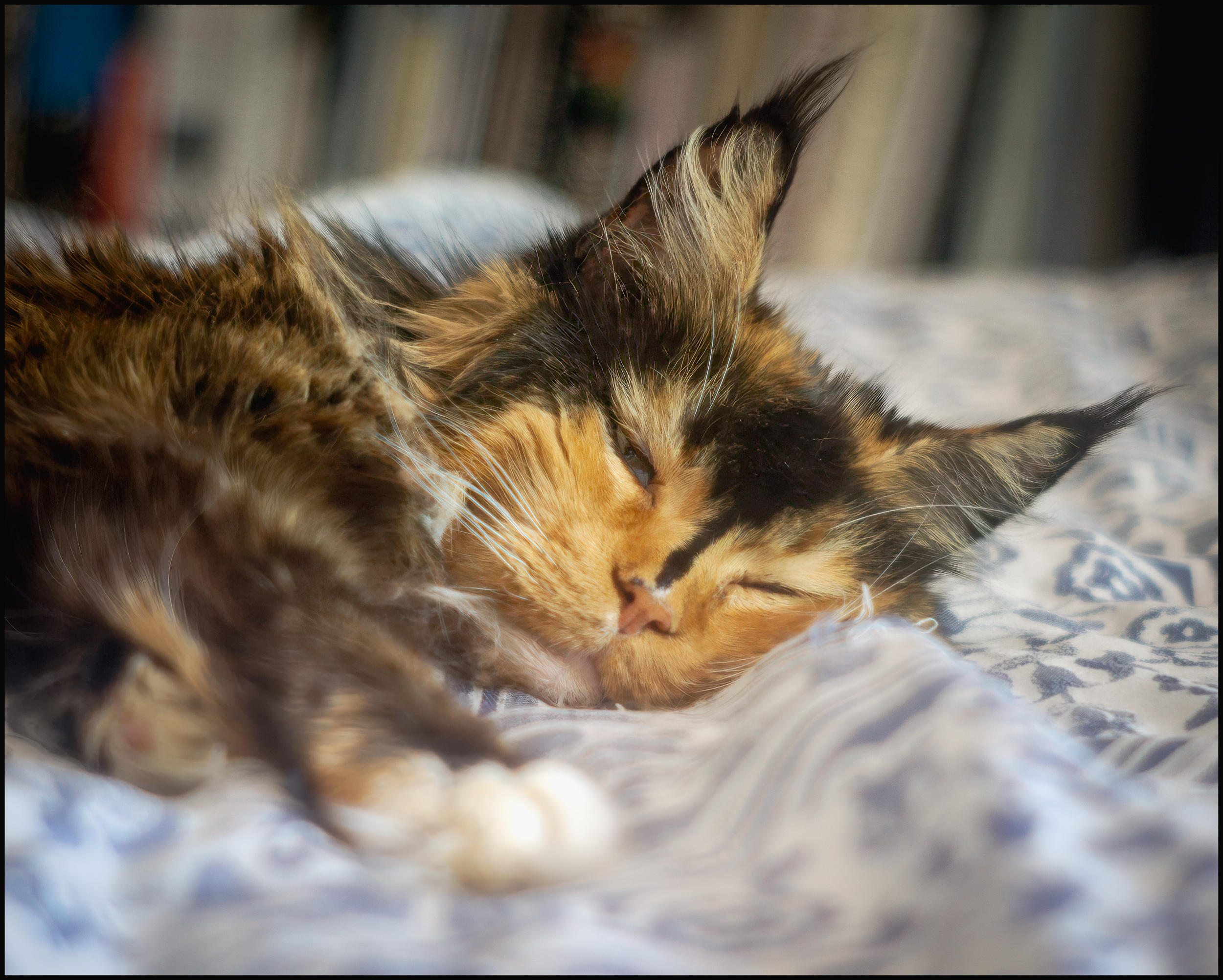
This is my cat, Isa. I don’t take very many pictures of her, partly because there are already plenty of cat pictures on the internet.

This one came about when I was fiddling around with a vintage lens. When I bought my Sony NEX 5N back in 2011 one of my reasons for buying it was the I’d read that you could use relatively inexpensive vintage, usually manual focus, lenses on it with the right adapter(s). I did this for some time, but the allure of autofocus (along with other goodies that modern technology brought along) eventually took me away from manual focus lenses.

Since I still have a number of old, manual focus lenses I decided to give them a try again. This one is from the former Soviet Union. It’s a copy of a Zeiss f2 Sonnar and it’s called a Jupiter 8 It’s in Leica Thread Mount (LTM). There’s a review of it here: Jupiter 8 – A giant amongst the stars. For some older pictures taken when I first got it see here.

While many lenses are nowhere near as sharp of as contrasty as modern lenses, I feel that in recent times sharpness and contrast have been overemphasized. Sure, modern lenses are sharp and contrasty, almost clinically so, but to me they lack the “character” (whatever that is) of the older lenses. And I rather like that character, in certain situations.

My copy was made in 1963.

Taken with a Sony A7IV and Krasnogorsk Mechanical Works (KMZ) 50mm f2, Jupiter 8.
Wisteria

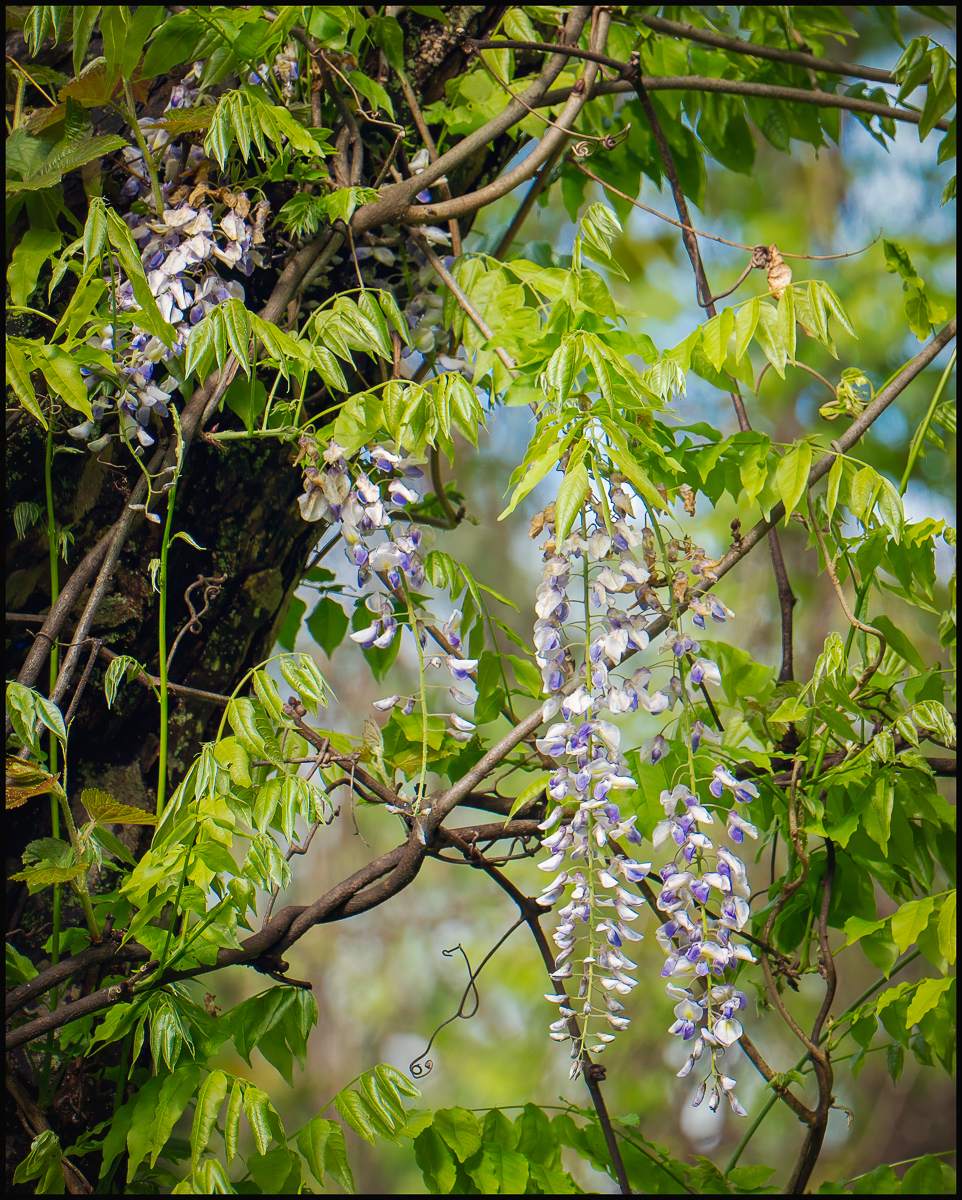
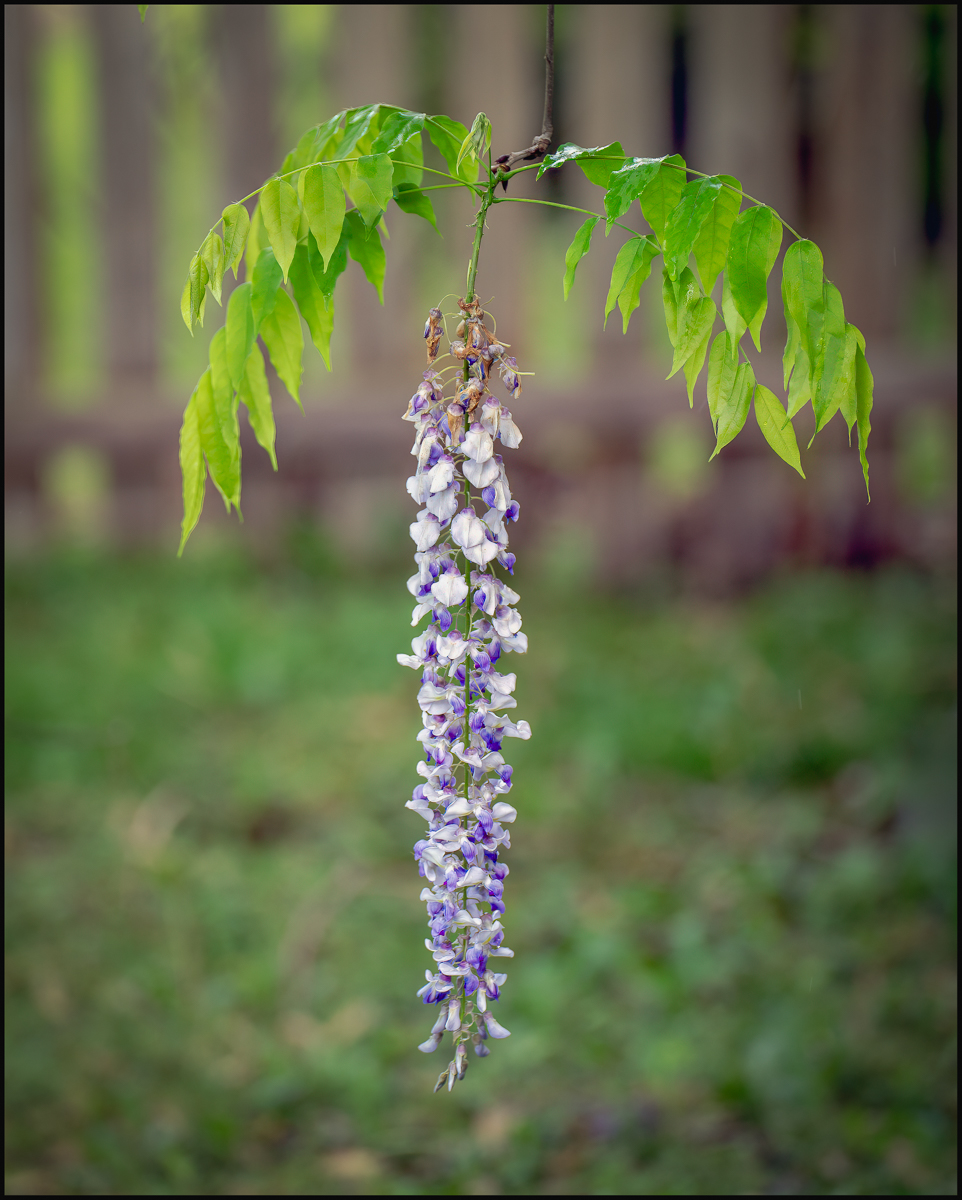
Wisteria is lovely to look at. When we first came to live here there was a lot of it. But over time it seemed to disappear. Actually, it was still there and still growing, but it didn’t bloom. In the last couple of years, it’s started to bloom again.

The first picture was taken of a Wisteria actually growing up the side of my house. The second is growing over a tree in the meadow (actually it’s more like an incipient forest nowadays) in front of my house.

The only problem is that if you don’t like and/or don’t want it, it’s extremely difficult to get rid of.

Taken with a Sony A7IV and Tamron Di III VXD A056SF 70-180mm f2.8.

Jacques Henri Lartigue. The Invention of an Artist by Kevin Moore

According to Amazon:

As a young boy, Jacques Henri Lartigue (1894-1986) set about passionately recording his life in photographs, first documenting his domestic circle and later capturing the auto races, air shows, and fashionable watering holes of the Belle époque. His images have so bewitched modern viewers that even scholars have failed to see them clearly.

In Jacques Henri Lartigue: The Invention of an Artist, Kevin Moore puts to rest the long-held myth of Lartigue as a naïve boy genius whose creations were based on instinct alone. Moore begins by exploring the milieu in which Lartigue became a photographer, examining his father’s crucial role in teaching him the latest techniques as well as the larger context of the turn-of-the-century craze for amateur photography.

Two events brought Lartigue before the public eye in America and created the Lartigue myth: In the summer of 1963, the first exhibition of Lartigue’s work in the United States was held at the Museum of Modern Art, which hailed him as an important modernist photographer, a forerunner of the art-documentary style of the 1960s. That fall, Life magazine published a feature presenting his work as an optimistic and sentimental prologue to World War I. Both treatments portrayed him as a naïve genius and Lartigue happily participated in shaping this new persona.

In Jacques Henri Lartigue: The Invention of an Artist, Moore successfully challenges the Lartigue myth using examples from popular magazines and the cinema. Illustrated with more than fifty of Lartigue’s photographs and drawings as well as press imagery from the period, the book offers a radical reassessment of the photographer and his work.

Many photobooks feature large images, and very little text – maybe a short introductory essay if you’re lucky. This is not one of those books. It’s rather text heavy. Certainly, there are lots of photographs, but they’re mostly rather small.

I enjoyed it, but then I like a lot of text.

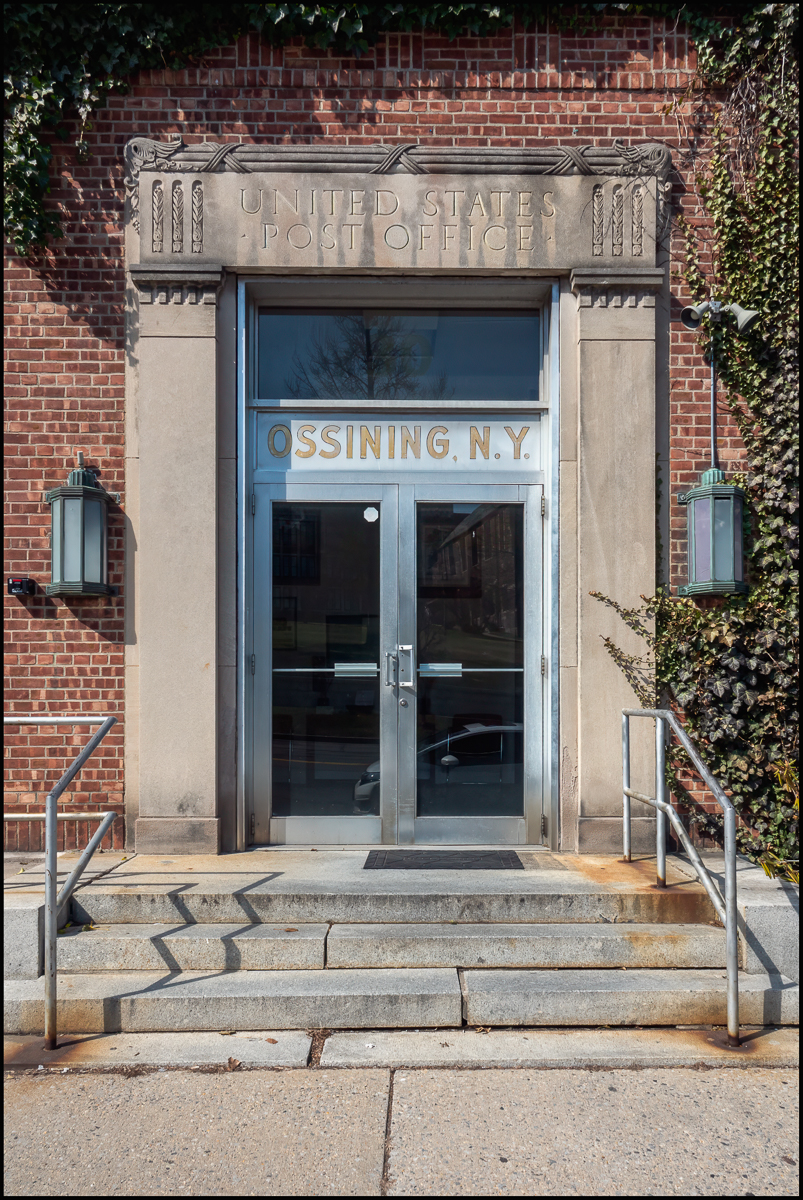
Not a post office

This building, which clearly bears the words “US Post Office, Ossining, NY” is, of course, no longer a Post Office. The left part of the building is a hairdresser, and the right part a doctor’s office.

As the Great Depression set in and construction slowed, one more public building completed the Downtown Historic District. The post office had outgrown its space at the Barlow Block again and needed to move. As part of the national relief programs, many new post offices were built. Arthur Ware contributed a restrained Classical Revival one-story brick building on South Highland, between the Cynthard Building and the Presbyterian Church, on the site of what had been the last remaining house on the west side of Main in the district. It was completed in 1933, the newest contributing property in the district.

As the 20th century became the 21st. The post office moved out of this building for a newer facility on the south side of Main Street, in the space cleared three decades earlier by urban renewal opposite the western extent of the district. Its former building (this one) was converted to retail use.

Taken with a Sony RX10 IV