Springwood – Fala

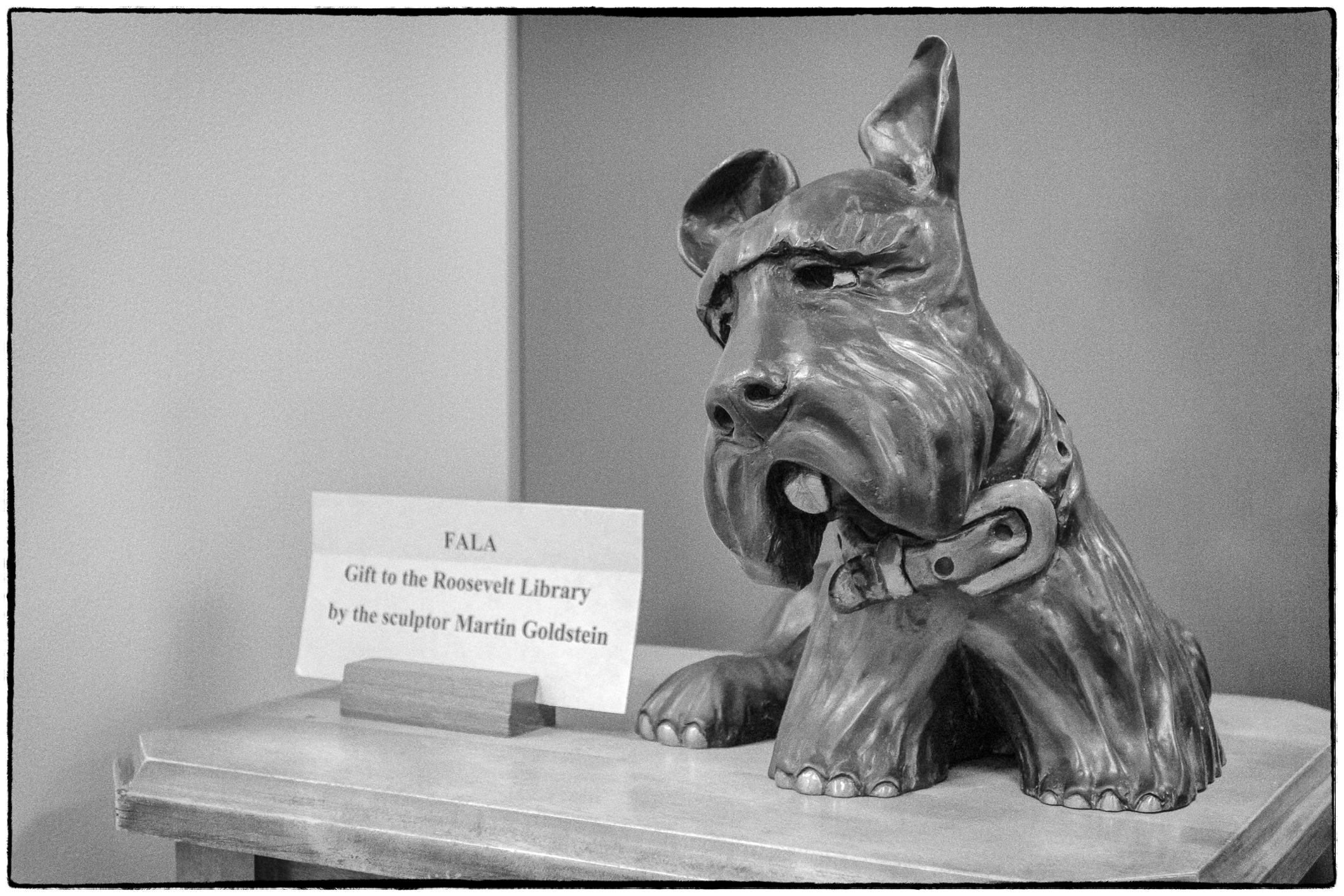
Fala was FDR’s Scottish Terrier. Fala was devoted to him and FDR was devoted to Fala.

One story in particular resonated in this election season of insults and attacks. It seems that FDR had been insulted by his Republican opponents (it seems not much has changed). In response he had these words to say during on of his radio broadcasts:

These Republican leaders have not been content with attacks on me, or my wife, or on my sons. No, not content with that, they now include my little dog, Fala. Well, of course, I don’t resent attacks, and my family don’t resent attacks, but Fala does resent them. You know, Fala is Scotch, and being a Scottie, as soon as he learned that the Republican fiction writers in Congress and out had concocted a story that I’d left him behind on an Aleutian island and had sent a destroyer back to find him—at a cost to the taxpayers of two or three, or eight or twenty million dollars—his Scotch soul was furious. He has not been the same dog since. I am accustomed to hearing malicious falsehoods about myself … But I think I have a right to resent, to object, to libelous statements about my dog.

Source: “1944 Radio News, 1944-09-23 FDR Teamsters Union Address – Fala (27:45–30:08)”. Internet Archive. Retrieved 2014-06-02. The speech itself can be found here.

Apparently the idea to turn the Republican attack into a joke came from no less a person than Orson Welles.

Fala’s devotion to FDR seems to have continued beyond the grave. According to Fala Still Seeking His Master Franklin Roosevelt he:

…roams Washington Square Park in search of the thirty-second president of the United States. He had been the dog of Franklin but not really Eleanor Roosevelt. She declared that the dog just barely tolerated her but adored his master. Fala knew Washington Square Park well, when Eleanor lived at 29 Washington Square West from 1942 to 1949. This had been intended to be the urban digs for FDR because it was wheelchair accessible.

I imagine that FDR’s love of dogs (which I can understand. I’m pretty fond of terriers myself) is the reason why Springwood is so “dog friendly”. And thankfully it is or Harley and myself would have been standing in the rain for 1 1/2 hours waiting for my wife and brother-in-law to finish at the Presidential Library.

Springwood – On the trails

When we arrived at Springwood the rain had more or less stopped so while my wife and brother-in-law did the tour, I went exploring with the dog. After walking around a bit near the house I was pleased to discover that there is a fairly extensive system of trails. They meander around the property and then go off in one direction up to Val-Kill and Top Cottage; and in the other into the neighboring Vanderbilt Property.

Not far from the beginning of the trail you pass an orchard with a nice view back to the house (see picture above).

Farther along I passed these odd structures. The one on the right appeared to be a seat of some kind, but I have no idea what the other one (on the left) is.

Continuing you pass a waterfall.

We kept walking but as we did so the rain was getting worse and worse. After about thirty minutes I could see that Harley was not enjoying the walk too much (and he’s usually pretty blasé about rain) so we turned around and walked thirty minutes back to the Visitor’s Center. By this time we were both soaked. Luckily the Visitor’s Center is dog friendly so we were able to sit indoors to dry out and wait for the others to finish their tour.

I’d like to come back on a nicer day and explore the trails more thoroughly.

Springwood – The Franklin Delano Roosevelt residence in Hyde Park, NY

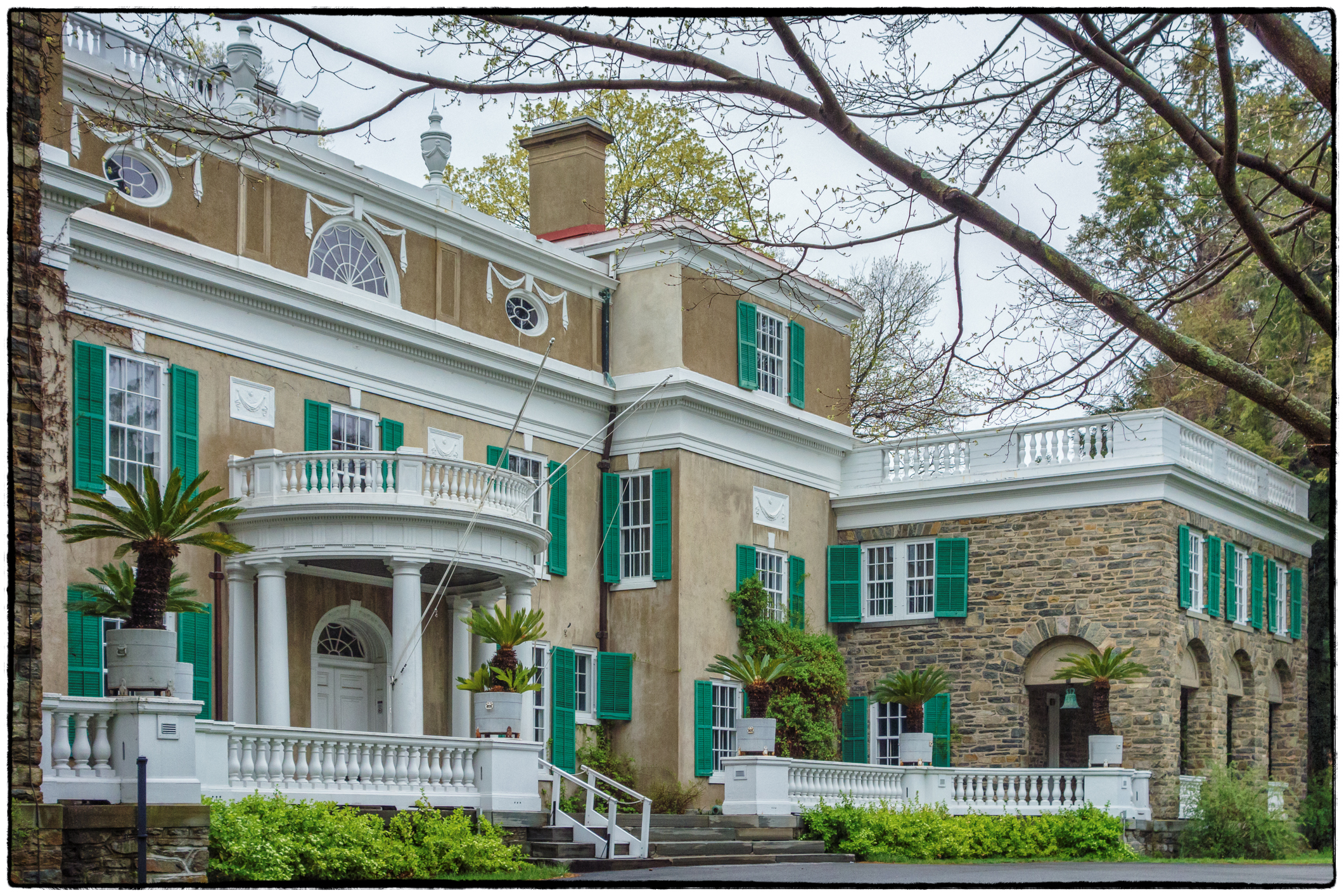
This is the first in a series of posts on Springwood, the Franklin Delano Roosevelt mansion in Hyde Park, NY.

In a previous post I mentioned that my brother-in-law was staying with us and that we had been looking for places to take him. We had already taken him to Boscobel and decided that we’d try Springwood. Unfortunately, when the day came to go it had started to rain. We debated whether or not we would still go but lacking a better alternative we decided to go ahead with our plans – particularly since my brother-in-law is a big fan of FDR. I’d been to the house before and had seen the interior, but hadn’t really seen the grounds. So my wife and brother-in-law did the house tour I decided to take the dog for walk around the grounds (luckily the rain had more or less abated at that time).

FDR was born at Springwood, frequently visited it during his life and is buried there. He once said: “All that is within me cries out to go back to my home on the Hudson River”. He also designed and built the first US Presidential Library there. It’s still there and is part of the tour. In fact my wife and brother-in-law spent more time there than on the tour. They only left because I got tired of sitting around in the visitor’s center (it had started to rain again by that point) and requested that they do so.

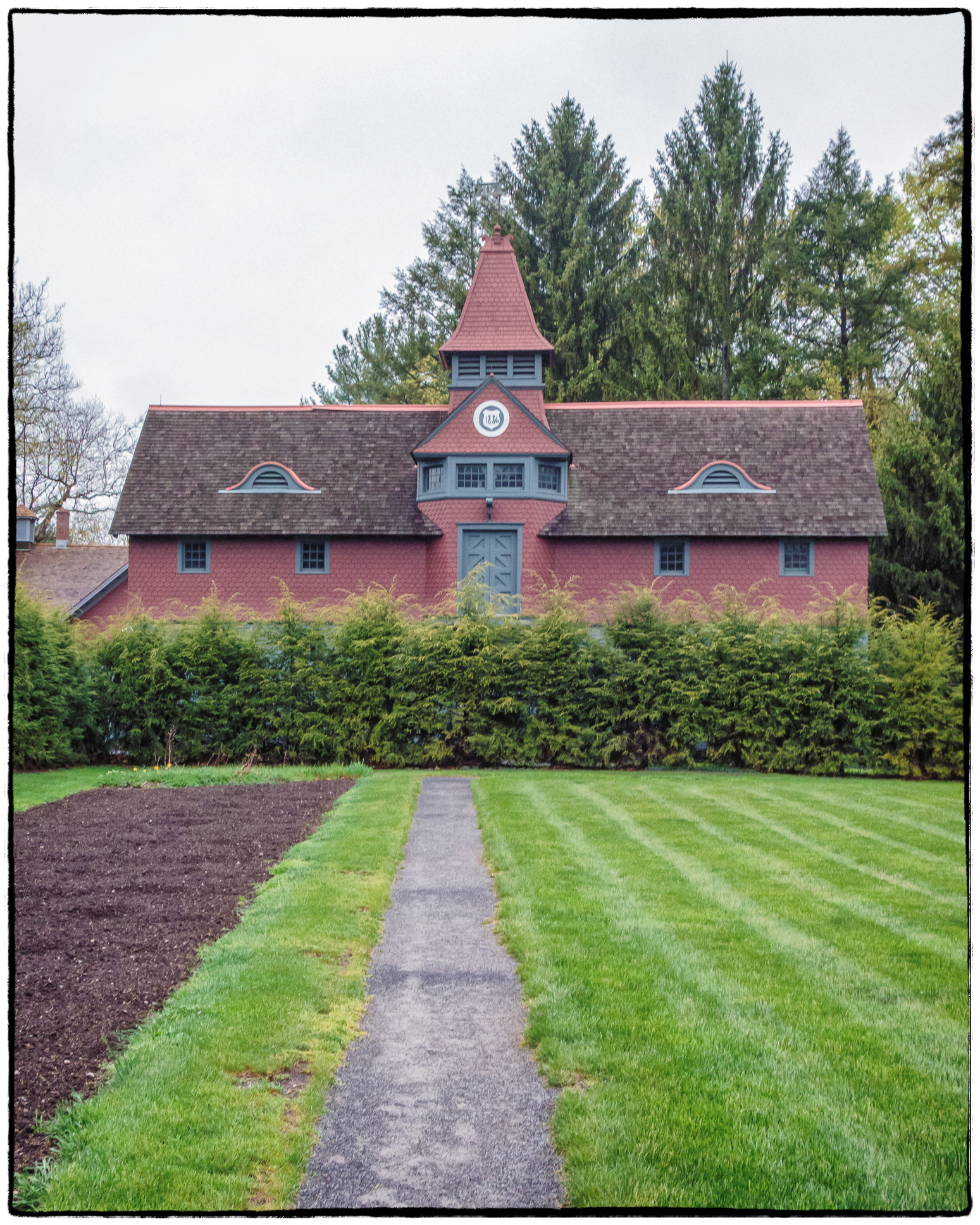
The stables.

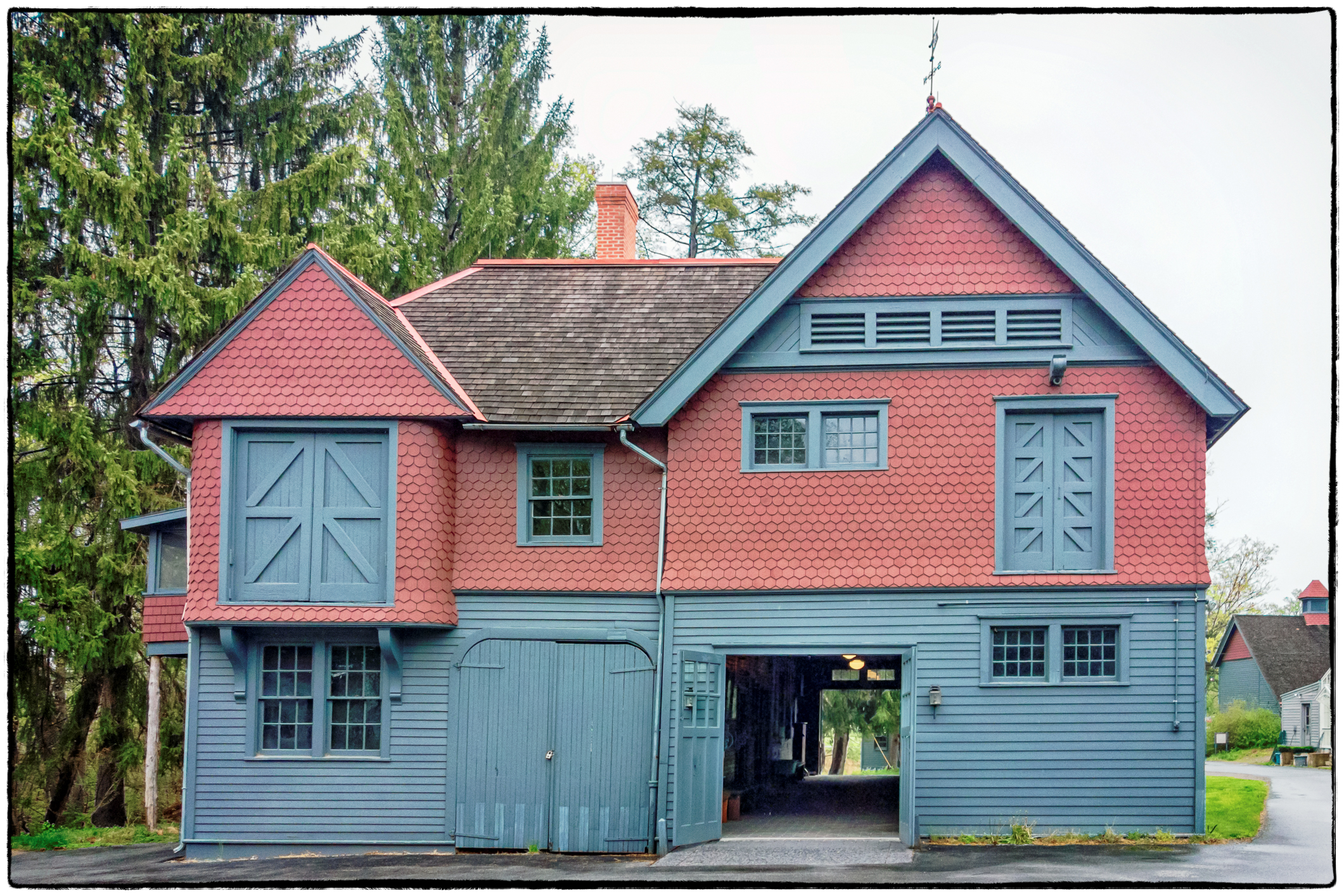
Another view of the stables.

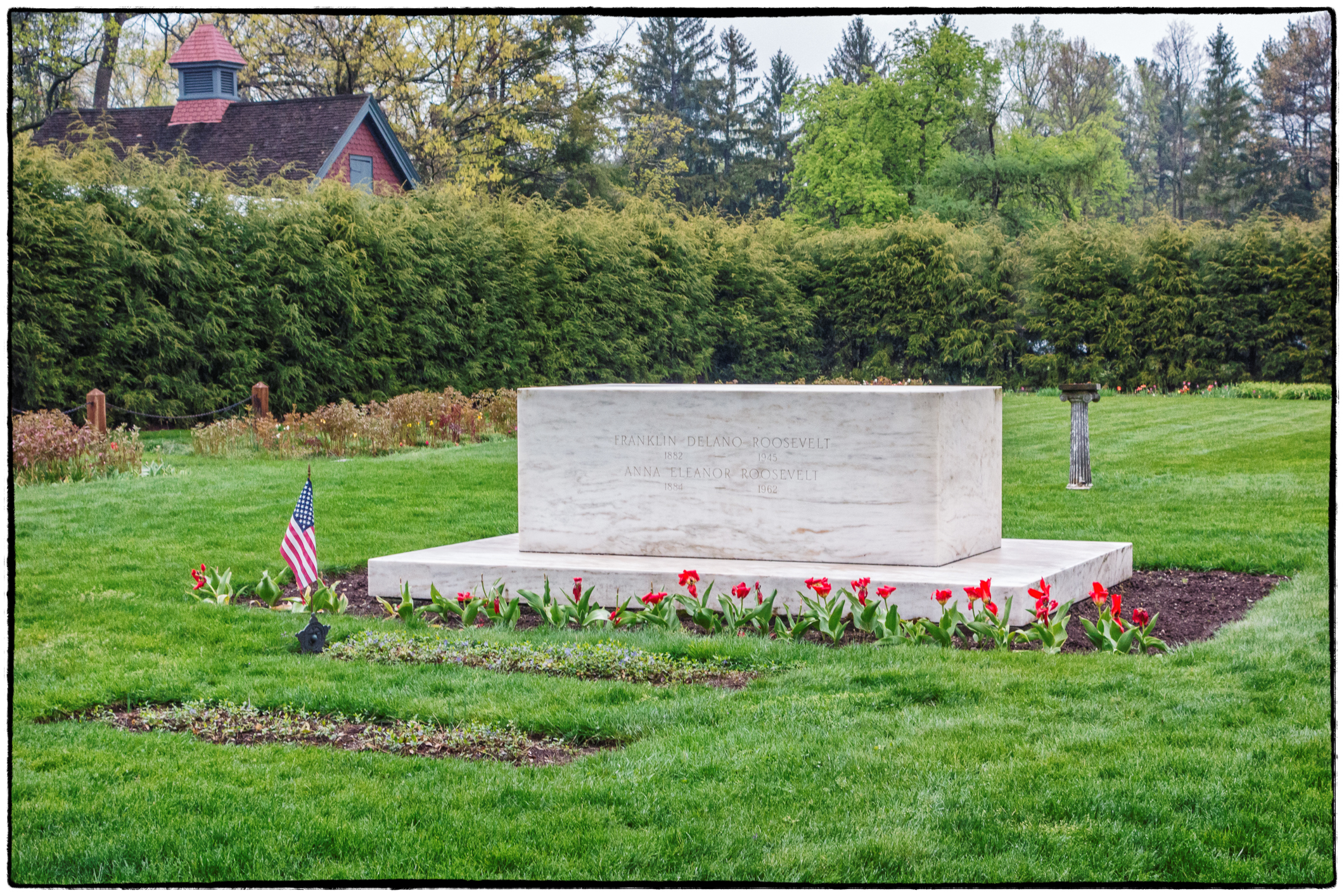
Eleanor and Franklin’s grave site. Their dog, Fala is also buried here – right by the column in the background.

Boscobel – Sculptures of Hudson River School Artists

This is the fourth of a series of posts on Boscobel, a lovely Federal style mansion in Garrison, NY the other three being: Boscobel – Objects; Boscobel – Interiors; and Boscobel – Rose Garden.

This one covers a new exhibit on the grounds: a series of sculptures of Hudson River School Artists by Greg Wyatt whose web site provides the following biography:

Greg Wyatt received his Bachelor of Arts degree in art history at Columbia College in 1971 and studied classical sculpture for three years at the National Academy of Design’s School of Fine Arts under sculptor Evangelos Frudakis, N.A. He earned his Masters of Arts degree at Columbia University, Teachers College in ceramic arts in 1974; in 1976 he was an Ed. D. candidate having completed his doctoral coursework in art education.

Greg Wyatt is a native of Grand View-on-Hudson, New York located south of Nyack, home of Edward Hopper. Mr. Wyatt was nurtured in the artistic tradition of his native Hudson River Valley at an early age by his father, Professor William Stanley Wyatt, painter and fine arts professor at Columbia University and the City College of the City University of New York.

Cast bronze is his medium of artistic expression. Dr. Anthony Janson, editor of W.H. Janson’s History of Art, has stated that Greg Wyatt’s work is based on the philosophy of “spiritual realism.” His mature style merges realistic images inspired by his readings of the Great Books content with creative masses of form, space and energy. His lyricism evokes poetry while his work process is attentive to craftsmanship and the fine details of cast bronze.

The Boscobel site describes the exhibit as follows:

Boscobel is installing a permanent sculpture garden honoring the 19th-century Hudson River School of Painting. Not a singular institution but a movement, this 19th-century endeavor was developed by artists inspired by the natural beauty of the Hudson River and the nearby Catskill and Adirondack Mountains. In time, the painters ventured well beyond this region, studying in Europe and traveling to America’s far west and the Canadian Rockies.

Upon completion, the Hudson River School Artists Garden will feature ten of the movement’s leading painters. These include: Thomas Cole, Frederic Church, Jasper Cropsey, Asher B. Durand, Albert Bierstadt, Sanford Gifford, Thomas Moran, Worthington Whittredge, George Inness and John Frederick Kensett.

Greg Wyatt, the sculptor of the garden’s bronze portraits, has a studio in Hastings-on-Hudson, appropriately located in the Hudson Valley region.

The project will be completed in the fall of 2017.

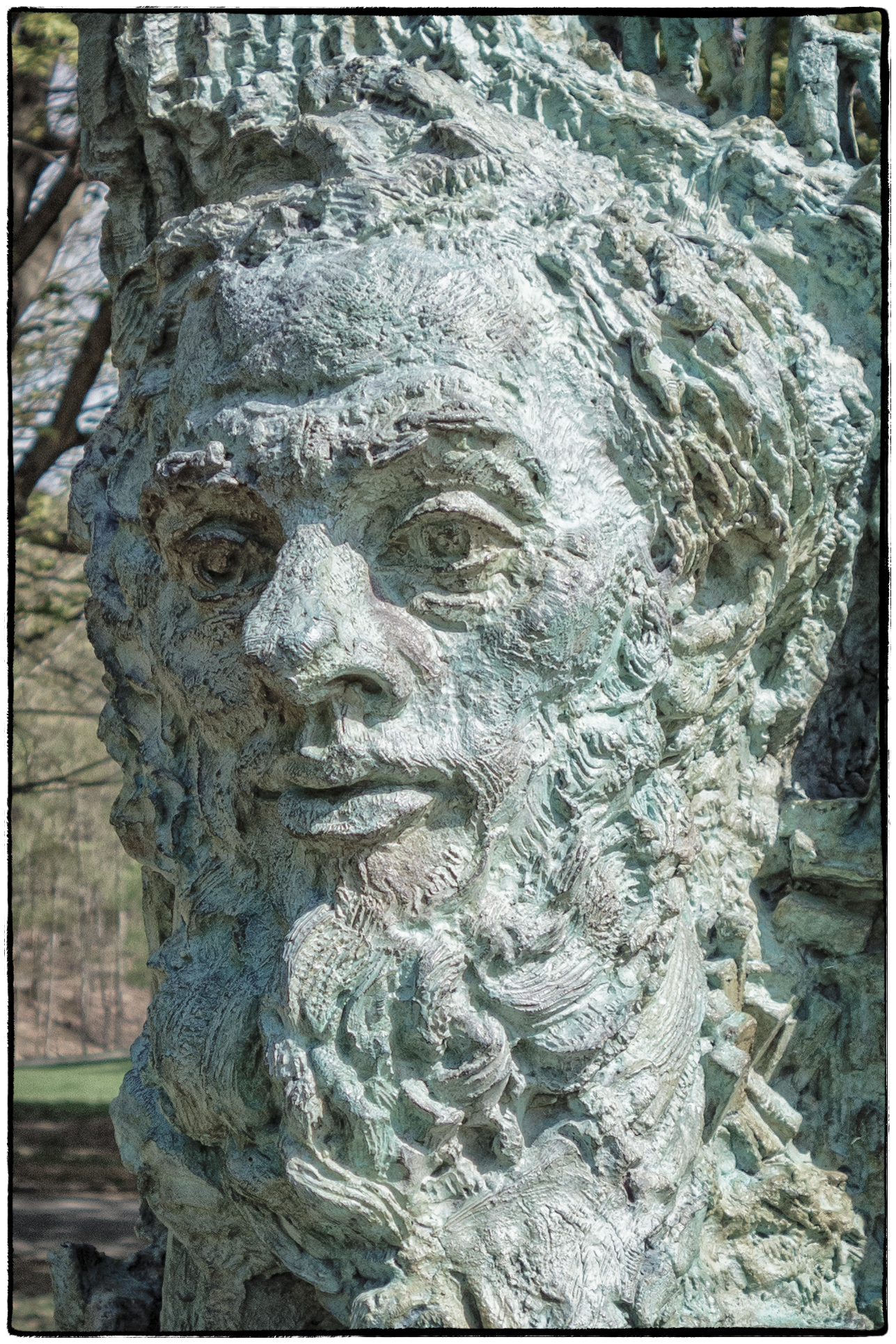
So far four of the projected ten sculptures have been completed (see below).

Thomas Cole.

Jasper F. Cropsey.

Asher B. Durand.

Frederick E. Church.