NY Air Show – B25 Mitchell

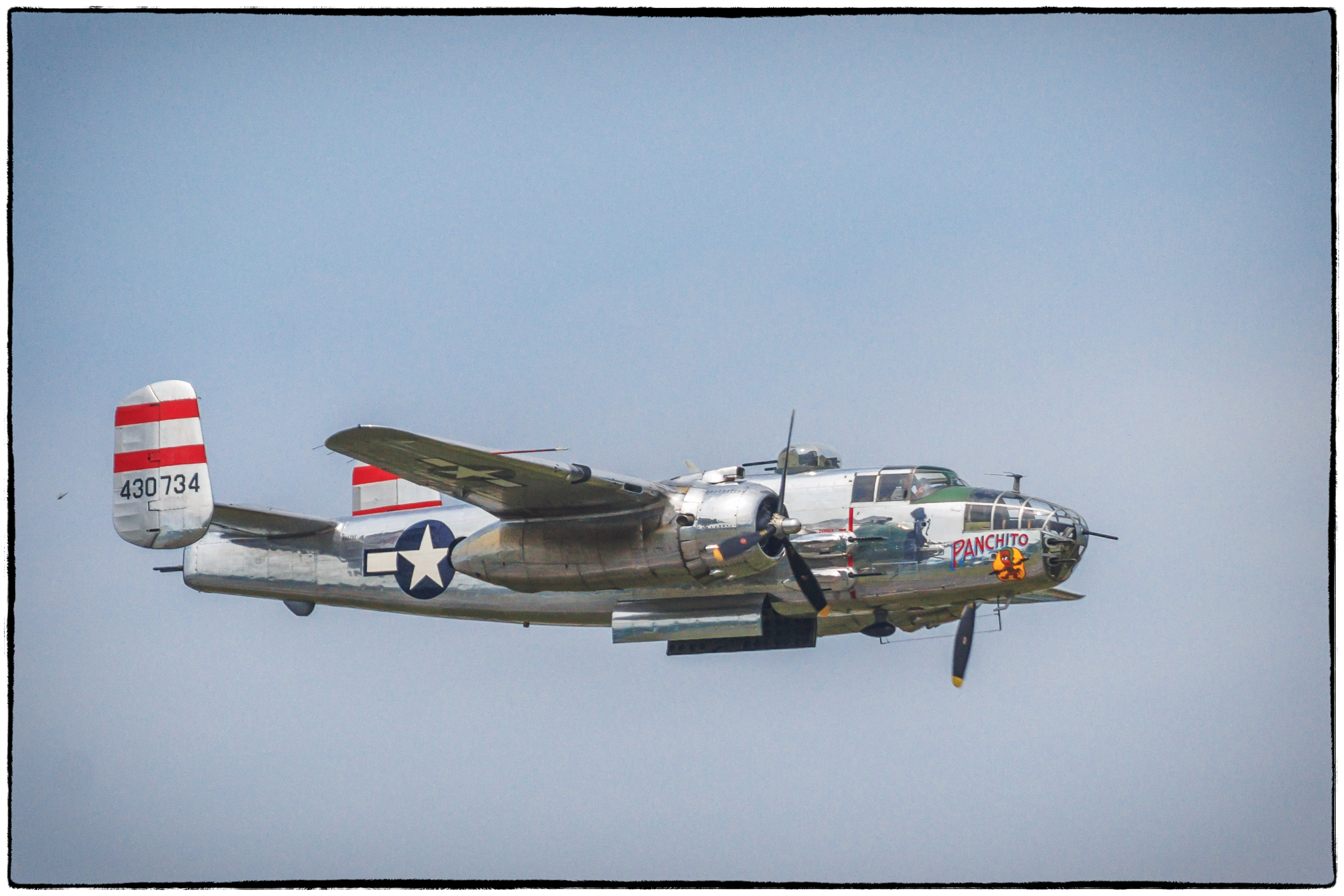
After the modern technology of the F/A-18 we now step back in time to World War II (WWII) with the B-25 Mitchell, the plane used in the famous Doolittle Raid shortly after the attack on Pearl Harbour. The Boeing website describes the B25 as follows:

The North American B-25 Mitchell, a twin-engine bomber that became standard equipment for the Allied air forces in World War II, was perhaps the most versatile aircraft of the war. It became the most heavily armed airplane in the world, was used for high- and low-level bombing, strafing, photoreconnaissance, submarine patrol, and even as a fighter and was distinguished as the aircraft that completed the historic raid over Tokyo in 1942.

It required 8,500 original drawings and 195,000 engineering man-hours to produce the first one, but nearly 10,000 were produced from late 1939, when the contract was awarded to North American Aviation, through 1945.

Named for famed airpower pioneer Brigadier General William “Billy” Mitchell, it was a twin-tail, mid-wing land monoplane powered by two 1,700-horsepower Wright Cyclone engines.

Normal bomb capacity was 5,000 pounds (2268 kilograms). Some versions carried 75 mm cannon, machine guns and added firepower of 13 .50-caliber guns in the conventional bombardier’s compartment. One version carried eight .50-caliber guns in the nose in an arrangement that provided 14 forward-firing guns.

As a child I was fascinated by WWII aircraft as I suspect where many of my generation. I was born not long after the war and my father was a soldier in the British army during it as was one of my uncles. My father didn’t really like to talk about the war, but my uncle did. He would regale us with stories of his military prowess. Sometimes after he left my father, who was in the same regiment, would turn to me and say: “you know none of that was true”. One of the famous victories that stood out was, of course, the Battle of Britain – an air battle in which, so the story goes, a relatively small number of British pilots stood up to the might of the German Luftwaffe. Spitfires, Hurricanes, Messerschmitts and Focke-Wulfs (although the latter did not become operational until after the Battle of Britain was over) were all the well known to us. US aircraft were also known to us, although perhaps not as well as the their British equivalents. I certainly knew about the B25 and the Doolittle Raid. My friends and I used to make Airfix scale models of the best known planes. Some of my friends were really good at it and produced beautiful creations. I seemed to lack the skill to do it properly: I always managed to get glue all over my fingers and subsequently all over the kit. My attempt at the camouflage paint also always seemed to leave something to be desired. None of this stopped me building them though. After I’d done one I’d attach thread to it and tack it to the ceiling of my bedroom so that it would be hanging as if flying. These kits are still available and sometimes when I’ve seen them in stores I’ve been tempted to buy one to see if I could do a better job now.

So, of course, it was with some nostalgia that I watched this venerable old WWII warbird take to the skies.
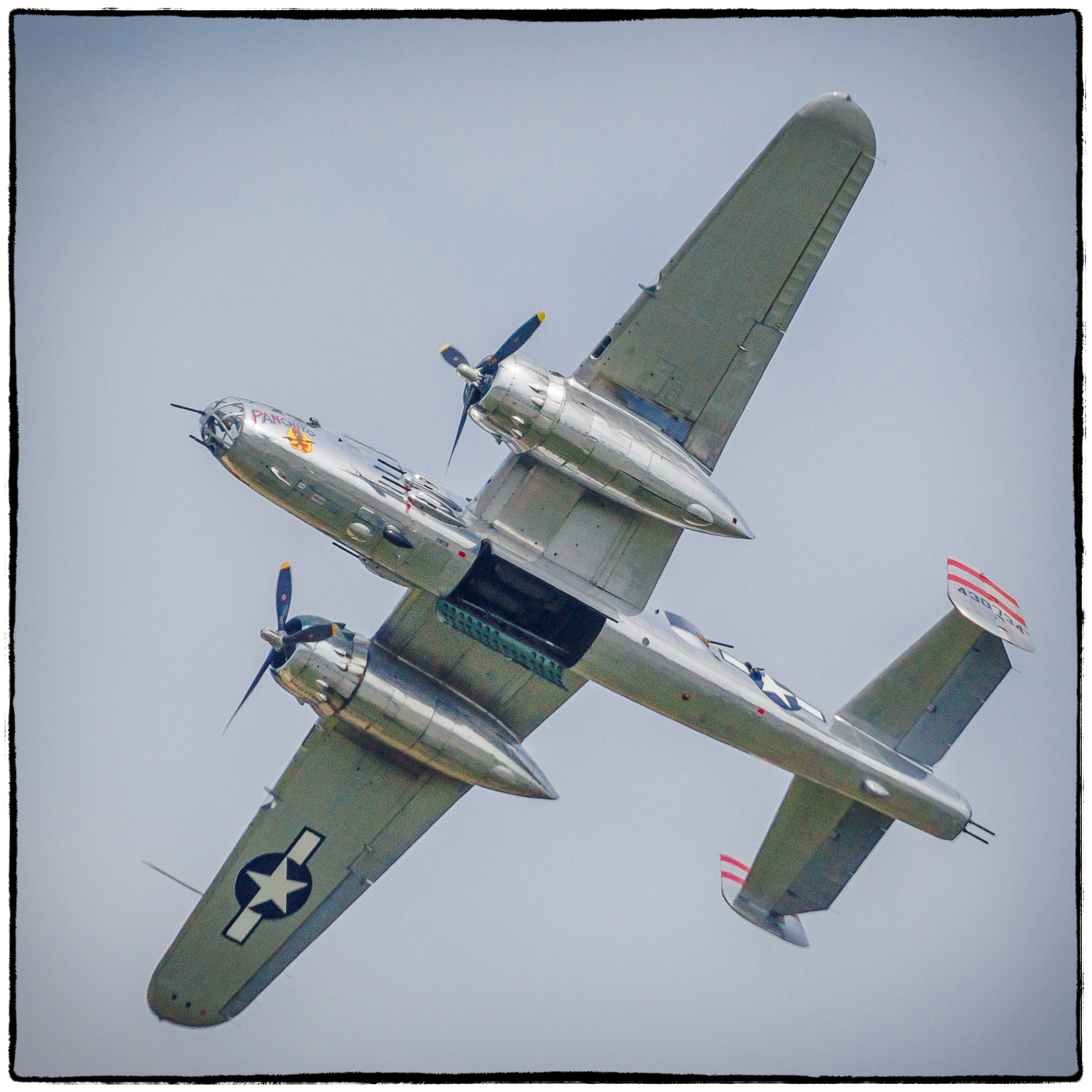
Bomb bay doors open.
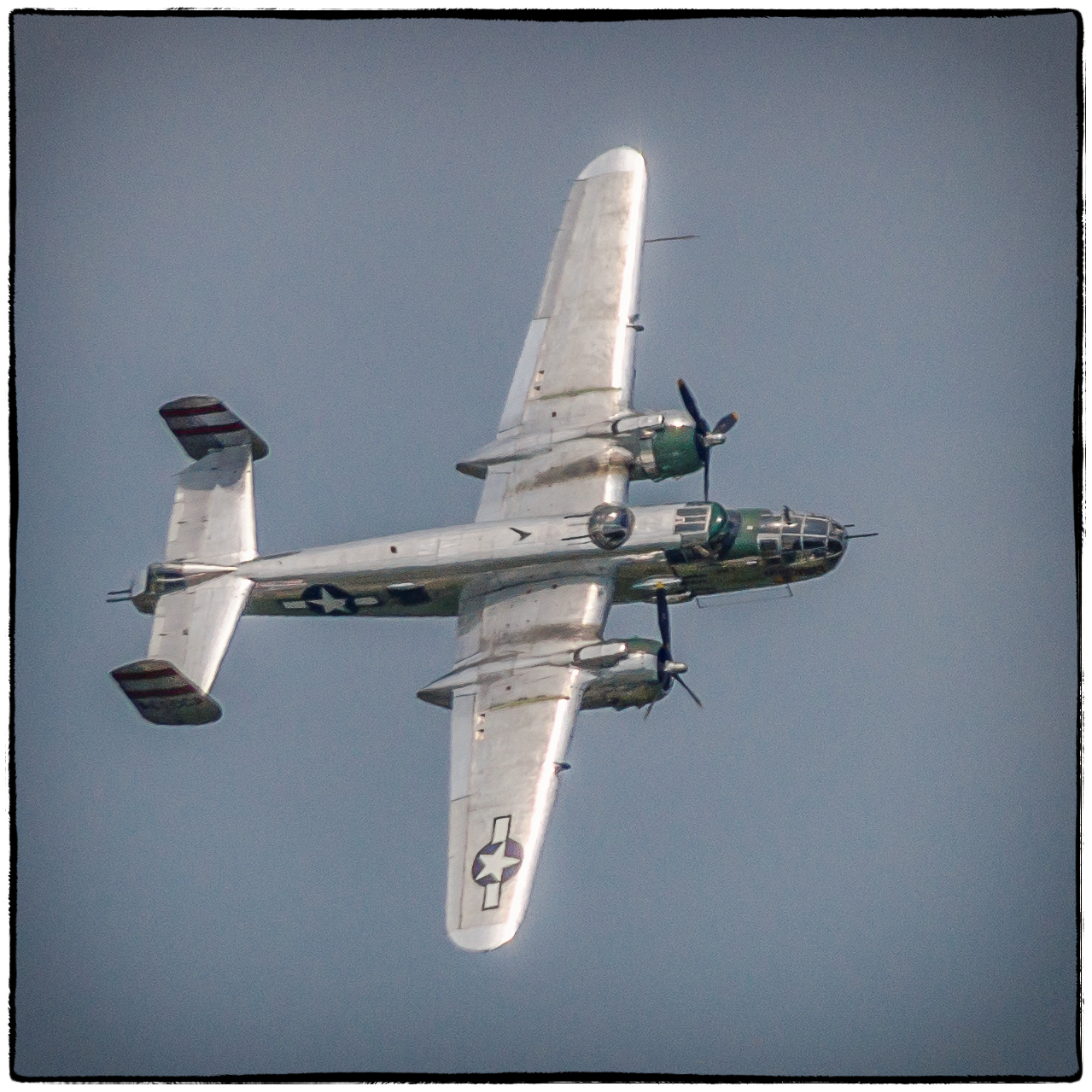
Top View.
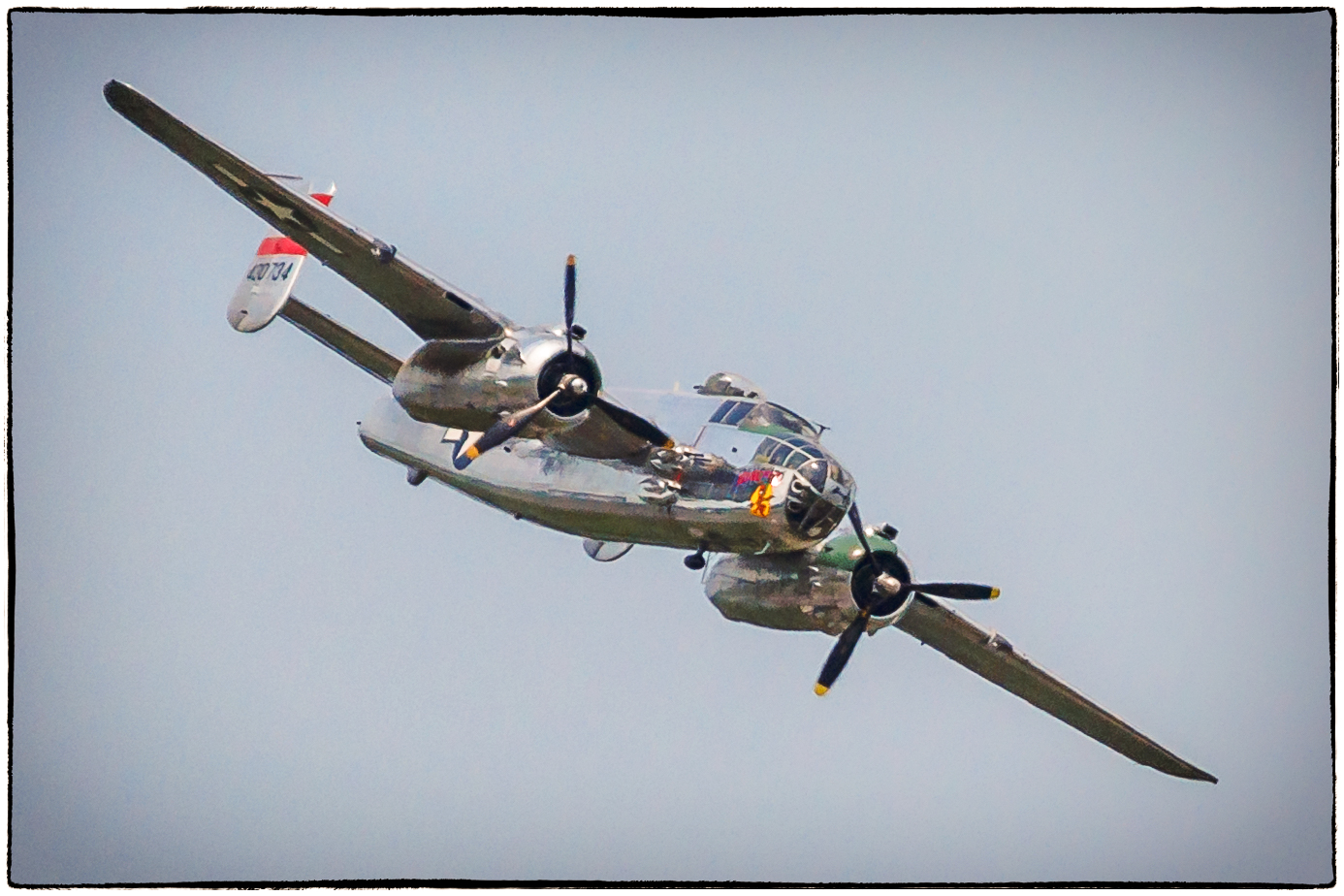
Front View.
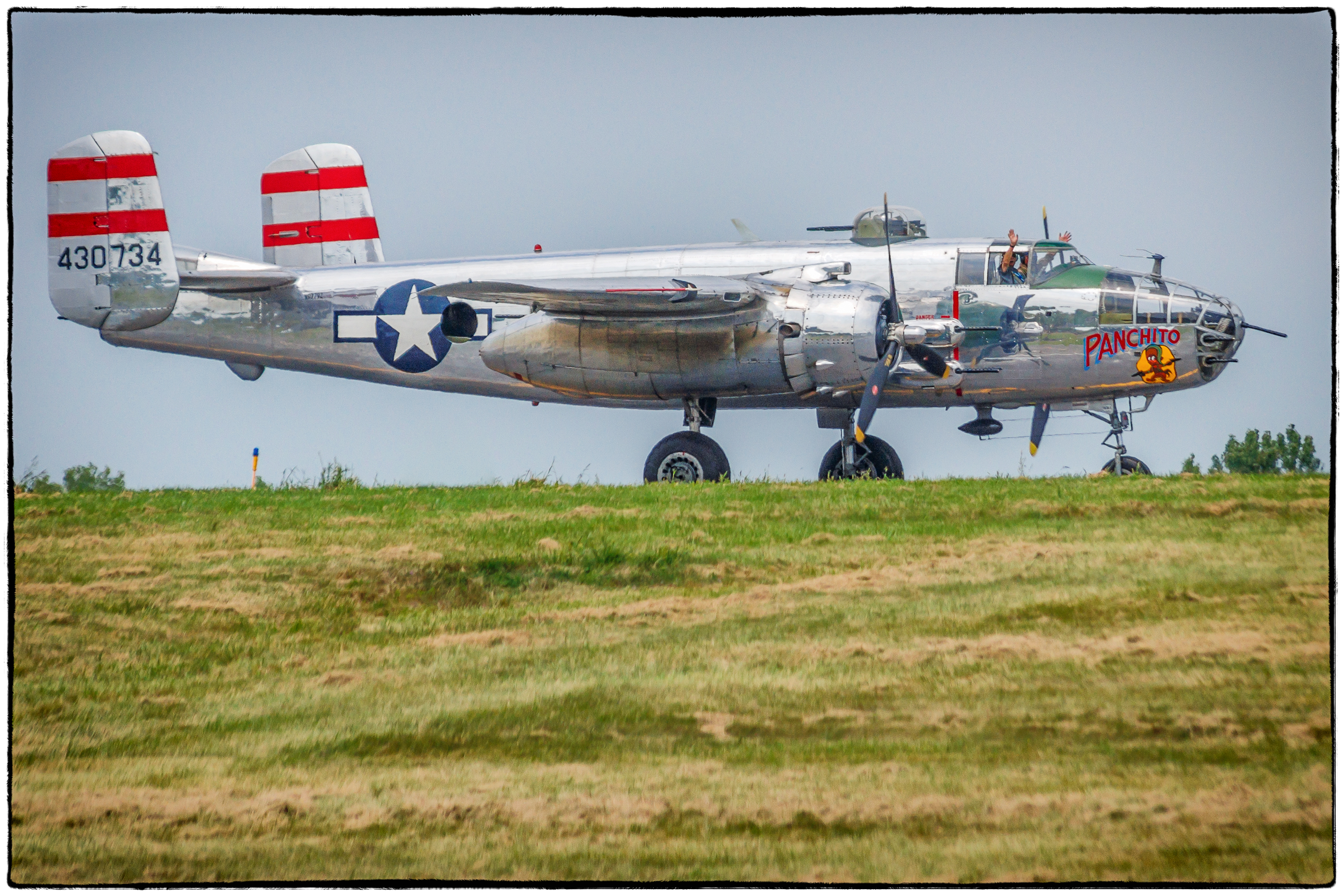
Taxiing and waving goodbye.
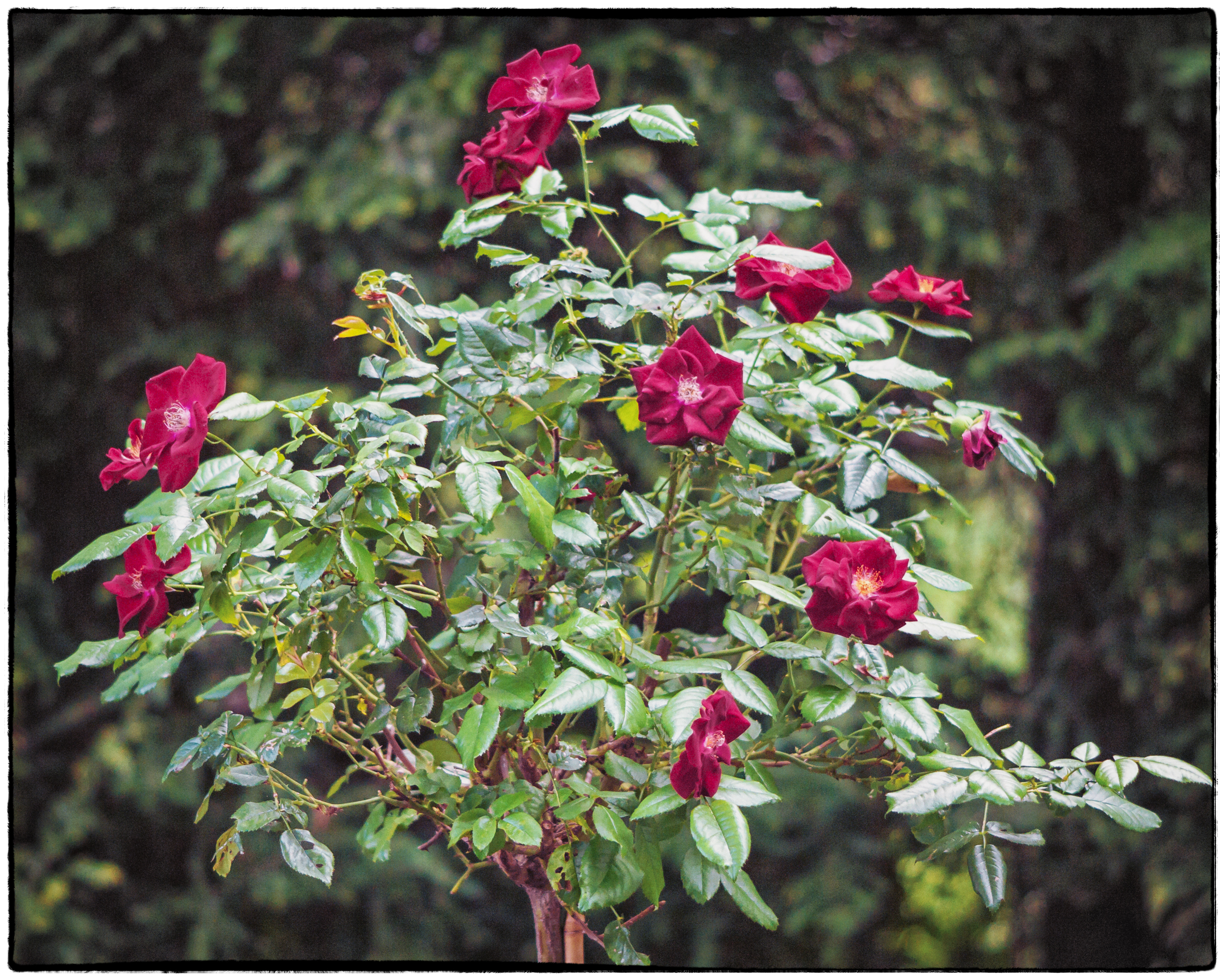
A tree rose in our garden

Another one of my wife’s roses: this time a tree rose. Taken with a Sony Alpha 500 and Minolta AF 100-200mm f4.5 lens. I had a lot of difficulty with the color of the roses and looking out of the window right now I can see that the reds are still not what they should be. I’m disappointed in the way this camera renders reds. They seem to be over saturated and over exposed. I think the hues are off too. Try as I may I don’t seem to be able to reliably fix them. Sometimes I get closer than others. Still, even if the reds are a bit off I like the picture. I find the swirly out of focus areas to be “interesting”

A Guide to Contemporary Indian Photography

Mother and Elsa: from Life is Elsewhere by Sohrab Hura

I’ve always wondered about what new photography is happening in India but never really knew quite how dynamic Indian photography is until I asked Sohrab Hura (Magnum member and author of the truly fantastic Life is Elsewhere) about it. Sohrab is helping to run the Delhi Photo-Festival – which takes place at the beginning of November and doubles up with Photo Kathmandu if you’re thinking of an India/Nepal Photo-Festival double-header. 

via Colin Pantall's blog: A Guide to Contemporary Indian Photography.

Interesting overview of photography in India (and to a lesser extent other parts of South Asia). I especially liked the links to the work of various Indian photographers. This will make it much easier for me to pursue this topic further – although as Mr. Hura points out: “Many of the photographers in India don’t have websites so you’ll need to dig a bit to see their works and I’m sure I’ve missed out on quite a few other names as well.”

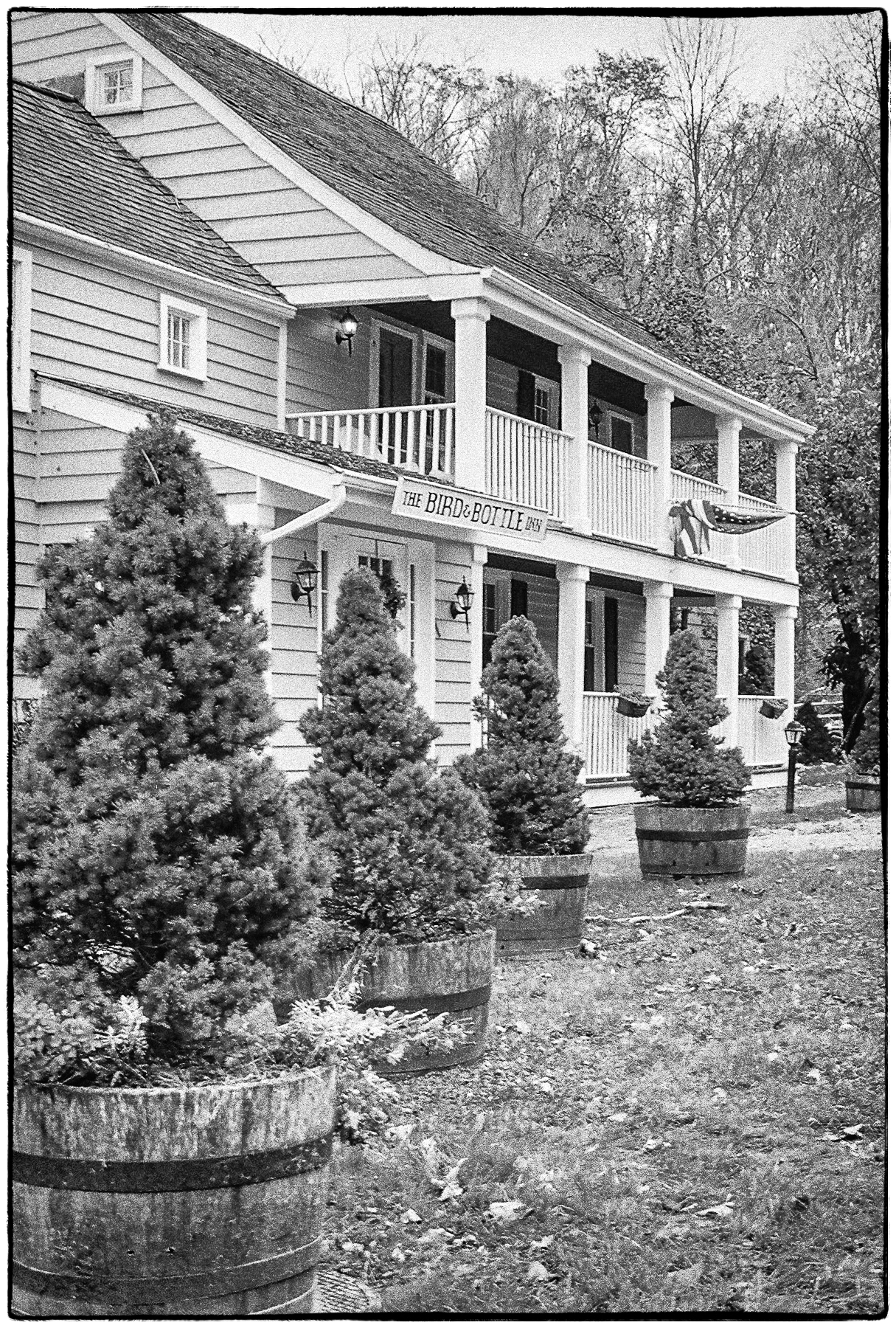
The Bird and Bottle Inn, Garrison, NY

According to “Historic Houses of the Hudson Valley” by Harold Donaldson Eberlein and Cortlandt Van Dyke Hubbard:

Lying just to the east of the Albany Post Road, at Indian Brook between Garrison-on-Hudson and Cold Spring, the Bird and Bottle began life about 1761 – perhaps a few years earlier – as Warren’s Tavern. When the Post Road was little more than a horse trail, John Warren’s tavern was a welcome sight to weary travellers of pre-Revolutionary days. As travel increased on this first highway through Putnam (then Dutchess) County – it had been much improved since its horse trail beginnings – Warren’s Tavern became a famous stopping place. Somewhat later, stagecoaches between Albany and New York regularly changed horses there, while passengers and drivers often stayed the night. In 1776 the inn passed to Absalom Nelson, at his marriage to Esther Warren, and thenceforth was known as Nelson’s Tavern. Its success continued under Absalom Nelson, and during the post-Revolutionary period it attained its greatest renown. The building of the Highland Turnpike (now the Albany Post Road – U.S. Route 9), which ran parallel to the old Post Road and ended at Nelson’s Tavern, greatly increased highway traffic between New York and Albany, and Nelson’s Tavern became one of the best known and esteemed ordinaries in that part of the Sate.

With the increase of boat travel on the Hudson and, finally, the coming of the railroad, life at Nelson’s Tavern gradually waned. At last, custom had so dwindled that the inn ceased to be a place of public entertainment and for a long time was a private dwelling. It so contined until 1939, when George W. Perkins of Cold Spring, wishing to preserve for Putnam County one of its historic buildings, bought it with the intent to restore it and have it again conducted as an ordinary, and in a manner worthy of its traditions.

Of course as is often the case with old houses, it’s reputed to be haunted. In this case by Emily Warren Roebling – daughter-in-law of John A. Roebling and wife of Washington A. Roebling, both of George Washington Bridge Fame. According to Hudson Valley Hallowe’en:

Emily has always made a great impression on the people of Cold Spring and her spirit lives on there. In 1969, Larry Evans, the director of the Bird and Bottle Inn explained that one of the upstairs rooms was to be known as the Emily Warren room and noted that Emily visited her grandparents there often. The Putnam County Historical Society displayed some of her personal belongings at the Foundry School Museum as a tribute to her importance to the village.

Today the inn is owned by Elaine Margolies. She is a charming woman and gracious hostess who has great respect and pride for the inn’s history. Emily has become part of her family. Guests and employees have sensed the presence of a woman in the inn. Some guests have even taken unique photos that could explain the unexplained. Elaine shared the most amazing photo (see image 7 in the photo gallery) taken in the dining room . I saw it as a ghostly image of a woman in old-fashion clothing. I have to believe it is Emily returning to her family home. There have also been reportings of a woman humming in the hall. Emily seems to be a little particular about how her room is arranged. At times the curtains and the chair in her room will be arranged as if someone wanted to peer out the window to enjoy the lovely view.

The information in the last paragraph seems dated and a notation on the Hudson Valley Hallowe’en site says: “The Bird and Bottle Inn is Closed and Up For Sale 7/15/2013”. I recently passed by and without going inside I definitely got the impression that it was open again. Their Facebook page indicates that this is the case.

Taken in November, 2011 with a Kodak Retina IIc.

Geese on the Wing

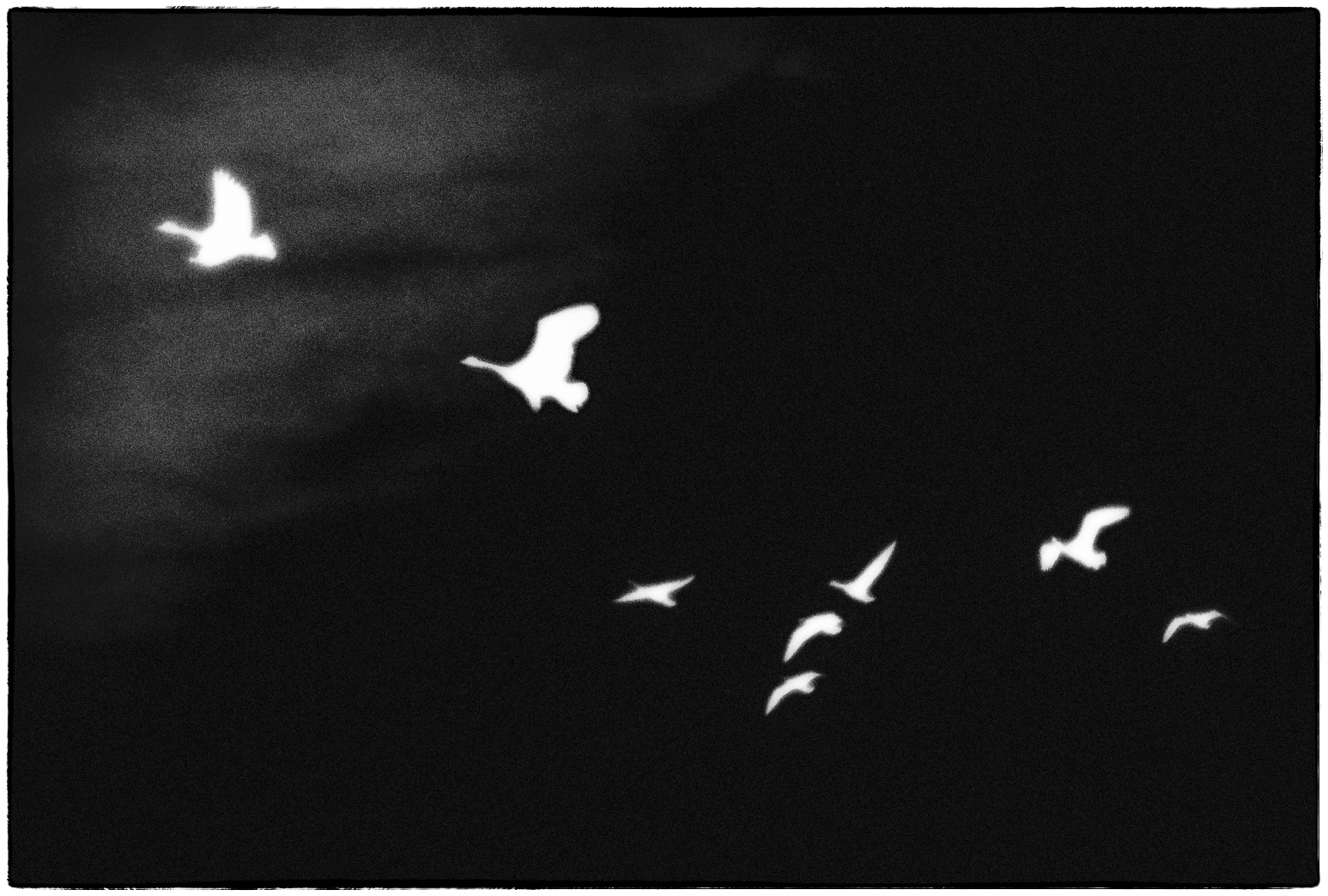
In the previous post (Why It Does Not Have to be In Focus: Modern Photography Explained) I mentioned that I find it hard to to break rules and explore boundaries. So I thought I’d try something a little different. This started out as fairly low resolution scan of a film photograph taken with a Kodak Retina IIc. I was standing in Charles Point Pier Park near Peekskill when I spotted some geese flying overhead. I quickly snapped the shot without thinking about exposure and/or focus. The result was a rather blurry photograph of the geese with the tops of a few lamp posts intruding.

First I blurred it some more and adjusted the cropping mostly to remove the lamp posts. Then I converted it to black and white, applied a few filters (including one which gave a negative look) and voilà this is what came out. It’s kind of abstract looking. It reminds me a tiny bit of Les Oiseaux by Matisse. I very much doubt that this is great art, but it was something different for me to do and I enjoyed the process.