Recently I’ve been reading “The Plantagenets” by Dan Jones. I’ve also been watching the TV series: Britains Bloodiest Dynasty. The Plantagenets narrated by Dan Brown. In the TV version there are some wonderful scenes with ruined castles. I love ruins and although there are many ruined buildings in the US very few of them have the ‘panache’ of a European castle. Makes me wonder if I’m in the wrong country (at least for photography).
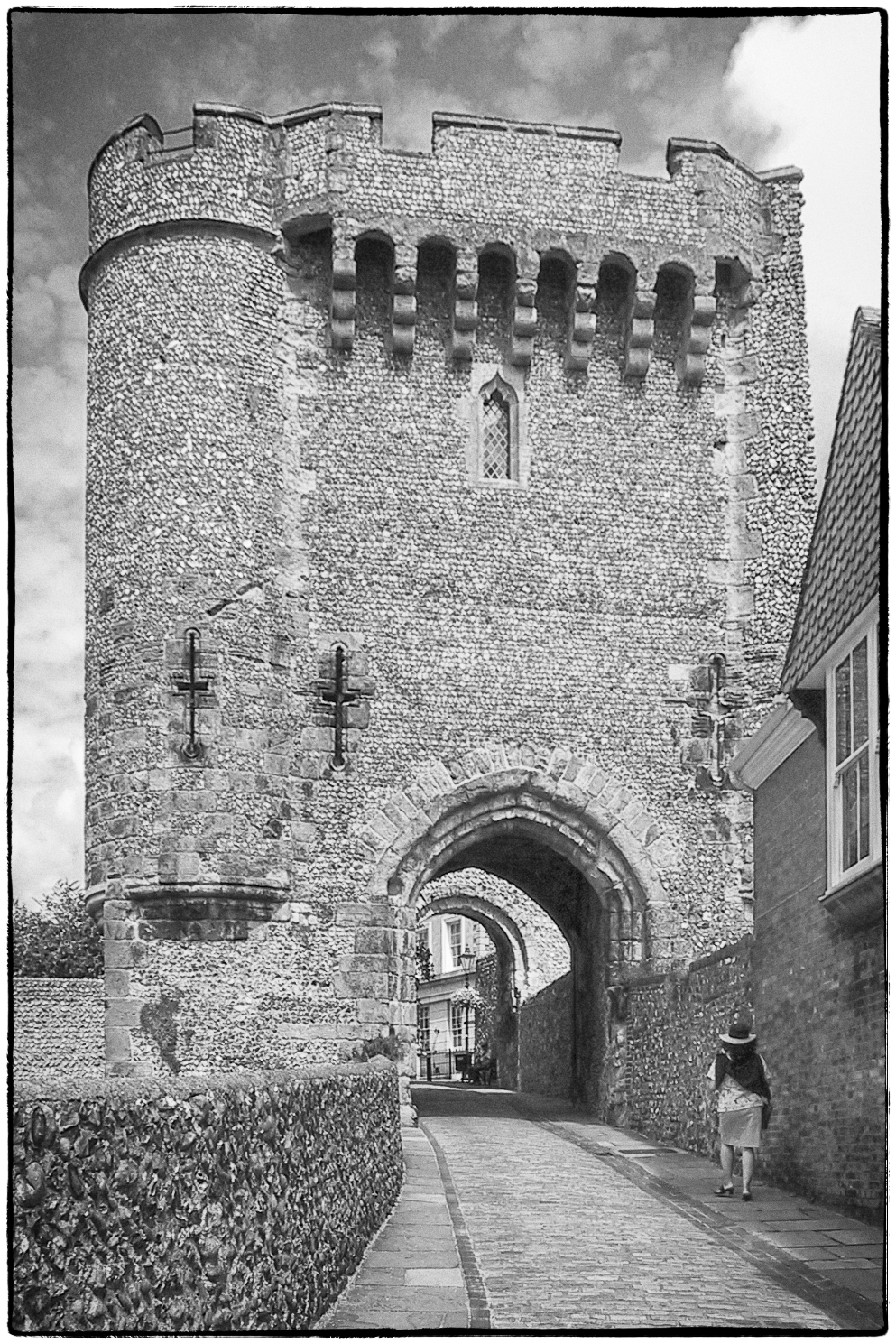
Above and below are pictures of one of these castles: Lewes Castle. Lewis is a historically significant town, particularly for the battle that took place there in 1264. According to Wikipedia:
The Battle of Lewes was one of two main battles of the conflict known as the Second Barons’ War. It took place at Lewes in Sussex, on 14 May 1264. It marked the high point of the career of Simon de Montfort, 6th Earl of Leicester, and made him the “uncrowned King of England”. Henry III left the safety of Lewes Castle and St. Pancras Priory to engage the Barons in battle and was initially successful, his son Prince Edward routing part of the baronial army with a cavalry charge. However Edward pursued his quarry off the battlefield and left Henry’s men exposed. Henry was forced to launch an infantry attack up Offham Hill where he was defeated by the barons’ men, defending the hilltop. The royalists fled back to the castle and priory and the King was forced to sign the Mise of Lewes, ceding many of his powers to Montfort.
De Montfort ruled England for a year and called two parliaments. The first stripped the King of his powers and the second included ordinary citizens, making him one of the originators of modern parliamentary democracy. Ultimately de Montfort was defeated and killed at the Battle of Evesham in 1265.