Urban blight

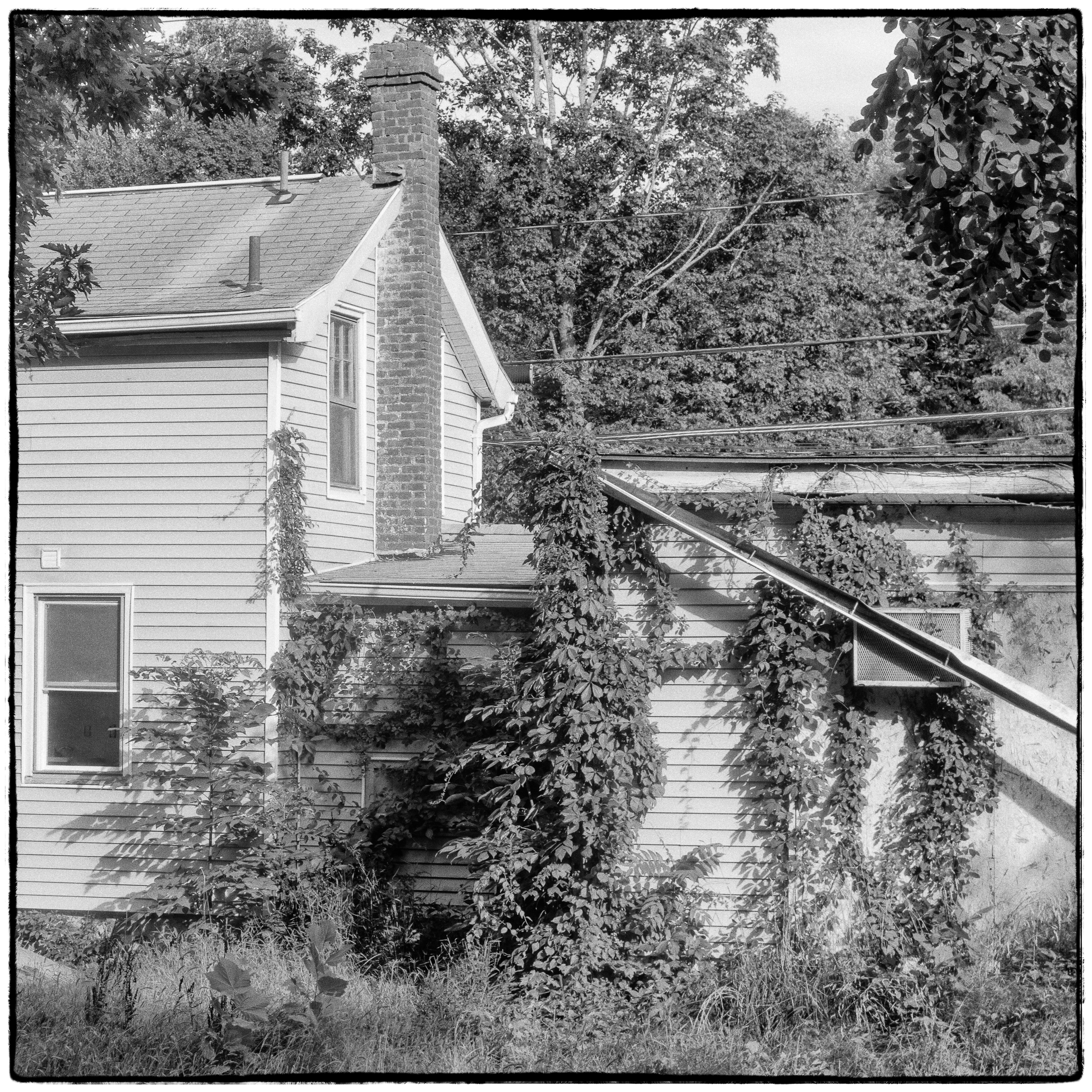
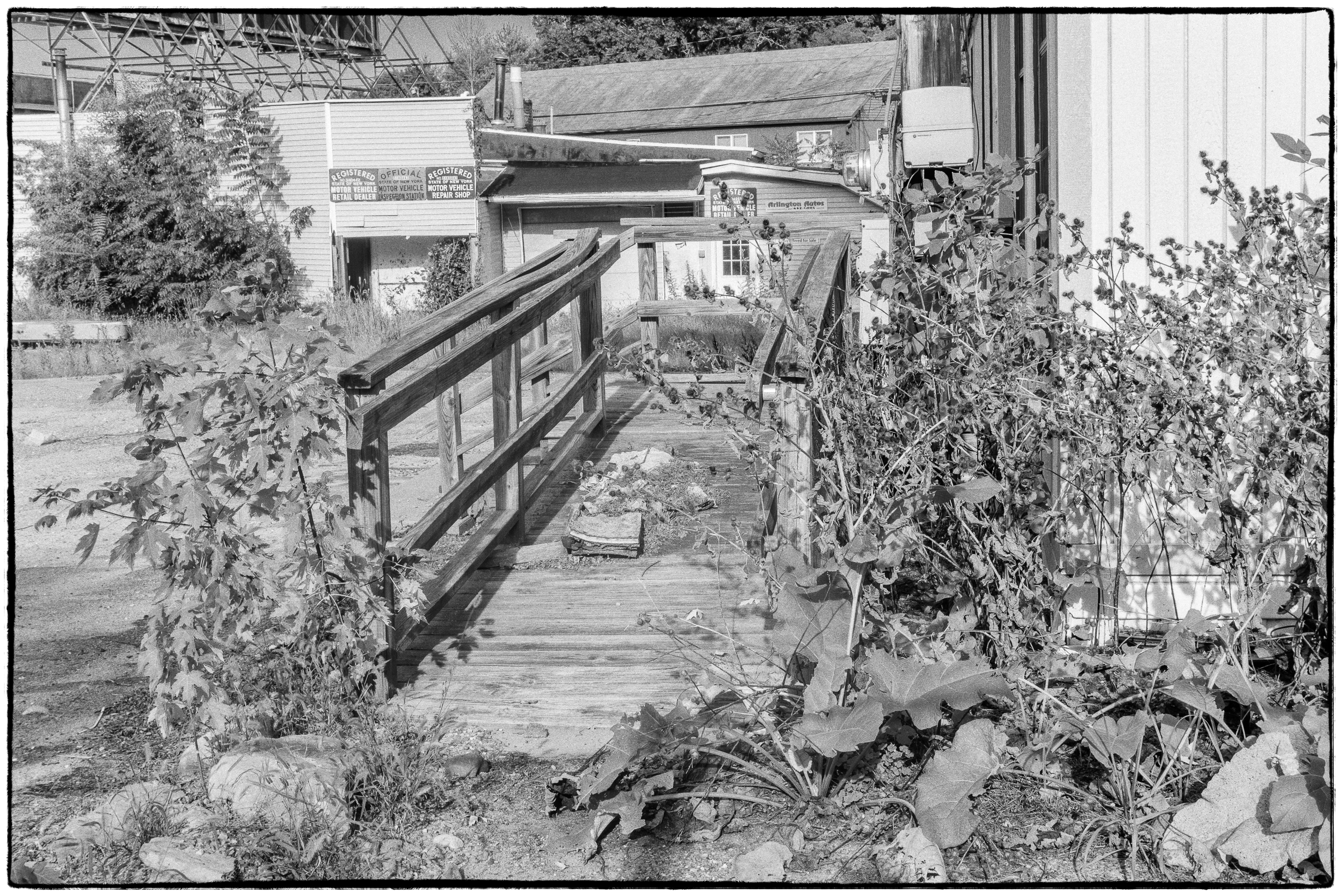
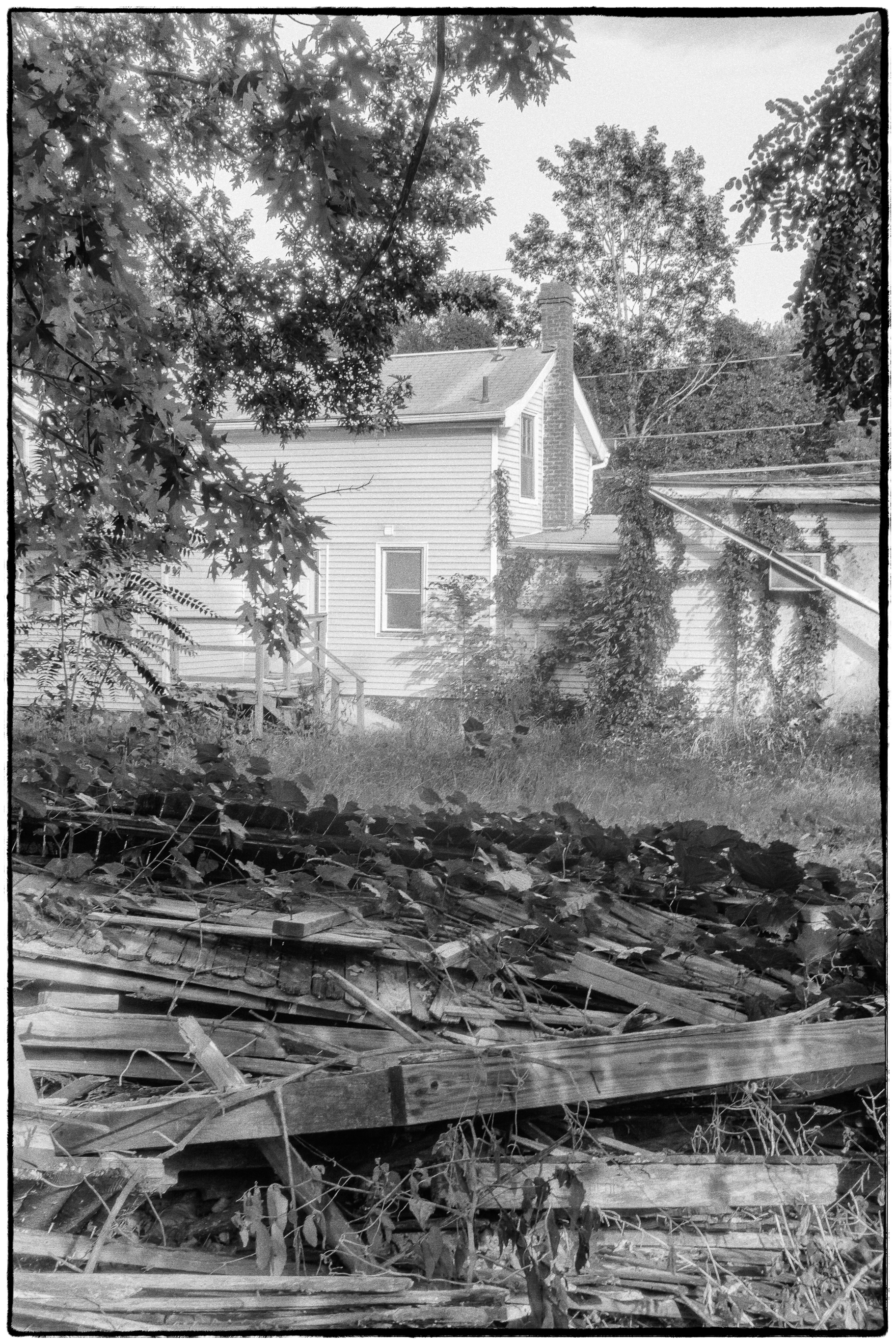
Returning from our trip to the Mills Mansion we decided to stop at our favorite Filipino store/restaurant. Actually I’m not sure that it’s our favorite, but it is the closest. It’s located in a small strip mall on the outskirts of Poughkeepsie, NY. While the area around it is generally pretty decent (there’s an Adams Fairacre complex nearby and an attractive looking restaurant across the road), the strip mall has four stores and two of them are vacant lending an air of neglect. This is only made worse by this property next door. It’s an old abandoned service station. Although deserted for some time it was for a while possible to walk up to the buildings. A while back, however, a large fence was erected around the entire property including a house, which forms part of it – see the two pictures below.

I wonder how long it will remain in this state before someone decides to tear it down.
A woman and a dog

We came across this statue and my wife immediately wanted a picture (this isn’t that picture) of herself posing with our dog in front of it. The statue has not aged well: the dog still looks rather elegant, but both it and the woman have suffered greatly from erosion. The features of both have almost worn away.

I know nothing about what, if anything, the statue represents and so far I haven’t been able to find any additional information.

Yashica TLR

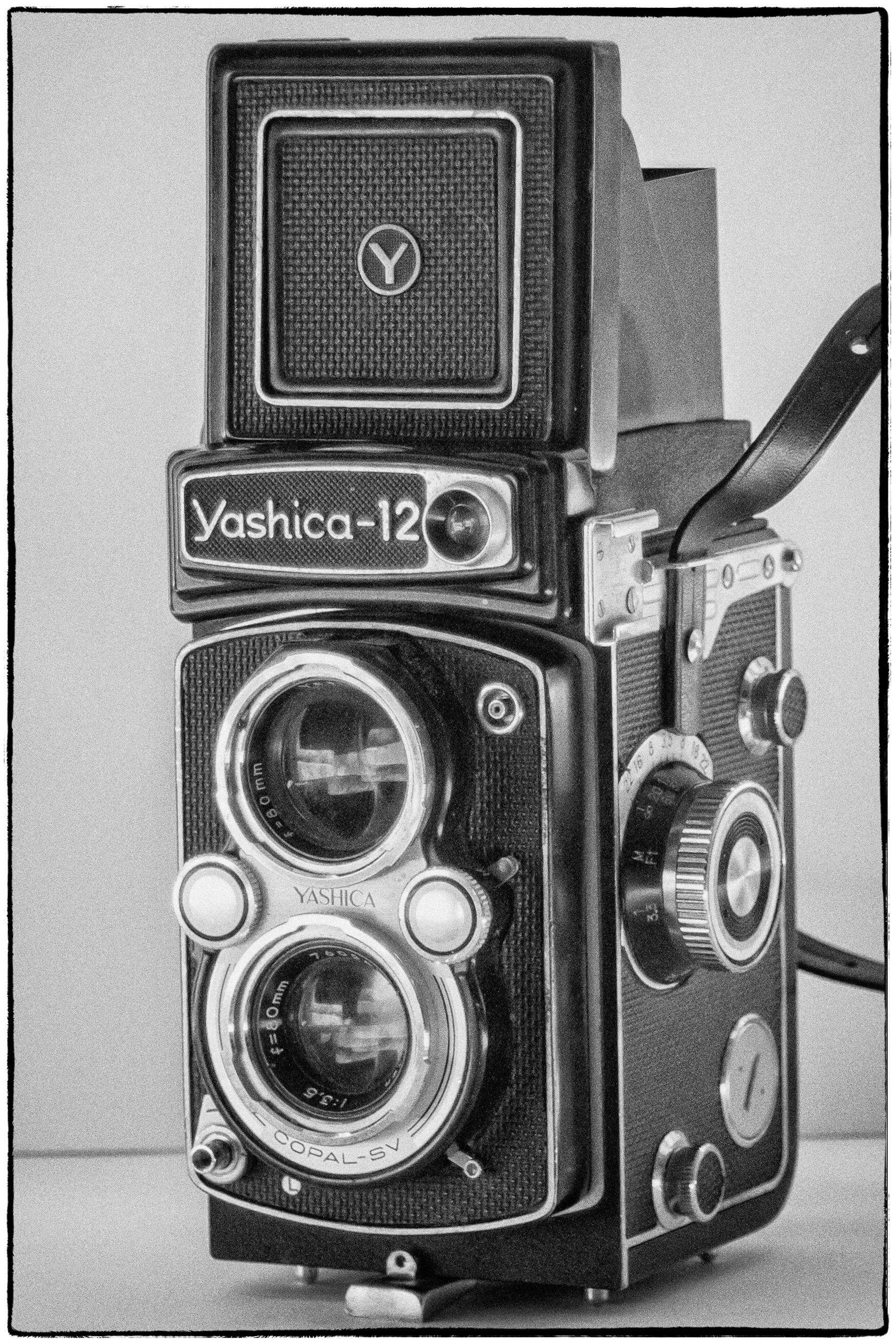
Of late I’ve developed an interest in Twin Lens Reflex (TLR) Cameras (above my own Yashica 12 – unfortunately not working because of a stuck shutter. I’ll get it fixed one of these days). A couple of days ago I was browsing around and I came across this very useful resource related the many models produced by Yashica. The Yashica TLR site describes itself as follows:

The first camera made by the fledgling camera maker, Yashima, later to adopt the name of its Yashica cameras, was a twin lens reflex (TLR) taking twelve 6 cm x 6 cm negatives on 120 format film. Like most other Japanese TLRs, it was patterned on the German made Franke & Heidecke Rolleicord and used a separate viewing lens matched to the taking lens below it, the camera front panel moving in and out to achieve correct focus. The view through the waist level finder is very similar to what the taking lens is seeing except that the view is correct side up but reversed left to right, courtesy of the 45 degree mirror (hence “reflex”). Yashica went on to make movie cameras, sub-miniature cameras and various categories of 35 mm cameras and in 1959, it even claimed to be the “largest manufacturer of cameras and photographic products in Japan”, but the offspring of the first model would continue in production for the next 33 years.

This site is dedicated to understanding and preserving the details and development history of the company’s TLR cameras from the first model Pigeonflex introduced in early 1953 through to the Yashica Mat-124G which ended manufacture in 1986: