Trying out Infrared Photography – First Attempt

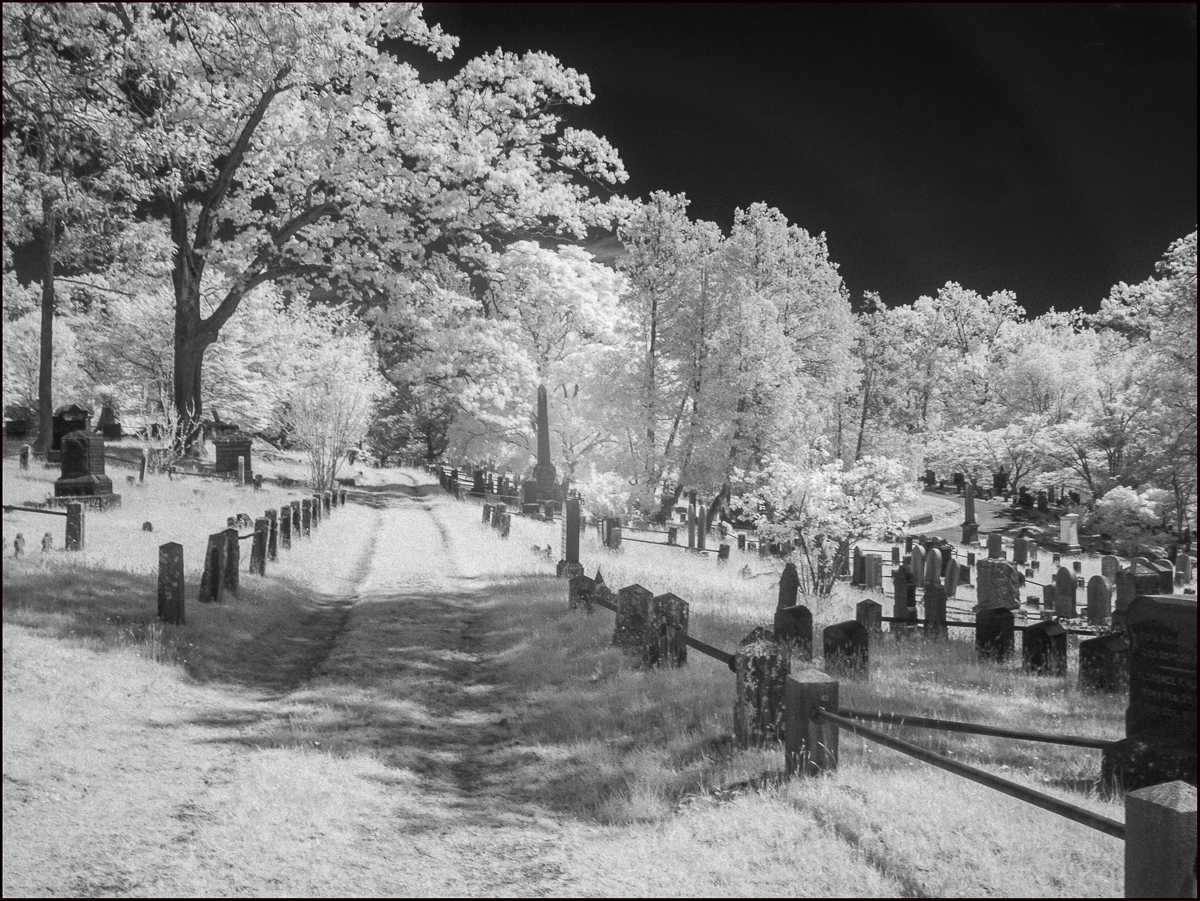
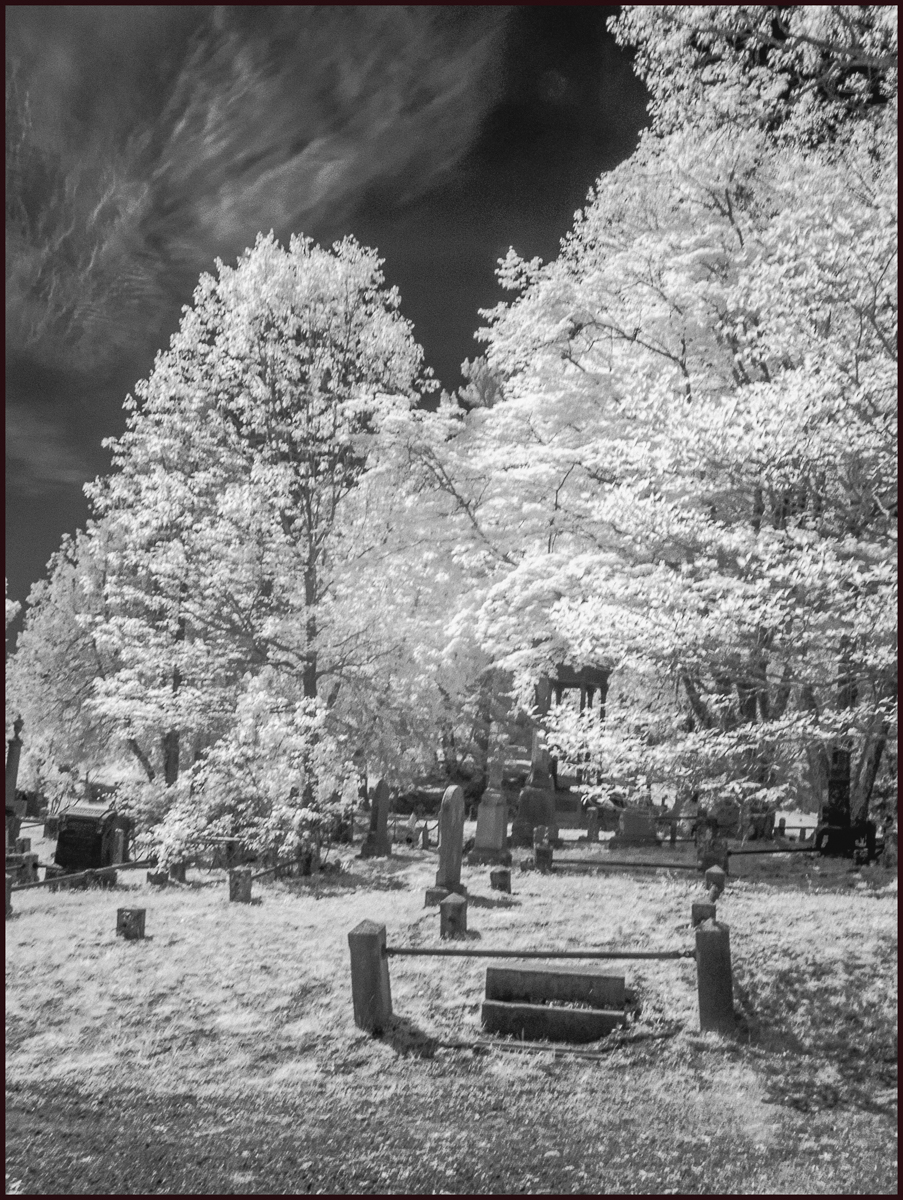
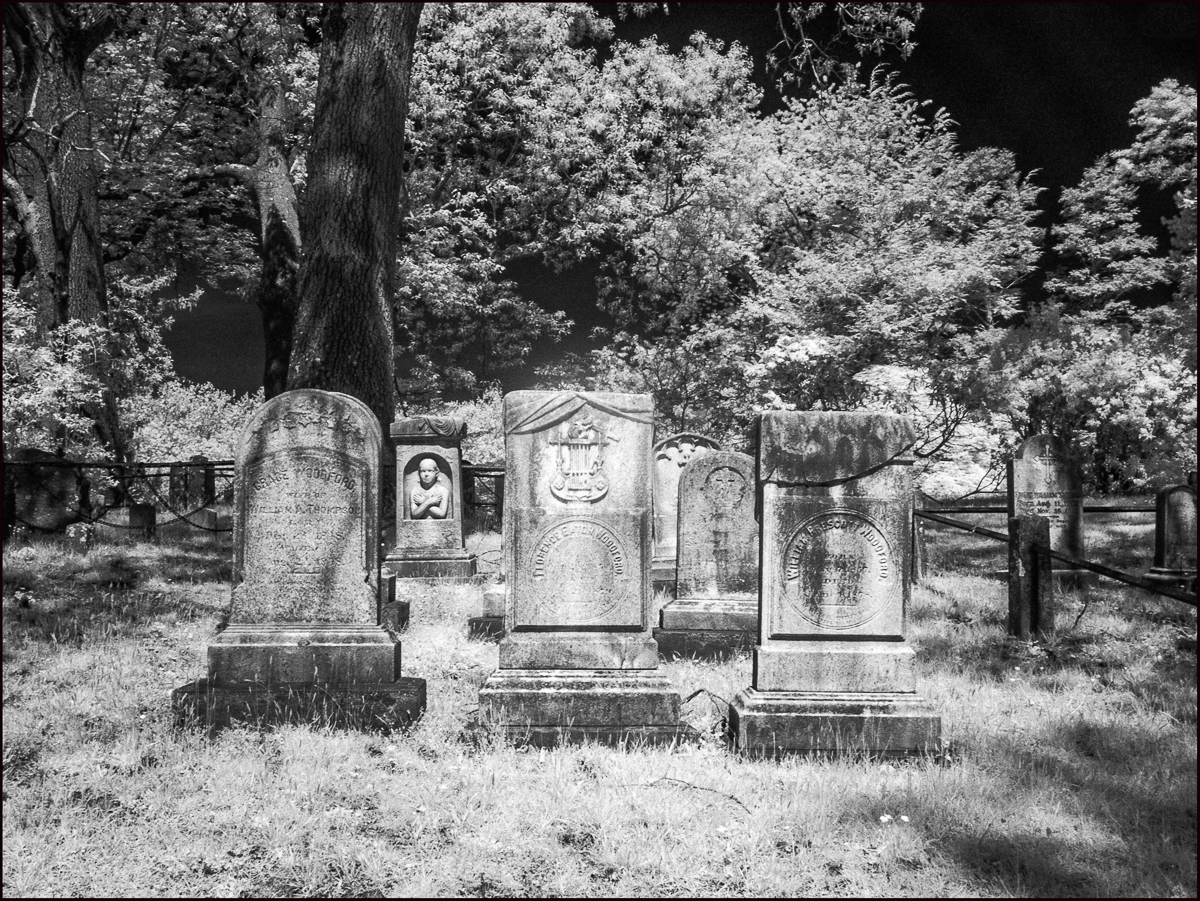
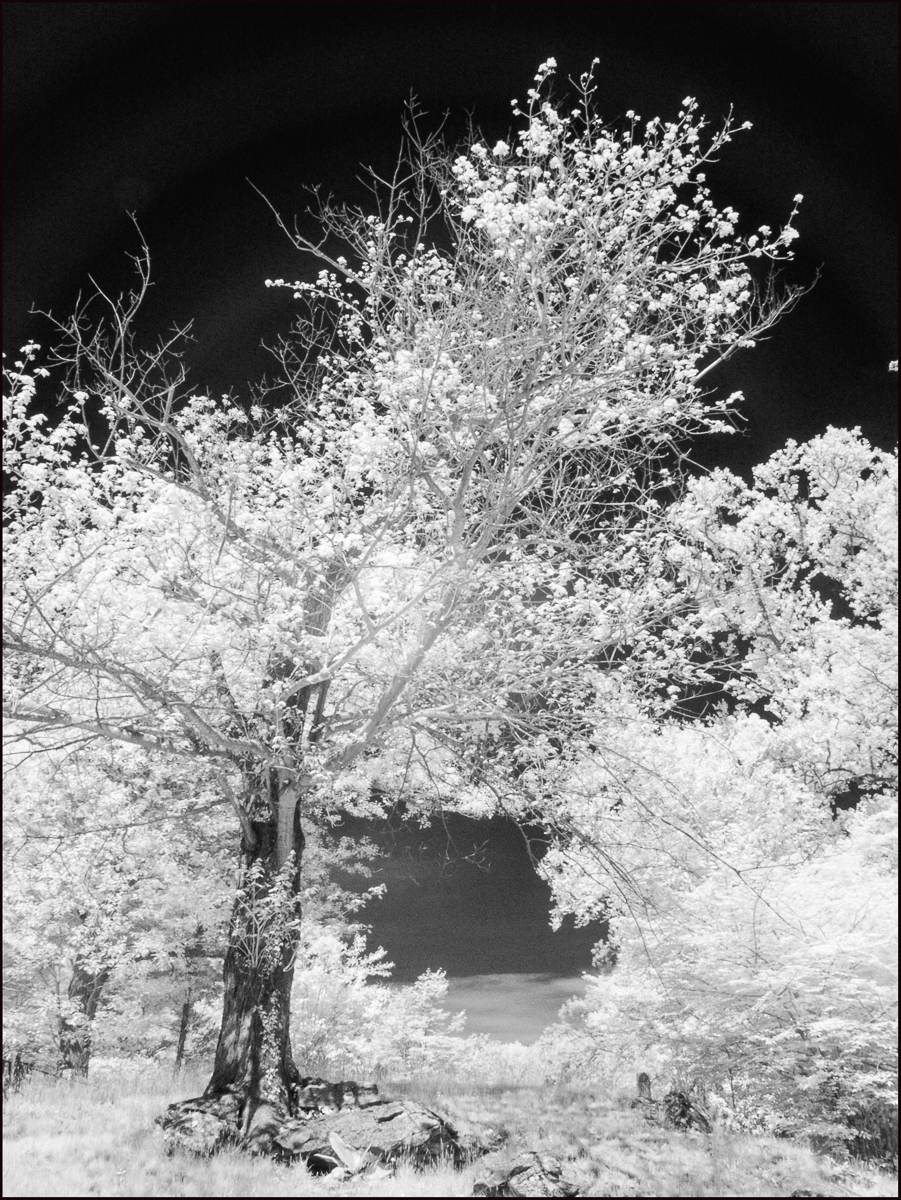
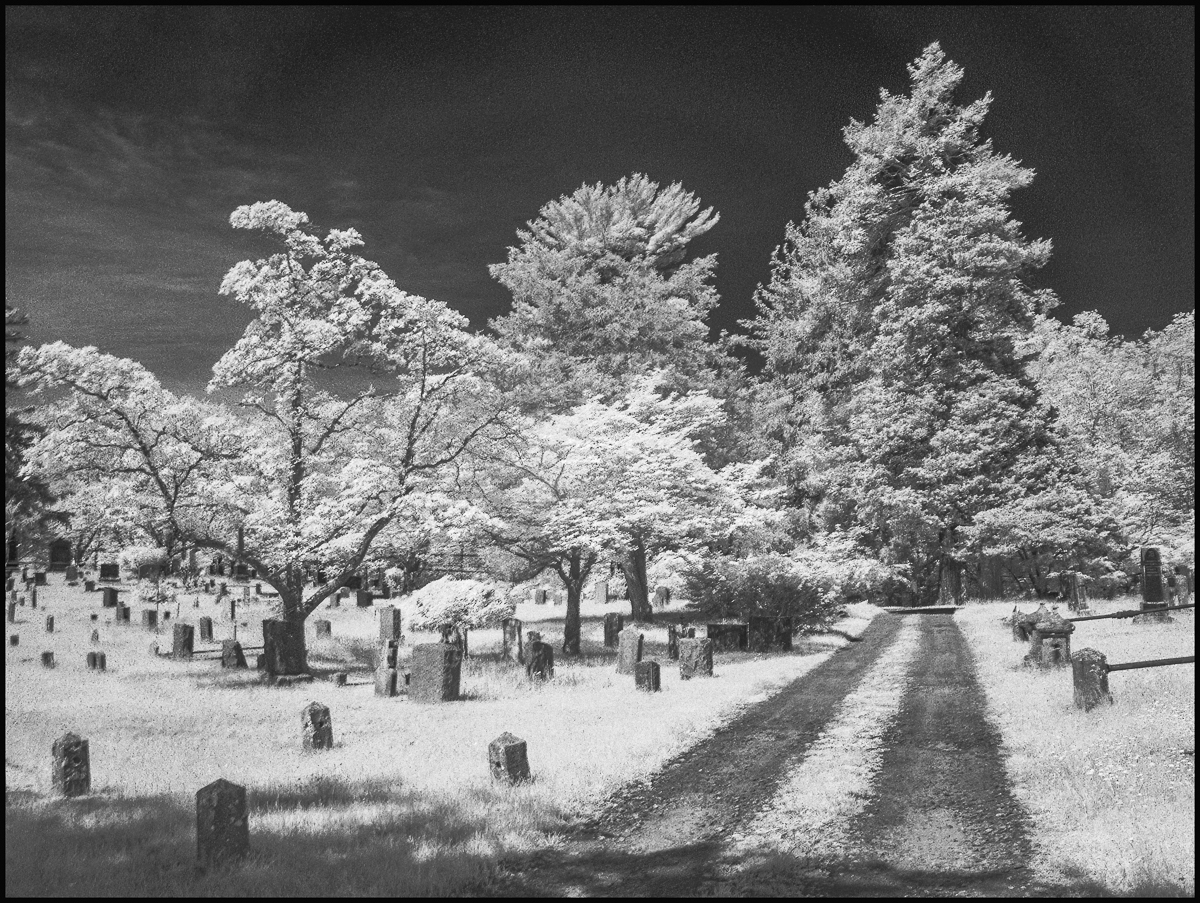
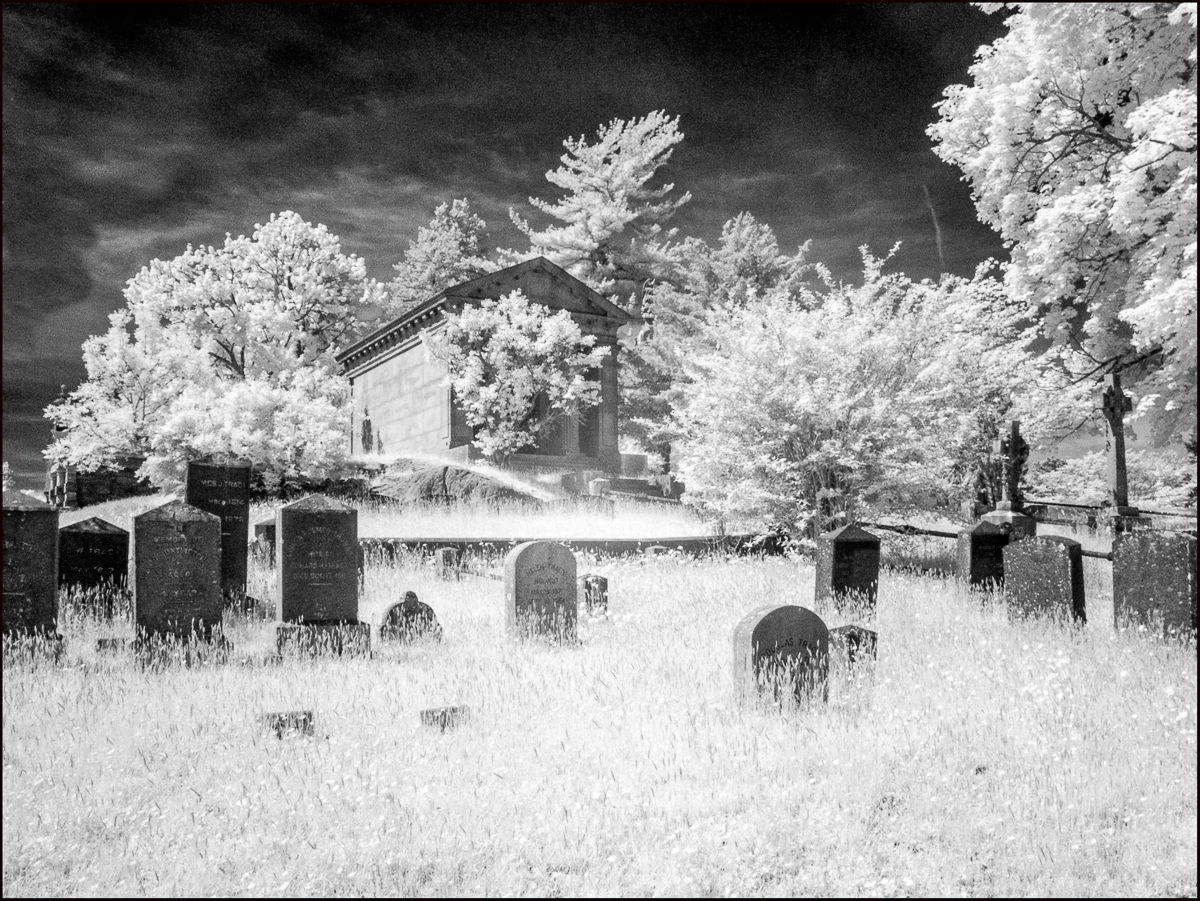
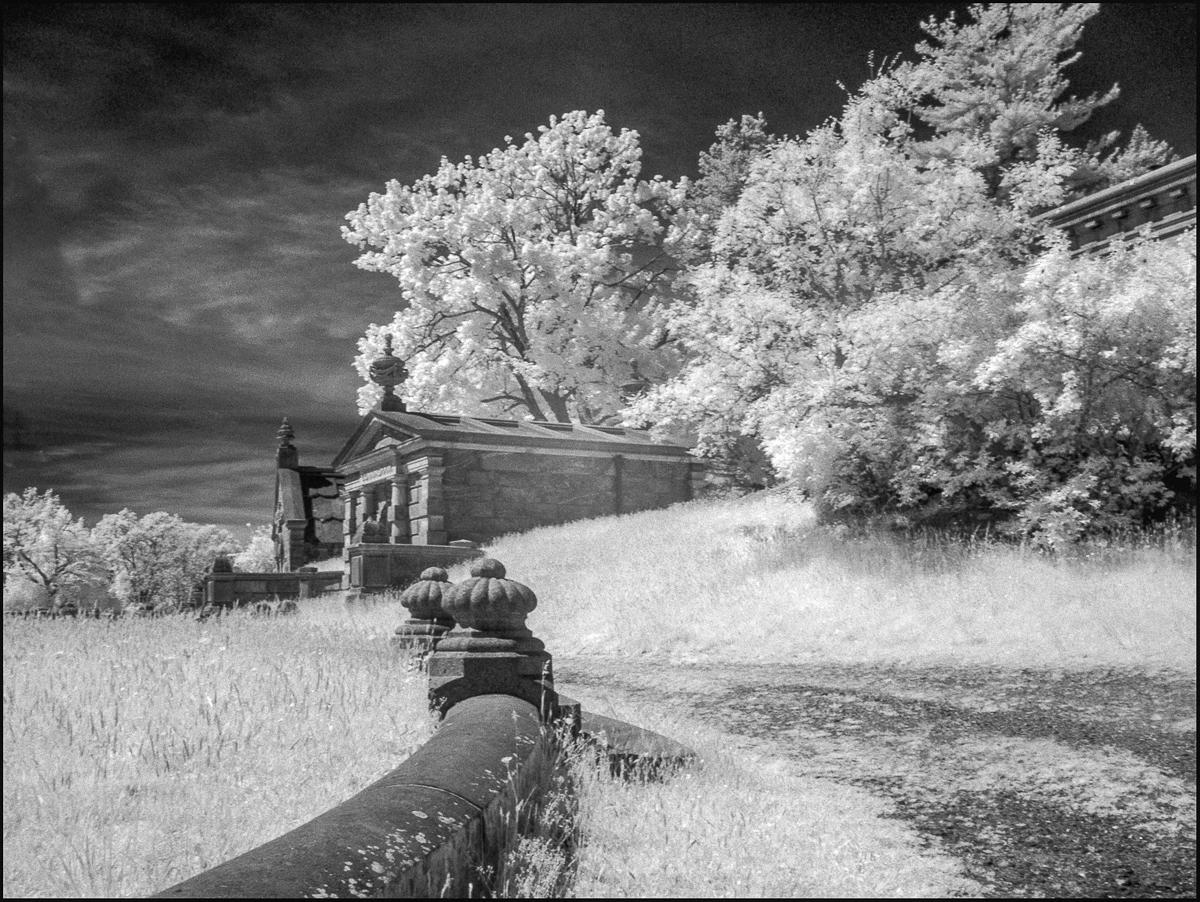
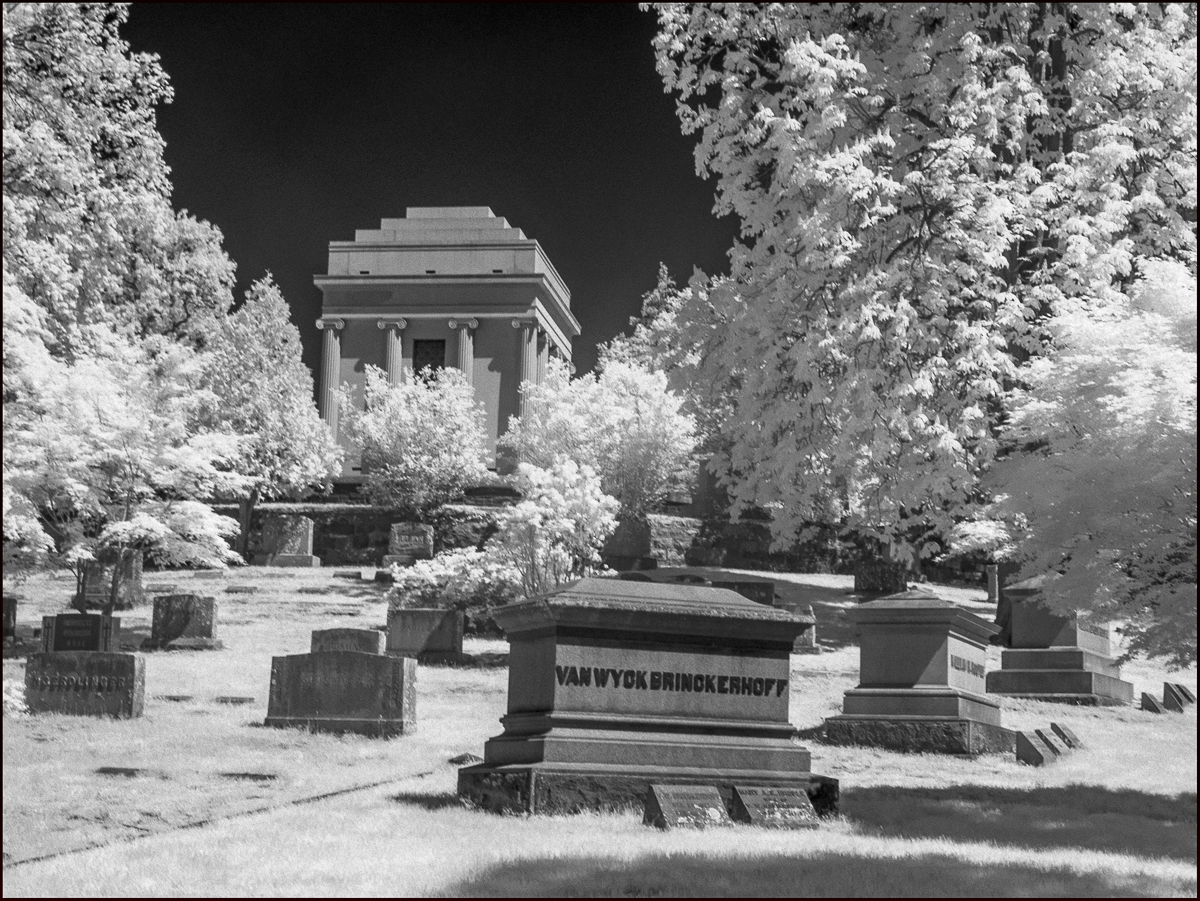
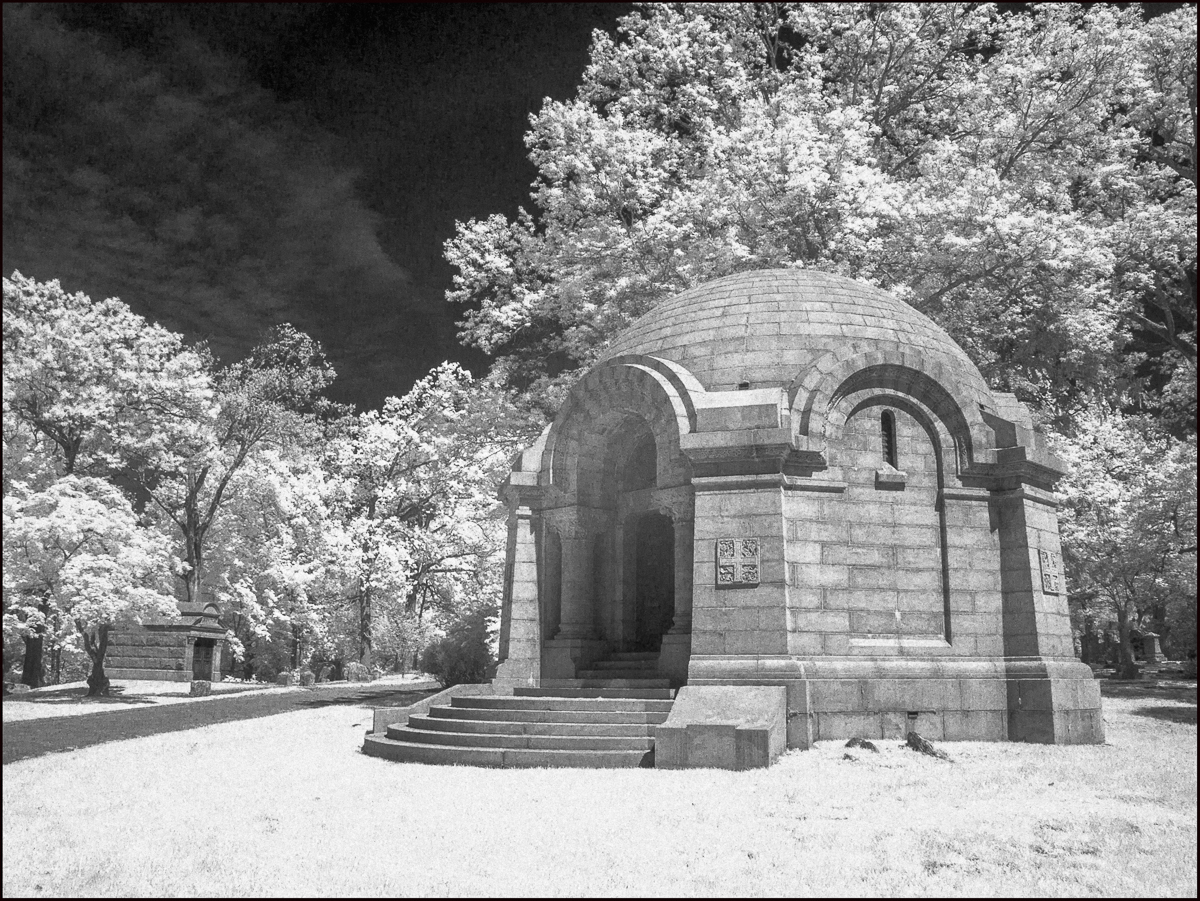
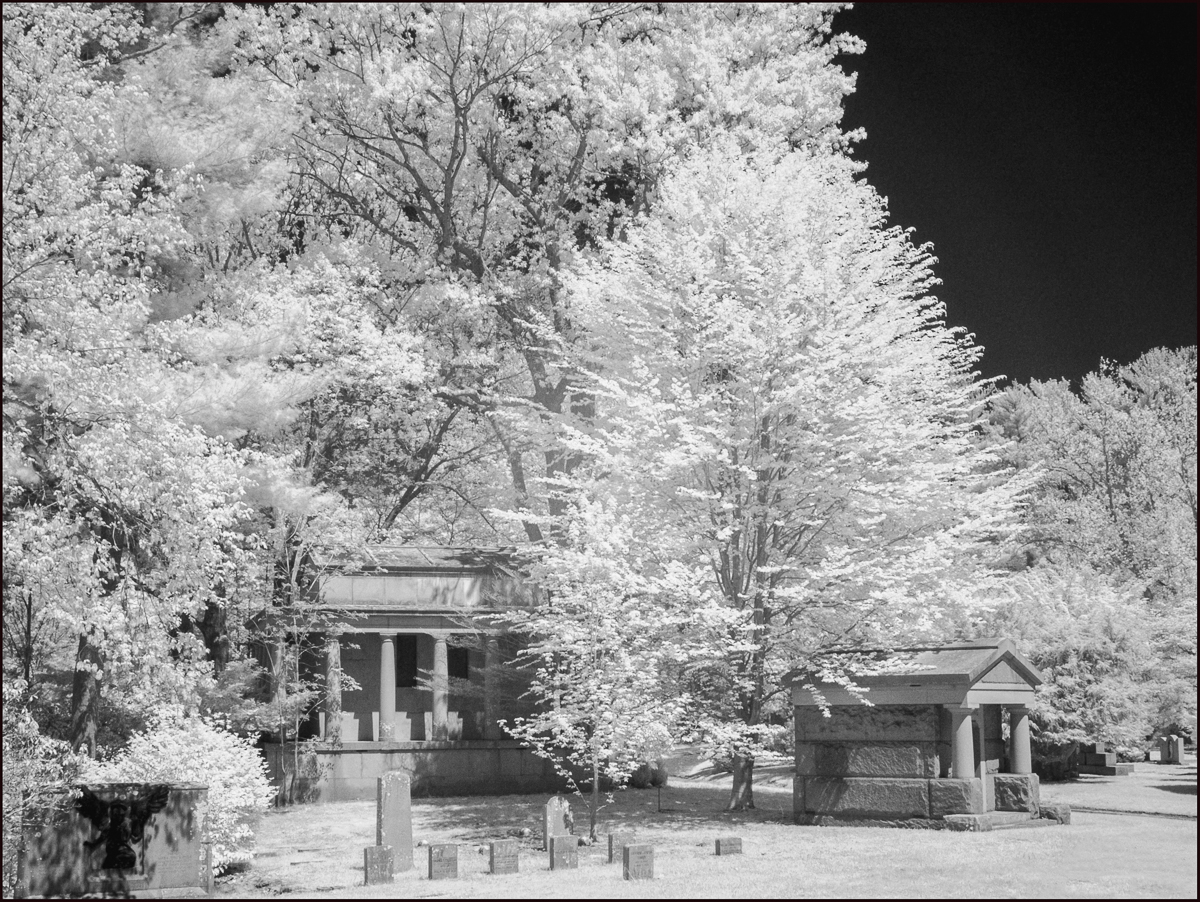
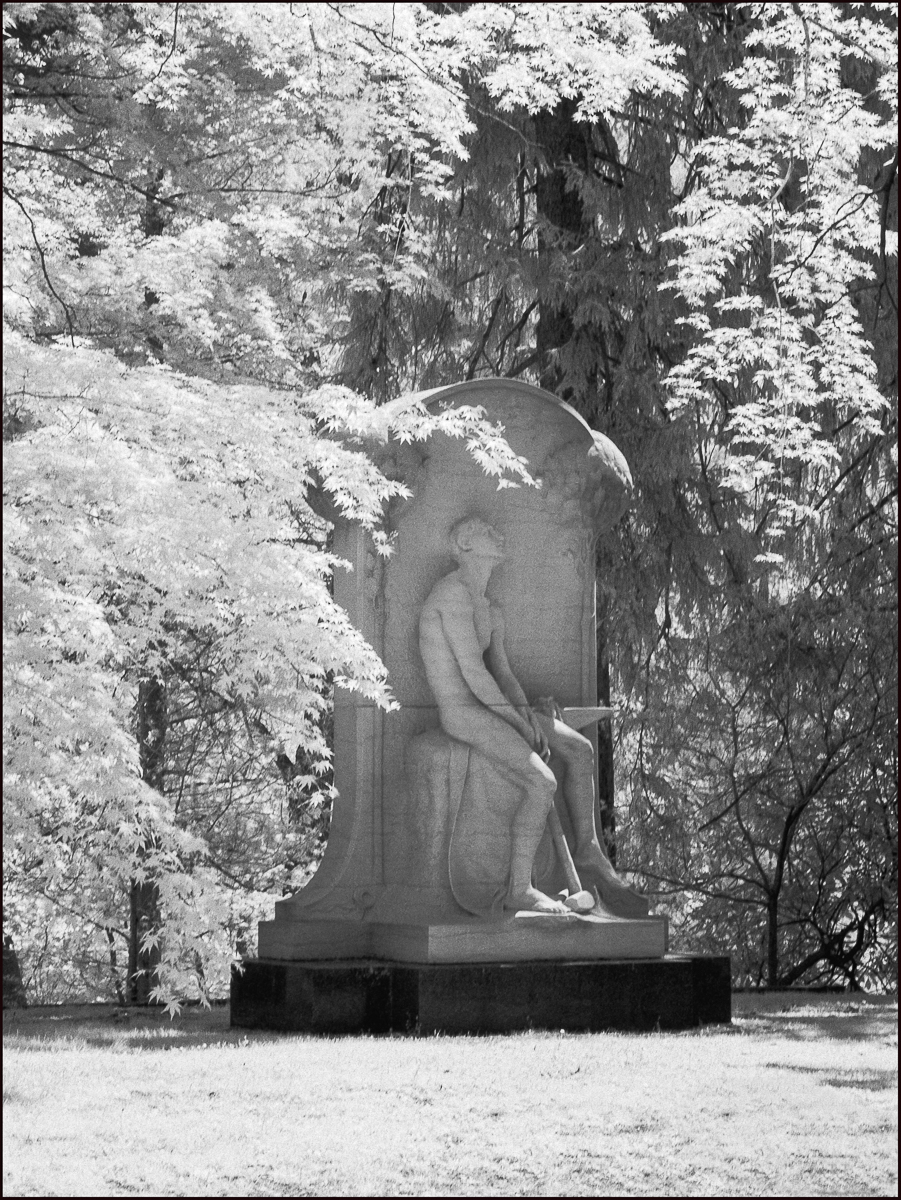
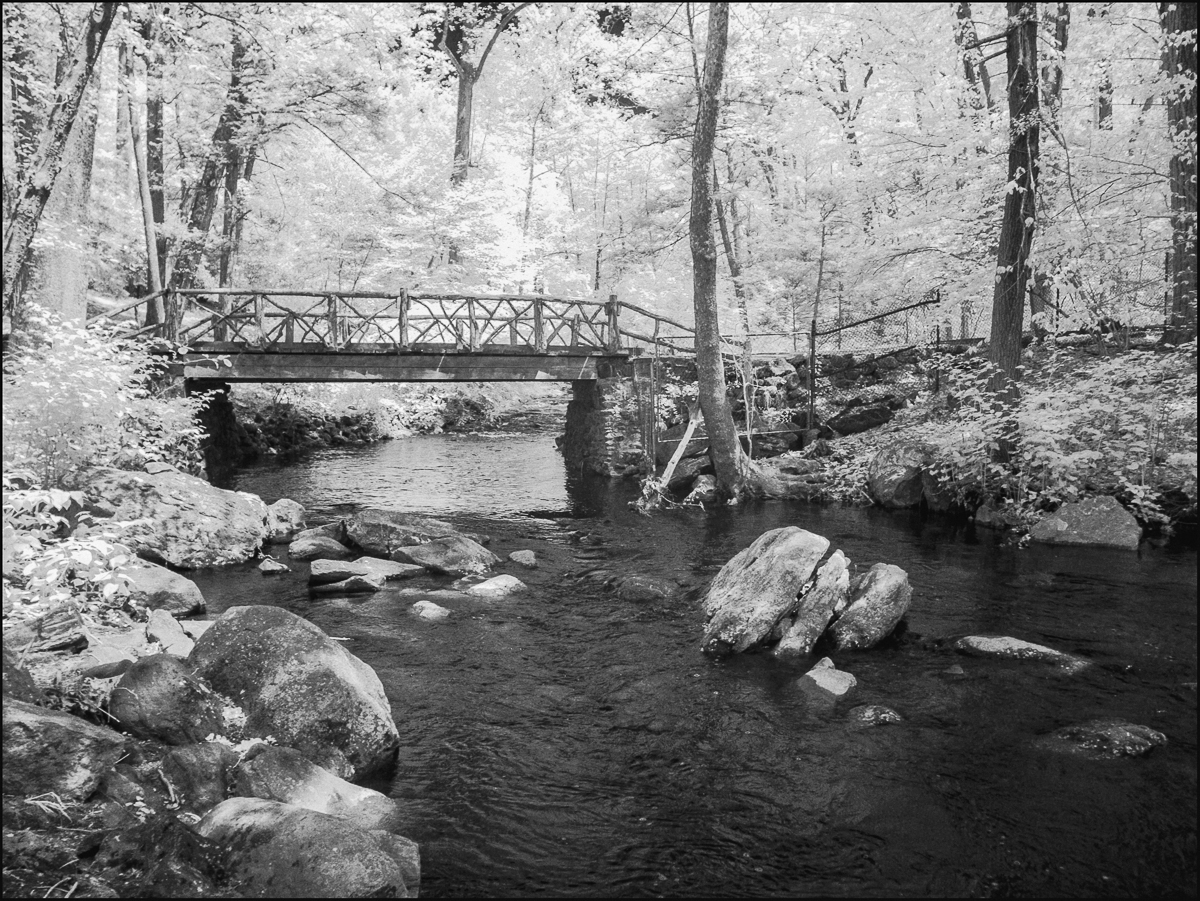
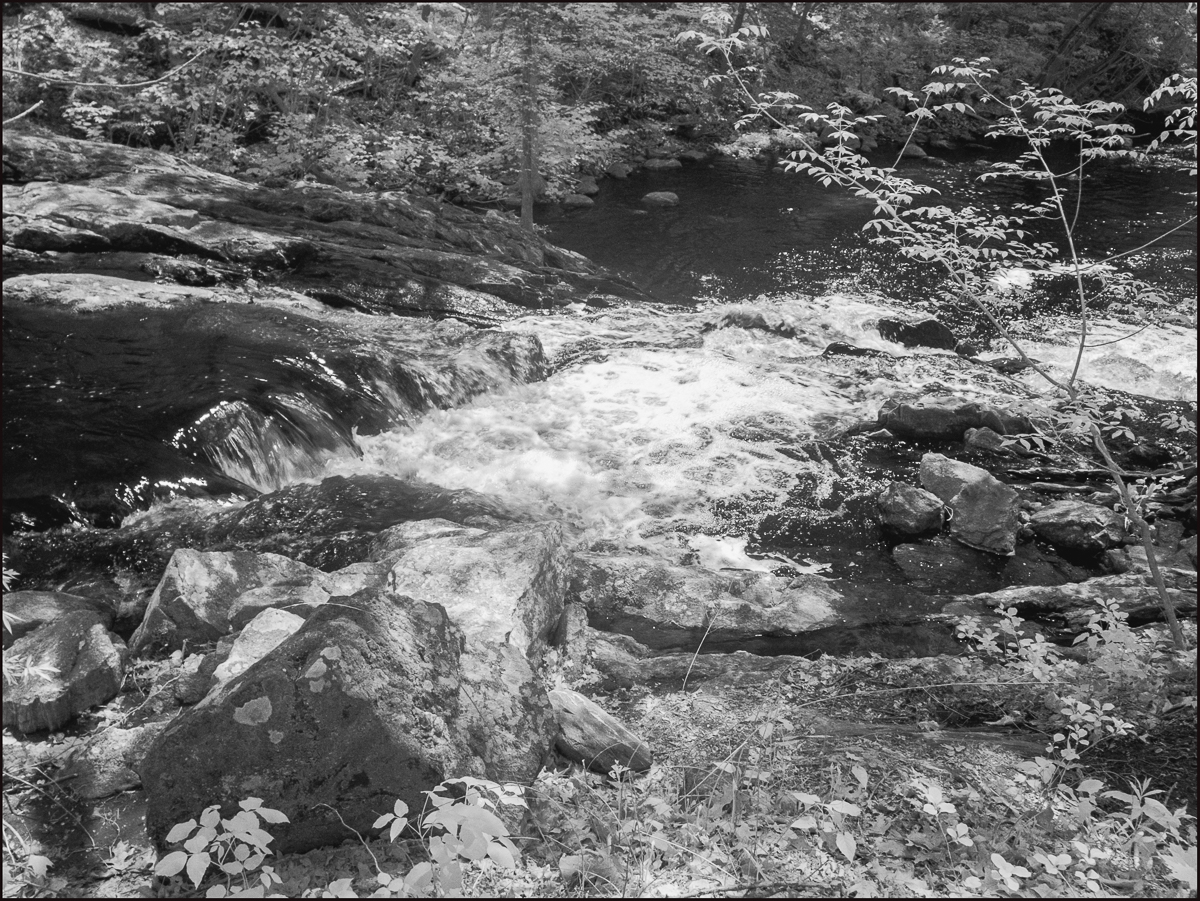
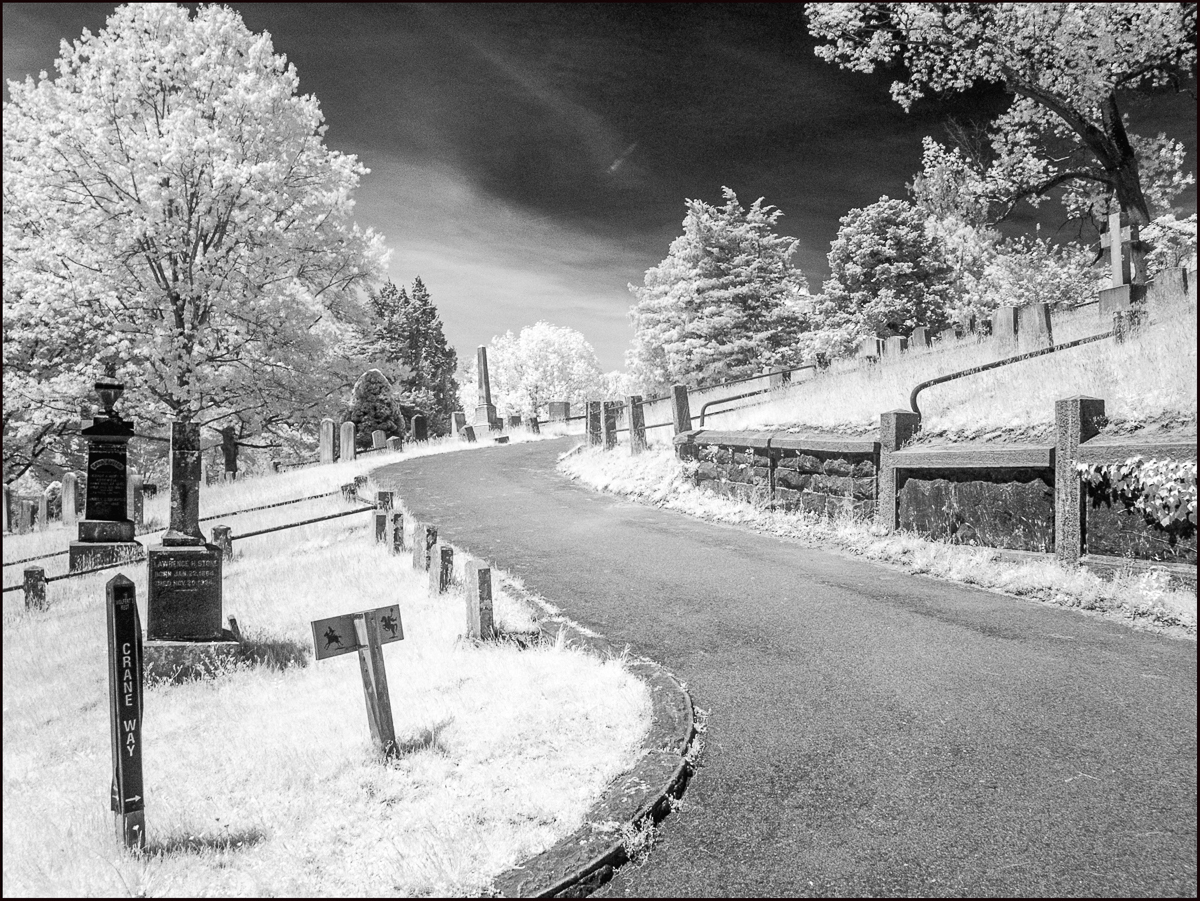
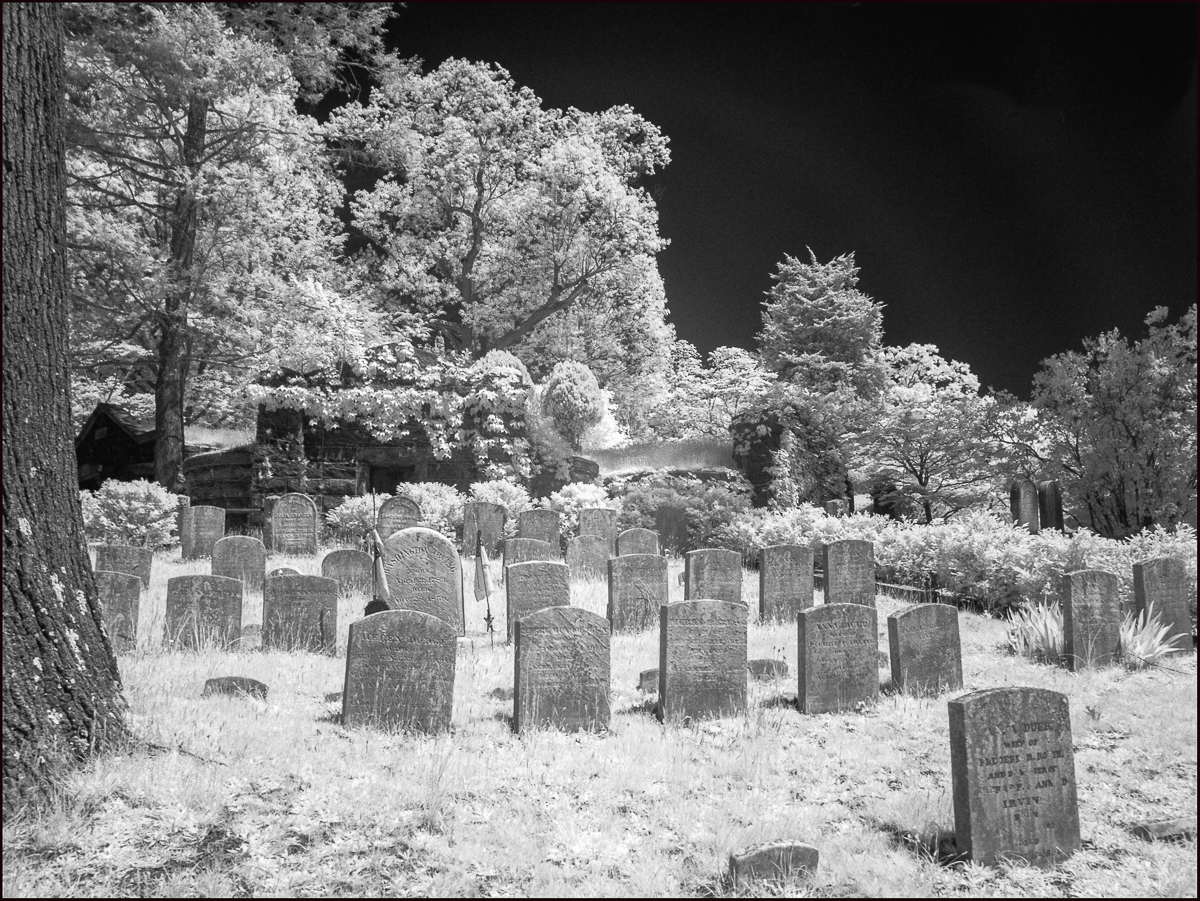
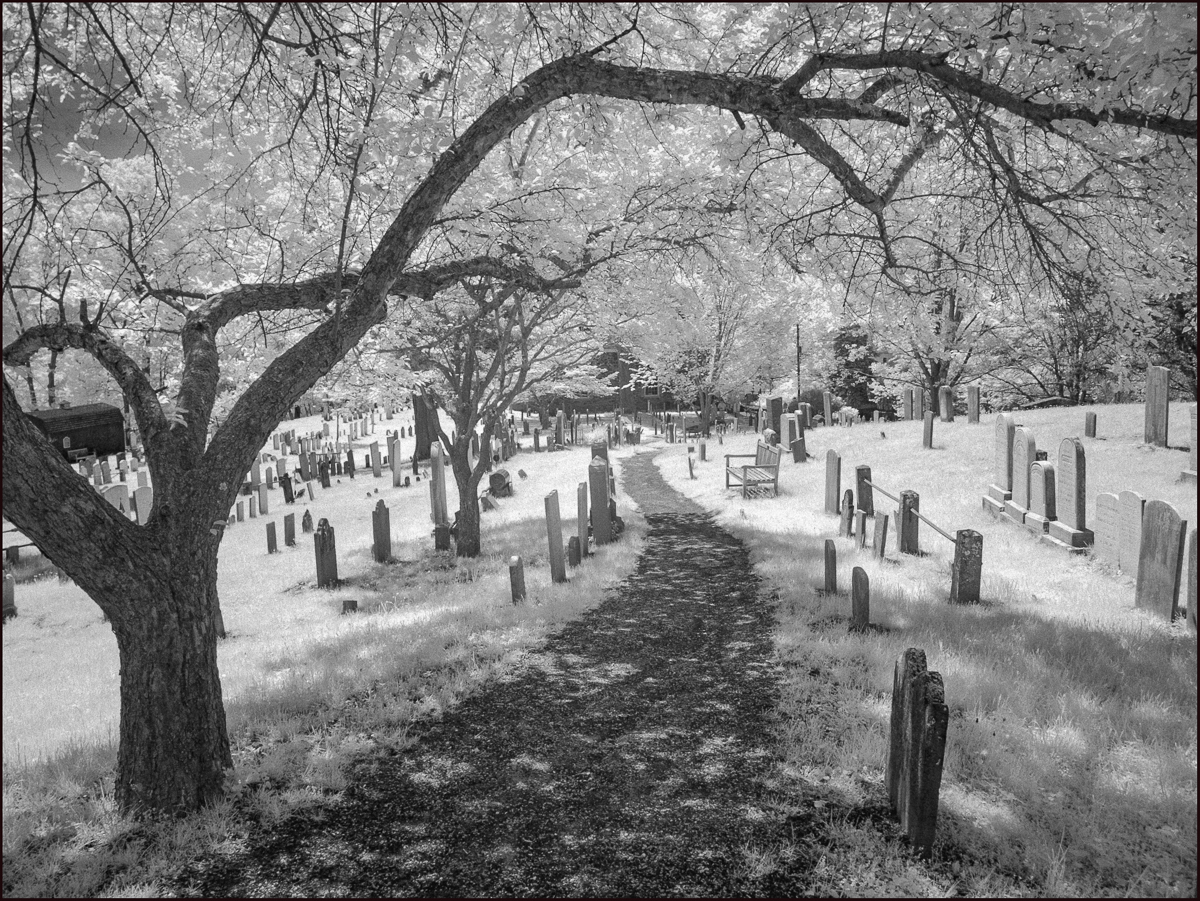
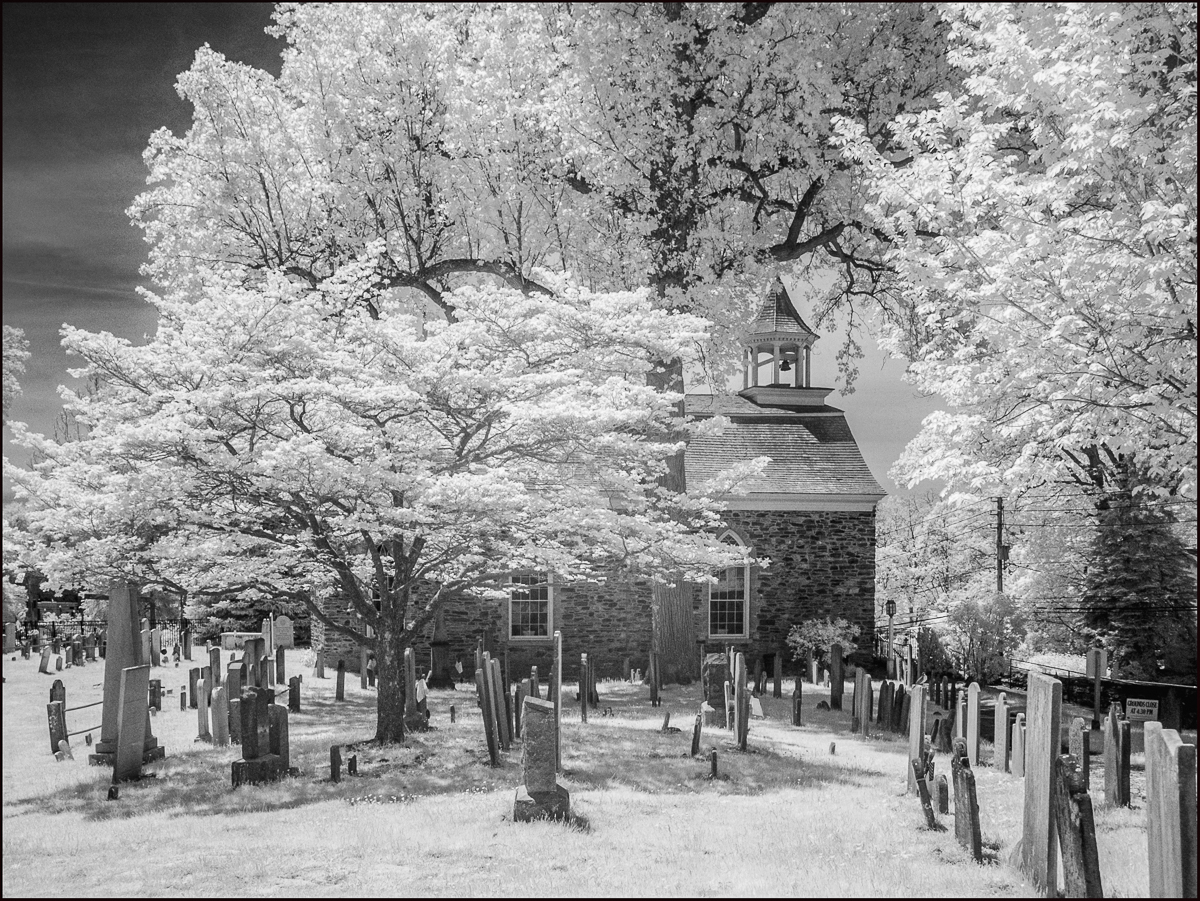
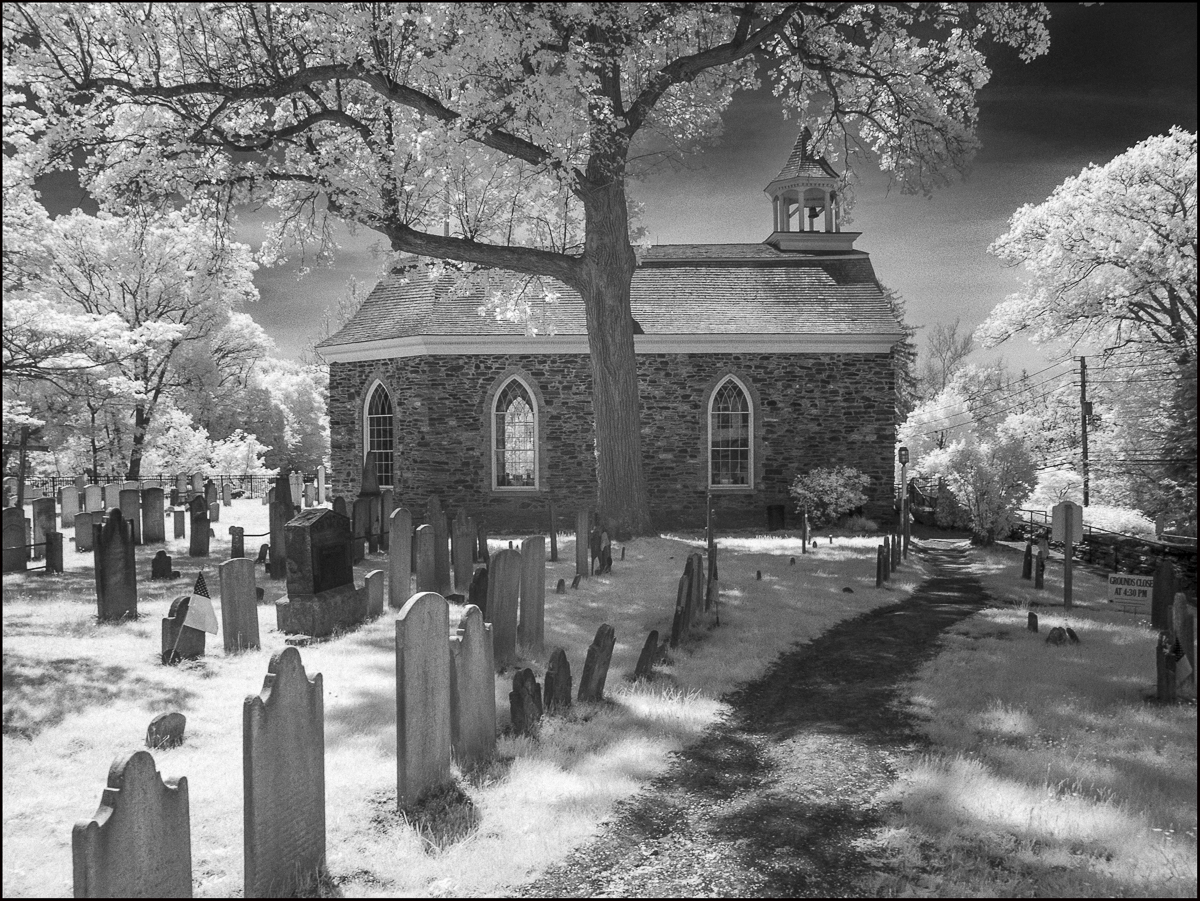
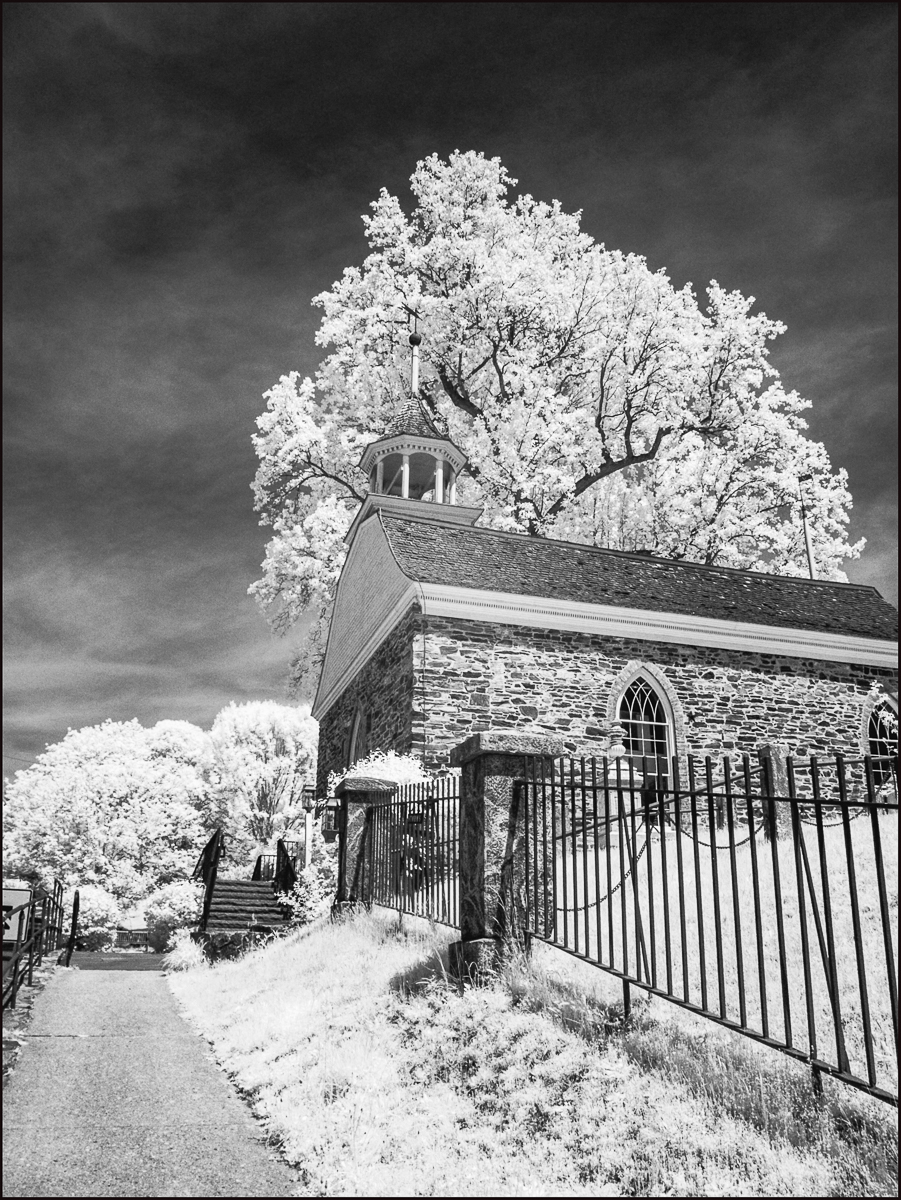
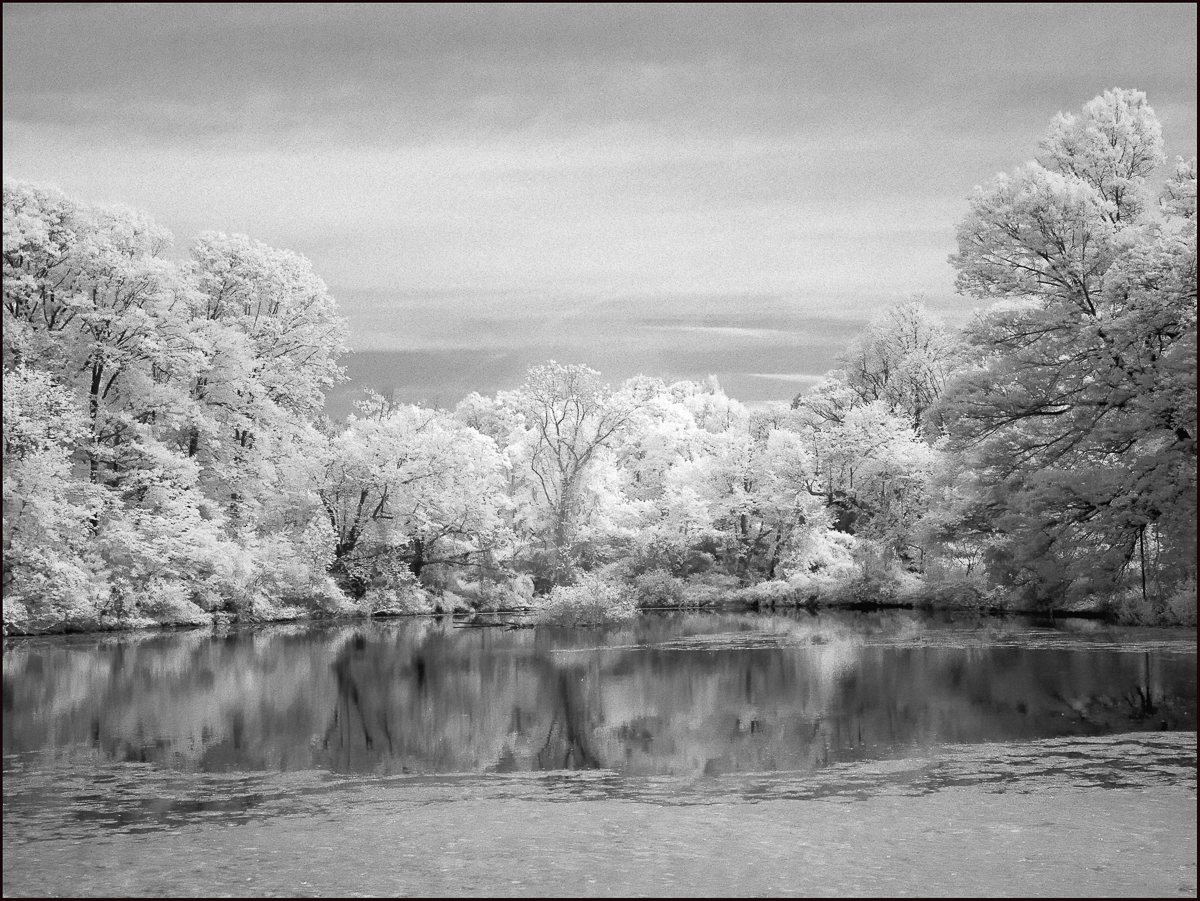
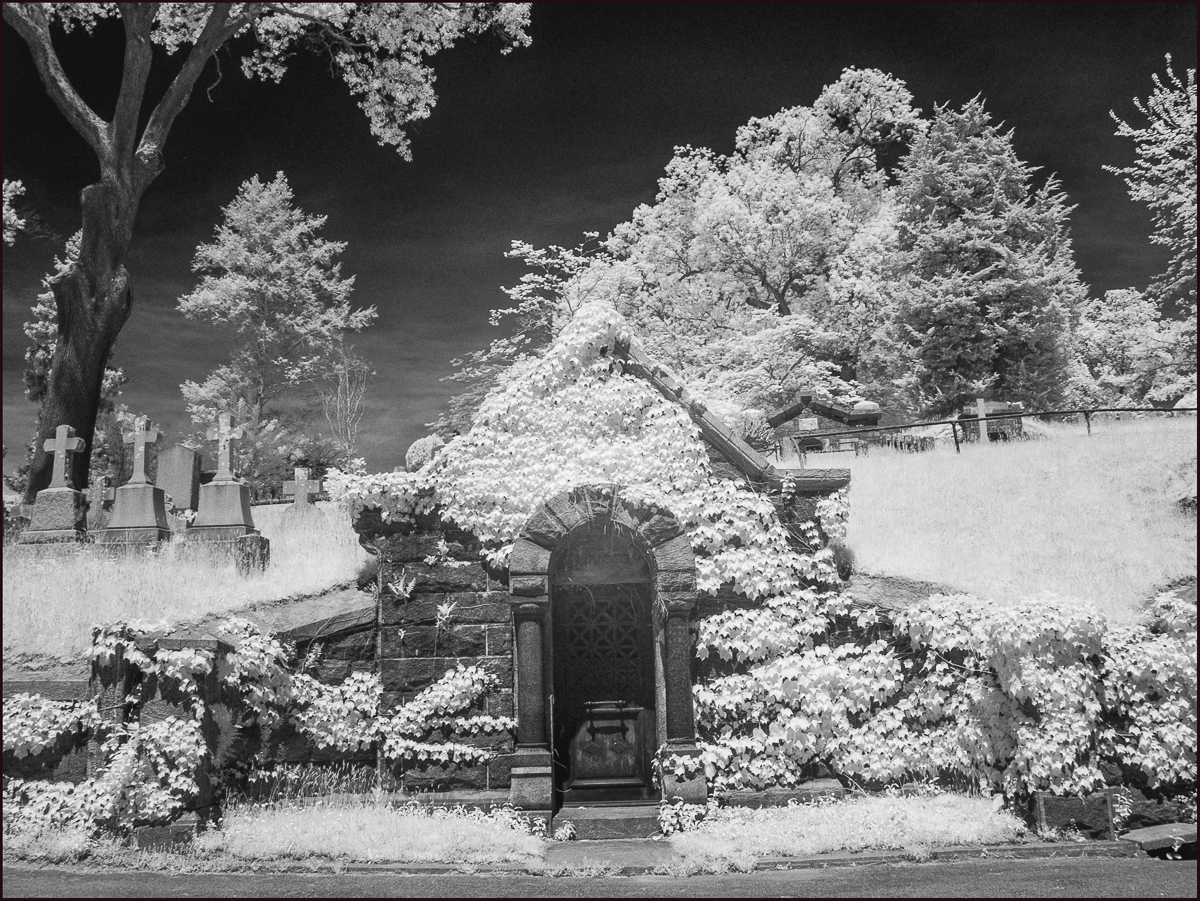
For my first attempt at infrared photography I decided to go to one of my favorite haunts: Sleepy Hollow Cemetery and the Old Dutch Burying Grounds. I really hadn’t a clue what I was doing and expected the results to be a disaster. I was surprised that, after some post-processing I quite happy with the results. This confirmed my desire to keep trying.


Taken with a Sony F828 and fixed Zeiss 28-200mm f2-2.8

Trying out Infrared Photography – Exploring the Options

I’ve been somewhat interested in trying infrared photography for some time. However, in my reading about it, it seemed as if there were only three ways of getting into it.

  1. Buy an infrared filter and put in on one of my lenses. This is by far the least expensive option requiring just the purchase of the filter. But the filter cuts out so much light that exposure times are very long. That means that you always have to use a tripod, and even then can’t take pictures when its windy. Anything that that blows in the wind (e.g. leaves, flowers, grasses, clouds etc.) will blur. So unless you really like this look it’s not a viable option.
  2. Buy an infrared camera. But apparently there are only a few of these. They’re mostly used for scientific applications and are extremely expensive. So not a viable option either.
  3. Have one of your cameras converted to infrared or buy one that’s already been converted. Both of these are fairly expensive. For the former you have to permanently devote one of your cameras to infrared (once its been converted you can’t easily go back). Moreover, the conversion costs around $300. The cost of buying an already converted camera includes the cost of a used camera plus the cost of the conversion, in all about $500 upwards depending on the camera you choose. Again not a great option if you’re not sure you’re going to like infrared photography and don’t want to pay a lot to find out.

So what is a person to do if they’d like to see if they like infrared, but don’t want to pay a lot of money in case they don’t.

Well, it turns out that there is a fourth option, and that takes us back to the camera in the preceding post (See: Another newly acquired old camera: Sony F828). The final line in that post includes the sentence: “But there’s something very special, even unique about this camera”.

Mike Eckman describes it better, and more succinctly that I can:

Of all the reasons to consider the DSC-F828, it’s most unique feature are it’s Night Shot and Night Framing features which use a hinged visual light filter that can be moved out of the way to turn the camera into a full spectrum digital camera that when used with an IR filter allows for infrared digital photos. An additional feature of the camera is one Sony likely never intended, which is to place a magnet on a specific part of the camera to manually deactivate the feature, making the DSC-F828 one of the few digital cameras ever made that can shoot IR and back to normal without any internal modification of the camera.

He goes on to explain:

One particularly interesting feature that was introduced in the the earlier DSC-F707 which made it into the DSC-F828, is what Sony called “Night Shot” which was an infrared technology borrowed from their higher end camcorders. Night shot (and the similar “Night Framing” modes) rely on both an IR emitter on the front of the camera, and the ability for a visible light filter that is normally placed in front of the digital camera sensor to swivel out of the way. To better understand Sony’s Night Shot feature, you need to know a little more about how digital camera sensors and the human eye perceive light.

In high school science class, you may remember that light travels as a wave. Light is all around us in a variety of wavelengths, some the human eye can see, some that it can’t. A wave consists of peaks and troughs. The distance between two peaks or two troughs is called the wavelength. As the wavelength changes, the properties of the light change as well.

For most people, the human eye can detect light with a wavelength of between 380 and 750 nanometers (there are 1 million nanometers in a millimeter). We perceive light between these two wavelengths as color, with violet on the low end and red on the high end. Beyond the visible spectrum of light on the low end is ultra-violet light, and on the high end is infrared. Light beyond the visible spectrum is around us all the time, we just cannot see it, at least not without help.

As the wavelength of visible light changes, the eye perceives it as color. Image courtesy, lightcolourvision.com.
All digital camera sensors made back then and today, can detect a wider spectrum of light that can see beyond what the human eye can see, from about 350 to 1000 nanometers. While the difference on the low end between 350 nm and 380 nm is small and would have little effect on the sensor’s performance, the difference on the high end from the 750 nm limit of the human eye to the 1000 nm limit of the sensor, is a problem.

All digital cameras have a visible light filter in front of the image sensor that blocks unwanted IR and UV light from being detected by the sensor.

In order to more closely match the spectrum that the human eye can see to what a digital sensor can see, all digital cameras have a visible light filter applied over the sensor to restrict the light that passes through it. Without this filter, digital sensors would be taking in more information than is needed, which would change the look of the images that the camera displays.

Cameras with Sony’s Night Shot feature have that same filter over the sensor to block unwanted wavelengths, however unlike most other digital cameras, that filter is on a hinge and can be electronically controlled by the camera for special purpose photography. Combined with an IR emitter on the front of the camera, which is essentially a flashlight that only emits IR which our eyes (and filtered digital sensors) cannot see, when used together, the visible light filter moves out of the way, allowing the sensor to see the full spectrum of light, including the IR light being projected from the front of the camera. Since the human eye cannot see this light, but the camera can, the sensor is able to focus on the IR light in complete darkness.

Sony uses this feature in two different ways. In the main Night Shot mode, IR light is emitted by the camera, the visible light filter moves out of the way, and the camera takes pictures of just the IR light in complete darkness. Although IR light cannot be seen by the human eye, the sensor can now see it, and it stores these images with the IR light changed to green, giving that “night vision” look that is often associated with electronic night vision devices. Although Night Shot images are presented in green monochrome without any other colors, they are an effective way of photographing objects such as sleeping babies in complete darkness.

A second Night Framing mode starts out the same way, using the IR emitted to shine light over a dark scene, and the visible light filter moves out of the way so that the digital sensor can focus and meter for whatever you are attempting to photograph, but at the moment of exposure, the IR emitter turns off, the visible light filter moves back in front of the sensor, and the camera fires it’s flash and shutter to capture a normal flash image in full color of objects in complete or very low light.

For anyone whose ever attempted to take photographs in complete darkness, you’ve likely encountered difficulties with the camera being able to focus on and meter for the extremely dark scenes. Even modern digital cameras and smartphone cameras today still struggle in very low light as they simply cannot “see” objects in complete darkness. With Night Framing mode, the camera uses it’s Night Shot technology to focus and meter for your shot, but then makes a normal flash exposure using the information it obtained using the IR light.

The Sony CyberShot DSC-F828 would be Sony’s last camera in the series and the last with the Night Shot feature. A combination of some scandalous uses of the feature, plus a widespread misunderstanding of the technology caused it’s removal in future models. By the mid 2000s, DSLRs had gained much more popularity as did more traditionally styled point and shoot’s so an oddly shaped top of the line camera with a $1000 price tag likely caused it to sell poorly.

Sony would never release a camera with the Night Shot feature again, and to the best of my knowledge, no other camera maker did either meaning these features are unique among this family of cameras in that they could do something that the best cameras today can’t.

When attaching an external magnet to a specific location in this area of the camera, you can override the built in visible light filter and move it out of the way, turning the DSC-F828 into a full spectrum camera.

I could probably end this review here, talking about a neat camera with a strange design and some cool features and that would make for a pretty interesting look back, but I’d be leaving out one more unintentional feature.

When Sony designed the visible light filter that could be moved out of the way of the digital sensor, they controlled it with magnets. At some point, some clever owners of these cameras discovered that if you used a small and powerful magnet, and attached it to the camera in a specific location, you could manually move the filter out of the way, essentially turning the camera into a full spectrum digital camera.

Now, you might be thinking, why would anyone want to do this? I thought you said that the reason these filters exist in the first place is to filter out light we can’t see, and that by including that light, we’d have undesirable images?

Using a magnet to manually disable the digital sensor’s filter, you can shoot the camera in full spectrum mode, that when used with a screw on IR filter, allows you to shoot infrared photographs in daylight.
That is true, however by eliminating the filter and exposing the sensor to the full 350 nm to 1000 nm spectrum, you can use screw on filters to pick and choose which wavelengths you want the sensor to see. Since we know that IR light is around us all the time but we can’t see it, by using a full spectrum digital sensor and a screw on IR filter, you can turn the camera into an IR only camera, something Sony never designed the camera to do. When used as intended, the Night Shot mode limits the aperture and shutter speed to only specific settings to optimize low light photography. With the camera in it’s “normal” mode, but the visible light filter out of the way, the camera doesn’t have these limitations, allowing you a full spectrum of f/stops and shutter speeds, while still shooting IR photos.

Shooting a full spectrum digital camera with an IR filter in bright sunlight will produce images with otherworldly colors. Lush green trees will turn white, blues and reds will take on a purple or sometimes yellow hue. By mixing different color filters and some clever post processing, you can make your local nature park look like an alien landscape.

There is a small niche of digital photographers who will open up their cameras and permanently remove the IR filter that is permanently attached to their sensor to achieve this effect. But once these cameras are modified, they are not easily returned to normal, meaning they will only work in IR mode. Furthermore, most cameras that are modified this way are usually point and shoots as they’re the easiest to work with.

With the Sony DSC-F828 and the two models that came before it, swapping back and forth between full spectrum and normal mode is just as simple as attaching and removing a magnet. You can change back and forth as often as you like with no damage to the camera!

Today, because of this ability, plus it’s excellent f/2 Carl Zeiss lens, 8 megapixel sensor, ability to write RAW files, and it’s screw on filter mount which makes using IR filters very easy, the Sony DSC-F828 has developed a bit of a cult following for IR photographers. These cameras are one of the easiest entry points into IR photography, and for those times you want to turn the feature off, you still have a pretty good regular digital camera.

So I got the magnet and some inexpensive Infrared filters and off I went to try this setup out.

The results of my efforts will follow in the next few posts.
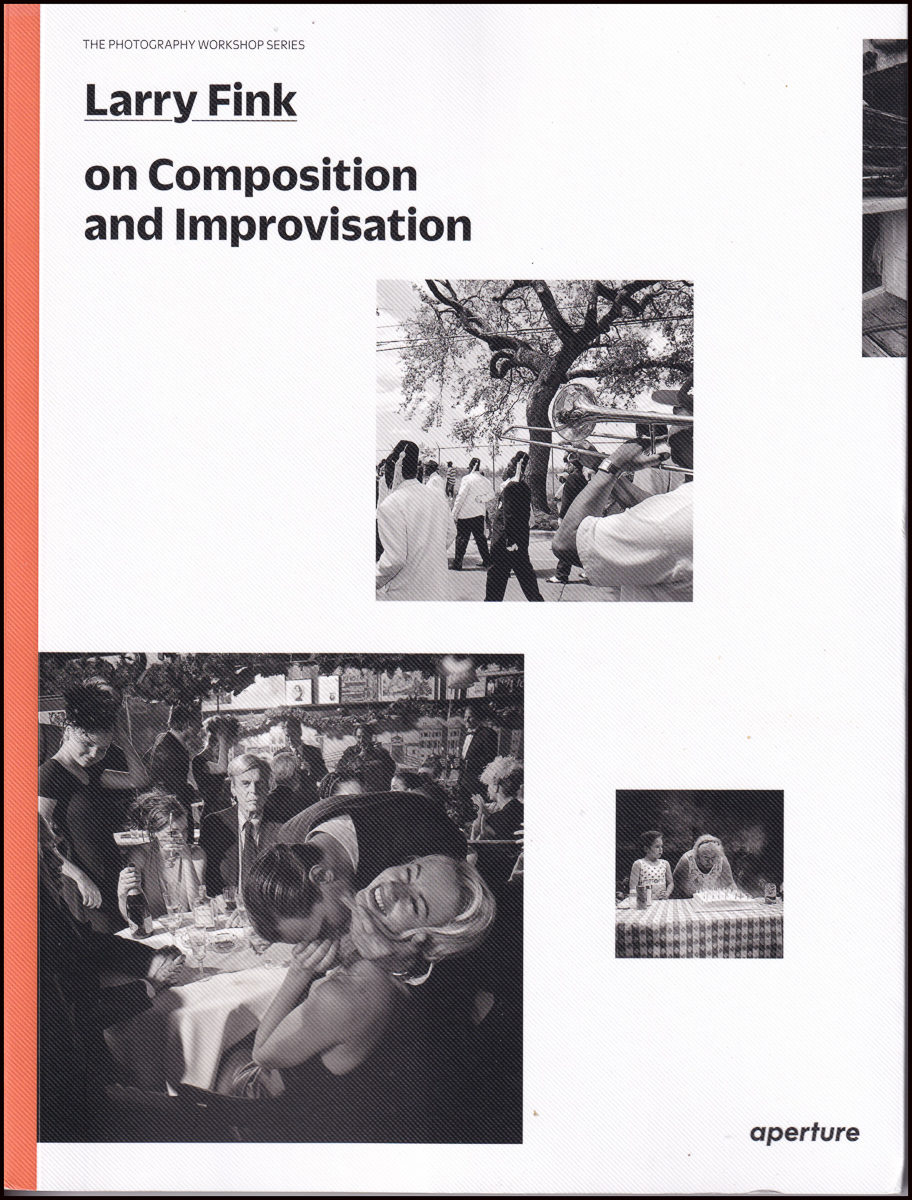
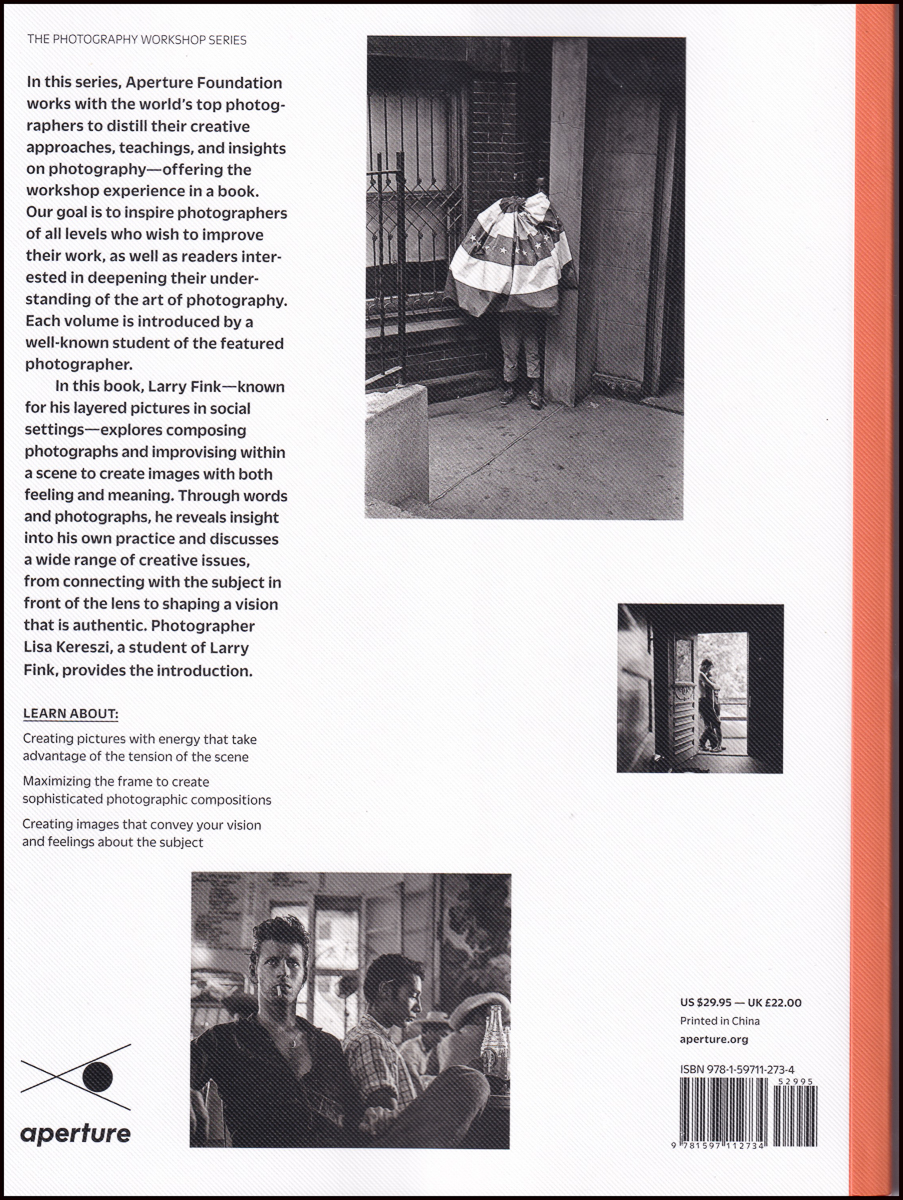
Larry Fink on Composition and Improvisation

Last January I posted my thoughts on another of the books in the Aperture Photography Workshop Series (See: On Street Photography and the Poetic Image). I really liked that book and decided to get some more in the series. As of today I have all but one of them

Unfortunately I didn’t like this book as much as I did the last one.

While most of the reviews on Amazon are positive, even glowing one review says:

I don’t know about the author before purchasing this book, I purchased this along with the other one written by Alex Webb in the same workshop series, so I thought it would be a promising book for composition inspiration. After reading the first 30 pages, I realized this book was kind of a joke. But i told myself to continue as the author got his fame on this for reasons and I need to read more to understand that. Until the end of this book, I almost didn’t find any really excellent photographs that deserve a thorough study. All of the photos inside are black and white, shot in photojournalistic style and quite a bunch were shot with flash. To me, a good candid or photojournalistic photo needs to have something that leads your eyes and keep them there, it may be some interesting light, some exotic juxtaposition, some decisive moments or something that you can smell out of it. But most of the author’s works shown in the book are not that interesting at all, some of them have really flat or bad light, harsh flash illumination, poor crop of human bodies at the frame edge or corner as well as no real moments existed there. And the author’s explanation in the excellence of his works are also confusing and not convincing. It looks like the author randomly made the incomplete crop or object inclusion when clicking the shutter, and then figured out some academic reasons or principles from nowhere to make these stuff sound like magic and then persuade you to follow and study.

Examples like Page 26, the author emphasized the importance of the table edge at the bottom left corner of the frame, which brought out the 3D feel of the image. To me, it’s like a redundant and incomplete composition, I would clone it out in PS without a second thought. If you want a 3D look, use the side lighting to shape your subject to bring out the texture of dimensionality instead of introducing unnecessary distractions into the frame, like the table here which has nothing to do with the central theme of the photo – the boxer. Other works like page 34, I even can’t figure out what that image is talking about, what are the roles of those people and what are they doing. The author seemed to be quite proud about the compositional arrangements in this photo, but I can’t find any interesting arrangements here, as well as no real moments can be discerned. It looks like a common snapshot, and if it is thrown onto the internet anonymously, I really doubt it will draw any attention from the public. Same thing for page 35 and a lot more pages in the book. At page 99, the author seemed to be quite excited to have a “lucky” photo, which to me is similar to a boring selfie photo bomb in today’s instagram. The main subject the author trying to photograph is a black student, who situated in the center of the frame in big proportion, emotionlessly, disinterested and only god knows why the author thought he was interesting enough for him to click the shutter. The other two silhouette students at the right side talking to each other, also cluelessly and had no obvious business with the main character in the center. The background is another black boy’s face bumped right out of the main character’s head, which is a failed composition in any common sense, or at least nothing special in my mind. And now the highlight came from the boy at the left, who laughed and waved his hands hysterically, staring at the camera and the author (the photographer). So what is this image all about? I didn’t see any good compositional or improvisational merits here. All I see is a common and random image taking phenomenon: You walked in a street and suddenly came across a beautiful lady, and then you quickly lifted your camera at the same time threw harsh flash light from your side on her face, only finding that the moment you clicked the shutter her daughter from behind was making a face towards you. Is this really a good photograph that worth your 2nd look? Is this a photo that deserved to be shown in a photo book or in a museum art exhibition? I doubt it, and I simply can’t understand it.

There are too many unconvincing ideas, instructions and explanations in this book, most of which is not practical or relevant to the title. I really can’t figure out how the author got great fame or his senior academic positions in photography, which is also a big mystery to many of my professional photographer colleagues after my showing them the works and the words in this book. Maybe we are too “young” to understand the art, but if I can easily appreciate and learn from lots of the other admirable photographers’ works such as those from Magnum Photos, I believe the author is simply incompetent in certain ways here.

Since this book looks more or less a best seller in this category on Amazon so far, I seriously wonder if anyone who purchased this book had the similar doubts but can’t or not dare to admit. Personally, I would strongly not recommend this book for educational purpose as it doesn’t show you any usable or practical compositional knowledge and skills as well as not exhibit any great examples falling in this aspect. It may be a good purchase or inclusion for any fans of this author’s works. I truly believe photographers such as Constantine Manos, Steve McCurry or Gueorgui Pinkhassov from Magnum Photos are more suitable for this book, their works and technical skills in this part is at least several light years better than the author, unabashedly.

And another one where the author is much more positive towards the images, but takes exception to the language:

First this is NOT a photo workshop book, as the title implies. I’m a teacher and hoped to get something to share from it; but no.
The book is a collection of photographs by Larry Fink, with short texts that vaguely relate to his process.

There are two major problems with this volume:

1. The photos, while certainly good, or above average, lack greatness. It seems that Fink has mastered a good composition trick; he knows how to shoot a multi-layered image really well; but unfortunately that’s all you’re going to get as he repeats the same trick over, and over, and over.

But in terms of voice, no one is there. It’s hard to explain in words but these pictures lack soul. To give some perspective, the work of Diane Arbus oozes with soul. There’s nothing like that here. There’s not one image where, as a viewer, I’m intrigued by the people he shoots. Which is really strange. Fink speaks a lot about empathy, but it’s not clear he understands what this means by looking at his images.

But it gets worse . . .

2. What’s really frustrating is how pedantic the author sounds throughout the book. It seems that he purposefully uses overly complex language to make his work more interesting.

Here’s a typical example, p 81: “There’s a difference between atmosphere and space within a picture. Atmosphere is charged space; it fills the setting with feeling and could come from the way you feel about the place—something from within your mind—or from physical conditions. Either way, it is worth trying to emphasize the factors in the reality that creates atmosphere . . .”

Sounds smart-ish . . . But what does it mean exactly? Not much.

Throughout the book, he sounds like a New Age guru . . .

p 83: “This is not technique. This is the entryway to the soul.”

p 73: “I’m not analyzing my desires to the point of cooling things down—just to the point of understanding impulses as they come.”

p 69: “I’m a volatile feeler. I don’t live in automatic mode . . . It’s the idea of merger—inter-organic merging with other energy forces.”

This whole thing sounds like terrible 70’s psycho-babble.

But the problem may not come from the artist but from the editor, Aperture (who mis-titled the book).

It’s the second time I received a bad book from Aperture. The first was the Aperture anthology — which was again incorrectly titled as it was not an anthology but a collection of essays.

No more Aperture books. This one will be returned because, to use the words of Fink, this “inter-organic merging with other energy forces” is not quite working.

If you love photography (without the pedantic jargon), please avoid this one.

Although I agree with a number of his comments, I think the author of the first review is a bit harsh. There are about 75 pictures and I like about 22 a lot. But please take this with a grain of salt. I don’t incline to this type of photography and in all likelihood don’t understand it that well.

I agree more with the second review, particularly his second point where he says “What’s really frustrating is how pedantic the author sounds throughout the book. It seems that he purposefully uses overly complex language to make his work more interesting.” While I don’t know whether he consciously tried to use “overly complex language” to “make his work more interesting” the language is somewhat tortured. It’s not the worst photography book I’ve ever read, but it’s far from the best. I don’t regret buying it.

You can find more information (e.g. publication information as well as more reviews) on Amazon.com where I purchased it. What you can’t do, at least for the moment, is purchase a copy for yourself and Amazon says: “Currently unavailable. We don’t know when or if this item will be back in stock.” It doesn’t seem to be available on ebay either, and it’s listed on the publisher Aperture’s site as “unavailable”. Must be popular?

Another black and white

A while back I went mad over black and white conversions. This was partly because I seem to see in black and white and partly because at that time I didn’t really understand color photography that well. Sometimes the conversion was appropriate, other times it wasn’t. Since then after immersing myself in William Eggleston, Joel Meyerowitz, Ernst Haas, Saul Leiter, Alex Webb, Stephen Shore, Alec Soth at al. I’ve become a little more comfortable with color and consequently I’ve largely moved away from black and white conversions. However, the Native American Chief in my last post seemed to call for a black and white treatment.

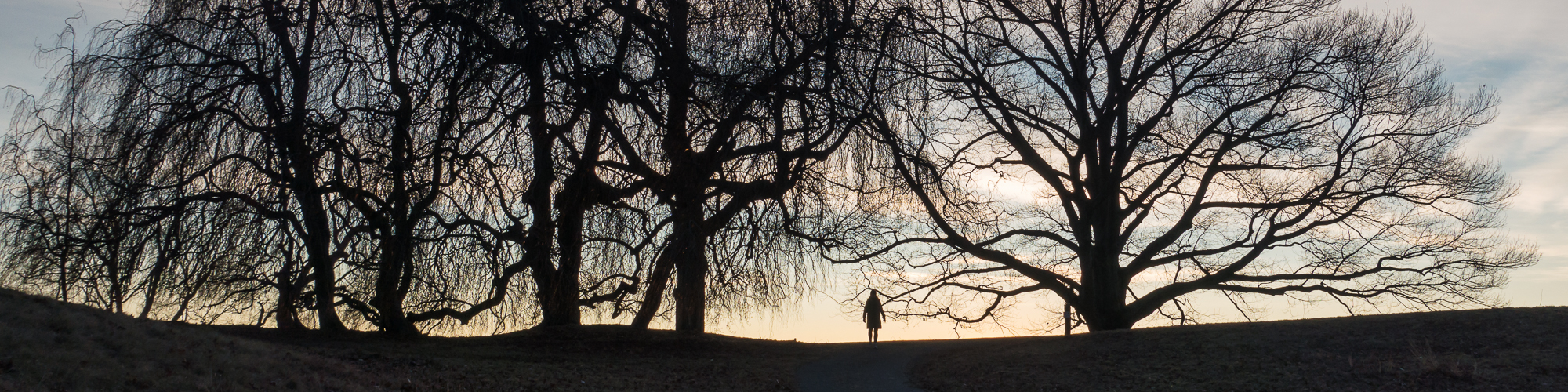
A short time after I took that picture I took this one of the Pocantico River as it passes through Briarcliff Manor, and decided to convert it to black and white too. I’m not entirely sure that it works. Maybe I was mistakenly just trying to make a not terribly inspiring color photograph look a bit better.

Taken in mid April 2023 with an iPhone SE II.