An Excursion to the Dutchess County Fair – Antique Farm Machinery

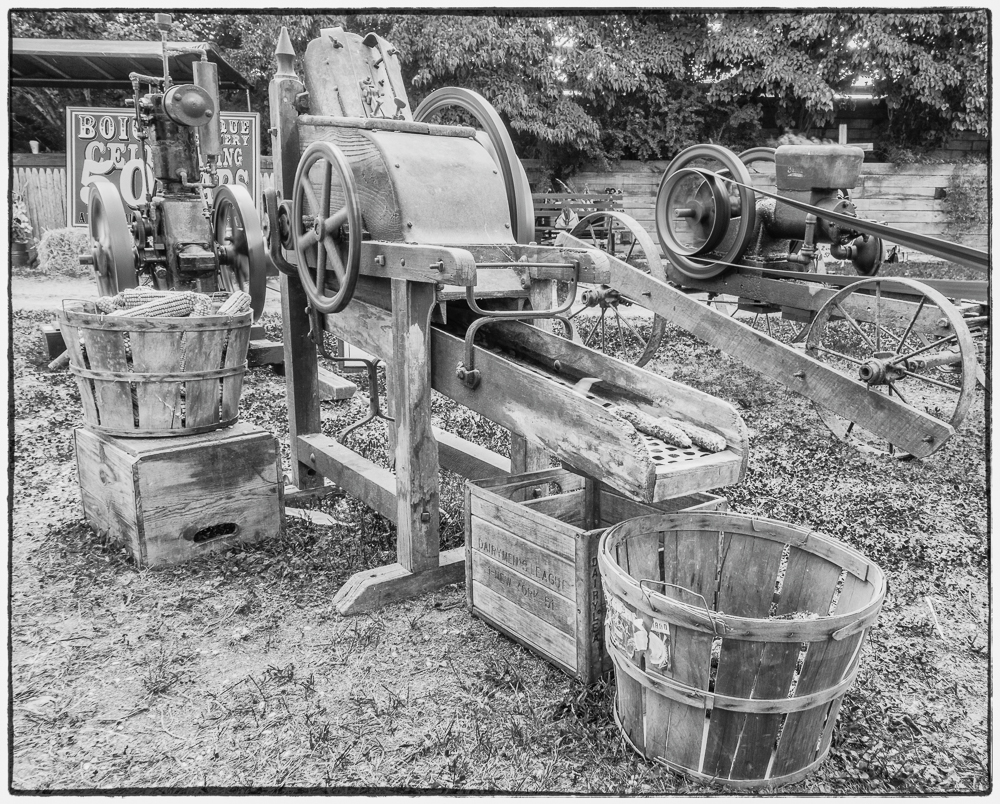
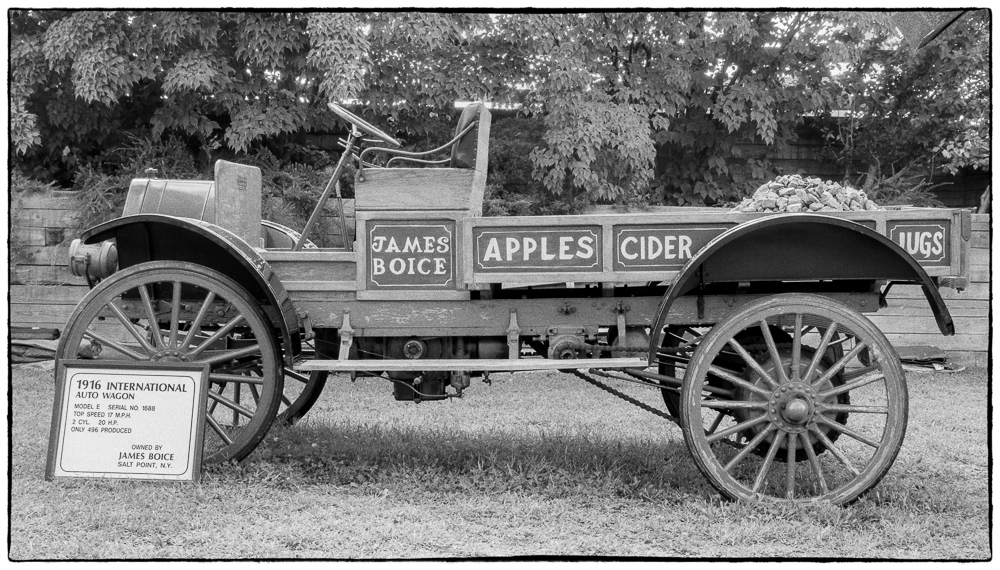
I love old machinery and the Dutchess County Fair had quite a lot, most I believe courtesy of Boice Antique Machines, featured in an article in the Daily Freeman News – At Dutchess County Fair, a new look at old machines:

There’s a symphony of combustion engines in the Antique Engine and Machinery Show at the Dutchess County Fair.

Among the sputtering, clanking and banging is the sound of steam-powered saw being operated by Jonathan Boice, who says the 1907 International Harvester machine was a turning point for farmers, allowing them to cut wood easily.

“What you would be doing is cutting fire wood the length of your stove or fire place,” Boice said.

“This is when someone went from doing it by hand to doing it with a power saw,” he said. “This was really the first power saw. I don’t know of an earlier machine than this for cutting wood.”

The 6-horsepower machine’s engine turns at 335 revolutions per minute.

“Attached is a box that looks like a tower and the water runs over trays that cools and evaporates,” Boice expalined. “As it evaporates, you have to add more. It carries about 15 gallons and has some leaks due to its age, so during the day, we may add water once or twice.”

Boice said the saw is largely in the same condition as when it was found several years ago, with ownership traced to a farm in Millerton.

“Mechanically, there were broken parts on it,” he said. “We didn’t want to paint it or anything like that. These machines are only original once.”

There are about 20 pieces of equipment on display in the Antique Engine and Machinery Show, including a rock-crushing machine that demonstrates the power of America’s industrial revolution and oat-processing equipment that turns a harvest into food.

Boice family members have been collecting the equipment over several decades and take several weeks to prepare for the fair.

“We work on this about three weekends before the fair — loading it up, bringing it over and making sure everything is ready to run,” he said.

“I wouldn’t quite call it a business,” Boice said. “It’s a family hobby. My nephew is in charge, and his father started it. … I’m one of the original ones in it, along with my brother’s wife, and there are some of our other family members that are involved, and we couldn’t do this without them.”

Below “The Abenaque”, which has its own interesting story described in an article in Farm Collector entitled The Short, Odd Story of the Abenaque Tractor.
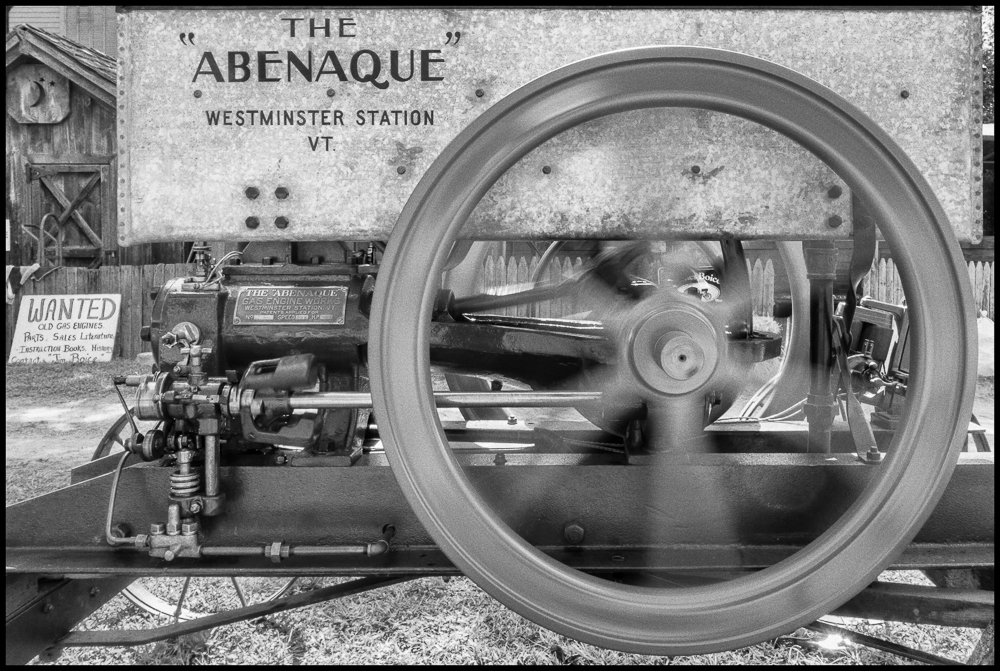
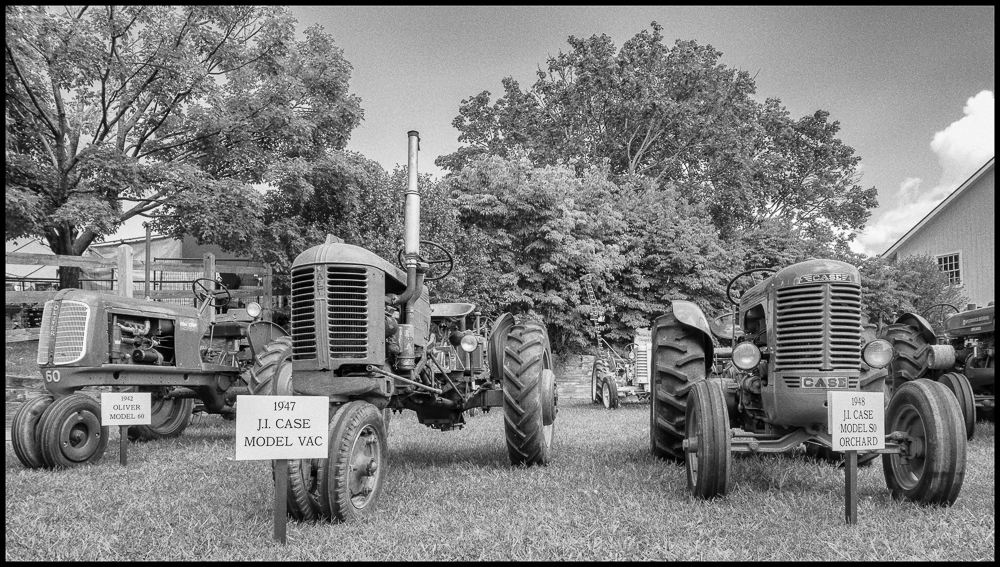
Taken with a Sony RX-100 M3.
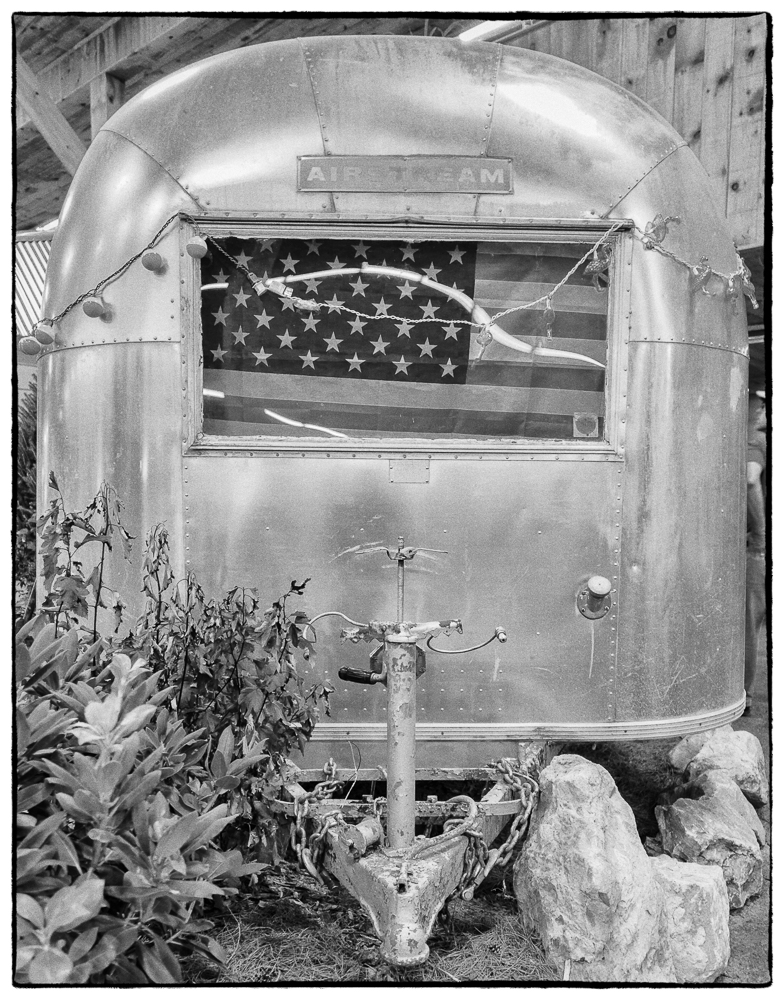
An Excursion to the Dutchess County Fair – Airstream

And then there was this gorgeous bright, shining, silvery Airstream. What in the UK we would call a caravan, but which I imagine here in the US is called a trailer. Unfortunately I neglected to check precisely what model of Airstream this is and the picture doesn’t show enough of it to hazard a guess. It looks like one of the smaller models.

According to Wikipedia:

The company was created by Wally Byam, a lawyer by training, who began building trailers out of Masonite in his backyard in Los Angeles during the late 1920s. Byam published a magazine selling “how-to” kits to customers wishing to build their own trailers. After helping market Hawley Bowlus’ trailer, Byam acquired the struggling Bowlus Company. In 1936, Byam introduced the “Airstream Clipper”, which was essentially a rebadged 1935 Bowlus, with the door relocated from the front to the side. The design cut down on wind resistance and thus improved fuel efficiency. It was the first of the now familiar sausage-shaped, silver aluminum Airstream trailers. The first Airstream, called the “Clipper” in 1936, was named after the first trans-Atlantic seaplane. It slept four, carried its own water supply, was fitted with electric lights and cost $1,200.[3] Of more than 400 travel trailer builders operating in 1936, Airstream was the sole survivor of the Depression.[4] During World War II, travel became a luxury most could not afford and non-military industries faced an acute aluminum shortage. When World War II ended, the economy boomed, and people’s attention once again turned towards leisure travel. Byam’s company went back into production in 1948. In July 1952, a new facility in Jackson Center, Ohio, was established. 1979 saw the last Airstreams to be manufactured in California.

In 1974, Airstream began manufacturing a Class A motorhome, badged “Argosy”. They began as painted 20- and 24-foot (6.1 and 7.3 m) models, and were followed in 1979 by the first examples of the Classic model motorhome, with an unpainted aluminum body much like the trailers.

Airstream-badged Class A motorhomes began as 24- and 28-foot (7.3 and 8.5-m) models in 1979, and in the 1980s and 1990s, models ranging from 25 up to 37 feet (7.6 up to 11.2 m) were marketed. The aluminum motorhomes were followed by more traditional-looking fiberglass models in the 1990s. Airstream discontinued manufacture of Class A motorhomes in 2006. One bus model, the Skydeck, featured interior stairs leading to a deck on the roof.

In 1981, Airstream’s Commercial Vehicle Division marketed a Class A motorhome as a funeral coach. It was designed to transport family, flowers and the deceased from the funeral home to the cemetery.

Starting in 1989, Airstream built Class B motorhomes based on the Ford Econoline chassis and the Dodge B-series van chassis. Production ceased after the 1999 model year. In 2004, Airstream introduced the Westfalia and Interstate, built on the Mercedes-Benz Sprinter chassis. The Westfalia was discontinued in 2006.

Airstream, still based in Jackson Center, is a division of Thor, Inc. Airstream produces several models — Basecamp, Sport, Flying Cloud, International Signature and Serenity, Tommy Bahama, and Classic. 2016 trailer sizes range between 16 ft to 33 ft (4.9 to 10 m).

Airstream also manufactures models for the European market, with smaller dimensions to accommodate narrower European roads.

Taken with a Sony RX-100 M3.

’76 House – Exterior views

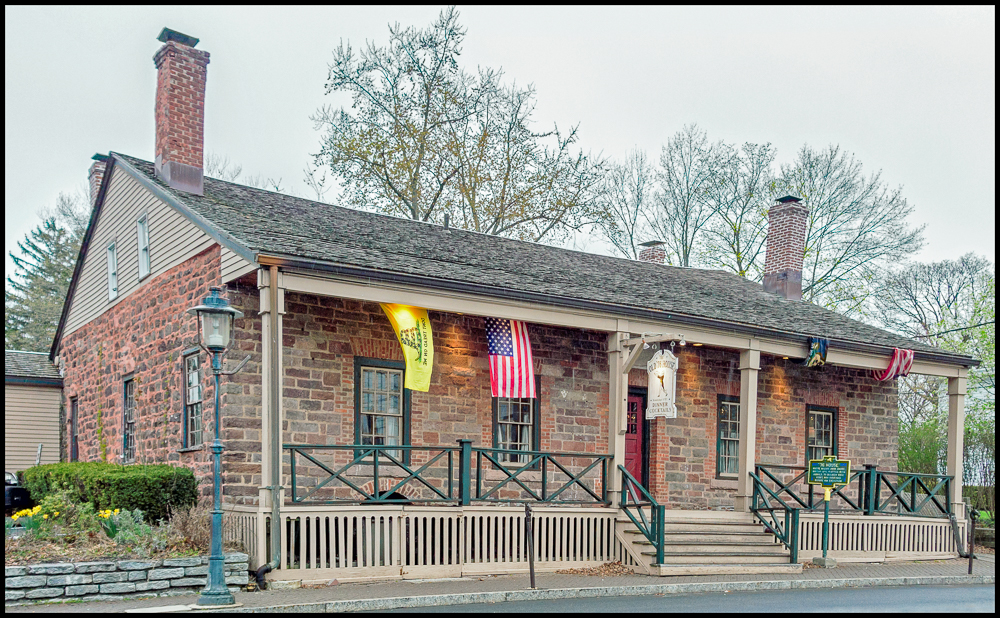
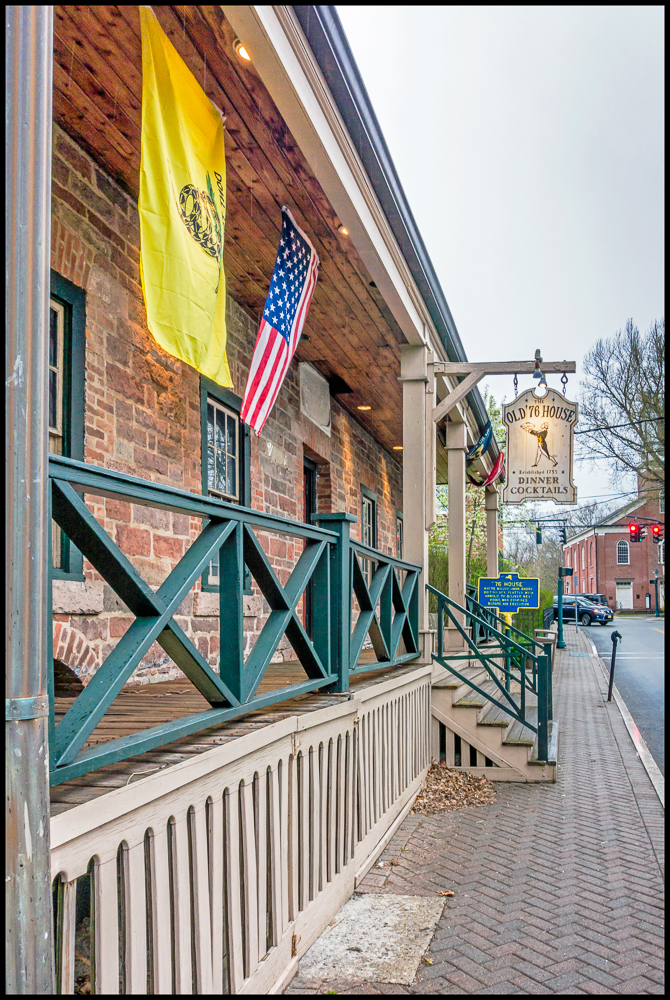
Yesterday was my birthday and we went to the ’76 House in Tappan, NY. It’s a great place, all dark wood, thick beams, muskets on the wall etc. It reminded me a lot of many of the pubs I used to frequent back in the UK. The menu was certainly different featuring items such as alligator empanadas (which I had), wild boar sausage, and red deer. We had a great time. It was a triple treat: good food, great friends and for me at least a location of some historical significance.

An historical marker outside reads: “Where Major John Andre, British spy, plotter with Arnold, to deliver West Point, was confined before his execution” (in Tappan, 2 October 1780). Apparently for once George Washington didn’t sleep here. He stayed at the nearby De Windt house. But he did eat here.

The ’76 House web site elaborates on it’s history:

The Old ’76 House is not simply one of America’s oldest taverns. Built in 1668, The Old ’76 House had a profound effect on the outcome of The Revolutionary War. Through its long use as a meeting place for patriots, The Old ’76 House established itself as safe ground for Americans when the air was rife with revolution and the tavern itself served as the “prison” of the Revolution’s most notorious spy, Major John Andre. That is why The Old ’76 House is often referred to as “Andre’s Prison”, not a real prison, in fact never having been a place of incarceration for anyone before or since. On the contrary, The Old ’76 House has been a haven for many a weary traveler for more than two hundred years. This great tavern has accommodated on various occasions, every General of the west wing of the Continental Army including Commander-in-Chief General George Washington who, with his chief provisioner Samuel Fraunces, dined in the comfortable atmosphere of The Old ’76 House.

The story of Major Andre and Benedict Arnold is one strewn with deception, fateful remorse, and mortal consequences. It is also a story which could have changed the outcome of the Revolution. Andre, a charming, handsome, young man, was adjutant general to General Sir Henry Clinton, Commander-in-Chief of the British forces in North America. Arnold was a brilliant and respected general as well as a great friend of General Washington.

General Benedict Arnold, having been severely reprimanded by Congress and, in fact, court martialed, had become embittered and ready to betray his country. Truly a brilliant general, he realized the strategic importance of West Point and, drawing on his longterm friendship with Washington, sought to secure the command of the fortress. Washington, who regretted the treatment and reprimand of Arnold, granted his request and thus Benedict Arnold was placed in a position to betray his country.

Arnold began to correspond secretly with General Clinton about his plan to let West Point fall into British hands. As a result, Clinton sent Major Andre up the Hudson in the British Sloop-of- War, Vulture, on September 20, 1780 to meet with Benedict Arnold. Andre was rowed ashore at the long cove just south of Haverstraw, where the two men conferred until sunrise. Their plans for the handing over of West Point still not complete, they rode on horseback to the home of Joshua Hett Smith, which stood on what is now known as Treason Hill. There it was agreed that Arnold should have one of the links removed from the great iron chain which stretched across the Hudson from West Point to King’s Ferry to prevent the passage of British ships up the river. Arnold planned to replace the iron link with rope, on the pretext that the chain needed mending.

Plans were completed and Andre hid his papers, showing the fortifications of West Point and the placement of soldiers, between his “stockings and feet”. Toward evening he asked to be rowed back to the Vulture, but Smith said it was too dangerous and persuaded Andre to cross the Hudson at Stony Point and proceed to the British lines by land. Near Tarrytown he was stopped by three American soldiers who discovered the incriminating papers and took him to the nearest commanding officer. From there he was taken to Tappan, where Washington had placed his headquarters, and imprisoned in The Old ’76 House – then called Mabie’s Inn.

After a trial in the Dutch Church in Tappan, a court of inquiry reported that Andre ought “to be considered a spy from the enemy and that, agreeable to the law and usage of nations, it is their opinion he ought to suffer death.” He was marched up the hill to a gallows at noon on October 2, 1780. As he stood beneath the gibbet he said: “All I request gentlemen is that while I acknowledge the propriety of my sentence, you will bear me witness that I die like a brave man.” In 1820 Andre’s remains were brought to rest in Westminster Abbey, London where he is regarded as a hero. Benedict Arnold died in London in 1801, shunned by friend and foe alike.

Taken with a Sony RX-100 M3.

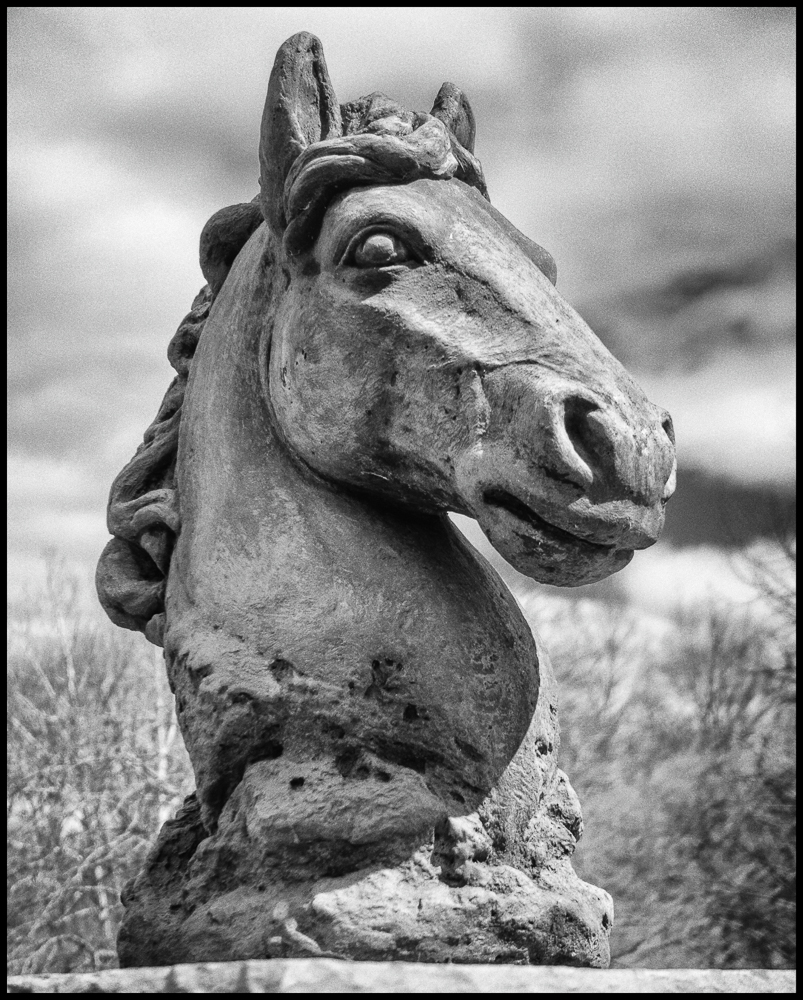
Horse head statue

As I wander around I often seen gateposts with statues on them. They’re usually either lions or eagles. I can’t ever recall seeing horse heads. As is usually they case (but not always as we have a case where three eagles are used near us) there were two of them, one on each of two gateposts.

From the road there was no indication of what this property might be. I took a look at Google maps satellite view and I saw an large building with quite a few cars parked outside and an area which appeared to be for horse jumping. So I figure it was probably some kind of stable/riding academy, which would of course explain the unusual statues.

Taken with a Sony RX-100 M.