Taken during a visit to Nepal in 1999 probably with a Canon AE-1 camera and I can’t recall what lens. I say Canon AE-1 because the only other camera I had at that time was a Minolta Hi-Matic 7sii. Some of the other pictures in this batch could not have been taken with the wider than normal lens on the Minolta, so by process of elimination it must have been the Canon and probably a zoom lens of some kind.
New Acquisition – Universal Mercury II CX
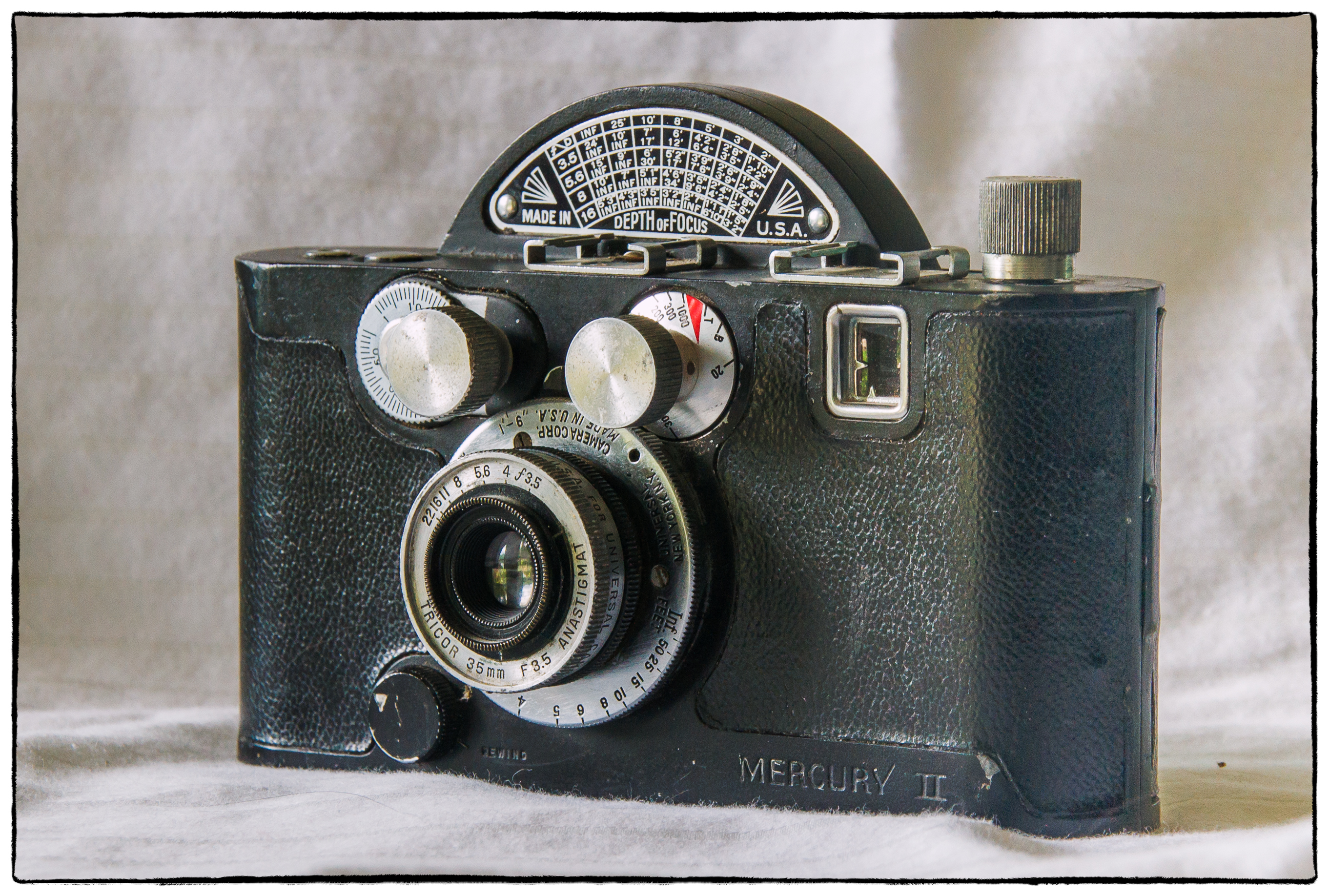
I’d been looking for one of these for a while – either the pre-WWII Mercury (often called Mercury I) or the post war Mercury II. One of the foci of my collection is US 35mm cameras, most of which (with the exception of my beloved Retinas and possibly a few Argus’s) I find to be rather weird and wonderful. When I saw pictures of the Mercury I couldn’t help but notice the large hump on top. For those who don’t already know it’s a rotary focal plane shutter and I’d never seen anything like it. When I came across this one for a reasonable price I just had to have it.
As is often the case Mike Eckman has written one of his excellent reviews (see: Universal Mercury II (1946-48)) on it. He provides a short history of the Universal Camera Corporation, gives his thoughts on the camera, offers some tips regarding repairs and shows some photographs he had taken with the camera.
Since Mike has already provided so much information I’ll limit myself to just a few comments.
First the size of the camera surprised me. This is sometimes the case when you’ve only seen pictures of the camera. I recall seeing an Exacta in a nearby photo shop and thinking that it was much larger than I had thought. I also remember seeing a Kodak Bantam Special in the Kodak Museum in Rochester and thinking that it was much smaller than I expected. In the case of the Mercury it’s a lot smaller than I thought it would be.
Second the camera is black. I think it looks good in black, but I doubt that any Mercury every left the factory like this. All those I’ve seen are chrome. This is without doubt some owners paint job. This is possibly because the finish on the Mercury is generally considered to be pretty dismal. In her superb book: The UniveX Story (more about which in a future post) Cynthia Repinski writes:
Generally speaking, the metal finish on the Mercury II lacked the luster and gleam that characterized the Mercury I. The finish of the Mercury II seemed to become dingy and dull within only a short time. Signs of heavy corrosion are extremely common on Mercy II models today, whereas many of the Mercury I models appear almost like new. Some former Universal engineers recalled the inferior finish of the Mercury II was due to the postwar use of magnesium metal in combination with the aluminum allow normally used in die casting the Mercury housings. Magnesium had become quite popular during WWII and was being readily used by many other manufacturing companies in the post war fabrication of their own products. The aluminum alloy used in the production of the Mercury I camera provided a more gleaming appearance than the combination of aluminium and magnesium used in the production of the Mercury II camera.
When I purchased this camera I had no intention of using it. I’m not a fan of half-frame cameras. I thought that I’d just put it alongside such other gorgeously ugly cameras as the Kodak 35RF (which someone once referred to as a camera “only a mother could love”). However, once I had it in my hands I liked the way it felt. The more I look at it the more I like the way it looks (I no longer consider it to be ugly) and I’d like to try taking pictures with it. Unfortunately I can’t. The shutter works, the aperture works, the viewfinder is OK – but unfortunately the focus is completely frozen. I intend to try to “unstick” it though.
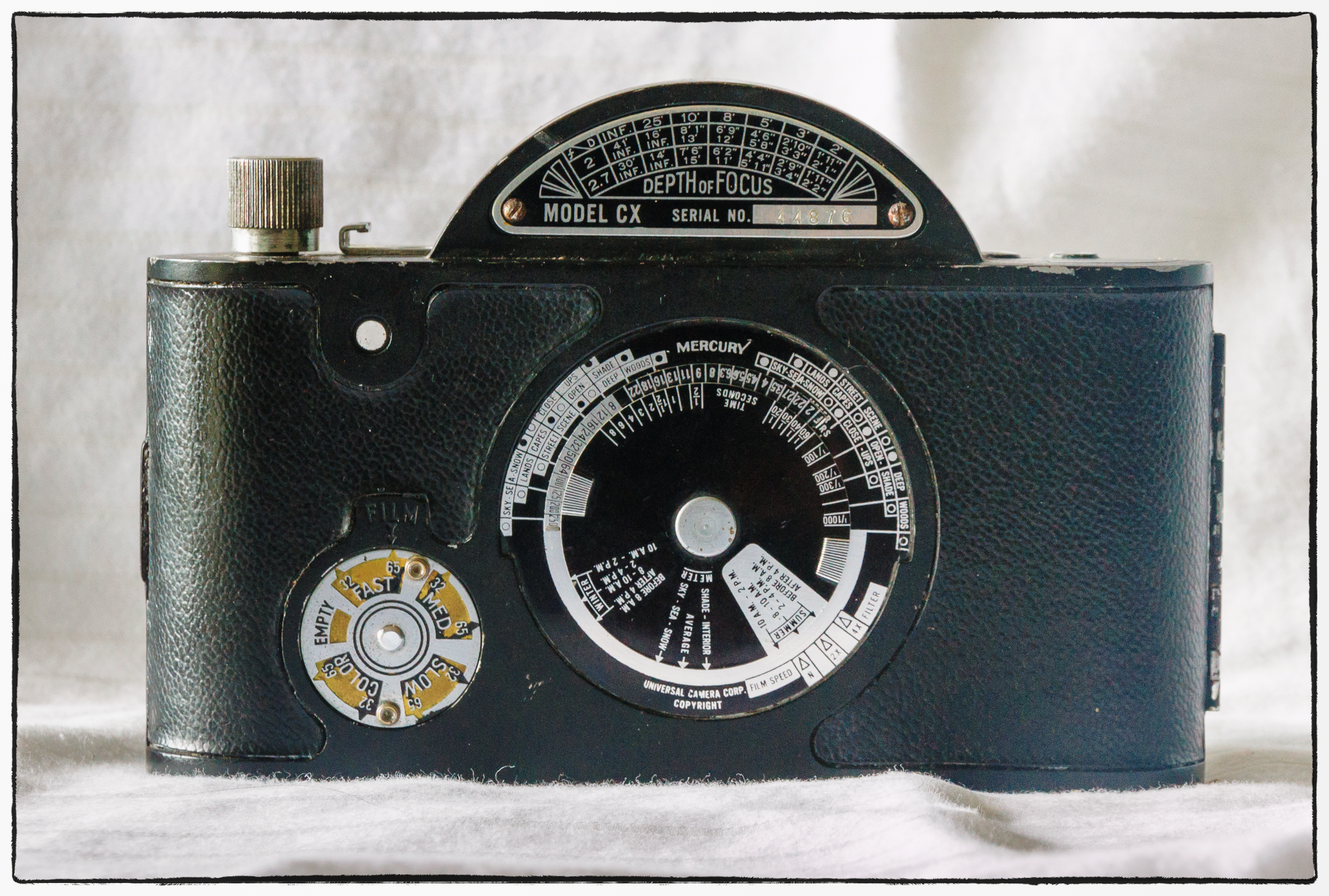
Rear view with the rather complex (I have no idea how it works) exposure calculator.

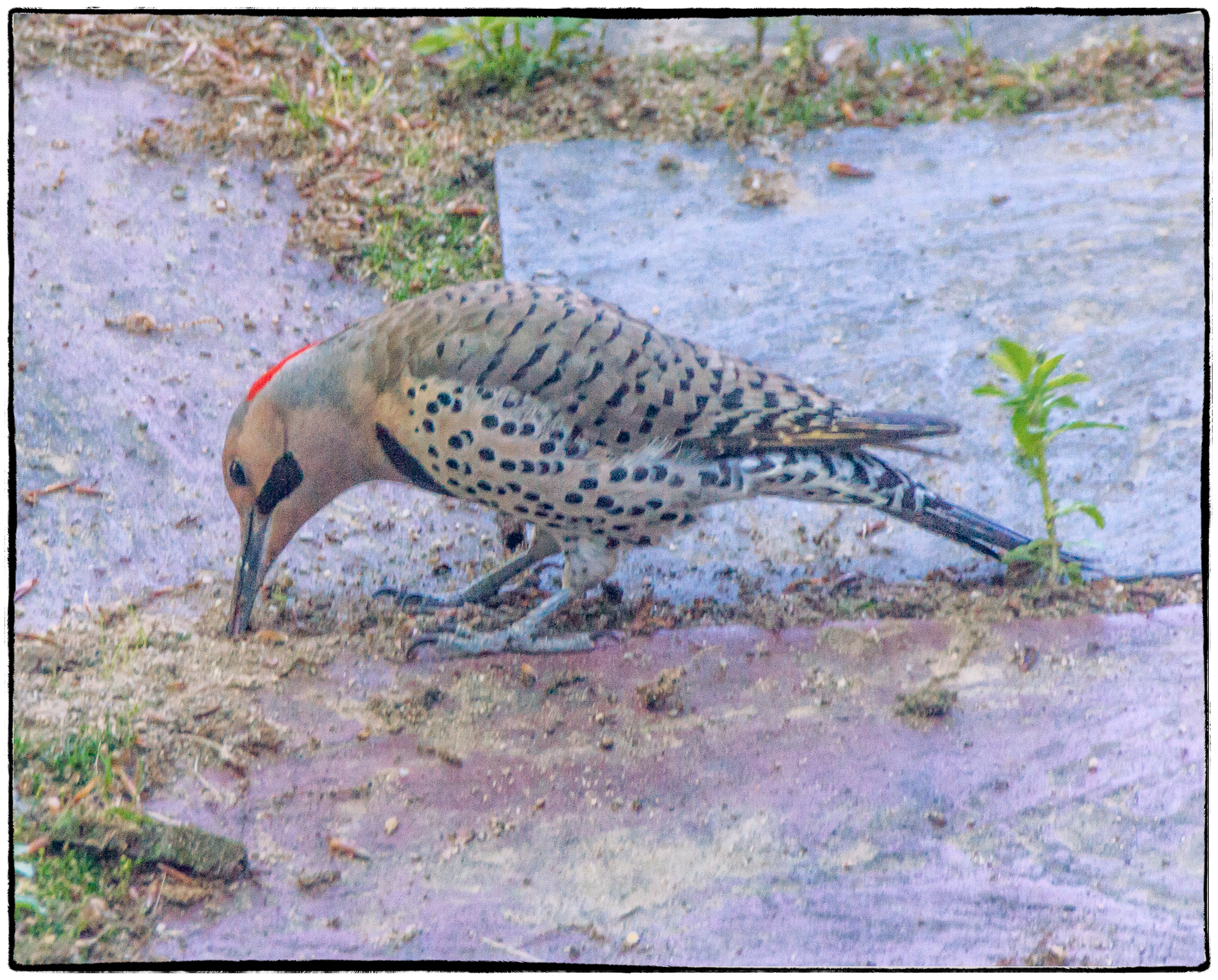
A recent visitor to our garden
A type of woodpecker: a northern flicker. Specifically (if I’m not mistaken, which I might well be) a yellow-shafted flicker (Colaptes auratus auratus). So if it’s a woodpecker why is it chewing up our patio rather than pecking wood? Grab a worm on the patio or bang your head against a tree? I guess it’s an easy choice.
As usual when I’m taken by surprise or my subject is moving I messed this up. When I noticed the bird I grabbed the nearest camera, which happened to my Sony Alpha 500 with Tamron A18 AF 18-250mm f3.5-6.3. Without thinking I zoomed in to the fullest extent not thinking that it as was relatively dark outside and that the combination of large aperture combined with large lens meant that that pictures were certainly going to suffer from blur resulting from the slow shutter speed selected and my inability to hand hold the lens at that speed.
This is why I don’t do more wildlife photography. Still better than nothing though. I’ve never seen one of these before.
April Film Camera – Canon Eos Elan IIe
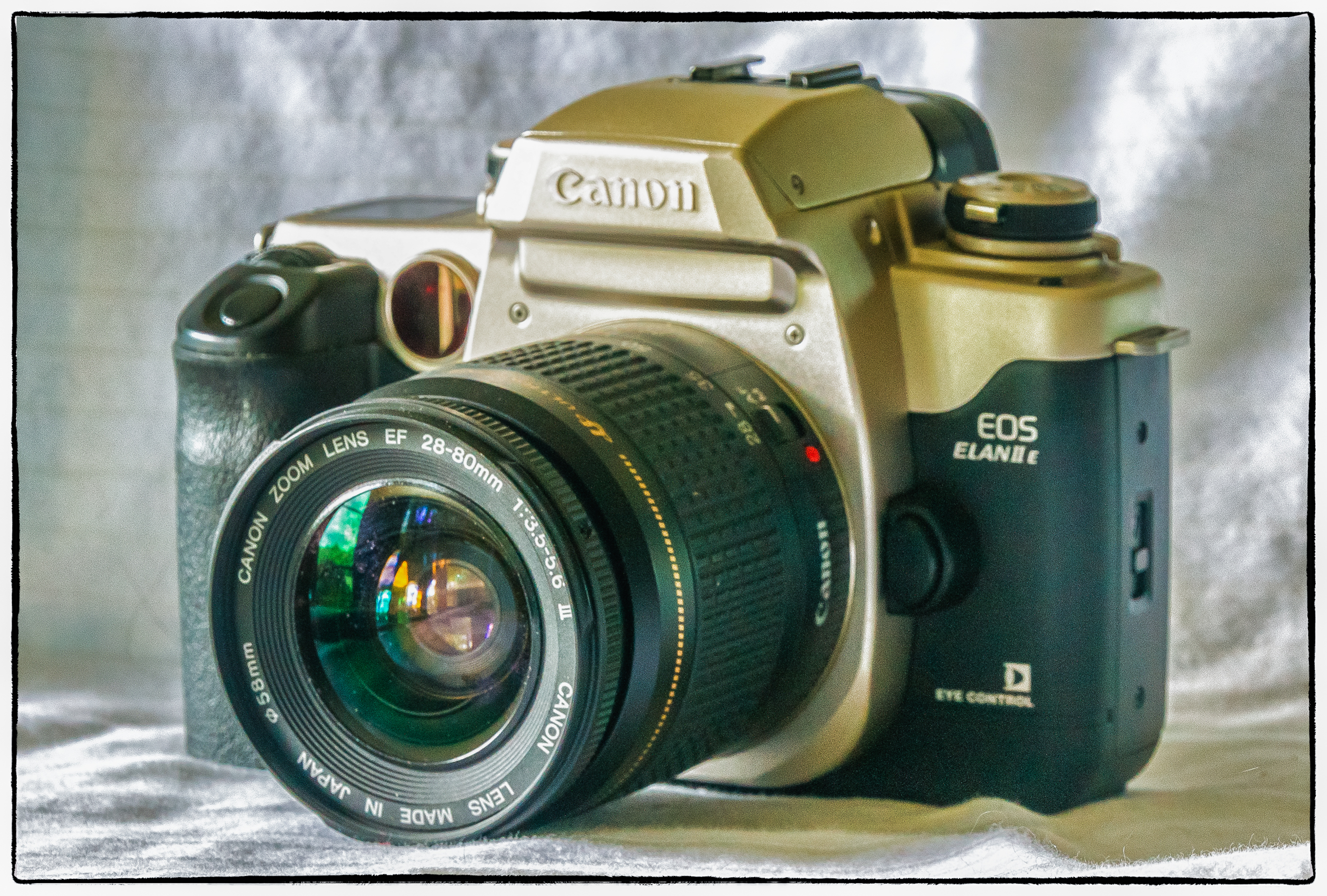
This, and four other cameras, were given to me by an old friend (see: Cameras Galore). It’s a Canon EOS Elan IIe, also known as the EOS-55-P in Japan and the EOS 50e everywhere else. Launched in September, 1995 it was a mid-range camera (with the single digit professional cameras above it and the ‘Rebel’ series below). It looks quite different from other Canon cameras and many seem to consider it to be among the best looking of all Canon cameras.
A significant feature of this camera was it’s Eye-controlled Autofocus function: you can select an autofocus point just by looking at it. I tried it out and it worked fine, but I generally use the centre point and then lock and recompose so I have little occasion to use it.
I won’t get into the major features of this camera. There’s a very good overview here for those who are interested.
I liked using the camera. Compared to the EOS 650 I used last month (See: March film camera – Canon EOS 650) it felt less sold, more “plasticky”, but I guess that’s just the way cameras evolved between 1987 and 1995.
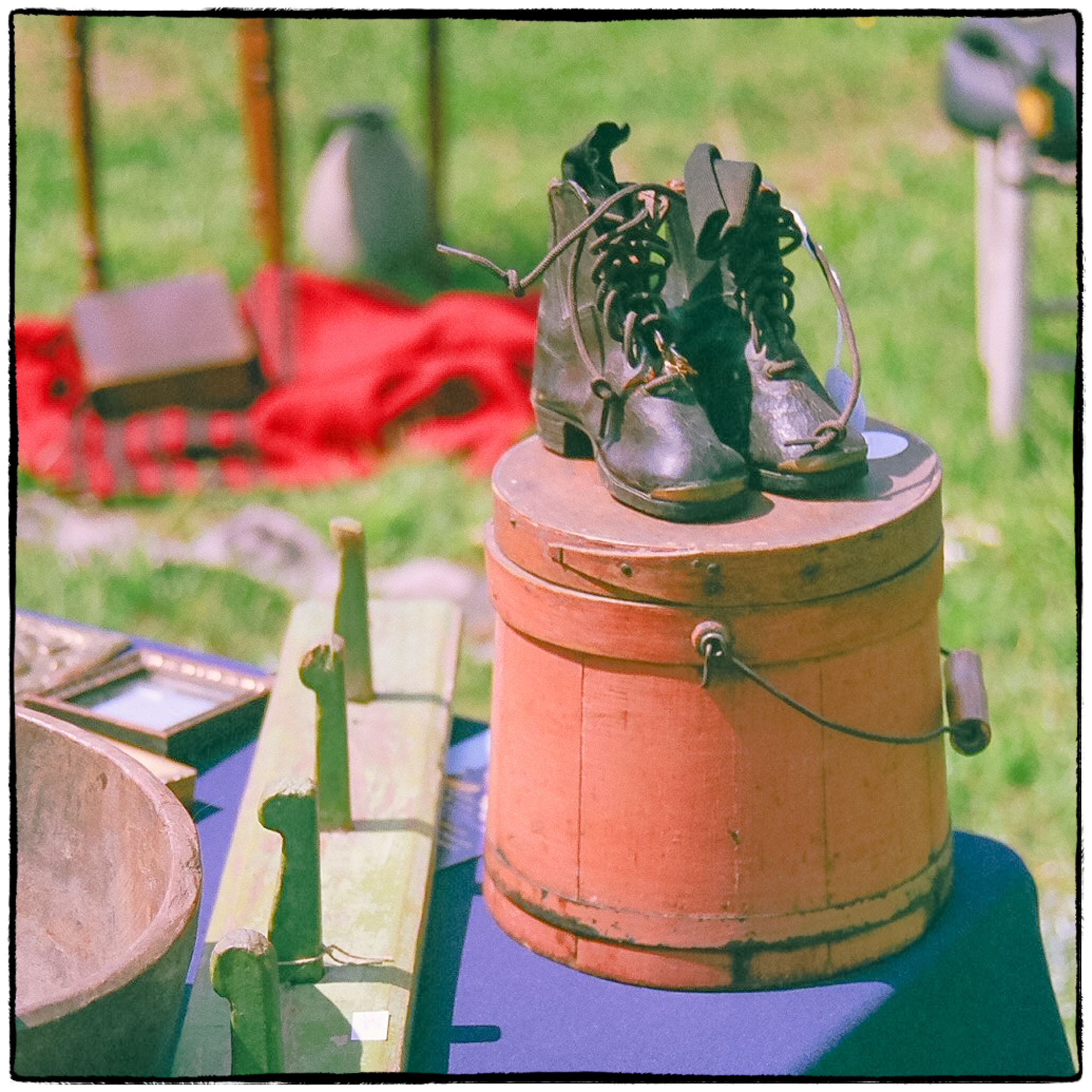
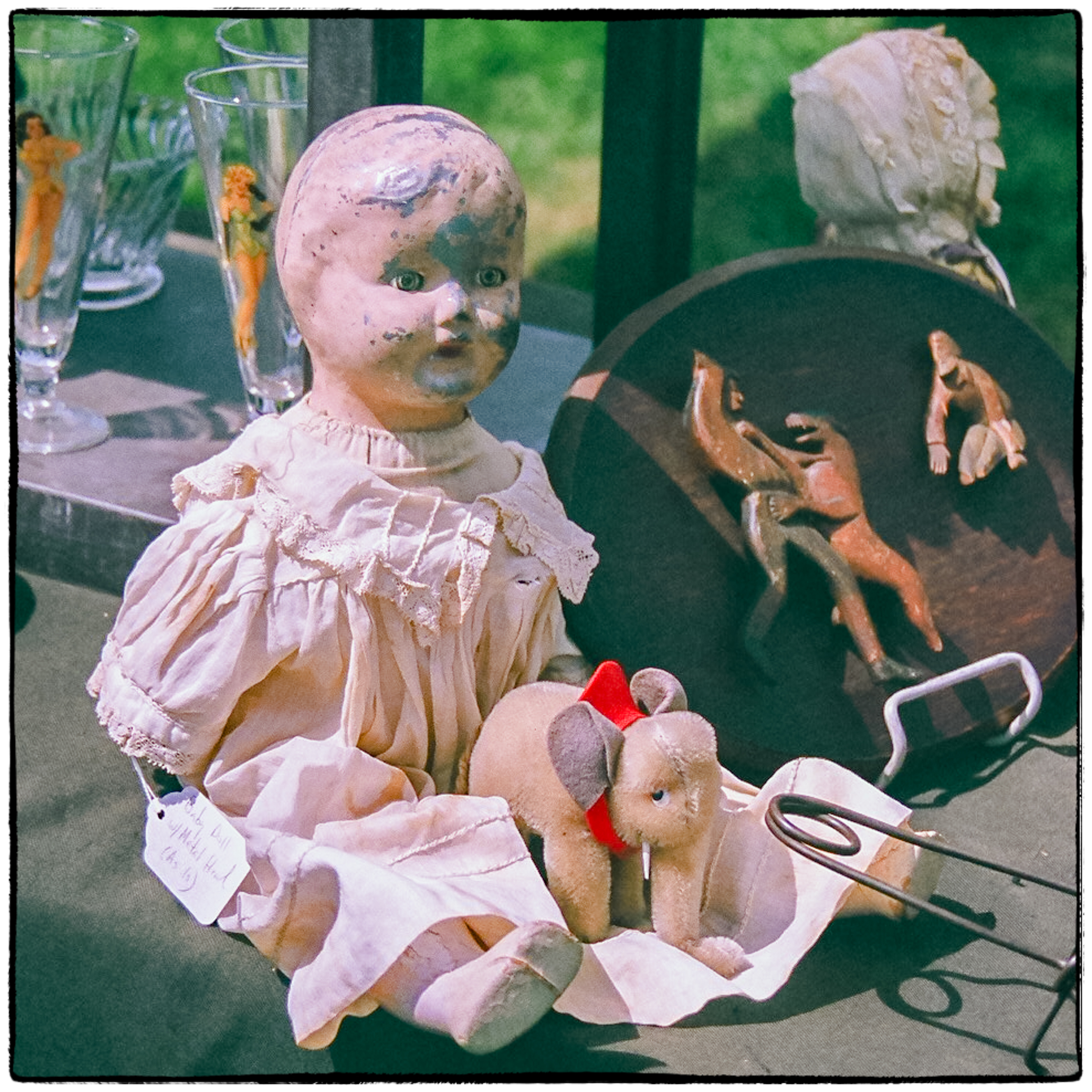
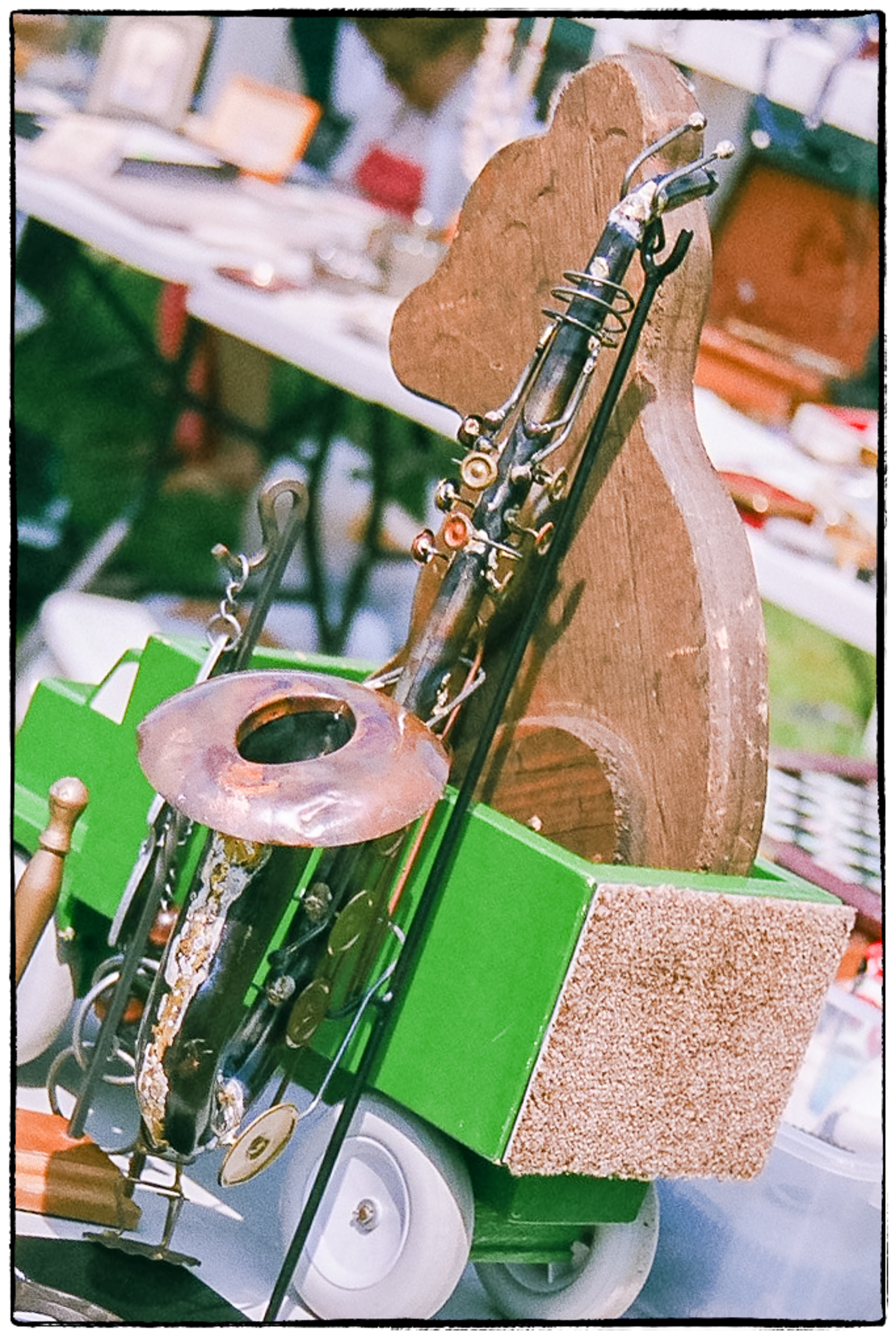
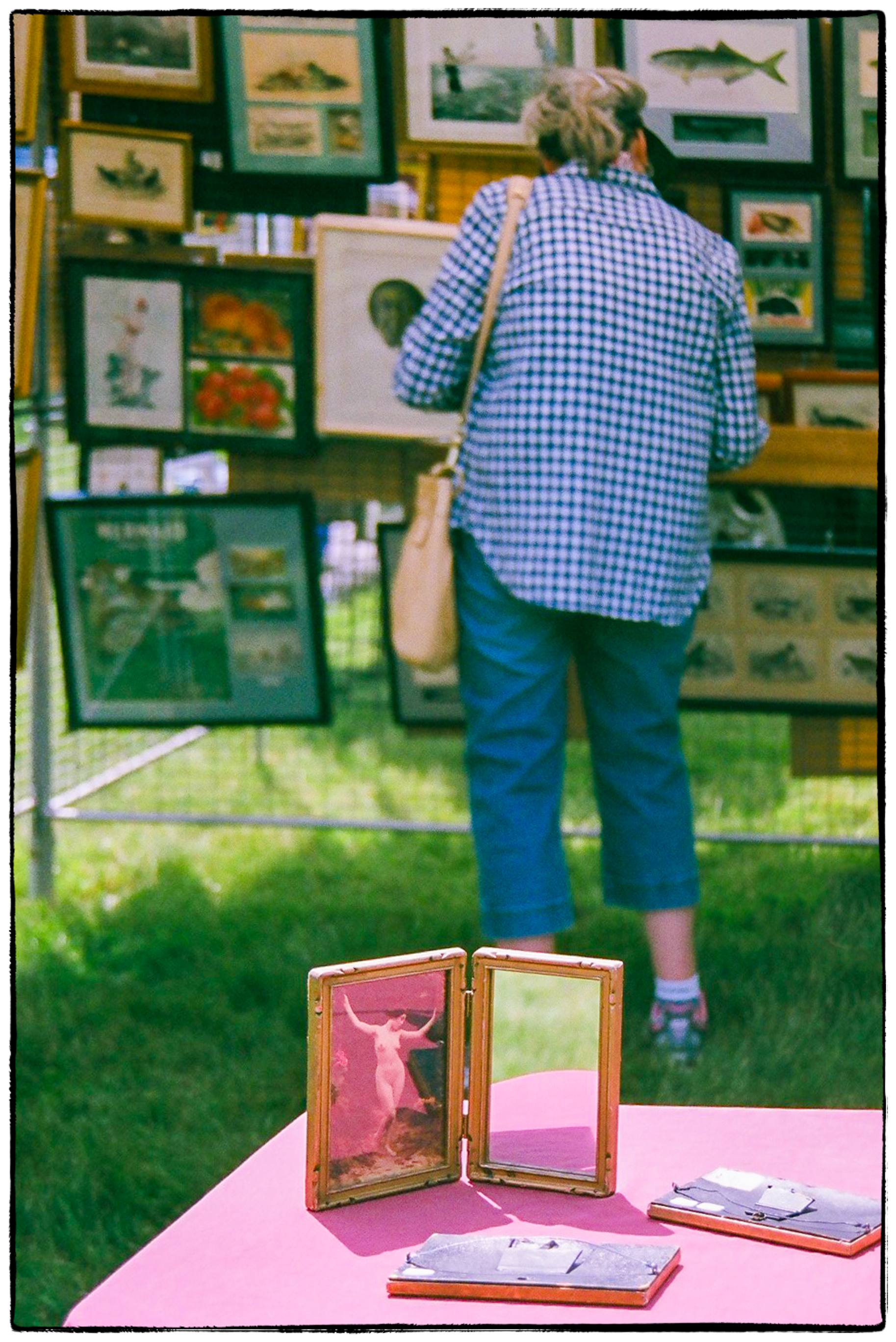
I did have one problem though. I took it to a local antiques fair (see pictures below) to try it out. It worked fine until I got towards the end of the roll and then suddenly refused to take pictures. I suspect this was because I had taken the battery from another camera which uses the same batteries. It had been there for some time. Then I spend quite a lot of time playing with the various functions of the camera. It’s possible that all of this wore the battery down. What was annoying was that it didn’t stop working completely. It still metered and focused, but when I pressed the shutter nothing happened. I haven’t tried the camera since then so I don’t know if fresh batteries will solve the problem, or if something more serious is happening. I hope it’s the former because I rather liked the camera.
For more posts related to this camera see:
Chinese Garden – Lasdon Park and Arboretum
The man in the mirror.
Geese.
Boots on a bucket.
Old doll.
Saxophone.
Picture frame.
Canon Eos 650 – Results
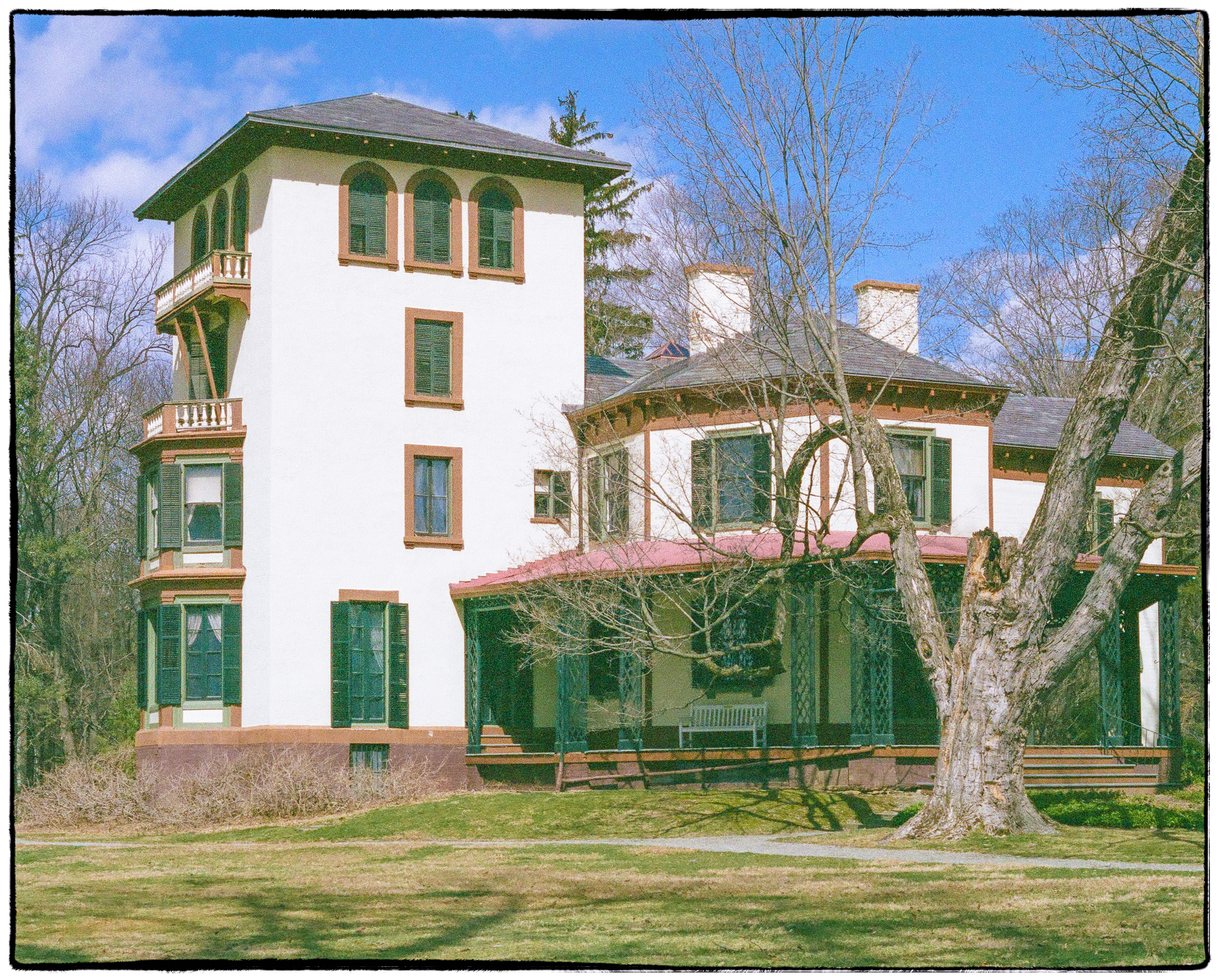
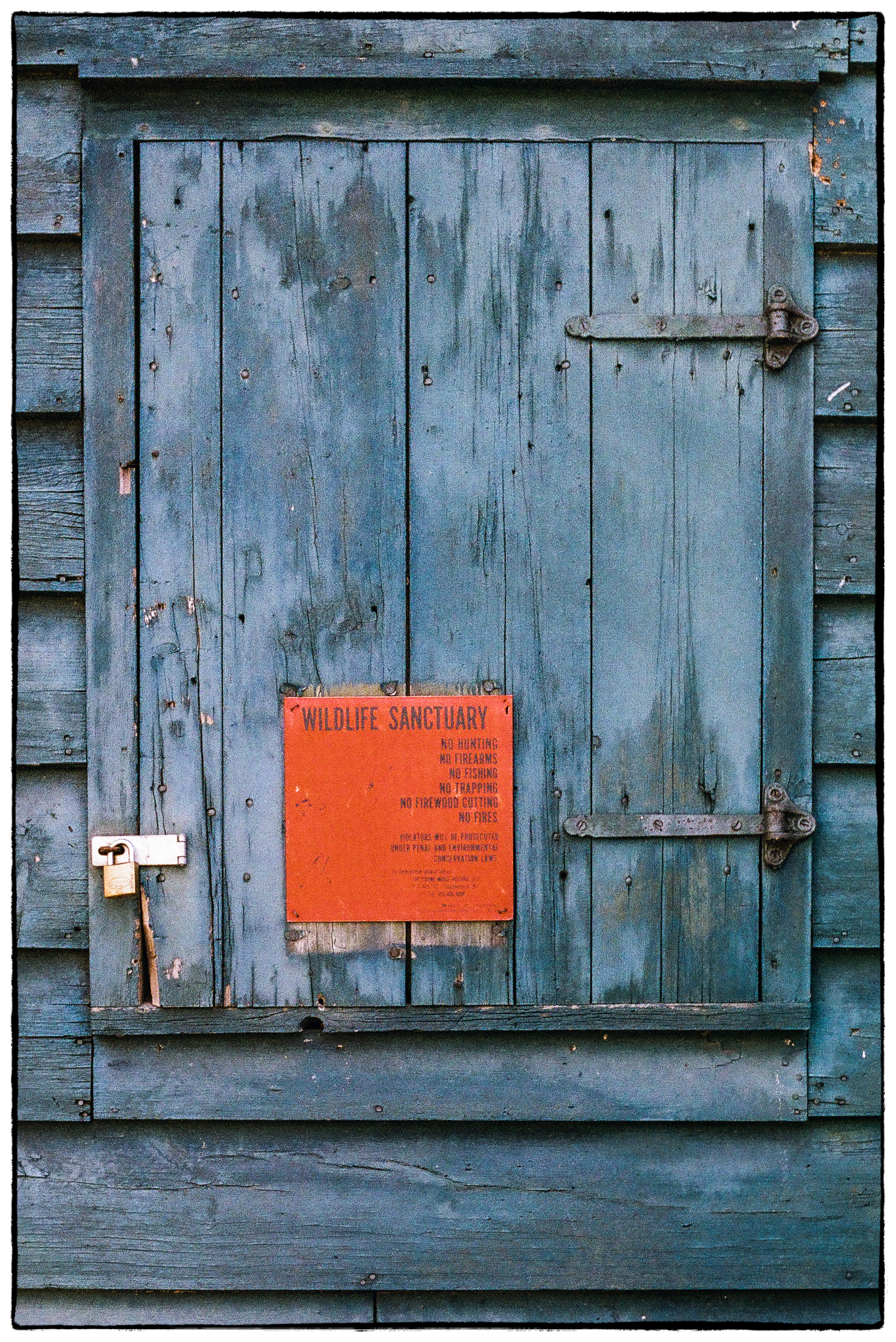
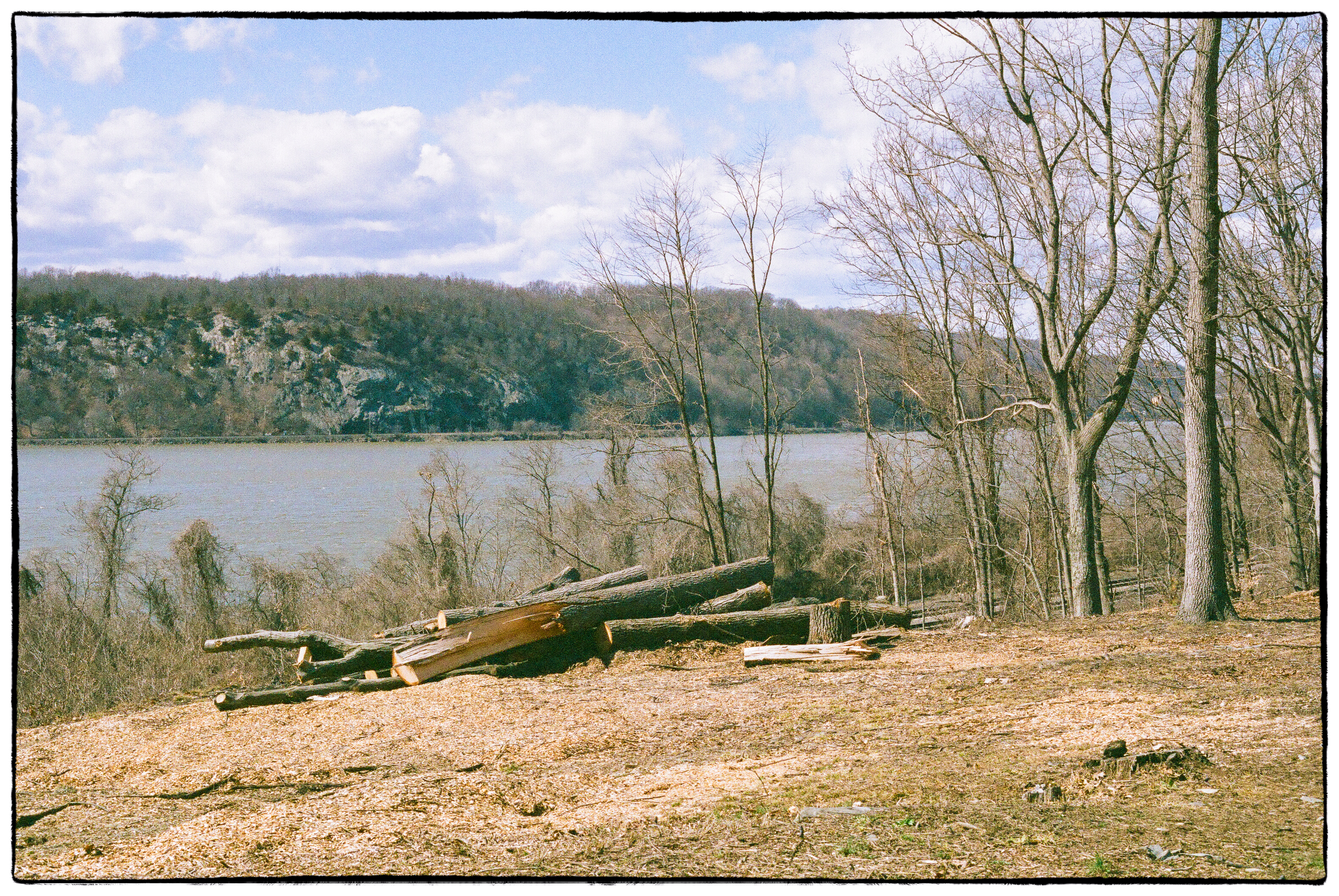
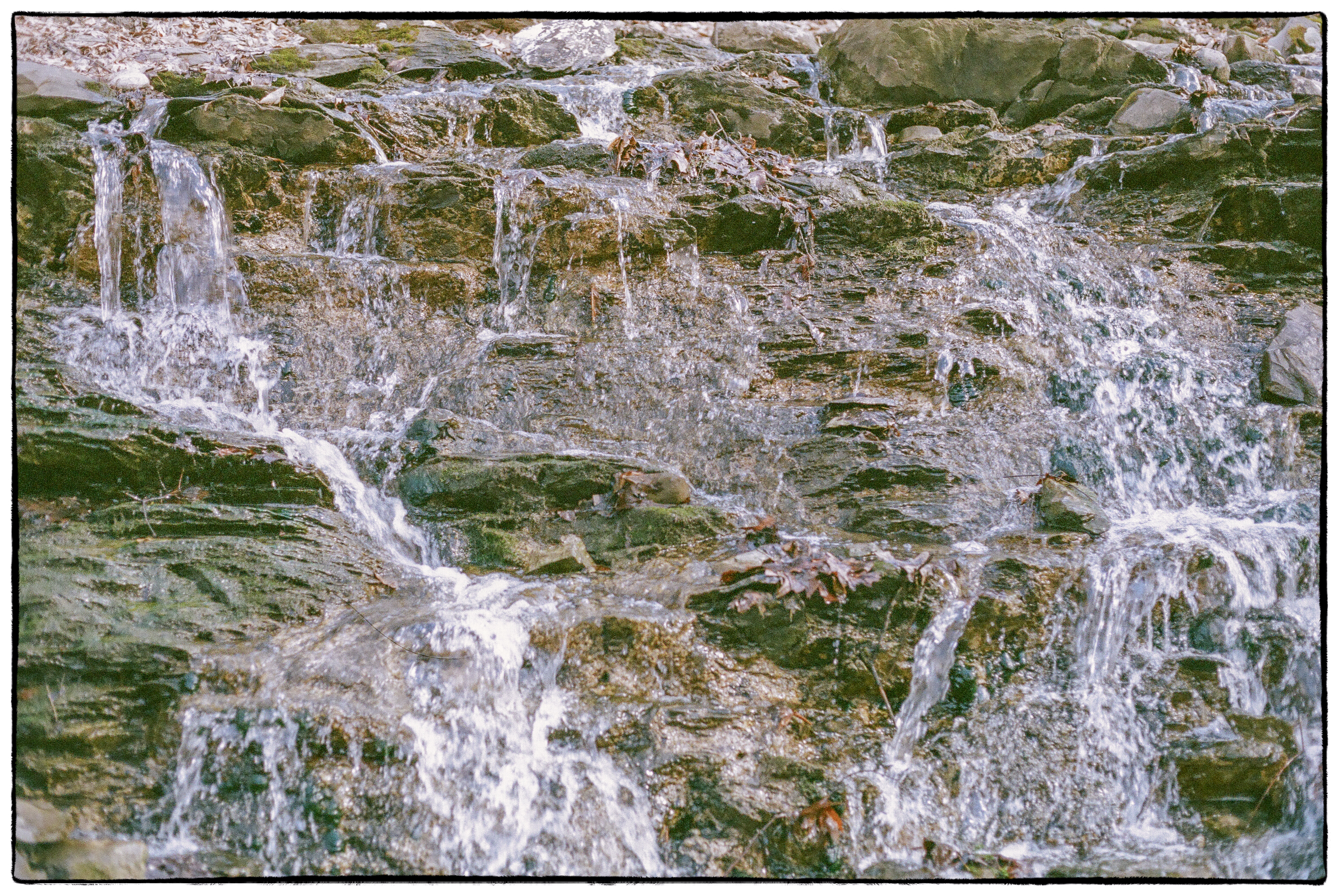
Here a few results from my March Film camera: a Canon EOS 650 with Canon EF 50mm f1.8. The pictures were taken at Locust Grove, the former home of Samuel F.B. Morse the renowned inventor, and unknown to me until our visit accomplished painter (particularly of portraits). Above is the house. I also took along a digital camera so I’ll say more about the house when I post those pictures. I used a very old (I don’t recall exactly how old, but definitely many years old) roll of Agfa Vista 200 that I had lying around.
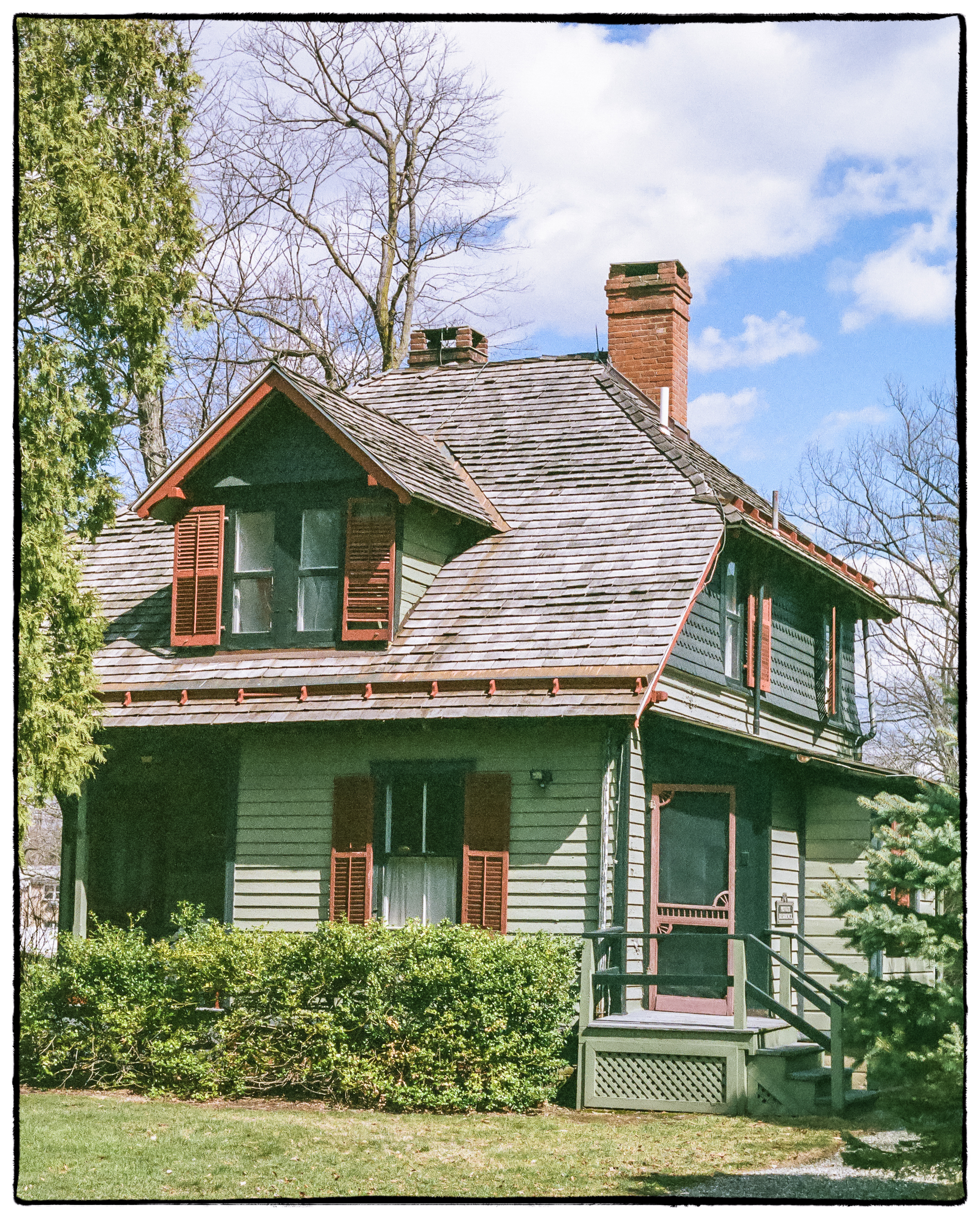
The Caretaker’s Cottage.
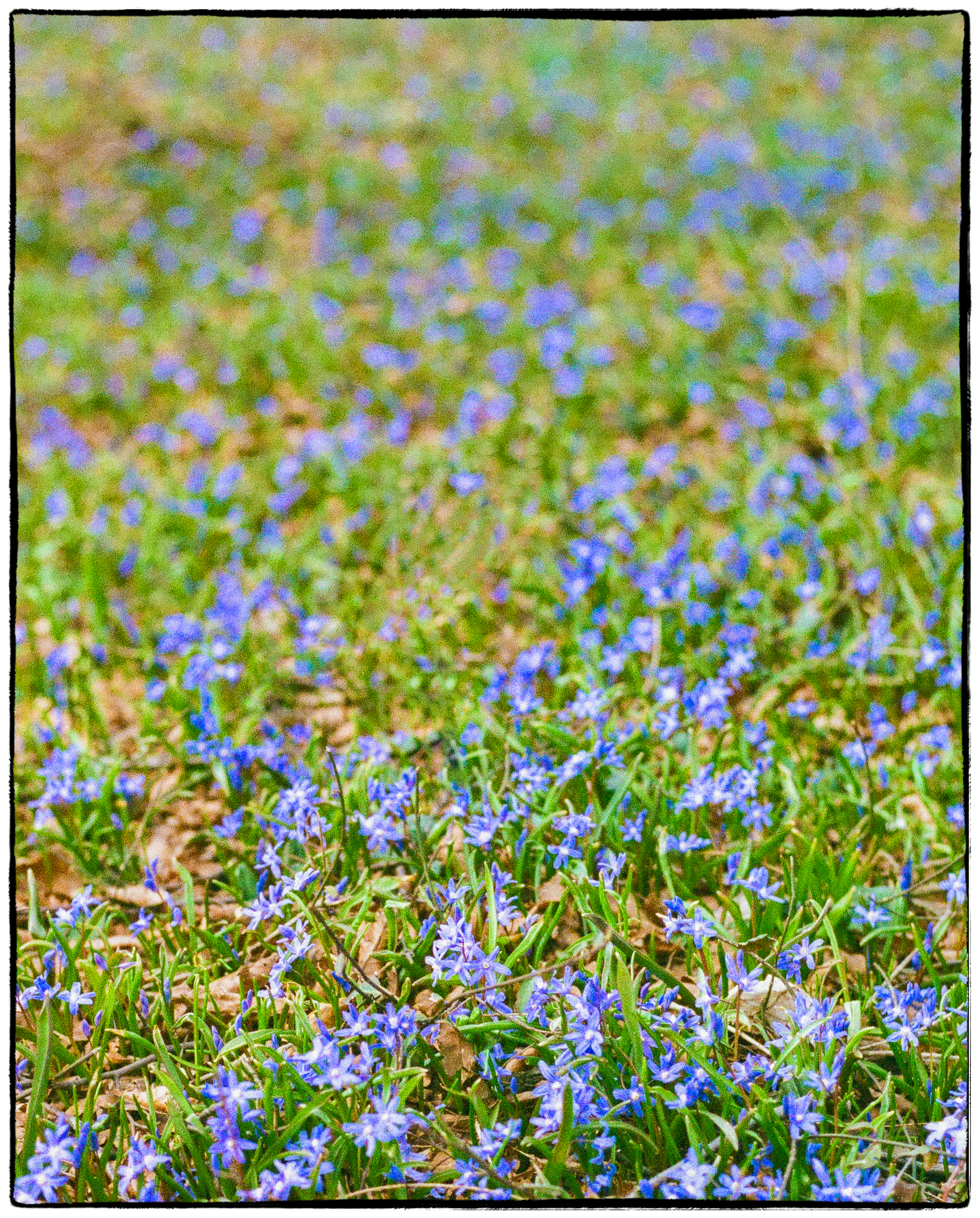
Blue flowers. These were all over.
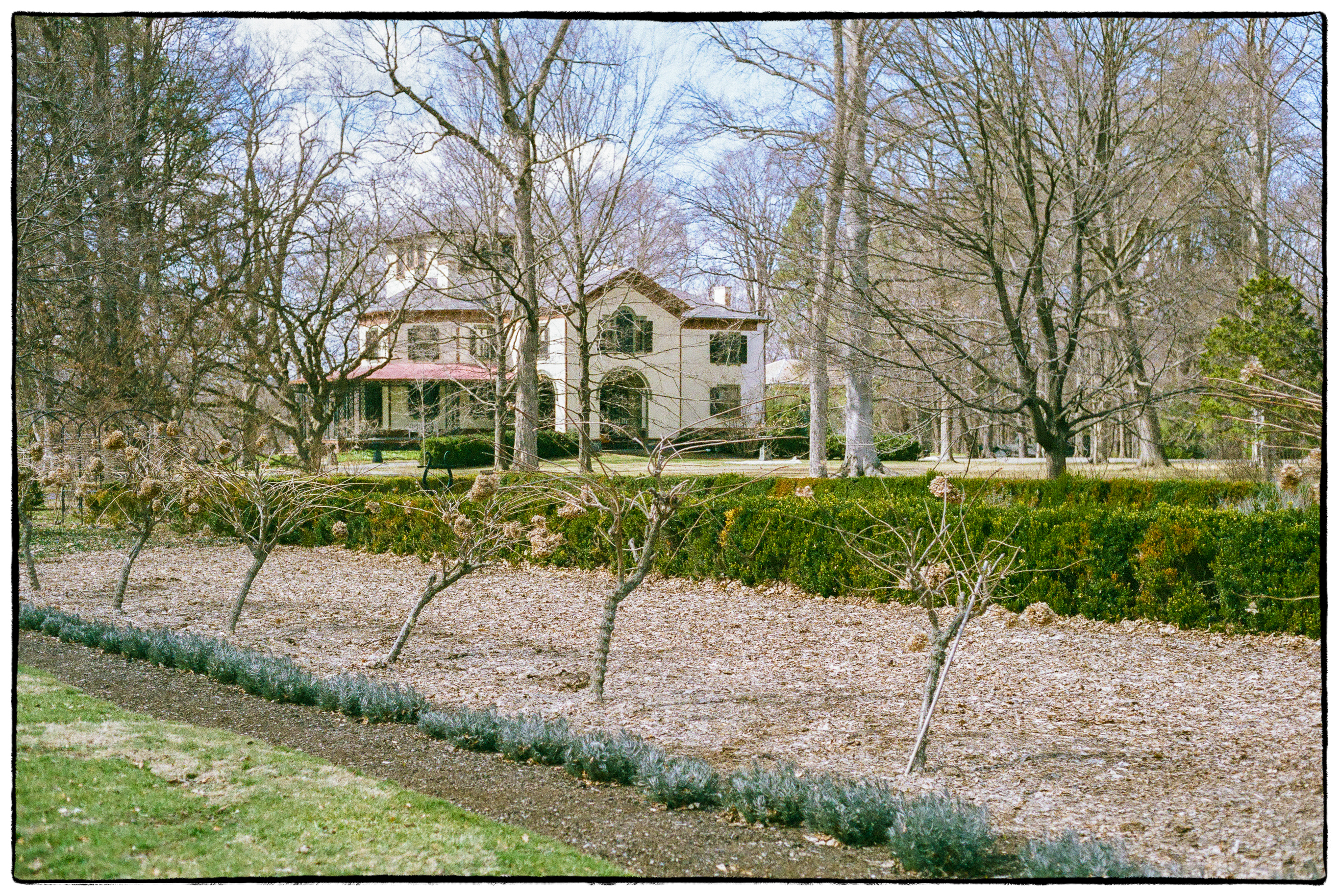
View of the house from the gardens. Here I tried the “Depth” mode where you set the closest point you want to be in focus, then the farthest point and the camera selects the optimal aperture to achieve this. I’ve read that this was also available on the EOS-1N, but I can’t recall seeing it on any non-Canon camera. It seemed to work.
Barn Door
Hudson View
Cascade
I enjoyed using the camera. It feels solid and reliable and the fairly minimal set of controls were easy to use. Focus was fast enough for my needs. I read on the internet somewhere (unfortunately I can’t remember where and I can’t seem to find it again) that the camera does not rewind automatically and that you have to manually press a button to get it to do so. This is definitely not the case (although there is a button that you can press to rewind mid-roll if you wish). Mine kept on until the end of the roll and then rewound automatically. It’s quite noisy when it rewinds. For my type of photography it doesn’t much matter, but if you wanted to remain unobtrusive (e.g. at a wedding, during a performance etc.) this would be a definite disadvantage.
All the pictures I took had something of a green cast. I suspect this is because of the ancient film I used. One of these days I’ll try a new film and see what I get.
It’s a lot of fun to use, with nothing to get in the way of the photographic experience.