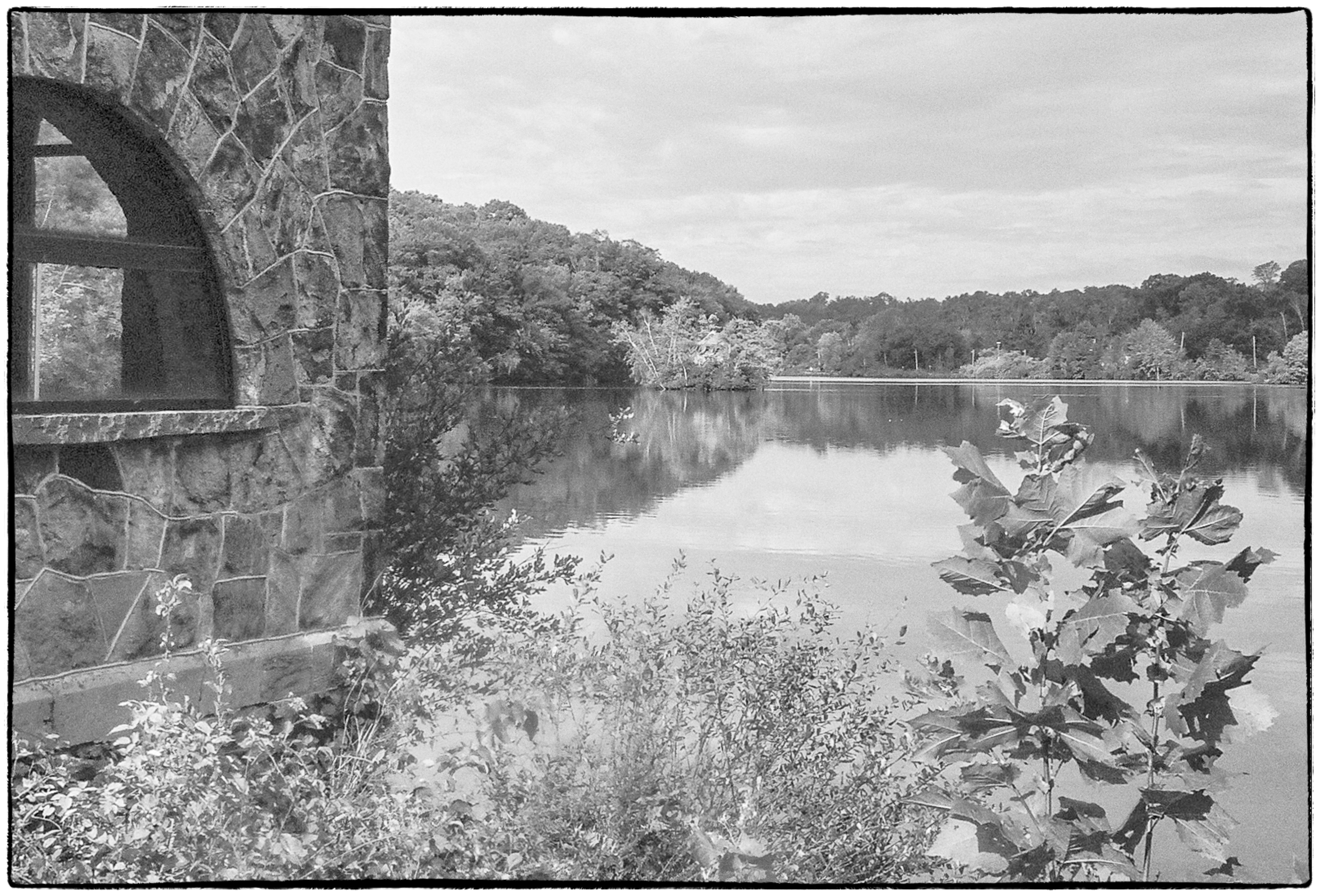
This was taken in the early days of my camera collecting. As I recall it was taken with a Zorki 4 rangefinder camera with a Industar 61 55mm f2.8 (not the L/D version) lens. I don’t recall what film was used other than that it wasn’t Kodak Professional BW400CN. I remember this quite clearly because I hadn’t realized (it was a long time since I’d used film) that places like CVS could not process this film (which at the time I found odd as they had sold it to me). I do recall that it was ISO 400 film so it was probably either Tri-X or TMAX.
How an Antique Camera Flash Became the Most Iconic Star Wars Prop

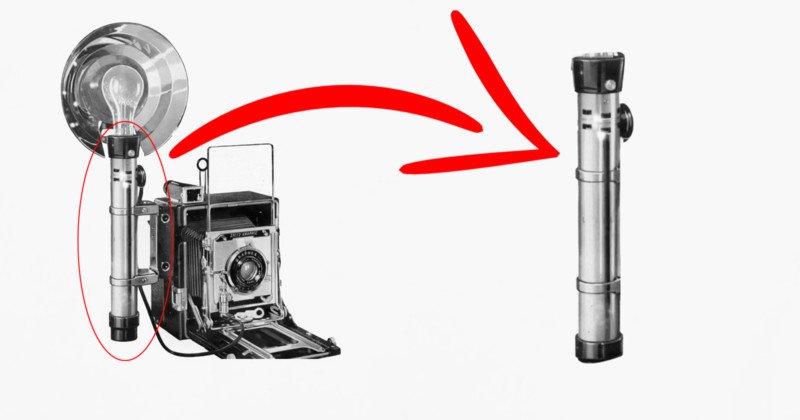
Graflex-3-Cell-Flash-Gun. Source: How an Antique Camera Flash Became the Most Iconic Star Wars Prop
Arguably the most iconic prop from the Star Wars universe is… a camera flash. It’s not a joke, Luke Skywalker and Darth Vader’s lightsabers (the handle, not the glowing, cut your hand off part) were both made from vintage camera flash guns.
Via Petapixel (How an Antique Camera Flash Became the Most Iconic Star Wars Prop). Who would have thought? Another piece of useless trivia for me to absorb.
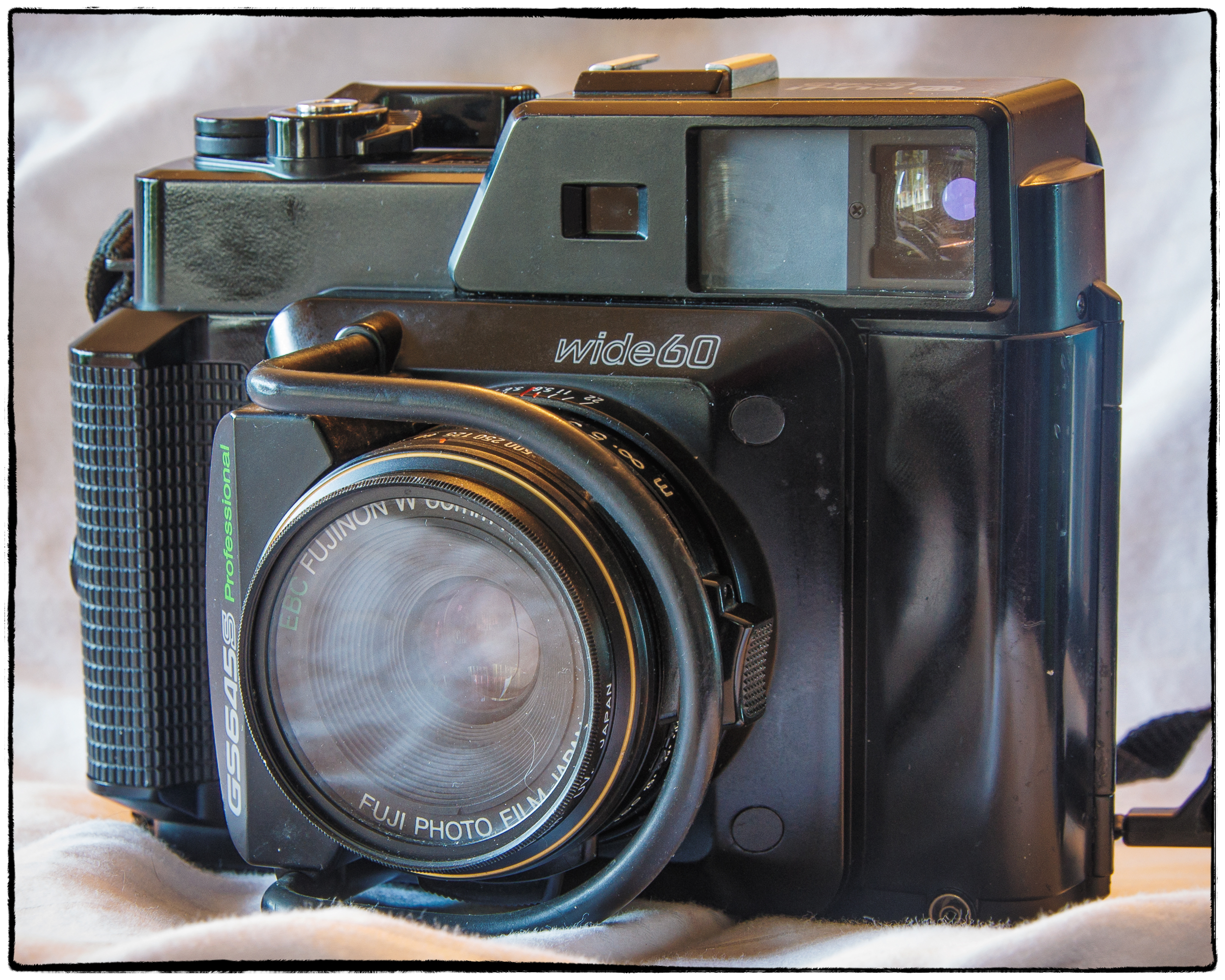
January film camera – Fuji GS645S
I started to collect cameras about five years ago and over the years I’ve acquired quite a lot. However, looking back over my collection I realize that I’ve only actually used a few of them.
So I’ve made a couple of New Year’s resolutions.
The first is to limit new acquisitions. Notice that I said ‘limit’ and not ‘stop’. I reserve the right to acquire cameras if a) they’re on my list of cameras I really, really want; b) they’re especially inexpensive. If I see something that takes my fancy and it will cost me less than I would usually spend for lunch then why not? The point of this is to limit additional cameras so I can try to use more of those I already have, which leads me to my second resolution.
Second. Most of my camera collection consists of old film cameras so I’m going to try to use a different one each month for the foreseeable future.
January 2017’s camera is the Fuji GS45S, which I acquired a few years ago and have never used. It’s a medium format film camera, first produced in 1984. It uses 120 roll film (15 6cm x 4.5cm exposures per roll) and 220 roll film. It’s a manual (rangefinder) focus camera that uses batteries only to power the center-weighted meter, which displays correct, over and under markings in the viewfinder. One quirk: when you look through the viewfinder the image you see is portrait format. To get a landscape (i.e. horizontal) format the camera must be turned on its side. It has a 60mm (35mm equivalent of 35mm) f4 Fujinon lens with focus, aperture (f4-f22), and shutter speed (1/15 – 1/500) settings on the lens barrel. ISO settings are from 25 to 1600. Another prominent feature is the ‘bumper’ around the lens barrel. Apparently the lens mount is quite fragile and the bumper is needed to stop it from shearing off. Looks like I’ll have to be particularly careful with this one.
A couple of reviews provide additional information:
Fuji GS645S Review by H W Kately on Film Shooters Collective.
Camera review: Fuji GS645s by Roy on Printer Attic.
For a medium format camera it’s not so large (about the same size as a large 35mm SLR) and it’s comfortable to hold. Despite the complaints about the fragility of the lens mount (which I’m convinced are valid) it otherwise feels quite solid. The meter worked well. My only real complaint relates to the rangefinder: the spot is quite small and somewhat difficult to see, particularly when the camera is held on its side for a horizontal shot. I found that I had to check the focus in the vertical position and then turn the camera sideways afterwards. I read somewhere that you can make the rangefinder spot brighter by placing a small piece of tape on the front of the viewfinder (see Resurrect Your Dim Rangefinder by Rick Olson). I may try this. Turning the camera sideways for a horizontal picture is, in any case, a little uncomfortable so if the majority of your pictures are horizontal this camera may not be for you.
I enjoyed using it, but since it was my first time I allowed for possible problems by framing wider than I usually would so that I could crop later if need be. This turned out to be a good idea because the camera had a light leak – fortunately fairly small and on the edge of the negative where it was easy to crop out. The leak is probably caused by old, decaying light seals and if I find I’m using the camera a lot I’ll consider having them replaced. If, as seems more likely, I use it infrequently I’ll probably just cover the offending area (I’m pretty sure I know where it is) with tape.
For some pictures taken with this camera see: Amawalk Friends Meeting House.
A camera for inauguration day
Just came across this on a photography forum. I loved the statement: “focus is out of whack”, but I wasn’t sure if the author was being ironic or was serious (I suspect the latter).
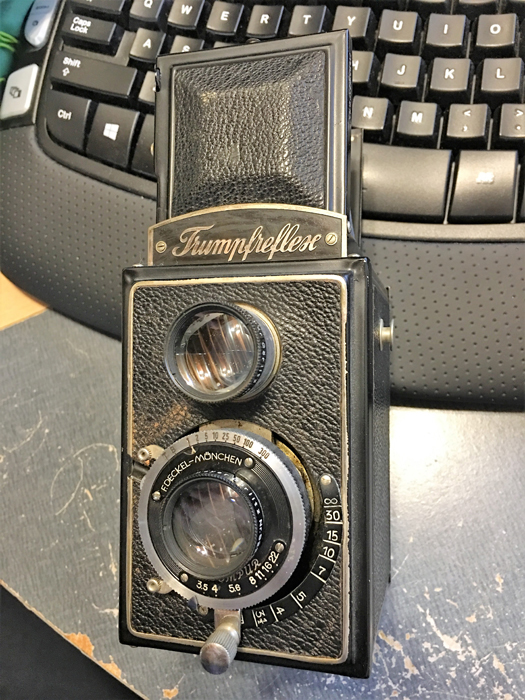
Just saying, tried to mark the presidential inauguration day with the appropriate camera, but no such luck, focus is out of whack, in both viewing and taking lenses, and the shutter fires at approximately the same speed.Oh well – need to find time and send it for repair, eventually
Source: Sometimes it doesn’t work out… – Photo.net Classic Manual Cameras Forum
I’d never heard of this camera before. It turns out that it’s an export version of the Richter Reflecta, made c1940 in Germany and sold in the United States by Sears. Focus (helical) is controlled by the lever at the lower right, and the viewing and taking lenses are coupled behind the faceplate. It appears to be worth from $50 (in average condition) to $140 (in mint condition).
Another year, another camera
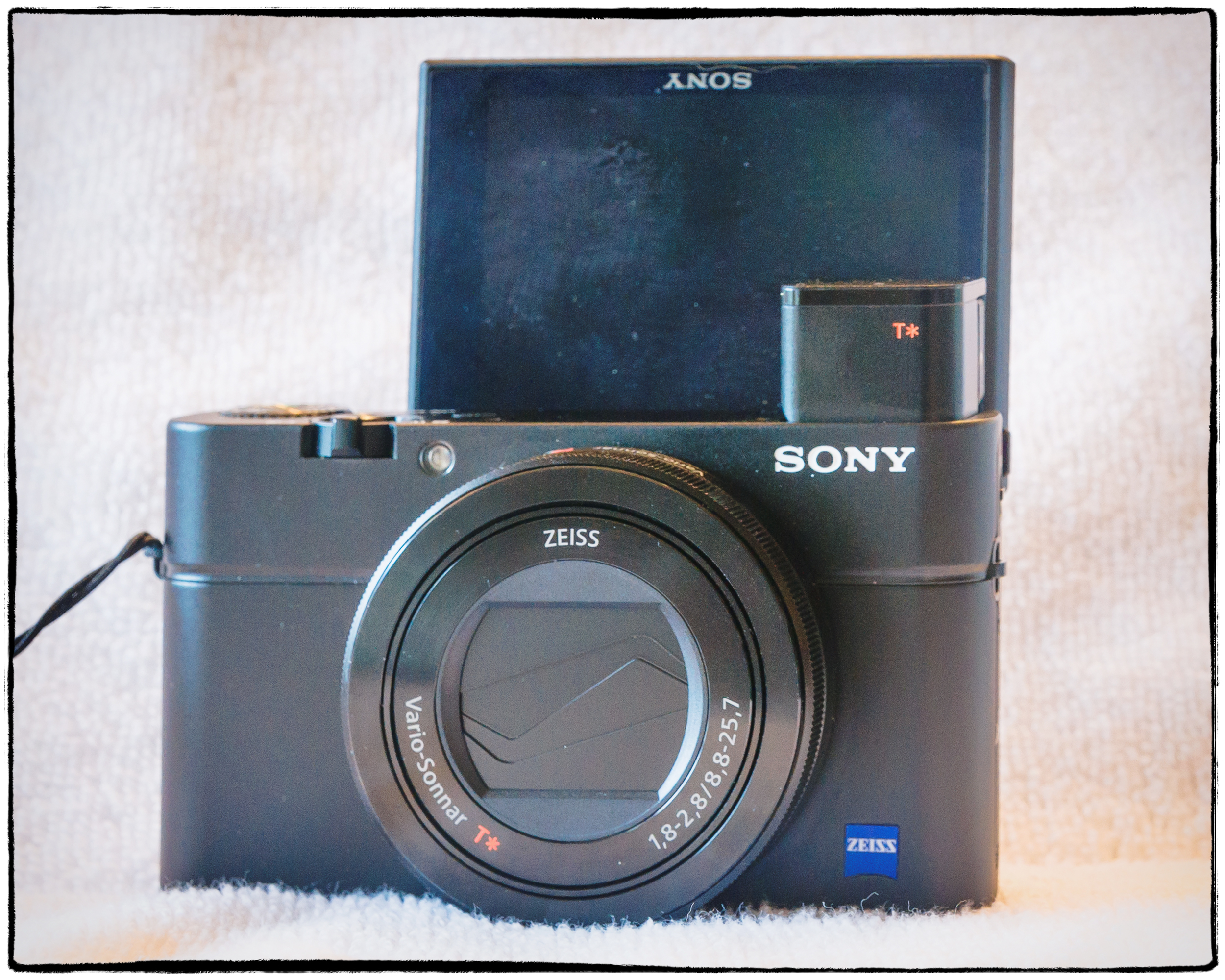
RX100 model 3 showing a couple of its distinctive features: the articulating screen (seen here rotated 180 degrees); and the excellent viewfinder (top right in the picture).
Happy New Year!
A few days ago I posted that my RX100 model 1 had given up the ghost on Christmas day and that I had ordered a model 3 (see RIP RX100).
It arrived December 29 as part of a bundle, which also included an 8 inch table tripod; a Sony 64 Gb memory card; a Sony AG-R2 grip; a 12 inch rubberized spider tripod; an LCD/Lens cleaning brush; a camera case; a lens cleaning kit; a travel charger; an SLR/DSLR hand grip; an additional battery; a USB multi card reader/writer; a memory card wallet; and a USB/micro USB cable all for the same price as the camera alone.
We’ve were pretty busy over New Year so I haven’t really had a chance to try it out thoroughly. Also it’s been pretty bleak (cold, wet and icy) for the past few days and I haven’t really felt like going out.
I did, however, give it a quick try – if nothing else than to make sure that everything was working properly and that I had configured it to meet my needs. My initial reaction follows:
I’ve read that it’s bigger and heavier than the model 1, but if that’s true I haven’t noticed it.
I had found that the control ring on the model 1 was virtually unusable and I had also read that this had NOT changed with the model 3. I was pleased to find that this was NOT the case. With the old model I had to move the ring a large distance to get it react. With the newer model focusing manually felt much more like I expected it to.
The viewfinder is excellent even if it is a little close to the camera body (so close that your face is pressed up against the LCD).
I always had trouble composing at a low angle with the model 1. I couldn’t get down low enough to the screen so I just had to point in the general direction of my subject and hope. The articulating screen nicely gets around this problem. I also like that you could rotate the screen through 180 degrees. I’m not much into selfies, but my wife is so I imagine this will be quite useful.
The interface is much improved and much more configurable.
I like the new lens with its wider 24mm focal length and faster aperture (f2.8 rather than f4.9) at the zoom end. So far I haven’t missed the focal length change from 100mm to 70mm.
I tried using the wifi to send images from the camera to my iphone and it worked perfectly. I’m not sure I’ll use this a lot, but it’s nice to know it’s there.
I haven’t yet used the neutral density filter, but there have certainly be occasions in the past when I could have used such a capability.
I shoot everything in RAW so the images below have all been processed.
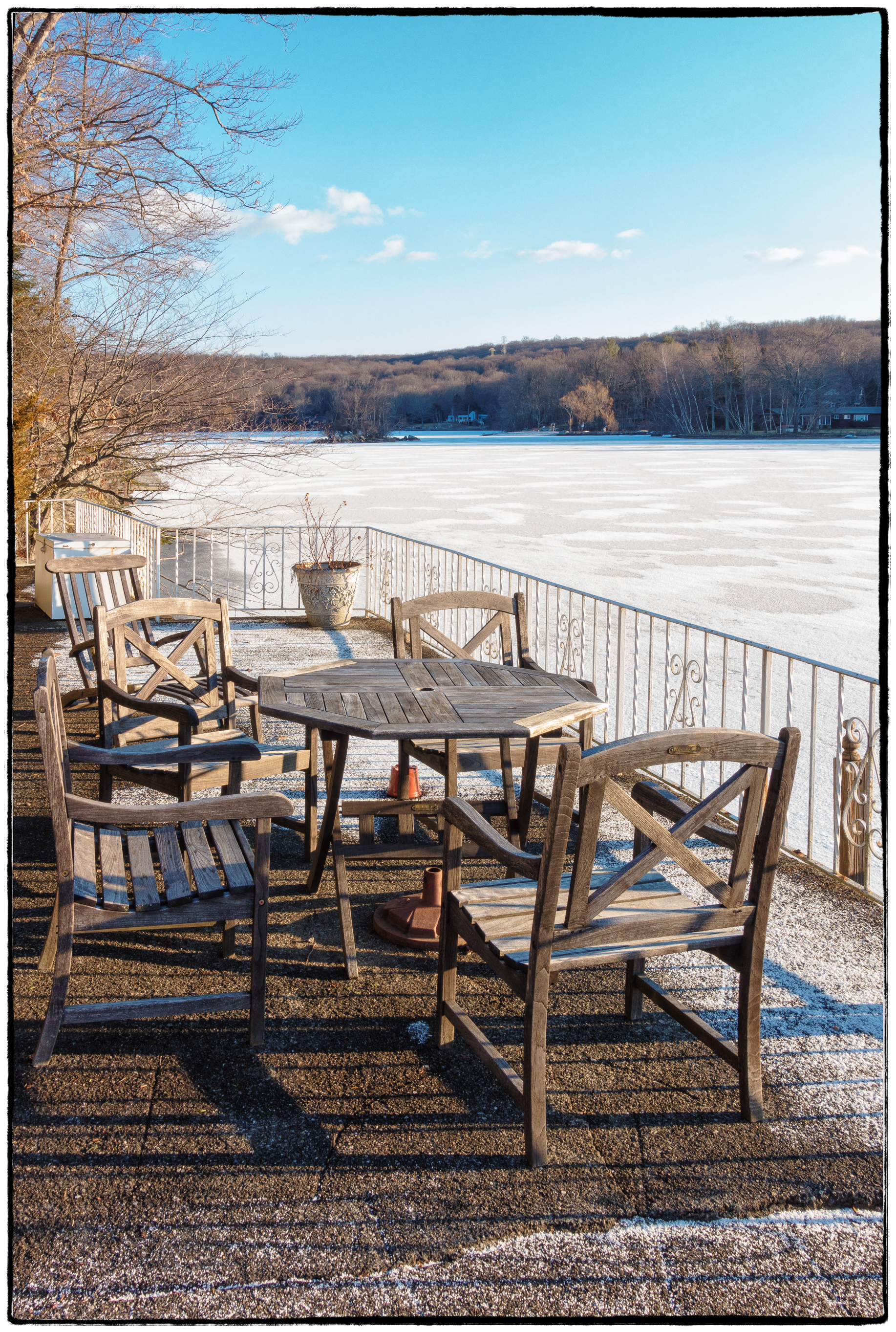
Frozen lake.
Selfie mode.
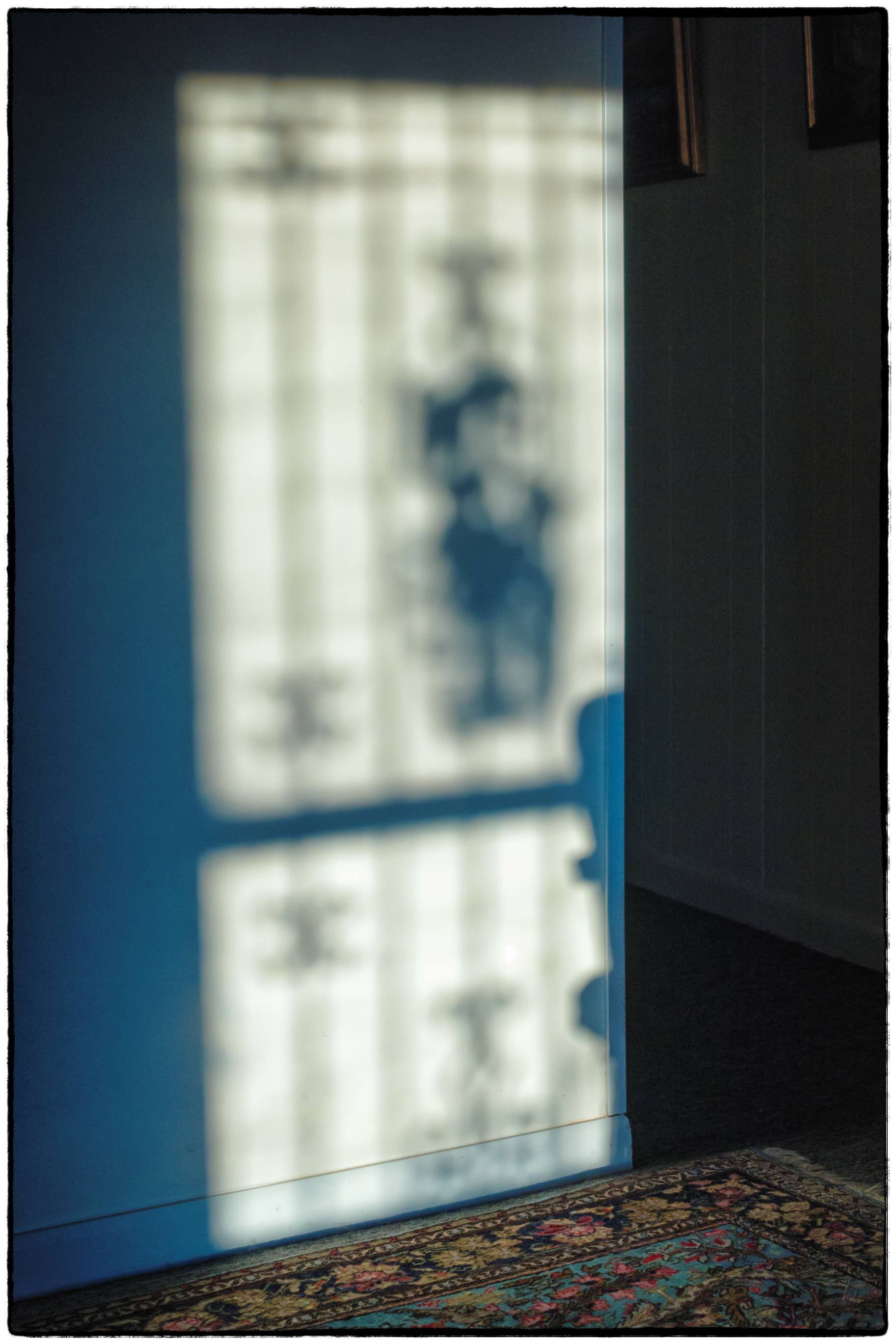
Early morning shadows.
Gypsy.
Statue.