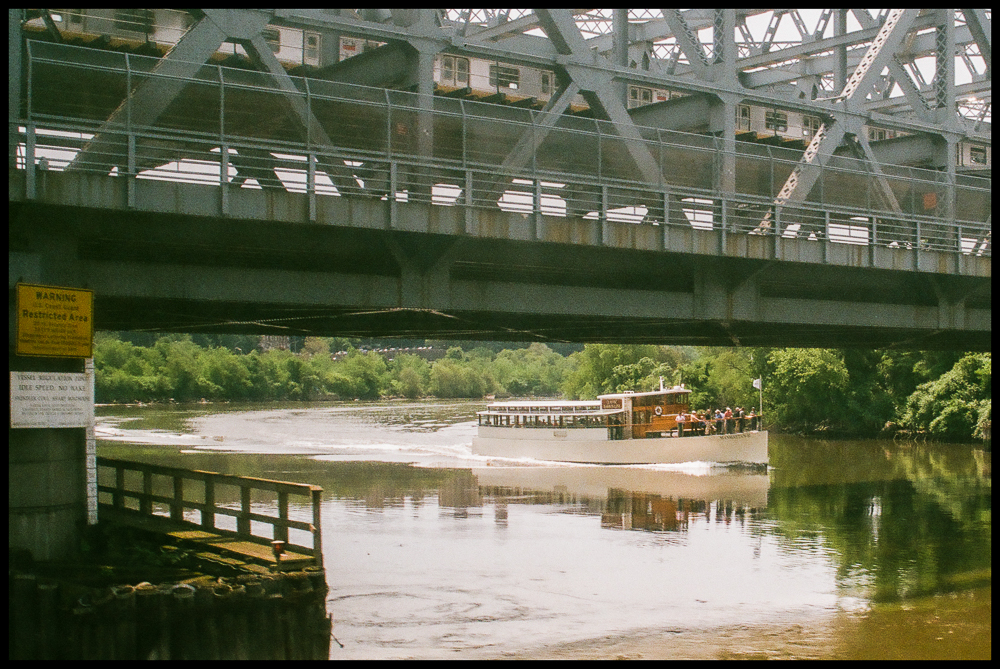
Boat passing under the Broadway Bridge over the Harlem River, New York City.
You can find this camera for a very low price. I can understand why. It’s quite large, quite heavy and it’s impossible to put it in a pocket. It has a fixed lens, so no opportunity to changes lenses if you need to. The power zoom might be off-putting to some. The lens (f4.5 to f5.6) could be a little faster, but I don’t do much low light photography so I didn’t have a problem. All in all it’s a rather odd camera, the precursor to later generations of bridge cameras.

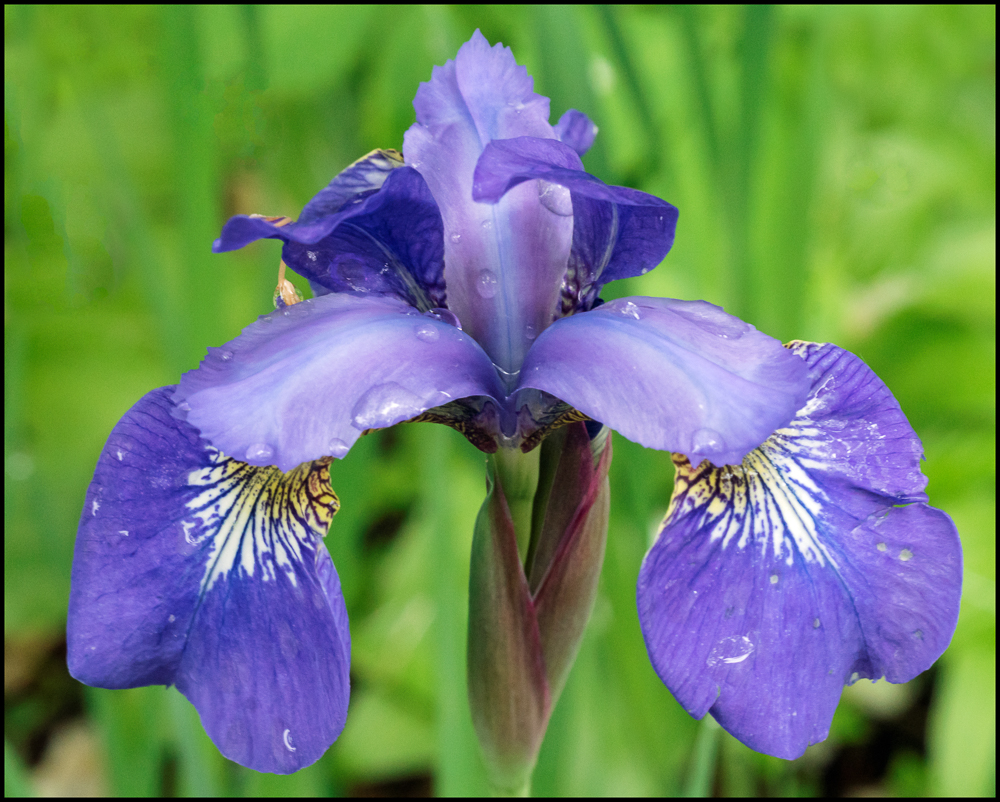
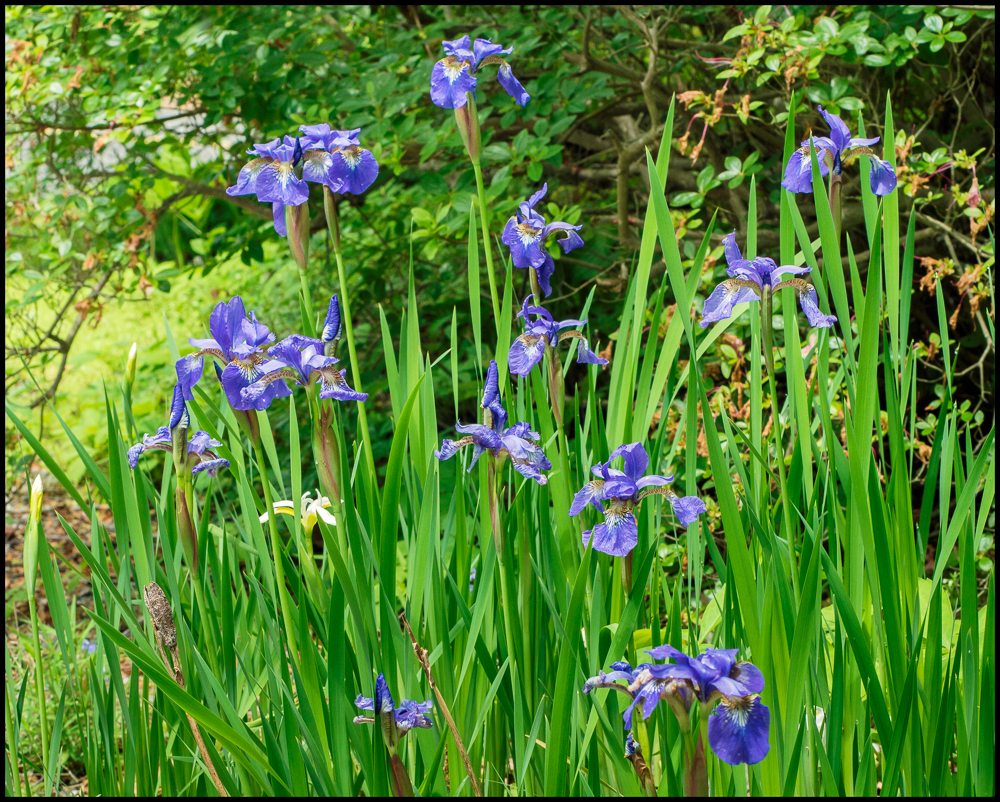
Iris in Law Park, Briarcliff Manor
However, I found that I rather enjoyed using it. Yes, it’s large but I found the ‘heft’ to be reassuring. I feels like it’s well built and I found it comfortable to hold. I did find the power zoom switch to be uncomfortable at first, but it didn’t take me long to get used to it. Yes, you’re limited to a fixed lens but I found the 35-180mm focal length to be useful and at least I didn’t have to cart around additional lenses. As my eyes worsen with age I found the autofocus to be helpful, as is the use of easy to find AA batteries. The lens is excellent. Any problems with sharpness in the pictures are probably because of me rather than the lens. I tended to forget that at its long end this is a 180 mm lens, and that consequently I should make sure that my shutter speed is at least 1/250 of a second. I suspect that this caused some lens shake problems, but surprisingly not too bad.

Bull statue outside a Ben and Jack’s Steakhouse in New York City.
I had one problem that was specific to my particular camera. There’s some kind of LCD bleed in the viewfinder that makes it hard (at times impossible) to see the aperture and shutter speed settings. I can always look at the rear panel for this information so it’s not much of a problem.

Two mallards in Downing Park, Newburgh.
So I’m happy to have this camera and I’m quite impressed with the results delivered. Since the one I have is “cosmetically challenged” and has the LCD bleed problem I’m considering getting another one – in better condition.

Fountain in Law Park, Briarcliff Manor.

Statue in our garden.
For more pictures taken with this camera see:
A Woodland Path
The Chrysler Building
Another view of the Polly Pond
Ducks and Ducklings again
The train now arriving…
Lifeguard on duty
Pictures taken with Fujicolor Superia X-TRA400