Geneva – Waiting to Board

In the preceding post (See Geneva – Introduction) I mentioned that there was a third factor that convinced me to go on vacation this year. I worry about being away because I don’t like leaving our animals, particularly our dog, Harley (I don’t worry so much about the cat. Cat’s are pretty independent and as long as she gets regular food and water and little human contact every day she seems to be happy enough. We can provide that easily enough by having someone come to the house every day). The dog is another story, however. Somewhat irrationally I don’t like kennels so that option is out. We used to know a couple who took dogs into their home. This worked well for us and the dog seemed to enjoy it too. Unfortunately, after a while they decided that they no longer wanted to do it and we have, so far, not been able to find a replacement.

So with no viable option for looking after the dog while we’re away I’ve tended to stay home. This time there was considerable pressure from both my wife and my daughter so I felt the need to find some way of going. What we decided to do was to take the dog with us.

When I was posted to Geneva in 1990 we took a cat with us. When we lived in France the cat moved too. And when we returned to NY in 1998 the cat came back with us. So we weren’t totally unfamiliar with the process: get a microchip implanted; get all of his shots done (even if some of them were still valid they all had to be done AFTER the microchip was put in; take all of the documentation down to JFK to get them stamped by the Dept. of Agriculture.

Luckily Harley is a small dog and so we were able to take him into the cabin with us. We had to get a carrier of an improved size. This had to go under the seat in front, and he had to stay in the carrier for the duration of the flight.

It turned out that he is an exceptionally good traveler. He’s a very sweet dog, but if he has a failing it’s that he likes to bark a lot. I had visions of us waiting to board and being refused because he was barking a lot. Instead I was surprised that from the time we put him in his carrier at home to the time we got off the plane in Geneva he barked only once. This was on the plane and only then because another dog in the cabin barked first. On the way back he didn’t bark at all. At the end of both trips he jumped out of the carrier as if nothing out of the ordinary had happened.

So Harley too is an international traveler having now been to Switzerland and France.

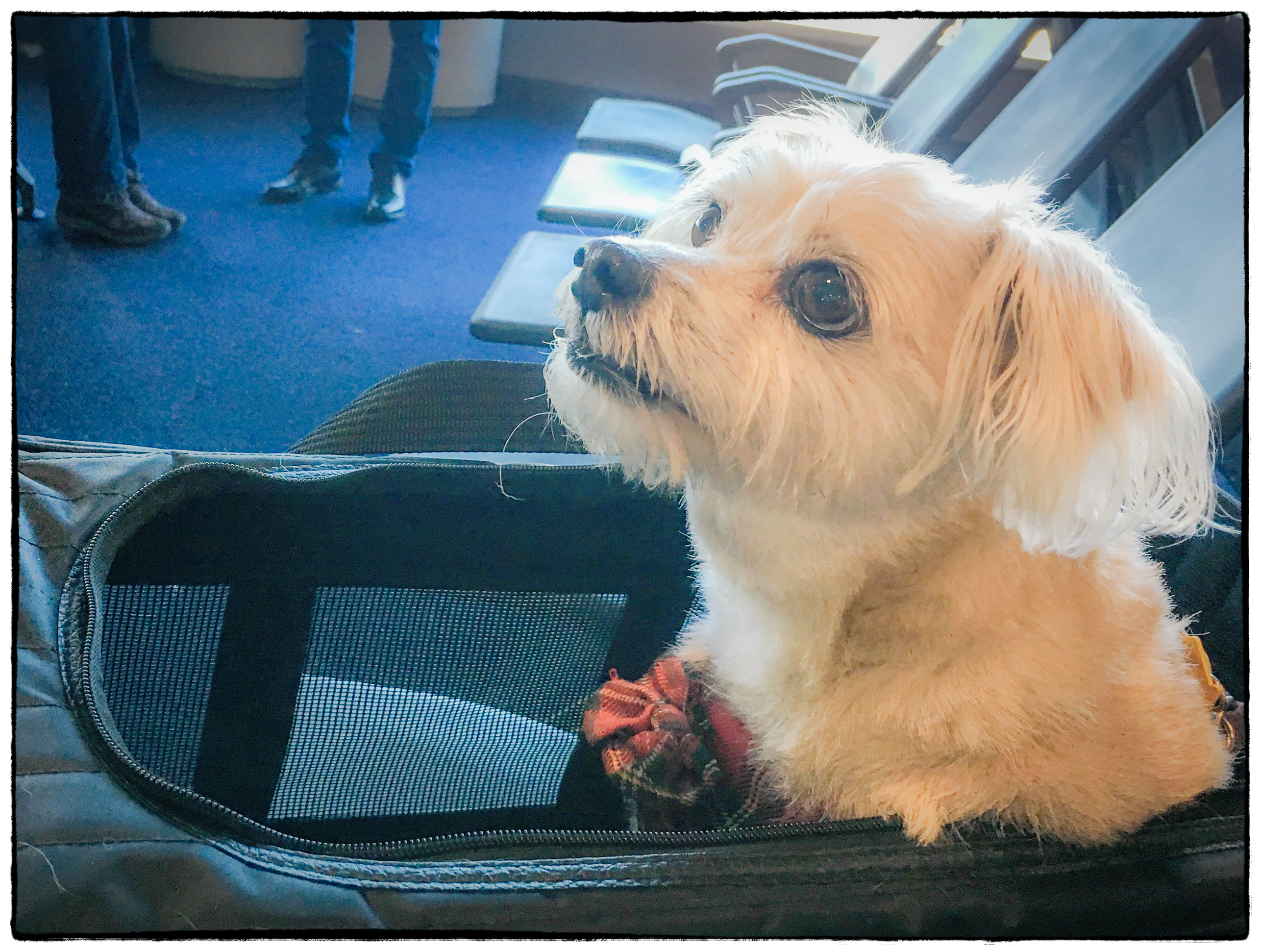
In the above picture he’s sitting in his carrier as we wait to board.

Picture taken by my wife with her iphone 6s.
A recent visitor to our garden

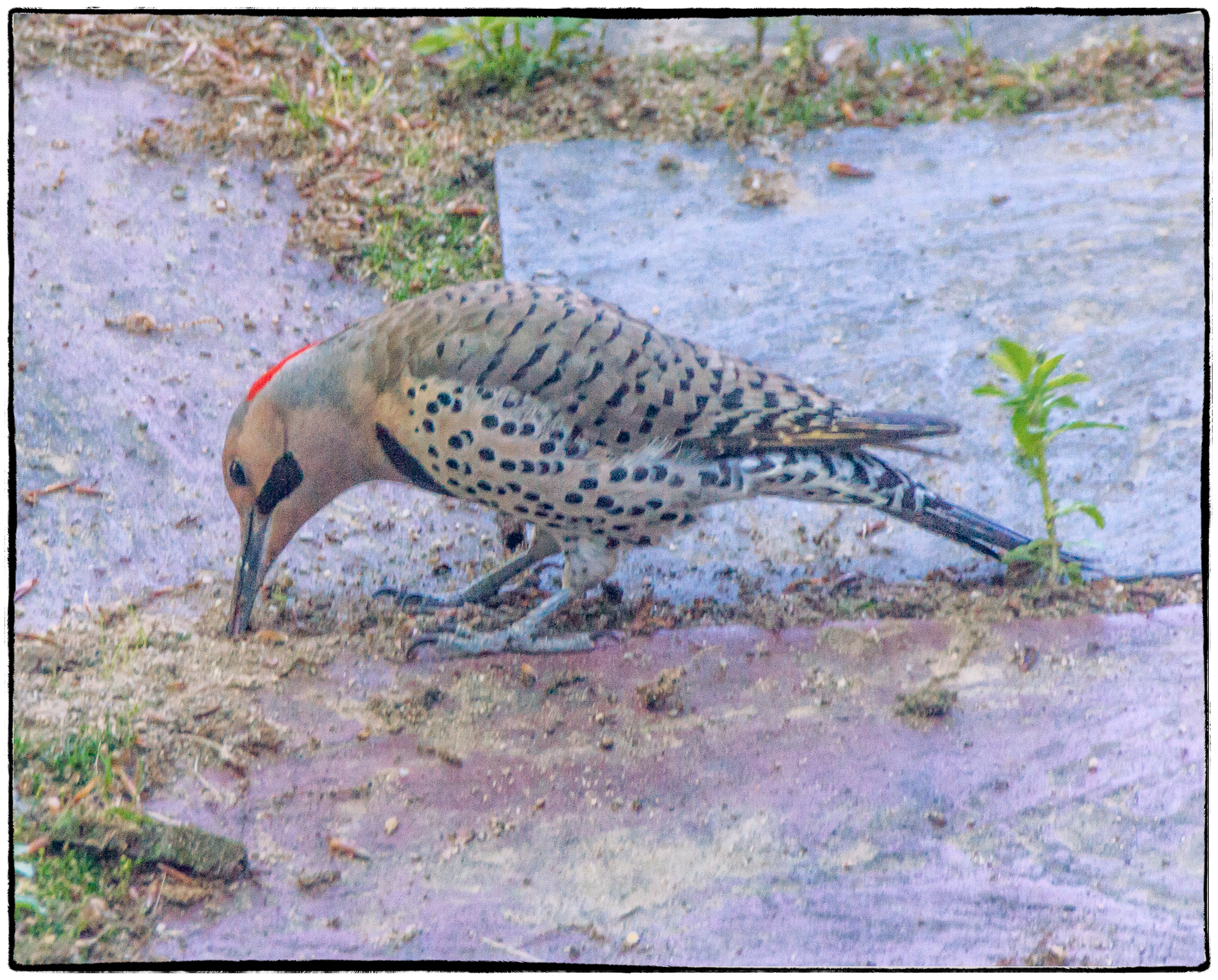
A type of woodpecker: a northern flicker. Specifically (if I’m not mistaken, which I might well be) a yellow-shafted flicker (Colaptes auratus auratus). So if it’s a woodpecker why is it chewing up our patio rather than pecking wood? Grab a worm on the patio or bang your head against a tree? I guess it’s an easy choice.

As usual when I’m taken by surprise or my subject is moving I messed this up. When I noticed the bird I grabbed the nearest camera, which happened to my Sony Alpha 500 with Tamron A18 AF 18-250mm f3.5-6.3. Without thinking I zoomed in to the fullest extent not thinking that it as was relatively dark outside and that the combination of large aperture combined with large lens meant that that pictures were certainly going to suffer from blur resulting from the slow shutter speed selected and my inability to hand hold the lens at that speed.

This is why I don’t do more wildlife photography. Still better than nothing though. I’ve never seen one of these before.

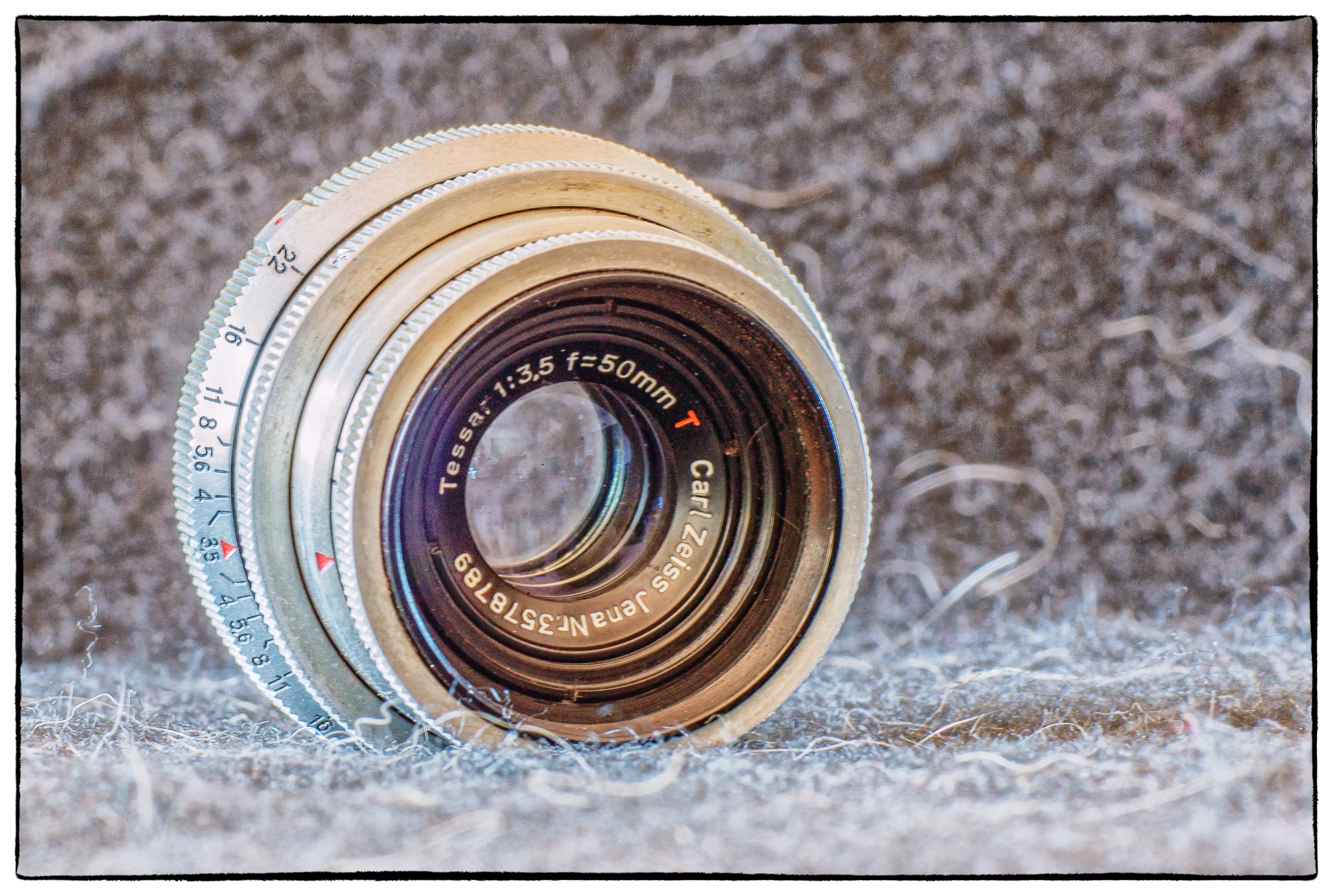
Carl Zeiss Jena 50mm f3.5 T Tessar

This came attached to an Exa (See:New Acquisitions – Exakta Varex/VX IIa and Exa August 10, 2015) that I acquired in 2015, but had never used. I decided to give it a try right after I had tried out the Ludwig Peronar I mentioned in an earlier post (See: Ernst Ludwig 50mm f2.9 Peronar). The two lenses are very similar, both in appearance and in size. But in most other respects they are light years apart. Where the peronar was extremely soft and difficult to focus, the Tessar is remarkably sharp.

It’s a solid, metal lens with four elements in three groups. Quite small (of course the adapter for the NEX makes it much larger. I’d guess about twice as large), it focuses down to about two and a quarter feet. It’s comfortable in the hand and smooth to focus. Apertures range from f3.5 to f22 without defined stop intervals. I also found the out of focus areas to be appealing and was impressed by the color rendition.

I really liked this lens. It’s still on my NEX.

Taken with the above lens on a Sony NEX 5N.

Arthurium and blue and white cat.

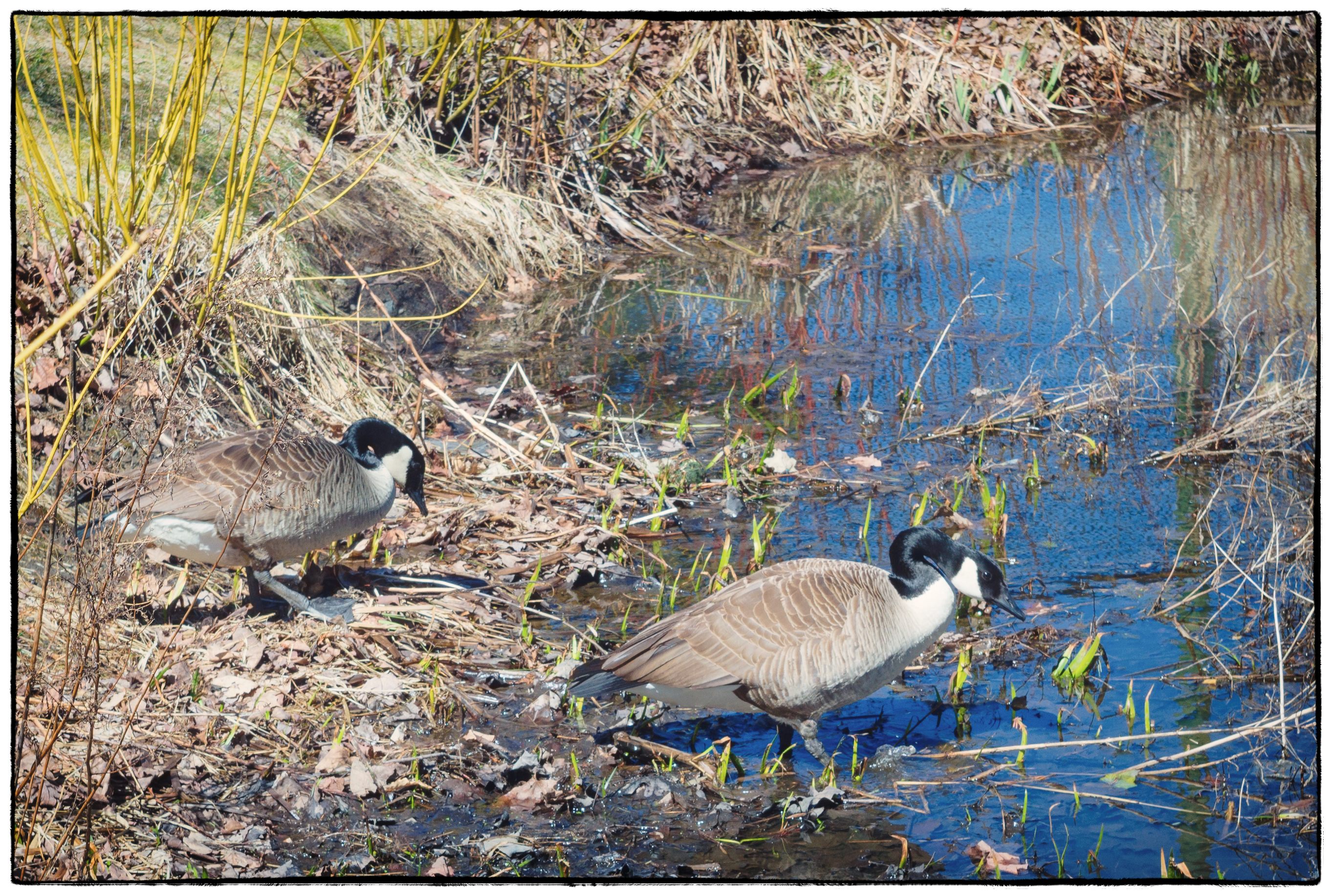
Geese.

Old Trunk.

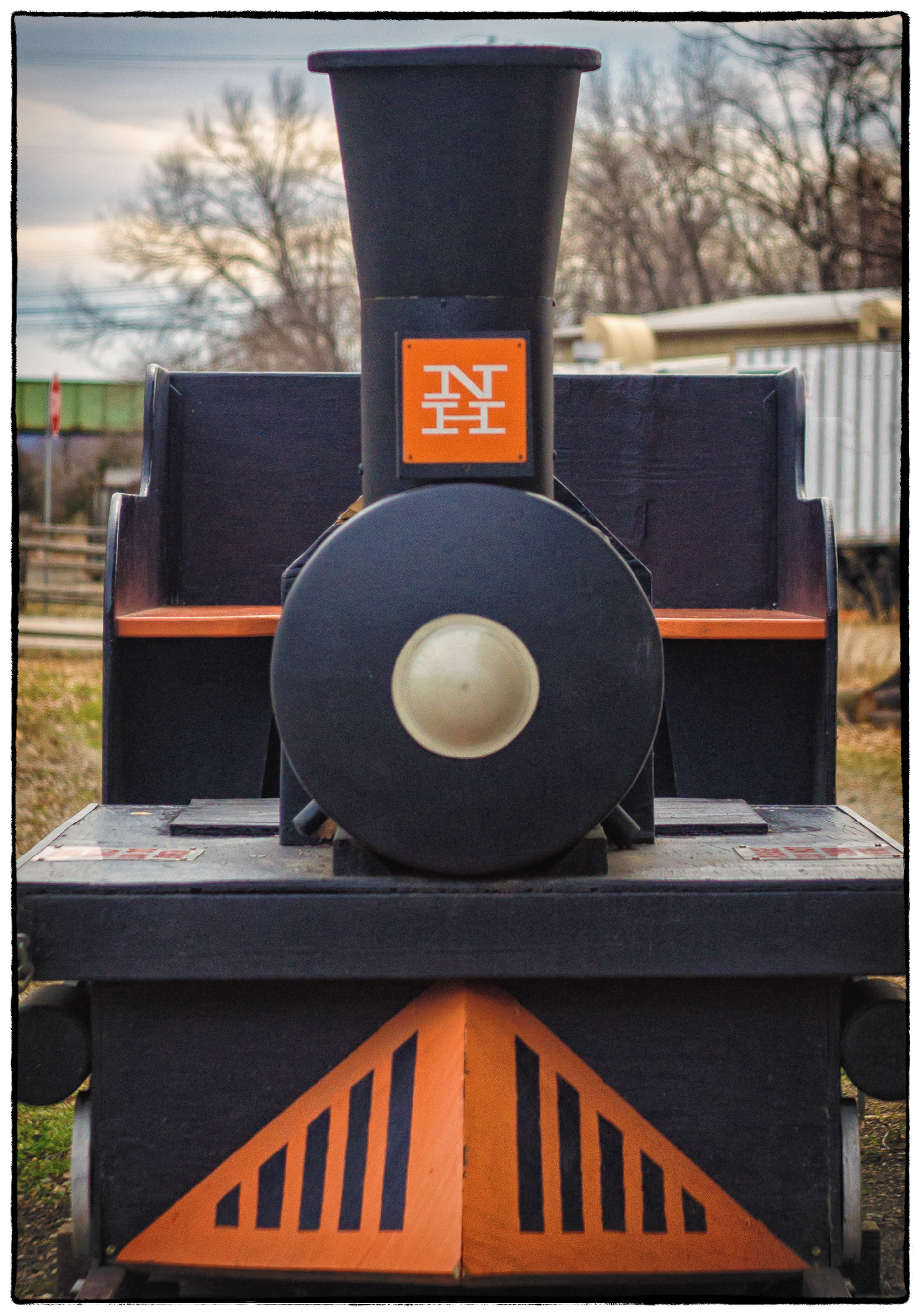
Model Locomotive.

For other posts related this lens see:

Hopewell Junction Depot
Vernal Pond
Lichen
Blue and Red Hydrant
First Day of Spring

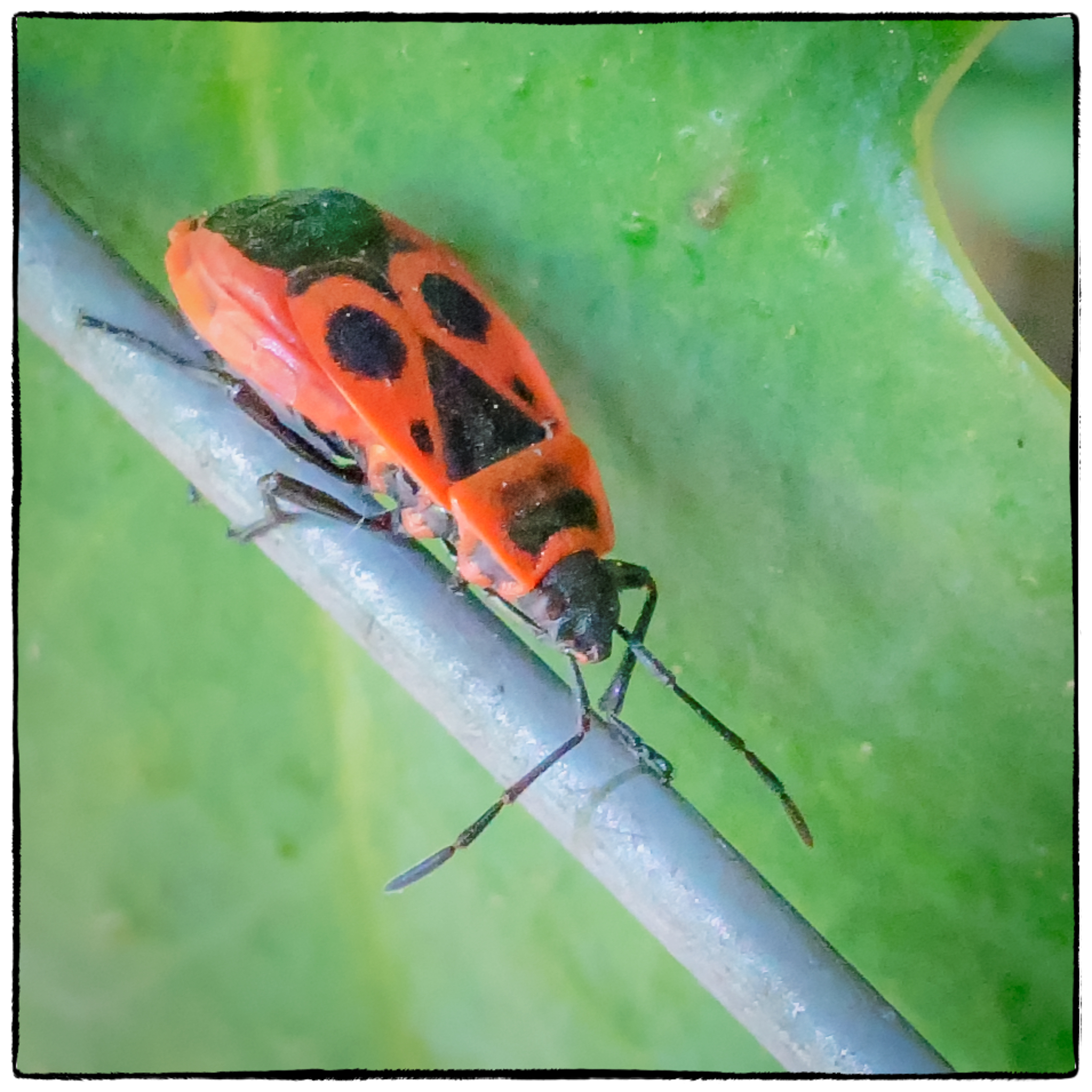
Red and Black Bug

My eye was initially attracted to the bright colors of this red and black bug against a green leaf. As I looked more closely, however, I noticed what looks very much like a skull pattern on its back. Looking at the black parts and moving from left to right we have: Hair, two round eyes, a triangular nose and down-turned mouth. Spooky!

After doing a bit of research I’ve concluded that it’s a Lygaeus equestris – commonly known as a black-and-red-bug, which sounds about right.

According to inaturalist.com:

These bugs can reach about 11 to 12 millimetres (0.43 to 0.47 in) in length. They have a characteristic red-black pattern, fully developed wings and long, powerful legs. The hemelytra have two transverse bands that reach the margin and a round white spot on the membrane. Scutellum is without bristles but with tiny hairs. The black band close to the eye is wider than the same.

This species is very difficult to differentiate from Lygaeus simulans, that has a scutellum with long bristles, antennae with angulous tubercles and a larger red area on the head.

The red-black pattern has a deterrent effect and serves to protect the insect (Mullerian mimicry or Batesian mimicry). By storing the toxic ingredients of their food plants, they are unpalatable to potential predators.

These bugs feed on plant juices, particularly milkweed (Vincetoxicum hirundinaria), Spring pheasant’s eye (Adonis vernalis) and sometimes also on dandelions.

Heavy crop of a picture taken with a Sony RX-100 M3